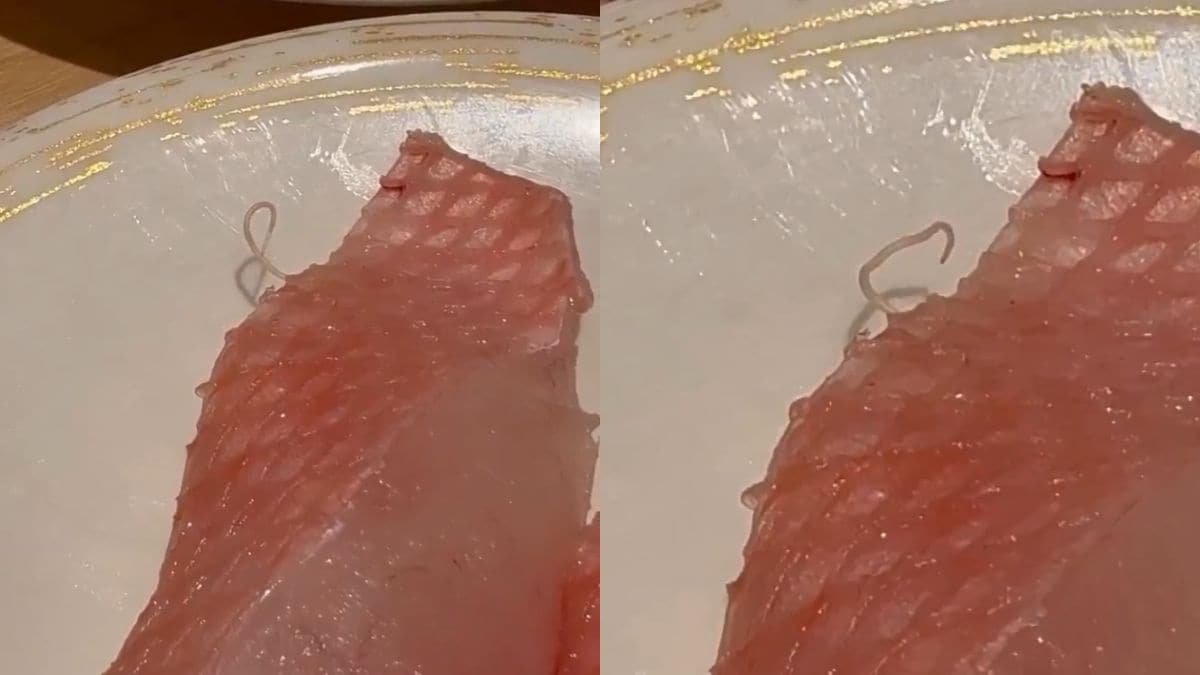
Video of a worm-like organism emerging from a sushi dish went viral, prompting public concern, an apology from the outlet, and a formal inspection by food safety authorities
Food safety regulators in Hong Kong have launched an inspection after a viral video appeared to show a parasite emerging from a piece of sushi served at a local restaurant, raising renewed concerns about raw seafood handling standards in one of Asia’s most heavily scrutinized dining markets.
The incident began when a diner posted footage showing what appears to be a small worm-like organism moving out of a sushi piece shortly after it was served.
The clip spread rapidly across social media platforms, generating widespread public reaction and prompting calls for immediate regulatory action.
What is confirmed is that the video was recorded at a restaurant in Hong Kong and that it prompted an official response from both the establishment and food safety authorities.
The restaurant involved issued an apology following the circulation of the video and stated it was cooperating with authorities.
The management said it had taken internal corrective steps, though it did not publicly confirm the exact nature of the organism shown in the footage.
The key issue under review is whether the contamination originated from improper handling, storage conditions, or was present in the raw fish before preparation.
Hong Kong’s food safety system routinely requires inspections of restaurants serving raw seafood, particularly sushi and sashimi, due to the known risk of parasites in under-processed fish.
Common parasites such as anisakis can survive in raw or undercooked marine products if freezing or preparation standards are not properly followed.
Health officials have not confirmed whether the organism in this case belongs to any known species, and laboratory analysis is ongoing.
Public concern has been amplified by the viral nature of the video, which has been widely shared and interpreted in different ways online.
While some viewers described it as a parasite, others have cautioned that visual identification alone is not sufficient for scientific classification.
Authorities have emphasized that conclusions will depend on laboratory examination rather than social media interpretation.
Food safety incidents involving raw fish are not uncommon globally, but they typically trigger rapid inspections and compliance reviews rather than immediate enforcement action unless systemic violations are identified.
In Hong Kong, restaurants found in breach of hygiene or food handling regulations can face fines, suspension of licenses, or mandatory corrective measures.
The case has also revived broader scrutiny of raw seafood supply chains, including freezing standards, sourcing documentation, and kitchen-level inspection practices.
Regulators are expected to assess whether the restaurant complied with mandatory protocols designed to eliminate parasitic risks in sushi-grade fish before serving.
The restaurant remains under observation as inspectors review ingredients, storage conditions, and preparation procedures, while laboratory results will determine whether any regulatory penalties follow.
The incident began when a diner posted footage showing what appears to be a small worm-like organism moving out of a sushi piece shortly after it was served.
The clip spread rapidly across social media platforms, generating widespread public reaction and prompting calls for immediate regulatory action.
What is confirmed is that the video was recorded at a restaurant in Hong Kong and that it prompted an official response from both the establishment and food safety authorities.
The restaurant involved issued an apology following the circulation of the video and stated it was cooperating with authorities.
The management said it had taken internal corrective steps, though it did not publicly confirm the exact nature of the organism shown in the footage.
The key issue under review is whether the contamination originated from improper handling, storage conditions, or was present in the raw fish before preparation.
Hong Kong’s food safety system routinely requires inspections of restaurants serving raw seafood, particularly sushi and sashimi, due to the known risk of parasites in under-processed fish.
Common parasites such as anisakis can survive in raw or undercooked marine products if freezing or preparation standards are not properly followed.
Health officials have not confirmed whether the organism in this case belongs to any known species, and laboratory analysis is ongoing.
Public concern has been amplified by the viral nature of the video, which has been widely shared and interpreted in different ways online.
While some viewers described it as a parasite, others have cautioned that visual identification alone is not sufficient for scientific classification.
Authorities have emphasized that conclusions will depend on laboratory examination rather than social media interpretation.
Food safety incidents involving raw fish are not uncommon globally, but they typically trigger rapid inspections and compliance reviews rather than immediate enforcement action unless systemic violations are identified.
In Hong Kong, restaurants found in breach of hygiene or food handling regulations can face fines, suspension of licenses, or mandatory corrective measures.
The case has also revived broader scrutiny of raw seafood supply chains, including freezing standards, sourcing documentation, and kitchen-level inspection practices.
Regulators are expected to assess whether the restaurant complied with mandatory protocols designed to eliminate parasitic risks in sushi-grade fish before serving.
The restaurant remains under observation as inspectors review ingredients, storage conditions, and preparation procedures, while laboratory results will determine whether any regulatory penalties follow.