Universities expand intake and support for mainland Chinese students, but language barriers, job-market limits, and social integration gaps continue to complicate long-term settlement
Hong Kong’s effort to position itself as a long-term education and talent hub for mainland Chinese students is being shaped by a system-level tension between expanded university access and the practical limits of post-graduation integration.
The core issue is not admission, which has steadily increased, but whether graduates can realistically transition into stable employment and social life in the city’s distinct linguistic, professional, and cultural environment.
Over the past decade, Hong Kong universities have increasingly relied on non-local students, particularly from mainland China, as a key driver of enrollment growth, institutional funding, and global competitiveness.
This shift has strengthened the city’s ambition to function as an international education hub while also aligning more closely with broader regional talent strategies.
Policy changes have expanded places for mainland students across undergraduate and postgraduate programs, making them one of the largest cohorts of non-local students in the system.
However, research on student outcomes consistently highlights persistent friction at the point where education ends and employment begins.
Mainland students often arrive with strong academic preparation, but face structural disadvantages in Cantonese proficiency, informal workplace networking, and familiarity with local professional norms.
These factors reduce competitiveness in sectors where local communication skills and established social ties remain decisive.
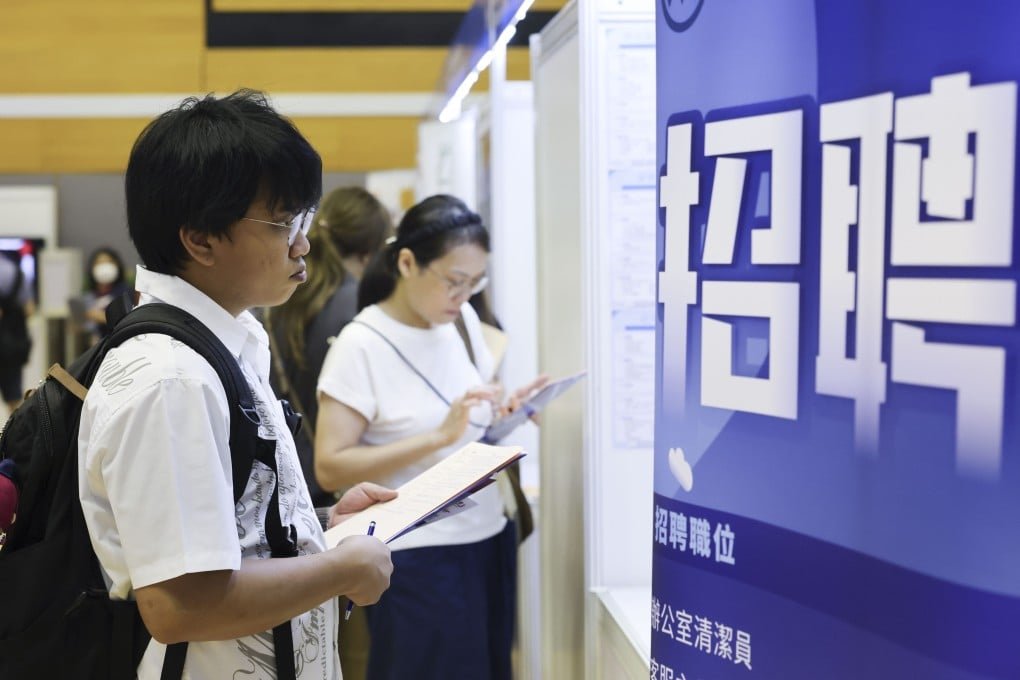
The transition from university to employment is therefore not automatic, even for high-performing graduates.
Academic studies of student integration in Hong Kong repeatedly show that adaptation challenges begin early in the university experience and carry forward into employment outcomes.
Language barriers—especially Cantonese in workplace settings and English in academic contexts—can limit classroom participation and later affect internship and hiring opportunities.
At the same time, weaker integration into local peer networks reduces access to informal job channels that are often critical in Hong Kong’s tight labor market structure.
These constraints accumulate rather than disappear at graduation.
Universities have responded by expanding support systems aimed at improving integration outcomes, including language training, career services, and internship pipelines.
At a policy level, Hong Kong has also promoted itself as a gateway for talent mobility, encouraging mainland graduates to remain in the city after their studies.
The intention is to convert educational inflows into long-term labor market retention, strengthening Hong Kong’s position within the broader regional knowledge economy.
Yet the effectiveness of these measures remains uneven.
While some mainland graduates successfully secure positions in finance, education, technology, and professional services, others face difficulties transitioning into roles that match their qualifications.
Employers continue to weigh local cultural fluency and communication style heavily in hiring decisions, which can offset academic credentials.
This creates a segmented outcome pattern in which integration success depends as much on social adaptation as on academic performance.
The broader implication is that Hong Kong’s higher education expansion strategy is functioning as a partial integration system rather than a fully convergent one.
Universities are increasingly global in enrollment structure, but the labor market remains locally anchored in language and network-based hiring practices.
This mismatch defines the current stage of policy development: large-scale educational openness without fully resolved mechanisms for post-graduation absorption.
As Hong Kong continues to position itself as a regional education hub, the central challenge is shifting from recruitment to retention.
The long-term success of this model will depend less on how many mainland students enroll, and more on whether institutional, linguistic, and employment structures can adapt to support sustained settlement beyond graduation.
The core issue is not admission, which has steadily increased, but whether graduates can realistically transition into stable employment and social life in the city’s distinct linguistic, professional, and cultural environment.
Over the past decade, Hong Kong universities have increasingly relied on non-local students, particularly from mainland China, as a key driver of enrollment growth, institutional funding, and global competitiveness.
This shift has strengthened the city’s ambition to function as an international education hub while also aligning more closely with broader regional talent strategies.
Policy changes have expanded places for mainland students across undergraduate and postgraduate programs, making them one of the largest cohorts of non-local students in the system.
However, research on student outcomes consistently highlights persistent friction at the point where education ends and employment begins.
Mainland students often arrive with strong academic preparation, but face structural disadvantages in Cantonese proficiency, informal workplace networking, and familiarity with local professional norms.
These factors reduce competitiveness in sectors where local communication skills and established social ties remain decisive.
The transition from university to employment is therefore not automatic, even for high-performing graduates.
Academic studies of student integration in Hong Kong repeatedly show that adaptation challenges begin early in the university experience and carry forward into employment outcomes.
Language barriers—especially Cantonese in workplace settings and English in academic contexts—can limit classroom participation and later affect internship and hiring opportunities.
At the same time, weaker integration into local peer networks reduces access to informal job channels that are often critical in Hong Kong’s tight labor market structure.
These constraints accumulate rather than disappear at graduation.
Universities have responded by expanding support systems aimed at improving integration outcomes, including language training, career services, and internship pipelines.
At a policy level, Hong Kong has also promoted itself as a gateway for talent mobility, encouraging mainland graduates to remain in the city after their studies.
The intention is to convert educational inflows into long-term labor market retention, strengthening Hong Kong’s position within the broader regional knowledge economy.
Yet the effectiveness of these measures remains uneven.
While some mainland graduates successfully secure positions in finance, education, technology, and professional services, others face difficulties transitioning into roles that match their qualifications.
Employers continue to weigh local cultural fluency and communication style heavily in hiring decisions, which can offset academic credentials.
This creates a segmented outcome pattern in which integration success depends as much on social adaptation as on academic performance.
The broader implication is that Hong Kong’s higher education expansion strategy is functioning as a partial integration system rather than a fully convergent one.
Universities are increasingly global in enrollment structure, but the labor market remains locally anchored in language and network-based hiring practices.
This mismatch defines the current stage of policy development: large-scale educational openness without fully resolved mechanisms for post-graduation absorption.
As Hong Kong continues to position itself as a regional education hub, the central challenge is shifting from recruitment to retention.
The long-term success of this model will depend less on how many mainland students enroll, and more on whether institutional, linguistic, and employment structures can adapt to support sustained settlement beyond graduation.