The company’s cancellation of 185,000 shares highlights ongoing efforts to manage capital structure and support shareholder value amid shifting property market conditions
The cancellation of repurchased shares by Hongkong Land reflects a system-driven capital management strategy shaped by global property market cycles, liquidity conditions, and shareholder return policies.
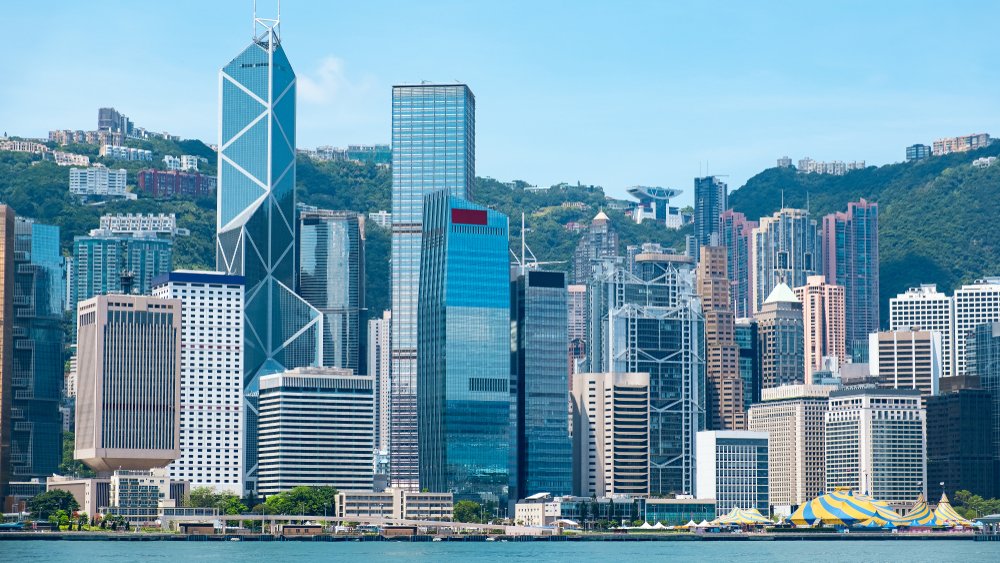
Hongkong Land, a major real estate investment and development group focused on prime commercial assets in Asia, has been actively using share buybacks as part of its broader approach to optimize capital allocation and signal financial discipline to investors.
What is confirmed is that Hongkong Land cancelled 185,000 shares following a recent buyback program.
Share cancellation is a standard corporate mechanism in which repurchased shares are permanently removed from circulation, reducing the total number of outstanding shares and potentially increasing earnings per share for remaining shareholders.
This action does not change the company’s underlying assets or operations but alters its capital structure.
The key issue behind this move is how listed property groups respond to prolonged valuation pressure in commercial real estate markets.
Hongkong Land’s portfolio is heavily concentrated in premium office and retail assets in Hong Kong and Singapore, markets that have faced cyclical demand shifts due to interest rate changes, hybrid work trends, and regional economic uncertainty.
In this context, buybacks are often used as a signal that management views the company’s shares as undervalued relative to long-term asset value.
Share buybacks also serve a financial engineering function.
By reducing the number of outstanding shares, companies can improve per-share metrics such as earnings per share and net asset value per share, even if total earnings remain unchanged.
For real estate investment groups, where valuation is closely tied to net asset value, such adjustments can influence investor perception and market pricing behavior.
Hongkong Land’s strategy sits within a broader pattern among large Asian property firms that have increasingly relied on capital returns rather than aggressive expansion.
This reflects tighter financing conditions, slower transaction volumes in prime office markets, and a more cautious development pipeline.
The focus has shifted toward preserving balance sheet strength and returning excess capital to shareholders when direct investment opportunities appear limited.
At the same time, share buybacks are not without trade-offs.
While they can support share prices and improve per-share financial indicators, they also reduce cash reserves that could otherwise be used for acquisitions, redevelopment, or debt reduction.
Investors typically interpret sustained buyback activity as a signal that management prioritizes capital efficiency over expansion in the near term.
The broader implication is that Hongkong Land is operating in a mature phase of its asset cycle, where value preservation and incremental optimization matter more than rapid portfolio growth.
The cancellation of 185,000 shares is relatively small in scale, but it is consistent with a disciplined capital management approach aimed at stabilizing investor confidence amid a structurally slower commercial property environment.
The immediate consequence is a slight reduction in Hongkong Land’s outstanding share base following its buyback program.
The longer-term implication is continued emphasis on shareholder returns as a central pillar of the company’s financial strategy in a constrained real estate cycle.
Hongkong Land, a major real estate investment and development group focused on prime commercial assets in Asia, has been actively using share buybacks as part of its broader approach to optimize capital allocation and signal financial discipline to investors.
What is confirmed is that Hongkong Land cancelled 185,000 shares following a recent buyback program.
Share cancellation is a standard corporate mechanism in which repurchased shares are permanently removed from circulation, reducing the total number of outstanding shares and potentially increasing earnings per share for remaining shareholders.
This action does not change the company’s underlying assets or operations but alters its capital structure.
The key issue behind this move is how listed property groups respond to prolonged valuation pressure in commercial real estate markets.
Hongkong Land’s portfolio is heavily concentrated in premium office and retail assets in Hong Kong and Singapore, markets that have faced cyclical demand shifts due to interest rate changes, hybrid work trends, and regional economic uncertainty.
In this context, buybacks are often used as a signal that management views the company’s shares as undervalued relative to long-term asset value.
Share buybacks also serve a financial engineering function.
By reducing the number of outstanding shares, companies can improve per-share metrics such as earnings per share and net asset value per share, even if total earnings remain unchanged.
For real estate investment groups, where valuation is closely tied to net asset value, such adjustments can influence investor perception and market pricing behavior.
Hongkong Land’s strategy sits within a broader pattern among large Asian property firms that have increasingly relied on capital returns rather than aggressive expansion.
This reflects tighter financing conditions, slower transaction volumes in prime office markets, and a more cautious development pipeline.
The focus has shifted toward preserving balance sheet strength and returning excess capital to shareholders when direct investment opportunities appear limited.
At the same time, share buybacks are not without trade-offs.
While they can support share prices and improve per-share financial indicators, they also reduce cash reserves that could otherwise be used for acquisitions, redevelopment, or debt reduction.
Investors typically interpret sustained buyback activity as a signal that management prioritizes capital efficiency over expansion in the near term.
The broader implication is that Hongkong Land is operating in a mature phase of its asset cycle, where value preservation and incremental optimization matter more than rapid portfolio growth.
The cancellation of 185,000 shares is relatively small in scale, but it is consistent with a disciplined capital management approach aimed at stabilizing investor confidence amid a structurally slower commercial property environment.
The immediate consequence is a slight reduction in Hongkong Land’s outstanding share base following its buyback program.
The longer-term implication is continued emphasis on shareholder returns as a central pillar of the company’s financial strategy in a constrained real estate cycle.