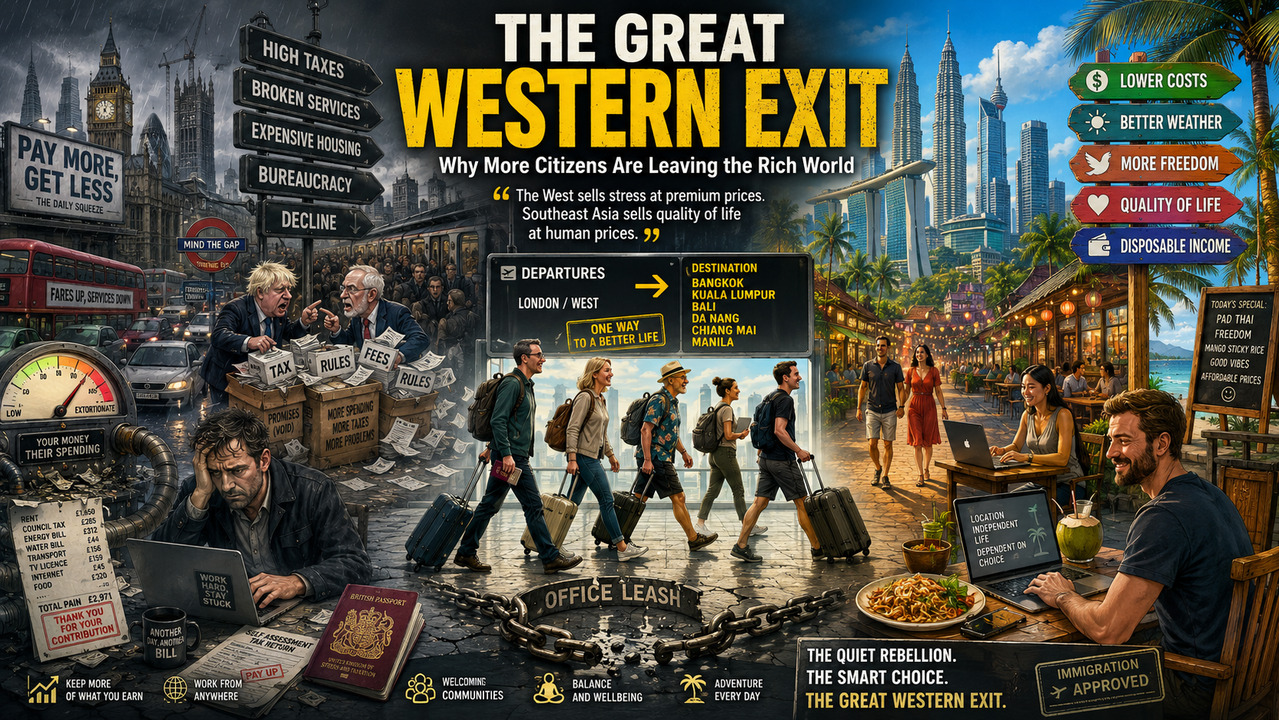
How Western governments punished competence, imported chaos, dependency, and troublemakers, drove their best citizens toward safer, freer, more comfortable, and more functional countries — and then called the collapse “progress.”

The West spent decades marketing itself as civilization’s final upgrade.

America sold the dream.

Britain sold prestige.

Canada sold politeness.

Australia sold balance.

Europe sold sophistication.

People moved there for safety, order, opportunity, clean streets, stable institutions, functioning services, and the promise that hard work still meant something.

That story is collapsing in real time.

Now the rich world is not only importing migrants.

It is bleeding its own citizens.

And the people leaving are not the failures.

They are the productive.

The skilled.

The mobile.

The ambitious.

The exhausted middle class.

The professionals who finally looked at their tax bill, rent bill, energy bill, transport bill, food bill, and political leadership and realized something brutal:

The system is consuming them faster than it rewards them.

This is not tourism.

This is not wanderlust.

This is not “finding yourself.”

This is a silent middle finger to governments that turned citizenship into a financial extraction program.

Millions are leaving wealthy countries because the deal has collapsed.

The social contract is dead.

And governments killed it themselves.


The West Became Addicted to Punishing the Productive

Western governments built entire political models around one dangerous assumption:

The productive class would never leave.

So they squeezed harder.

Higher taxes.

More regulation.

More fees.

More compliance.

More reporting.

More surveillance.

More penalties.

More guilt.

More lectures.

Every budget became a hostage note written to taxpayers.

“Pay more.”

“For fairness.”

“For healthcare.”

“For climate.”

“For inclusion.”

“For infrastructure.”

“For social justice.”

“For yesterday’s mistakes.”

“For tomorrow’s promises.”

The slogans changed.

The robbery stayed the same.

Governments discovered something politically addictive: productive citizens are easier to tax than government waste is to fix.

So instead of reforming bloated bureaucracies, they milked workers.

Instead of cutting incompetence, they taxed ambition.

Instead of reducing waste, they punished productivity.

And they did it while services got worse.

That is the part that broke people psychologically.

Citizens can survive high taxes.

What they cannot survive is paying Scandinavian-level taxation for collapsing standards, dirty streets, unaffordable housing, weak policing, overcrowded infrastructure, migration chaos, and politicians who speak like therapists while governing like accountants drunk on debt.

The insult is no longer economic.

It is moral.

People feel cheated.

And they are right.


Britain Became the Perfect Warning Sign

Britain is no longer viewed internationally as the polished center of stability and competence it once pretended to be.

It became a cautionary tale.

A country where people work harder and own less.

A country where salaries rise slower than rent.

A country where young people cannot buy homes.

A country where trains cost a fortune and still fail.

A country where taxes rise while public confidence collapses.

A country where the political class behaves like a protected aristocracy managing decline while pretending to manage recovery.

The Conservatives spent years promising discipline while producing drift, scandal, tax expansion, mass migration chaos, bureaucratic paralysis, and collapsing public trust.

Then Labour arrived promising repair while carrying the exact same addiction to taxpayer money — just wrapped in softer language and moral branding.

Both sides blame each other.

Both sides protect the machine.

Both sides feed from the same ecosystem of consultants, donors, lobbyists, public-sector managers, think tanks, media insiders, and career politicians.

Both sides grow richer while ordinary citizens grow poorer.

That is why public anger feels different now.

It is no longer frustration.

It is disgust.

People look at Westminster and no longer see leadership.

They see a corporate board of professional promise-makers managing national decline while billing the public for the experience.


Modern Corruption Does Not Hide in Dark Alleys. It Sits in Parliament.

Western corruption became sophisticated.

It stopped looking criminal.

It started looking official.

It wears tailored suits.

It speaks in policy language.

It hides behind committees, reports, inquiries, advisory panels, consultations, compliance frameworks, and endless procedural theatre.

Modern corruption is not a politician stealing cash from a safe.

Modern corruption is wasting billions with no consequences.

It is failed ministers receiving promotions.

It is lobbyists writing policy.

It is donor networks feeding legislation.

It is public contracts handed to connected insiders.

It is regulators protecting systems instead of citizens.

It is politicians becoming millionaires while preaching sacrifice to workers.

It is governments printing debt while taxing productivity.

It is leaders demanding “solidarity” from citizens while protecting themselves from the consequences of their own decisions.

And ordinary people see it clearly.

That is the political mistake elites keep making.

They think the public is stupid because the public is polite.

The public sees everything.

They see the hypocrisy.

They see the double standards.

They see the corruption hidden behind sophistication.

They see politicians entering office comfortably wealthy and leaving extraordinarily wealthy.

They see entire political careers built on managing problems that never get solved because solving them would end the funding stream.

Western politics became an industry.

Decline became a business model.

Fear became taxation fuel.

And productive citizens became livestock.


The Pandemic Destroyed the Final Illusion

Then Covid happened.

And the office lie collapsed.

For decades, millions of workers were trapped in a ridiculous ritual designed less for productivity and more for managerial control.

Wake up early.

Commute through traffic.

Sit in cubicles.

Attend meaningless meetings.

Pretend to look busy.

Spend money near the office.

Repeat until retirement.

Then lockdowns arrived and exposed the truth.

A huge percentage of modern work can be done from anywhere.

Once people discovered they could work remotely, the psychological barrier shattered instantly.

The question changed forever.

Why live in London if your laptop works in Bangkok?

Why suffer freezing rent slavery in Toronto when Kuala Lumpur offers a higher standard of living at a fraction of the cost?

Why tolerate endless stress in Britain when Thailand offers sunshine, affordability, safety, comfort, and breathing room?

The office cage opened.

Millions walked out mentally before they walked out physically.

And once a citizen emotionally detaches from the system, departure becomes logistics.

Not philosophy.


Southeast Asia Humiliated the Western Narrative

Southeast Asia did not become attractive because it is perfect.

It became attractive because it exposed how absurd the Western cost-to-quality ratio became.

That is the comparison Western governments fear most.

Not military rivals.

Not political opposition.

Comparison.

Because comparison destroys propaganda instantly.

A British professional lands in Bangkok and suddenly realizes something devastating:

Life does not have to feel like financial punishment.

The same income delivers:

Better apartments.

Better weather.

Better food.

Better healthcare access.

More convenience.

More personal freedom.

More service.

More social life.

More savings.

More breathing room.

More life.

Meanwhile, back in the West:

Higher taxes.

Higher rent.

Higher stress.

Higher energy costs.

Higher transport costs.

Higher childcare costs.

Higher food costs.

Higher anxiety.

Lower trust.

Lower optimism.

Lower quality of life.

The West sells stress at luxury prices.

Southeast Asia sells dignity at human prices.

That comparison is politically radioactive because once citizens experience it, they stop believing the old mythology.

The Western establishment still talks as if Asia is the developing world.

Meanwhile millions of Westerners now quietly view parts of Southeast Asia as the upgrade.

That is humiliating for Western leadership.

And they earned the humiliation themselves.


The Productive Are Escaping the Extraction Machine

The people leaving are not random.

They are exactly the people governments cannot afford to lose.

Engineers.

Founders.

Developers.

Consultants.

Remote workers.

Investors.

Retirees with capital.

Young professionals.

Business owners.

The welfare state depends on them.

The tax system depends on them.

The property market depends on them.

The service economy depends on them.

And governments spent years treating them like enemies.

So now they leave.

And when productive citizens leave, the damage multiplies.

The state loses future tax revenue.

Future startups.

Future spending.

Future investment.

Future children.

Future jobs.

Future economic energy.

Then the remaining population gets taxed harder to compensate.

Then more people leave.

This is how rich countries begin decaying from the inside.

Not with riots.

With airport departures.

One-way tickets.

Foreign residency permits.

Offshore companies.

Remote contracts.

And laptops opening under warmer skies.


Western Leaders Already Know All of This

That is the darkest part.

They know.

They hear the complaints.

They see the departure statistics.

They understand the collapse in trust.

They know citizens feel squeezed, betrayed, overtaxed, overregulated, overcharged, and politically abandoned.

They know housing is broken.

They know public services are deteriorating.

They know young people lost faith in ownership.

They know middle-class families feel trapped.

They know productive citizens feel hunted.

They know the exodus is real.

And they keep doing the same thing.

Why?

Because the system still works for them.

Politics became a wealth ladder.

A networking club.

A consultancy pipeline.

A media career accelerator.

A donor marketplace.

A retirement investment plan disguised as public service.

The public suffers.

The machine feeds itself.

And leadership calls this democracy.

That is why citizens are leaving.

Not because they hate their countries.

Because their countries stopped respecting them.


The Great Western Exit Is Not About Beaches

This is the biggest misunderstanding.

The exodus is not about sunshine.

It is not about cheap cocktails.

It is not about palm trees.

It is about trust collapsing between citizens and the systems ruling them.

People tolerate hardship when they believe leadership is competent and honest.

People tolerate sacrifice when they believe the system is fair.

People tolerate taxes when they receive dignity in return.

That trust is gone.

Now millions look at their governments and see something colder:

A permanent extraction machine feeding on productive citizens while rewarding incompetence, bureaucracy, ideological theatre, and political insiders.

That realization changes everything.

Because once citizens stop believing the system deserves loyalty, geography becomes optional.

And the West is discovering a terrifying truth:

In a remote-work world, productive people no longer need to stay where they are punished.

They can leave.

And increasingly, they do.


Final Warning

The Great Western Exit is not a migration trend.

It is a civilizational alarm bell.

A warning that citizens no longer believe their governments serve them.

A warning that the productive class feels hunted instead of valued.

A warning that corruption wrapped in sophistication still looks like corruption.

A warning that endless taxation without visible competence destroys trust.

A warning that countries cannot indefinitely punish ambition while expecting loyalty.

The people leaving already delivered their verdict.

The West became too expensive.

Too bureaucratic.

Too arrogant.

Too disconnected from ordinary life.

Too comfortable managing decline while calling it progress.

And now millions are responding in the only language governments truly understand:

Departure.

The productive are leaving.

The taxpayers are leaving.

The entrepreneurs are leaving.

The engineers, founders, professionals, investors, skilled workers, and educated middle class are leaving.

And Western governments are replacing loyalty, competence, stability, and contribution with uncontrolled dependency, social fragmentation, imported tensions, collapsing cohesion, and demographic policies they are too cowardly to discuss honestly with their own citizens.

The result is a civilization committing slow-motion suicide while its political class calls it “progress.”

A country cannot endlessly punish the people who build, fund, obey, innovate, and sustain society while importing chaos faster than it imports integration.

It cannot tax competence into exile and subsidize dysfunction into permanence.

It cannot survive by driving out the productive class and then pretending GDP statistics still mean civilization is healthy.

And yet Western leaders continue the same policies because the collapse has not reached their pockets, their corruption deals, their salaries, their pensions, or their security details.

Not yet.

And by the time politicians finally feel the damage themselves, the country they exploited no longer exists in a form capable of financing their corruption, their luxury, their protection, and the decadent political class that fed on its decline.

When the builders leave, the system rots from the inside.

And by the time politicians finally feel the damage themselves, the country they exploited no longer exists in a form capable of financing their corruption, their luxury, their protection, and the decadent political class that fed on its decline.
When the builders leave, the system rots from the inside.

But history is brutally clear:

When the builders leave, the system rots from the inside.

And by the time politicians finally feel the damage themselves, the country they exploited no longer exists in a form capable of financing their corruption, their luxury, their protection, and the decadent political class that fed on its decline.

The Civil Aviation Authority of Singapore announced extensive airspace restrictions around Kallang and other urban areas to secure military and civilian aviation activities during National Day preparations.
The Philippine Armed Forces announced broader trilateral naval operations within the country’s exclusive economic zone, reflecting closer defence coordination amid continuing tensions in the South China Sea.
The Bangko Sentral ng Pilipinas indicated it may begin reducing interest rates by the third quarter after core inflation moderated for three consecutive months, potentially providing relief for borrowers and supporting investment.
More than 250 ministers, technology executives and investors gathered in Indonesia to discuss financing strategies for artificial intelligence and advanced digital infrastructure across Southeast Asia.
PTT Oil and Retail Business and Bangchak Corporation reduced prices for petrol, gasohol and diesel products nationwide in a move aimed at supporting consumer purchasing power and lowering logistics costs.
The Tourism Authority of Thailand unveiled an international marketing strategy centred on gastronomy, luxury hospitality and cultural festivals to attract higher-spending travellers from Europe, the Middle East and North America.
Singapore announced new funding to advance urban planning, engineering and digital twin technologies as the city-state seeks to optimise land use and strengthen climate adaptation measures.
Thai and Cambodian authorities arrested dozens of foreign nationals during coordinated raids on scam compounds in Cambodia, marking a significant expansion in cross-border law enforcement cooperation.
The ASEAN Plus Three Macroeconomic Research Office said public finances remain broadly resilient but warned that higher energy subsidy costs and tighter financial conditions are beginning to strain government budgets in oil-importing economies.
The government expanded requirements for domestic processing of nickel ores, increasing pressure on international battery manufacturers to invest in Indonesian smelter and processing facilities.
The Ministry of Industry and Trade ordered faster approvals for offshore wind farms and liquefied natural gas terminals to prevent electricity shortages that could undermine confidence among international manufacturers.
Jakarta Governor Pramono Anung invited Singaporean sovereign and private investors to help finance the expansion of the capital’s Mass Rapid Transit system, highlighting deepening regional infrastructure cooperation.
The two governments unveiled the final regulatory architecture for the cross-border economic zone, offering tax incentives and streamlined talent mobility to position the corridor as a major destination for multinational companies.
Provincial authorities in northern Vietnam reached agreements with major Chinese technology manufacturers to expand industrial capacity as global supply chains increasingly shift production into Southeast Asia.
Leading United States cloud providers committed an additional three billion dollars to expand data infrastructure in Johor and Cyberjaya, strengthening Malaysia’s position as a growing digital infrastructure hub in Southeast Asia.
Authorities moved forward with new terminal and runway projects at Bangkok’s main airport to accommodate rising passenger demand and reinforce Thailand’s role as a regional aviation and logistics hub.
Major Japanese industrial groups committed fresh investments in Thailand’s decarbonisation and smart infrastructure initiatives during a high-level summit in Bangkok, reaffirming Japan’s longstanding economic role in the country.
Trade ministers from the ten-member bloc agreed on key principles covering cross-border data flows, cybersecurity, and e-commerce regulations, laying the groundwork for a more integrated regional digital economy by the end of the decade.
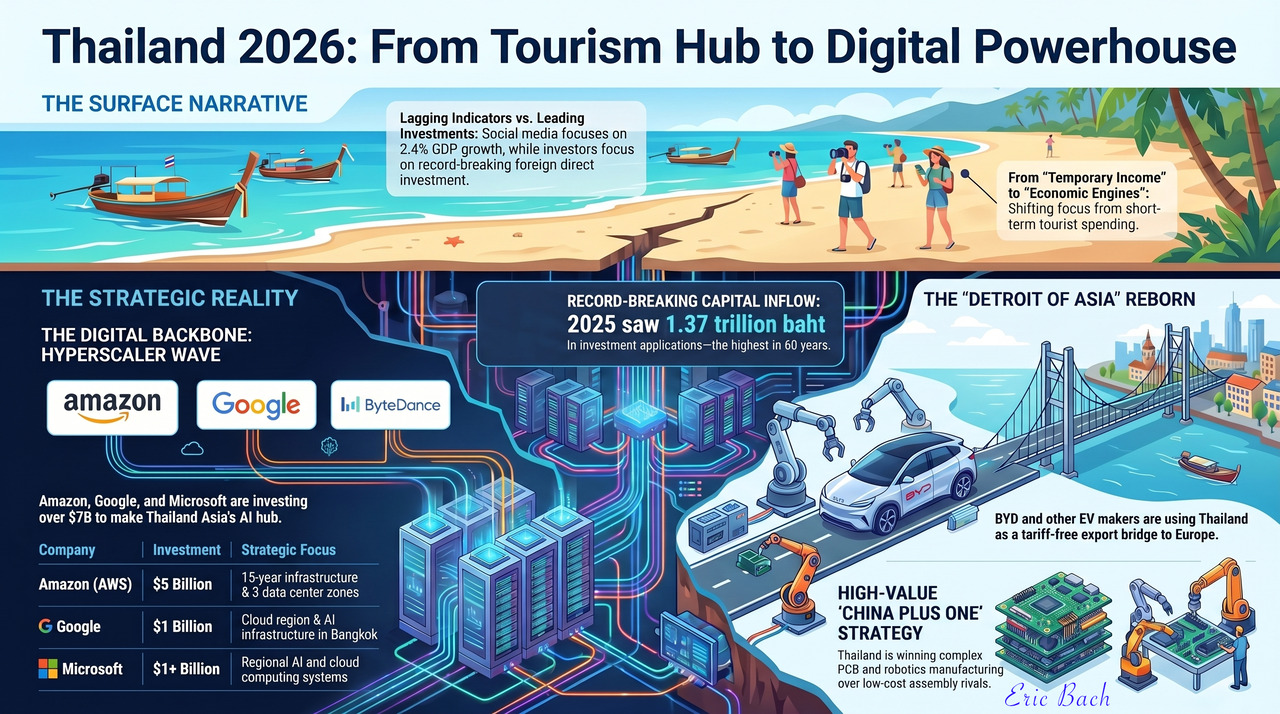
The Board of Investment approved new tax incentives for advanced battery makers and autonomous vehicle developers as Thailand seeks to reinforce its position as Southeast Asia’s leading electric vehicle production and export base.
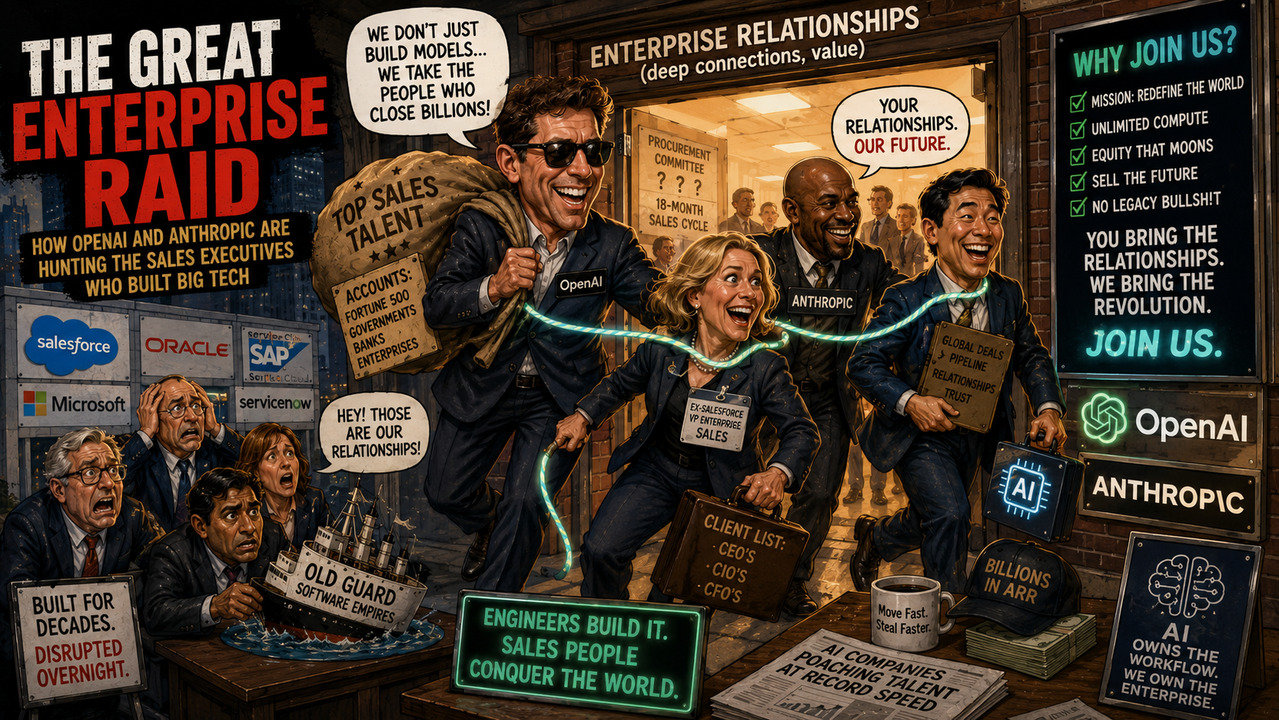
Prime Minister Anutin Charnvirakul said the multi-billion-baht TH-AI Passport initiative will proceed despite parliamentary scrutiny, arguing that broad access to sovereign artificial intelligence is essential to Thailand’s digital independence and long-term competitiveness.
The Thai government said premium visitor spending continues to reach record levels in Bangkok, Phuket and Chiang Mai as visa reforms and luxury tourism initiatives attract higher-value international travellers.
The National Grid Corporation of the Philippines declared yellow alerts after several generating units went offline, exposing vulnerabilities in the country's power infrastructure and raising concerns about supply reliability.
Official data showed Sri Lanka’s economy expanded by 5.1 percent in the first quarter, supported by stronger agricultural production and export manufacturing as the country continues to emerge from its debt crisis.
The financial technology provider has launched integrated advisory tools in Malaysia aimed at helping banks deliver more personalised services to high-net-worth clients and reduce software fragmentation.
New industry data shows the Singaporean government is offering significant salary premiums to attract machine learning engineers, intensifying competition for highly skilled technology workers across Southeast Asia.
Nearly 40 percent of organisations across Asia-Pacific are investing heavily in machine learning technologies without conducting basic return-on-investment assessments, raising concerns about inefficient capital allocation.
The Thai parliament has approved amendments allowing electronic securities to be issued, transferred and used as collateral, advancing the digitalisation of the country's capital markets.
Thailand’s Board of Investment announced fresh tax incentives and infrastructure support that have attracted additional production commitments from global electric vehicle manufacturers.
The visit marks 35 years of relations between Russia and Southeast Asia and reflects Thailand’s continued emphasis on trade, investment and a multi-directional foreign policy.
AT&S has announced further investment in its advanced printed circuit board facilities in Kulim, strengthening Malaysia’s role in global electronics and semiconductor supply chains.
Thailand’s Department of Health Service Support and Informa Markets have introduced International Healthcare Week to reinforce the country’s position as a leading destination for medical tourism and healthcare manufacturing.
The Philippine economy expanded by just 2.8 percent in the first three months of the year as budget delays and elevated borrowing costs constrained government expenditure and consumer activity.
The Asian Development Bank reported that local currency government bond yields in the Philippines rose by an average of 120 basis points across all maturities, highlighting the challenges posed by inflation and capital outflows.
Jakarta has introduced a new round of incentives for electric cars and motorcycles in an effort to accelerate the energy transition and shield the economy from volatile oil prices.
The ASEAN Macroeconomic Research Office said public finances across the region remain broadly resilient, but higher global borrowing costs and energy subsidies introduced during the Middle East conflict could strain budgets later this year.
A regional investment fund has injected capital into Singapore-based Racks Central to support the expansion of artificial intelligence-ready hyperscale data centres in Johor, strengthening cross-border digital infrastructure.
Bangkok has established a central task force to accelerate foreign investment in semiconductor manufacturing as it seeks a larger role in global electronics supply chains.
The Vietnamese government has launched a broad digital transformation programme centred on nationwide 5G deployment, expanded digital identification systems and increased science and engineering education to modernise its manufacturing base.
A study by PricewaterhouseCoopers projects a prolonged investment boom in Thailand, driven by high-speed rail projects in the Eastern Economic Corridor and a surge in international data centre development.
Governments and financial markets across Southeast Asia cautiously welcomed a preliminary agreement between the United States and Iran, hoping lower energy costs will relieve pressure on inflation, manufacturing and economic growth.
Airlines across Thailand, Singapore and Malaysia are increasing flight frequencies and regional connectivity as visitor numbers rise above pre-pandemic expectations, reinforcing Southeast Asia's position as one of the world's fastest-recovering travel markets.
New employment data show that workers with advanced technological and leadership skills are commanding significant wage premiums while traditional administrative roles face increasing pressure from automation.
Vietnam's leadership has promoted a new national strategy centred on technological self-reliance, socialist governance and economic modernisation following recent changes at the top of the political system.
The Australian government has allocated funding and veterinary support to help Indonesia combat a lumpy skin disease outbreak and reduce risks to regional food security and Australia's own agricultural sector.
Malaysia's police chief said a United Nations-coordinated resettlement mechanism for Rohingya refugees has nearly stalled as Western countries sharply reduce intake quotas, leaving thousands of displaced people in prolonged uncertainty.
True Corporation demonstrated advanced network capabilities at Thailand Travel Mart Plus 2026 in Pattaya as part of broader efforts to integrate digital technology into the country's growing luxury wellness tourism industry.
Vision Lab, a San Francisco-based artificial intelligence startup founded by a Thai MIT graduate, secured fresh venture capital funding to expand factory partnerships across Asia and support the development of industrial robotics systems.
President Ferdinand Marcos Jr. and Russian President Vladimir Putin held talks in Kazan focused on stabilising global energy prices and agricultural supply chains that are important to the Philippines' inflation outlook and national security.
Japanese Technology Firm Fujitsu Launches Advanced Artificial Intelligence Tool for Corporate Disclosures
South Africa Officially Launches Nationwide Campaign for Highly Contested Local Government Elections
United Kingdom Commits Additional Funding for Unexploded Ordnance Clearance in Laos
Singapore Announces Stringent New Greenhouse Gas Regulations for Commercial Cooling Systems
Cambodia and Thailand Hold High-Level Border Security Talks at United Nations Headquarters
Myanmar Military Government and China Sign Major Agreement to Upgrade Media and Cultural Cooperation
Knife Attack at Swiss Train Station Leaves Three Injured in Suspected Act of Domestic Terrorism
Transnational Extortion Gang Threatens Canadian Police With Army of One Thousand Armed Operatives
Australia Imposes Forty-Two-Day Quarantine on Cruise Ship Passengers Following Deadly Hantavirus Outbreak
International Monetary Fund Unlocks Seven Hundred Million United States Dollars for Sri Lanka Following Economic Reforms
China and Canada Foreign Ministers Meet in Ottawa in Effort to Stabilize Strained Diplomatic Ties
Indonesia Demands Urgent United Nations Security Council Reform Amid Escalating Global Conflicts
Extreme Weather Patterns Trigger Severe Drought in Madagascar and Destructive Flooding in East Africa
Indian State of Karnataka Faces Political Upheaval as Chief Minister Siddaramaiah Abruptly Resigns
Philippines and Japan Reaffirm Defense Ties as Crucial for Indo-Pacific Regional Stability
Norway Joins French Nuclear Deterrence Initiative in Major Shift for European Security Architecture
Global Critical Mineral Alliances Expand as Western Nations Move to Counter Chinese Supply Dominance
United States Imposes Fifty Percent Tariffs on Mexican Steel and Aluminum Ahead of Trade Pact Review
European Union and China Head Toward Major Trade Conflict Over Clean Technology Exports
United States Economic Growth Severely Downgraded to One Point Six Percent as Stagflation Fears Mount
World Health Organization Warns Central African Ebola Epidemic is Outpacing Containment Efforts
United States Treasury Department Conditions Sanctions Relief on Reopening of the Strait of Hormuz
Iranian Air Defenses Intercept and Destroy United States Military Drone Over Bushehr Province
Iranian Armed Forces Launch Ballistic Missiles Toward Unspecified Targets Prompting Regional Condemnation
United Nations Secretary-General Warns Global Order Facing Highest Level of Conflict Since 1945
Israel Issues Sweeping Evacuation Orders in Southern Lebanon Amid Intensified Hezbollah Conflict
Russia Announces Systemic Military Strikes Targeting Ukrainian Defense and Energy Infrastructure
United States and Iranian Negotiators Reach Draft Agreement to Extend Ceasefire and Resume Nuclear Talks
United Nations Security Council Deeply Divided Over United States Capture of Venezuelan President
US and Iran Exchange Direct Military Strikes Amid Fragile Gulf Ceasefire
World Health Organization Warns of Catastrophic Ebola Outbreak in DR Congo
Russia Threatens New Wave of Strikes on Ukrainian Infrastructure and Embassies
Scientists Warn Atlantic Ocean Currents Could Collapse Faster Than Projected
Anthropic Reaches $900 Billion Valuation in Historic AI Funding Round
Washington Imposes Crippling Sanctions on Iranian Maritime Authority
Japan and the Philippines Initiate Strategic Intelligence-Sharing Pact
Microsoft Deploys Autonomous Computer-Using AI Agents to Global Markets
Anthropic Secures $45 Billion Compute Infrastructure Agreement With SpaceX
U.S. Director of National Intelligence Resigns Amid Administration Shakeup
Micron Technology Crosses Trillion-Dollar Valuation Amid Unprecedented Hardware Demand
Canada and Germany Finalize Historic Long-Term LNG Export Agreement
China Expands International Travel Restrictions on Domestic AI Researchers
Japan Approves Sweeping Overhaul of National Intelligence Apparatus
Global Airlines Scramble Logistics as Middle East Airspace Remains Fractured
Japan's Naphtha Imports Plunge 47 Percent Amid Strait of Hormuz Closure
Global Crude Prices Retreat Below $96 as Gulf Tensions Momentarily Ease
Generative AI Outperforms Human Baselines in Landmark Global Creativity Study
NASA Partners With Private Aerospace to Unveil Permanent Lunar Base Architecture
South Korean Equity Markets Surge on Next-Generation Memory Chip Frenzy
U.S. Treasury Yields Slip as Energy-Driven Inflation Anxiety Cools