Hung Shui Kiu development body considers future bond issuance and tax incentives as it prepares to kick-start operations with HK$10 billion government backing
A SYSTEM-DRIVEN infrastructure and industrial policy shift is taking shape in Hong Kong as the operator of the Hung Shui Kiu industrial park prepares to explore bond financing and tax incentives to attract companies into the Northern Metropolis development corridor.
The plan reflects a broader government strategy to accelerate large-scale land and industrial transformation through a mix of public funding, institutional expansion, and eventual private capital participation.
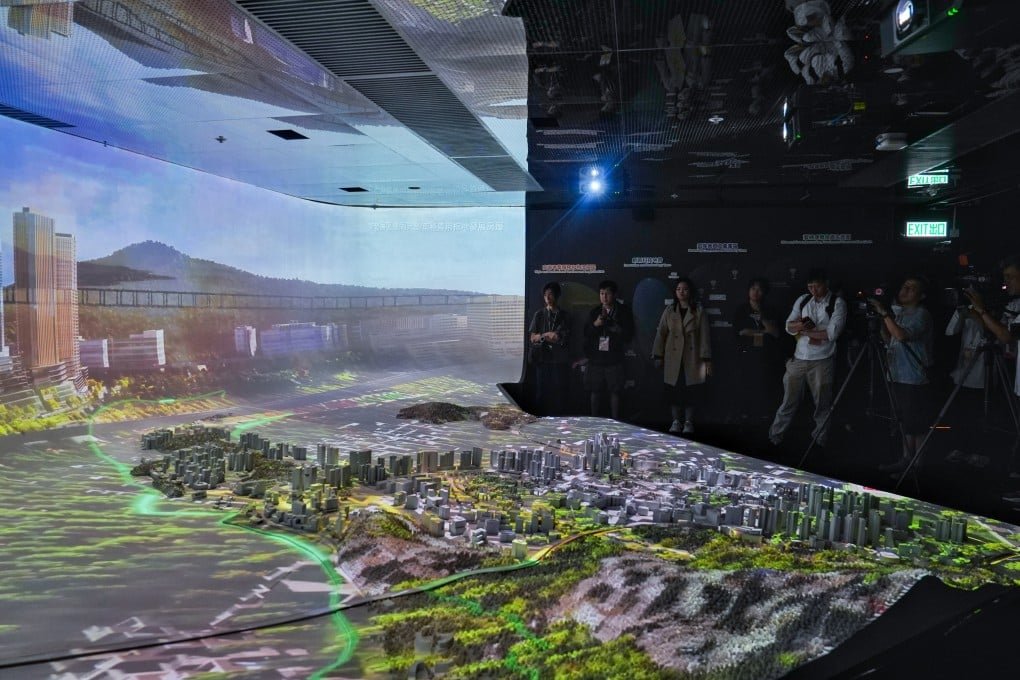
The Hung Shui Kiu Industry Park Company is the first government-owned entity established specifically to drive development within the Northern Metropolis megaproject, a long-term urban and economic expansion initiative aimed at reshaping Hong Kong’s northern districts into a major innovation and industrial zone.
The company is expected to rely initially on a government capital injection of HK$10 billion, equivalent to about US$1.28 billion, to fund early-stage operations and infrastructure planning.
Jeffrey Lam Kin-fung, a veteran industrialist who is set to assume the chairmanship of the company on June first, outlined a phased financial strategy that begins with public funding and gradually opens the door to capital market instruments.
He indicated that bond issuance could become a viable financing tool once the project demonstrates operational stability and builds a track record of development progress.
The proposed approach reflects a cautious sequencing strategy.
Early-stage financing is anchored in government support, while longer-term expansion would depend on the credibility of the park’s infrastructure buildout and its ability to attract tenant companies.
Lam noted that issuing bonds immediately would be difficult given the absence of an operational history, but suggested that debt issuance could become more practical once companies begin establishing a presence in the park.
Alongside financing considerations, the operator is preparing to propose tax concession measures to the government as part of its effort to attract enterprise participation.
These incentives are intended to reduce the cost of entry for companies relocating or expanding into the industrial park, particularly in sectors aligned with Hong Kong’s broader industrial policy goals.
The development strategy is closely tied to the Northern Metropolis plan, one of Hong Kong’s largest ongoing urban transformation projects, designed to expand housing, logistics, and innovation capacity near the border with mainland China.
Industrial parks within the framework are intended to serve as anchors for advanced manufacturing, technology deployment, and cross-border economic integration.
Lam emphasized that budget discipline will be a central constraint during early development.
The operator is expected to manage spending within the limits of its initial capital allocation while coordinating with different sectors to attract private investment.
The broader objective is to establish a self-sustaining development model in which infrastructure readiness precedes large-scale corporate settlement.
The potential shift toward bond issuance signals a longer-term intention to integrate the industrial park into capital markets once it reaches operational maturity.
That would allow the project to expand beyond direct government funding and tap institutional investors, but only after demonstrating stable revenue prospects and infrastructure execution within the Northern Metropolis framework.
The plan reflects a broader government strategy to accelerate large-scale land and industrial transformation through a mix of public funding, institutional expansion, and eventual private capital participation.
The Hung Shui Kiu Industry Park Company is the first government-owned entity established specifically to drive development within the Northern Metropolis megaproject, a long-term urban and economic expansion initiative aimed at reshaping Hong Kong’s northern districts into a major innovation and industrial zone.
The company is expected to rely initially on a government capital injection of HK$10 billion, equivalent to about US$1.28 billion, to fund early-stage operations and infrastructure planning.
Jeffrey Lam Kin-fung, a veteran industrialist who is set to assume the chairmanship of the company on June first, outlined a phased financial strategy that begins with public funding and gradually opens the door to capital market instruments.
He indicated that bond issuance could become a viable financing tool once the project demonstrates operational stability and builds a track record of development progress.
The proposed approach reflects a cautious sequencing strategy.
Early-stage financing is anchored in government support, while longer-term expansion would depend on the credibility of the park’s infrastructure buildout and its ability to attract tenant companies.
Lam noted that issuing bonds immediately would be difficult given the absence of an operational history, but suggested that debt issuance could become more practical once companies begin establishing a presence in the park.
Alongside financing considerations, the operator is preparing to propose tax concession measures to the government as part of its effort to attract enterprise participation.
These incentives are intended to reduce the cost of entry for companies relocating or expanding into the industrial park, particularly in sectors aligned with Hong Kong’s broader industrial policy goals.
The development strategy is closely tied to the Northern Metropolis plan, one of Hong Kong’s largest ongoing urban transformation projects, designed to expand housing, logistics, and innovation capacity near the border with mainland China.
Industrial parks within the framework are intended to serve as anchors for advanced manufacturing, technology deployment, and cross-border economic integration.
Lam emphasized that budget discipline will be a central constraint during early development.
The operator is expected to manage spending within the limits of its initial capital allocation while coordinating with different sectors to attract private investment.
The broader objective is to establish a self-sustaining development model in which infrastructure readiness precedes large-scale corporate settlement.
The potential shift toward bond issuance signals a longer-term intention to integrate the industrial park into capital markets once it reaches operational maturity.
That would allow the project to expand beyond direct government funding and tap institutional investors, but only after demonstrating stable revenue prospects and infrastructure execution within the Northern Metropolis framework.