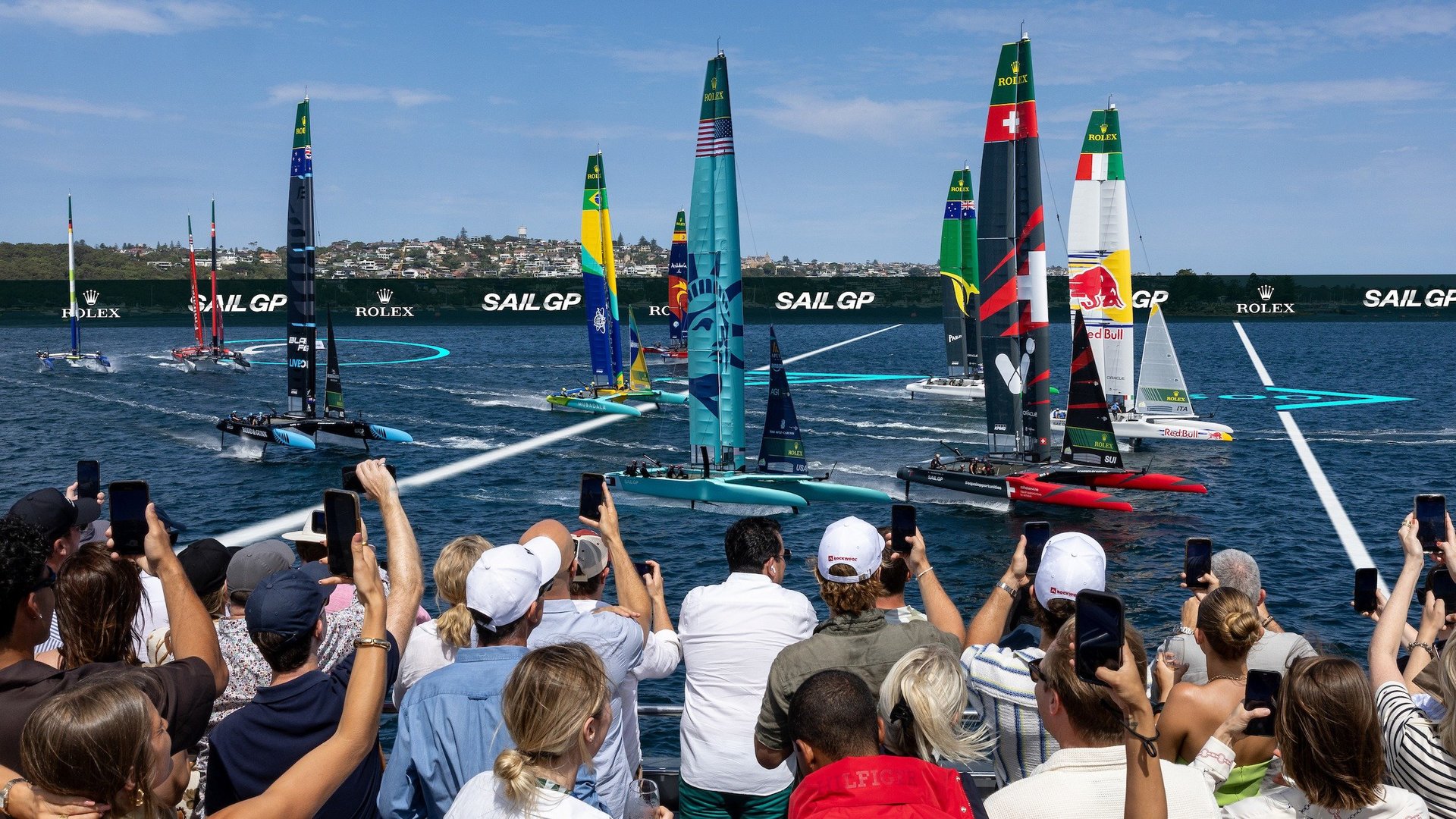
High-speed sailing championship accelerates regional growth strategy with Hong Kong positioned as a flagship venue in its expanding Asia circuit
EVENT-DRIVEN — the story is driven by SailGP’s scheduled expansion into Asia, marked by Hong Kong’s inclusion as a host venue in the 2027 season calendar, signaling a broader push to grow the sport’s commercial and regional footprint.
SailGP, the international high-performance sailing championship featuring identical hydrofoiling catamarans, is accelerating its expansion across Asia, with Hong Kong set to play a central role in the 2027 season lineup.
The move reflects a strategic effort to broaden the league’s geographic reach beyond its established venues in Europe, the Middle East, and North America.
What is confirmed is that Hong Kong has been selected as a host city for the 2027 SailGP season, positioning it among a growing roster of global coastal venues designed to showcase short-format, high-speed sailing races in urban waterfront environments.
The event format typically features national teams competing in identical boats capable of reaching speeds exceeding seventy kilometers per hour, with races staged close to shore for spectator visibility.
The inclusion of Hong Kong reflects a broader expansion strategy focused on Asia, where organizers see strong potential for audience growth, sponsorship development, and regional team participation.
The city’s deep-water harbor, iconic skyline, and established event infrastructure make it a natural fit for the league’s signature stadium-style sailing format.
The key issue is commercialization and audience scaling.
SailGP operates at the intersection of elite sport and entertainment product design, relying on broadcast appeal, corporate sponsorship, and tightly controlled technical regulations to maintain competitive balance.
Expansion into Asia is intended to increase global viewership and unlock new commercial partnerships in fast-growing markets.
Hong Kong’s role also carries logistical and operational implications.
Hosting a SailGP event requires significant coordination of maritime safety zones, temporary racecourses, spectator infrastructure, and broadcast technology deployment.
These events are designed to be highly visual, with races occurring in compact courses that allow viewers to follow the action from shorelines and waterfront districts.
The 2027 season expansion into Asia is part of a broader trend in international sport where leagues are increasingly targeting regional diversification.
By adding venues in Asia, SailGP is aligning itself with shifting global sports consumption patterns, where live events, digital streaming, and short-format competition are becoming more commercially viable than traditional long-duration formats.
For Hong Kong, the event adds to its portfolio of international sporting and entertainment events, reinforcing its positioning as a global events hub.
It also provides a platform for tourism exposure and hospitality sector engagement, particularly through waterfront zones that can accommodate large spectator gatherings and media installations.
The introduction of SailGP to the region also has competitive implications for sailing itself.
The league’s standardized boats and team-based national representation model differ significantly from traditional sailing competitions, emphasizing speed, tactical precision, and real-time decision-making under high physical and technical pressure.
If executed as planned, the Hong Kong event in 2027 will mark one of the most high-profile entries of modern competitive sailing into the Asian entertainment market, expanding both the sport’s geographic footprint and its commercial visibility in the region.
SailGP, the international high-performance sailing championship featuring identical hydrofoiling catamarans, is accelerating its expansion across Asia, with Hong Kong set to play a central role in the 2027 season lineup.
The move reflects a strategic effort to broaden the league’s geographic reach beyond its established venues in Europe, the Middle East, and North America.
What is confirmed is that Hong Kong has been selected as a host city for the 2027 SailGP season, positioning it among a growing roster of global coastal venues designed to showcase short-format, high-speed sailing races in urban waterfront environments.
The event format typically features national teams competing in identical boats capable of reaching speeds exceeding seventy kilometers per hour, with races staged close to shore for spectator visibility.
The inclusion of Hong Kong reflects a broader expansion strategy focused on Asia, where organizers see strong potential for audience growth, sponsorship development, and regional team participation.
The city’s deep-water harbor, iconic skyline, and established event infrastructure make it a natural fit for the league’s signature stadium-style sailing format.
The key issue is commercialization and audience scaling.
SailGP operates at the intersection of elite sport and entertainment product design, relying on broadcast appeal, corporate sponsorship, and tightly controlled technical regulations to maintain competitive balance.
Expansion into Asia is intended to increase global viewership and unlock new commercial partnerships in fast-growing markets.
Hong Kong’s role also carries logistical and operational implications.
Hosting a SailGP event requires significant coordination of maritime safety zones, temporary racecourses, spectator infrastructure, and broadcast technology deployment.
These events are designed to be highly visual, with races occurring in compact courses that allow viewers to follow the action from shorelines and waterfront districts.
The 2027 season expansion into Asia is part of a broader trend in international sport where leagues are increasingly targeting regional diversification.
By adding venues in Asia, SailGP is aligning itself with shifting global sports consumption patterns, where live events, digital streaming, and short-format competition are becoming more commercially viable than traditional long-duration formats.
For Hong Kong, the event adds to its portfolio of international sporting and entertainment events, reinforcing its positioning as a global events hub.
It also provides a platform for tourism exposure and hospitality sector engagement, particularly through waterfront zones that can accommodate large spectator gatherings and media installations.
The introduction of SailGP to the region also has competitive implications for sailing itself.
The league’s standardized boats and team-based national representation model differ significantly from traditional sailing competitions, emphasizing speed, tactical precision, and real-time decision-making under high physical and technical pressure.
If executed as planned, the Hong Kong event in 2027 will mark one of the most high-profile entries of modern competitive sailing into the Asian entertainment market, expanding both the sport’s geographic footprint and its commercial visibility in the region.