Insurance giant reports $1.76 billion in first-quarter growth, led by cross-border demand and mainland expansion
AIA Group’s operating structure and regional strategy are driving a sharp increase in new business value, with its China and Hong Kong divisions emerging as the core engines behind a strong first-quarter performance.
What is confirmed is that the Asia-focused life insurer generated approximately $1.76 billion in new business value in the first quarter, marking a significant year-on-year increase.
This metric, which reflects the profitability of newly written policies rather than raw sales volume, is a key indicator of future earnings in the insurance sector.
The growth signals both higher demand and improved product mix across its main markets.
The mechanism behind the surge is concentrated in two areas.
In mainland China, AIA has continued expanding its footprint through a multi-provincial strategy that allows it to operate beyond its original base in major cities.
This expansion increases access to a large and underpenetrated life insurance market, where rising incomes and an aging population are driving demand for protection and savings products.
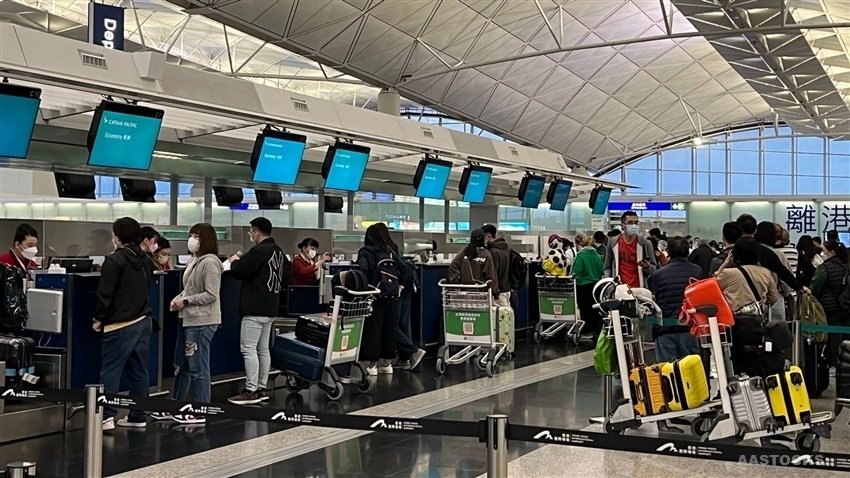
In Hong Kong, the rebound is being powered by cross-border business.
The reopening of travel between mainland China and Hong Kong has restored a crucial flow of customers who historically purchased insurance policies in the city.
These policies are often denominated in foreign currencies and are perceived as offering diversification and stability compared with domestic products.
The return of this demand has materially lifted sales volumes and margins.
Distribution is a central factor.
AIA relies heavily on agency channels, and its ability to recruit and retain agents in both markets has supported growth.
Increased agent productivity, combined with digital tools that streamline underwriting and customer engagement, has improved conversion rates and reduced acquisition costs.
This operational efficiency directly feeds into higher new business value.
Product design also plays a role.
AIA has focused on higher-margin protection products and long-term savings plans, which generate more value per policy than simpler offerings.
The shift in product mix indicates a deliberate strategy to prioritize profitability over sheer scale, aligning with broader industry trends toward capital efficiency.
The stakes extend beyond quarterly performance.
China represents one of the largest life insurance growth opportunities globally, but it is also a highly regulated and competitive market dominated by domestic players.
AIA’s ability to expand geographically while maintaining margins will determine whether it can sustain its growth trajectory.
In Hong Kong, the dependence on mainland customers introduces volatility tied to travel policies and economic conditions across the border.
There are structural risks.
Mainland China’s economic slowdown and pressure on household incomes could limit demand for long-term financial products.
Regulatory changes, including capital requirements and product approvals, can also affect profitability.
In Hong Kong, shifts in currency expectations or cross-border policy restrictions could alter purchasing behavior.
The immediate implication of the latest results is a reaffirmation of AIA’s positioning as a cross-border insurer with dual engines.
Strong performance in China and Hong Kong not only boosts near-term earnings visibility but also reinforces the company’s strategy of linking mainland demand with international financial products offered through Hong Kong.
The result is a clear signal to investors: AIA’s growth model, built on geographic expansion and cross-border integration, is delivering measurable gains as regional mobility and consumer demand recover.
What is confirmed is that the Asia-focused life insurer generated approximately $1.76 billion in new business value in the first quarter, marking a significant year-on-year increase.
This metric, which reflects the profitability of newly written policies rather than raw sales volume, is a key indicator of future earnings in the insurance sector.
The growth signals both higher demand and improved product mix across its main markets.
The mechanism behind the surge is concentrated in two areas.
In mainland China, AIA has continued expanding its footprint through a multi-provincial strategy that allows it to operate beyond its original base in major cities.
This expansion increases access to a large and underpenetrated life insurance market, where rising incomes and an aging population are driving demand for protection and savings products.
In Hong Kong, the rebound is being powered by cross-border business.
The reopening of travel between mainland China and Hong Kong has restored a crucial flow of customers who historically purchased insurance policies in the city.
These policies are often denominated in foreign currencies and are perceived as offering diversification and stability compared with domestic products.
The return of this demand has materially lifted sales volumes and margins.
Distribution is a central factor.
AIA relies heavily on agency channels, and its ability to recruit and retain agents in both markets has supported growth.
Increased agent productivity, combined with digital tools that streamline underwriting and customer engagement, has improved conversion rates and reduced acquisition costs.
This operational efficiency directly feeds into higher new business value.
Product design also plays a role.
AIA has focused on higher-margin protection products and long-term savings plans, which generate more value per policy than simpler offerings.
The shift in product mix indicates a deliberate strategy to prioritize profitability over sheer scale, aligning with broader industry trends toward capital efficiency.
The stakes extend beyond quarterly performance.
China represents one of the largest life insurance growth opportunities globally, but it is also a highly regulated and competitive market dominated by domestic players.
AIA’s ability to expand geographically while maintaining margins will determine whether it can sustain its growth trajectory.
In Hong Kong, the dependence on mainland customers introduces volatility tied to travel policies and economic conditions across the border.
There are structural risks.
Mainland China’s economic slowdown and pressure on household incomes could limit demand for long-term financial products.
Regulatory changes, including capital requirements and product approvals, can also affect profitability.
In Hong Kong, shifts in currency expectations or cross-border policy restrictions could alter purchasing behavior.
The immediate implication of the latest results is a reaffirmation of AIA’s positioning as a cross-border insurer with dual engines.
Strong performance in China and Hong Kong not only boosts near-term earnings visibility but also reinforces the company’s strategy of linking mainland demand with international financial products offered through Hong Kong.
The result is a clear signal to investors: AIA’s growth model, built on geographic expansion and cross-border integration, is delivering measurable gains as regional mobility and consumer demand recover.