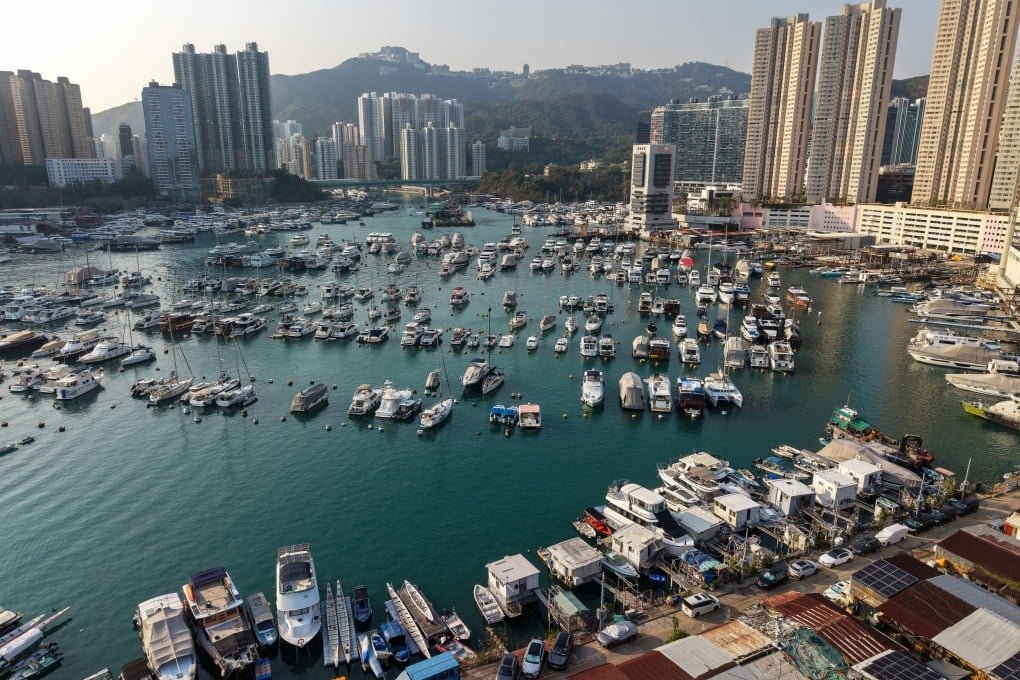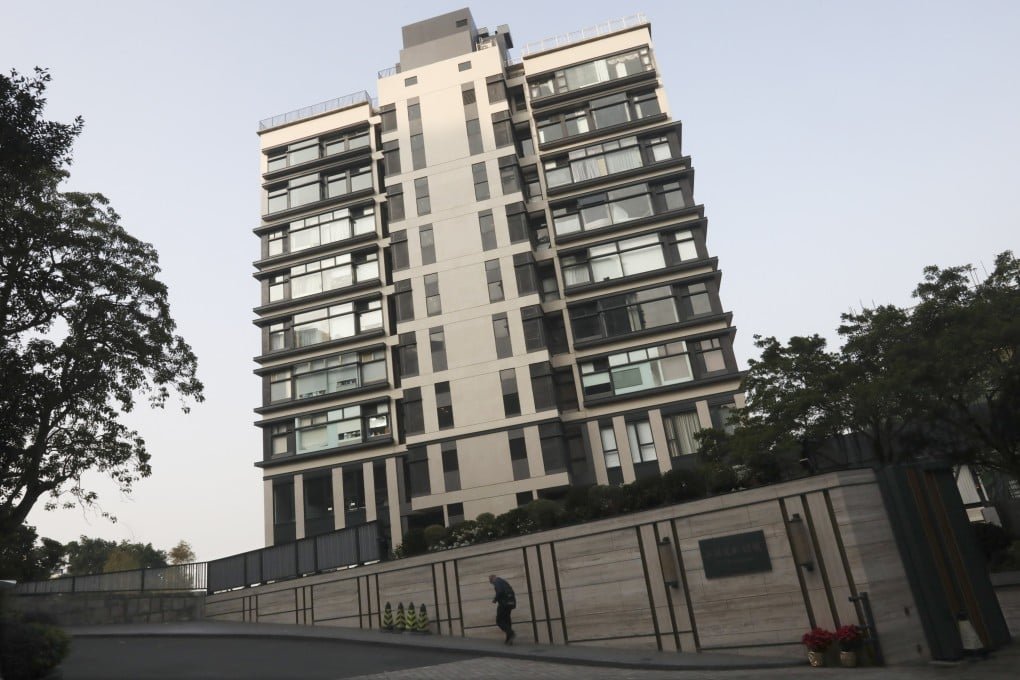
A pair of ultra-prime residences changed hands for about HK$320 million, highlighting renewed demand from wealthy buyers and a selective recovery in Hong Kong’s trophy property segment.
SYSTEM-DRIVEN forces in Hong Kong’s luxury housing market are reshaping the flow of high-value transactions as global wealth, interest-rate expectations, and regional capital movement converge on a small pool of ultra-prime assets.

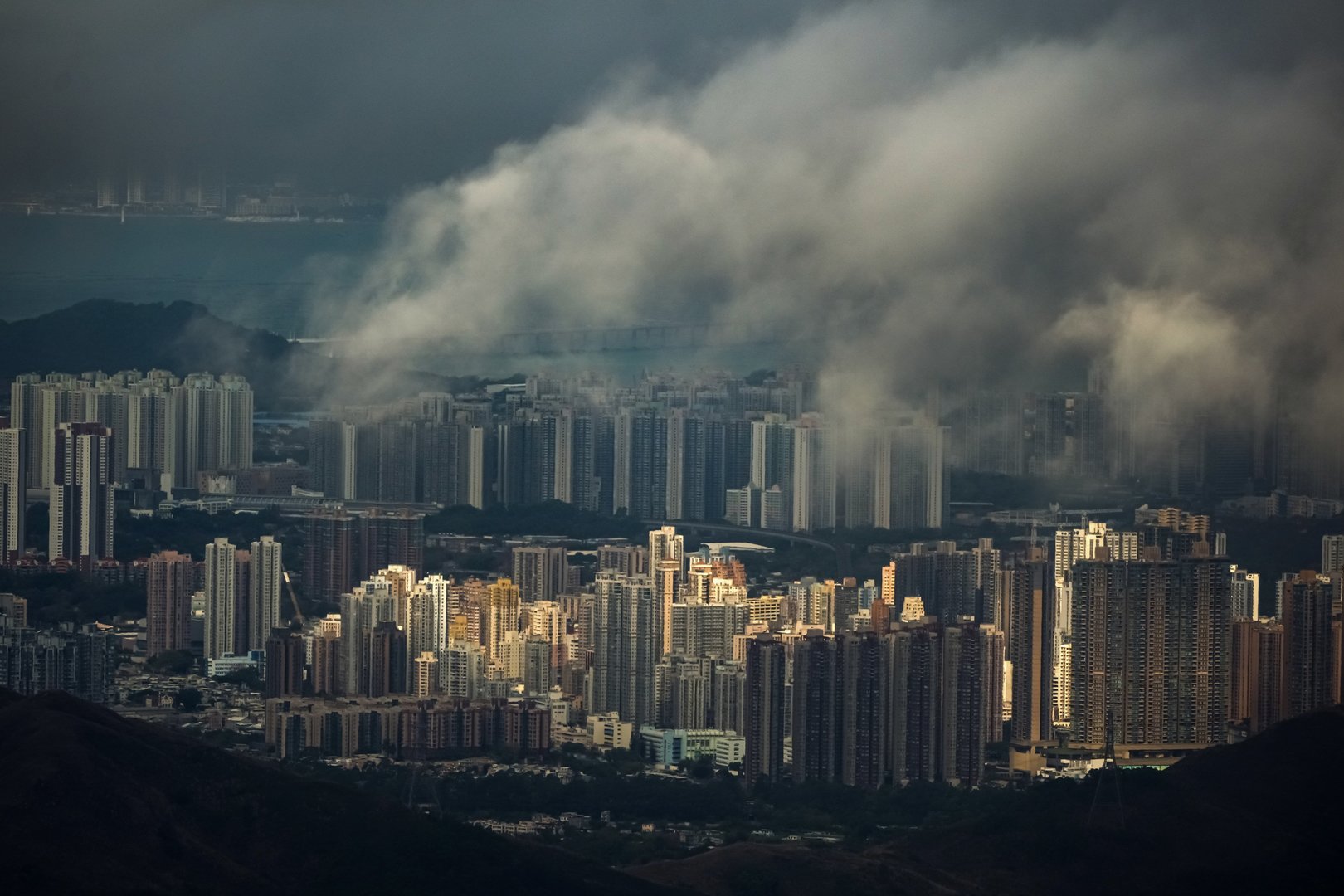
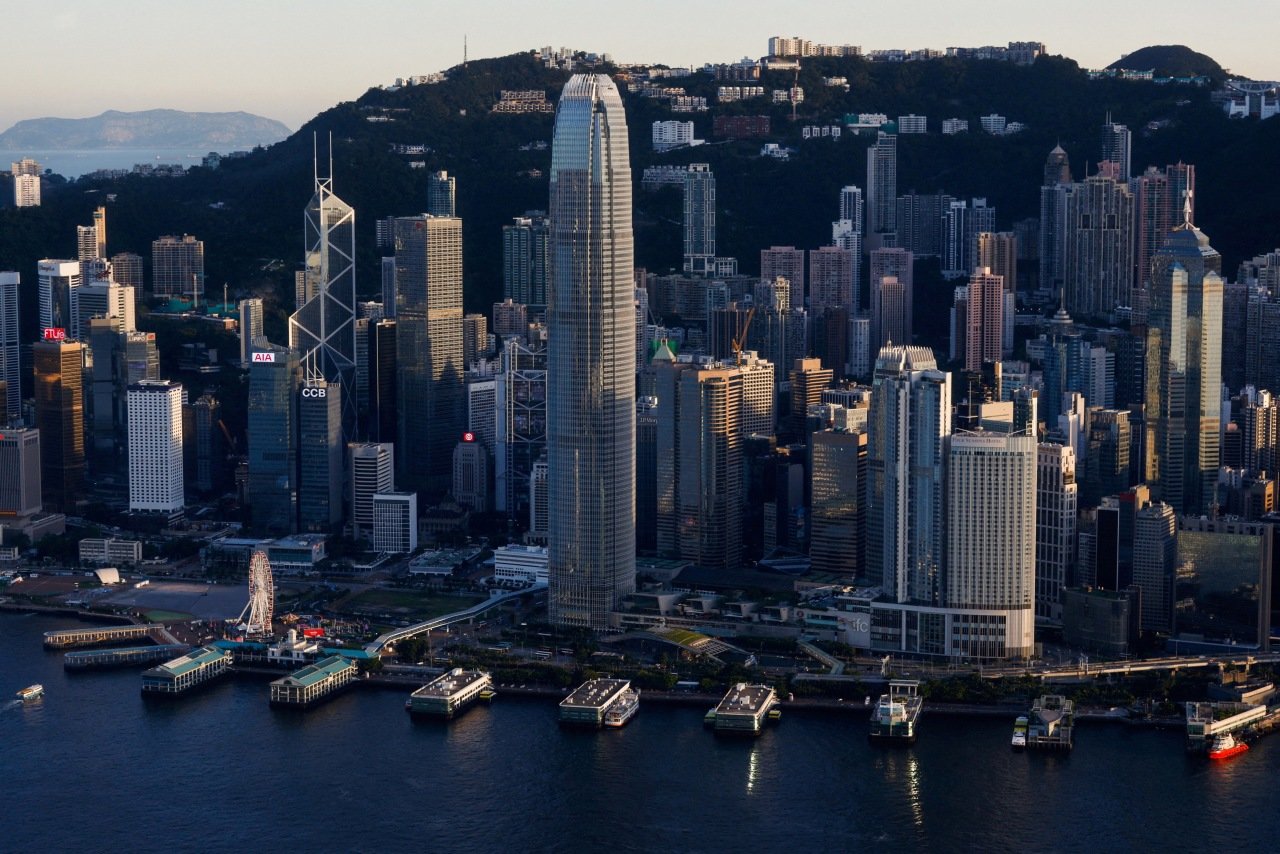
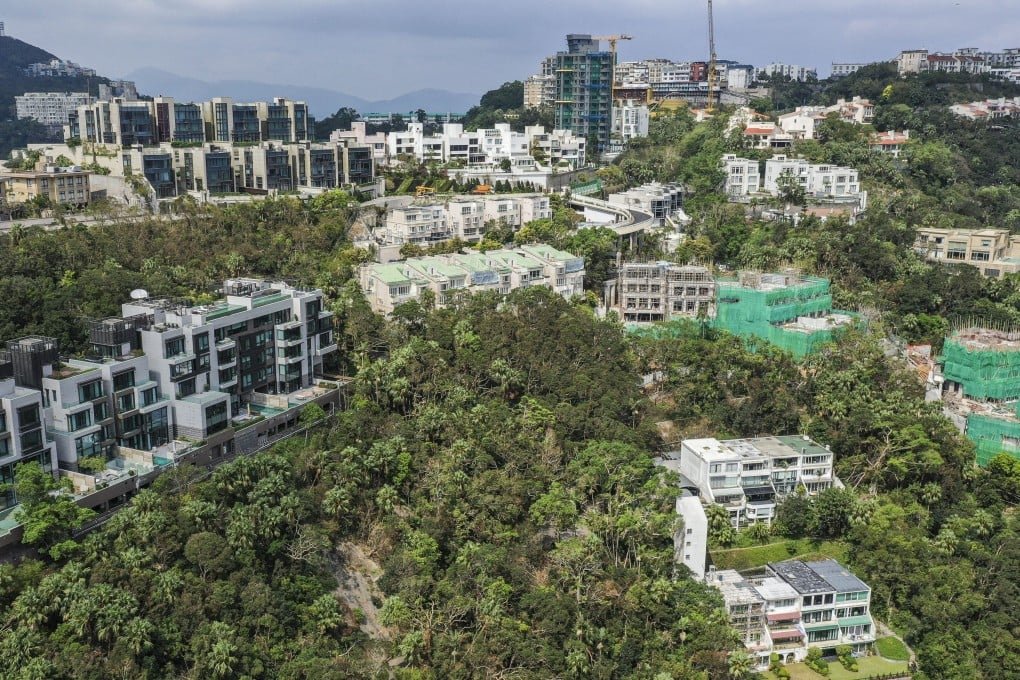
A pair of luxury homes in Hong Kong has been sold for a combined HK$320 million, roughly US$41 million, marking another high-end transaction in a market that has begun to stabilize after several years of volatility.

The properties are located at a prestigious residential development on The Peak, one of the city’s most expensive and tightly held housing districts.

What is confirmed is that the units were purchased in 2010 for significantly lower prices and were recently sold at a substantial gain.

The seller, a mainland-linked property investor, is reported to have realized a return of around 80 percent over the holding period.

The deal was executed through corporate entities, a common structure in Hong Kong’s luxury property market where confidentiality and tax planning considerations often influence transaction design.

The sale fits into a broader pattern of renewed activity at the very top end of Hong Kong’s residential market.

Over the first months of the year, transactions involving homes above HK$100 million have risen sharply compared with the same period last year, reflecting a rebound in confidence among wealthy buyers.

Market data indicates that luxury sales volumes more than doubled in early 2026 compared with a year earlier, driven by both local and mainland Chinese capital.

This recovery is not evenly distributed.

Demand is concentrated in a narrow band of ultra-prime properties defined by scarcity, location, and long-term prestige.

The Peak, Southside districts, and select waterfront enclaves continue to attract capital, while less distinctive luxury properties remain slower to sell and more dependent on price reductions.

The underlying mechanism driving this shift is a combination of wealth effect and relative valuation.

Strong equity market performance over the past two years has increased liquidity among high-net-worth individuals, prompting partial reallocation into real estate.

At the same time, Hong Kong’s luxury property prices, after a multi-year correction, are being perceived as more attractive relative to historical peaks and other global safe-haven cities.

Foreign and mainland Chinese buyers remain central to the market’s liquidity recovery.

Their participation is shaping pricing dynamics at the top end, where single transactions can significantly influence perceived market sentiment.

Rental yields, however, remain weak in many luxury segments, meaning purchases are increasingly driven by long-term wealth storage and lifestyle considerations rather than income generation.

Despite the renewed activity, the market remains highly selective.

Buyers are focusing on rare assets with strong privacy, views, and long-term scarcity value, while older or less differentiated luxury stock continues to face extended negotiation cycles.

The result is a bifurcated market: resilient at the top, uneven in the middle.

The latest US$41 million transaction underscores this divide.

It reflects not a broad housing boom, but a targeted return of capital to Hong Kong’s most exclusive residential assets, where liquidity has improved enough to allow long-held properties to change hands at substantial gains.
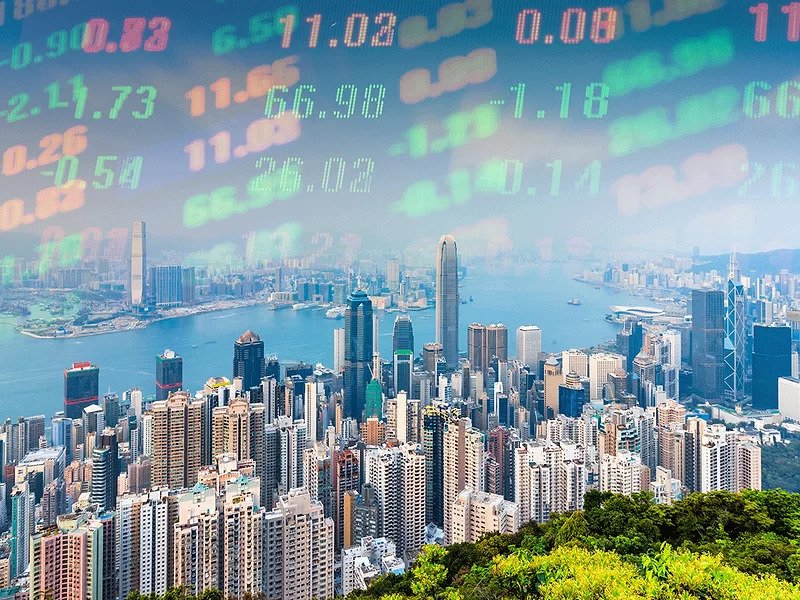
Ribo and Diagens account for a limited but symbolically important start to biotech and medtech fundraising in Hong Kong, underscoring a cautious recovery in high-risk listings.
SYSTEM-DRIVEN capital market conditions are shaping the pace and composition of initial public offerings in Hong Kong, particularly in high-risk sectors such as biotechnology and medical technology where investor appetite is closely tied to liquidity cycles, regulatory clarity, and global risk sentiment.

What is confirmed is that two companies, Ribo and Diagens, have been identified as completing or participating in Hong Kong listings in the first quarter of 2026, bringing the total number of biotech and medtech IPOs in the period to two.

While modest in absolute terms, this activity is being closely watched because these sectors have historically served as indicators of risk tolerance in Hong Kong’s equity markets.

The key issue behind this limited IPO volume is not demand alone, but the structural filtering process applied by investors and underwriters.

Biotech and medtech companies typically enter public markets without stable profitability, meaning their valuations depend heavily on clinical data, regulatory approvals, and long-term commercialization potential.

In periods of tighter liquidity or higher global interest rates, investors tend to concentrate capital into fewer, higher-conviction deals rather than broad-based issuance.

Ribo and Diagens represent part of this selective pipeline, where only companies with clearer scientific validation or nearer-term commercialization pathways are able to access public funding.

The concentration of just two IPOs in a quarter reflects that filtering effect rather than a complete absence of issuance capability in the sector.

Hong Kong’s role as a listing venue for biotechnology remains structurally important because it provides access to both international capital and mainland Chinese investors under cross-border schemes.

However, the market has shifted from an earlier phase of rapid expansion in speculative biotech listings toward a more disciplined environment where profitability timelines and clinical milestones are scrutinized more aggressively.

The implications for the sector are twofold.

On one side, successful listings—even if limited in number—signal that capital markets remain open to innovation-driven companies.

On the other, the low volume underscores that financing conditions are still selective, with investors prioritizing risk control over aggressive growth exposure.

For emerging biotech and medtech firms, this environment increases the importance of demonstrating validated research pipelines, regulatory progress, and credible commercialization strategies before attempting to list.

It also places greater emphasis on private funding rounds as a necessary bridge to public markets.

The broader market signal from the first quarter is therefore one of constrained but functioning access to capital.

IPO windows exist, but they are narrow, and only a small subset of companies is able to pass through them under current investor expectations.
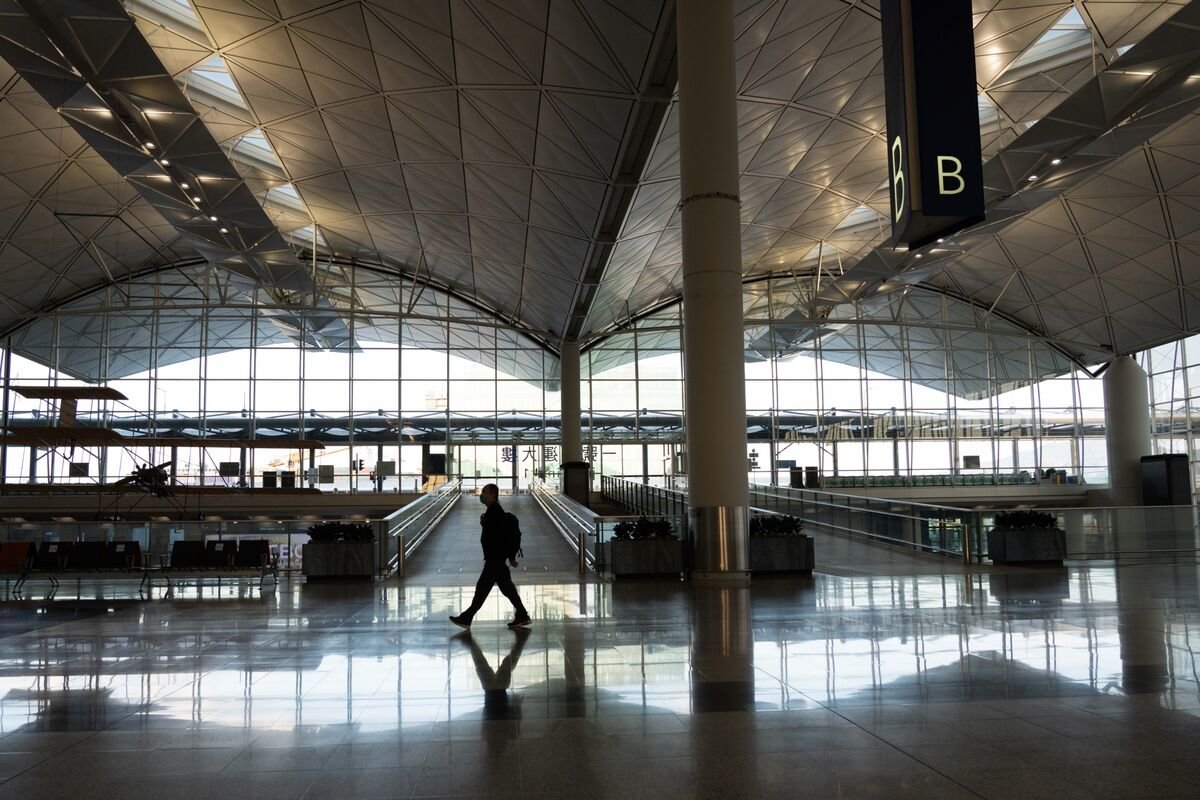
The airport operator is tapping surging Hong Kong dollar debt demand to fund infrastructure expansion, highlighting how local liquidity is reshaping large-scale public investment financing.
SYSTEM-DRIVEN financial and infrastructure dynamics are shaping how Hong Kong’s major public assets are funded, as the city’s airport operator moves to raise roughly US$1.9 billion through local debt markets to support long-term expansion projects.

What is confirmed is that the Airport Authority Hong Kong is preparing a sizeable debt issuance in Hong Kong dollars, taking advantage of strong investor demand for high-quality local currency bonds.

The financing is intended to support ongoing infrastructure development, including capacity expansion and upgrades designed to reinforce Hong Kong International Airport’s role as a regional aviation hub.

The key mechanism behind this financing decision is a sustained boom in Hong Kong’s local debt market, where institutional investors, insurers, and banks have shown strong appetite for high-grade paper.

This demand has created favorable borrowing conditions for large public-sector issuers, enabling them to secure long-term funding at comparatively stable costs despite global interest rate volatility.

The airport’s funding strategy reflects the capital intensity of aviation infrastructure.

Major airport systems require continuous investment in runways, terminals, logistics infrastructure, and digital systems to maintain throughput capacity and competitiveness.

In Hong Kong’s case, this pressure is heightened by its position as a gateway between mainland China and international markets, where cargo and passenger demand remain structurally significant.

The planned issuance also signals a broader shift in funding strategy among Hong Kong public infrastructure bodies, which are increasingly relying on domestic bond markets rather than external borrowing or direct government funding.

This reduces foreign exchange exposure and aligns long-term liabilities with local currency revenue streams generated through aviation fees, retail operations, and logistics services.

The backdrop is a regional infrastructure financing environment where liquidity is concentrated but selective.

High-quality issuers such as government-linked entities benefit from investor preference for stability and predictable returns, particularly in periods of global financial uncertainty.

This has allowed large-scale projects to proceed without immediate fiscal pressure on central budgets.

The implications extend beyond financing mechanics.

By deepening reliance on local debt markets, Hong Kong is reinforcing its role as a regional financial hub capable of absorbing large-scale infrastructure funding needs internally.

At the same time, it strengthens the integration between capital markets and strategic public assets, where bond performance and investor sentiment can indirectly influence long-term development timelines.

If completed as planned, the US$1.9 billion fundraising will provide the airport operator with significant liquidity to advance expansion projects that are central to maintaining capacity and competitiveness in one of the world’s busiest aviation nodes.
A sweeping regulatory shift banning possession of alternative smoking products raises enforcement questions, supply chain disruption risks, and the likelihood of a growing illicit vaping market.
SYSTEM-DRIVEN regulatory enforcement in Hong Kong is reshaping the city’s nicotine and alternative smoking market as a new legal regime tightens restrictions on vaping products, including a ban on possession that extends beyond sale and import controls.

What is confirmed is that Hong Kong has moved toward a comprehensive restriction framework covering electronic cigarettes and other alternative smoking products, expanding from earlier bans on importation and sale to include possession.

This marks a structural escalation in tobacco control policy, shifting enforcement from supply-side regulation to direct consumer-level criminalization.

The key issue is how enforcement will function in practice.

A possession ban requires frontline detection, policing discretion, and legal thresholds for proving ownership or control of prohibited devices.

This raises operational challenges in a densely populated city where enforcement resources are already distributed across multiple public safety priorities.

The policy is designed to reduce long-term public health risks associated with vaping, particularly among younger users.

Authorities have cited concerns about nicotine addiction pathways, product appeal to adolescents, and uncertainty over long-term health impacts compared to traditional combustible tobacco products.

The regulatory approach aligns with broader regional efforts in parts of Asia to restrict or eliminate vaping markets entirely rather than regulate them as consumer goods.

A major consequence of the new framework is likely displacement of demand into informal channels.

When legal retail supply is cut off while user demand persists, historical patterns in similar markets show increased reliance on cross-border smuggling, small-scale unregulated distribution, and peer-to-peer transactions.

In Hong Kong’s case, proximity to major manufacturing hubs in mainland China increases the logistical feasibility of illicit supply chains.

Enforcement pressure is expected to focus on import interception, retail surveillance, and public compliance checks.

However, possession-based bans are typically harder to enforce uniformly because they require discovery of products in private or semi-private contexts rather than commercial settings.

This creates uneven enforcement risk and potential legal ambiguity in marginal cases.

For consumers, the immediate impact is legal exposure for continued possession of vaping devices and related products.

For retailers and distributors, the transition effectively removes any remaining legal commercial pathway, consolidating the market into prohibition status.

This eliminates legitimate pricing signals and increases the potential profitability of illegal supply.

The broader implication is a tightening of Hong Kong’s public health regulatory model toward prohibition rather than controlled harm reduction in the vaping sector.

While traditional cigarette sales remain legal and regulated, alternative nicotine delivery systems are being treated as a distinct category subject to elimination rather than integration.

As enforcement begins under the new rules, the practical outcome will depend on inspection intensity, judicial interpretation of possession cases, and the adaptability of informal distribution networks, which will determine whether vaping in Hong Kong becomes rare or simply less visible.
A sharp rise in consumer complaints highlights mounting pressure on Hong Kong’s insurance sector, with payouts totaling HK$13 million reflecting increased disputes over claims handling and policy interpretation.
SYSTEM-DRIVEN regulatory and consumer protection dynamics are reshaping oversight pressure in Hong Kong’s insurance industry, as authorities report a significant increase in formal complaints alongside growing compensation payouts by insurers.

What is confirmed is that complaints related to insurance services in Hong Kong have increased by about 33 percent over the latest reporting period, while insurers have collectively paid out approximately HK$13 million in settlements tied to dispute resolutions.

These figures reflect cases handled through formal complaint mechanisms rather than general customer dissatisfaction, indicating structured escalation through regulatory channels.

The increase in complaints spans multiple categories of insurance products, including medical, life, and general insurance policies.

The underlying disputes commonly relate to claim rejections, delays in processing, policy wording interpretation, and disagreements over coverage scope.

These friction points tend to emerge when policy terms are complex or when claim events fall into grey areas of coverage definitions.

The key mechanism driving the rise in disputes is the gap between consumer expectations and insurer interpretation of contractual language.

In practice, insurance policies are legally binding documents with precise exclusions and conditions, but policyholders often interpret coverage more broadly, particularly in high-stress situations such as medical emergencies or accident claims.

The HK$13 million in payouts represents resolved cases where insurers either agreed to compensate claimants directly or reached mediated settlements to avoid prolonged adjudication.

While the sum is not large relative to the overall size of Hong Kong’s insurance market, it signals increasing regulatory and reputational pressure on insurers to resolve disputes more quickly and transparently.

The broader context is a post-pandemic insurance environment in which claim volumes and consumer sensitivity to coverage outcomes have increased.

Medical inflation, rising healthcare utilization, and more complex cross-border insurance products have contributed to a higher probability of disputes, particularly in health-related claims.

Regulatory oversight has also become more active, with complaint resolution frameworks designed to encourage early settlement and reduce litigation.

This structure incentivizes insurers to resolve cases through compensation where appropriate, contributing to the recorded payout total.

The implications for the sector are operational rather than systemic.

Insurers are likely to face continued pressure to simplify policy language, improve disclosure standards, and strengthen claims handling processes to reduce dispute rates.

At the same time, rising complaint volumes may prompt tighter internal compliance reviews and more conservative underwriting practices in certain product lines.

The latest figures therefore reflect not a crisis in the insurance system, but a measurable increase in friction between policy design, consumer understanding, and claims execution within a tightly regulated financial services environment.
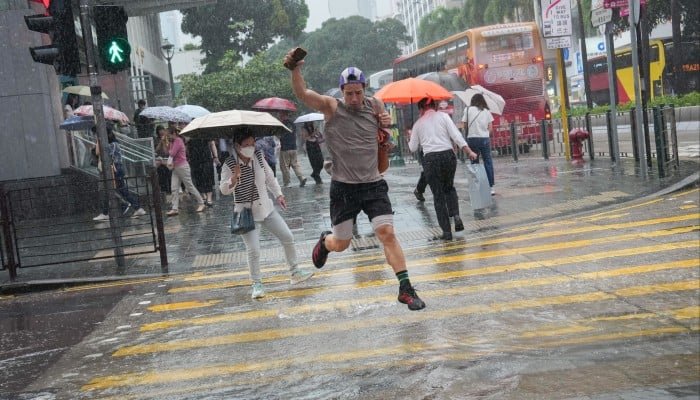
The Hong Kong Observatory has raised its lowest rainstorm alert level amid intense thundery showers, warning of flooding risks, hazardous winds, and rapidly changing conditions across the territory.
SYSTEM-DRIVEN weather dynamics are driving a sharp escalation in Hong Kong’s rainfall alerts, as the Hong Kong Observatory issues an Amber Rainstorm Warning in response to developing thundery showers and strong wind gusts linked to upper-air atmospheric disturbances.

What is confirmed is that the Amber signal was raised as heavy rain bands associated with unstable atmospheric conditions moved across the territory.

The warning indicates that rainfall is either occurring or expected to exceed roughly thirty millimetres in an hour, a threshold that can quickly overwhelm drainage systems in dense urban areas.

The system is designed to alert the public to potential flooding risks and trigger readiness measures across transport and emergency services.

The Observatory also issued concurrent thunderstorm warnings, highlighting the presence of intense convective activity capable of producing sudden downpours and hazardous wind gusts.

In similar recent episodes, gusts have reached around seventy kilometres per hour or higher, posing risks from falling debris, reduced visibility, and instability on exposed roads and elevated transport routes.

The immediate hazard profile is driven by short-duration, high-intensity rainfall events.

In Hong Kong’s geography, where steep terrain meets heavily built-up low-lying districts, these conditions can lead to flash flooding in streets, underpasses, and poorly drained areas within a short timeframe.

Transport disruption is a recurring consequence, particularly on road networks and sections of the metro system exposed to surface runoff.

The Amber Rainstorm Warning represents the lowest of three formal alert levels, but its activation is operationally significant.

It signals that rainfall conditions may deteriorate further into higher-tier Red or Black warnings if storm cells intensify or stall over the territory.

Those higher levels correspond to more severe flooding risk, widespread disruption, and heightened public safety interventions.

The current weather pattern is linked to unstable upper-air flows affecting southern China and the Pearl River Delta region.

These systems often produce clusters of thunderstorms rather than uniform rainfall, meaning conditions can vary sharply between districts, with some areas experiencing heavy downpours while others remain relatively unaffected.

The broader implication is that Hong Kong’s rainstorm warning system is increasingly operating in a high-frequency alert environment during the spring and summer transitional months.

Urban density, climate variability, and intense localized rainfall combine to make short-term forecasting and response critical for limiting disruption and managing public safety.

As the system continues to track evolving storm cells, authorities remain focused on real-time monitoring of rainfall intensity and wind conditions to determine whether escalation to higher warning levels is required.
A major auction result involving a rare impression of the iconic Japanese print underscores sustained demand for blue-chip artworks in Asia’s financial hub despite broader market uncertainty.
SYSTEM-DRIVEN dynamics in the global art market are increasingly shaping where high-value cultural assets are traded, how liquidity forms around them, and which cities maintain relevance as auction hubs.

Hong Kong, long positioned as a gateway between Western collectors and Asian capital, has once again been reinforced by a high-profile sale involving Katsushika Hokusai’s iconic woodblock print, The Great Wave off Kanagawa.

What is confirmed is that a rare impression of the work was sold at a Hong Kong auction, attracting strong collector interest and competitive bidding.

The sale is being interpreted within the industry as a signal that demand for blue-chip historical artworks remains intact even as segments of the broader art market experience uneven performance.

The identity of the buyer and full transaction details were not disclosed, consistent with standard practice in high-value auction sales.

The Great Wave is one of the most recognized images in global art history, produced in the early nineteenth century as part of Hokusai’s Thirty-Six Views of Mount Fuji series.

Its market value derives from both cultural significance and scarcity, as surviving impressions in strong condition are limited and increasingly held in long-term private collections or institutions.

When such works reappear at auction, they function less as typical market inventory and more as rare liquidity events in an otherwise illiquid asset class.

The Hong Kong sale reflects a broader structural reality in the global art ecosystem: ultra-high-end works continue to circulate through a small number of international auction centers where capital concentration is strongest.

Despite periodic volatility in regional demand, Hong Kong remains a critical node due to its proximity to mainland Chinese collectors, established auction infrastructure, and its role as a neutral meeting point for international sellers.

In recent cycles, the city’s art market has faced pressure from macroeconomic uncertainty, shifting wealth patterns, and fluctuating cross-border buying activity.

However, the persistence of strong bidding for landmark works suggests that demand at the very top tier is less sensitive to short-term economic conditions than mid-market segments.

Instead, it is driven by long-term wealth preservation strategies, cultural prestige, and competition for globally recognized assets.

The mechanism behind such sales is straightforward but highly concentrated.

A limited supply of museum-quality works meets a global base of ultra-wealthy buyers, with auction houses acting as price discovery intermediaries.

When a piece like The Great Wave enters the market, it compresses this dynamic into a single event, producing outsized attention and reinforcing confidence in the broader category.

For Hong Kong, each successful high-profile auction reinforces its position in the global hierarchy of art trading centers alongside New York and London.

While lower-value segments of the market remain sensitive to liquidity conditions, the resilience of top-tier sales continues to anchor the city’s reputation as a key venue for international cultural capital flows.

The latest transaction therefore functions as both a market event and a structural signal: demand for canonical works of global art history remains concentrated, competitive, and firmly anchored in established auction hubs, with Hong Kong maintaining its role at the center of that system.
The Chinese truckmaker is reportedly considering a Hong Kong listing that could raise up to $500 million, reflecting renewed momentum in industrial and automotive IPOs tied to electrification and global expansion.
SYSTEM-DRIVEN dynamics in China’s capital markets are shaping a new wave of listings as industrial manufacturers, particularly in transport and heavy machinery, explore offshore fundraising.

Against this backdrop, Chinese truckmaker Xuzhou XCMG Automobile Manufacturing Co. is said to be considering an initial public offering in Hong Kong that could raise as much as $500 million.

The company, part of the broader XCMG machinery group based in Jiangsu province, is primarily engaged in heavy-duty commercial vehicles, including trucks that increasingly incorporate electric and alternative-energy powertrains.

What is confirmed in current reporting is that the firm is evaluating a Hong Kong listing structure and targeting a fundraising scale around half a billion dollars.

This places it within a familiar bracket for mid-sized mainland industrial IPOs that use Hong Kong as a platform for international capital access.

The listing is not yet officially launched.

The consideration stage means no final valuation, timetable, or share structure has been confirmed.

In comparable deals in the region, companies at a similar scale typically pursue Hong Kong listings to finance expansion, research and development, and overseas market penetration, particularly in sectors transitioning toward electrification.

The timing aligns with a broader recovery in Hong Kong’s IPO market after a period of subdued activity.

Recent years have seen large Chinese automotive and industrial companies return to the exchange, including major carmakers raising over a billion dollars per listing.

This has helped restore Hong Kong’s position as a key offshore financing hub for mainland manufacturers seeking foreign currency funding and global investor exposure.

For XCMG Auto, the strategic context is structural rather than event-driven.

The global truck and heavy-vehicle industry is undergoing a transition driven by emissions regulation, electrification of commercial fleets, and competition in hydrogen and battery technologies.

Chinese manufacturers, including those in XCMG’s ecosystem, are attempting to scale production and technology investment simultaneously, which requires substantial capital inflows.

If the IPO proceeds, proceeds would likely be directed toward expanding production capacity, accelerating electrified commercial vehicle platforms, and strengthening export capabilities.

However, no regulatory approval or formal prospectus has been released, meaning key parameters remain subject to change.

The development should therefore be understood as a capital-market signal rather than a completed transaction: a mid-tier Chinese industrial automaker testing investor appetite for heavy-vehicle electrification stories in Hong Kong’s reopening IPO window.
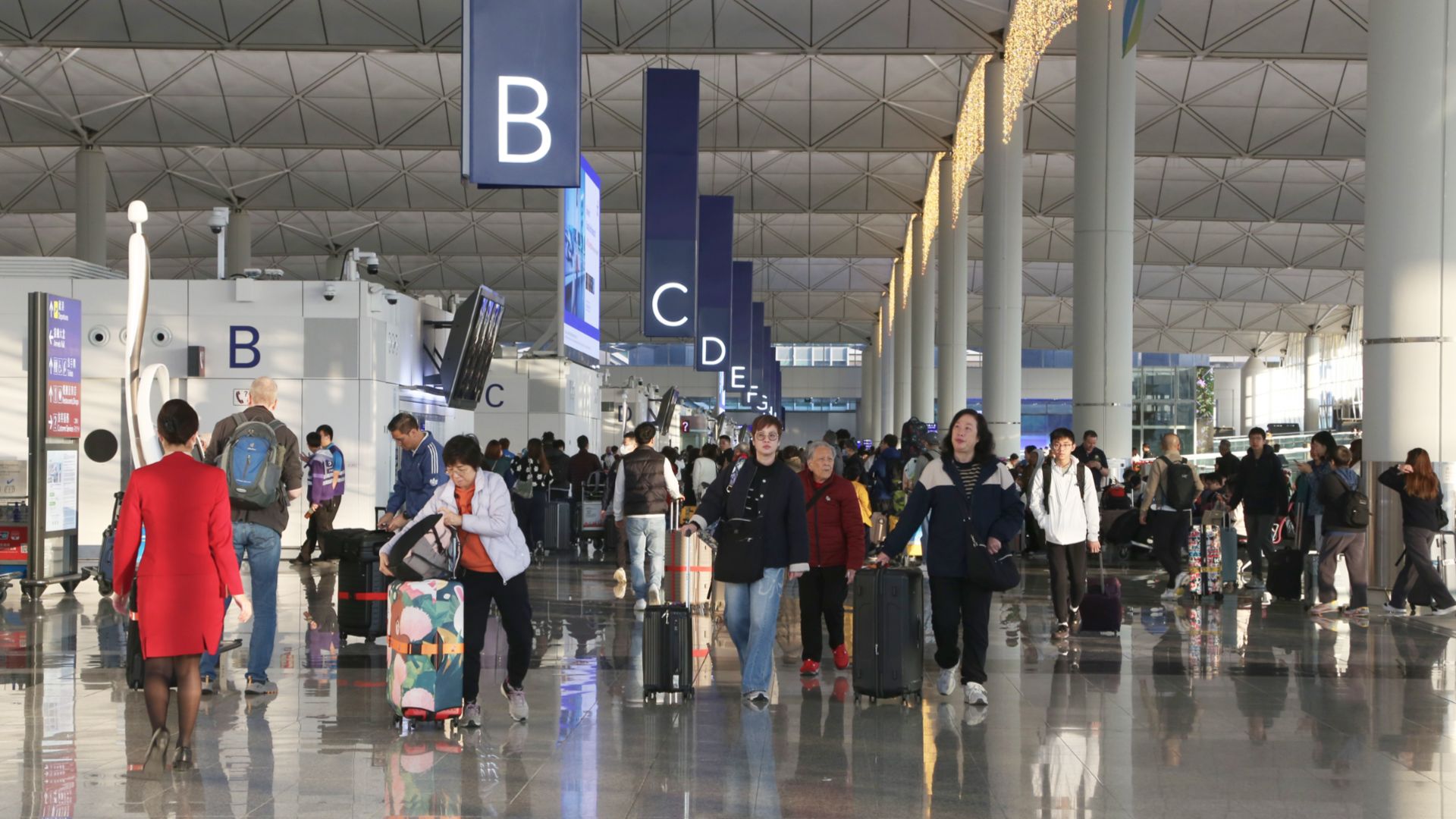
Strong rebound in passenger demand lifts HKIA to 5.74 million travelers in March, with four Asia-Pacific city pairs ranking among the world’s busiest international routes
SYSTEM-DRIVEN — The story is driven by the recovery and reconfiguration of global air travel demand flowing through Hong Kong International Airport, where network structure and regional connectivity are reshaping passenger volumes and global route rankings.

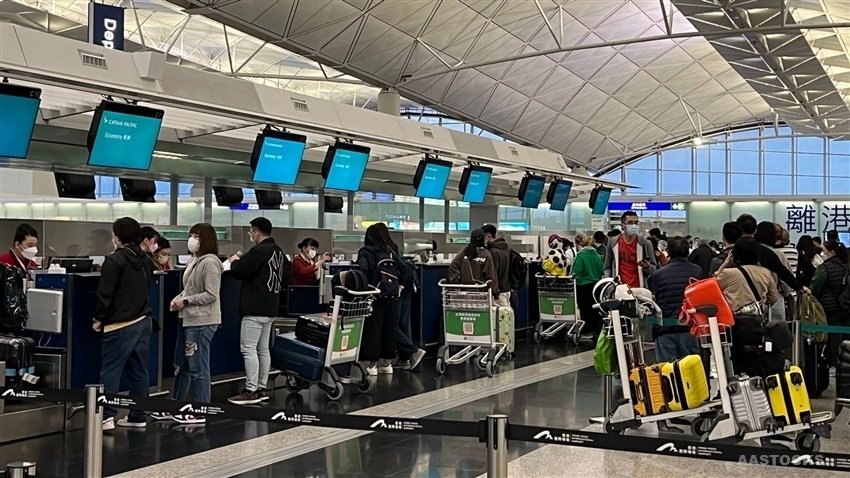
Hong Kong International Airport recorded a sharp rise in activity in March, handling about 5.74 million passengers, an increase of roughly 19.6 percent compared with the same period a year earlier.

The growth marks a continuation of sustained recovery across Asia’s aviation network after years of disruption, with Hong Kong increasingly functioning as a regional transit and short-haul hub rather than solely a long-haul gateway.

What is confirmed is that aircraft movements rose more modestly, by about 2.7 percent to around 34,100 flights.

This gap between passenger growth and flight growth indicates higher load factors—airlines are carrying more passengers per aircraft rather than simply increasing schedules.

It reflects tighter fleet utilization and stronger demand on established routes rather than rapid expansion of capacity.

A defining feature of the March data is the concentration of traffic in a small number of regional city pairs.

Four routes connected to Hong Kong—Hong Kong–Taipei, Hong Kong–Bangkok, Hong Kong–Manila, and Hong Kong–Seoul—ranked among the world’s ten busiest international routes during the month.

Hong Kong–Taipei led the global list, underscoring the intensity of cross-strait and regional travel flows in East and Southeast Asia.

The dominance of these routes highlights a structural shift in aviation demand.

Short-haul intra-Asia travel has recovered faster than long-haul intercontinental routes, driven by business travel normalization, tourism recovery, and dense economic linkages between major Asian cities.

Hong Kong’s geographic position places it at the center of these corridors, even as competition from other regional hubs intensifies.

Passenger growth was primarily driven by increased transfer and transit traffic, alongside rising visitor arrivals.

This indicates that Hong Kong’s airport is regaining its role as a connecting hub, where passengers change flights between regional and international destinations.

Such transfer traffic is particularly sensitive to airline network decisions, alliance strategies, and pricing competitiveness across competing hubs in the region.

Cargo performance presented a more mixed picture.

Freight volumes declined compared with the previous year, reflecting shifts in global trade flows and softer export demand in some categories.

However, Hong Kong remains one of the world’s most important air cargo hubs, and fluctuations in monthly freight data are typically influenced by global supply chain timing rather than structural decline.

The broader context behind the passenger surge is a gradual rebalancing of global aviation.

As travel restrictions have fully receded, demand has not returned evenly.

Instead, it has concentrated along high-frequency regional corridors where price sensitivity, convenience, and business links drive repeated travel patterns.

Hong Kong’s traffic profile now reflects this reality more strongly than pre-pandemic long-haul dominance.

The implications for airlines are significant.

Carriers operating in and out of Hong Kong are increasingly optimizing for route density and frequency on short-haul routes, where competition is intense but demand is stable.

At the same time, airport operators are managing higher passenger throughput without proportional increases in flight movements, placing pressure on terminal efficiency and airspace coordination.

The result is a more concentrated but more efficient traffic structure, where a handful of city pairs dominate global rankings and regional mobility defines airport performance more than traditional long-haul connectivity metrics.

Hong Kong’s March figures reinforce its position as a high-density aviation hub embedded in Asia’s busiest travel corridors.
Surge in leaks and cyber incidents exposes gaps in Hong Kong’s privacy regime, where reporting remains largely voluntary despite growing scale of personal data exposure
SYSTEM-DRIVEN — The core of this story is a regulatory gap in Hong Kong’s personal data protection framework: a system that encourages but does not yet require companies to formally report data breaches, even as incidents increase in scale and frequency.

Hong Kong is facing renewed pressure to introduce mandatory data breach reporting as incidents involving personal and corporate data continue to rise, exposing structural weaknesses in how the city monitors and responds to cyber incidents affecting individuals.

What is confirmed is that under current Hong Kong law, there is no general statutory requirement for private companies to notify regulators or affected individuals when a data breach occurs.

The existing framework is built around guidance issued by the Office of the Privacy Commissioner for Personal Data, which encourages—but does not legally compel—organizations to report breaches when there is a real risk of harm to individuals.

Notification is treated as best practice rather than enforceable obligation.

In practice, this means companies decide on reporting based on internal risk assessments, including the type of data exposed, the likelihood of harm, and whether disclosure could create reputational or legal consequences.

Even when notification occurs, timing is flexible, with guidance stating it should happen as soon as practicable rather than within a fixed legal deadline.

Recent public reporting and case examples highlight the scale of the problem.

Data breaches affecting tens of thousands of individuals in sectors such as healthcare and public services have been documented in Hong Kong over the past year, underscoring that incidents are not isolated.

The city’s privacy regulator has recorded a notable rise in breach cases, with some reports indicating year-on-year increases in reported incidents in 2025.

The key issue driving the current debate is that this reporting structure limits transparency.

Without mandatory disclosure, the public and regulators may not have a complete view of the frequency, severity, or systemic causes of data leaks.

This makes it harder to assess whether breaches are concentrated in specific industries, whether attackers are escalating tactics, or whether internal negligence is a recurring factor.

Cybersecurity experts and policy commentators argue that the absence of mandatory reporting creates a blind spot.

Companies may delay or avoid disclosure, particularly in cases where reputational damage or regulatory scrutiny is a concern.

This can reduce the effectiveness of incident response coordination and weaken public trust in data protection systems.

At the same time, the regulatory authority has previously acknowledged the direction of reform.

Plans have been discussed in recent years to introduce mandatory breach notification requirements and potential penalties, but legislative progress has been delayed amid concerns about compliance burdens for businesses and the impact on Hong Kong’s commercial environment.

Internationally, mandatory breach reporting has become a standard feature of modern data protection regimes in multiple jurisdictions, typically requiring notification to regulators within fixed timeframes after discovery of an incident.

Hong Kong’s current voluntary model therefore stands out as less stringent, particularly given its status as a major financial and digital services hub.

The policy tension now centers on balancing two competing priorities: reducing administrative burden on companies versus increasing systemic transparency and accountability in data security.

As digitalization expands across banking, healthcare, logistics, and government services, the volume of sensitive personal data being processed continues to grow, increasing both exposure and potential impact of breaches.

The practical consequence is that Hong Kong’s data protection system is increasingly being tested by the scale of modern cyber incidents while still operating under a framework designed for a less data-intensive environment.

Calls to mandate reporting reflect a broader recognition that visibility into breaches is now a core component of cybersecurity governance rather than an optional compliance feature.

Any move toward mandatory reporting would reshape corporate obligations, requiring faster disclosure timelines, standardized reporting formats, and clearer accountability for failure to protect personal data, marking a structural shift in how data security is enforced across the city.
The bank has cut access to Claude AI tools in Hong Kong following a contractual interpretation with Anthropic, while keeping other major AI systems active across its internal platform
ACTOR-DRIVEN — The story is driven by a policy decision inside Goldman Sachs, one of the world’s largest investment banks, to restrict access to a specific artificial intelligence system developed by Anthropic for employees operating in Hong Kong.

Goldman Sachs has removed access to Anthropic’s Claude AI models for its bankers based in Hong Kong, according to people familiar with the situation cited in multiple reports.

Employees previously used Claude through the bank’s internal AI platform, where it was embedded alongside other large language models used for research, document drafting, and workflow automation.

That access has now been withdrawn in recent weeks.

What is confirmed is that the decision stems from Goldman Sachs adopting a strict interpretation of its contractual arrangement with Anthropic after consulting with the AI company.

Under that interpretation, the bank concluded that its Hong Kong-based employees should not use Anthropic products at all, effectively excluding Claude from that jurisdiction while leaving other AI tools operational.

Importantly, the restriction does not extend across Goldman Sachs’ entire AI ecosystem.

Internal access to other widely used models, including systems developed by OpenAI and Google, remains in place.

This selective removal indicates that the decision is not a broad AI rollback, but a targeted compliance and contractual adjustment tied specifically to one vendor.

Anthropic has indicated that its Claude models were never formally designated as supported in Hong Kong, though the tool had been accessible internally through Goldman’s systems prior to the restriction.

Goldman Sachs has not publicly elaborated on its reasoning, consistent with its broader practice of limiting disclosure on internal technology controls.

The change takes place against a backdrop of accelerating AI integration across global investment banking.

Goldman Sachs has been actively working with Anthropic in other contexts to develop AI-powered agents designed to automate internal processes such as trade documentation, compliance workflows, and client onboarding.

That parallel collaboration underscores that the restriction is not a withdrawal from the technology itself, but a geographically constrained policy boundary.

The Hong Kong dimension is structurally sensitive.

While mainland China prohibits many U.S.-developed AI tools, Hong Kong has historically operated under a more flexible regime, leaving access decisions largely to private companies rather than government restriction.

Goldman’s move therefore reflects internal risk and compliance interpretation rather than a direct regulatory ban in the territory.

The practical consequence for Goldman’s Hong Kong operations is a narrower set of approved AI tools for internal use.

While day-to-day workflows continue to incorporate AI assistance through alternative systems, employees lose access to one of the more widely used competing models in enterprise deployment, reinforcing how fragmented AI adoption has become even within single global institutions.

The decision also highlights a broader emerging reality in financial services: access to frontier AI models is increasingly governed not just by capability or cost, but by contract terms, jurisdictional interpretation, and internal risk policy.

In practice, that means identical tools may be available in one office and restricted in another under the same corporate structure.

Goldman Sachs’ adjustment therefore represents a narrowing of operational AI flexibility in one region while maintaining continued expansion of AI use elsewhere, reinforcing that enterprise adoption of generative AI is being shaped as much by legal architecture as by technological performance.
The Chinese inverter and energy storage leader has revived its Hong Kong IPO plan after a previous application expired, signaling renewed capital-raising ambitions tied to overseas growth and R&D investment.
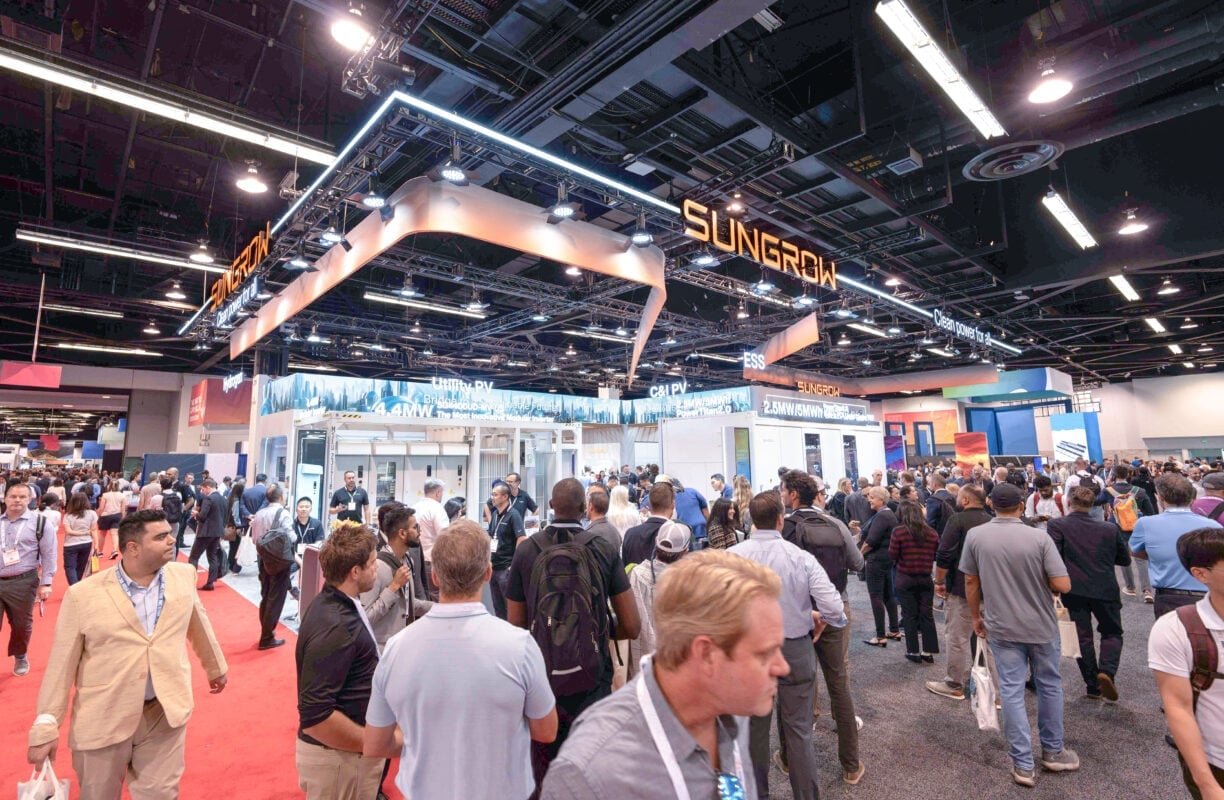
SYSTEM-DRIVEN dynamics in Hong Kong’s capital markets are shaping the renewed listing attempt by Sungrow Power Supply, a Chinese clean energy manufacturer specializing in solar inverters and energy storage systems.

The company has formally refiled its application to list on the Hong Kong Stock Exchange after an earlier submission lapsed due to regulatory timing rules.

What is confirmed is that Sungrow originally submitted its Hong Kong listing application in October 2025, but the filing expired in April 2026 after the standard six-month validity period.

The company has now resubmitted updated documentation to restart the process, with a major Chinese investment bank acting as sponsor.

The re-filing restores its plan for a secondary listing structure known as an “A+H” framework, linking its existing mainland China shares with new Hong Kong-listed shares.

The listing effort is part of a broader corporate strategy to expand international financing channels and support overseas industrial growth.

Company disclosures tied to the application indicate that proceeds are intended to fund research and development in next-generation energy storage technologies, expand manufacturing capacity abroad, and strengthen global supply chain positioning.

These priorities reflect a shift in Sungrow’s business model toward energy storage, which has become a major revenue driver alongside its core solar inverter segment.

Sungrow is already a large-scale player in global clean energy equipment markets.

It is one of the world’s largest suppliers of photovoltaic inverters, with a long-standing leadership position in global shipment rankings.

Its business footprint spans more than one hundred countries, and its storage systems have accumulated large-scale deployment measured in tens of gigawatt-hours.

Financially, the company’s scale supports its capital market ambitions.

Recent reported figures show strong revenue growth and multi-billion-yuan annual profitability, driven in part by rapid expansion in energy storage demand.

The firm’s market valuation on mainland exchanges has been in the hundreds of billions of yuan range, placing it among China’s most valuable clean energy manufacturers.

The key issue behind the Hong Kong listing is not fundraising alone but structural positioning.

A secondary listing would allow Sungrow to access international investors more directly, diversify funding sources beyond mainland capital markets, and increase visibility among global institutional funds that track Hong Kong-listed technology and energy companies.

It also provides a platform for financing overseas production projects, including planned facilities in Europe and other regions.

The refiled application comes amid a broader uptick in Hong Kong listings by mainland Chinese firms seeking offshore capital.

This trend reflects both strategic globalization efforts and a market environment where Hong Kong remains a primary gateway for international equity financing linked to Chinese industrial champions.

If approved, Sungrow’s dual listing structure would formally integrate its mainland and Hong Kong shares, expanding its investor base while reinforcing its role as a core supplier in the global transition toward renewable energy infrastructure.

The immediate consequence is continued regulatory review by Hong Kong authorities, with the company now re-entering the pipeline for one of Asia’s most closely watched capital market processes.
The April 2026 Hong Kong showcase confirms sustained demand in Asian numismatics, with over 7,700 lots sold and strong performance across coins and paper money.
The April 2026 Hong Kong showcase auction conducted by Stack’s Bowers & Ponterio was driven primarily by market demand for rare coins and paper money, reflecting the continued strength of global numismatics and sustained appetite in Asia’s collecting sector.

What is confirmed is that the multi-session sale, held over roughly one week in mid-April 2026, generated more than thirty million dollars in total realized value, including post-auction sales adjustments.

The auction offered over 7,700 individual lots and achieved a sell-through rate of approximately ninety-six percent, indicating that nearly all material found a buyer.

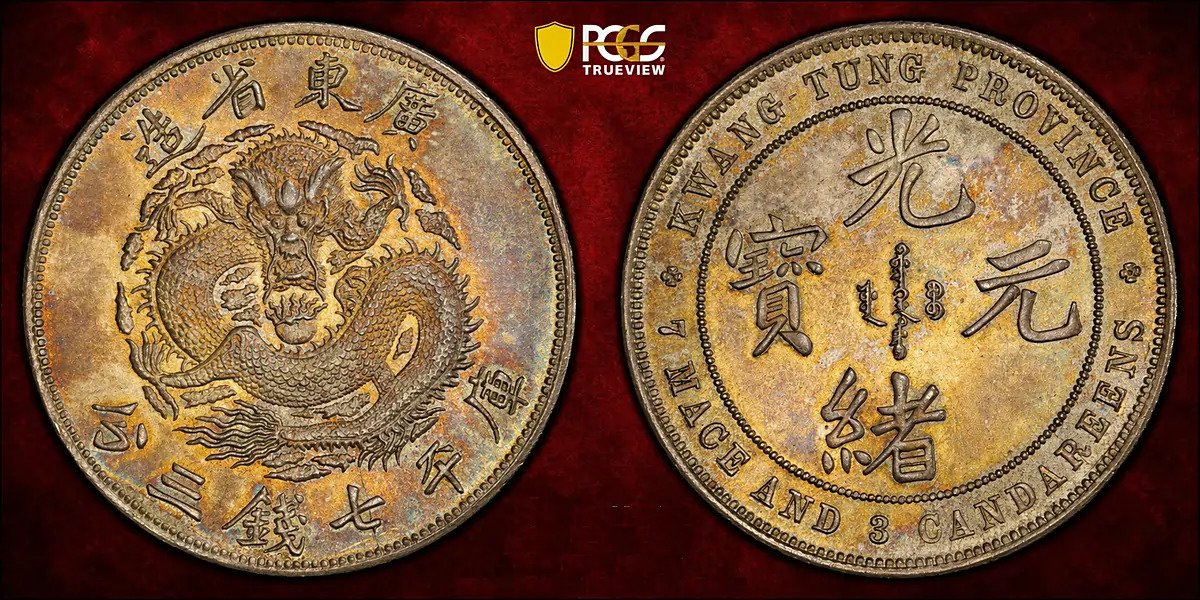
The structure of the event combined high-end numismatic rarities with broadly accessible collector material, spanning Chinese provincial issues, imperial-era coinage, modern Asian patterns, and world paper currency.

The strongest prices came from rare Chinese coins and patterns, many of which attracted competitive bidding from international collectors and dealers.

Several standout pieces significantly exceeded pre-sale expectations, reinforcing the depth of demand at the top end of the market.

A major component of the sale was a dedicated collection segment that included early twentieth-century Chinese and regional issues, where multiple coins reached mid-six-figure dollar results.

These outcomes were consistent with a broader pattern in recent years in which high-grade Chinese numismatic material continues to outperform estimates, particularly in certified mint-state conditions.

Paper money sessions also contributed meaningfully to the overall total.

Rare banknotes from Asia, Europe, and colonial-era territories achieved strong results, with multiple lots setting individual benchmarks for their categories.

The breadth of participation across sessions suggests a market that remains liquid across both coins and currency, not solely concentrated in trophy assets.

The key issue in this auction is not a single record price but the combination of high sell-through and sustained global participation.

A sell-through rate near ninety-six percent at this scale indicates a highly efficient absorption of supply, with limited unsold inventory and consistent demand across price tiers.

This level of clearance is typically interpreted as a sign of stable collector confidence rather than speculative bidding spikes.

Compared with prior Hong Kong sales by major auction houses, the results align with a pattern of large-format numismatic auctions regularly surpassing the thirty million dollar threshold in recent years.

The Hong Kong market continues to function as a central hub for Asian coinage, particularly for Chinese imperial, republican, and pattern issues, which often attract cross-border competition from North American and European bidders.

The broader implication is that the high-end numismatic market remains structurally resilient even amid broader fluctuations in luxury collectibles.

Demand is concentrated in authenticated, high-grade rarities with established provenance, while mid-tier material continues to trade actively but with more selective bidding intensity.

With the April 2026 results, Stack’s Bowers reinforces its position as a dominant intermediary in the Asian numismatic auction space, while the strong clearance rate signals that collector demand remains sufficiently deep to absorb large, multi-thousand-lot offerings without significant market saturation.

The auction closes with the market maintaining its established trajectory: high-value Chinese and world rarities continue to anchor price performance, while broad participation across thousands of lots sustains overall liquidity and turnover at scale.
Foreign Minister Maxime Prévot calls for renewed engagement during talks in Hong Kong, framing dialogue as essential despite years of strained relations following national security reforms and EU policy downgrades
A renewed diplomatic outreach by Belgium toward Hong Kong is emerging as part of a broader recalibration in Europe’s engagement with China, driven by shifting geopolitical realities and the economic importance of maintaining access to Asian financial and technology hubs.

The central driver of the story is system-level: the gradual reactivation of structured dialogue between European states and Hong Kong after several years of reduced political contact following major changes in the city’s governance framework.

What is confirmed is that Belgian Foreign Minister Maxime Prévot has publicly called for a revival of dialogue with Hong Kong during meetings with Hong Kong’s Chief Executive John Lee, framing engagement as necessary for protecting economic and strategic interests while addressing political differences.

The remarks come during a wider diplomatic mission that includes stops in Hong Kong and mainland China, reflecting Belgium’s effort to balance commercial ties with a more coordinated European foreign policy approach toward Beijing.

Prévot has described the relationship as one that must be both “clear and balanced,” explicitly linking market access, trade fairness, and geopolitical stability to continued engagement.

The backdrop to this renewed outreach is a period of sustained strain between Hong Kong and Western governments.

Since the introduction of sweeping national security legislation in 2020 and reforms to the city’s electoral system, the European Union significantly reduced the intensity of its political engagement with Hong Kong, while continuing limited economic interaction.

These changes were widely interpreted in Europe as a weakening of the “one country, two systems” framework that had previously defined Hong Kong’s autonomy.

Against this backdrop, Belgium’s position reflects a cautious but deliberate attempt to reopen channels without reversing broader EU concerns.

The minister explicitly linked dialogue to the ability to address contentious issues, including civil liberties and governance standards, while maintaining that engagement does not require agreement on all political questions.

Economic considerations remain central.

Hong Kong continues to function as a major gateway for European companies into mainland China, particularly in logistics, financial services, and cross-border trade infrastructure.

Belgian firms maintain significant exposure to Chinese markets, and Hong Kong plays a key role in facilitating regional supply chains, including e-commerce flows into Europe.

The visit also highlights Hong Kong’s effort to reposition itself as a financial and innovation hub in the Asia-Pacific region, particularly through integration projects with mainland China’s Greater Bay Area.

These initiatives are designed to strengthen the city’s role in research, capital markets, and high-value services rather than traditional manufacturing.

The practical implication of Belgium’s call for renewed dialogue is a gradual re-normalisation of official contact between parts of Europe and Hong Kong at a time when broader EU-China relations remain marked by trade friction, regulatory disputes, and geopolitical disagreement.

It signals that, despite political tensions, economic interdependence continues to drive selective re-engagement on both sides.
At least 17 biotech companies have established operations in Hong Kong this year, with several choosing the city as their Asia-Pacific headquarters amid government incentives, infrastructure build-out, and Greater Bay Area integration
Hong Kong’s strategy to position itself as a regional life sciences hub is gaining traction as international biotechnology companies increasingly establish Asia-Pacific headquarters in the city, reflecting a broader shift in how global drug development firms structure their regional operations.

The core driver of this development is system-level: Hong Kong’s coordinated policy push to attract high-value research and development activity, combined with its role as a gateway to the Greater Bay Area and mainland China’s biomedical ecosystem.

What is confirmed is that at least 17 biotech companies have set up operations in Hong Kong this year, with several explicitly designating the city as their Asia-Pacific headquarters.

Among the companies expanding in the city is a Swiss diagnostics firm focused on early disease detection, which has established its regional headquarters at the Hong Kong–Shenzhen Innovation and Technology Park.

The company is using the facility as a base for cross-border research and development, with plans to build local laboratory capacity and gradually expand into manufacturing as commercialisation progresses.

It has also secured milestone-based funding under a local innovation program tied to the park’s development framework.

Another example includes a French clinical-stage biotechnology company that has also set up its Asia-Pacific headquarters in the same innovation zone.

Its stated operational model involves recruiting local scientific talent in Hong Kong to conduct preclinical and clinical studies while leveraging proximity to manufacturing partners across the border in mainland China.

The pattern emerging across these cases is consistent: Hong Kong is being used less as a traditional manufacturing base and more as a coordination hub for research, regulatory alignment, capital access, and regional clinical development.

Companies are embedding small but strategic teams in the city while distributing large-scale production and trial infrastructure across the wider Greater Bay Area.

Government-linked investment promotion agencies report that biotech firms are increasingly attracted by Hong Kong’s intellectual property protections, its common law legal system, and its ability to connect Western pharmaceutical firms with mainland China’s fast-growing clinical and manufacturing networks.

A significant share of firms engaged in the sector cite clinical trial capability as a decisive factor in location decisions, particularly for late-stage drug development programs.

The Northern Metropolis development plan and the Hong Kong–Shenzhen Innovation and Technology Park are central to this strategy.

These projects are designed to concentrate research institutions, startup incubators, and translational medicine infrastructure in a cross-border zone that integrates Hong Kong’s regulatory environment with mainland China’s industrial scale.

At the same time, the expansion reflects structural pressures within the global biotech industry.

Firms are seeking to diversify research locations, shorten drug development cycles, and access multiple regulatory and funding environments simultaneously.

Hong Kong’s positioning allows companies to operate within international financial markets while maintaining physical proximity to one of the world’s largest pharmaceutical manufacturing ecosystems.

The inflow also signals a competitive regional landscape.

Cities such as Singapore and Shanghai continue to compete for the same headquarters and R&D mandates, but Hong Kong’s recent gains suggest that policy alignment with cross-border science parks and targeted funding schemes is beginning to reshape its role in the global biotech value chain.

The immediate consequence is a gradual consolidation of Hong Kong as a coordination and financing hub for Asia-Pacific life sciences operations, rather than a standalone production centre, with firms increasingly structuring their regional headquarters around its regulatory and financial infrastructure.
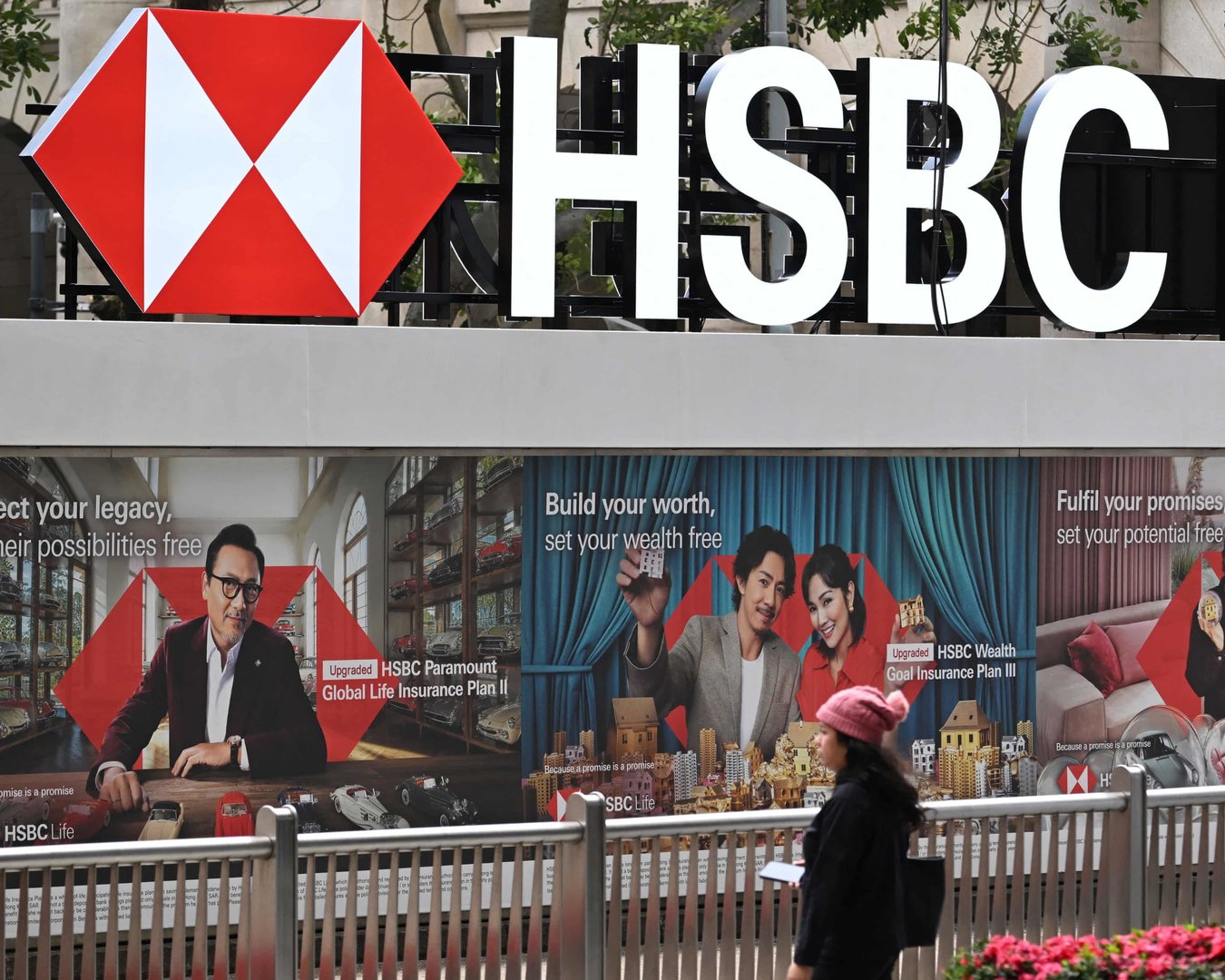
Bank examines whether to scale back a rare education subsidy covering up to 95% of international school fees for staff in Hong Kong amid global restructuring under CEO Georges Elhedery
A global cost-standardisation push at HSBC Holdings is driving a review of one of its most distinctive employee benefits in Asia: a heavily subsidised international school-fee scheme for bankers in Hong Kong.

What is confirmed is that HSBC is reassessing a long-standing perk that pays up to 95% of school fees for mid- and senior-level employees in Hong Kong.

The benefit can reach roughly HK$220,000 for primary school and HK$300,000 per child annually for secondary education, depending on the institution and level.

It applies to hundreds of staff in the city, HSBC’s largest profit centre, and is not offered in the same form in the bank’s other global hubs.

The review is part of a broader restructuring agenda led by chief executive Georges Elhedery, who has prioritised simplifying HSBC’s organisational structure, reducing costs, and aligning compensation frameworks across regions.

The bank has already been pursuing multi-billion-dollar efficiency targets, including workforce reductions and the removal of overlapping management layers.

The school-fee subsidy has become a structurally sensitive issue inside the group because of its uneven geographic application.

In Hong Kong, where international schooling is a central cost for expatriate and internationally mobile families, the perk has long been used as a recruitment and retention tool for senior banking talent.

Outside Hong Kong, however, comparable benefits are largely absent, creating internal pressure to harmonise compensation practices across markets.

What is under consideration is not a confirmed cancellation but a range of adjustments.

These include removing the subsidy for future hires or folding its value into broader compensation packages rather than maintaining it as a separate entitlement.

No final decision has been made.

The financial scale of the benefit is material.

It is estimated to cost HSBC tens of millions of dollars annually.

International school tuition in Hong Kong has also been rising in recent years, adding to the bank’s expense exposure and intensifying scrutiny of legacy benefits designed in earlier labour-market conditions.

At a strategic level, the review reflects HSBC’s continuing shift toward tighter cost discipline as it balances two competing pressures.

On one hand, Hong Kong remains central to its earnings base and its Asia-focused strategy.

On the other, headquarters is under pressure to eliminate regional anomalies in pay structures that complicate global benchmarking and budgeting.

The issue also highlights a broader structural tension in multinational banking: the need to attract globally mobile staff to high-cost financial centres while controlling long-term compensation inflation.

Education subsidies have historically been one of the most expensive but least visible components of expatriate pay packages, particularly in hubs like Hong Kong.

The outcome of the review will shape not only internal compensation norms but also the competitiveness of HSBC’s Hong Kong hiring model, where access to elite international schooling has functioned as a key non-cash incentive in a market with high living costs and intense regional talent competition.
The world’s largest EV battery maker completed a major share placement, selling new Hong Kong-listed shares at a discount amid strong investor demand and global expansion plans.
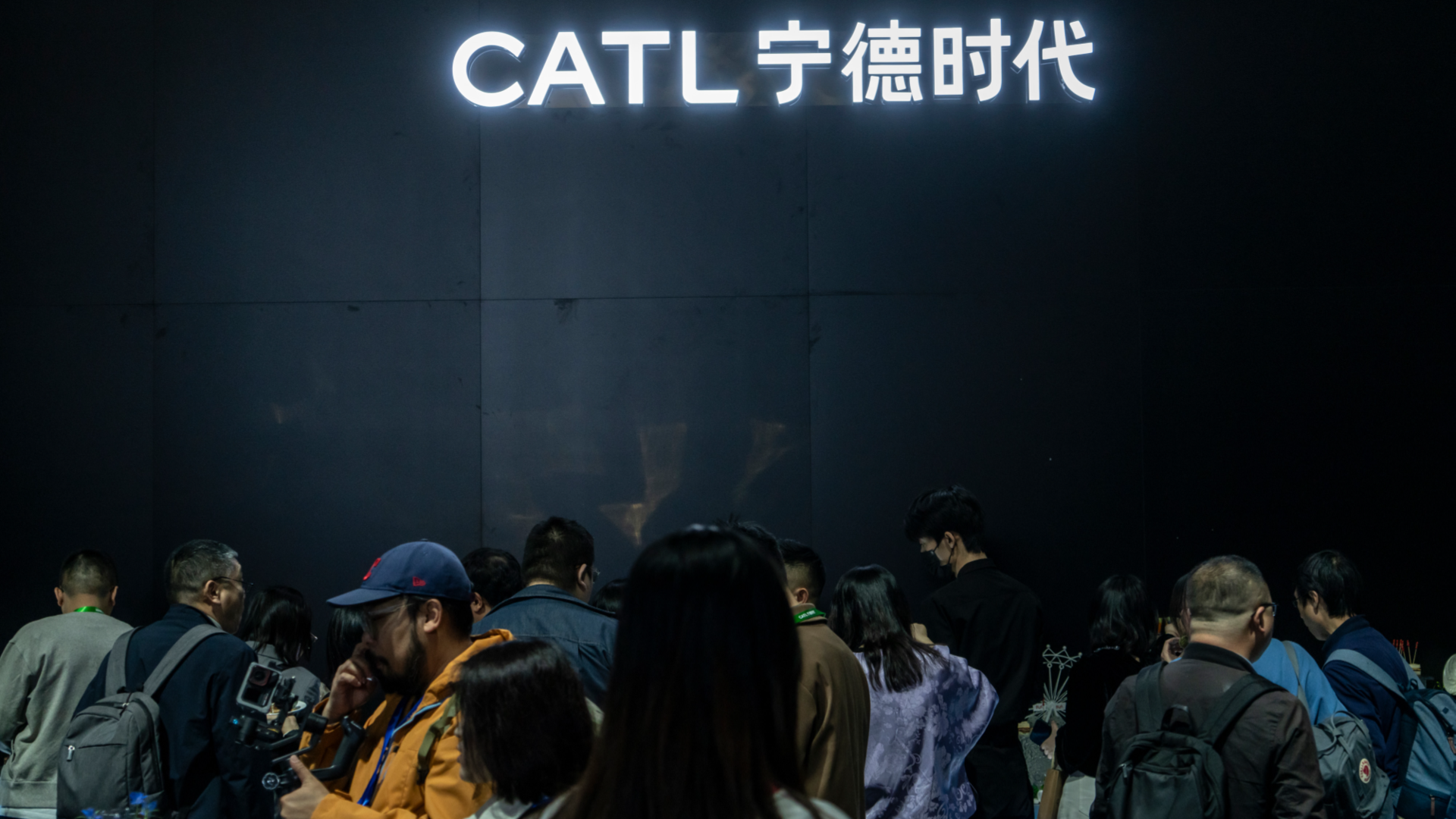
ACTOR-DRIVEN: The story is driven by Contemporary Amperex Technology Co. Ltd. (CATL), the world’s largest electric vehicle battery manufacturer, and its strategic decision to raise capital through a Hong Kong share placement.

CATL has completed a roughly $5 billion share placement in Hong Kong, issuing new shares at the bottom of its marketed price range.

The company sold about 62.4 million new shares at HK$628.20 each, pricing the deal at a discount of roughly 7 percent to its previous closing price.

The transaction ranks as the largest equity offering in Hong Kong so far this year.

The fundraising reflects a deliberate attempt by CATL to secure large-scale capital while its valuation remains elevated after a strong multi-year rally.

The company has expanded rapidly alongside global demand for electric vehicle batteries and energy storage systems, supplying major automakers including Tesla, BMW, and Volkswagen.

It has also built a dominant position in lithium-ion battery manufacturing, with a global market share that has made it central to the electric mobility supply chain.

What is confirmed is that investor demand for the placement was strong, with multiple institutional buyers participating, including long-term funds and existing shareholders.

Despite the discount, the deal was fully executed at the lower end of the range, signaling CATL’s preference for certainty of capital over maximizing short-term pricing.

The capital raised is intended to fund overseas expansion, research and development, and broader zero-carbon initiatives.

A significant portion is expected to support construction of new production capacity outside China, including large-scale battery manufacturing projects in Europe, as global automakers continue to localize supply chains and reduce dependency on single-region production.

The pricing outcome highlights a balancing act between investor appetite and market risk.

While CATL shares have experienced strong gains since its Hong Kong listing, volatility in global EV demand, intense price competition in China’s electric vehicle market, and uncertainty over raw material costs have created caution among investors.

The discount reflects that tension rather than a lack of demand.

The placement also reinforces a broader trend in global capital markets: large industrial technology firms are increasingly using Hong Kong to raise multi-billion-dollar sums to finance international expansion.

For CATL, the scale of the transaction strengthens its ability to compete in next-generation battery technologies, including emerging chemistries and grid-scale storage systems.

With the capital now secured, attention shifts to how efficiently CATL deploys the funds into new production capacity and whether continued global expansion can offset pressure from a highly competitive and rapidly evolving electric vehicle market.
New regulatory easing and conversion schemes are reshaping a tight, high-demand market—but balancing growth with competition and preventing consolidation remains the central challenge.
SYSTEM-DRIVEN: Hong Kong’s student housing market is being reshaped by regulatory reform, land-use policy, and institutional investment dynamics that determine who can enter and operate in the sector.

Hong Kong’s student housing system is expanding under structural pressure from rising enrolment of non-local students and a persistent shortage of dedicated beds.

The core issue is not only supply, but who is allowed to build and operate accommodation in a market increasingly dominated by large institutional investors and developers.

Policymakers are now attempting to keep the sector open to smaller players through simplified approvals, conversion pathways, and targeted schemes that reduce entry barriers.

The underlying imbalance is well established.

Publicly funded university hostels cannot absorb demand from international and mainland students, and private purpose-built accommodation has become a rapidly growing substitute.

Market estimates indicate tens of thousands of additional beds will be needed over the coming years, with a structural shortfall already visible in existing supply pipelines.

This gap has pushed rents upward and encouraged investors to repurpose hotels, residential buildings, and underused commercial offices into student housing assets.

Recent policy direction has focused on enabling that conversion process rather than relying on entirely new construction.

Government-led initiatives have introduced streamlined procedures for planning approval, building works, and land administration when converting existing properties into student accommodation.

These measures are designed to reduce friction that previously made small-scale redevelopment slow, costly, and heavily dependent on large developer capacity.

The intention is to open participation to mid-sized landlords who hold older commercial or hotel assets but lack the scale to navigate complex redevelopment processes.

At the same time, the government’s approach reflects a broader structural concern: without intervention, the sector risks consolidation into a small number of large operators with the capital and expertise to dominate conversion projects.

That dynamic can limit competition, reduce innovation in housing models, and concentrate pricing power.

Smaller property owners—particularly those holding non-prime office buildings—are seen as a potential counterbalance if regulatory barriers remain low enough for them to participate.

The economics of conversion are a key driver of this shift.

Underused office space in secondary locations has become increasingly viable for repurposing due to elevated vacancy rates and weaker rental performance.

Student housing, by contrast, offers more stable occupancy patterns, shorter turnover periods, and stronger cash-flow predictability.

This has already attracted both institutional funds and emerging private operators, intensifying competition for suitable buildings.

However, openness to smaller players is not guaranteed simply by policy intent.

The practical barriers remain significant: financing requirements, compliance obligations, design standards, and operational expertise still favour experienced institutional actors.

Even with streamlined approval pathways, smaller landlords often face constraints in raising capital or meeting long-term operational expectations set by lenders and regulators.

The result is a market in transition rather than equilibrium.

Hong Kong is attempting to expand student housing supply quickly while preventing the sector from becoming overly concentrated in the hands of a few large operators.

The success of this approach will depend on whether simplified conversion schemes and pilot programmes translate into sustained participation from mid-sized property owners, rather than reinforcing existing disparities in access to capital and development capability.

If smaller players can remain active in conversions and niche developments, the sector is likely to evolve into a more diversified ecosystem of operators.

If not, consolidation pressure will continue to push student housing toward institutional ownership, with implications for pricing, availability, and long-term affordability for non-local students.
Official data shows residential prices rising in March while rents continue an extended upward streak, reflecting a market shaped by shifting interest rates, returning demand, and tight supply conditions.
SYSTEM-DRIVEN dynamics define Hong Kong’s housing market, where pricing and rents are being shaped less by isolated transactions and more by interest rates, capital flows, and structural supply constraints.

In March, Hong Kong’s lived-in residential property prices rose by 1.4 percent month-on-month, extending a broader upward trend that has emerged after several years of decline.

The increase contributed to a stronger first-quarter performance, with prices rising by 4.4 percent overall.

The official index tracking second-hand home values shows that the market has now recorded multiple consecutive months of gains, indicating that the earlier downturn has stabilized into a gradual recovery phase rather than continued contraction.

At the same time, the rental market has continued to tighten.

Rents have increased for five consecutive months, reaching new highs in the latest readings.

This divergence between prices and rents reflects a key structural shift: while purchase activity is recovering, rental demand remains persistently strong, driven by inflows of workers and students, limited housing supply, and affordability barriers that keep many residents in the rental sector rather than ownership.

The recovery in prices is not uniform or explosive.

Monthly gains have moderated compared with earlier months, suggesting that momentum is present but sensitive to broader financial conditions.

Interest rates remain a central variable, with borrowing costs still influencing buyer affordability and transaction volume.

In parallel, sentiment has been supported by improved equity market performance and expectations that policy easing cycles could continue to filter into property demand.

Even with recent gains, the market remains well below its historical peak reached in 2021, reflecting the depth of the prior correction.

That downturn was driven by sustained high mortgage costs, weaker economic conditions, and reduced demand following demographic and policy shifts.

The current rebound therefore represents partial recovery rather than a full return to prior valuations.

Supply constraints continue to reinforce pricing pressure.

New inventory has been absorbed gradually, while developers have adjusted pricing strategies to encourage sales, particularly in smaller residential units where demand has been most resilient.

This has helped stabilize transaction volumes, which in turn supports price recovery even in a high-cost financing environment.

The rental surge carries broader implications for affordability and household financial pressure.

As rents rise while ownership costs remain high, more residents are effectively pushed into long-term renting, increasing competition for limited units.

This dynamic strengthens rental yields and attracts investors, but also reinforces structural affordability challenges in one of the world’s most expensive housing markets.

The current phase of the market is therefore defined by a dual movement: gradual price recovery in the sales market alongside sustained upward pressure in rents.

Together, they signal a housing system adjusting to a new equilibrium shaped by higher interest rates than the previous decade, evolving demand patterns, and persistent supply limitations.
Singapore equities close lower amid cautious sentiment, with property heavyweight Hongkong Land emerging as the top-performing stock despite broader index weakness.
SYSTEM-DRIVEN

Singapore’s equity market ended the trading session in negative territory as the Straits Times Index (STI), the benchmark gauge of listed Singapore companies, fell 0.61 percent to close at 4,892.73.

What is confirmed is that the decline came during a broadly mixed trading day in which gains in select blue-chip and regional-linked stocks were offset by weakness in financial and industrial counters.

Despite the index drop, individual stock performance showed significant dispersion, reflecting selective investor positioning rather than broad-based selling pressure.

Hongkong Land emerged as the strongest performer in the session, leading gains among STI constituents with a rise of approximately 2.35 percent.

The property developer’s movement placed it at the top of trading activity, highlighting continued investor interest in large-cap real estate and conglomerate-linked names with regional exposure.

Other notable gainers included Thai Beverage and DFI Retail, both of which recorded modest advances, indicating selective buying in defensive and consumer-facing sectors.

These gains, however, were not sufficient to offset losses elsewhere in the index.

On the downside, several heavyweight stocks, including Keppel and Seatrium, weighed on overall performance.

Their declines reflected ongoing sensitivity in capital-intensive and industrial sectors, which tend to react strongly to shifts in interest rate expectations, infrastructure demand, and global growth signals.

The broader market context is shaped by cautious investor sentiment across Asian equities, where liquidity flows remain sensitive to global macroeconomic conditions, including interest rate policy expectations and China’s uneven economic recovery trajectory.

Singapore’s market, given its structural exposure to regional trade and financial flows, tends to reflect these external dynamics.

The movement of Hongkong Land as the day’s top stock also underscores the continued influence of property-linked conglomerates within the Singapore-listed universe.

These companies often act as hybrid proxies for both real estate cycles and broader regional capital flows, particularly between Hong Kong, China, and Southeast Asia.

While the index decline signals short-term weakness, the internal market structure shows a differentiated pattern: capital is rotating rather than exiting entirely, with investors concentrating exposure in specific sectors perceived as more resilient or undervalued under current conditions.

The immediate consequence of the session is a modest erosion in benchmark index value, while the broader implication is continued fragmentation in market leadership, where single-stock moves increasingly drive perception of market strength rather than uniform sector performance.
The photonics chipmaker’s IPO highlights accelerating demand for next-generation AI infrastructure, raising questions about valuation extremes, technological competition, and China’s push to reshape the global semiconductor stack.
ACTOR-DRIVEN

Lightelligence, a Shanghai-based photonics chipmaker focused on optical computing for artificial intelligence systems, surged nearly 400 percent in its Hong Kong stock market debut after raising roughly 2.4 billion Hong Kong dollars in its initial public offering.

What is confirmed is that the company priced its shares at the top end of expectations before listing, and trading opened far above that level, immediately valuing the firm at several times its offering price.

The IPO was heavily oversubscribed, reflecting intense investor demand for companies tied to artificial intelligence infrastructure and next-generation semiconductor technologies.

Lightelligence develops optical computing and photonic interconnect systems that use light rather than electrons to process and transmit data.

The technology is designed to address bottlenecks in traditional semiconductor systems, particularly in large-scale AI data centers where energy consumption and data movement have become critical constraints.

Its product line includes hybrid optical-electronic accelerators and photonic networking hardware intended for high-performance computing environments.

The company’s business model sits at the intersection of two fast-expanding sectors: artificial intelligence computing demand and advanced semiconductor alternatives to traditional silicon-based architectures.

Its pitch to investors is that photonics can significantly improve speed and energy efficiency in AI workloads, particularly for inference and data center communication.

Investor enthusiasm reflects broader market dynamics.

Capital has increasingly flowed toward AI infrastructure companies across Asia, particularly in Hong Kong listings, where multiple technology IPOs tied to semiconductors, robotics, and AI systems have seen strong first-day performance.

Lightelligence is part of a wider wave of so-called “hard tech” listings that emphasize hardware underlying AI systems rather than software applications.

The company is also backed by a mix of venture and strategic investors spanning technology and state-linked capital, which is common in China’s advanced semiconductor sector.

Its rise to public markets follows years of development from a research-driven startup originating from advanced photonics work, evolving into a commercial supplier targeting data center-scale deployment.

The scale of the share price surge underscores the tension between market optimism and underlying fundamentals.

While investor demand is clearly strong, companies in this sector typically operate with high research and development costs, long commercialization cycles, and uncertain mass adoption timelines for emerging technologies like optical computing.

The listing also reflects geopolitical and industrial policy pressure shaping semiconductor development.

China has been accelerating investment into alternative computing architectures, including photonics, as part of a broader effort to reduce reliance on traditional chip supply chains dominated by foreign technology.

In practical terms, the IPO provides Lightelligence with expanded capital to scale manufacturing, accelerate research, and push its optical computing systems toward broader commercial deployment.

The immediate market consequence is a sharply repriced valuation, while the longer-term outcome depends on whether photonic computing can move from specialized applications into mainstream AI infrastructure at scale.
The world’s largest EV battery maker taps investor appetite for clean energy to fund overseas expansion, new factories, and next-generation battery technology amid intensifying competition and energy transition pressures.
SYSTEM-DRIVEN

Contemporary Amperex Technology Co. Ltd. (CATL), the world’s largest electric vehicle battery manufacturer, has raised roughly $5 billion through a share placement in Hong Kong, reinforcing how global capital markets are financing the rapid expansion of clean energy infrastructure.

What is confirmed is that CATL issued new Hong Kong-listed shares at a price range slightly below recent trading levels, attracting strong institutional demand and raising approximately HK$39 billion.

The transaction ranks among the largest equity offerings globally in 2026 and comes shortly after a period of sharp gains in the company’s valuation.

The share sale reflects a broader structural shift in global energy markets.

CATL sits at the center of the electric vehicle and energy storage supply chain, producing batteries used by major automakers including Tesla, BMW, Volkswagen, and others.

Its position has strengthened as governments, utilities, and private industry accelerate electrification and grid storage deployment.

The funds raised are primarily allocated to international expansion, large-scale manufacturing projects, research and development, and general corporate operations.

A significant portion is expected to support construction of overseas production capacity, particularly in Europe, where automakers are increasingly localizing supply chains to reduce dependence on Asian exports.

The timing of the capital raise is closely linked to favorable market conditions.

Investor appetite for green energy assets has increased as global energy markets experience volatility and governments push aggressive decarbonization policies.

This has reinforced valuations across the battery and renewable energy sectors, even as competition intensifies within China’s domestic EV market.

CATL’s business model depends on scale manufacturing of lithium-ion batteries and ongoing innovation in energy density, cost reduction, and charging performance.

The company is also expanding into alternative chemistries, including sodium-ion technology, which aims to reduce reliance on lithium and other critical raw materials.

These developments are central to long-term cost structure and supply chain resilience.

The Hong Kong fundraising also highlights capital recycling dynamics among major shareholders.

Existing investors have periodically sold stakes into strong market demand, while CATL continues to use public markets to fund long-term expansion rather than relying solely on internal cash flow.

At a strategic level, the transaction underscores how the global energy transition is now capital-intensive and geographically distributed.

Battery manufacturing is no longer concentrated solely in domestic Chinese demand; instead, it is being shaped by European and global industrial policy, trade considerations, and the rapid growth of energy storage demand alongside electric mobility.

The immediate consequence of the raise is a stronger balance sheet for CATL and accelerated funding for overseas projects.

The broader implication is that battery production capacity is scaling in parallel with the global shift away from fossil fuels, locking in supply chains that will define the next phase of industrial electrification.
Survivors revisit the scorched remains of a Tai Po housing estate where a 2025 blaze killed 168 people, exposing unresolved questions over safety failures, accountability, and what remains of home after mass tragedy.
SYSTEM-DRIVEN

Hong Kong’s deadliest residential fire in decades is no longer an active disaster, but a continuing structural and political crisis shaped by housing safety rules, renovation practices, and state response.

The focus now is not on firefighting but on how a densely built city manages the aftermath of catastrophic building failure.

The fire broke out on November 26, 2025, at Wang Fuk Court, a large public housing estate in the Tai Po district.

It spread rapidly across multiple 31-storey residential towers undergoing renovation.

What is confirmed is that the blaze ultimately killed 168 people and destroyed or severely damaged seven buildings, making it the most lethal urban fire in Hong Kong since 1948.

In April 2026, authorities began allowing former residents to briefly re-enter the site under strict supervision.

Each household is given a limited time window, typically around three hours, to retrieve whatever remains inside their former homes.

Entry is tightly controlled due to structural instability, toxic debris, and ongoing safety concerns.

One of the central stories emerging from this return is the Yip family, who revisited their apartment in Wang Fuk Court for the first time since losing their mother in the fire.

The visit, described across multiple accounts of survivor returns, took place in a heavily damaged environment: soot-covered interiors, melted household objects, and corridors stripped back to exposed concrete and twisted remnants of domestic life.

The family’s experience reflects the broader reality faced by hundreds of households.

Many residents are not simply retrieving property but confronting the physical collapse of entire family histories—photographs, documents, heirlooms, and personal archives often reduced to fragments.

Some manage to recover small items such as jewellery or commemorative objects; others find almost nothing intact.

What is confirmed across survivor returns is the emotional and logistical structure of the process itself.

Residents are transported in organized groups, accompanied by officials or social workers, and are required to move quickly through hazardous conditions.

The pace is deliberate but restrictive, forcing families to prioritize what can be carried within minutes rather than what represents a lifetime of belongings.

The broader implications of the fire continue to extend beyond personal loss.

The estate’s destruction has intensified scrutiny of renovation safety standards, building materials, and enforcement mechanisms in high-density housing.

Investigations and public debate have focused on how external construction elements contributed to the fire’s rapid vertical spread, though definitive legal conclusions remain tied to ongoing inquiries.

At the same time, residents face an uncertain future regarding compensation and relocation.

Government proposals include property buybacks and redevelopment planning, but these measures are contested by some owners who argue that financial valuation does not reflect long-term community displacement or emotional attachment to the estate.

The return visits have therefore become more than recovery operations.

They are temporary re-entries into a permanently altered urban landscape, where the physical structure of home exists only as ruins and the social structure of community is suspended in administrative process.

The fire has already reshaped Hong Kong’s conversation about housing safety, but its consequences now lie in a slower phase: legal accountability, long-term rehousing decisions, and the unresolved question of how a city rebuilds trust after a residential disaster of this scale.
A surge in cross-border travel is expected to test transport systems, tourism capacity, and retail demand as mainland China’s holiday period drives one of the year’s largest inbound flows.
EVENT-DRIVEN: HOLIDAY TRAVEL SURGE AND CROSS-BORDER MOBILITY PRESSURE

Hong Kong is preparing for a major influx of mainland visitors during the Labour Day Golden Week holiday period, with projected arrivals approaching 980,000 people over the multi-day break.

What is confirmed is that Golden Week remains one of the most significant travel peaks in the region, driven by coordinated national holidays that trigger large-scale domestic and cross-border mobility across mainland China and neighboring destinations.

Hong Kong, due to its proximity and transport connectivity, consistently ranks among the most visited outbound destinations during this period.

The scale of the expected influx places immediate pressure on transport infrastructure, border checkpoints, hospitality capacity, and retail districts.

Entry points such as rail crossings, highway links, and ferry terminals typically experience concentrated congestion as travelers move in waves across short time windows.

The key issue is capacity management across a tightly constrained urban system.

Hong Kong operates with high baseline density, meaning even moderate increases in visitor volume can produce visible strain on public transport, hotel occupancy, and pedestrian-heavy commercial areas such as shopping districts and tourist zones.

Retail and service sectors are among the most directly affected.

High visitor volumes typically translate into increased spending in hospitality, dining, luxury goods, and experiential services.

However, the distribution of demand is uneven, often concentrated in specific commercial corridors that already operate near peak capacity during weekends and holidays.

Transport authorities and operators typically respond to Golden Week surges by increasing service frequency, deploying additional staff at key stations, and implementing crowd management measures at border control points.

These operational adjustments are designed to maintain throughput while preventing bottlenecks in high-traffic areas.

The projected figure of nearly one million arrivals reflects both the scale of outbound travel demand from mainland China and Hong Kong’s structural role as a short-haul international destination.

The city’s integrated rail and border systems make it one of the most accessible cross-border urban centers for mainland travelers.

At the same time, such surges highlight the structural tension between tourism-driven economic activity and urban capacity limits.

While visitor inflows support retail and service revenues, they also intensify congestion, strain public infrastructure, and increase operational complexity for city services.

The broader implication is that holiday-driven mobility cycles have become a defining feature of regional economic patterns in East Asia.

For Hong Kong, Golden Week periods function as both a major economic opportunity and a recurring stress test for its transport, hospitality, and urban management systems.

As the holiday period unfolds, the city’s ability to absorb near-record visitor volumes without systemic disruption will directly shape short-term economic activity and public infrastructure performance across key districts.
The English Schools Foundation strengthens its financial buffer while navigating reduced government support and rising pressure on international school funding models.
SYSTEM-DRIVEN: EDUCATION FINANCING AND PUBLIC-SUBSIDY FRAMEWORK

The English Schools Foundation, Hong Kong’s largest operator of English-medium international schools, has accumulated reserves of about HK$3.75 billion even as public subsidies from the government continue to shrink.

What is confirmed is that ESF operates a network of international schools serving tens of thousands of students, funded through a combination of tuition fees, government subsidies, and internally generated surpluses.

Its financial position is unusually strong for an education provider, with significant accumulated reserves that act as a long-term buffer for operational stability and infrastructure investment.

The reduction in government subsidies forms the structural backdrop of this development.

Over time, ESF has transitioned from a heavily subsidized quasi-public education provider into a more financially self-sustaining institution that relies increasingly on tuition income.

This shift has altered how costs are distributed between families, the organization, and public funding.

The key issue is the changing balance between public support and private funding in Hong Kong’s international education system.

As subsidies decline, institutions like ESF must either adjust tuition fees, draw on reserves, or restructure operational spending to maintain service levels across campuses, staffing, and educational programs.

The size of the reserve provides ESF with a significant degree of financial flexibility.

In practical terms, it allows the organization to manage fluctuations in enrollment, absorb cost pressures from inflation, and fund capital projects such as school expansions and facility upgrades without immediate reliance on external funding.

At the same time, the accumulation of large reserves within a publicly supported education framework raises broader policy questions about the role of subsidies.

When government funding is reduced while institutional reserves grow, it can prompt scrutiny over how effectively public resources are being allocated and whether funding structures reflect current operational realities.

For families, the financial structure of ESF has direct consequences through tuition levels and fee adjustments.

As subsidies decrease, schools may face greater pressure to pass costs onto parents, particularly in a high-demand international education market where capacity constraints already influence pricing.

The broader implication is a gradual normalization of self-funded international schooling models in Hong Kong.

Institutions that once relied more heavily on public support are increasingly operating as financially independent entities, with reserve accumulation serving as a stabilizing mechanism in a competitive education environment.

This shift reflects a wider trend in global education systems where hybrid public-private funding models are being rebalanced, placing greater emphasis on institutional financial sustainability and long-term reserve management as core components of school governance.
Rising geopolitical risk in the Middle East is accelerating capital reallocation by ultra-wealthy investors, strengthening Hong Kong’s role as a regional hub for private banking and family office expansion.
ACTOR-DRIVEN: PRIVATE WEALTH MIGRATION AND FINANCIAL INTERMEDIATION

Escalating conflict in the Middle East is reshaping global capital allocation patterns, with Hong Kong emerging as a key beneficiary of increased demand for private banking services and family office structuring among ultra-high-net-worth individuals.

What is confirmed is that geopolitical instability tends to trigger rapid repositioning of private wealth portfolios, particularly among individuals and families with multi-jurisdictional assets.

In the current cycle, wealth managers and financial institutions in Hong Kong are reporting stronger interest from clients seeking diversification away from exposed regional markets and toward more stable financial hubs in Asia.

Family offices—private entities that manage the wealth of ultra-wealthy families—are expanding their operational footprint in Hong Kong as part of this shift.

These structures typically handle investment allocation, tax planning, succession strategy, and cross-border asset protection.

Hong Kong’s legal system, currency convertibility, and deep financial infrastructure make it a natural base for such operations.

The key issue is risk diversification under geopolitical stress.

When conflict increases uncertainty in asset-heavy regions, high-net-worth investors tend to move capital toward jurisdictions perceived as politically stable, legally predictable, and financially liquid.

Hong Kong’s role in this process is not driven by proximity to the conflict, but by its function as a gateway to Asian capital markets and global investment products.

Private banking institutions in the city are also experiencing increased engagement from clients seeking tailored portfolio restructuring.

This includes shifts toward hard assets, global equities, alternative investments, and more complex multi-currency strategies designed to reduce exposure to regional shocks.

At the same time, the influx is not purely reactive.

Over the past several years, Hong Kong has actively positioned itself as a hub for family offices through policy incentives, regulatory streamlining, and efforts to attract foreign capital.

The current geopolitical environment is amplifying trends that were already underway.

The implications extend beyond asset flows.

As family offices expand, they generate demand for legal services, asset management expertise, trust structures, and private investment vehicles.

This creates a secondary economic ecosystem that strengthens Hong Kong’s broader financial services sector.

However, competition among global wealth hubs remains intense.

Cities such as Singapore, Dubai, and London are simultaneously competing for the same capital inflows, each offering different combinations of regulatory frameworks, tax incentives, and lifestyle factors for ultra-wealthy families establishing regional headquarters.

The broader consequence is a structural redistribution of global private capital management.

Geopolitical instability in one region is accelerating the consolidation of wealth management functions in a smaller number of global financial centers, reinforcing the role of hubs like Hong Kong in managing increasingly mobile and security-sensitive capital.
Faster trade settlement is emerging as a structural upgrade for Hong Kong’s stock market infrastructure, with implications for liquidity, risk, and its rivalry with other major financial hubs.
SYSTEM-DRIVEN: SECURITIES MARKET INFRASTRUCTURE TRANSFORMATION

A global shift toward T+1 securities settlement is reshaping how equity trades are processed, with Hong Kong positioning itself to align with faster post-trade systems that could strengthen its standing as a leading international financial hub.

T+1 settlement means that when a stock is bought or sold, the transaction is finalized one business day after the trade date.

This replaces older systems such as T+2, where settlement takes two business days.

The change reduces the time between trade execution and final ownership transfer, tightening financial exposure and improving market efficiency.

What is confirmed is that multiple major global markets have already transitioned or are in the process of transitioning to T+1 settlement standards.

This shift is driven by regulators and exchanges seeking to reduce counterparty risk, improve capital efficiency, and modernize post-trade infrastructure in line with faster electronic trading systems.

For Hong Kong, the relevance lies in competitive positioning.

As a major international financial center, its market infrastructure is evaluated not only on liquidity and listing activity but also on operational efficiency.

Settlement speed has become a key benchmark in comparing financial hubs such as New York, London, and Singapore.

The key issue is risk and capital efficiency.

Faster settlement reduces the period during which market participants are exposed to price movements without finalizing transactions.

It also reduces the amount of collateral required to support trades, freeing up capital for further investment activity.

In highly liquid markets, these efficiencies can compound into meaningful structural advantages.

Hong Kong’s clearing and settlement system is already highly developed, but global alignment with T+1 standards creates pressure to ensure compatibility with cross-border trading flows.

As international investors increasingly operate across multiple time zones and markets, mismatched settlement cycles can create operational friction and increase funding costs.

The broader implication is that settlement infrastructure is becoming a competitive variable in global finance.

Markets that process trades faster can potentially attract higher trading volumes, particularly from institutional investors who prioritize efficiency and risk reduction in portfolio execution.

At the same time, the transition is not purely technical.

It requires coordination across brokers, custodians, banks, and clearing systems.

Any mismatch in readiness across jurisdictions can temporarily increase operational complexity, particularly for cross-listed securities and global funds operating across multiple markets.

For Hong Kong, alignment with faster settlement cycles supports its strategy of maintaining relevance as global capital flows become more fragmented and regionally distributed.

As financial markets evolve, infrastructure speed and reliability are increasingly central to attracting listings, trading activity, and institutional participation.

The shift to T+1 therefore represents more than an operational upgrade.

It reinforces a structural trend in which the efficiency of financial plumbing directly influences the competitive position of global exchanges, shaping where capital is traded, cleared, and ultimately concentrated.
A new agreement between Hong Kong’s exchange operator and Malaysia’s stock market infrastructure is designed to expand cross-border listings, liquidity links, and regional capital flows across Southeast Asia.
SYSTEM-DRIVEN: CAPITAL MARKET INFRASTRUCTURE AND REGIONAL INTEGRATION

A formal cooperation agreement between Hong Kong’s stock exchange operator and Malaysia’s capital market authorities is reshaping how equity markets in the region connect, with a focus on improving cross-border access for companies and investors across Southeast Asia.

What is confirmed is that the agreement is structured as a partnership framework between the two market operators to strengthen collaboration in areas such as listings, product development, and market connectivity.

The initiative is positioned as part of a broader effort to deepen financial integration between Hong Kong as a major international financial hub and Southeast Asia’s rapidly growing capital markets.

The mechanism behind such pacts typically involves coordinated efforts to reduce friction in cross-listing processes, encourage dual-market participation, and explore shared financial products that can be traded across jurisdictions.

While each market retains its own regulatory authority, the agreement creates institutional pathways for closer alignment in how capital is raised and deployed.

The key issue is not symbolic cooperation, but structural access.

Hong Kong serves as a gateway for Chinese and international capital, while Malaysia represents one of Southeast Asia’s more developed and internationally open equity markets.

Linking these systems more tightly allows companies in the region to tap deeper pools of liquidity and gives investors broader access to growth markets across multiple economies.

This type of arrangement reflects a wider regional trend.

Southeast Asia has become an increasingly important destination for equity financing as global supply chains diversify and multinational companies expand manufacturing and infrastructure investment in the region.

At the same time, Hong Kong has been working to reinforce its role as a cross-border capital hub amid shifting global financial flows.

For companies, the practical implication is expanded optionality in fundraising.

Firms may gain more flexible access to dual listings or cross-market investor bases, potentially reducing dependency on a single domestic exchange.

For investors, the benefit lies in improved access to regional growth sectors, including technology, consumer markets, and infrastructure development.

The agreement also signals competitive positioning among financial centers.

As global capital markets fragment into more regionalized networks, exchanges are increasingly forming bilateral or multilateral links to maintain relevance and attract listings.

These partnerships are designed to preserve liquidity depth while expanding geographic reach.

If fully implemented through operational mechanisms such as joint products or streamlined listing processes, the pact could gradually shift how capital flows between Hong Kong and Southeast Asia.

Rather than isolated national markets, the region would move toward a more interconnected equity ecosystem with shared access points for issuers and investors.

The broader consequence is a steady institutional convergence of Asian capital markets, where regulatory cooperation and exchange-level partnerships play a growing role in determining how efficiently capital moves across borders.
The Chinese printed circuit board manufacturer raised about $2.6 billion in a heavily oversubscribed listing, with shares jumping more than fifty percent on debut as investors bet on AI infrastructure growth.
EVENT-DRIVEN: HONG KONG IPO SURGE IN AI HARDWARE

Victory Giant Technology, a Chinese manufacturer of high-end printed circuit boards used in artificial intelligence servers and advanced electronics, saw its shares surge sharply on their first trading day in Hong Kong following a multibillion-dollar public offering.

What is confirmed is that the company raised roughly $2.6 billion through its Hong Kong listing, making it the largest IPO in the city so far this year and one of its most significant technology-focused offerings in recent months.

The stock priced at HK$209.88 per share, the top end of its indicated range, before trading opened.

On debut, shares surged as much as 60 percent intraday and later settled more than 50 percent above the offer price, reflecting intense investor demand across both institutional and retail channels.

Trading volume was exceptionally high, with turnover quickly placing the stock among the most actively traded names on the exchange.

The offering was heavily oversubscribed, with retail demand reported at several hundred times the available allocation and international demand also multiple times covered.

The company expanded the deal size through an upsized share sale to meet demand, issuing nearly 96 million shares in total.

Victory Giant is already listed in mainland China and operates as a major supplier of printed circuit boards used in AI computing, data centers, automotive electronics, aerospace systems, and consumer devices.

Its products form the physical substrate that connects processors and memory inside high-performance computing systems, making it a foundational part of AI hardware infrastructure rather than a software or consumer technology company.

The timing of the listing reflects broader capital flows into AI-related industrial supply chains.

Investors are increasingly focusing on companies positioned upstream of semiconductor and server assembly, where demand growth has accelerated due to global expansion of AI training systems, cloud infrastructure, and data center construction.

Financially, the company has reported rapid growth in recent years, driven by rising demand for AI-related hardware.

Revenue and profit expanded significantly in its latest reporting period, supported by increasing adoption of high-density circuit boards used in advanced computing systems.

Most of the funds raised are allocated to expanding production capacity in mainland China, upgrading manufacturing equipment, and increasing research and development spending.

This expansion is aimed at securing long-term supply contracts in a market where AI infrastructure demand is increasingly concentrated among a small number of global technology platforms.

The IPO also highlights Hong Kong’s continuing role as a financing hub for Chinese industrial technology companies, particularly those linked to artificial intelligence infrastructure.

The strong market reception signals sustained investor appetite for hardware firms positioned at the core of the AI supply chain, even amid broader global market volatility.
The Chinese solar inverter manufacturer is reportedly returning to a long-delayed Hong Kong IPO strategy, seeking fresh funding as global renewable energy expansion intensifies competition for manufacturing scale.
ACTOR-DRIVEN: SUNGROW AND ITS CAPITAL MARKET STRATEGY

Sungrow Power Supply, one of the world’s largest manufacturers of solar inverters and energy storage systems, is moving to revive plans for a Hong Kong stock market listing as demand for clean energy infrastructure continues to expand globally.

The company sits at a critical point in the renewable energy supply chain.

Solar inverters, its core product, convert electricity generated by solar panels into usable grid power.

Without them, large-scale solar deployment cannot function.

This positions Sungrow not as a consumer-facing brand, but as a core industrial supplier to global energy systems.

What is confirmed is that Sungrow is already a dominant global player in inverter manufacturing, competing across major international markets and supplying utility-scale solar and storage projects.

The company has built its position through rapid scaling in manufacturing capacity and continuous product development aimed at higher-efficiency and grid-compatible systems.

The renewed push toward a Hong Kong listing is framed by broader financing pressure across the renewable energy sector.

Clean energy companies are entering a capital-intensive phase where expansion depends on securing large-scale funding for factories, supply chains, and research into next-generation grid integration technologies.

The reported IPO revival reflects a strategic shift rather than a standalone financial move.

Access to Hong Kong capital markets would provide Sungrow with an additional funding channel outside mainland China, potentially increasing flexibility in foreign currency fundraising and international investor participation.

The timing aligns with sustained global investment in solar power, driven by energy security concerns, decarbonization targets, and rising electricity demand from electrification and data infrastructure growth.

These forces are pushing utilities and governments to accelerate renewable deployment, which in turn increases demand for core hardware suppliers like inverter manufacturers.

Within this context, competition in the sector is intensifying.

Industrial players are scaling production aggressively, while also investing in software-enabled grid management and energy storage integration.

The inverter market has become more than a hardware business; it is increasingly tied to digital energy control systems and large-scale infrastructure coordination.

For Sungrow, renewed access to equity markets would likely support expansion of manufacturing capacity and continued international growth.

It would also strengthen its ability to compete in regions where supply chain reliability and pricing pressure are tightening margins across the renewable equipment industry.

The broader implication is structural: clean energy supply chains are entering a phase where capital markets are directly shaping industrial scale.

Companies like Sungrow are no longer raising funds solely for incremental growth but to compete in a global race to supply the backbone infrastructure of the energy transition.
The printed circuit board maker is tapping strong investor demand to expand AI server capacity, positioning the deal as one of Hong Kong’s largest recent IPOs amid a global rush into AI infrastructure.
ACTOR-DRIVEN: VICTORY GIANT TECHNOLOGY AND ITS HONG KONG MARKET LISTING

Victory Giant Technology, a Chinese manufacturer of advanced printed circuit boards used in artificial intelligence and high-performance computing systems, is moving ahead with a Hong Kong share offering expected to raise about $2.2 billion, with the potential for the final proceeds to rise further depending on demand.

The company, already listed in mainland China, is issuing new Hong Kong shares as part of a dual-listing strategy designed to fund large-scale industrial expansion.

The offering is structured around roughly 83 million shares, with pricing set near the top end of its indicated range at HK$209.88 per share after strong investor demand during the book-building process.

What is confirmed is that the proceeds are primarily directed toward expanding production capacity in mainland China, upgrading manufacturing equipment, and increasing research and development spending.

The company’s business sits at a critical point in the global artificial intelligence supply chain, producing high-density circuit boards that connect and support AI chips inside data center servers.

This hardware is not consumer-facing.

It functions as the physical backbone that allows AI systems to process large volumes of data, linking processors, memory, and networking components.

As demand for AI infrastructure grows, especially for high-performance computing clusters, suppliers of these components have become strategically important in the broader technology ecosystem.

Victory Giant’s financial performance reflects this surge in demand.

The company reported rapid revenue growth in recent years, driven by expanding orders linked to AI server construction and data center buildouts.

Its profitability has also strengthened, supported by higher-margin advanced circuit board products used in computing-intensive systems.

The Hong Kong listing is part of a broader pattern in which Chinese technology and industrial firms connected to AI infrastructure are turning to equity markets to fund expansion.

Investor appetite for such companies has remained strong, even amid broader global uncertainty and fluctuating sentiment toward Chinese equities.

Market response to the offering has been firm, with the deal heavily subscribed by institutional investors and supported by multiple large cornerstone investors.

This level of demand indicates confidence not only in the company’s near-term growth trajectory but also in the structural expansion of AI-related hardware demand.

The stakes of the transaction extend beyond capital raising.

By scaling production capacity, Victory Giant is positioning itself to secure long-term supply relationships in the AI hardware ecosystem, where demand is increasingly concentrated among a small number of global technology platforms and data center operators.

If fully executed, the listing strengthens Hong Kong’s role as a financing hub for industrial technology firms tied to artificial intelligence infrastructure.

It also reinforces the shift in global capital markets toward physical AI supply chains, where semiconductors and supporting components are becoming as strategically significant as software platforms.
A new system targeting departmental leadership aims to clarify responsibility inside government agencies and force structural change in how policy failures are managed.
ACTOR-DRIVEN: HONG KONG GOVERNMENT CIVIL SERVICE REFORM

Hong Kong is advancing a restructuring of how senior civil servants are held responsible for policy implementation failures, introducing a formal accountability framework designed to make departmental leadership directly answerable for systemic administrative breakdowns.

The reform centers on a “Heads of Department Accountability System,” which places the responsibility for investigating major failures or recurring administrative problems on senior officials leading government departments.

The system is designed to address a long-standing governance issue: when policy failures occur, responsibility has often been diffuse, with unclear separation between political leadership and administrative execution.

Under the framework, investigations can be triggered by the Chief Executive or senior bureau leaders and are handled through an independent advisory body.

The scope includes cases involving widespread or repeated management failures, as well as situations where department heads may be personally implicated in oversight breakdowns.

In serious cases, outcomes can include disciplinary action, which may extend to removal from office.

What is confirmed is that the reform applies to a significant number of department heads across the civil service, while certain categories such as some top permanent secretaries and police personnel are treated under separate arrangements.

The system is explicitly designed to focus on leadership responsibility rather than frontline operational staff.

Government messaging frames the reform as a corrective to structural inefficiencies rather than a punitive purge.

Officials argue that past arrangements allowed accountability gaps to emerge, particularly when complex policy failures involved multiple agencies.

In those situations, responsibility could be shifted downward or diffused across departments, limiting consequences for those at the top.

Supporters of the reform argue it addresses a persistent administrative pattern often described as buck-passing, where departments or officials avoid ownership of failures by attributing them to coordination issues or procedural constraints.

The new model attempts to close that gap by assigning clear accountability to the leadership level responsible for oversight and internal performance management.

The stakes of the reform are institutional rather than symbolic.

Hong Kong’s civil service is large, highly structured, and central to policy execution across housing, transport, healthcare, and regulatory enforcement.

Any change in accountability mechanisms directly affects how decisions are made, how risks are managed, and how aggressively departments pursue policy targets.

Critically, the system also introduces potential behavioral pressure on senior officials.

By tying leadership performance to outcomes and embedding formal review mechanisms, it may incentivize faster decision-making and tighter internal control.

At the same time, it raises concerns within administrative circles about whether increased personal liability could make senior officials more risk-averse in complex policy environments.

The broader implication is a shift in governance philosophy: from a system where responsibility is often shared and procedural, toward one where accountability is individualized and structurally enforced at the departmental leadership level.

If fully implemented, it changes not only who is blamed for failure, but how government departments define success in the first place.
The company is shifting enterprises from AI pilots to fully operational AI agent systems, embedding governance, automation, and Copilot-based workflows into large-scale business operations across Hong Kong.
SYSTEM-DRIVEN: PLATFORM TRANSFORMATION

Microsoft is repositioning enterprise artificial intelligence in Hong Kong around a structured model it calls “Frontier Success,” marking a shift away from experimental AI tools toward fully integrated agent-based systems embedded inside corporate workflows.

The change is centered on what the company describes as agentic AI—software systems that do not merely respond to prompts but actively perform multi-step tasks across business processes, coordinate actions between systems, and operate with defined levels of autonomy under human oversight.

In practical terms, this moves AI from a productivity assistant layer into an operational layer of enterprise infrastructure.

The rollout was positioned during Microsoft’s AI-focused enterprise push in Hong Kong, where the company argues that organizations are entering a new phase of adoption: not testing AI, but restructuring work around it.

The “Frontier Success” framework defines this transition as moving from isolated pilots to enterprise-scale deployment, where AI agents are embedded across departments such as customer service, claims processing, marketing, and internal knowledge management.

At the core of the system is Microsoft’s broader Copilot ecosystem, extended with enterprise controls such as agent governance, identity management, and security layers.

These tools are designed to allow companies to deploy multiple AI agents while maintaining auditability, access control, and operational oversight.

The underlying goal is to ensure that automation does not function as an uncontrolled layer but as a managed extension of enterprise systems.

Several large Hong Kong-based organizations are already being used as early examples of this transition.

One major insurer is applying AI agents to automate elements of product training, customer support, and claims handling, while also deploying internal tools that allow employees to build their own lightweight AI workflows.

A major retail group is using AI systems to support product recommendation, in-store personalization, and automated content generation for marketing, linking online and offline customer experiences through data-driven systems.

These deployments reflect a broader shift in enterprise logic: instead of using AI as a tool to assist workers, companies are redesigning workflows so that AI agents perform coordination, retrieval, and execution tasks, while humans focus on oversight and decision-making.

This reallocation of labor is central to Microsoft’s argument that productivity gains come not from isolated automation but from restructuring entire processes.

The company also emphasizes governance as a critical constraint.

As AI systems gain autonomy, concerns about security, compliance, and operational risk increase.

The proposed architecture therefore includes centralized control mechanisms intended to track agent behavior, enforce permissions, and ensure that automated decisions remain traceable within regulated industries.

The broader implication for Hong Kong’s business environment is structural.

If adopted at scale, agentic AI systems could reduce dependence on manual coordination across departments, compress decision cycles, and increase automation of back-office functions.

At the same time, they introduce new dependencies on platform ecosystems that control AI infrastructure, governance rules, and integration layers.

The shift signals a transition point: AI in Hong Kong enterprises is no longer framed as a competitive advantage gained through experimentation, but as a baseline operational system that may redefine how corporate work is organized, measured, and executed.
Equity gains driven by mainland support signals, tech sector strength, and improving liquidity conditions
China’s policy framework and capital market support measures are driving a renewed rise in Hong Kong equities, with the city’s stock market closing higher as investor confidence strengthens after a prolonged period of volatility and weak sentiment.

What is confirmed is that Hong Kong’s benchmark equity indices have posted gains in recent trading sessions, supported by a combination of mainland policy signals, stabilizing macroeconomic expectations, and targeted buying in key sectors.

The rebound reflects a shift in sentiment rather than a sudden change in underlying economic fundamentals, with investors responding to clearer indications that authorities are willing to support growth and financial markets.

The mechanism behind the rally is closely tied to mainland China’s influence over Hong Kong’s financial system.

A significant share of listed companies in Hong Kong are mainland-based firms, and capital flows between the two markets are tightly connected through cross-border investment channels.

Recent inflows from mainland investors have provided a consistent source of demand, helping to lift valuations and reduce downward pressure on prices.

Technology and platform companies have led the gains, reflecting both improved earnings expectations and a perception that regulatory pressure on the sector has eased compared with earlier tightening cycles.

Financial stocks have also contributed, supported by expectations of more stable interest rate conditions and improved capital market activity.

Together, these sectors carry significant weight in Hong Kong’s indices, amplifying their impact on overall market performance.

Liquidity conditions have also improved.

With global interest rate expectations becoming more predictable, the sharp outflows that previously affected Hong Kong assets have moderated.

This has reduced volatility and encouraged institutional investors to re-enter positions, particularly in large-cap stocks that offer exposure to China’s economic recovery at relatively compressed valuations.

The rebound follows an extended period of underperformance.

Hong Kong’s equity market had been among the weakest globally in previous years, affected by a combination of geopolitical tensions, regulatory uncertainty in China’s technology sector, and a slower-than-expected post-pandemic recovery.

This context is critical: the current gains represent a partial recovery from depressed levels rather than a return to previous peaks.

Despite the improvement in sentiment, structural challenges remain.

Corporate earnings growth is uneven, and sectors tied to property and domestic consumption continue to face pressure.

The durability of the rally depends on whether policy support translates into sustained economic activity rather than short-term market stabilization.

The immediate implication is a recalibration of risk perception.

Investors are beginning to price in a lower probability of severe downside scenarios, particularly those linked to systemic financial stress or aggressive regulatory intervention.

This shift is allowing valuations to expand modestly, even without strong earnings growth.

As capital inflows stabilize and policy signals remain supportive, Hong Kong’s market is transitioning from a phase dominated by risk aversion to one characterized by selective re-engagement, with gains anchored in liquidity, policy expectations, and sector-specific recovery dynamics.
Inventory drawdown signals shifting balance in housing market after prolonged downturn and policy easing
Hong Kong’s residential property market is being reshaped by a structural shift in supply and demand, as developers move aggressively to clear unsold inventory amid a measurable rebound in buyer activity and a decline in new housing supply.

What is confirmed is that major developers have reduced their stock of unsold units at a faster pace in recent months, driven by stronger transaction volumes and targeted pricing strategies.

This follows a prolonged period of weak demand during which high interest rates, economic uncertainty, and outward migration weighed heavily on the market.

The recent pickup reflects both improved sentiment and policy adjustments that have lowered barriers to entry for buyers.

The mechanics behind the shift are twofold.

On the demand side, the removal of several cooling measures has lowered upfront costs for property purchases, including reductions in stamp duties that previously discouraged both local and non-local buyers.

At the same time, interest rate expectations have stabilized, reducing uncertainty around mortgage costs.

Together, these factors have drawn sidelined buyers back into the market, particularly first-time purchasers and investors seeking discounted assets.

On the supply side, the pipeline of new residential projects has tightened.

Developers, facing financing constraints and cautious market conditions over the past two years, slowed land acquisitions and delayed project launches.

This has resulted in fewer new units entering the market, amplifying the impact of rising demand on existing inventory.

As a result, developers are now able to accelerate sales without triggering the steep price cuts that characterized earlier phases of the downturn.

Pricing dynamics remain nuanced.

While headline home prices have not returned to previous peaks, the rate of decline has slowed significantly, and certain segments—particularly mass-market apartments—are seeing stabilization or modest gains.
Developers are still offering incentives, including flexible payment schemes and discounts, but these are increasingly targeted rather than broad-based, reflecting improved bargaining power.

The clearing of inventory carries broader financial implications.

Property development is a core pillar of Hong Kong’s economy, and prolonged inventory overhang had constrained cash flow and balance sheets across the sector.

Faster sales improve liquidity for developers, reduce debt pressure, and enable a gradual restart of project pipelines.

This has knock-on effects for construction activity, employment, and related industries.

However, the recovery is uneven.

Luxury properties and larger units continue to face softer demand, reflecting both affordability constraints and shifts in buyer preferences.

External factors, including global economic conditions and capital flows, also continue to influence high-end demand, which is more sensitive to international investment trends than local housing needs.

The policy environment remains a critical variable.

Authorities have signaled a willingness to maintain a more accommodative stance to support market stability, but without returning to the speculative excesses seen in earlier cycles.

This balancing act aims to restore confidence while avoiding rapid price inflation that could undermine affordability.

The immediate consequence of the current trend is a tighter inventory environment, with fewer unsold units available relative to rising transaction volumes.

This rebalancing is shifting negotiating power incrementally toward sellers and setting the stage for a more stable pricing environment after several years of volatility.

With developers continuing to release units strategically and demand holding firm under eased policy conditions, the market is transitioning from inventory overhang to controlled supply, marking a decisive change in Hong Kong’s post-downturn property cycle.
March surge driven by transfer passengers, regional demand, and geopolitical flight shifts despite cargo headwinds
Hong Kong International Airport’s recovery as a global aviation hub is driving a sharp rebound in passenger traffic, with throughput rising 19.6 percent year on year in March to 5.74 million यात्रies, marking one of the clearest signs yet that long-haul connectivity and transit flows are normalizing at scale.

What is confirmed is that the increase is not primarily driven by local travel demand but by the airport’s traditional role as a transfer hub.

Double-digit growth in transit and transfer passengers accounted for a large share of the rise, alongside a steady increase in inbound visitors.

This reflects the restoration of airline networks and the reactivation of Hong Kong’s position as a connecting point between Asia, Europe, and beyond.

The mechanics of the rebound are structural.

Airlines have rebuilt capacity across key regional corridors, particularly routes linking Hong Kong with Southeast Asia and mainland China.

Several of these routes now rank among the busiest international air corridors globally, indicating that short- and medium-haul travel demand has returned to high frequency, high-density patterns.

At the same time, long-haul travel has been partially reshaped by external disruptions, with geopolitical tensions in the Middle East diverting some Europe-bound traffic through alternative hubs, including Hong Kong.

This combination of restored regional demand and redirected long-haul flows has amplified passenger volumes without a corresponding surge in flight movements, which rose only 2.7 percent in March.

The imbalance points to higher load factors and more efficient aircraft utilization, suggesting airlines are filling more seats per flight rather than simply adding capacity.

The broader trend reinforces a sustained recovery trajectory.

In the first quarter of the year, passenger traffic exceeded 16.6 million, up more than 14 percent compared with the same period a year earlier.

On a rolling twelve-month basis, the airport handled over 63 million passengers, reflecting a consistent double-digit expansion as international travel continues to normalize after pandemic-era disruptions.

However, the recovery is uneven across business lines.

Cargo volumes declined 4.4 percent in March, driven by a sharp contraction in exports to the Middle East following regional instability.

While imports and transshipment activity increased, offsetting part of the decline, the divergence highlights how passenger and cargo dynamics are responding differently to geopolitical risk and shifting trade patterns.

The underlying infrastructure strategy is central to the airport’s trajectory.

Expansion through a three-runway system and continued investment in transit facilities is designed to significantly increase long-term capacity, with the stated goal of handling up to 120 million passengers annually within the next decade.

The current surge suggests that demand is already moving in that direction, particularly as airlines restore full network connectivity and business travel gradually strengthens.

The immediate implication is that Hong Kong is re-establishing itself as a high-volume, high-efficiency transit hub at a time when global aviation flows are being reconfigured by both recovery dynamics and geopolitical disruptions.

The March figures show that the airport is not merely regaining lost traffic but actively capturing redirected demand, reinforcing its strategic role in international air travel.

With passenger growth outpacing flight increases and infrastructure expansion underway, the airport is entering a phase where capacity, connectivity, and geopolitical positioning are converging to drive sustained traffic gains.
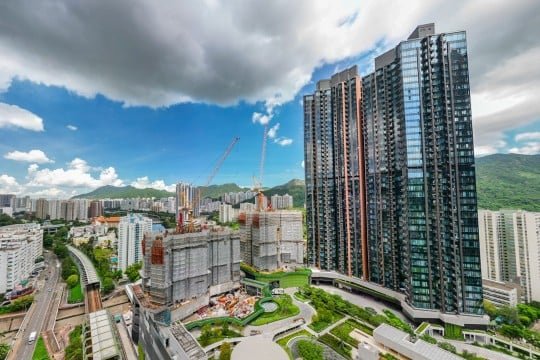
Authorities step up cross-border messaging ahead of Golden Week to enforce strict rules on vaping products
Government enforcement policy is driving a cross-border awareness campaign as Hong Kong intensifies efforts to inform mainland Chinese visitors about its strict ban on e-cigarettes ahead of a major holiday travel surge.

What is confirmed is that Hong Kong authorities have expanded publicity in mainland China before the upcoming Golden Week holiday period, when large numbers of tourists are expected to enter the city.

The campaign focuses on explaining that the import, sale, and manufacture of e-cigarettes and heated tobacco products are prohibited under Hong Kong law, with enforcement extending to travelers carrying such items across the border.

The mechanism is rooted in legislation that took effect in 2022, which banned alternative smoking products including electronic cigarettes, heated tobacco devices, and herbal smoking products.

The law does not criminalize personal possession for private use, but it strictly prohibits bringing these products into the city, creating a compliance risk for incoming visitors who may be accustomed to looser rules elsewhere.

Authorities have identified a recurring problem: mainland visitors arriving with vaping devices unaware that the items are illegal to import.

Enforcement at border checkpoints has led to seizures and, in some cases, penalties, particularly when quantities suggest commercial intent.

The pre-holiday campaign is designed to reduce these incidents by targeting travelers before they depart, using digital platforms, travel channels, and transport hubs in Guangdong and other nearby regions.
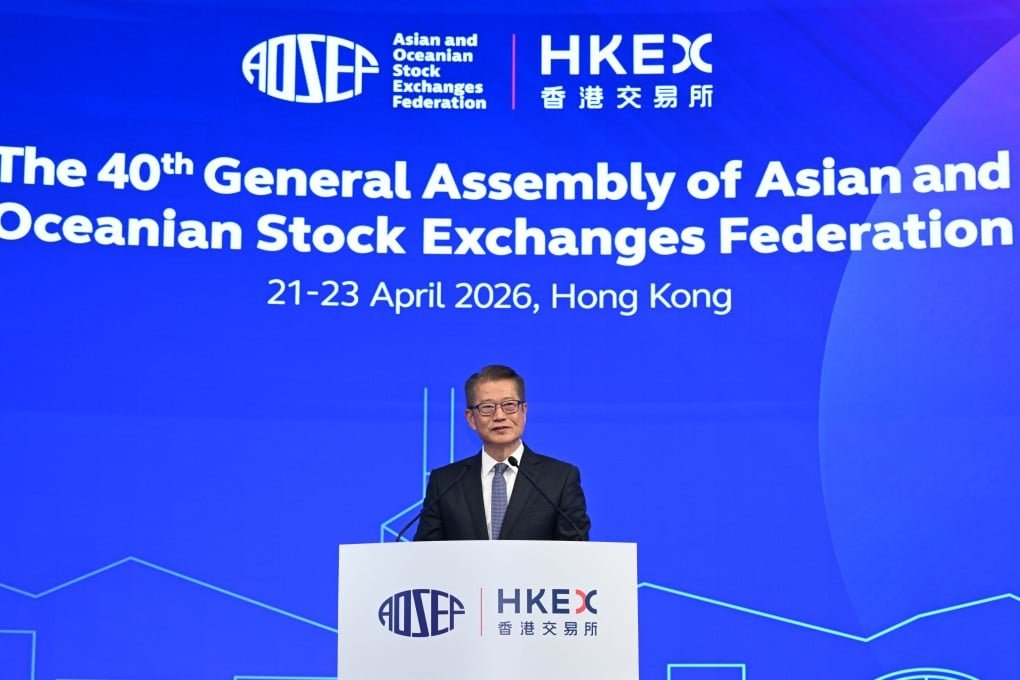
Golden Week, which includes National Day holidays in early October, is one of the busiest travel periods in the region.

Hong Kong expects a significant influx of mainland tourists, many of whom travel independently rather than in organized tour groups.
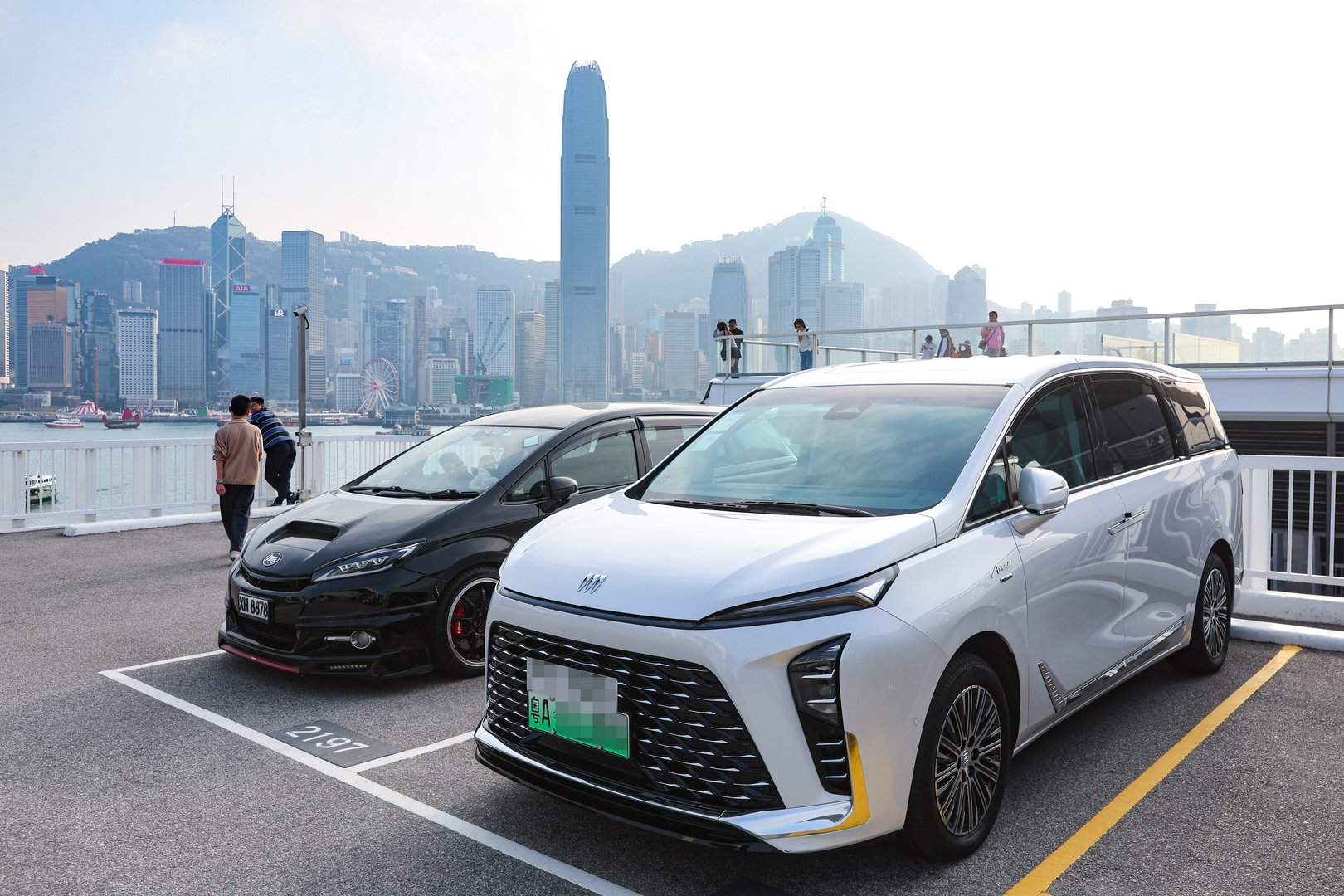
That shift increases the importance of direct communication, as individual travelers are less likely to receive structured briefings on local regulations.

The stakes are both legal and economic.

From an enforcement perspective, clearer awareness reduces the burden on customs and health authorities while ensuring the law is applied consistently.

From a tourism standpoint, minimizing misunderstandings helps avoid negative visitor experiences that could affect Hong Kong’s reputation as a destination.

The policy itself reflects a broader public health strategy.

Hong Kong has positioned itself as one of the stricter jurisdictions globally on alternative smoking products, citing concerns about youth uptake and long-term health risks.

The ban aligns with efforts to reduce overall smoking rates and prevent new forms of nicotine dependence from taking hold.

At the same time, the cross-border dimension exposes regulatory differences within the Greater Bay Area.

E-cigarettes are regulated but not uniformly banned in mainland China, creating a gap in expectations for travelers moving between jurisdictions.

The awareness campaign effectively functions as a bridge between two regulatory systems with different thresholds for control.

The immediate consequence is a more proactive enforcement model that begins before travelers reach the border.

By shifting communication upstream into mainland departure points, Hong Kong is attempting to convert a reactive enforcement issue into a managed compliance process during one of the year’s busiest travel periods.
Capital markets rebound and a renewed push into precious metals signal a strategic bid to restore Hong Kong’s financial edge
Market structure and policy momentum are driving a sharp revival in Hong Kong’s capital markets, with initial public offerings raising more than HK$140 billion so far this year and authorities simultaneously advancing a plan to expand the city’s role in global gold trading.

What is confirmed is that Hong Kong’s IPO market has rebounded strongly after a prolonged downturn, with total fundraising exceeding HK$140 billion, already surpassing recent annual totals.

The increase reflects a pipeline of large mainland Chinese listings returning to the city, alongside improved investor sentiment and more stable global financial conditions compared with the volatility of previous years.

The mechanism behind the recovery is twofold.

First, Chinese companies—particularly in technology, manufacturing, and consumer sectors—are again using Hong Kong as a primary offshore fundraising venue.

Second, regulatory adjustments and listing reforms have reduced friction for issuers, including streamlined approval processes and expanded channels for dual listings.

Together, these shifts have restored deal flow and increased market depth.

The parallel push into gold trading is part of a broader strategy to diversify Hong Kong’s financial infrastructure.

Authorities are working to strengthen the city’s commodities ecosystem, including enhancing storage, settlement, and trading capabilities for precious metals.

The objective is to position Hong Kong as a regional hub for gold pricing, trading, and risk management, linking mainland demand with international markets.

The timing is deliberate.

Global demand for gold has remained resilient amid geopolitical tensions, inflation concerns, and currency volatility.

By expanding its role in gold markets, Hong Kong aims to capture a larger share of capital flows tied to safe-haven assets, complementing its traditional strengths in equities and foreign exchange.

The two developments—IPO recovery and gold trading expansion—are connected by a common goal: reinforcing Hong Kong’s status as a leading international financial center at a time of intensifying competition from regional rivals.

The city’s role as a gateway between mainland China and global investors remains its core advantage, but that position has been tested by shifting capital flows and regulatory changes in recent years.

There are practical implications for issuers and investors.

A stronger IPO pipeline provides companies with access to deep pools of international capital, while investors gain exposure to mainland firms through a familiar legal and financial framework.

At the same time, a more developed gold market offers additional hedging tools and asset diversification options, particularly for institutional participants.

Constraints remain.

Market performance is still sensitive to mainland China’s economic trajectory, global interest rates, and geopolitical risk.

The success of the gold trading initiative will depend on liquidity, pricing credibility, and integration with existing global benchmarks, all of which require sustained participation from major financial institutions.

What has changed is momentum.

The combination of renewed listings and targeted expansion into commodities signals a coordinated effort to rebuild scale and relevance.

The immediate effect is a measurable increase in capital formation and trading activity, reinforcing Hong Kong’s role as a critical financial conduit in Asia.
More than 5,000 applications highlight strong demand for cross-border car access despite tight quotas and phased rollout
A government-run cross-border transport scheme linking Hong Kong and mainland China is driving a sharp rise in applications from Guangdong motorists, with more than 5,000 drivers signing up within months of its launch.

What is confirmed is that the “Southbound Travel for Guangdong Vehicles” scheme, introduced at the end of 2025, allows approved private cars from selected Guangdong cities to enter Hong Kong via the Hong Kong–Zhuhai–Macao Bridge.

The programme operates under strict controls, including a daily quota of 100 vehicles and a maximum stay of three days per trip, reflecting a cautious, pilot-phase rollout.

The mechanism is deliberately constrained.

Applicants must secure advance bookings, pass vehicle inspections, obtain Hong Kong insurance coverage, and comply with local licensing and toll systems.

Only motorists from an initial group of cities—including Guangzhou, Zhuhai, Zhongshan and Jiangmen—are eligible in the first phase, with expansion planned after an initial trial period.

The scale of demand is outpacing early expectations.

Within weeks of launch, thousands of applications were submitted, with a smaller portion converting into confirmed bookings due to the quota system.

The figure has now surpassed 5,000 sign-ups, indicating sustained interest rather than a one-off surge linked to holiday travel periods.

Early usage data shows hundreds of vehicles successfully entering the city, particularly during peak travel windows such as Lunar New Year.

The scheme is the reciprocal counterpart to the “Northbound Travel for Hong Kong Vehicles” programme introduced in 2023, which enabled Hong Kong drivers to enter Guangdong.

That earlier scheme attracted more than 100,000 participating vehicles and significantly increased traffic across the Hong Kong–Zhuhai–Macao Bridge, providing a working model for two-way private car travel within the Greater Bay Area.

The key issue is integration.

The southbound scheme is designed to deepen economic and social links between Hong Kong and mainland cities in the Greater Bay Area by lowering barriers to short-term travel.

Officials expect it to stimulate tourism, retail spending, and business exchanges by making Hong Kong more accessible to mainland visitors who prefer private transport over group tours or public transit.

However, the controlled rollout reflects operational and regulatory sensitivities.

Hong Kong’s dense urban environment, left-hand traffic system, and stricter road regulations require mainland drivers to adapt quickly.

Authorities have emphasized enforcement parity, meaning visiting drivers are subject to the same legal standards as local motorists, including traffic laws and penalties.

There are also infrastructure considerations.

The scheme relies heavily on the Hong Kong–Zhuhai–Macao Bridge as a single entry corridor, and authorities have tied expansion to the system’s ability to manage traffic flow, border processing, and urban congestion.

The low daily quota functions as both a safety valve and a testing mechanism for scaling the programme without overwhelming city roads.

The rapid accumulation of applications underscores a structural shift rather than a temporary spike in interest.

Private car travel offers flexibility and status that public transport does not, particularly for cross-border family visits and short business trips.

That demand aligns with broader policy goals to integrate the Greater Bay Area into a more unified economic zone.

The next phase of the scheme will hinge on gradual quota increases and geographic expansion, with authorities using early data to refine enforcement, infrastructure capacity, and administrative processes.

The immediate consequence is clear: cross-border private vehicle travel between Hong Kong and Guangdong is moving from a controlled experiment toward a scalable regional mobility system.
Unusual flowering and leaf cycles point to climate disruption with cascading ecological risks
Climate-driven shifts in seasonal patterns are increasingly disrupting how trees grow and reproduce in Hong Kong, and botanists now warn the changes are visible, measurable, and potentially far-reaching.

What is confirmed is that several common species are no longer following their established biological calendars.

Trees that typically shed their leaves in winter are retaining foliage into spring, while others are flowering earlier than expected or doing both at once.

This phenomenon has been observed in species such as the red kapok, or cotton tree, and the flame tree—plants long used as seasonal markers in the city.

The mechanism at the center of the shift is plant phenology, the study of how growth cycles—leafing, flowering, and dormancy—respond to environmental conditions.

These cycles are tightly regulated by temperature, rainfall, and daylight.

When those inputs change, the timing of biological events changes with them.

Hong Kong has recently recorded unusually warm winters, with average temperatures significantly above historical norms, altering the environmental signals that trees rely on.

The result is visible disorder.

Instead of shedding leaves before blooming, some trees now carry both leaves and flowers simultaneously.

In others, flowering begins weeks earlier than expected.

These changes are no longer isolated anomalies but have become increasingly common over the past decade, suggesting a systemic shift rather than random variation.

The implications extend beyond appearance.

Trees operate within tightly coordinated ecological systems.

Flowering time determines when nectar is available for birds and insects; leaf cycles influence habitat and food availability.

When plants shift their timing, species that depend on them may fall out of sync.

Pollinators may miss peak flowering periods, while birds and other animals may encounter reduced or mistimed food supplies.

There are also physiological costs for the trees themselves.

Maintaining leaves while producing flowers forces plants to divide energy between competing processes.

Early observations suggest this may reduce the intensity or duration of flowering, potentially weakening reproductive success over time.

Scientists argue that the current observations are only the surface of a deeper structural change.

Short-term fluctuations cannot fully explain patterns that are now recurring across multiple species and locations.

A long-term, citywide study—potentially lasting years—has been proposed to track how plant life is responding to sustained warming and how those changes propagate through the broader ecosystem.

The stakes are practical as well as ecological.

Urban trees contribute to temperature regulation, air quality, and biodiversity in one of the world’s densest cities.

Disruptions to their growth cycles could affect everything from urban cooling to wildlife stability.

The issue is no longer confined to botany; it is a visible indicator of how climate change is reshaping living systems in real time.

The emerging picture is not of isolated “strange” trees, but of a coordinated biological response to a warming environment—one that is already altering the timing, structure, and reliability of urban ecosystems.
Authorities removed a group of asylum seekers following failed protection claims, highlighting tightening scrutiny of non-refoulement applications and renewed pressure on Hong Kong’s immigration system.
An immigration enforcement system governing asylum and non-refoulement protection claims in Hong Kong is driving the removal of a group of Vietnamese migrants after authorities rejected their applications for protection against return.

What is confirmed is that Hong Kong authorities deported around 30 Vietnamese nationals after their claims under the city’s non-refoulement protection framework were denied.

The individuals had sought protection on the basis that they would face risk if returned to Vietnam, but their applications were assessed and ultimately rejected under Hong Kong’s legal standards for protection from forced return.

Non-refoulement is a legal principle that prohibits returning individuals to a country where they face a credible risk of persecution, torture, or other serious harm.

In Hong Kong, this principle is implemented through a screening mechanism that evaluates asylum and protection claims, even though the city is not a party to the United Nations Refugee Convention.

Instead, claims are assessed under local immigration law and constitutional protections.

The removal of this group reflects the outcome of that screening process, where authorities determined that the threshold for protection was not met.

Once claims are rejected, individuals are subject to deportation unless they successfully appeal or obtain alternative legal grounds to remain.

The mechanism behind such removals is administrative and legal rather than discretionary enforcement.

Claims are first screened for credibility and risk, then subjected to detailed assessment procedures that may include interviews and evidence review.

If authorities conclude that risk criteria are not satisfied, deportation orders can be issued and enforced.

The broader context is increased pressure on Hong Kong’s immigration and asylum system, which has handled thousands of protection claims over the past decade.

The system has faced criticism from rights groups over processing times and rejection rates, while authorities have emphasized the need to prevent misuse of protection claims and maintain immigration control.

For Vietnam, migration flows to Hong Kong have historically included both economic migrants and individuals seeking asylum based on claimed risks.

Over time, the number of Vietnamese claims has fluctuated, but enforcement actions have continued as part of routine immigration management.

The implications of this latest removal are procedural rather than policy-changing.

It demonstrates continued enforcement of existing legal thresholds for non-refoulement protection and signals that rejected claims will result in removal rather than prolonged residence under uncertain status.

The case also reinforces the operational reality of Hong Kong’s immigration framework: protection is conditional on meeting a high evidentiary threshold, and failure to do so results in return to country of origin under formal deportation procedures.
The oil major is exploring a divestment of its Esso-branded Hong Kong gas station network in a deal valued at up to $500–600 million, reflecting a broader global retreat from retail fuel assets and shifting demand toward electrification and asset-light strategies.
A corporate restructuring trend in the global energy sector, rather than a one-off asset sale, is driving Exxon Mobil’s consideration of selling its Hong Kong fuel station network in a deal valued at roughly $500 million to $600 million.

What is confirmed is that Exxon Mobil is exploring the sale of its gasoline retail operations in Hong Kong, where it operates around 41 Esso-branded service stations.

The company has engaged financial advisers and entered discussions with a small group of potential bidders.

No final decision has been made, and the process remains at an exploratory stage.

The asset under consideration is part of Exxon’s downstream retail footprint, a segment that includes direct fuel sales to consumers through service stations.

In Hong Kong, this network has operated for decades and represents one of the company’s more established retail presences in Asia.

The valuation being discussed reflects both the infrastructure scale and the relatively stable cash flows associated with urban fuel retail operations.

The mechanism behind the potential sale is strategic repositioning.

Global oil majors have increasingly sought to reduce exposure to capital-intensive, lower-margin retail fuel distribution networks, particularly in densely urban markets where electrification of transport is accelerating.

As electric vehicle penetration rises and fuel demand growth slows in advanced economies, retail station ownership is becoming less central to long-term profitability models.

At the same time, these assets remain attractive to regional energy firms, trading houses, and infrastructure investors seeking stable, long-duration cash flow.

Hong Kong’s network, with its established urban footprint and limited land availability, falls into this category.

This mismatch between seller strategy and buyer interest is a key driver of the transaction pipeline.

The broader context is a gradual restructuring of Exxon’s global downstream portfolio.

The company has been reviewing and divesting retail fuel assets in multiple markets as part of a strategy to concentrate capital on upstream production and higher-return industrial segments.

Similar transactions in other regions have established pricing benchmarks that place the Hong Kong network in the mid-hundreds of millions of dollars range.

Hong Kong itself adds a specific structural dimension.

The city has one of the most electrified urban transport systems in Asia, with rising adoption of electric vehicles and strong reliance on public transport, which limits long-term growth in conventional fuel consumption.

This weakens the strategic rationale for maintaining large-scale retail fuel ownership compared with earlier decades when gasoline demand growth was more predictable.

The transaction, if completed, would represent another step in the gradual reshaping of fuel retail ownership across Asia, where international oil majors are increasingly replaced by regional operators or financial investors.

It would also reinforce a broader industry shift: downstream retail is being treated less as a core strategic asset and more as a monetizable infrastructure holding.

For Hong Kong, the outcome would not significantly alter fuel availability but would change ownership structure and potentially accelerate operational consolidation in the city’s service station market.

For Exxon, it would mark continued simplification of its downstream portfolio and further concentration on upstream production and integrated energy operations.
Sales of ultra-luxury properties in Hong Kong jumped 156% in the first quarter, driven by rising wealth effects, mainland Chinese capital inflows, and renewed appetite for trophy assets despite a fragmented recovery in the broader housing market.
The recovery in Hong Kong’s ultra-luxury residential property market is being driven by a structural shift in high-net-worth capital allocation, with investors increasingly rotating wealth from equities into scarce, high-end real estate assets.

What is confirmed is that transactions for homes valued above HK$100 million rose sharply in the first quarter of 2026 compared with the same period a year earlier, with sales increasing by about 156%.

The total number of such deals reached 64, while the aggregate value of transactions more than doubled.

The expansion reflects renewed activity at the very top end of the market after a prolonged downturn triggered by higher interest rates and weak sentiment in previous years.

The underlying mechanism is a combination of improved financial-market performance and stabilizing borrowing conditions.

Wealth effects from equity gains have increased liquidity among affluent buyers, particularly in Asia’s financial elite.

This has encouraged a reallocation of capital into property, which is viewed not only as housing but as a store of wealth and status-preserving asset class.

Lower mortgage uncertainty compared with earlier tightening cycles has also contributed to improved transaction confidence.

Buyer composition is central to the current dynamic.

Mainland Chinese investors continue to play a major role, alongside local wealthy families and international buyers.

In the luxury segment, demand is concentrated in rare, high-quality assets—properties in elite districts such as The Peak and southern Hong Kong Island—where scarcity and prestige matter more than general price levels.

In some cases, mainland buyers are estimated to account for a significant share of transactions in this segment, although exact proportions vary by dataset and remain partially opaque due to limited disclosure of buyer nationality.

Despite the surge in luxury activity, the broader market remains uneven.

Mid-tier and mass residential segments have not experienced the same level of recovery, and pricing across the wider market is still adjusting after a multi-year correction from previous peaks.

This divergence underscores that the current rebound is not a general housing boom but a concentration of capital at the top end.

Analysts describe the market environment as selective rather than broadly inflationary.

Buyers are prioritizing properties with structural scarcity—prime views, low density, strong privacy, and established prestige addresses—while less distinctive luxury units face longer selling periods and more negotiation pressure.

This bifurcation suggests that liquidity is returning unevenly, flowing first into assets with the strongest long-term desirability.

Policy and macroeconomic conditions remain important background factors.

Hong Kong’s currency peg to the US dollar means interest rate expectations remain linked to US monetary policy, affecting financing costs for property purchases.

At the same time, recent policy adjustments aimed at supporting the property sector have helped stabilize sentiment, but have not eliminated structural constraints such as affordability pressures and uneven economic recovery.

The result is a market defined by two simultaneous realities: a sharp rebound in ultra-luxury demand driven by global and regional wealth accumulation, and a still-fragile broader housing market adjusting to higher financing costs and shifting demand patterns.

The current cycle is therefore less a uniform recovery than a re-pricing of scarcity at the very top of Hong Kong’s property hierarchy.
US briefing highlights Hong Kong as the world’s second-largest biotech funding hub, underscoring a structural recovery in listings, venture flows, and cross-border life sciences investment.
A government and industry-driven financial ecosystem, not a single market event, is reinforcing Hong Kong’s position as a global hub for biotech capital formation, with recent international briefings in the United States highlighting its role as the world’s second-largest biotech funding centre after New York.

What is confirmed is that Hong Kong has been publicly described in recent official investment outreach as the second-largest global biotech fundraising hub, supported by its equity markets and listing reforms.

The classification is based on the scale of biotech capital raised through public listings and related financing activity, which has expanded significantly since regulatory changes introduced in 2018 allowed early-stage and pre-revenue biotech companies to list in the city.

The structural mechanism behind this position is Hong Kong’s capital markets framework.

The introduction of dedicated listing rules for biotech firms enabled companies without profits to access public funding earlier than in many other jurisdictions.

Since these reforms, dozens of biotech companies have listed, collectively raising tens of billions of US dollars and building one of the most active life sciences fundraising pipelines in Asia.

This has positioned Hong Kong as a financing bridge between mainland China’s research ecosystem and global capital markets.

The city’s exchange infrastructure, combined with its international investor base and proximity to mainland scientific clusters, has made it a preferred venue for biotech initial public offerings and secondary fundraising.

Market data from recent years consistently place Hong Kong just behind New York in global biotech fundraising scale.

The renewed emphasis on Hong Kong’s status comes at a time when global biotech financing is uneven.

After a period of tightening liquidity and weaker risk appetite, capital has begun returning selectively to life sciences, particularly in markets where listing rules and investor access remain favorable.

Hong Kong’s rebound in biotech listings and healthcare sector activity reflects this broader rotation rather than a uniform global recovery.

Within the ecosystem, growth has not been evenly distributed.

Larger, clinically advanced or platform-based biotech firms have attracted disproportionate investor attention, while earlier-stage or less differentiated companies continue to face capital constraints.

This reflects a global pattern in which investors increasingly concentrate funding on fewer, more mature or strategically positioned assets.

The strategic stakes for Hong Kong are significant.

Biotech funding is not only a capital market indicator but also a measure of competitiveness in global innovation financing.

Maintaining this position depends on continued listing activity, regulatory efficiency, and the ability to attract cross-border institutional investors amid competition from other financial centers in the United States and Asia.

At the same time, the sector is closely tied to broader policy and technology development trends, including clinical trial infrastructure, drug approval processes, and integration with mainland China’s innovation economy.

These factors collectively determine whether Hong Kong remains a leading conduit for life sciences capital or experiences relative erosion as global competition intensifies.

The current positioning signals continuity rather than disruption: Hong Kong remains embedded in the top tier of global biotech finance, but its role is increasingly defined by specialization in cross-border capital access and high-concentration equity financing for late-stage innovation companies.
The insurer’s latest recognition is tied to official market statistics and long-running distribution dominance across policies and premium channels, reflecting entrenched scale advantages in Hong Kong’s life insurance sector
SYSTEM-DRIVEN: the structure and competitive dynamics of Hong Kong’s life insurance market, where distribution scale, policy persistence, and premium inflows determine leadership positions.

AIA Hong Kong has maintained its position as the city’s leading insurer of choice for twelve consecutive years, according to the latest market-based performance indicators drawn from Hong Kong’s long-term insurance statistics.

The designation is not a subjective branding label but is anchored in measurable outcomes such as the number of new business policies written and the number of in-force policies maintained across the insurer’s portfolio.

What is confirmed is that AIA continues to rank first in multiple core market categories, including both new policy generation and existing policy retention.

These metrics are widely used in the insurance sector as indicators of distribution strength and customer persistence.

New business policies reflect the insurer’s ability to attract fresh customers, while in-force policies measure the durability of existing contracts and renewal stability over time.

The latest reporting also confirms that AIA’s leadership position is not limited to a single channel.

Its dominance extends across agency distribution networks, brokerage channels, and broader premium generation metrics, indicating a multi-channel sales structure that continues to outperform competitors in aggregate volume.

This breadth of performance is a key reason the company’s market position has remained stable across more than a decade.

The mechanism behind this sustained leadership lies in scale.

AIA operates one of the largest tied-agent networks in Hong Kong and benefits from deep penetration across both local and cross-border customer segments.

In a market where life insurance is heavily intermediated rather than directly purchased, distribution reach functions as a structural advantage.

Once established, such networks tend to reinforce themselves through recruitment, training systems, and long-term client servicing relationships.

The stakes of this position are financial and systemic.

In Hong Kong’s insurance market, size directly influences access to recurring premium inflows, which in turn supports long-duration investment portfolios held by insurers.

These portfolios are typically invested in bonds, real estate, and long-term financial instruments, meaning stable policy inflows translate into predictable capital deployment capacity.

The latest recognition also aligns with broader industry data trends showing that AIA continues to hold leading positions in both policy volume and premium generation across recent reporting periods.

This includes sustained leadership in new business policy counts over multiple years, reinforcing the durability of its distribution footprint rather than a short-term performance spike.

From a consumer perspective, the implication is less about brand perception and more about market concentration.

A small number of large insurers dominate Hong Kong’s life insurance sector, and AIA’s continued position at the top reflects the inertia created by long-term contracts, advisor networks, and customer retention patterns in insurance products that often span decades.

As a result, the company’s twelve-year streak as insurer of choice signals not a single-year achievement but a structurally reinforced market outcome, where distribution scale and policy retention continue to outweigh short-term competitive shifts.
The property group cancels newly repurchased shares as part of an ongoing programme that steadily reduces outstanding stock and marginally concentrates ownership
SYSTEM-DRIVEN: capital allocation and equity structure management through a sustained share buyback programme.

Hongkong Land, one of Asia’s largest commercial property investors with a major portfolio anchored in Hong Kong’s Central business district, has continued to reduce its outstanding share count through a series of market buybacks followed by cancellation of the repurchased shares.

The latest disclosed transaction involved the repurchase of approximately 170,000 ordinary shares, which will be cancelled, bringing the company’s issued share capital to roughly 2.15 billion voting shares with no treasury stock held.

What is confirmed is that the company is actively executing a structured capital return programme in which shares are bought in the open market and then permanently retired.

This is not a one-off action but part of a sequence of similar transactions carried out over recent months, each reducing the total number of shares in circulation by relatively small increments.

The pricing of recent repurchases has generally clustered in the high single-digit US dollar range per share, reflecting market conditions at the time of execution.

The mechanism is straightforward but financially meaningful over time.

When a company cancels shares, the total equity base shrinks.

That does not change the underlying value of the property portfolio, but it does increase each remaining share’s proportional claim on future earnings and assets.

In accounting terms, this can modestly support earnings per share even when net income remains unchanged, simply because profits are divided across fewer shares.

Hongkong Land’s approach sits within a broader strategy of capital recycling.

In parallel with buybacks, the company has previously engaged in asset-level transactions in its prime Central district holdings, converting illiquid real estate value into cash that can be redeployed or returned to shareholders.

The buyback programme is typically funded through internal cash flow and asset monetisation rather than external leverage expansion, signalling a preference for balance sheet discipline over aggressive growth.

The stakes are primarily structural rather than speculative.

For investors, sustained buybacks in a mature property landlord signal management’s view that internal equity is undervalued relative to intrinsic asset value or that alternative deployment opportunities are limited.

In either case, returning capital via share reduction becomes a default efficiency mechanism.

However, the economic impact should be kept in proportion.

Each individual buyback in recent filings is small relative to the company’s multi-billion share base, meaning the near-term effect on valuation or control is incremental rather than transformative.

The longer-term effect depends on whether the programme continues at scale and whether it is paired with stable or improving underlying property income.

The broader implication is that Hongkong Land is gradually tightening its equity structure while maintaining exposure to a high-quality but mature real estate portfolio.

The continued reduction in share count signals disciplined capital management rather than expansion-driven growth, reinforcing a shareholder return model anchored in incremental value enhancement rather than structural business change.
Restricted access conditions force residents of the Hong Kong housing estate to physically carry valuables and personal items up and down high-rise stairwells
The underlying driver of this situation is an event-driven access restriction affecting residents of Wang Fuk Court, a public housing estate in Hong Kong, where physical movement into residential units has become difficult enough that retrieval of personal belongings requires sustained physical effort.

What is confirmed in the reported situation is that residents of Wang Fuk Court have been making long climbs through stairwells in order to retrieve family treasures and personal possessions from their homes.

The process involves carrying items through multi-storey walk-ups in conditions that significantly increase the physical burden on residents, many of whom are navigating repeated trips to recover essential and sentimental belongings.

The key issue is not only the act of retrieval itself but the conditions under which it is taking place.

High-density public housing estates in Hong Kong are vertically structured, and access constraints or temporary restrictions can turn routine movement into a physically demanding task.

In this context, even short retrieval trips become extended exercises in endurance, particularly for elderly residents or those with limited mobility.

The stakes are primarily personal and material.

Family treasures in this context refer to irreplaceable items such as photographs, documents, keepsakes, and culturally significant household objects.

These are not easily substitutable, which increases urgency even when access conditions are difficult.

The effort required to recover them reflects a trade-off between physical strain and the perceived irreplaceability of the items being retrieved.

The broader implication lies in how urban housing infrastructure shapes everyday resilience.

In dense vertical living environments, access limitations or disruptions can quickly translate into logistical and physical challenges for residents.

The situation at Wang Fuk Court illustrates how the design of high-rise public housing amplifies the cost of movement when normal access patterns are disrupted.

As residents continue these repeated climbs, the immediate consequence is a sustained physical and emotional strain tied to the recovery of personal property, highlighting how infrastructure conditions directly shape the experience of recovery and loss in high-density urban housing systems.
Large-scale waterfront project signals renewed competition for prime coastal real estate amid shifting demand for luxury maritime and mixed-use developments
The underlying driver of the Aberdeen marina redevelopment in Hong Kong is a system-level shift in how waterfront land is being repositioned for high-value mixed-use and luxury maritime development in a constrained real estate market.

What is confirmed is that a major redevelopment project centered on the Aberdeen marina area has attracted interest from both local and overseas investors.

The site, located in a traditional fishing and boating district on Hong Kong Island’s southern coast, is being positioned for transformation into a modernized marina-led development integrating leisure, residential, and commercial components.

The project forms part of a broader pattern of waterfront regeneration in Hong Kong, where limited available coastal land has made marina-adjacent sites increasingly strategic assets.

These developments typically combine berthing facilities for private yachts with high-end residential towers, retail space, and hospitality infrastructure.

The Aberdeen site is considered particularly valuable due to its sheltered harbor, established maritime culture, and proximity to central urban districts.

Investor interest reflects a renewed appetite for long-term, asset-backed real estate projects in Hong Kong, particularly those linked to lifestyle infrastructure rather than purely speculative residential supply.

Both local developers and overseas capital groups are assessing participation, indicating confidence in the site’s potential positioning within the luxury marine and tourism economy.

The redevelopment also sits within a broader structural context in which Hong Kong’s coastal infrastructure is being gradually repurposed.

Traditional fishing and industrial maritime zones have, over time, been integrated into urban redevelopment frameworks as economic activity in those sectors has declined or relocated.

Aberdeen is emblematic of this transition, balancing its historic identity as a working harbor with increasing pressure for commercial modernization.

The mechanism driving the project’s attractiveness is the scarcity of comparable marina sites in Hong Kong.

Strict land constraints and high population density have made waterfront developments rare, which in turn increases their long-term value proposition.

Investors typically view such assets as resilient due to their limited supply and strong association with high-income consumption patterns, including private boating, tourism, and premium hospitality services.

At the same time, redevelopment of established maritime communities introduces operational and planning complexity.

Projects of this scale require coordination between government land authorities, transport and marine regulators, and private developers, particularly in areas where existing harbor usage must be integrated into new commercial frameworks.

The balance between preserving public access, maintaining marine activity, and enabling private development remains a central design constraint.

The broader implication of renewed interest in Aberdeen is the continued financialization of Hong Kong’s coastal geography, where cultural and working waterfronts are increasingly absorbed into high-value real estate cycles.

If progressed, the project would reinforce the city’s position as a regional hub for luxury marina development while reshaping one of its most historically significant harbor districts into a mixed-use economic zone anchored in property and leisure capital.
KPMG Cuts Around 10% of US Audit Partners After Failed Exit Push
French Police Probe Suspected Weather-Data Tampering After Unusual Polymarket Bets on Paris Temperatures
CATL Unveils Revolutionary EV Battery Tech: 1000 km Range and 7-Minute Charging Ahead of Beijing Auto Show
Changi Airport: How Singapore Engineered the World’s Most Efficient Travel Experience
Italy’s €100K Tax Gambit: Europe’s Soft Power Tax Haven
Travel on all public transport in the Australian state of Victoria will be free in May and then half price for the remainder of this year as the government ramps up help for consumers battling high fuel costs
News Roundup
Zhejiang China Commodities City Group Eyes Hong Kong IPO to Drive Global Expansion
Chinese Healthcare Stocks Surge in Hong Kong as Middle East Tensions Rattle Markets
Hong Kong to Channel Diesel Subsidies Directly to Oil Firms Amid Oversight Concerns
Hong Kong to Host Major Wiki Finance Expo 2026 Showcasing Fintech and Web3 Innovation
Hong Kong Police Arrest Suspect in Major Patient Data Leak Affecting Tens of Thousands
ISOPT Gears Up for Joint Scientific Meeting Across Shenzhen and Hong Kong
Hong Kong Tunnel Toll Cuts Leave Taxi Passengers Without Fare Relief
Hong Kong’s Dining Scene Shines with Must-Visit Restaurants This April
Hong Kong Awards First Stablecoin Licences to Major Banking Players
From Factory Floor to Fortune: Hong Kong Worker Rises to Global Wealth Elite
Hong Kong Laundry Businesses Struggle as Rising Oil Prices Drive Costs Higher
Workplace Sexual Harassment Complaints Rise Sharply in Hong Kong
Manycore Targets $130 Million Raise in Hong Kong IPO as Hangzhou Tech Firms Expand
IPO Activity in Mainland China and Hong Kong Shows Renewed Momentum in Early 2026
Hong Kong Urged to Strengthen Resilience Amid Increasingly Complex Global Environment
Norman Foster’s Vision Redefined Hong Kong’s Skyline and Global Trading Architecture
Hong Kong Anti-Corruption Body Emphasizes Clean Governance as Foundation for Sustainable Growth
dentsu Hong Kong and Café de Coral Bring Social Media Energy to Life with Flash-Mob at CON-CON 2026
Hong Kong Dining Scene Showcases Top Quick-Service and Casual Restaurants in 2026 Rankings
Hong Kong Collectors Shift Focus from Ownership to Public Cultural Engagement
Chinese Firm’s Washington Outreach Linked to Trump-Era Networks Yields Policy Breakthrough
Hong Kong PMI Slips Below Growth Threshold as External Pressures Weigh on Business Activity
Hong Kong Surges Ahead of Wall Street and Europe in Global IPO Rankings
Hong Kong Moves to Criminalise Refusal to Provide Passwords in Investigations
Hong Kong Shapes Near-Term Property Outlook Across Greater Bay Area
Liu Wei’s ‘You Like Pork?’ Tops Poly Hong Kong Art Sale at 3.5 Million Dollars
Artificial Intelligence Takes Centre Stage at Hong Kong Technology Fairs
Hongkong Land Executives Increase Holdings Through Senior Management Share Plan
Hong Kong Company Launches Arbitration Against Maersk Over Panama Port Dispute
Hong Kong Urges Foreign Governments to Lift Covid-Era Flight Restrictions
Hong Kong Mortgage Corporation Explores Landmark Digital Bond Offering
Hong Kong Steps Up Scrutiny of Bank Culture in Push for Stronger Financial Governance
Hong Kong Clarifies Digital Currency Strategy, Says It Is Not Competing With US Stablecoins or Digital Yuan
Chinese AI Glasses Firm Rokid Plans Hong Kong IPO to Accelerate Expansion
Hong Kong Doctor Faces Disciplinary Review After Sharing Resuscitation Image Online
Hong Kong’s East Dam Draws Strong Easter Crowds With Steady Visitor Surge
Cathay Pacific Flight Diverts to Japan After Mid-Air Issue on Los Angeles–Hong Kong Route
U Power Expands Battery-Swapping Truck Plans in Thailand and Eyes Hong Kong Taxi Rollout
Hong Kong Selected to Host INTERPOL General Assembly at End of Year
7-Eleven Recreates Its First Hong Kong Store to Celebrate Anniversary Milestone
Wilson Sonsini Strengthens Hong Kong Presence With Senior Antitrust Hire
Chilled Red Wine Gains Popularity in Hong Kong as Tastes and Climate Shape New Trend
China and Australia Strengthen Energy Dialogue Amid Middle East Supply Disruptions