Chinese traders accelerate sales of Hong Kong-listed stocks through cross-border trading links, marking the fastest pace of selling on record amid a surge in mainland equity markets.
Investors in mainland China have sold Hong Kong-listed shares at the fastest pace on record, signaling a sharp shift in capital flows as traders redirect funds toward a booming domestic stock market.
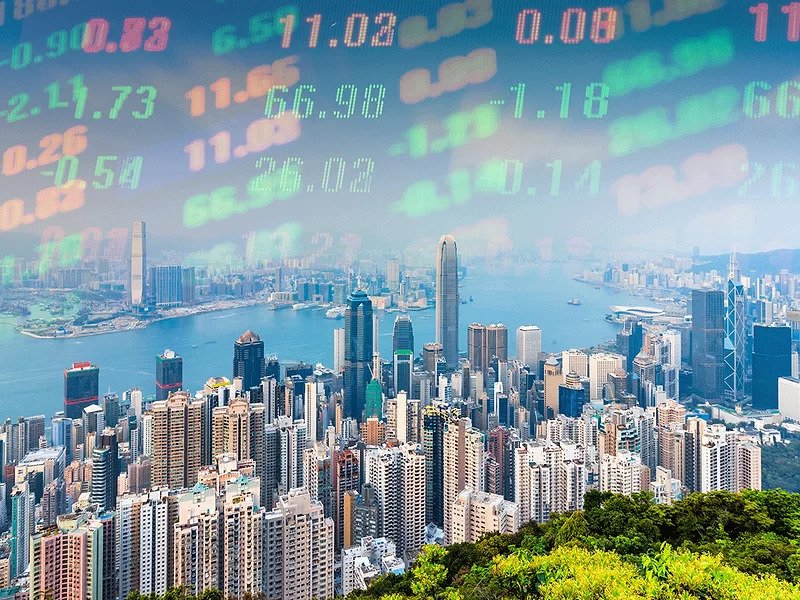
Data from cross-border trading channels linking mainland exchanges with Hong Kong show that mainland investors offloaded a record HK$20.4 billion worth of Hong Kong equities in a single day, surpassing the previous peak set in 2021. The selling spree reflects a rapid rebalancing by investors as opportunities in mainland markets become increasingly attractive.
Market analysts say the move is largely driven by a powerful rally in Chinese onshore equities, which has drawn significant retail participation and revived enthusiasm among investors across the country.
A surge in mainland stock prices—estimated to have added roughly one trillion dollars in market value—has encouraged traders to rotate funds back into domestic markets.
The shift is occurring through the so-called “southbound” trading link of the Stock Connect programme, a cross-border system that allows mainland investors to buy and sell selected Hong Kong-listed stocks through exchanges in Shanghai and Shenzhen.
The mechanism has become a major channel for capital flows between the two markets since its introduction in 2014. ([Zawya][2])
Analysts caution that the record selling does not necessarily signal a broader loss of confidence in Hong Kong’s financial markets.
Instead, they describe the trend as a tactical rotation of capital after earlier periods of heavy buying in the city’s equities.
Investors had previously poured large sums into Hong Kong shares, particularly in technology companies, seeking exposure to firms such as Tencent and Alibaba that are not fully accessible through mainland exchanges.
The episode highlights how closely Hong Kong’s stock market has become tied to mainland capital flows.
In recent years, mainland investors have accounted for a growing share of trading activity in the city, sometimes representing roughly a quarter of daily turnover through the Stock Connect programme.
While the sudden outflow has placed short-term pressure on Hong Kong equities, analysts say the long-term relationship between the two markets remains intact.
Hong Kong continues to provide mainland investors with access to global capital markets and to companies listed outside China’s domestic exchanges.
For now, the record pace of selling illustrates the speed with which investor sentiment can shift as Chinese markets evolve.
As the rally in mainland stocks gathers momentum, capital flows across the region’s interconnected exchanges are likely to remain highly dynamic.
Data from cross-border trading channels linking mainland exchanges with Hong Kong show that mainland investors offloaded a record HK$20.4 billion worth of Hong Kong equities in a single day, surpassing the previous peak set in 2021. The selling spree reflects a rapid rebalancing by investors as opportunities in mainland markets become increasingly attractive.
Market analysts say the move is largely driven by a powerful rally in Chinese onshore equities, which has drawn significant retail participation and revived enthusiasm among investors across the country.
A surge in mainland stock prices—estimated to have added roughly one trillion dollars in market value—has encouraged traders to rotate funds back into domestic markets.
The shift is occurring through the so-called “southbound” trading link of the Stock Connect programme, a cross-border system that allows mainland investors to buy and sell selected Hong Kong-listed stocks through exchanges in Shanghai and Shenzhen.
The mechanism has become a major channel for capital flows between the two markets since its introduction in 2014. ([Zawya][2])
Analysts caution that the record selling does not necessarily signal a broader loss of confidence in Hong Kong’s financial markets.
Instead, they describe the trend as a tactical rotation of capital after earlier periods of heavy buying in the city’s equities.
Investors had previously poured large sums into Hong Kong shares, particularly in technology companies, seeking exposure to firms such as Tencent and Alibaba that are not fully accessible through mainland exchanges.
The episode highlights how closely Hong Kong’s stock market has become tied to mainland capital flows.
In recent years, mainland investors have accounted for a growing share of trading activity in the city, sometimes representing roughly a quarter of daily turnover through the Stock Connect programme.
While the sudden outflow has placed short-term pressure on Hong Kong equities, analysts say the long-term relationship between the two markets remains intact.
Hong Kong continues to provide mainland investors with access to global capital markets and to companies listed outside China’s domestic exchanges.
For now, the record pace of selling illustrates the speed with which investor sentiment can shift as Chinese markets evolve.
As the rally in mainland stocks gathers momentum, capital flows across the region’s interconnected exchanges are likely to remain highly dynamic.