Restricted access conditions force residents of the Hong Kong housing estate to physically carry valuables and personal items up and down high-rise stairwells
The underlying driver of this situation is an event-driven access restriction affecting residents of Wang Fuk Court, a public housing estate in Hong Kong, where physical movement into residential units has become difficult enough that retrieval of personal belongings requires sustained physical effort.
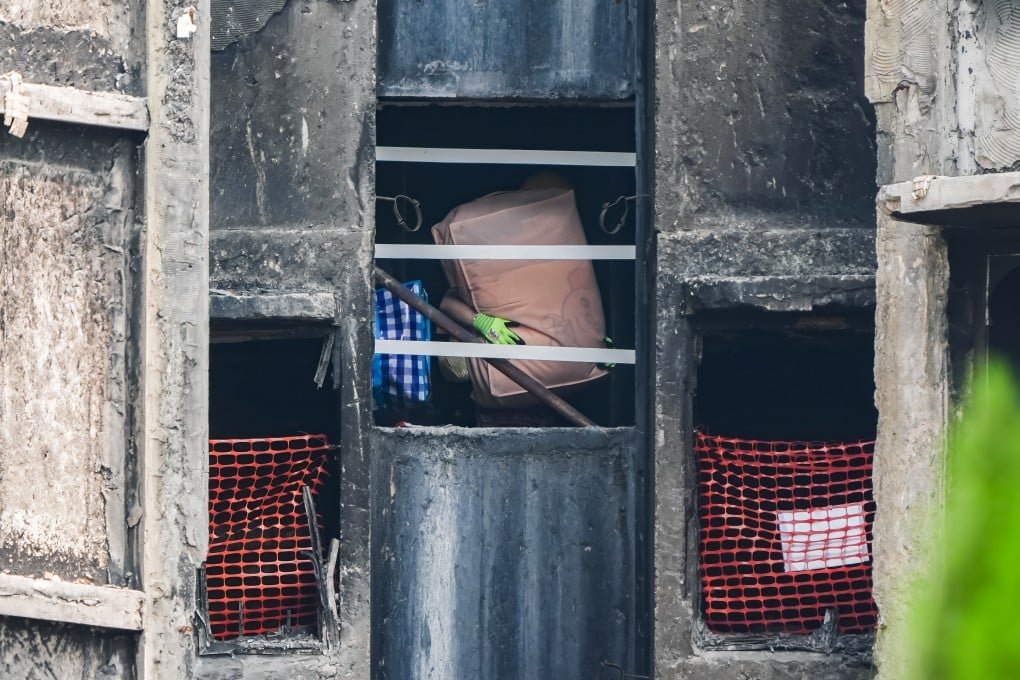
What is confirmed in the reported situation is that residents of Wang Fuk Court have been making long climbs through stairwells in order to retrieve family treasures and personal possessions from their homes.
The process involves carrying items through multi-storey walk-ups in conditions that significantly increase the physical burden on residents, many of whom are navigating repeated trips to recover essential and sentimental belongings.
The key issue is not only the act of retrieval itself but the conditions under which it is taking place.
High-density public housing estates in Hong Kong are vertically structured, and access constraints or temporary restrictions can turn routine movement into a physically demanding task.
In this context, even short retrieval trips become extended exercises in endurance, particularly for elderly residents or those with limited mobility.
The stakes are primarily personal and material.
Family treasures in this context refer to irreplaceable items such as photographs, documents, keepsakes, and culturally significant household objects.
These are not easily substitutable, which increases urgency even when access conditions are difficult.
The effort required to recover them reflects a trade-off between physical strain and the perceived irreplaceability of the items being retrieved.
The broader implication lies in how urban housing infrastructure shapes everyday resilience.
In dense vertical living environments, access limitations or disruptions can quickly translate into logistical and physical challenges for residents.
The situation at Wang Fuk Court illustrates how the design of high-rise public housing amplifies the cost of movement when normal access patterns are disrupted.
As residents continue these repeated climbs, the immediate consequence is a sustained physical and emotional strain tied to the recovery of personal property, highlighting how infrastructure conditions directly shape the experience of recovery and loss in high-density urban housing systems.
What is confirmed in the reported situation is that residents of Wang Fuk Court have been making long climbs through stairwells in order to retrieve family treasures and personal possessions from their homes.
The process involves carrying items through multi-storey walk-ups in conditions that significantly increase the physical burden on residents, many of whom are navigating repeated trips to recover essential and sentimental belongings.
The key issue is not only the act of retrieval itself but the conditions under which it is taking place.
High-density public housing estates in Hong Kong are vertically structured, and access constraints or temporary restrictions can turn routine movement into a physically demanding task.
In this context, even short retrieval trips become extended exercises in endurance, particularly for elderly residents or those with limited mobility.
The stakes are primarily personal and material.
Family treasures in this context refer to irreplaceable items such as photographs, documents, keepsakes, and culturally significant household objects.
These are not easily substitutable, which increases urgency even when access conditions are difficult.
The effort required to recover them reflects a trade-off between physical strain and the perceived irreplaceability of the items being retrieved.
The broader implication lies in how urban housing infrastructure shapes everyday resilience.
In dense vertical living environments, access limitations or disruptions can quickly translate into logistical and physical challenges for residents.
The situation at Wang Fuk Court illustrates how the design of high-rise public housing amplifies the cost of movement when normal access patterns are disrupted.
As residents continue these repeated climbs, the immediate consequence is a sustained physical and emotional strain tied to the recovery of personal property, highlighting how infrastructure conditions directly shape the experience of recovery and loss in high-density urban housing systems.