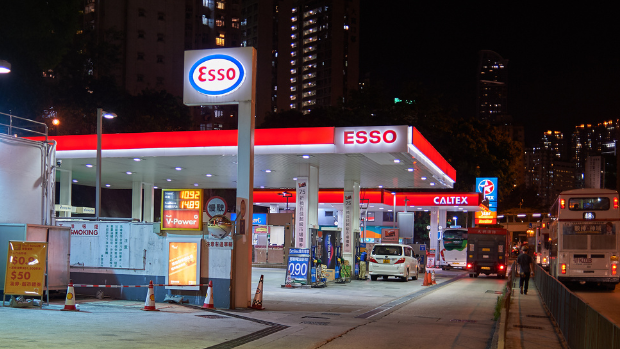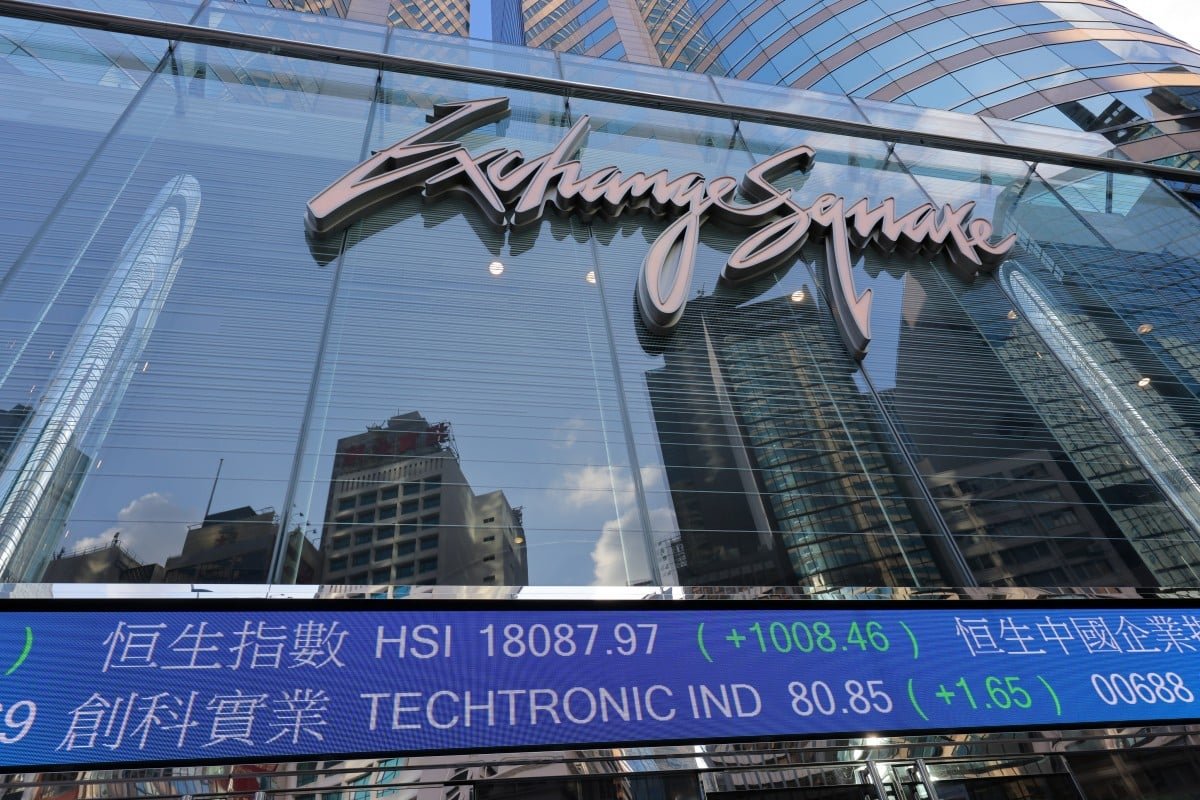
The oil major is exploring a divestment of its Esso-branded Hong Kong gas station network in a deal valued at up to $500–600 million, reflecting a broader global retreat from retail fuel assets and shifting demand toward electrification and asset-light strategies.
A corporate restructuring trend in the global energy sector, rather than a one-off asset sale, is driving Exxon Mobil’s consideration of selling its Hong Kong fuel station network in a deal valued at roughly $500 million to $600 million.

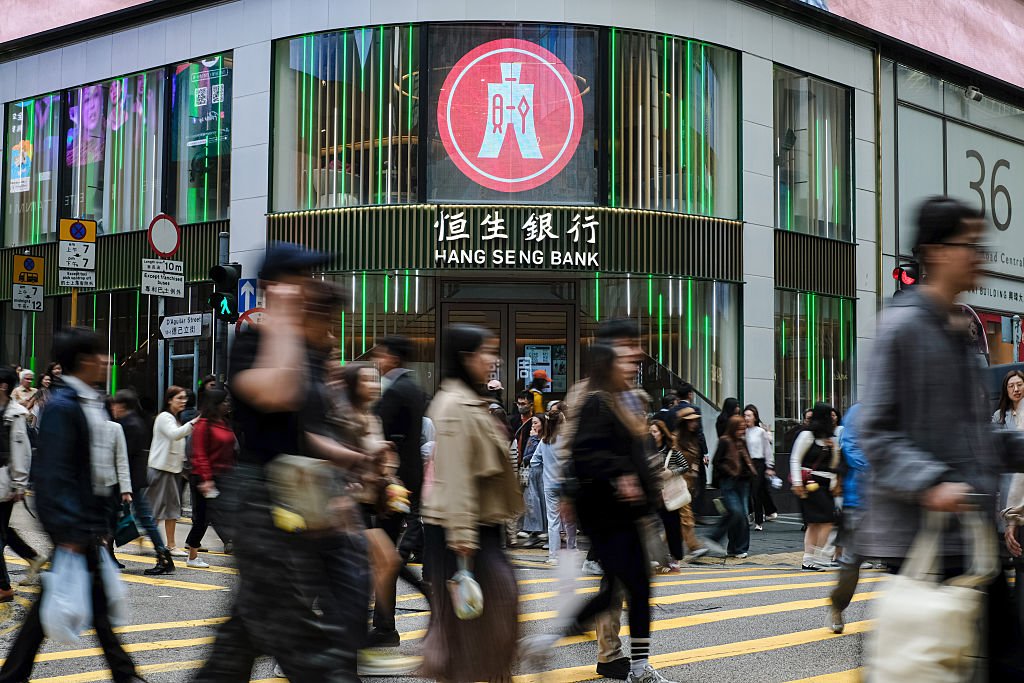
What is confirmed is that Exxon Mobil is exploring the sale of its gasoline retail operations in Hong Kong, where it operates around 41 Esso-branded service stations.

The company has engaged financial advisers and entered discussions with a small group of potential bidders.

No final decision has been made, and the process remains at an exploratory stage.

The asset under consideration is part of Exxon’s downstream retail footprint, a segment that includes direct fuel sales to consumers through service stations.

In Hong Kong, this network has operated for decades and represents one of the company’s more established retail presences in Asia.

The valuation being discussed reflects both the infrastructure scale and the relatively stable cash flows associated with urban fuel retail operations.

The mechanism behind the potential sale is strategic repositioning.

Global oil majors have increasingly sought to reduce exposure to capital-intensive, lower-margin retail fuel distribution networks, particularly in densely urban markets where electrification of transport is accelerating.

As electric vehicle penetration rises and fuel demand growth slows in advanced economies, retail station ownership is becoming less central to long-term profitability models.

At the same time, these assets remain attractive to regional energy firms, trading houses, and infrastructure investors seeking stable, long-duration cash flow.

Hong Kong’s network, with its established urban footprint and limited land availability, falls into this category.

This mismatch between seller strategy and buyer interest is a key driver of the transaction pipeline.

The broader context is a gradual restructuring of Exxon’s global downstream portfolio.

The company has been reviewing and divesting retail fuel assets in multiple markets as part of a strategy to concentrate capital on upstream production and higher-return industrial segments.

Similar transactions in other regions have established pricing benchmarks that place the Hong Kong network in the mid-hundreds of millions of dollars range.

Hong Kong itself adds a specific structural dimension.

The city has one of the most electrified urban transport systems in Asia, with rising adoption of electric vehicles and strong reliance on public transport, which limits long-term growth in conventional fuel consumption.

This weakens the strategic rationale for maintaining large-scale retail fuel ownership compared with earlier decades when gasoline demand growth was more predictable.

The transaction, if completed, would represent another step in the gradual reshaping of fuel retail ownership across Asia, where international oil majors are increasingly replaced by regional operators or financial investors.

It would also reinforce a broader industry shift: downstream retail is being treated less as a core strategic asset and more as a monetizable infrastructure holding.

For Hong Kong, the outcome would not significantly alter fuel availability but would change ownership structure and potentially accelerate operational consolidation in the city’s service station market.

For Exxon, it would mark continued simplification of its downstream portfolio and further concentration on upstream production and integrated energy operations.
Equity gains driven by mainland support signals, tech sector strength, and improving liquidity conditions
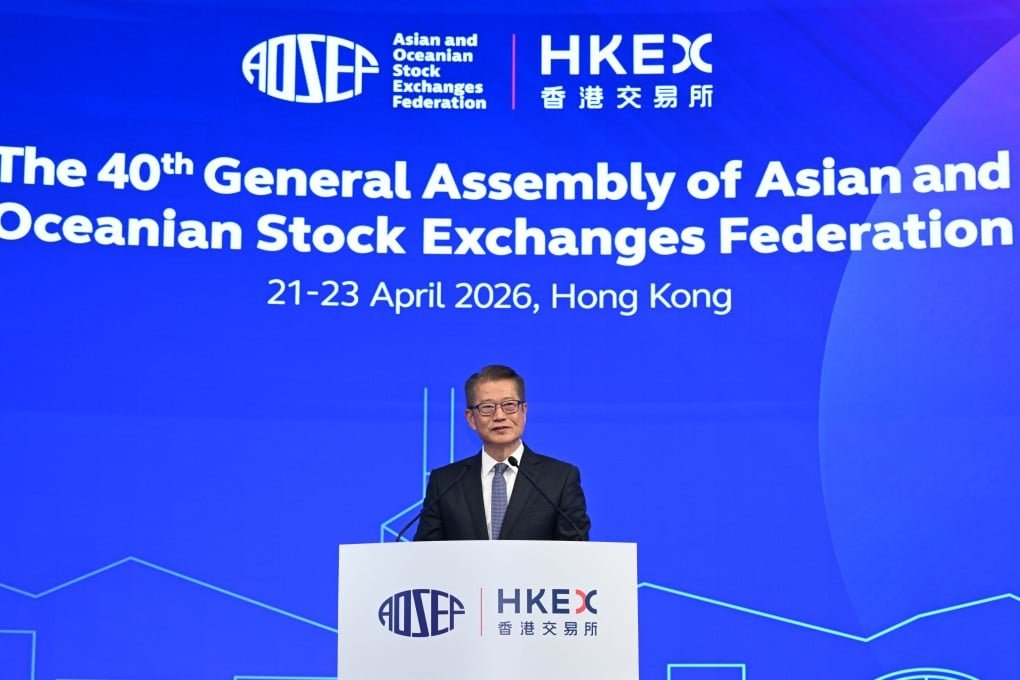
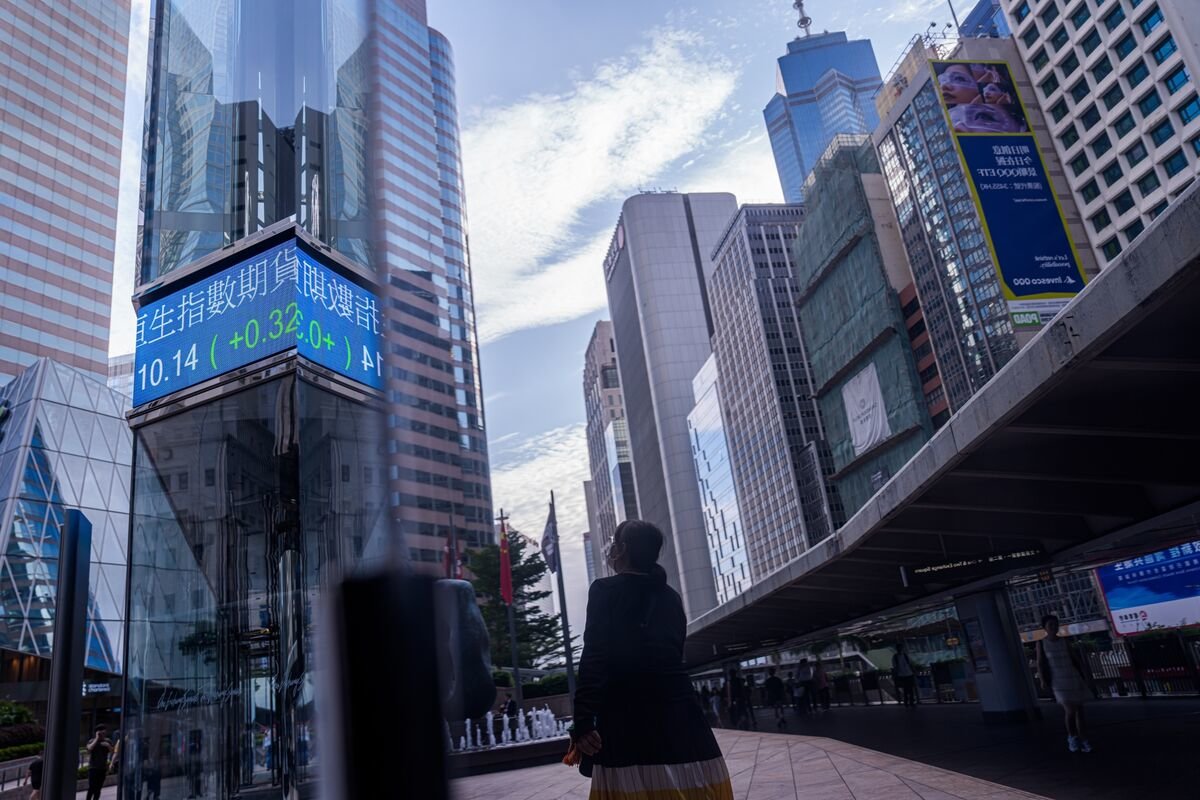
China’s policy framework and capital market support measures are driving a renewed rise in Hong Kong equities, with the city’s stock market closing higher as investor confidence strengthens after a prolonged period of volatility and weak sentiment.

What is confirmed is that Hong Kong’s benchmark equity indices have posted gains in recent trading sessions, supported by a combination of mainland policy signals, stabilizing macroeconomic expectations, and targeted buying in key sectors.

The rebound reflects a shift in sentiment rather than a sudden change in underlying economic fundamentals, with investors responding to clearer indications that authorities are willing to support growth and financial markets.

The mechanism behind the rally is closely tied to mainland China’s influence over Hong Kong’s financial system.

A significant share of listed companies in Hong Kong are mainland-based firms, and capital flows between the two markets are tightly connected through cross-border investment channels.

Recent inflows from mainland investors have provided a consistent source of demand, helping to lift valuations and reduce downward pressure on prices.

Technology and platform companies have led the gains, reflecting both improved earnings expectations and a perception that regulatory pressure on the sector has eased compared with earlier tightening cycles.

Financial stocks have also contributed, supported by expectations of more stable interest rate conditions and improved capital market activity.

Together, these sectors carry significant weight in Hong Kong’s indices, amplifying their impact on overall market performance.

Liquidity conditions have also improved.

With global interest rate expectations becoming more predictable, the sharp outflows that previously affected Hong Kong assets have moderated.

This has reduced volatility and encouraged institutional investors to re-enter positions, particularly in large-cap stocks that offer exposure to China’s economic recovery at relatively compressed valuations.

The rebound follows an extended period of underperformance.

Hong Kong’s equity market had been among the weakest globally in previous years, affected by a combination of geopolitical tensions, regulatory uncertainty in China’s technology sector, and a slower-than-expected post-pandemic recovery.

This context is critical: the current gains represent a partial recovery from depressed levels rather than a return to previous peaks.

Despite the improvement in sentiment, structural challenges remain.

Corporate earnings growth is uneven, and sectors tied to property and domestic consumption continue to face pressure.

The durability of the rally depends on whether policy support translates into sustained economic activity rather than short-term market stabilization.

The immediate implication is a recalibration of risk perception.

Investors are beginning to price in a lower probability of severe downside scenarios, particularly those linked to systemic financial stress or aggressive regulatory intervention.

This shift is allowing valuations to expand modestly, even without strong earnings growth.

As capital inflows stabilize and policy signals remain supportive, Hong Kong’s market is transitioning from a phase dominated by risk aversion to one characterized by selective re-engagement, with gains anchored in liquidity, policy expectations, and sector-specific recovery dynamics.
Inventory drawdown signals shifting balance in housing market after prolonged downturn and policy easing
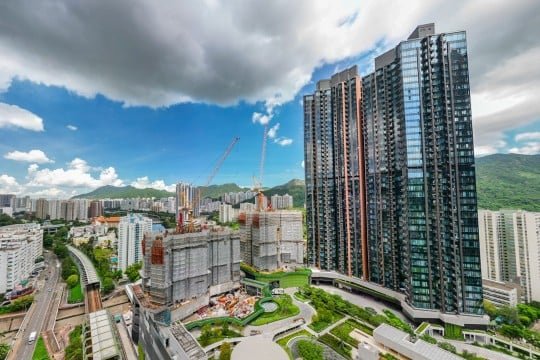
Hong Kong’s residential property market is being reshaped by a structural shift in supply and demand, as developers move aggressively to clear unsold inventory amid a measurable rebound in buyer activity and a decline in new housing supply.

What is confirmed is that major developers have reduced their stock of unsold units at a faster pace in recent months, driven by stronger transaction volumes and targeted pricing strategies.

This follows a prolonged period of weak demand during which high interest rates, economic uncertainty, and outward migration weighed heavily on the market.

The recent pickup reflects both improved sentiment and policy adjustments that have lowered barriers to entry for buyers.

The mechanics behind the shift are twofold.

On the demand side, the removal of several cooling measures has lowered upfront costs for property purchases, including reductions in stamp duties that previously discouraged both local and non-local buyers.

At the same time, interest rate expectations have stabilized, reducing uncertainty around mortgage costs.

Together, these factors have drawn sidelined buyers back into the market, particularly first-time purchasers and investors seeking discounted assets.

On the supply side, the pipeline of new residential projects has tightened.

Developers, facing financing constraints and cautious market conditions over the past two years, slowed land acquisitions and delayed project launches.

This has resulted in fewer new units entering the market, amplifying the impact of rising demand on existing inventory.

As a result, developers are now able to accelerate sales without triggering the steep price cuts that characterized earlier phases of the downturn.

Pricing dynamics remain nuanced.

While headline home prices have not returned to previous peaks, the rate of decline has slowed significantly, and certain segments—particularly mass-market apartments—are seeing stabilization or modest gains.

Developers are still offering incentives, including flexible payment schemes and discounts, but these are increasingly targeted rather than broad-based, reflecting improved bargaining power.

The clearing of inventory carries broader financial implications.

Property development is a core pillar of Hong Kong’s economy, and prolonged inventory overhang had constrained cash flow and balance sheets across the sector.

Faster sales improve liquidity for developers, reduce debt pressure, and enable a gradual restart of project pipelines.

This has knock-on effects for construction activity, employment, and related industries.

However, the recovery is uneven.

Luxury properties and larger units continue to face softer demand, reflecting both affordability constraints and shifts in buyer preferences.

External factors, including global economic conditions and capital flows, also continue to influence high-end demand, which is more sensitive to international investment trends than local housing needs.

The policy environment remains a critical variable.

Authorities have signaled a willingness to maintain a more accommodative stance to support market stability, but without returning to the speculative excesses seen in earlier cycles.

This balancing act aims to restore confidence while avoiding rapid price inflation that could undermine affordability.

The immediate consequence of the current trend is a tighter inventory environment, with fewer unsold units available relative to rising transaction volumes.

This rebalancing is shifting negotiating power incrementally toward sellers and setting the stage for a more stable pricing environment after several years of volatility.

With developers continuing to release units strategically and demand holding firm under eased policy conditions, the market is transitioning from inventory overhang to controlled supply, marking a decisive change in Hong Kong’s post-downturn property cycle.
March surge driven by transfer passengers, regional demand, and geopolitical flight shifts despite cargo headwinds
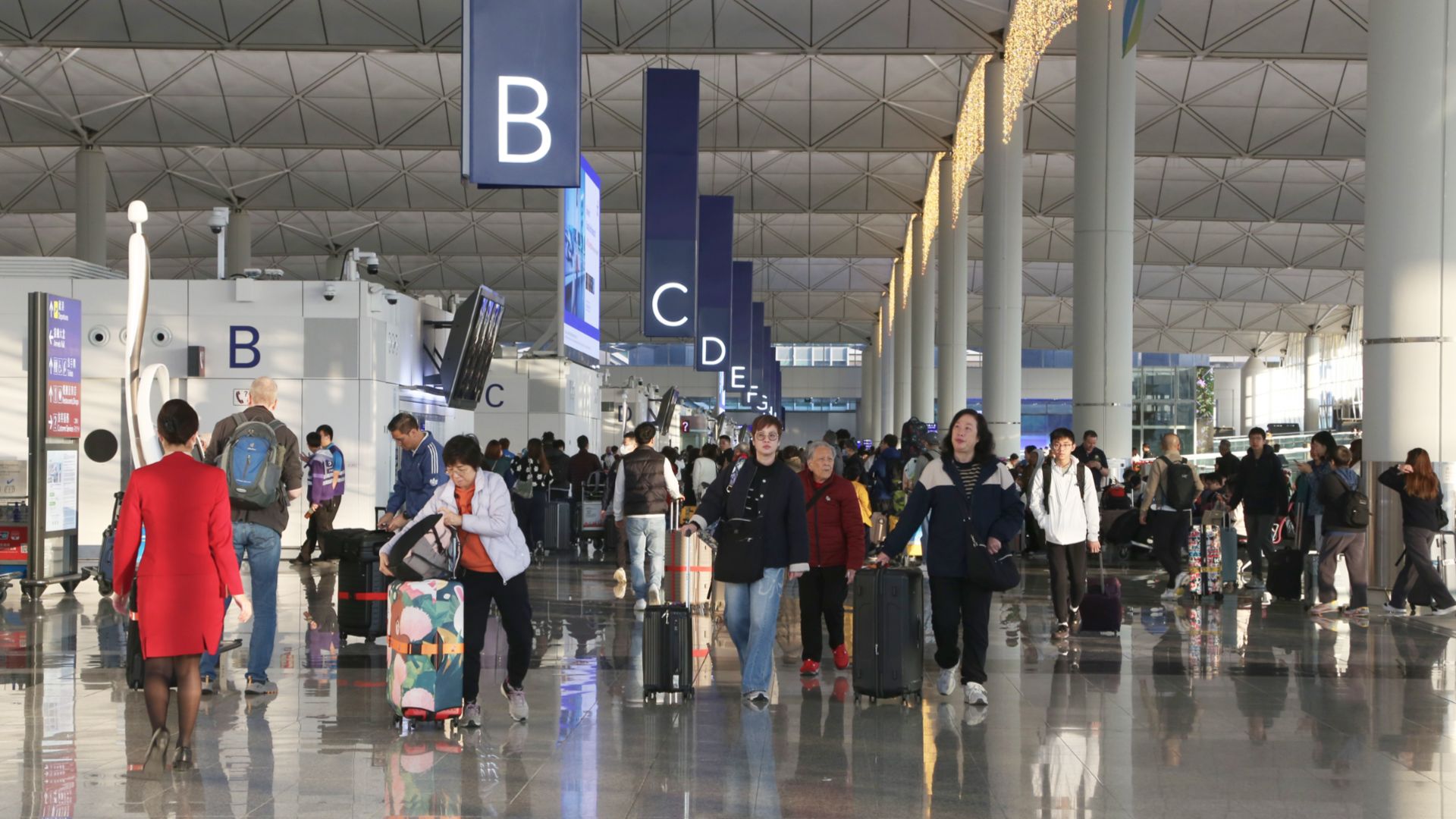
Hong Kong International Airport’s recovery as a global aviation hub is driving a sharp rebound in passenger traffic, with throughput rising 19.6 percent year on year in March to 5.74 million यात्रies, marking one of the clearest signs yet that long-haul connectivity and transit flows are normalizing at scale.

What is confirmed is that the increase is not primarily driven by local travel demand but by the airport’s traditional role as a transfer hub.

Double-digit growth in transit and transfer passengers accounted for a large share of the rise, alongside a steady increase in inbound visitors.

This reflects the restoration of airline networks and the reactivation of Hong Kong’s position as a connecting point between Asia, Europe, and beyond.

The mechanics of the rebound are structural.

Airlines have rebuilt capacity across key regional corridors, particularly routes linking Hong Kong with Southeast Asia and mainland China.

Several of these routes now rank among the busiest international air corridors globally, indicating that short- and medium-haul travel demand has returned to high frequency, high-density patterns.

At the same time, long-haul travel has been partially reshaped by external disruptions, with geopolitical tensions in the Middle East diverting some Europe-bound traffic through alternative hubs, including Hong Kong.

This combination of restored regional demand and redirected long-haul flows has amplified passenger volumes without a corresponding surge in flight movements, which rose only 2.7 percent in March.

The imbalance points to higher load factors and more efficient aircraft utilization, suggesting airlines are filling more seats per flight rather than simply adding capacity.

The broader trend reinforces a sustained recovery trajectory.

In the first quarter of the year, passenger traffic exceeded 16.6 million, up more than 14 percent compared with the same period a year earlier.

On a rolling twelve-month basis, the airport handled over 63 million passengers, reflecting a consistent double-digit expansion as international travel continues to normalize after pandemic-era disruptions.

However, the recovery is uneven across business lines.

Cargo volumes declined 4.4 percent in March, driven by a sharp contraction in exports to the Middle East following regional instability.

While imports and transshipment activity increased, offsetting part of the decline, the divergence highlights how passenger and cargo dynamics are responding differently to geopolitical risk and shifting trade patterns.

The underlying infrastructure strategy is central to the airport’s trajectory.

Expansion through a three-runway system and continued investment in transit facilities is designed to significantly increase long-term capacity, with the stated goal of handling up to 120 million passengers annually within the next decade.

The current surge suggests that demand is already moving in that direction, particularly as airlines restore full network connectivity and business travel gradually strengthens.

The immediate implication is that Hong Kong is re-establishing itself as a high-volume, high-efficiency transit hub at a time when global aviation flows are being reconfigured by both recovery dynamics and geopolitical disruptions.

The March figures show that the airport is not merely regaining lost traffic but actively capturing redirected demand, reinforcing its strategic role in international air travel.

With passenger growth outpacing flight increases and infrastructure expansion underway, the airport is entering a phase where capacity, connectivity, and geopolitical positioning are converging to drive sustained traffic gains.
Authorities step up cross-border messaging ahead of Golden Week to enforce strict rules on vaping products
Government enforcement policy is driving a cross-border awareness campaign as Hong Kong intensifies efforts to inform mainland Chinese visitors about its strict ban on e-cigarettes ahead of a major holiday travel surge.

What is confirmed is that Hong Kong authorities have expanded publicity in mainland China before the upcoming Golden Week holiday period, when large numbers of tourists are expected to enter the city.

The campaign focuses on explaining that the import, sale, and manufacture of e-cigarettes and heated tobacco products are prohibited under Hong Kong law, with enforcement extending to travelers carrying such items across the border.

The mechanism is rooted in legislation that took effect in 2022, which banned alternative smoking products including electronic cigarettes, heated tobacco devices, and herbal smoking products.

The law does not criminalize personal possession for private use, but it strictly prohibits bringing these products into the city, creating a compliance risk for incoming visitors who may be accustomed to looser rules elsewhere.

Authorities have identified a recurring problem: mainland visitors arriving with vaping devices unaware that the items are illegal to import.

Enforcement at border checkpoints has led to seizures and, in some cases, penalties, particularly when quantities suggest commercial intent.

The pre-holiday campaign is designed to reduce these incidents by targeting travelers before they depart, using digital platforms, travel channels, and transport hubs in Guangdong and other nearby regions.

Golden Week, which includes National Day holidays in early October, is one of the busiest travel periods in the region.

Hong Kong expects a significant influx of mainland tourists, many of whom travel independently rather than in organized tour groups.

That shift increases the importance of direct communication, as individual travelers are less likely to receive structured briefings on local regulations.

The stakes are both legal and economic.

From an enforcement perspective, clearer awareness reduces the burden on customs and health authorities while ensuring the law is applied consistently.

From a tourism standpoint, minimizing misunderstandings helps avoid negative visitor experiences that could affect Hong Kong’s reputation as a destination.

The policy itself reflects a broader public health strategy.

Hong Kong has positioned itself as one of the stricter jurisdictions globally on alternative smoking products, citing concerns about youth uptake and long-term health risks.

The ban aligns with efforts to reduce overall smoking rates and prevent new forms of nicotine dependence from taking hold.

At the same time, the cross-border dimension exposes regulatory differences within the Greater Bay Area.

E-cigarettes are regulated but not uniformly banned in mainland China, creating a gap in expectations for travelers moving between jurisdictions.

The awareness campaign effectively functions as a bridge between two regulatory systems with different thresholds for control.

The immediate consequence is a more proactive enforcement model that begins before travelers reach the border.

By shifting communication upstream into mainland departure points, Hong Kong is attempting to convert a reactive enforcement issue into a managed compliance process during one of the year’s busiest travel periods.
Capital markets rebound and a renewed push into precious metals signal a strategic bid to restore Hong Kong’s financial edge
Market structure and policy momentum are driving a sharp revival in Hong Kong’s capital markets, with initial public offerings raising more than HK$140 billion so far this year and authorities simultaneously advancing a plan to expand the city’s role in global gold trading.

What is confirmed is that Hong Kong’s IPO market has rebounded strongly after a prolonged downturn, with total fundraising exceeding HK$140 billion, already surpassing recent annual totals.

The increase reflects a pipeline of large mainland Chinese listings returning to the city, alongside improved investor sentiment and more stable global financial conditions compared with the volatility of previous years.

The mechanism behind the recovery is twofold.

First, Chinese companies—particularly in technology, manufacturing, and consumer sectors—are again using Hong Kong as a primary offshore fundraising venue.

Second, regulatory adjustments and listing reforms have reduced friction for issuers, including streamlined approval processes and expanded channels for dual listings.

Together, these shifts have restored deal flow and increased market depth.

The parallel push into gold trading is part of a broader strategy to diversify Hong Kong’s financial infrastructure.

Authorities are working to strengthen the city’s commodities ecosystem, including enhancing storage, settlement, and trading capabilities for precious metals.

The objective is to position Hong Kong as a regional hub for gold pricing, trading, and risk management, linking mainland demand with international markets.

The timing is deliberate.

Global demand for gold has remained resilient amid geopolitical tensions, inflation concerns, and currency volatility.

By expanding its role in gold markets, Hong Kong aims to capture a larger share of capital flows tied to safe-haven assets, complementing its traditional strengths in equities and foreign exchange.

The two developments—IPO recovery and gold trading expansion—are connected by a common goal: reinforcing Hong Kong’s status as a leading international financial center at a time of intensifying competition from regional rivals.

The city’s role as a gateway between mainland China and global investors remains its core advantage, but that position has been tested by shifting capital flows and regulatory changes in recent years.

There are practical implications for issuers and investors.

A stronger IPO pipeline provides companies with access to deep pools of international capital, while investors gain exposure to mainland firms through a familiar legal and financial framework.

At the same time, a more developed gold market offers additional hedging tools and asset diversification options, particularly for institutional participants.

Constraints remain.

Market performance is still sensitive to mainland China’s economic trajectory, global interest rates, and geopolitical risk.

The success of the gold trading initiative will depend on liquidity, pricing credibility, and integration with existing global benchmarks, all of which require sustained participation from major financial institutions.

What has changed is momentum.

The combination of renewed listings and targeted expansion into commodities signals a coordinated effort to rebuild scale and relevance.

The immediate effect is a measurable increase in capital formation and trading activity, reinforcing Hong Kong’s role as a critical financial conduit in Asia.
More than 5,000 applications highlight strong demand for cross-border car access despite tight quotas and phased rollout
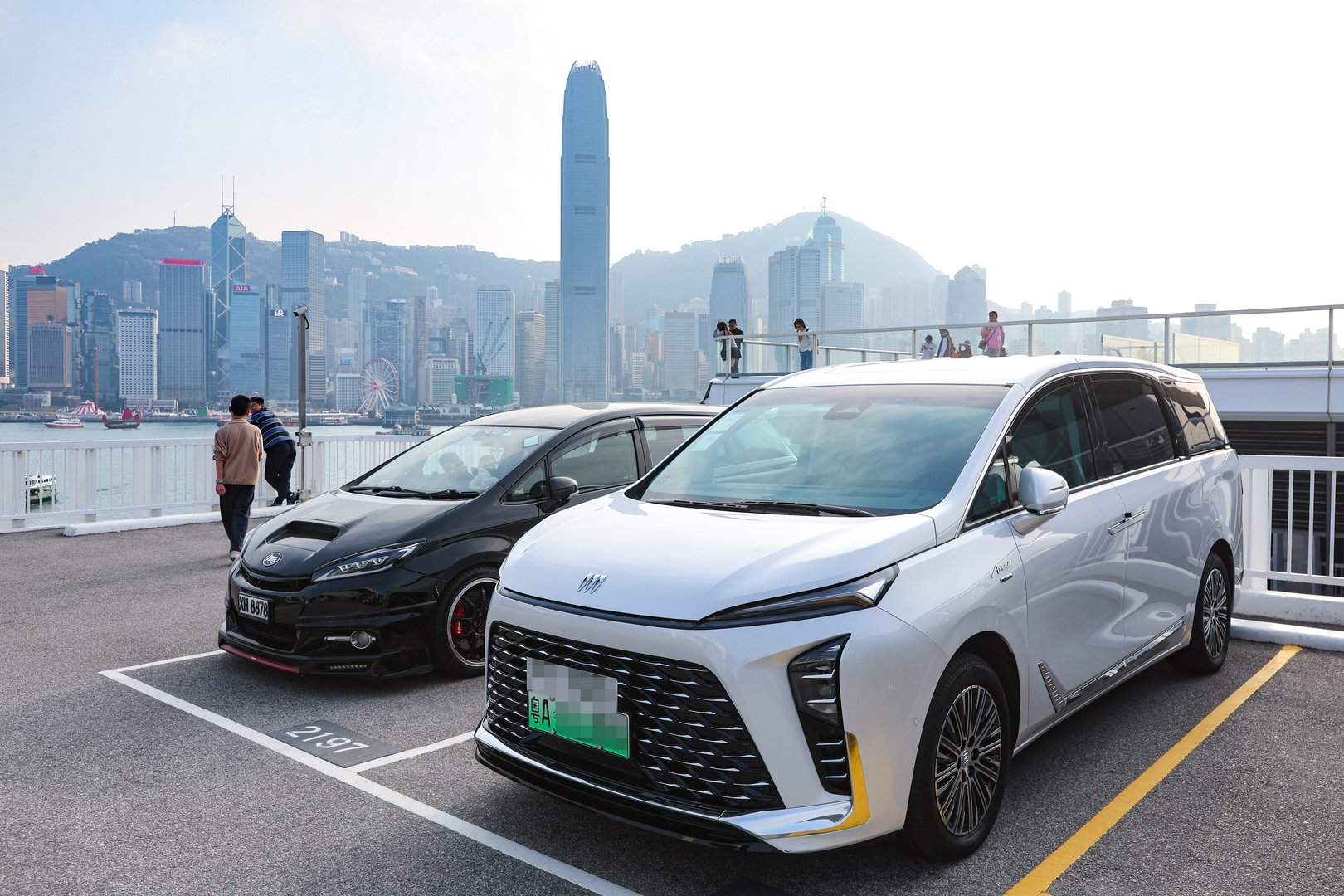
A government-run cross-border transport scheme linking Hong Kong and mainland China is driving a sharp rise in applications from Guangdong motorists, with more than 5,000 drivers signing up within months of its launch.

What is confirmed is that the “Southbound Travel for Guangdong Vehicles” scheme, introduced at the end of 2025, allows approved private cars from selected Guangdong cities to enter Hong Kong via the Hong Kong–Zhuhai–Macao Bridge.

The programme operates under strict controls, including a daily quota of 100 vehicles and a maximum stay of three days per trip, reflecting a cautious, pilot-phase rollout.

The mechanism is deliberately constrained.

Applicants must secure advance bookings, pass vehicle inspections, obtain Hong Kong insurance coverage, and comply with local licensing and toll systems.

Only motorists from an initial group of cities—including Guangzhou, Zhuhai, Zhongshan and Jiangmen—are eligible in the first phase, with expansion planned after an initial trial period.

The scale of demand is outpacing early expectations.

Within weeks of launch, thousands of applications were submitted, with a smaller portion converting into confirmed bookings due to the quota system.

The figure has now surpassed 5,000 sign-ups, indicating sustained interest rather than a one-off surge linked to holiday travel periods.

Early usage data shows hundreds of vehicles successfully entering the city, particularly during peak travel windows such as Lunar New Year.

The scheme is the reciprocal counterpart to the “Northbound Travel for Hong Kong Vehicles” programme introduced in 2023, which enabled Hong Kong drivers to enter Guangdong.

That earlier scheme attracted more than 100,000 participating vehicles and significantly increased traffic across the Hong Kong–Zhuhai–Macao Bridge, providing a working model for two-way private car travel within the Greater Bay Area.

The key issue is integration.

The southbound scheme is designed to deepen economic and social links between Hong Kong and mainland cities in the Greater Bay Area by lowering barriers to short-term travel.

Officials expect it to stimulate tourism, retail spending, and business exchanges by making Hong Kong more accessible to mainland visitors who prefer private transport over group tours or public transit.

However, the controlled rollout reflects operational and regulatory sensitivities.

Hong Kong’s dense urban environment, left-hand traffic system, and stricter road regulations require mainland drivers to adapt quickly.

Authorities have emphasized enforcement parity, meaning visiting drivers are subject to the same legal standards as local motorists, including traffic laws and penalties.

There are also infrastructure considerations.

The scheme relies heavily on the Hong Kong–Zhuhai–Macao Bridge as a single entry corridor, and authorities have tied expansion to the system’s ability to manage traffic flow, border processing, and urban congestion.

The low daily quota functions as both a safety valve and a testing mechanism for scaling the programme without overwhelming city roads.

The rapid accumulation of applications underscores a structural shift rather than a temporary spike in interest.

Private car travel offers flexibility and status that public transport does not, particularly for cross-border family visits and short business trips.

That demand aligns with broader policy goals to integrate the Greater Bay Area into a more unified economic zone.

The next phase of the scheme will hinge on gradual quota increases and geographic expansion, with authorities using early data to refine enforcement, infrastructure capacity, and administrative processes.

The immediate consequence is clear: cross-border private vehicle travel between Hong Kong and Guangdong is moving from a controlled experiment toward a scalable regional mobility system.
Unusual flowering and leaf cycles point to climate disruption with cascading ecological risks
Climate-driven shifts in seasonal patterns are increasingly disrupting how trees grow and reproduce in Hong Kong, and botanists now warn the changes are visible, measurable, and potentially far-reaching.

What is confirmed is that several common species are no longer following their established biological calendars.

Trees that typically shed their leaves in winter are retaining foliage into spring, while others are flowering earlier than expected or doing both at once.

This phenomenon has been observed in species such as the red kapok, or cotton tree, and the flame tree—plants long used as seasonal markers in the city.

The mechanism at the center of the shift is plant phenology, the study of how growth cycles—leafing, flowering, and dormancy—respond to environmental conditions.

These cycles are tightly regulated by temperature, rainfall, and daylight.

When those inputs change, the timing of biological events changes with them.

Hong Kong has recently recorded unusually warm winters, with average temperatures significantly above historical norms, altering the environmental signals that trees rely on.

The result is visible disorder.

Instead of shedding leaves before blooming, some trees now carry both leaves and flowers simultaneously.

In others, flowering begins weeks earlier than expected.

These changes are no longer isolated anomalies but have become increasingly common over the past decade, suggesting a systemic shift rather than random variation.

The implications extend beyond appearance.

Trees operate within tightly coordinated ecological systems.

Flowering time determines when nectar is available for birds and insects; leaf cycles influence habitat and food availability.

When plants shift their timing, species that depend on them may fall out of sync.

Pollinators may miss peak flowering periods, while birds and other animals may encounter reduced or mistimed food supplies.

There are also physiological costs for the trees themselves.

Maintaining leaves while producing flowers forces plants to divide energy between competing processes.

Early observations suggest this may reduce the intensity or duration of flowering, potentially weakening reproductive success over time.

Scientists argue that the current observations are only the surface of a deeper structural change.

Short-term fluctuations cannot fully explain patterns that are now recurring across multiple species and locations.

A long-term, citywide study—potentially lasting years—has been proposed to track how plant life is responding to sustained warming and how those changes propagate through the broader ecosystem.

The stakes are practical as well as ecological.

Urban trees contribute to temperature regulation, air quality, and biodiversity in one of the world’s densest cities.

Disruptions to their growth cycles could affect everything from urban cooling to wildlife stability.

The issue is no longer confined to botany; it is a visible indicator of how climate change is reshaping living systems in real time.

The emerging picture is not of isolated “strange” trees, but of a coordinated biological response to a warming environment—one that is already altering the timing, structure, and reliability of urban ecosystems.
Authorities removed a group of asylum seekers following failed protection claims, highlighting tightening scrutiny of non-refoulement applications and renewed pressure on Hong Kong’s immigration system.
An immigration enforcement system governing asylum and non-refoulement protection claims in Hong Kong is driving the removal of a group of Vietnamese migrants after authorities rejected their applications for protection against return.

What is confirmed is that Hong Kong authorities deported around 30 Vietnamese nationals after their claims under the city’s non-refoulement protection framework were denied.

The individuals had sought protection on the basis that they would face risk if returned to Vietnam, but their applications were assessed and ultimately rejected under Hong Kong’s legal standards for protection from forced return.

Non-refoulement is a legal principle that prohibits returning individuals to a country where they face a credible risk of persecution, torture, or other serious harm.

In Hong Kong, this principle is implemented through a screening mechanism that evaluates asylum and protection claims, even though the city is not a party to the United Nations Refugee Convention.

Instead, claims are assessed under local immigration law and constitutional protections.

The removal of this group reflects the outcome of that screening process, where authorities determined that the threshold for protection was not met.

Once claims are rejected, individuals are subject to deportation unless they successfully appeal or obtain alternative legal grounds to remain.

The mechanism behind such removals is administrative and legal rather than discretionary enforcement.

Claims are first screened for credibility and risk, then subjected to detailed assessment procedures that may include interviews and evidence review.

If authorities conclude that risk criteria are not satisfied, deportation orders can be issued and enforced.

The broader context is increased pressure on Hong Kong’s immigration and asylum system, which has handled thousands of protection claims over the past decade.

The system has faced criticism from rights groups over processing times and rejection rates, while authorities have emphasized the need to prevent misuse of protection claims and maintain immigration control.

For Vietnam, migration flows to Hong Kong have historically included both economic migrants and individuals seeking asylum based on claimed risks.

Over time, the number of Vietnamese claims has fluctuated, but enforcement actions have continued as part of routine immigration management.

The implications of this latest removal are procedural rather than policy-changing.

It demonstrates continued enforcement of existing legal thresholds for non-refoulement protection and signals that rejected claims will result in removal rather than prolonged residence under uncertain status.

The case also reinforces the operational reality of Hong Kong’s immigration framework: protection is conditional on meeting a high evidentiary threshold, and failure to do so results in return to country of origin under formal deportation procedures.
Sales of ultra-luxury properties in Hong Kong jumped 156% in the first quarter, driven by rising wealth effects, mainland Chinese capital inflows, and renewed appetite for trophy assets despite a fragmented recovery in the broader housing market.
The recovery in Hong Kong’s ultra-luxury residential property market is being driven by a structural shift in high-net-worth capital allocation, with investors increasingly rotating wealth from equities into scarce, high-end real estate assets.

What is confirmed is that transactions for homes valued above HK$100 million rose sharply in the first quarter of 2026 compared with the same period a year earlier, with sales increasing by about 156%.

The total number of such deals reached 64, while the aggregate value of transactions more than doubled.

The expansion reflects renewed activity at the very top end of the market after a prolonged downturn triggered by higher interest rates and weak sentiment in previous years.

The underlying mechanism is a combination of improved financial-market performance and stabilizing borrowing conditions.

Wealth effects from equity gains have increased liquidity among affluent buyers, particularly in Asia’s financial elite.

This has encouraged a reallocation of capital into property, which is viewed not only as housing but as a store of wealth and status-preserving asset class.

Lower mortgage uncertainty compared with earlier tightening cycles has also contributed to improved transaction confidence.

Buyer composition is central to the current dynamic.

Mainland Chinese investors continue to play a major role, alongside local wealthy families and international buyers.

In the luxury segment, demand is concentrated in rare, high-quality assets—properties in elite districts such as The Peak and southern Hong Kong Island—where scarcity and prestige matter more than general price levels.

In some cases, mainland buyers are estimated to account for a significant share of transactions in this segment, although exact proportions vary by dataset and remain partially opaque due to limited disclosure of buyer nationality.

Despite the surge in luxury activity, the broader market remains uneven.

Mid-tier and mass residential segments have not experienced the same level of recovery, and pricing across the wider market is still adjusting after a multi-year correction from previous peaks.

This divergence underscores that the current rebound is not a general housing boom but a concentration of capital at the top end.

Analysts describe the market environment as selective rather than broadly inflationary.

Buyers are prioritizing properties with structural scarcity—prime views, low density, strong privacy, and established prestige addresses—while less distinctive luxury units face longer selling periods and more negotiation pressure.

This bifurcation suggests that liquidity is returning unevenly, flowing first into assets with the strongest long-term desirability.

Policy and macroeconomic conditions remain important background factors.

Hong Kong’s currency peg to the US dollar means interest rate expectations remain linked to US monetary policy, affecting financing costs for property purchases.

At the same time, recent policy adjustments aimed at supporting the property sector have helped stabilize sentiment, but have not eliminated structural constraints such as affordability pressures and uneven economic recovery.

The result is a market defined by two simultaneous realities: a sharp rebound in ultra-luxury demand driven by global and regional wealth accumulation, and a still-fragile broader housing market adjusting to higher financing costs and shifting demand patterns.

The current cycle is therefore less a uniform recovery than a re-pricing of scarcity at the very top of Hong Kong’s property hierarchy.
US briefing highlights Hong Kong as the world’s second-largest biotech funding hub, underscoring a structural recovery in listings, venture flows, and cross-border life sciences investment.
A government and industry-driven financial ecosystem, not a single market event, is reinforcing Hong Kong’s position as a global hub for biotech capital formation, with recent international briefings in the United States highlighting its role as the world’s second-largest biotech funding centre after New York.

What is confirmed is that Hong Kong has been publicly described in recent official investment outreach as the second-largest global biotech fundraising hub, supported by its equity markets and listing reforms.

The classification is based on the scale of biotech capital raised through public listings and related financing activity, which has expanded significantly since regulatory changes introduced in 2018 allowed early-stage and pre-revenue biotech companies to list in the city.

The structural mechanism behind this position is Hong Kong’s capital markets framework.

The introduction of dedicated listing rules for biotech firms enabled companies without profits to access public funding earlier than in many other jurisdictions.

Since these reforms, dozens of biotech companies have listed, collectively raising tens of billions of US dollars and building one of the most active life sciences fundraising pipelines in Asia.

This has positioned Hong Kong as a financing bridge between mainland China’s research ecosystem and global capital markets.

The city’s exchange infrastructure, combined with its international investor base and proximity to mainland scientific clusters, has made it a preferred venue for biotech initial public offerings and secondary fundraising.

Market data from recent years consistently place Hong Kong just behind New York in global biotech fundraising scale.

The renewed emphasis on Hong Kong’s status comes at a time when global biotech financing is uneven.

After a period of tightening liquidity and weaker risk appetite, capital has begun returning selectively to life sciences, particularly in markets where listing rules and investor access remain favorable.

Hong Kong’s rebound in biotech listings and healthcare sector activity reflects this broader rotation rather than a uniform global recovery.

Within the ecosystem, growth has not been evenly distributed.

Larger, clinically advanced or platform-based biotech firms have attracted disproportionate investor attention, while earlier-stage or less differentiated companies continue to face capital constraints.

This reflects a global pattern in which investors increasingly concentrate funding on fewer, more mature or strategically positioned assets.

The strategic stakes for Hong Kong are significant.

Biotech funding is not only a capital market indicator but also a measure of competitiveness in global innovation financing.

Maintaining this position depends on continued listing activity, regulatory efficiency, and the ability to attract cross-border institutional investors amid competition from other financial centers in the United States and Asia.

At the same time, the sector is closely tied to broader policy and technology development trends, including clinical trial infrastructure, drug approval processes, and integration with mainland China’s innovation economy.

These factors collectively determine whether Hong Kong remains a leading conduit for life sciences capital or experiences relative erosion as global competition intensifies.

The current positioning signals continuity rather than disruption: Hong Kong remains embedded in the top tier of global biotech finance, but its role is increasingly defined by specialization in cross-border capital access and high-concentration equity financing for late-stage innovation companies.
The insurer’s latest recognition is tied to official market statistics and long-running distribution dominance across policies and premium channels, reflecting entrenched scale advantages in Hong Kong’s life insurance sector
SYSTEM-DRIVEN: the structure and competitive dynamics of Hong Kong’s life insurance market, where distribution scale, policy persistence, and premium inflows determine leadership positions.

AIA Hong Kong has maintained its position as the city’s leading insurer of choice for twelve consecutive years, according to the latest market-based performance indicators drawn from Hong Kong’s long-term insurance statistics.

The designation is not a subjective branding label but is anchored in measurable outcomes such as the number of new business policies written and the number of in-force policies maintained across the insurer’s portfolio.

What is confirmed is that AIA continues to rank first in multiple core market categories, including both new policy generation and existing policy retention.

These metrics are widely used in the insurance sector as indicators of distribution strength and customer persistence.

New business policies reflect the insurer’s ability to attract fresh customers, while in-force policies measure the durability of existing contracts and renewal stability over time.

The latest reporting also confirms that AIA’s leadership position is not limited to a single channel.

Its dominance extends across agency distribution networks, brokerage channels, and broader premium generation metrics, indicating a multi-channel sales structure that continues to outperform competitors in aggregate volume.

This breadth of performance is a key reason the company’s market position has remained stable across more than a decade.

The mechanism behind this sustained leadership lies in scale.

AIA operates one of the largest tied-agent networks in Hong Kong and benefits from deep penetration across both local and cross-border customer segments.

In a market where life insurance is heavily intermediated rather than directly purchased, distribution reach functions as a structural advantage.

Once established, such networks tend to reinforce themselves through recruitment, training systems, and long-term client servicing relationships.

The stakes of this position are financial and systemic.

In Hong Kong’s insurance market, size directly influences access to recurring premium inflows, which in turn supports long-duration investment portfolios held by insurers.

These portfolios are typically invested in bonds, real estate, and long-term financial instruments, meaning stable policy inflows translate into predictable capital deployment capacity.

The latest recognition also aligns with broader industry data trends showing that AIA continues to hold leading positions in both policy volume and premium generation across recent reporting periods.

This includes sustained leadership in new business policy counts over multiple years, reinforcing the durability of its distribution footprint rather than a short-term performance spike.

From a consumer perspective, the implication is less about brand perception and more about market concentration.

A small number of large insurers dominate Hong Kong’s life insurance sector, and AIA’s continued position at the top reflects the inertia created by long-term contracts, advisor networks, and customer retention patterns in insurance products that often span decades.

As a result, the company’s twelve-year streak as insurer of choice signals not a single-year achievement but a structurally reinforced market outcome, where distribution scale and policy retention continue to outweigh short-term competitive shifts.
The property group cancels newly repurchased shares as part of an ongoing programme that steadily reduces outstanding stock and marginally concentrates ownership
SYSTEM-DRIVEN: capital allocation and equity structure management through a sustained share buyback programme.

Hongkong Land, one of Asia’s largest commercial property investors with a major portfolio anchored in Hong Kong’s Central business district, has continued to reduce its outstanding share count through a series of market buybacks followed by cancellation of the repurchased shares.

The latest disclosed transaction involved the repurchase of approximately 170,000 ordinary shares, which will be cancelled, bringing the company’s issued share capital to roughly 2.15 billion voting shares with no treasury stock held.

What is confirmed is that the company is actively executing a structured capital return programme in which shares are bought in the open market and then permanently retired.

This is not a one-off action but part of a sequence of similar transactions carried out over recent months, each reducing the total number of shares in circulation by relatively small increments.

The pricing of recent repurchases has generally clustered in the high single-digit US dollar range per share, reflecting market conditions at the time of execution.

The mechanism is straightforward but financially meaningful over time.

When a company cancels shares, the total equity base shrinks.

That does not change the underlying value of the property portfolio, but it does increase each remaining share’s proportional claim on future earnings and assets.

In accounting terms, this can modestly support earnings per share even when net income remains unchanged, simply because profits are divided across fewer shares.

Hongkong Land’s approach sits within a broader strategy of capital recycling.

In parallel with buybacks, the company has previously engaged in asset-level transactions in its prime Central district holdings, converting illiquid real estate value into cash that can be redeployed or returned to shareholders.

The buyback programme is typically funded through internal cash flow and asset monetisation rather than external leverage expansion, signalling a preference for balance sheet discipline over aggressive growth.

The stakes are primarily structural rather than speculative.

For investors, sustained buybacks in a mature property landlord signal management’s view that internal equity is undervalued relative to intrinsic asset value or that alternative deployment opportunities are limited.

In either case, returning capital via share reduction becomes a default efficiency mechanism.

However, the economic impact should be kept in proportion.

Each individual buyback in recent filings is small relative to the company’s multi-billion share base, meaning the near-term effect on valuation or control is incremental rather than transformative.

The longer-term effect depends on whether the programme continues at scale and whether it is paired with stable or improving underlying property income.

The broader implication is that Hongkong Land is gradually tightening its equity structure while maintaining exposure to a high-quality but mature real estate portfolio.

The continued reduction in share count signals disciplined capital management rather than expansion-driven growth, reinforcing a shareholder return model anchored in incremental value enhancement rather than structural business change.
Restricted access conditions force residents of the Hong Kong housing estate to physically carry valuables and personal items up and down high-rise stairwells
The underlying driver of this situation is an event-driven access restriction affecting residents of Wang Fuk Court, a public housing estate in Hong Kong, where physical movement into residential units has become difficult enough that retrieval of personal belongings requires sustained physical effort.

What is confirmed in the reported situation is that residents of Wang Fuk Court have been making long climbs through stairwells in order to retrieve family treasures and personal possessions from their homes.

The process involves carrying items through multi-storey walk-ups in conditions that significantly increase the physical burden on residents, many of whom are navigating repeated trips to recover essential and sentimental belongings.

The key issue is not only the act of retrieval itself but the conditions under which it is taking place.

High-density public housing estates in Hong Kong are vertically structured, and access constraints or temporary restrictions can turn routine movement into a physically demanding task.

In this context, even short retrieval trips become extended exercises in endurance, particularly for elderly residents or those with limited mobility.

The stakes are primarily personal and material.

Family treasures in this context refer to irreplaceable items such as photographs, documents, keepsakes, and culturally significant household objects.

These are not easily substitutable, which increases urgency even when access conditions are difficult.

The effort required to recover them reflects a trade-off between physical strain and the perceived irreplaceability of the items being retrieved.

The broader implication lies in how urban housing infrastructure shapes everyday resilience.

In dense vertical living environments, access limitations or disruptions can quickly translate into logistical and physical challenges for residents.

The situation at Wang Fuk Court illustrates how the design of high-rise public housing amplifies the cost of movement when normal access patterns are disrupted.

As residents continue these repeated climbs, the immediate consequence is a sustained physical and emotional strain tied to the recovery of personal property, highlighting how infrastructure conditions directly shape the experience of recovery and loss in high-density urban housing systems.
Large-scale waterfront project signals renewed competition for prime coastal real estate amid shifting demand for luxury maritime and mixed-use developments
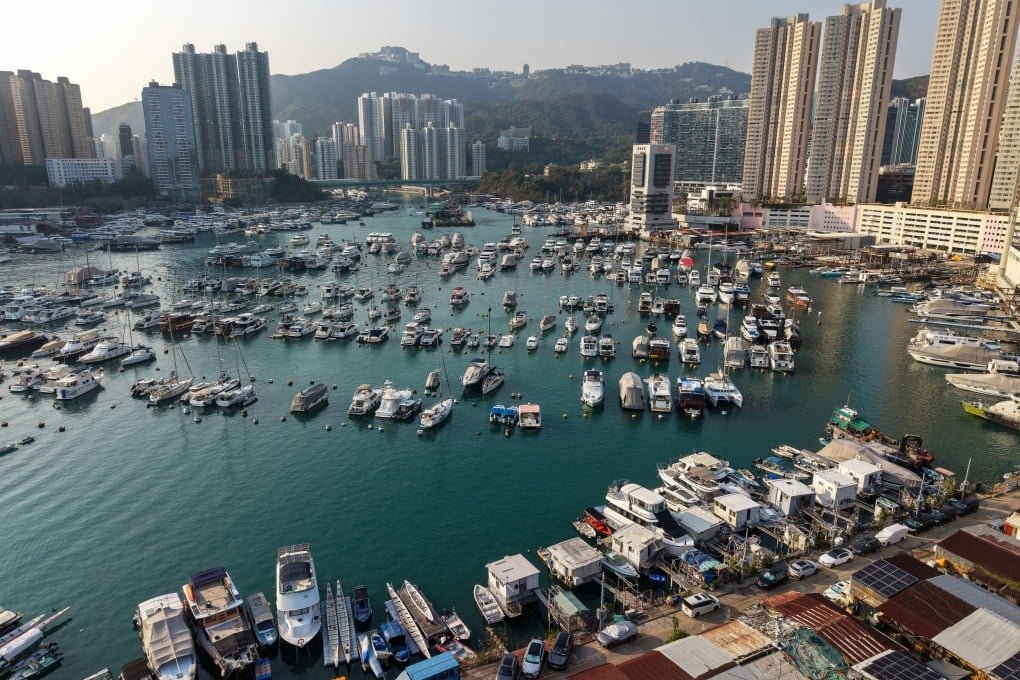
The underlying driver of the Aberdeen marina redevelopment in Hong Kong is a system-level shift in how waterfront land is being repositioned for high-value mixed-use and luxury maritime development in a constrained real estate market.

What is confirmed is that a major redevelopment project centered on the Aberdeen marina area has attracted interest from both local and overseas investors.

The site, located in a traditional fishing and boating district on Hong Kong Island’s southern coast, is being positioned for transformation into a modernized marina-led development integrating leisure, residential, and commercial components.

The project forms part of a broader pattern of waterfront regeneration in Hong Kong, where limited available coastal land has made marina-adjacent sites increasingly strategic assets.

These developments typically combine berthing facilities for private yachts with high-end residential towers, retail space, and hospitality infrastructure.

The Aberdeen site is considered particularly valuable due to its sheltered harbor, established maritime culture, and proximity to central urban districts.

Investor interest reflects a renewed appetite for long-term, asset-backed real estate projects in Hong Kong, particularly those linked to lifestyle infrastructure rather than purely speculative residential supply.

Both local developers and overseas capital groups are assessing participation, indicating confidence in the site’s potential positioning within the luxury marine and tourism economy.

The redevelopment also sits within a broader structural context in which Hong Kong’s coastal infrastructure is being gradually repurposed.

Traditional fishing and industrial maritime zones have, over time, been integrated into urban redevelopment frameworks as economic activity in those sectors has declined or relocated.

Aberdeen is emblematic of this transition, balancing its historic identity as a working harbor with increasing pressure for commercial modernization.

The mechanism driving the project’s attractiveness is the scarcity of comparable marina sites in Hong Kong.

Strict land constraints and high population density have made waterfront developments rare, which in turn increases their long-term value proposition.

Investors typically view such assets as resilient due to their limited supply and strong association with high-income consumption patterns, including private boating, tourism, and premium hospitality services.

At the same time, redevelopment of established maritime communities introduces operational and planning complexity.

Projects of this scale require coordination between government land authorities, transport and marine regulators, and private developers, particularly in areas where existing harbor usage must be integrated into new commercial frameworks.

The balance between preserving public access, maintaining marine activity, and enabling private development remains a central design constraint.

The broader implication of renewed interest in Aberdeen is the continued financialization of Hong Kong’s coastal geography, where cultural and working waterfronts are increasingly absorbed into high-value real estate cycles.

If progressed, the project would reinforce the city’s position as a regional hub for luxury marina development while reshaping one of its most historically significant harbor districts into a mixed-use economic zone anchored in property and leisure capital.
More than 160 sets of artefacts, including rare national treasures, bring Sui and Tang China into focus at the Hong Kong Museum of History in a limited-time cultural showcase
An exhibition opening in Hong Kong is driven by a large-scale cultural exchange effort between mainland heritage authorities and local institutions to present a curated view of China’s Sui and Tang dynasties through original artefacts, many of which are being shown publicly in the city for the first time.

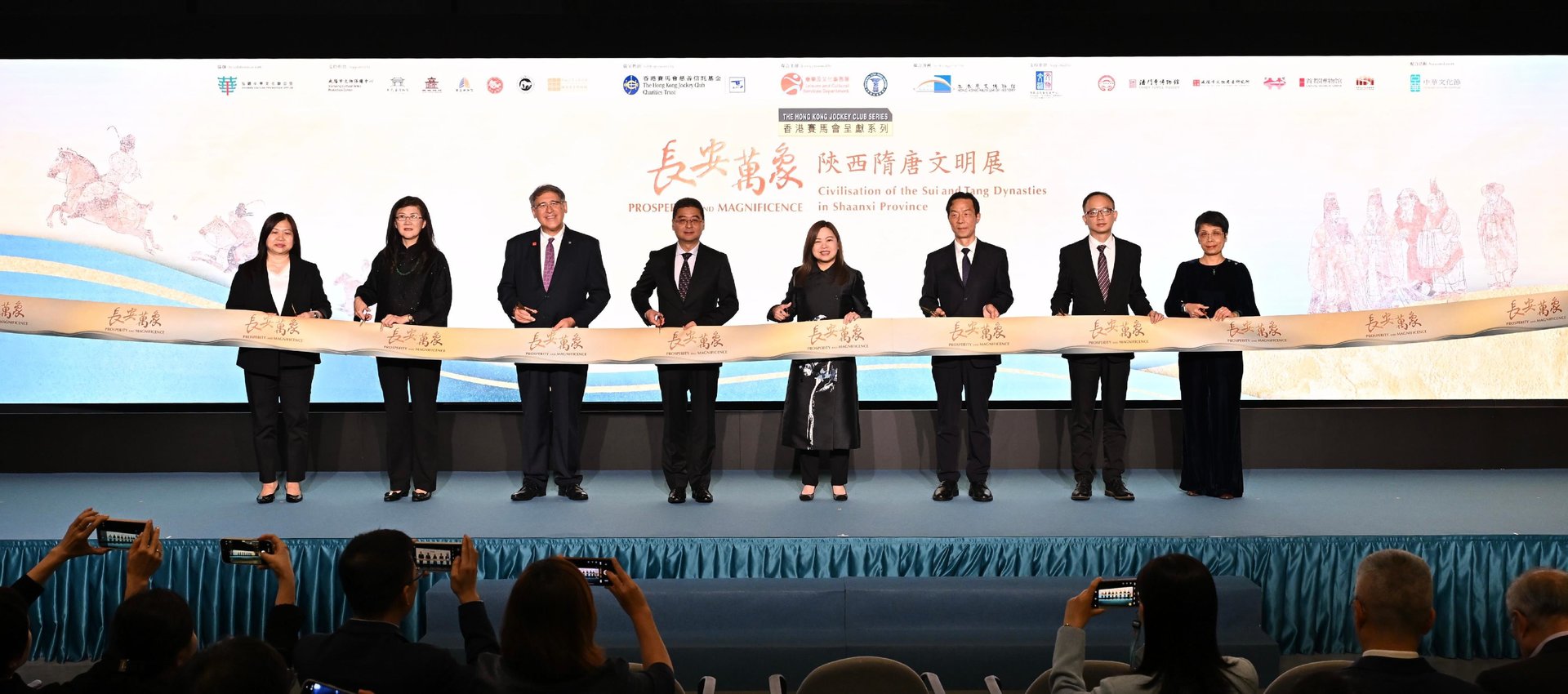
What is confirmed is that the exhibition, titled the Hong Kong Jockey Club Series: Prosperity and Magnificence – Civilisation of the Sui and Tang Dynasties in Shaanxi Province, has opened at the Hong Kong Museum of History and will run for a limited period until late August.

It is jointly organised by Hong Kong cultural authorities and the Shaanxi provincial cultural heritage administration, with full sponsorship support from a major charitable foundation.

Admission is free, making it broadly accessible to the public.

The exhibition brings together more than 165 sets of artefacts drawn from multiple museums and cultural institutions across Shaanxi, one of China’s most historically significant regions.

Among them are 18 nationally classified top-tier relics, reflecting the highest level of archaeological importance under China’s cultural heritage system.

A substantial portion of the items are being exhibited outside mainland China for the first time, increasing the significance of the display from a curatorial and preservation standpoint.

The historical scope of the exhibition spans several centuries, tracing the development from earlier dynastic periods into the Sui and Tang eras, with particular emphasis on the Tang dynasty’s political stability, cultural openness, and technological refinement.

Artefacts on display include finely crafted gold and silver ornaments, figurines, ritual objects, and items associated with court life and equestrian culture, which played a central role in Tang-era governance and military organization.

A defining feature of the exhibition is its integration of artefacts discovered not only in mainland archaeological sites but also in Hong Kong itself.

These local finds, dating back to the same historical period, demonstrate that the territory was already integrated into regional trade and administrative networks during the Tang dynasty, then under the jurisdiction of a southern Chinese county-level system.

The exhibition design extends beyond static displays.

It incorporates multimedia installations, reconstructed historical environments, and interactive elements intended to translate archaeological findings into accessible historical narratives.

These tools are used to explain topics such as imperial governance, cultural exchange along early trade routes, and the social structure of Tang-era society.

The broader significance of the exhibition lies in its role as part of an ongoing institutional strategy to position Hong Kong as a major site for the public presentation of Chinese archaeological heritage.

It follows a pattern of large-scale historical exhibitions in the city that rotate dynastic themes, bringing high-value cultural relics into urban museum spaces where they can be viewed without travel to mainland repositories.

At a practical level, the exhibition consolidates multiple layers of cultural diplomacy, museum collaboration, and public education.

It reinforces Hong Kong’s role as a bridge between mainland cultural institutions and international audiences while increasing public access to artefacts that are typically restricted to controlled museum environments due to their fragility and historical value.

As the exhibition continues through its scheduled run, it effectively turns a major urban museum into a temporary repository of one of China’s most influential historical periods, making Tang-era material culture directly accessible to a broad public audience in Hong Kong.
Educators are increasingly treating teacher-student bonds, peer networks, and school belonging as the core mechanism shaping pupil mental health and resilience
The underlying driver in Hong Kong’s evolving approach to student well-being is a system-level shift in how schools understand what produces resilience, engagement, and mental stability: the quality of relationships inside the education system itself.

What is confirmed across current school practice and education frameworks is that pupil well-being is no longer treated as an outcome of academic performance alone.

Instead, schools increasingly structure support systems around relational anchors — tutors, house systems, and sustained teacher contact — on the premise that consistent human connection is a primary stabilizer during adolescence.

In practical terms, this means schools are investing in structures designed to make every student visibly known to at least one adult and embedded in a peer group.

Tutor systems assign responsibility for monitoring academic progress alongside emotional state.

House systems group students across age levels to create stable social identities that are intended to reduce isolation and encourage informal support networks.

These mechanisms are not cosmetic; they are being positioned as the operational infrastructure of student welfare.

The rationale is grounded in a widely observed pattern in adolescent development: academic stress becomes more destabilizing when students lack trusted relationships that can absorb pressure, detect early distress, and provide informal intervention before problems escalate.

In environments where competition is intense and workloads are heavy, schools are increasingly treating relational continuity as a protective layer against psychological strain.

The stakes are becoming more visible as youth mental health concerns remain a persistent issue in Hong Kong’s education system.

Surveys and institutional reports in recent years have consistently pointed to elevated levels of distress among secondary school students, including symptoms consistent with depression, anxiety, and emotional exhaustion.

While the causes are multi-factorial, education professionals increasingly emphasize that lack of belonging and weak peer integration amplify risk.

The mechanism linking relationships to well-being is straightforward but operationally complex: strong student-teacher relationships increase early detection of distress, peer belonging reduces social isolation, and stable school communities improve help-seeking behavior.

Together, these factors function as a feedback system that either mitigates or intensifies stress depending on their strength and consistency.

The policy implication is that interventions focused solely on counseling services or academic reform are considered insufficient on their own.

Schools are instead moving toward “whole-school” models where relational design is treated as foundational infrastructure, shaping everything from classroom organization to extracurricular grouping and pastoral care strategies.

This reflects a broader redefinition of education as not only knowledge delivery, but sustained social containment during developmental risk periods.

As this model becomes more embedded, the central question for Hong Kong’s education system is no longer whether relationships matter for student well-being, but how reliably schools can engineer and maintain them at scale under continued academic pressure.
Company explores sale of around 41 Esso stations amid global asset streamlining, EV transition pressure, and volatile refining margins
Exxon Mobil’s reported consideration of an exit from Hong Kong’s fuel retail market reflects a broader, system-level restructuring of how major oil companies are repositioning downstream assets in response to electrification, price volatility, and capital discipline.

What is confirmed is that Exxon Mobil is exploring the sale of its Hong Kong gasoline station network, which operates under the Esso brand and includes roughly 41 service stations across the city.

The company has engaged financial advisers and is holding discussions with multiple potential buyers, including trading houses.

Market reports indicate that preliminary valuation expectations for the assets fall in the range of roughly 500 million to 600 million US dollars.

No final agreement has been reached, and Exxon Mobil has not publicly confirmed a binding decision to sell.

The Hong Kong network is part of Exxon’s long-established presence in the territory, where it has operated for nearly a century and a half in various fuel, lubricant, and petrochemical roles.

The retail station network represents a downstream consumer-facing business that historically generated steady cash flow but relatively limited growth compared with upstream oil production or industrial-scale refining.

The strategic logic behind a potential sale is consistent with a wider portfolio adjustment underway across the global oil industry.

Large integrated energy companies have increasingly been divesting retail fuel assets in select markets while focusing capital on higher-margin production, trading, and energy transition investments.

In parallel, several regional transactions in Asia have already reshaped ownership of fuel station networks, reinforcing a trend toward consolidation and regional specialization.

A central driver of this shift is structural pressure on traditional fuel retail.

Electrification of transport in Hong Kong and other developed markets is gradually eroding long-term gasoline demand expectations.

At the same time, refining margins and retail fuel economics have become more volatile due to geopolitical disruptions, including instability affecting global crude supply routes and sharp swings in oil prices.

These dynamics complicate long-term investment planning for station networks, which depend on stable demand and predictable margins.

Exxon’s reported review of its Hong Kong assets also aligns with a broader corporate strategy of capital reallocation.

The company has been prioritizing investments in upstream production, lower-carbon technologies, and selective high-return projects, while trimming or monetizing non-core downstream holdings in multiple regions.

Similar moves in other markets suggest that Hong Kong is part of a wider optimization of geographic exposure rather than an isolated withdrawal decision.

For Hong Kong’s fuel retail landscape, a potential exit by Exxon Mobil would further concentrate ownership among remaining suppliers or new entrants, continuing a pattern of reshuffling that has already seen competing assets change hands in recent years.

The immediate consumer impact would likely be limited in terms of station availability, but ownership changes could influence pricing strategies, supply contracts, and long-term investment in service infrastructure.

The transaction, if completed, would mark another step in the gradual repositioning of traditional oil majors away from direct retail presence in mature urban markets, and toward a more capital-light, transition-aware operating model shaped by electrification and global energy market uncertainty.
Ribo and Diagens debut activity highlights renewed but selective investor appetite for biotech and medtech capital raising in Hong Kong’s equity market
A SYSTEM-DRIVEN shift in Hong Kong’s capital markets is reflected in the listing activity of two healthcare companies, identified as Ribo and Diagens, which together account for the city’s biotech and medtech initial public offerings in the first quarter of 2026.

What is confirmed is that two companies in the biotechnology and medical technology sectors completed or advanced IPO activity in Hong Kong during the first quarter of 2026, marking continued, albeit limited, reopening of a segment that has experienced cyclical volatility over recent years.

The key issue is the condition of Hong Kong’s IPO pipeline for science and healthcare companies, which is closely tied to global risk appetite, interest rate expectations, and investor tolerance for long development-cycle firms that typically operate without near-term profitability.

Biotech and medtech listings are structurally dependent on specialized capital markets.

These companies often require large upfront funding for research, clinical trials, and regulatory approval processes before generating sustained revenue.

As a result, IPO windows for such firms tend to open and close in response to broader liquidity conditions rather than purely sector-specific fundamentals.

The presence of Ribo and Diagens in the IPO cohort suggests that Hong Kong’s exchange continues to function as a viable listing venue for healthcare innovation firms, particularly those with exposure to Asian clinical markets and manufacturing ecosystems.

However, the small number of deals also reflects a selective environment in which only companies meeting specific valuation and disclosure thresholds are able to secure successful listings.

In recent years, Hong Kong has positioned itself as a key global hub for biotech listings, especially after regulatory reforms allowed pre-revenue companies to access public capital markets.

That framework has enabled a wave of early-stage healthcare listings, though volumes have fluctuated significantly depending on global market cycles and investor sentiment toward growth equities.

The 2026 first-quarter activity indicates that the market remains open but not expansive.

Investors are showing continued interest in healthcare innovation, but are applying stricter scrutiny to business models, clinical pipelines, and cash runway requirements.

This has resulted in fewer but more selectively vetted listings.

The implications extend beyond individual companies.

IPO activity in biotech and medtech serves as a broader indicator of risk capital availability in Asia’s equity markets.

When listings are concentrated among a small number of firms, it typically reflects cautious deployment of capital rather than a broad-based reopening of fundraising channels.

For Hong Kong, maintaining a functioning pipeline of healthcare listings is strategically important.

It supports the city’s positioning as a financing hub for innovation industries and reinforces its role in connecting mainland Chinese life sciences companies with international investors.

However, sustained growth in this segment will depend on stability in global liquidity conditions and renewed appetite for high-risk, long-duration investment cycles.

The result is a market that is active but constrained: capable of supporting biotech and medtech IPOs, but not yet at a scale that would indicate a fully normalized or accelerated listing environment.
Reports of alleged assistance to fugitive former Prime Minister Sher Bahadur Deuba and his wife intensify political and legal pressure as Nepal pursues cross-border enforcement
An ACTOR-DRIVEN diplomatic controversy is unfolding around Nepal’s consular presence in Hong Kong, as authorities investigate allegations that a senior Nepali diplomatic official may have assisted former Prime Minister Sher Bahadur Deuba and his wife, former Foreign Minister Arzu Rana Deuba, while they are abroad under money laundering investigation.

What is confirmed is that Nepalese authorities have issued arrest warrants against Sher Bahadur Deuba and Arzu Rana Deuba in connection with an ongoing money laundering probe led by Nepal’s Department of Money Laundering Investigation.

The warrants were issued through the Kathmandu District Court, and both individuals have been placed on a fugitive list as they remain outside Nepal’s jurisdiction.

The Deuba couple is currently believed to be abroad, with multiple investigative reports indicating they have been in Hong Kong following travel through Singapore.

The case is part of a broader financial investigation involving senior political figures and their family members, focused on the origin and legality of substantial assets under their control.

The new and developing element of the story centers on allegations that a Nepali diplomatic official based in Hong Kong may have assisted the couple while they were in the territory.

The nature of the alleged assistance has not been formally detailed in court filings, and no public disciplinary outcome has been confirmed against any named diplomatic staff at this stage.

The key issue is the legal and diplomatic sensitivity of the case.

If a serving consular official is found to have facilitated the movement, protection, or logistical support of individuals under active arrest warrants, it could trigger both domestic legal consequences and international diplomatic complications.

Such conduct would raise questions about compliance with host-country obligations and Nepal’s own internal governance standards for diplomatic missions.

At the same time, the legal case against the Deubas remains in its early enforcement phase.

Authorities have indicated that steps such as international notices through Interpol could be pursued to secure cooperation from foreign jurisdictions, although such processes depend on evidentiary thresholds and bilateral or multilateral legal frameworks.

The broader context is a widening anti–money laundering investigation in Nepal that has drawn in multiple senior political figures and their networks.

The case reflects an intensified effort by state investigative bodies to trace financial flows, freeze assets, and pursue suspects beyond national borders when necessary.

Diplomatic experts note that allegations involving consular staff, if substantiated, would place additional pressure on Nepal’s foreign service oversight mechanisms, particularly in jurisdictions such as Hong Kong where extradition and enforcement cooperation depend on specific legal channels rather than automatic transfers.

For now, the allegations regarding the Hong Kong-based diplomat remain unproven in the public record, while the arrest warrants against the Deubas are formally in effect and enforcement actions continue to be explored through international legal cooperation frameworks.

The situation has evolved into a combined legal and diplomatic test case, where domestic corruption investigations intersect with the operational limits of cross-border enforcement and the conduct of state representatives abroad.
Rising multinational activity highlights renewed confidence in Hong Kong’s financial hub status, even as structural risks and regional competition persist
An EVENT-DRIVEN economic development is unfolding in Hong Kong as an influx of global firms points to a gradual recovery in the city’s role as an international financial and business hub after years of disruption linked to pandemic restrictions, capital outflows, and shifting geopolitical conditions.

What is confirmed is that Hong Kong has recently seen increased interest from multinational corporations establishing or expanding regional offices in the city.

This trend spans sectors including finance, professional services, technology, and trade facilitation, reinforcing its traditional position as a gateway between mainland China and global markets.

The key issue is the balance between renewed corporate confidence and lingering structural constraints.

While business activity has rebounded in several segments, Hong Kong continues to face competition from regional financial centers such as Singapore, alongside broader concerns about regulatory environment stability, talent mobility, and cross-border capital flows.

Corporate relocation and expansion decisions are driven by a combination of market access, tax structures, legal predictability, and proximity to mainland Chinese economic activity.

Hong Kong’s unique status as a Special Administrative Region under China’s “one country, two systems” framework remains central to its attractiveness, even as that framework has evolved in recent years.

Recent inflows of multinational firms suggest that many global companies still view Hong Kong as a strategically important base for Asia-Pacific operations.

The city’s financial infrastructure, established legal system, and deep capital markets continue to provide operational advantages that are difficult to replicate elsewhere in the region.

At the same time, the recovery is not uniform across all sectors.

While financial services and corporate headquarters activity have shown signs of strengthening, retail, tourism, and small business sectors have experienced a more uneven rebound, reflecting shifts in travel patterns and domestic consumption behavior following extended pandemic-era disruptions.

Government policy has focused on reinforcing Hong Kong’s role as a global financial center through incentives for foreign companies, talent attraction schemes, and efforts to deepen integration with mainland economic initiatives such as the Greater Bay Area development plan.

These measures aim to stabilize long-term growth rather than produce immediate structural change.

The broader implication is that Hong Kong’s recovery is being driven less by a return to pre-2019 conditions and more by adaptation to a new regional economic reality.

The city is increasingly positioning itself as a specialized financial and legal interface within a more China-centered regional economy.

This duality—renewed foreign corporate presence alongside ongoing structural competition—defines the current phase of Hong Kong’s economic trajectory.

The inflow of global firms signals confidence, but the durability of that trend will depend on whether the city can maintain its institutional advantages while adapting to evolving regional dynamics.
William Fitzsimmons’ meetings in Hong Kong spotlight how elite U.S. universities are expanding donor engagement in Asia amid shifting political and financial pressures
A SYSTEM-DRIVEN development in global higher education financing is reflected in Harvard University’s renewed engagement with major donors in Hong Kong, where admissions dean William Fitzsimmons has been meeting supporters as part of an Asia fundraising and outreach effort tied to the university’s long-term institutional funding model.

What is confirmed is that Fitzsimmons, one of Harvard’s most senior admissions and alumni engagement figures, has conducted donor-facing meetings in Hong Kong as part of a broader regional visit aimed at strengthening philanthropic ties across Asia.

These interactions form part of Harvard’s established practice of cultivating international donors who contribute to endowment growth, scholarship funding, and academic program support.

The key issue is the increasing importance of overseas philanthropy to elite American universities.

Institutions such as Harvard operate large endowments, but donor contributions remain essential for funding financial aid, research initiatives, and capital projects.

Asia, and Hong Kong in particular, has become a significant hub for high-net-worth donors with longstanding educational and financial connections to U.S. universities.

Fitzsimmons’ role is primarily institutional rather than political.

As a senior figure involved in admissions and alumni relations, he has long been associated with Harvard’s efforts to maintain global alumni networks and donor engagement pipelines.

His presence in donor meetings signals continuity in a strategy that treats international philanthropy as a structural pillar of university finance.

The broader context includes increased scrutiny of elite university funding models in the United States, particularly around questions of admissions practices, endowment usage, and political pressure on higher education institutions.

Against this backdrop, overseas donor engagement has become both more valuable and more sensitive, as universities balance financial needs with reputational considerations.

Hong Kong remains a critical node in this system due to its concentration of wealth and its historical role as a bridge between Western academic institutions and Asian business families.

Donations from the region often support scholarships, professorships, and research centers, creating long-term institutional ties that extend beyond individual gift cycles.

What is not indicated in confirmed details is any policy shift or change in admissions practice tied to the trip.

The meetings are consistent with longstanding Harvard fundraising and alumni relations activity rather than a new strategic direction.

However, the visibility of such visits underscores how international fundraising has become more central to elite university operations.
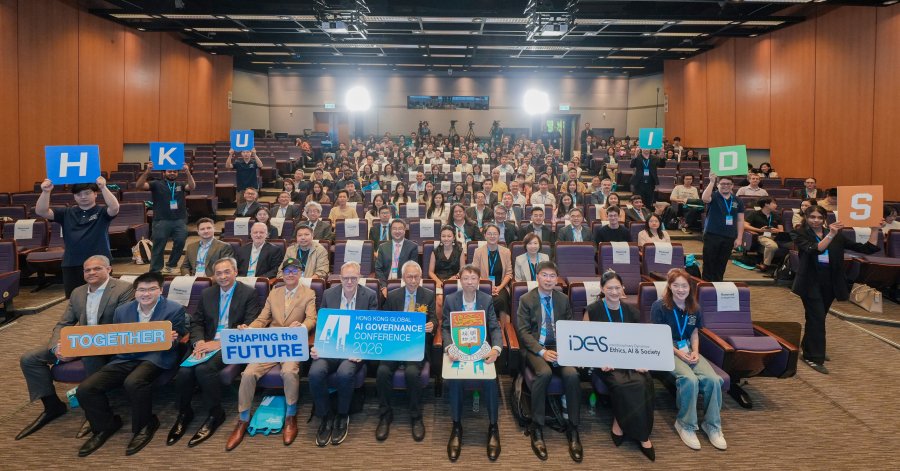
The broader implication is structural.

As U.S. higher education faces rising costs, political scrutiny, and intensified competition for domestic funding, global donor networks—particularly in Asia—are becoming increasingly important to sustaining institutional stability and growth.
Big Four firm removes roughly 100 senior partners to realign workforce size after voluntary retirements fell short, signaling structural pressure in audit staffing.
KPMG, one of the Big Four accounting firms, is cutting about 10% of its U.S. audit partners—roughly 100 senior figures—in a targeted restructuring of its audit business.

The move follows several years of unsuccessful efforts to encourage voluntary early retirements, leaving the firm with more partners than current demand justifies.

The firm says the cuts are not performance-related but part of a multi-year strategy to align the “size, shape and skills” of its audit leadership with evolving business needs.

Affected partners will receive financial exit packages and support in finding new roles.

KPMG’s U.S. audit practice has been growing and audits about 10% of public companies, but still trails major rivals.

The reduction reflects a broader industry correction after pandemic-era overhiring combined with unusually low attrition, which left firms with excess senior capacity.

Partner-level cuts are rare due to the cost and complexity of buying out equity stakes, making this move notable within the sector.

What is confirmed is a deliberate structural downsizing rather than a crisis response.

What remains unclear is whether the cuts will affect audit delivery or client retention as competitors seek to capitalize on any disruption.
A criminal complaint by Météo-France has thrust prediction-market design, public data integrity and possible sensor interference into the same investigation
Polymarket, a crypto-based prediction market where users trade on real-world outcomes, is at the center of a French investigation after suspicious bets on Paris temperatures coincided with abrupt, isolated spikes in data from a weather station at Charles de Gaulle Airport.

The case matters beyond a niche betting market because the disputed readings came from infrastructure tied not only to contract settlement but also to wider public meteorological systems.

What is confirmed is that Météo-France filed a police complaint after identifying anomalies in temperature readings on 6 April and 15 April.

Those spikes, reported as jumps of roughly four to five degrees Celsius within minutes before a rapid return to prior levels, did not align with surrounding stations, increasing suspicion that the measurements may have been artificially influenced rather than caused by ordinary weather variation.

The betting pattern is one reason the episode drew immediate scrutiny.

Traders placed low-probability positions on Paris reaching specific temperature thresholds and then collected unusually large profits when the anomalous readings pushed the contracts over the line.

In one widely cited instance, a wager of roughly thirty dollars generated close to fourteen thousand dollars.

On another date, a small position reportedly turned into a profit above twenty thousand dollars.

In practical terms, those returns matter less for their absolute size than for what they suggest: even modest manipulation of a single data point may be enough to produce outsized financial rewards.

The core mechanism is straightforward.

These weather markets settle against a designated external data source.

If that source records a temperature high enough to cross the contract threshold, the market resolves accordingly.

That creates a structural vulnerability: the platform may be technically secure while the real weak point sits outside it, in the physical or data-collection system used to define reality for settlement purposes.

Investigators are examining whether the sensor itself, or the immediate environment around it, could have been interfered with.

One theory under discussion is a highly localized heat source applied near the instrument, enough to alter the reading briefly without affecting nearby stations.

What remains unclear is whether any interference, if it occurred, was physical, digital, opportunistic or coordinated, and whether anyone with prior knowledge of the data pathway played a role.

The significance for French authorities goes well beyond gambling.

The same measurement network feeds aviation operations, forecasting and public weather services.

A brief distortion in one location does not mean the broader national system failed, but it does show how a public-data node can become financially attractive once a private market ties money directly to its output.

The episode also exposes a wider design issue in prediction markets.

These platforms promise price discovery based on crowd judgment, yet many contracts depend on a single authoritative source or a narrow chain of reporting.

That arrangement is efficient when the source is stable and hard to influence.

It becomes much riskier when the source is public, localized, physical or otherwise vulnerable to tampering.

The problem is not only insider trading in the classic sense of privileged information; it is the possibility of influencing the event or measurement itself.

Polymarket has already adjusted at least some of its Paris weather market rules by shifting away from the airport station as the reference point.

The company has also tightened language around manipulation and trading on outcomes a participant can influence.

Those steps may reduce immediate exposure, but they do not fully resolve the broader question raised by the French case: how a market built on external truth should function when that truth can be nudged, however briefly, by actors chasing profit.

The affair lands at a moment of growing scrutiny for event-based betting more broadly.

Regulators and policymakers have already been wrestling with questions about insider knowledge, market integrity and the ethics of wagering on politically or socially sensitive outcomes.

This case sharpens that debate because it is not only about who knew something first.

It is about whether the incentives created by such markets can encourage direct interference with the underlying facts used to settle them.

For now, the French inquiry remains focused on whether the temperature anomalies reflected tampering and, if so, who was responsible.

The answer will determine whether this becomes a narrow criminal case or a more consequential warning about a new category of risk: public data infrastructure turning into a target the moment a market starts paying for the right reading.
The property group retired repurchased shares as part of an ongoing capital return strategy, reducing its issued share count and tightening shareholder equity structure.
Hongkong Land Holdings, the Asia-focused commercial property developer, has cancelled 350,000 ordinary shares after completing a recent on-market buyback, continuing a broader programme of capital returns aimed at reducing its share count and managing shareholder equity.

The shares were repurchased in the open market on 22 April 2026 at prices ranging roughly between 7.78 and 7.92 US dollars each, with a weighted average near 7.90 US dollars.

Following the transaction, the company confirmed that all acquired shares would be permanently cancelled rather than held in treasury, lowering its issued share capital to about 2.15 billion voting shares.

The move forms part of Hongkong Land’s ongoing buyback strategy, under which it has repeatedly returned capital through market purchases funded by asset recycling and balance-sheet optimisation.

In recent periods, the company has executed multiple smaller buybacks, often followed by immediate cancellation, reflecting a consistent approach to reducing dilution and supporting per-share metrics rather than building a treasury stock position.

What is confirmed is that the cancellation reduces the total number of outstanding shares used to calculate earnings per share and voting rights.

What remains less explicit in the announcement is whether the latest repurchase signals an acceleration of the programme or simply continues previously authorised buyback capacity, which has been periodically expanded and extended in earlier corporate disclosures.

Hongkong Land, a major landlord with prime office and retail holdings concentrated in Hong Kong and other Asian financial centres, has increasingly used share buybacks alongside asset sales to adjust capital structure amid shifting property market conditions.

Recent corporate actions indicate a broader strategy of balancing portfolio repositioning with shareholder returns, though the longer-term scale and pace of repurchases remain dependent on market conditions and management allocation decisions.

The cancellation leaves investors with a slightly reduced share base as the company continues to navigate a period of active capital management in parallel with its core real estate operations.
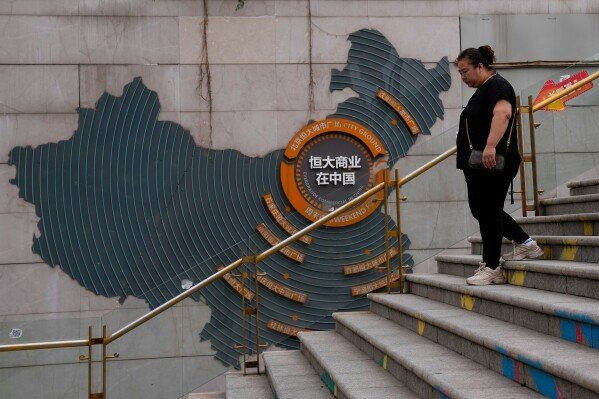
The Chinese macroeconomist takes a senior role at a Hong Kong-listed crypto firm, describing digital assets as entering a historic phase of financial integration
Hong Kong’s expanding digital asset sector is drawing high-profile figures from traditional economics, with Chinese economist Fu Peng joining Hong Kong-listed Bitfire Group in a senior scientific role and publicly arguing that cryptocurrencies have reached a turning point in mainstream financial integration.

What is confirmed is that Fu Peng has been appointed chief scientist at Bitfire, a wealth management and digital asset firm operating under Hong Kong’s regulated virtual asset framework.

He made his first public remarks in the role at a company event in Hong Kong, where he described the current phase of crypto development as a “historical” stage of convergence between finance and technology.

Fu said digital assets had become sufficiently mature to be incorporated into investment portfolios, framing their evolution as part of a broader structural shift in global markets.

He compared the integration of crypto into finance to earlier waves of financial innovation, arguing that the sector is now moving beyond experimentation into institutional adoption.

His appointment comes as Bitfire expands its regulated crypto investment strategy in Hong Kong, including plans tied to Bitcoin-linked products and derivatives-based asset management offerings aimed at institutional investors.

The firm has recently been consolidating trading infrastructure and investment teams from affiliated entities to support this expansion.

Fu’s move is notable in the context of mainland China’s continued restrictions on cryptocurrency trading, which have pushed many related activities toward Hong Kong, where authorities have adopted a regulated but more open framework for virtual assets.

This regulatory divergence has made the city a focal point for firms seeking compliant access to crypto markets.

In his remarks, Fu argued that the crypto industry is entering a new phase defined by deeper integration with traditional financial systems, including potential roles for stablecoins in payments and for Bitcoin as a portfolio asset with both value-preservation and financial utility functions.

The extent to which these views reflect broader policy or market consensus remains uncertain, but they align with a growing trend in Hong Kong’s financial sector, where regulated crypto firms are increasingly positioning digital assets as part of mainstream institutional portfolios rather than speculative instruments alone.
Companies in pharmaceuticals and biotech are increasingly using Hong Kong as a base for Asia operations, supported by financing access, policy incentives, and Greater Bay Area links
Hong Kong’s role as a regional base for biotechnology and life sciences companies is expanding as firms increasingly position the city as a headquarters hub for Asia operations, reflecting a broader effort to integrate research, financing, and cross-border commercialization in the sector.

What is confirmed is that Hong Kong has in recent years developed a large and growing biotech ecosystem, supported by targeted listing reforms and policy initiatives that allow pre-revenue and early-stage life sciences companies to access capital markets.

Official exchange data shows that more than 260 biotech and healthcare firms are now listed locally, with the sector collectively valued in the trillions of Hong Kong dollars, underscoring the depth of market participation in the industry.

Companies operating in the sector increasingly cite Hong Kong’s financial infrastructure and regulatory environment as key reasons for establishing or expanding regional headquarters functions in the city.

These functions typically include fundraising, investor relations, intellectual property management, and coordination of clinical and commercial activities across mainland China and international markets.

The trend is reinforced by government-linked investment promotion efforts that present Hong Kong as a launchpad for life sciences and biotechnology development, with access to both global capital and mainland research networks.

Authorities and investment agencies have highlighted the city’s clinical research capacity, intellectual property protections, and proximity to the Greater Bay Area as structural advantages for biotech firms seeking cross-border scale.

At the same time, several firms in the broader pharmaceutical and biotech ecosystem have been moving parts of their strategic operations to Hong Kong or establishing dual-base structures, pairing research facilities in mainland innovation hubs with financial and corporate headquarters functions in the city.

This model is increasingly used to streamline fundraising and regulatory engagement while maintaining proximity to production and R&D pipelines.

The expansion comes amid strong regional competition for high-value life sciences investment, particularly in fields such as cell therapy, drug discovery, and medical technology.

Hong Kong has sought to differentiate itself by focusing on capital market access and regulatory alignment with international standards, rather than large-scale manufacturing.

While the city’s positioning as a biotech headquarters hub is strengthening, the long-term scale of the shift remains uncertain.

The sustainability of this model will depend on continued capital inflows, the ability to attract and retain scientific talent, and the competitiveness of alternative regional centers also seeking to capture life sciences investment.
New initiatives and industry partnerships aim to attract startups, capital, and cross-border innovation networks
Hong Kong’s efforts to strengthen its role as an international technology hub are increasingly being driven by structured initiatives that link startups, investors, and overseas partners, as the city seeks to position itself as a key gateway between mainland China and global markets.

What is confirmed is that recent programmes led by local innovation institutions, including platforms designed to connect startups with overseas capital and corporate partners, are being presented as part of a broader strategy to expand Hong Kong’s influence in global technology ecosystems.

These initiatives focus on helping companies scale across borders while using the city as an operational and financial bridge.

One of the most prominent developments is a newly launched global innovation networking platform designed to bring together technology ventures, investors, and institutional partners from multiple countries.

The platform is intended to facilitate what organisers describe as “soft landing” pathways for startups entering Hong Kong and the wider Greater Bay Area, while also helping local companies access foreign markets.

Officials and industry participants involved in these programmes have framed Hong Kong as a “super-connector” between mainland China’s industrial and research capacity and international capital markets.

The emphasis reflects a policy direction that has been building over several years, with authorities seeking to reinforce the city’s traditional strengths in finance and professional services through deeper integration with the technology sector.

The push comes amid a broader regional competition to attract high-growth technology companies, particularly in artificial intelligence, biotechnology, and advanced manufacturing.

Hong Kong has been working to expand its appeal to such firms through funding schemes, research collaboration platforms, and simplified listing pathways for tech companies seeking access to capital markets.

While supporters argue that the city’s legal system, financial infrastructure, and proximity to mainland China make it uniquely positioned as a technology gateway, the extent to which these initiatives will translate into sustained global leadership remains uncertain.

Analysts and stakeholders continue to note that long-term success will depend on the depth of private-sector participation and the ability to retain talent and research-driven enterprises.

For now, the direction of policy and institutional investment suggests a continued effort to embed Hong Kong more firmly into global innovation networks, even as the competitive landscape for technology hubs intensifies across Asia and beyond.
A 51-year-old man was pronounced dead after collapsing mid-flight on CX216 from Manchester to Hong Kong, with police citing a prior medical history
Hong Kong authorities have confirmed the death of a passenger who fell ill and collapsed aboard a Cathay Pacific flight arriving from the United Kingdom, in another in-flight medical emergency involving the carrier’s long-haul services.

The incident occurred on flight CX216 from Manchester to Hong Kong International Airport, which landed at 6:35 a.m. local time on Friday.

What is confirmed is that police received a report shortly before landing that a 51-year-old male passenger had collapsed during the flight.

He was later pronounced dead after the aircraft arrived in Hong Kong.

Authorities said the man was found to have a history of illness, though they have not disclosed further medical details.

The precise cause of death has not yet been publicly established, and standard post-mortem procedures are expected to determine the final findings.

Emergency response procedures were initiated while the aircraft was still en route, and medical assistance was arranged upon landing.

The passenger was declared dead shortly after arrival at Hong Kong International Airport, according to officials.

The case is being handled by local police, who routinely investigate deaths occurring on incoming international flights.

No suggestion of foul play has been reported, and officials have not indicated any safety concerns related to the aircraft or flight operations.
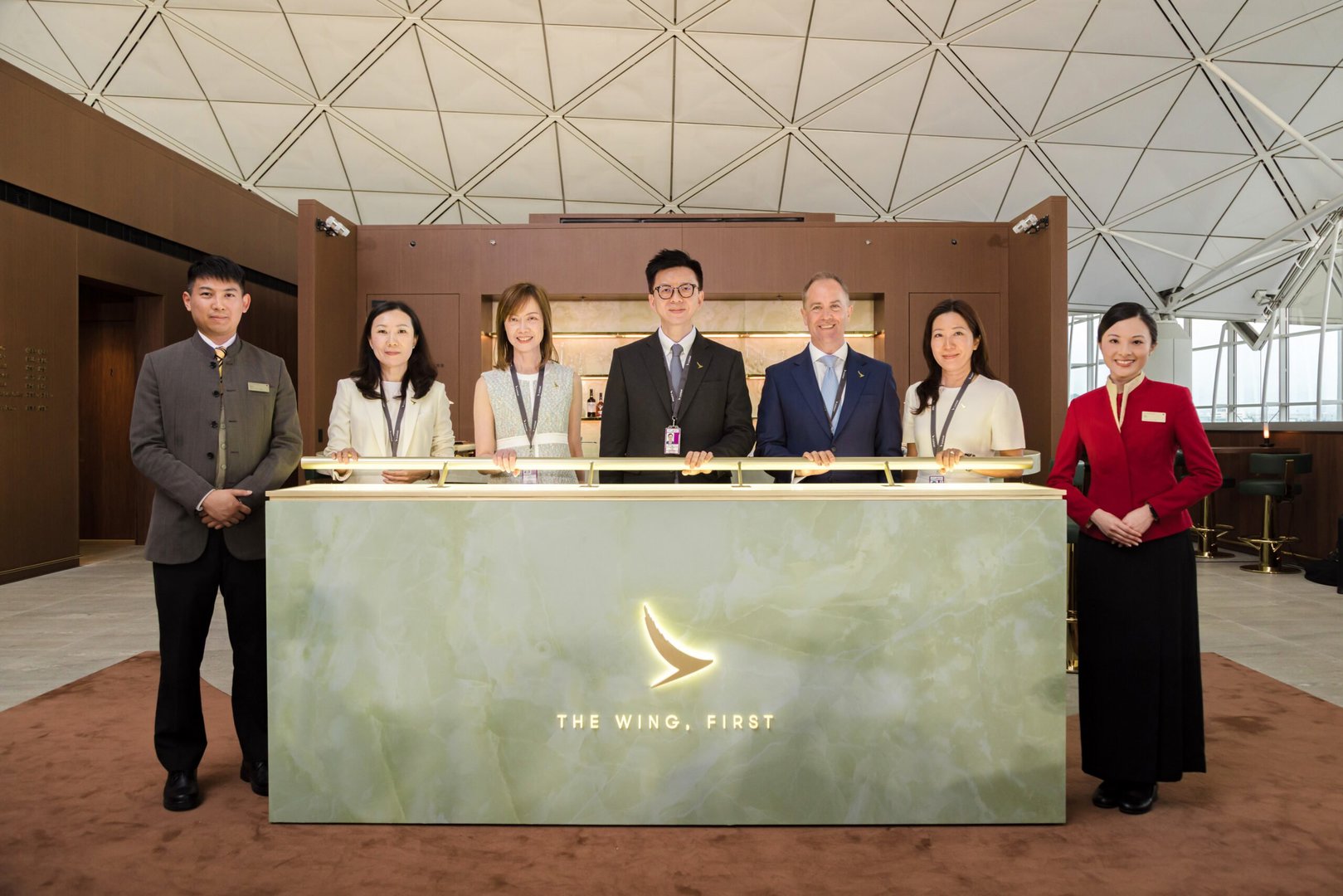
The incident adds to a small number of similar medical emergencies reported on Cathay Pacific long-haul services in recent years, most of which involve passengers experiencing sudden illness during flight.

Airlines typically note that cabin crews are trained in basic emergency response and rely on medical professionals on board when available, as well as airport-based emergency services on landing.

Further details, including a definitive medical cause of death, are expected following the completion of the post-mortem examination.
The two-day HKU-led forum brought together scholars and policymakers to expand international dialogue on AI regulation, accountability, and global coordination
University-led AI governance initiatives in Hong Kong are increasingly positioning the city as a convening point for global technology policy debates, with the Hong Kong Global AI Governance Conference 2026 held at the University of Hong Kong focusing on how artificial intelligence should be regulated across borders and sectors.

The conference, hosted on April 10–11, 2026 by the HKU Musketeers Foundation Institute of Data Science, gathered dozens of academics, policymakers, and industry figures from Asia, Europe, and North America to examine the governance challenges posed by rapidly advancing AI systems.

What is confirmed is that the event included keynote dialogues, panel discussions, and thematic sessions on areas such as education, legal frameworks, public governance, and international cooperation.

Organisers described the conference as an effort to broaden the global AI policy conversation beyond dominant geopolitical framing and to include perspectives from a wider range of regions.

That emphasis reflects a growing concern in academic and policy circles that AI governance debates are often concentrated around a small number of major technological powers, leaving broader international stakeholders underrepresented.

Across the two days, participants discussed issues including accountability in AI systems, explainability of machine learning models, regulatory design, and the societal impacts of emerging technologies.

Several sessions also examined how governments and institutions can coordinate across jurisdictions as AI development accelerates faster than existing legal and regulatory frameworks.

The conference forms part of a broader series of initiatives at HKU’s data science and policy institutes aimed at integrating technical research with ethical and governance questions.

The institution has increasingly hosted interdisciplinary forums on artificial intelligence, reflecting Hong Kong’s positioning as a regional hub for academic and policy exchange on emerging technologies.

While the discussions highlighted areas of emerging consensus on the need for stronger oversight and international collaboration, no binding policy outcomes were produced.

What remains ongoing is how such academic and policy dialogues may translate into formal regulatory coordination across different jurisdictions, particularly as governments continue to develop their own competing approaches to AI governance.
Regulators say audit failures helped mask China Evergrande’s financial collapse, triggering fines, compensation orders, and a temporary client ban on PwC Hong Kong
Hong Kong’s financial regulators have imposed a total penalty of about US$166 million on PricewaterhouseCoopers’ Hong Kong arm after finding serious audit failures in its work for China Evergrande Group, the collapsed property developer whose downfall triggered a wider crisis in China’s real estate sector.

The action, confirmed by the Securities and Futures Commission and the Accounting and Financial Reporting Council, concludes a long-running investigation into PwC’s audits of Evergrande’s 2019 and 2020 financial statements.

What is confirmed is that regulators concluded those audits failed to detect or properly challenge material misstatements, including the premature recognition of revenue that inflated reported performance.

Under the settlement, PwC Hong Kong agreed to pay HK$1.3 billion in total penalties and compensation.

Roughly HK$1 billion of that sum is allocated to a compensation fund for eligible minority shareholders who held Evergrande stock, while HK$300 million is a direct regulatory fine imposed by the accounting watchdog.

The agreement was reached without PwC admitting liability, and authorities say no further action will be taken if the terms are fulfilled.

Alongside the financial penalties, regulators imposed a six-month ban preventing PwC from taking on new listed-company audit clients in Hong Kong.

Two former audit partners were also publicly reprimanded and fined HK$5 million each, reflecting what regulators described as failures in professional judgment and audit skepticism.

Regulatory findings describe the audit shortcomings as severe, alleging that PwC did not adequately verify documentation supporting Evergrande’s reported revenue and failed to apply sufficient scrutiny to management representations.

These failures, regulators said, contributed to misleading financial statements that obscured the company’s deteriorating financial position before its eventual default.

Evergrande, once among China’s largest property developers, collapsed under more than US$300 billion in liabilities and defaulted in 2021, setting off a prolonged sector-wide crisis.

The company has since been ordered into liquidation in Hong Kong, and related legal and enforcement actions continue across multiple jurisdictions, including separate proceedings involving former executives.

The settlement adds to earlier penalties imposed on PwC in mainland China over its Evergrande audits, reflecting coordinated regulatory pressure on audit practices tied to one of China’s most significant corporate failures in decades.

PwC has said the resolution addresses historical issues and does not affect its ongoing client work, though the case further underscores heightened scrutiny of major audit firms operating in Hong Kong’s capital markets.
The airline has reopened its flagship First Class lounge at Hong Kong International Airport after a full redesign, marking a key step in its broader lounge investment program
Cathay Pacific has reopened its redesigned The Wing First lounge at Hong Kong International Airport following a major refurbishment that forms part of a wider upgrade of its global ground services strategy.

The reopening positions the lounge as a refreshed flagship facility for First Class passengers and top-tier loyalty members at the airline’s home hub.

What is confirmed is that the lounge officially resumed operations on April 22, 2026, after a period of renovation led in partnership with London-based design studio StudioIlse.

The project represents the most significant update to the space in more than a decade and continues Cathay Pacific’s broader program to modernize its premium lounges in Hong Kong and other key international airports.

The redesigned Wing First retains several signature design elements associated with the original lounge, including its well-known green onyx features, while introducing updated materials such as walnut wood and granite flooring.

The layout has been reconfigured to improve privacy, circulation, and dining experiences, with a stronger emphasis on a residential-style environment rather than a purely commercial lounge setting.

The airline has also emphasized changes to service concepts inside the lounge, including updated dining spaces, private work areas, and wellness-focused zones.

A core objective of the redesign is to create a more segmented environment that separates rest, dining, and work functions more clearly than in the previous layout.

The Wing First has long been one of Cathay Pacific’s most prominent airport lounges and originally opened in 1998 alongside the expansion of Hong Kong International Airport.

It has undergone periodic renovations over the years, but the latest overhaul is part of a broader investment cycle that includes upgrades to other lounges in Hong Kong and abroad.

Cathay Pacific has framed the project as part of a multi-year push to enhance its premium travel experience across both air and ground services.

The airline has been investing heavily in fleet upgrades, cabin redesigns, and airport facilities as it rebuilds its premium positioning in the post-pandemic aviation market.

The reopening also comes alongside ongoing changes to Cathay Pacific’s lounge network in Hong Kong, including phased renovations of other flagship spaces and the continued restructuring of its airport customer facilities.

While the Wing First has reopened, other lounges in the network are expected to undergo further upgrades in the coming years, indicating that the redesign program is not yet complete.
Hong Kong regulators impose fines, compensation and a temporary client ban after finding serious audit failures linked to Evergrande’s collapsed financial reporting
PricewaterhouseCoopers (PwC) will pay a total of about US$166 million in fines and compensation in Hong Kong to resolve regulatory investigations into its audit work for China Evergrande Group, marking one of the most significant enforcement actions yet in the fallout from the property giant’s collapse.

The settlement, announced by Hong Kong’s Securities and Futures Commission and the Accounting and Financial Reporting Council, concludes probes into PwC’s role in auditing Evergrande’s 2019 and 2020 financial statements, which regulators said materially overstated the company’s revenues.

What is confirmed by the authorities is that PwC agreed to the package without admitting liability, and that no further enforcement action will be taken if the terms are fulfilled.

Under the agreement, PwC Hong Kong will contribute about HK$1 billion (roughly US$127.7 million) into a fund intended to compensate eligible minority shareholders who were misled by the financial statements.

Separately, it will pay HK$300 million in regulatory fines to Hong Kong’s audit watchdog.

The total package, including penalties and compensation, amounts to roughly HK$1.3 billion.

Regulators also imposed additional sanctions, including a six-month restriction preventing PwC from taking on new listed-company audit clients in Hong Kong.

Two former PwC partners involved in the audits were publicly reprimanded and fined HK$5 million each.

Authorities described the audit failures as serious breaches of professional duty, citing insufficient skepticism and failures to properly verify supporting documentation during the audits.

The regulator’s findings indicate that these shortcomings contributed to the persistence of misleading financial reporting at Evergrande before its default.

What remains clear is that Evergrande, once one of China’s largest property developers, collapsed under more than US$300 billion in liabilities and defaulted in 2021, triggering a broader crisis in China’s real estate sector.

It has since been ordered into liquidation in Hong Kong, with its founder facing separate criminal proceedings in mainland China.

PwC has said the settlement resolves historical issues and does not affect its current clients, though the episode adds to sustained regulatory scrutiny of its China and Hong Kong audit practices.

The enforcement action also underscores rising pressure on major accounting firms in Hong Kong following one of the most high-profile corporate failures in recent years.
Investors are watching a widening gap between onshore growth stocks and weaker Hong Kong-listed tech shares amid shifting liquidity and sector rotation
China’s equity markets are showing a growing split between onshore growth stocks and Hong Kong-listed technology companies, with the ChiNext board in Shenzhen recently outperforming its offshore peers in Hong Kong.

The divergence has been most visible in technology-heavy benchmarks, where the ChiNext Index has posted stronger gains in recent sessions while the Hang Seng Tech Index has faced intermittent pressure from large-cap declines and uneven investor sentiment.

Recent market summaries indicate that onshore A-share markets have been led by domestic growth themes, including artificial intelligence infrastructure, semiconductor supply chains, and advanced manufacturing.

In contrast, Hong Kong’s tech-heavy index has experienced more volatility, weighed at times by profit-taking in major platform companies and sensitivity to global liquidity expectations.

Several recent trading sessions have shown simultaneous strength in mainland tech names alongside weakness or stagnation in offshore-listed counterparts, reinforcing the perception of a structural split in performance.

Analysts attribute the divergence in part to differences in investor base and capital flows.

Mainland A-share markets, including ChiNext, are more heavily influenced by domestic liquidity conditions and policy-driven sentiment, while Hong Kong equities are more exposed to international funds and broader macro signals such as U.S. interest rate expectations and global risk appetite.

Recent data also show that thematic trading in China remains concentrated in artificial intelligence and advanced computing supply chains.

Semiconductor-related stocks and AI infrastructure firms have been among the most actively traded segments in onshore markets, contributing to episodic surges in the ChiNext benchmark.

By contrast, Hong Kong-listed technology giants have shown more mixed performance, with gains in some AI-linked listings offset by declines in established platform companies during earnings periods or sector rotations.

This unevenness has contributed to the perception that offshore Chinese tech equities are lagging their mainland counterparts in the current cycle.

What remains unclear is whether this divergence represents a temporary phase driven by short-term capital flows or a more sustained structural separation between domestic and offshore valuations.

Market participants are also watching whether policy signals from Beijing or shifts in global interest rate expectations could narrow the gap between the two segments.

For now, the contrasting trajectories of ChiNext and Hong Kong’s tech index reflect a broader rebalancing within Chinese equities, where investor attention is increasingly concentrated on domestic growth narratives rather than unified performance across markets.
Government confirms anonymised data from 500,000 volunteers was listed on Alibaba, prompting investigation and suspension of access while security is reviewed
A UK government-backed biomedical data system that holds health and genetic information from hundreds of thousands of volunteers is under investigation after parts of its dataset were found advertised for sale on a Chinese e-commerce platform, prompting questions about research data governance and cross-border access controls.

The story is system-driven: it centres on the governance framework governing UK Biobank, a large-scale medical research resource that provides anonymised health data to approved researchers worldwide, and the safeguards intended to prevent misuse of that data once it is shared.

Officials have confirmed that data linked to approximately 500,000 UK Biobank participants was discovered listed for sale on Alibaba’s platforms in China.

The listings were identified earlier this week and reported to UK authorities by UK Biobank itself.

Government ministers told parliament that the data was removed after intervention involving UK and Chinese authorities, and that no purchases are believed to have taken place before removal.

What is confirmed is that the dataset did not include direct personal identifiers such as names, addresses, telephone numbers or NHS numbers.

However, it did contain sensitive health-related information including demographic details, lifestyle factors and biological measurements, according to government and institutional statements.

The source of the breach has been traced to three research institutions that had legitimate access to UK Biobank data under approved agreements.

Their access has now been revoked.

The incident is being treated as a breach of contractual and data-use conditions rather than a direct external hack of UK Biobank systems, though the precise chain of events leading to the appearance of the listings remains under investigation.

UK Biobank has suspended access to parts of its research platform while it implements additional security measures designed to limit bulk data extraction and improve monitoring of downloads.

It has also launched a formal internal review and referred itself to the UK Information Commissioner’s Office, which oversees data protection compliance.

Government ministers have described the incident as a serious breach of trust in a widely used scientific resource, while stressing that safeguards were in place to anonymise participant data.

At the same time, regulators and oversight officials have warned that even de-identified datasets can carry residual risks of re-identification if combined with other sources.

What remains unclear is how the data ultimately came to be listed for sale online and whether it was resold, aggregated, or improperly shared after initial lawful access.

Authorities have not confirmed whether any individuals or organisations will face enforcement action as the investigation continues.

The incident has intensified scrutiny of how large-scale biomedical datasets are shared internationally, particularly when accessed by multiple institutions across jurisdictions with differing data protection standards.
Investigation launched into how anonymised UK Biobank dataset was listed online, prompting suspension of access and regulatory scrutiny
The UK government has launched an investigation after anonymised health data from around 500,000 volunteers in a major biomedical research programme appeared for sale on Chinese e-commerce platforms operated by Alibaba.

What is confirmed is that UK Biobank, a large-scale health research resource used by scientists worldwide, informed authorities that its dataset had been listed in multiple online postings.

The material is understood to relate to data from its volunteer cohort, which includes detailed health, genetic, and lifestyle information collected for research purposes.

According to government statements, the listings were identified across several vendors and were removed after intervention involving UK authorities, UK Biobank, Alibaba, and Chinese officials.

Officials have said there is no evidence that any of the data was successfully sold before it was taken down.

The dataset in question is described as anonymised, meaning it does not include direct identifiers such as names, addresses, or contact details.

However, it does contain sensitive information such as demographic details and health measurements, which has raised concern among data protection experts even when stripped of personal identifiers.

UK Biobank has described the incident as a breach of its data-sharing terms and has revoked access for three research institutions linked to the source of the listings.

It has also paused access to parts of its research platform while introducing additional technical safeguards intended to prevent bulk extraction of data.

The UK’s Information Commissioner’s Office has been notified and is examining the circumstances, while a broader investigation is under way to determine how the material was extracted and listed for sale.

Officials have said they are working to establish whether the breach occurred through misuse of legitimate research access or other technical or contractual violations.

What remains unclear is the precise pathway by which the data appeared on commercial listings, and whether any malicious intent or systemic security failure was involved.

Authorities have not publicly confirmed the identity of individuals responsible or whether the incident reflects isolated misconduct or broader weaknesses in data governance arrangements.

The case has renewed scrutiny of large-scale biomedical data platforms, which depend on public trust and strict controls to enable international research collaboration while safeguarding sensitive health information.

The outcome of the investigation is expected to shape how such datasets are accessed and monitored in future.
Jiangsu New Vision Automotive Electronics debuts as investors continue to back China’s fast-growing head-up display sector and smart cockpit technologies
Jiangsu New Vision Automotive Electronics, a Chinese developer of automotive head-up display (HUD) systems, has entered the Hong Kong stock market as part of a broader wave of technology-focused listings linked to advanced vehicle electronics and smart cockpit innovation.

The company’s listing follows a completed initial public offering in Hong Kong that introduced its shares under the code 2632.HK, marking its transition into public trading on the city’s main board.

The firm specialises in HUD technologies, including windshield head-up displays and augmented reality systems designed to project driving and navigation information directly into a driver’s field of vision.

Its product suite, built around systems known as CyberLens and CyberVision, integrates optical engineering, software algorithms, and human-machine interface design.

The company positions itself as a full-stack provider of in-vehicle visual interaction solutions for automotive manufacturers, with a focus on intelligent cockpit systems and enhanced driver assistance technologies.

The listing places New Vision among a growing cohort of Chinese automotive technology companies accessing Hong Kong’s equity markets, as global investors continue to show strong interest in sectors tied to electrification, digitalisation, and smart mobility.

Industry data cited in the company’s offering materials indicates it ranks among the leading HUD solution providers in China, reflecting its established position in a rapidly expanding segment of automotive electronics.

Funds raised from the offering are expected to support production expansion, automation upgrades, and further research and development, particularly in augmented reality display systems and next-generation cockpit interfaces.

The company has also outlined plans to enhance its technological capabilities and broaden applications across automotive platforms.

The debut comes amid sustained momentum in Hong Kong’s IPO market, where technology and advanced manufacturing listings have attracted significant investor participation.

Recent market activity has been driven in part by demand for companies linked to artificial intelligence, semiconductor supply chains, and smart vehicle systems, reinforcing the city’s role as a key financing hub for mainland China’s high-tech industrial expansion.

As trading develops, market attention will focus on whether demand for automotive HUD technologies can translate into sustained investor confidence, particularly as global automakers continue integrating augmented reality and digital display systems into next-generation vehicle platforms.
Chinese electronics manufacturer jumps up to 17% in first-day trading as investors continue to back mainland tech listings in Hong Kong
Shares of Chinese electronics manufacturer Huaqin Technology rose sharply in their Hong Kong trading debut after the company completed a $581 million initial public offering, underscoring continued investor appetite for mainland technology listings in the financial hub.

The Shanghai-based firm raised approximately HK$4.55 billion (about $580.8 million) through the issuance of 58.5 million shares priced at HK$77.70 each.

Trading began in Hong Kong following the completion of pricing earlier in the week, with the stock initially climbing as much as 17% above its offer price before moderating slightly while still holding double-digit gains in early trading.

The company, which is already listed in Shanghai, operates as a major electronics design and manufacturing provider, supplying products including smartphones, laptops, smart devices, and data centre systems.

It has positioned itself as a significant global original design manufacturer, with a growing focus on artificial intelligence-enabled hardware and communication technologies.

Proceeds from the offering are expected to be directed toward research and development, expansion of manufacturing capacity, and strategic investments in emerging sectors such as automotive electronics and robotics.

The listing is part of a broader trend of Chinese technology firms turning to Hong Kong to access international capital markets amid strong regional liquidity and ongoing investor interest in AI-linked industries.

The debut adds to a recent wave of sizeable Hong Kong listings by mainland companies, reinforcing the city’s role as a key financing centre for Chinese industrial and technology expansion.

Market activity in recent months has been supported by strong subscription demand for IPOs, particularly in advanced manufacturing, AI infrastructure, and electronics supply chains.

As trading stabilises, attention will turn to whether Huaqin can maintain its early gains and deliver sustained performance in a competitive technology sector increasingly shaped by global demand cycles and domestic innovation policies.
New amendments to security regulations requiring disclosure of passwords and device access deepen concerns over the future of personal privacy in the city
Recent amendments to Hong Kong’s legal framework have intensified scrutiny of how far authorities can go in compelling access to private digital data, with new provisions allowing law enforcement to demand passwords and decryption assistance from individuals under national security investigations.

Under the updated rules, individuals suspected of offences related to national security can be legally required to provide access credentials for mobile phones, computers, and other encrypted devices.

Refusal to comply may result in imprisonment, reflecting a significant expansion of enforcement powers within the city’s broader security architecture.

Authorities have argued that the measures are consistent with Hong Kong’s constitutional framework and are necessary to address evolving security threats.

The changes extend existing provisions that already grant police broad investigative authority in cases involving alleged threats to national security.

Officials maintain that these tools are intended to enhance investigative efficiency and prevent the concealment of evidence in serious cases, while insisting that ordinary residents will not be affected in day-to-day life.

However, legal experts and rights advocates have raised concerns that the measures could have a chilling effect on privacy protections, particularly in relation to confidential communications between professionals such as journalists, lawyers, and medical practitioners and their clients.

The lack of prior judicial authorisation in certain enforcement scenarios has been a particular point of contention in public debate.

The policy shift comes amid a wider pattern of regulatory tightening affecting information access, digital communication, and data governance in Hong Kong.

Courts have recently weighed competing considerations between privacy rights and public interest in cases involving journalistic access to official data, often endorsing frameworks that allow for greater administrative discretion in restricting access.

Supporters of the current direction argue that enhanced digital enforcement powers are a necessary evolution in an era of encrypted communications and cross-border cyber risks.

Critics, meanwhile, warn that the cumulative effect of such measures could reshape expectations of privacy in the city, particularly in contexts involving sensitive political or security-related investigations.

As implementation continues, attention is expected to focus on how enforcement practices are applied in real cases and whether safeguards evolve alongside the expanding scope of digital investigative authority.
New analysis highlights how Hong Kong’s regulated stablecoin rollout is designed around major banks, reinforcing a controlled approach to digital money development
Hong Kong’s emerging stablecoin framework is increasingly being defined by the central role of major banks, with policymakers positioning regulated financial institutions as the primary issuers and gatekeepers of digital money in the city’s evolving payments ecosystem.

Recent developments show that the first stablecoin issuer licences have been granted under a tightly controlled regulatory regime designed to integrate digital currencies into the existing financial system rather than disrupt it.

The approvals, issued under Hong Kong’s new stablecoin framework, were awarded to HSBC and a joint venture involving Standard Chartered, Animoca Brands, and Hong Kong Telecommunications.

These institutions were selected from a wider pool of dozens of applicants, reflecting a deliberate preference for well-capitalised and heavily regulated entities.

The structure of the rollout underscores a strategic choice by authorities to embed stablecoins within the banking sector.

Both HSBC and Standard Chartered are among the city’s note-issuing banks, already playing a foundational role in Hong Kong’s currency system.

Their participation signals that stablecoins are being treated less as experimental crypto assets and more as extensions of existing monetary infrastructure, with direct links to established balance sheets and compliance systems.

Regulators have outlined that initial stablecoin use cases will focus on payments, cross-border transfers, and tokenised financial assets.

These applications are intended to address inefficiencies in traditional settlement systems while maintaining strict oversight on reserves, redemption mechanisms, and anti-money-laundering safeguards.

The framework emphasises a risk-based approach, with licensing standards that prioritise operational resilience, transparency, and real-world utility.

The broader policy direction suggests a cautious but deliberate attempt to position Hong Kong as a regulated hub for digital finance, rather than a lightly supervised crypto market.

Authorities have indicated that only a limited number of licences will be issued in the early stages, allowing the ecosystem to develop under close supervision before any potential expansion.

Analysts note that this bank-led model distinguishes Hong Kong from more decentralised or retail-driven approaches seen in other jurisdictions.

Instead, it reflects a design in which digital currency issuance remains closely aligned with the traditional financial system, reinforcing stability while gradually introducing programmable and blockchain-based payment features.

As implementation continues, attention is expected to focus on how quickly licensed issuers can move from regulatory approval to live deployment, and whether bank-issued stablecoins can achieve meaningful adoption in both domestic and cross-border payment flows without undermining existing financial safeguards.
Commentary highlights the city’s reliance on imported fuel and suggests conservation could become necessary if global energy pressures persist
Hong Kong may need to rely more heavily on energy conservation if ongoing global fuel pressures continue to weigh on supply and pricing, according to a recent discussion on the city’s energy outlook amid persistent market instability.

The commentary notes that Hong Kong’s energy system remains fundamentally dependent on imported fuels and refined products, leaving it exposed to fluctuations in international markets.

With no domestic oil production or refining capacity, the city sources all its petrol and diesel from global suppliers, meaning that changes in crude oil supply chains, shipping routes, and geopolitical tensions can quickly translate into higher local costs.

Current conditions have been shaped by broader disruptions in global energy markets, including instability in key supply corridors and sustained volatility in fuel pricing.

These pressures have already contributed to higher transport and electricity-related costs in Hong Kong, with policymakers and industry leaders acknowledging the city’s limited ability to directly control price movements.

Against this backdrop, energy conservation has re-emerged as a potential policy response.

Historical precedent shows that during previous periods of oil supply shocks, Hong Kong authorities encouraged reduced consumption as a practical way to manage scarcity and cost pressures rather than relying on large-scale subsidies or price controls.

The latest discussion suggests that if current conditions persist, similar measures could again become relevant, with emphasis on reducing unnecessary consumption across households, transport, and commercial sectors.

While power suppliers have maintained that electricity supply remains stable, they have also underscored the importance of preparedness and demand management in a city highly exposed to external energy shocks.

Analysts continue to describe Hong Kong’s position as structurally vulnerable due to its lack of local energy production and heavy reliance on imports.

This dependency, combined with global uncertainty, is driving renewed attention toward efficiency, demand reduction, and long-term energy transition strategies.
New values education guidelines deepen focus on patriotism, national unity, and understanding of China across all school levels
Hong Kong authorities have introduced a revised education framework that significantly strengthens the emphasis on national identity and patriotic values across the city’s school system, according to newly released curriculum guidance.

The 2026 Values Education Curriculum Framework applies to all government, aided, special, and private schools, and is designed to guide how values education is implemented at different stages of schooling.

Compared with the previous version issued in 2021, the updated framework places a markedly stronger focus on "national identity" as one of its core educational priorities.

Under the new guidelines, pupils in the early years of primary school are expected to gain a basic understanding of national affairs and develop a sense of pride in being Chinese.

As students progress through primary education, they are encouraged to deepen their understanding of national unity and ethnic solidarity, alongside learning about civic responsibility and the importance of safeguarding national security.

The framework outlines 12 key values to be cultivated in students, including perseverance, respect for others, responsibility, integrity, empathy, diligence, filial piety, and unity.

These are presented as part of a broader effort to strengthen character education while embedding a clearer sense of national belonging within the curriculum.

Education authorities say the revised approach builds on earlier reforms introduced in recent years, which already expanded national education content across multiple subjects and increased exposure to themes such as the Constitution of China, the Basic Law, and national security education.

Schools have also incorporated activities such as flag-raising ceremonies and exchange programmes with mainland China as part of efforts to reinforce civic and national awareness.

The updated framework is intended to provide schools with clearer guidance on curriculum planning and implementation, ensuring that values education is consistently delivered across different subjects and school types.

It reflects an ongoing policy direction in Hong Kong’s education system aimed at strengthening students’ understanding of national development and their role within the broader national context.
The annual assessment concludes that political and civil liberties in Hong Kong have been systematically weakened amid expanded national security enforcement and reduced judicial safeguards.
A newly released United States State Department assessment has warned that political, civil, and judicial freedoms in Hong Kong have been systematically eroded, citing continued expansion of national security enforcement and declining protections for dissent.

The report, covering developments over the past year, argues that Hong Kong’s autonomy under the “one country, two systems” framework has been significantly undermined.

It points to the use of national security legislation as a central instrument in reshaping the city’s political and legal environment.

According to the findings, national security measures have been applied in ways that extend beyond traditional law enforcement, affecting political expression, media activity, and public participation in civic life.

The assessment also highlights concerns that judicial independence in cases related to national security may be constrained by broader political considerations.

Authorities in Hong Kong have consistently rejected such characterisations, insisting that the legal framework is essential for restoring stability following years of unrest and for safeguarding national sovereignty.

They argue that rights and freedoms remain protected under both the Basic Law and the city’s constitutional structure, while accusing external actors of politicising internal affairs.

The report comes amid ongoing international debate over Hong Kong’s evolving governance model following the introduction of sweeping national security legislation in recent years.

Supporters of the measures describe them as necessary to ensure long-term stability and restore order, while critics maintain that they have fundamentally altered the city’s political landscape.

The latest assessment adds to a series of annual reviews that have increasingly focused on the balance between security enforcement and civil liberties, as Hong Kong continues to operate under a markedly different legal and political environment compared with its pre-2019 status.

No immediate changes in policy or official responses were announced in connection with the report’s publication.
The Hang Seng Index slipped around 0.8% as profit-taking, oil-driven inflation concerns, and uncertainty over Middle East tensions weighed on sentiment ahead of key economic data.
Hong Kong equities edged lower in volatile trading as investors adopted a more cautious stance, with the benchmark Hang Seng Index falling roughly 202 points, or 0.8%, to 25,950.

The decline marked a reversal from the previous session’s gains, as market participants locked in recent profits and reassessed risk exposure amid a mixed global backdrop.

While United States equities were broadly supported by resilient corporate earnings and improved risk appetite, sentiment in Asia remained more restrained.

Investor focus has increasingly shifted toward geopolitical developments linked to tensions in the Middle East, particularly concerns surrounding energy supply routes through the Strait of Hormuz.

Fluctuations in crude oil prices have kept inflation worries elevated, reinforcing a more defensive tone across regional markets.

Within Hong Kong, heavyweight technology and financial stocks were among the main contributors to the decline.

Tencent, AIA Group, Xiaomi, Geely Automobile, and Anta Sports all recorded losses, reflecting broad-based pressure across key index constituents.

Attention is also turning to upcoming local inflation data, which is expected to provide fresh signals on underlying price pressures.

The reading could influence expectations for monetary conditions and near-term policy direction, adding another layer of uncertainty for investors already navigating a fragile global environment.

Despite periodic optimism earlier in the week driven by easing geopolitical fears, sentiment has remained sensitive to rapid shifts in headlines, with traders continuing to weigh the balance between stabilising corporate fundamentals and persistent external risks.

Market observers note that while liquidity conditions remain supportive and selective sectors continue to attract inflows, the broader index is struggling to sustain upward momentum without clearer macroeconomic direction and sustained improvement in global risk sentiment.
Robovan operator Zelos Technology is reportedly preparing a Hong Kong listing that could raise roughly $600 million as investor appetite for AI-driven logistics firms accelerates.
Zelos Technology, a Chinese autonomous delivery vehicle operator backed by Alibaba Group’s logistics affiliate Cainiao, is preparing an initial public offering in Hong Kong that could raise around $600 million, according to people familiar with the matter.

The company, formally known as Jiushi Suzhou Intelligent Technology Co., is said to be in discussions with investment banks over a potential listing.

While deliberations remain ongoing, both the size and timing of the offering are still subject to change.

Founded in 2021, Zelos has rapidly expanded its position in the autonomous logistics sector, operating a fleet of more than 25,000 Level 4 self-driving delivery vehicles across mainland China.

The company has also extended its footprint internationally, including operations in Southeast Asia and the Middle East, with deployments in markets such as Singapore and the United Arab Emirates.

Zelos develops highly autonomous delivery trucks designed to operate with minimal human intervention, a segment increasingly viewed as central to the next phase of logistics automation.

Its growth has been supported by strategic investment from Cainiao, which earlier this year took a stake in the company through an undisclosed cash injection.

The planned listing reflects a broader surge of capital-raising activity among Chinese artificial intelligence and automation firms in Hong Kong, where investor demand for next-generation technology companies has remained strong despite global market uncertainty.

Recent months have seen a wave of AI-related IPO preparations from multiple startups seeking to fund expansion and large-scale research and development programmes.

If completed, the Zelos listing would mark one of the larger Hong Kong technology offerings of the period and further underline the city’s role as a key fundraising hub for mainland Chinese tech firms transitioning from venture-backed growth to public markets.

No official comment has been provided by the company regarding the proposed listing.
Investors are increasingly diversifying beyond Hong Kong equities, easing a multi-year wave of AI-driven capital inflows from mainland China
Inflows from mainland China into Hong Kong-listed equities that were previously driven by artificial intelligence-related enthusiasm are showing signs of moderation as investors gain access to a wider range of domestic and overseas investment options.
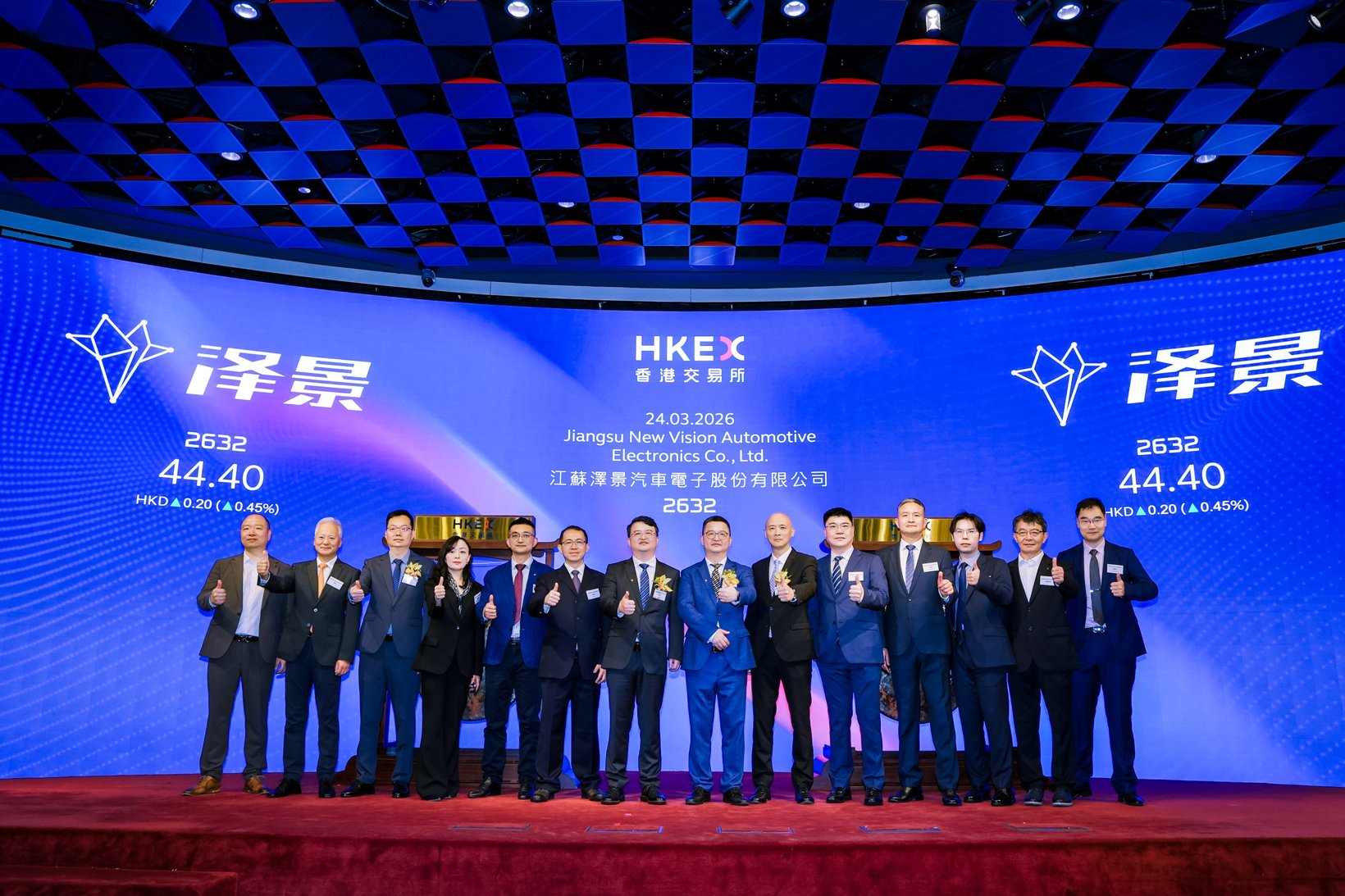
Market participants tracking cross-border trading patterns say the pace of so-called southbound flows into Hong Kong has eased compared with earlier periods of strong momentum, when AI-linked themes and valuation gaps between mainland and Hong Kong listings helped fuel record participation.

The slowdown is being attributed not to a reversal in sentiment, but to a gradual diversification of capital allocation strategies among mainland investors.
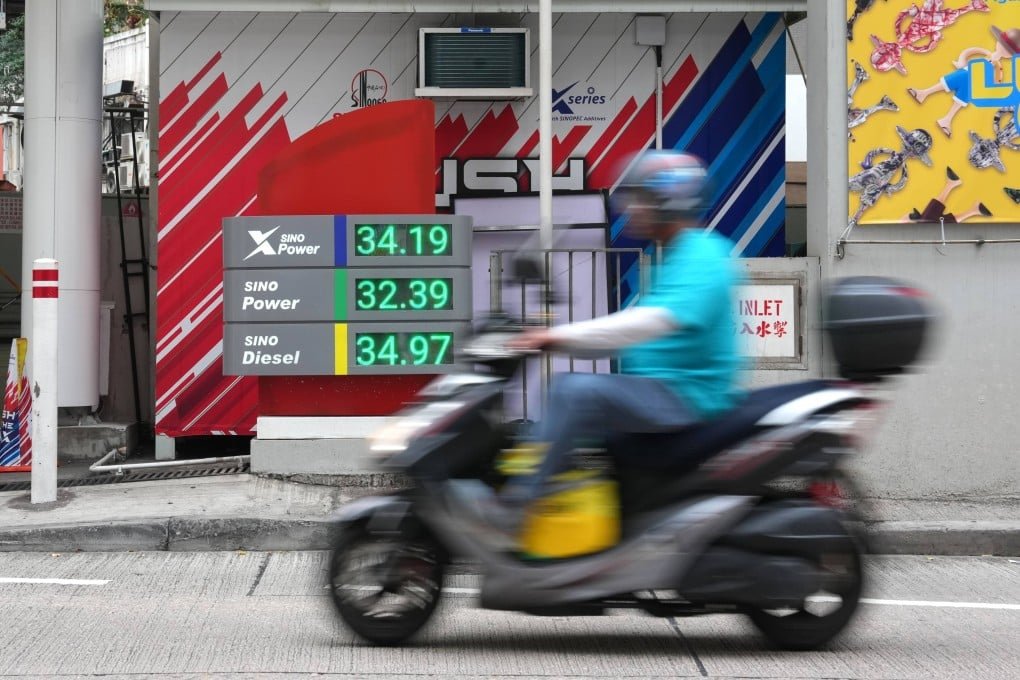
Hong Kong’s stock market has in recent years benefited significantly from mainland demand, channelled primarily through the Stock Connect programme, which allows investors in mainland China to buy eligible Hong Kong shares.
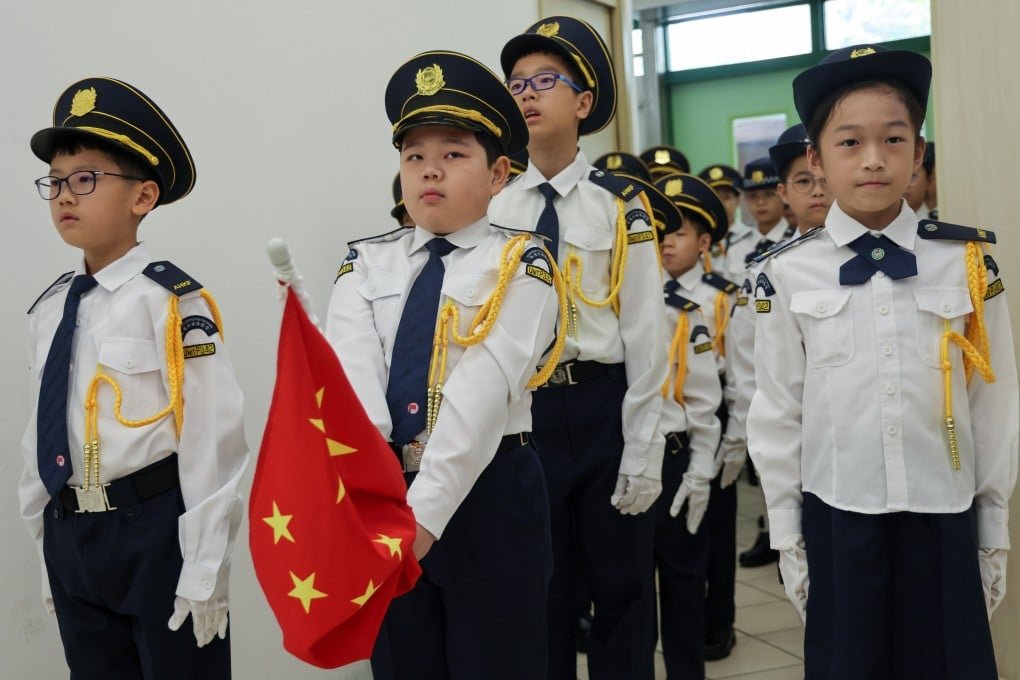
These flows surged to record levels in 2025, surpassing prior annual highs and accounting for a substantial share of daily turnover in the city’s equity market.

However, analysts note that the composition of investor demand is becoming more selective.

While artificial intelligence-related firms and technology platforms previously dominated inflows, a growing range of onshore investment products, including ETFs and newly available domestic technology and industrial equities, is offering alternative exposure to similar themes without requiring offshore allocation.

This shift has coincided with an increasingly crowded market for AI-linked investment vehicles across Greater China.

A wave of new listings, particularly in the semiconductor, hardware and AI infrastructure sectors, has given investors additional avenues to gain exposure to the same growth narrative that once primarily benefited Hong Kong-listed stocks.

Despite the moderation in momentum, Hong Kong continues to serve as a key offshore hub for Chinese capital, with structural demand still supported by valuation differences and the presence of large technology firms listed in the city.

Market observers suggest that while inflows may no longer rise at the pace seen during earlier AI-driven surges, the broader cross-border investment channel remains firmly established.

The evolving pattern reflects a maturing investment cycle in which mainland capital is no longer concentrated in a narrow set of offshore tech trades, but is instead distributed across a widening universe of domestic and international assets.
KPMG Cuts Around 10% of US Audit Partners After Failed Exit Push
French Police Probe Suspected Weather-Data Tampering After Unusual Polymarket Bets on Paris Temperatures
CATL Unveils Revolutionary EV Battery Tech: 1000 km Range and 7-Minute Charging Ahead of Beijing Auto Show
Changi Airport: How Singapore Engineered the World’s Most Efficient Travel Experience
Italy’s €100K Tax Gambit: Europe’s Soft Power Tax Haven
Travel on all public transport in the Australian state of Victoria will be free in May and then half price for the remainder of this year as the government ramps up help for consumers battling high fuel costs
News Roundup
Zhejiang China Commodities City Group Eyes Hong Kong IPO to Drive Global Expansion
Chinese Healthcare Stocks Surge in Hong Kong as Middle East Tensions Rattle Markets
Hong Kong to Channel Diesel Subsidies Directly to Oil Firms Amid Oversight Concerns
Hong Kong to Host Major Wiki Finance Expo 2026 Showcasing Fintech and Web3 Innovation
Hong Kong Police Arrest Suspect in Major Patient Data Leak Affecting Tens of Thousands
ISOPT Gears Up for Joint Scientific Meeting Across Shenzhen and Hong Kong
Hong Kong Tunnel Toll Cuts Leave Taxi Passengers Without Fare Relief
Hong Kong’s Dining Scene Shines with Must-Visit Restaurants This April
Hong Kong Awards First Stablecoin Licences to Major Banking Players
From Factory Floor to Fortune: Hong Kong Worker Rises to Global Wealth Elite
Hong Kong Laundry Businesses Struggle as Rising Oil Prices Drive Costs Higher
Workplace Sexual Harassment Complaints Rise Sharply in Hong Kong
Manycore Targets $130 Million Raise in Hong Kong IPO as Hangzhou Tech Firms Expand
IPO Activity in Mainland China and Hong Kong Shows Renewed Momentum in Early 2026
Hong Kong Urged to Strengthen Resilience Amid Increasingly Complex Global Environment
Norman Foster’s Vision Redefined Hong Kong’s Skyline and Global Trading Architecture
Hong Kong Anti-Corruption Body Emphasizes Clean Governance as Foundation for Sustainable Growth
dentsu Hong Kong and Café de Coral Bring Social Media Energy to Life with Flash-Mob at CON-CON 2026
Hong Kong Dining Scene Showcases Top Quick-Service and Casual Restaurants in 2026 Rankings
Hong Kong Collectors Shift Focus from Ownership to Public Cultural Engagement
Chinese Firm’s Washington Outreach Linked to Trump-Era Networks Yields Policy Breakthrough
Hong Kong PMI Slips Below Growth Threshold as External Pressures Weigh on Business Activity
Hong Kong Surges Ahead of Wall Street and Europe in Global IPO Rankings
Hong Kong Moves to Criminalise Refusal to Provide Passwords in Investigations
Hong Kong Shapes Near-Term Property Outlook Across Greater Bay Area
Liu Wei’s ‘You Like Pork?’ Tops Poly Hong Kong Art Sale at 3.5 Million Dollars
Artificial Intelligence Takes Centre Stage at Hong Kong Technology Fairs
Hongkong Land Executives Increase Holdings Through Senior Management Share Plan
Hong Kong Company Launches Arbitration Against Maersk Over Panama Port Dispute
Hong Kong Urges Foreign Governments to Lift Covid-Era Flight Restrictions
Hong Kong Mortgage Corporation Explores Landmark Digital Bond Offering
Hong Kong Steps Up Scrutiny of Bank Culture in Push for Stronger Financial Governance
Hong Kong Clarifies Digital Currency Strategy, Says It Is Not Competing With US Stablecoins or Digital Yuan
Chinese AI Glasses Firm Rokid Plans Hong Kong IPO to Accelerate Expansion
Hong Kong Doctor Faces Disciplinary Review After Sharing Resuscitation Image Online
Hong Kong’s East Dam Draws Strong Easter Crowds With Steady Visitor Surge
Cathay Pacific Flight Diverts to Japan After Mid-Air Issue on Los Angeles–Hong Kong Route
U Power Expands Battery-Swapping Truck Plans in Thailand and Eyes Hong Kong Taxi Rollout
Hong Kong Selected to Host INTERPOL General Assembly at End of Year
7-Eleven Recreates Its First Hong Kong Store to Celebrate Anniversary Milestone
Wilson Sonsini Strengthens Hong Kong Presence With Senior Antitrust Hire
Chilled Red Wine Gains Popularity in Hong Kong as Tastes and Climate Shape New Trend
China and Australia Strengthen Energy Dialogue Amid Middle East Supply Disruptions