US briefing highlights Hong Kong as the world’s second-largest biotech funding hub, underscoring a structural recovery in listings, venture flows, and cross-border life sciences investment.
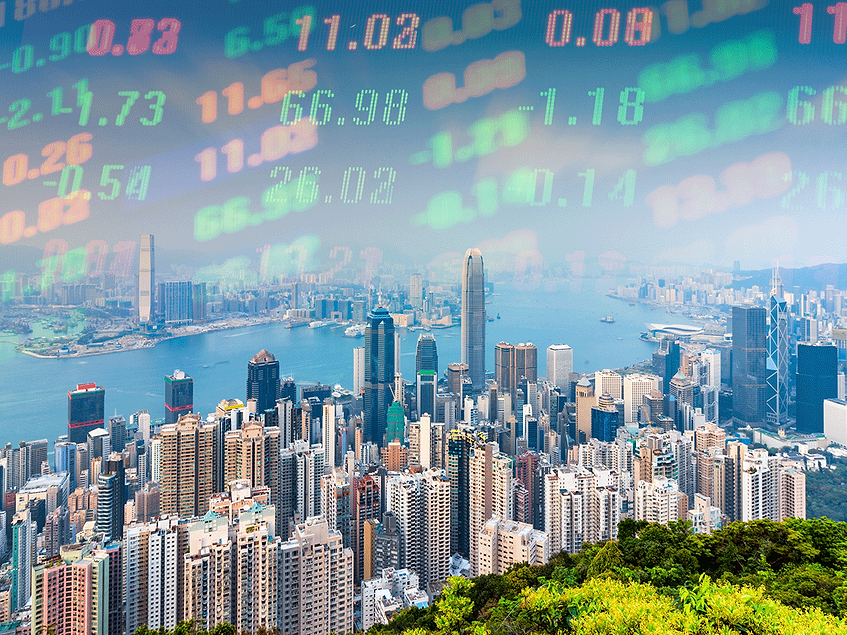
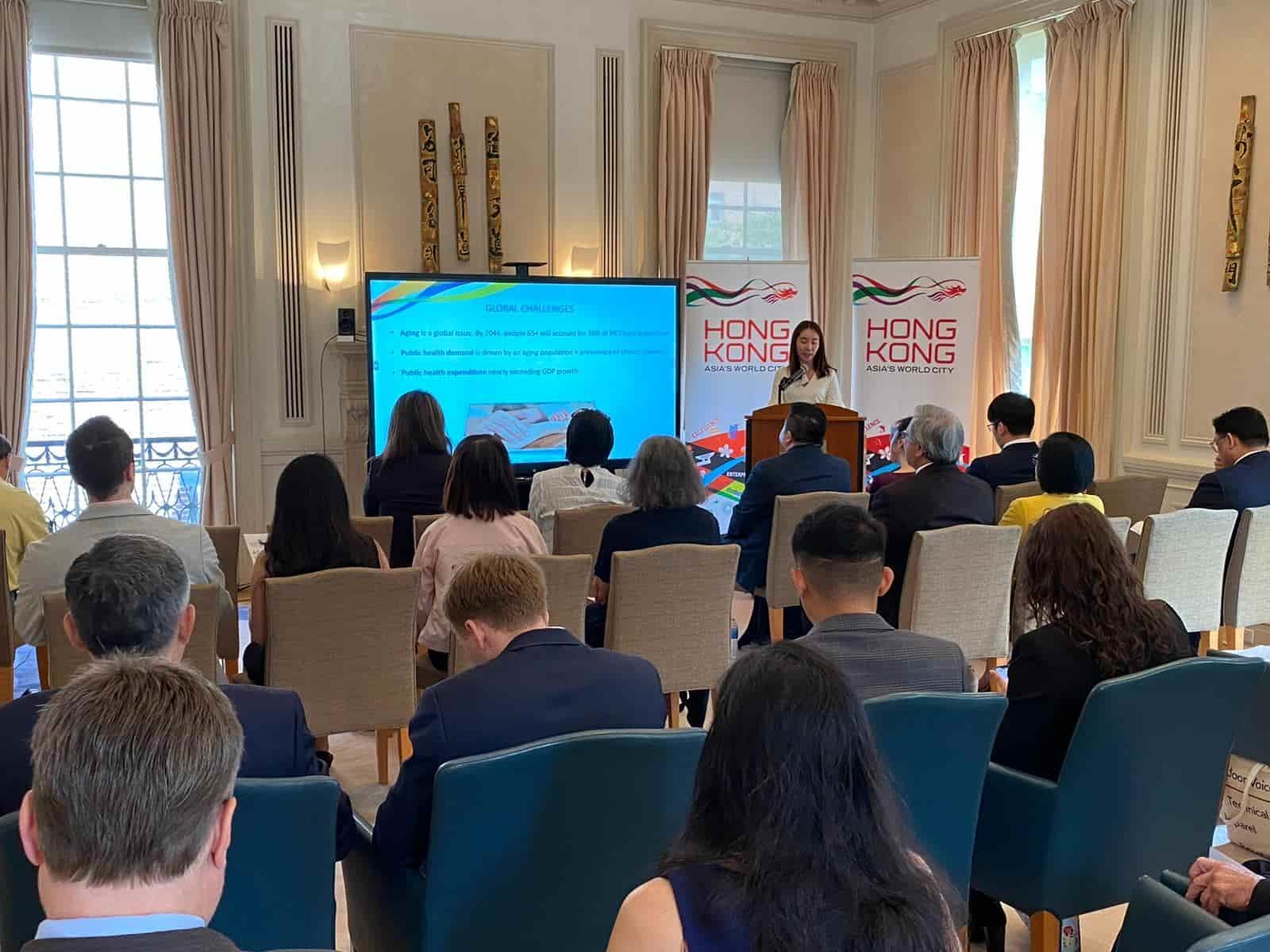
A government and industry-driven financial ecosystem, not a single market event, is reinforcing Hong Kong’s position as a global hub for biotech capital formation, with recent international briefings in the United States highlighting its role as the world’s second-largest biotech funding centre after New York.
What is confirmed is that Hong Kong has been publicly described in recent official investment outreach as the second-largest global biotech fundraising hub, supported by its equity markets and listing reforms.
The classification is based on the scale of biotech capital raised through public listings and related financing activity, which has expanded significantly since regulatory changes introduced in 2018 allowed early-stage and pre-revenue biotech companies to list in the city.
The structural mechanism behind this position is Hong Kong’s capital markets framework.
The introduction of dedicated listing rules for biotech firms enabled companies without profits to access public funding earlier than in many other jurisdictions.
Since these reforms, dozens of biotech companies have listed, collectively raising tens of billions of US dollars and building one of the most active life sciences fundraising pipelines in Asia.
This has positioned Hong Kong as a financing bridge between mainland China’s research ecosystem and global capital markets.
The city’s exchange infrastructure, combined with its international investor base and proximity to mainland scientific clusters, has made it a preferred venue for biotech initial public offerings and secondary fundraising.
Market data from recent years consistently place Hong Kong just behind New York in global biotech fundraising scale.
The renewed emphasis on Hong Kong’s status comes at a time when global biotech financing is uneven.
After a period of tightening liquidity and weaker risk appetite, capital has begun returning selectively to life sciences, particularly in markets where listing rules and investor access remain favorable.
Hong Kong’s rebound in biotech listings and healthcare sector activity reflects this broader rotation rather than a uniform global recovery.
Within the ecosystem, growth has not been evenly distributed.
Larger, clinically advanced or platform-based biotech firms have attracted disproportionate investor attention, while earlier-stage or less differentiated companies continue to face capital constraints.
This reflects a global pattern in which investors increasingly concentrate funding on fewer, more mature or strategically positioned assets.
The strategic stakes for Hong Kong are significant.
Biotech funding is not only a capital market indicator but also a measure of competitiveness in global innovation financing.
Maintaining this position depends on continued listing activity, regulatory efficiency, and the ability to attract cross-border institutional investors amid competition from other financial centers in the United States and Asia.
At the same time, the sector is closely tied to broader policy and technology development trends, including clinical trial infrastructure, drug approval processes, and integration with mainland China’s innovation economy.
These factors collectively determine whether Hong Kong remains a leading conduit for life sciences capital or experiences relative erosion as global competition intensifies.
The current positioning signals continuity rather than disruption: Hong Kong remains embedded in the top tier of global biotech finance, but its role is increasingly defined by specialization in cross-border capital access and high-concentration equity financing for late-stage innovation companies.
What is confirmed is that Hong Kong has been publicly described in recent official investment outreach as the second-largest global biotech fundraising hub, supported by its equity markets and listing reforms.
The classification is based on the scale of biotech capital raised through public listings and related financing activity, which has expanded significantly since regulatory changes introduced in 2018 allowed early-stage and pre-revenue biotech companies to list in the city.
The structural mechanism behind this position is Hong Kong’s capital markets framework.
The introduction of dedicated listing rules for biotech firms enabled companies without profits to access public funding earlier than in many other jurisdictions.
Since these reforms, dozens of biotech companies have listed, collectively raising tens of billions of US dollars and building one of the most active life sciences fundraising pipelines in Asia.
This has positioned Hong Kong as a financing bridge between mainland China’s research ecosystem and global capital markets.
The city’s exchange infrastructure, combined with its international investor base and proximity to mainland scientific clusters, has made it a preferred venue for biotech initial public offerings and secondary fundraising.
Market data from recent years consistently place Hong Kong just behind New York in global biotech fundraising scale.
The renewed emphasis on Hong Kong’s status comes at a time when global biotech financing is uneven.
After a period of tightening liquidity and weaker risk appetite, capital has begun returning selectively to life sciences, particularly in markets where listing rules and investor access remain favorable.
Hong Kong’s rebound in biotech listings and healthcare sector activity reflects this broader rotation rather than a uniform global recovery.
Within the ecosystem, growth has not been evenly distributed.
Larger, clinically advanced or platform-based biotech firms have attracted disproportionate investor attention, while earlier-stage or less differentiated companies continue to face capital constraints.
This reflects a global pattern in which investors increasingly concentrate funding on fewer, more mature or strategically positioned assets.
The strategic stakes for Hong Kong are significant.
Biotech funding is not only a capital market indicator but also a measure of competitiveness in global innovation financing.
Maintaining this position depends on continued listing activity, regulatory efficiency, and the ability to attract cross-border institutional investors amid competition from other financial centers in the United States and Asia.
At the same time, the sector is closely tied to broader policy and technology development trends, including clinical trial infrastructure, drug approval processes, and integration with mainland China’s innovation economy.
These factors collectively determine whether Hong Kong remains a leading conduit for life sciences capital or experiences relative erosion as global competition intensifies.
The current positioning signals continuity rather than disruption: Hong Kong remains embedded in the top tier of global biotech finance, but its role is increasingly defined by specialization in cross-border capital access and high-concentration equity financing for late-stage innovation companies.