Unusual flowering and leaf cycles point to climate disruption with cascading ecological risks
Climate-driven shifts in seasonal patterns are increasingly disrupting how trees grow and reproduce in Hong Kong, and botanists now warn the changes are visible, measurable, and potentially far-reaching.
What is confirmed is that several common species are no longer following their established biological calendars.
Trees that typically shed their leaves in winter are retaining foliage into spring, while others are flowering earlier than expected or doing both at once.
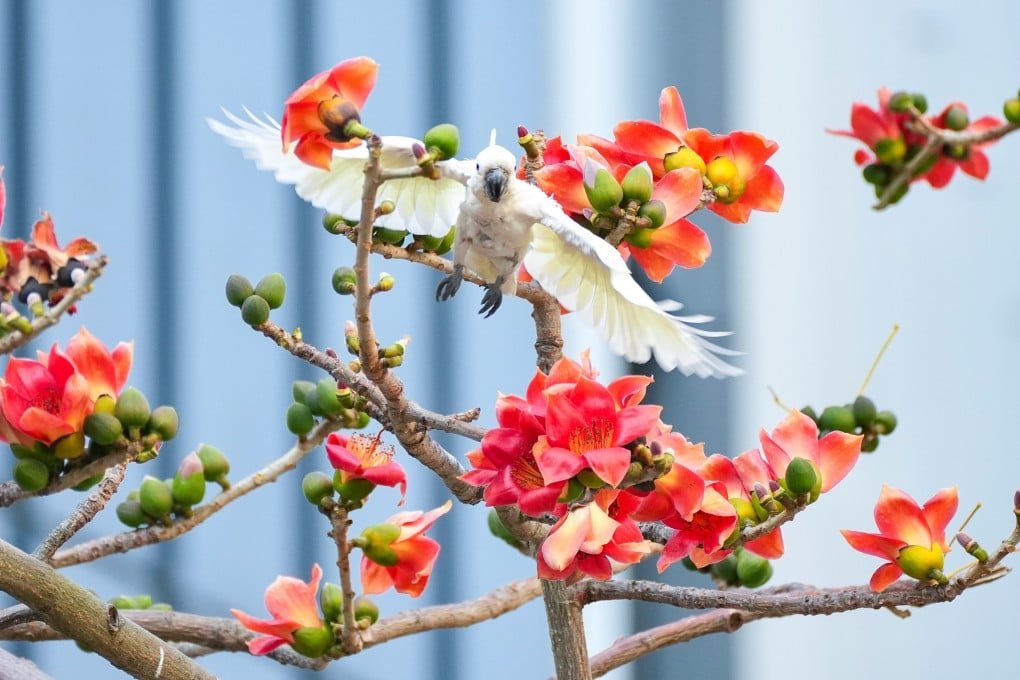
This phenomenon has been observed in species such as the red kapok, or cotton tree, and the flame tree—plants long used as seasonal markers in the city.
The mechanism at the center of the shift is plant phenology, the study of how growth cycles—leafing, flowering, and dormancy—respond to environmental conditions.
These cycles are tightly regulated by temperature, rainfall, and daylight.
When those inputs change, the timing of biological events changes with them.
Hong Kong has recently recorded unusually warm winters, with average temperatures significantly above historical norms, altering the environmental signals that trees rely on.
The result is visible disorder.
Instead of shedding leaves before blooming, some trees now carry both leaves and flowers simultaneously.
In others, flowering begins weeks earlier than expected.
These changes are no longer isolated anomalies but have become increasingly common over the past decade, suggesting a systemic shift rather than random variation.
The implications extend beyond appearance.
Trees operate within tightly coordinated ecological systems.
Flowering time determines when nectar is available for birds and insects; leaf cycles influence habitat and food availability.
When plants shift their timing, species that depend on them may fall out of sync.
Pollinators may miss peak flowering periods, while birds and other animals may encounter reduced or mistimed food supplies.
There are also physiological costs for the trees themselves.
Maintaining leaves while producing flowers forces plants to divide energy between competing processes.
Early observations suggest this may reduce the intensity or duration of flowering, potentially weakening reproductive success over time.
Scientists argue that the current observations are only the surface of a deeper structural change.
Short-term fluctuations cannot fully explain patterns that are now recurring across multiple species and locations.
A long-term, citywide study—potentially lasting years—has been proposed to track how plant life is responding to sustained warming and how those changes propagate through the broader ecosystem.
The stakes are practical as well as ecological.
Urban trees contribute to temperature regulation, air quality, and biodiversity in one of the world’s densest cities.
Disruptions to their growth cycles could affect everything from urban cooling to wildlife stability.
The issue is no longer confined to botany; it is a visible indicator of how climate change is reshaping living systems in real time.
The emerging picture is not of isolated “strange” trees, but of a coordinated biological response to a warming environment—one that is already altering the timing, structure, and reliability of urban ecosystems.
What is confirmed is that several common species are no longer following their established biological calendars.
Trees that typically shed their leaves in winter are retaining foliage into spring, while others are flowering earlier than expected or doing both at once.
This phenomenon has been observed in species such as the red kapok, or cotton tree, and the flame tree—plants long used as seasonal markers in the city.
The mechanism at the center of the shift is plant phenology, the study of how growth cycles—leafing, flowering, and dormancy—respond to environmental conditions.
These cycles are tightly regulated by temperature, rainfall, and daylight.
When those inputs change, the timing of biological events changes with them.
Hong Kong has recently recorded unusually warm winters, with average temperatures significantly above historical norms, altering the environmental signals that trees rely on.
The result is visible disorder.
Instead of shedding leaves before blooming, some trees now carry both leaves and flowers simultaneously.
In others, flowering begins weeks earlier than expected.
These changes are no longer isolated anomalies but have become increasingly common over the past decade, suggesting a systemic shift rather than random variation.
The implications extend beyond appearance.
Trees operate within tightly coordinated ecological systems.
Flowering time determines when nectar is available for birds and insects; leaf cycles influence habitat and food availability.
When plants shift their timing, species that depend on them may fall out of sync.
Pollinators may miss peak flowering periods, while birds and other animals may encounter reduced or mistimed food supplies.
There are also physiological costs for the trees themselves.
Maintaining leaves while producing flowers forces plants to divide energy between competing processes.
Early observations suggest this may reduce the intensity or duration of flowering, potentially weakening reproductive success over time.
Scientists argue that the current observations are only the surface of a deeper structural change.
Short-term fluctuations cannot fully explain patterns that are now recurring across multiple species and locations.
A long-term, citywide study—potentially lasting years—has been proposed to track how plant life is responding to sustained warming and how those changes propagate through the broader ecosystem.
The stakes are practical as well as ecological.
Urban trees contribute to temperature regulation, air quality, and biodiversity in one of the world’s densest cities.
Disruptions to their growth cycles could affect everything from urban cooling to wildlife stability.
The issue is no longer confined to botany; it is a visible indicator of how climate change is reshaping living systems in real time.
The emerging picture is not of isolated “strange” trees, but of a coordinated biological response to a warming environment—one that is already altering the timing, structure, and reliability of urban ecosystems.