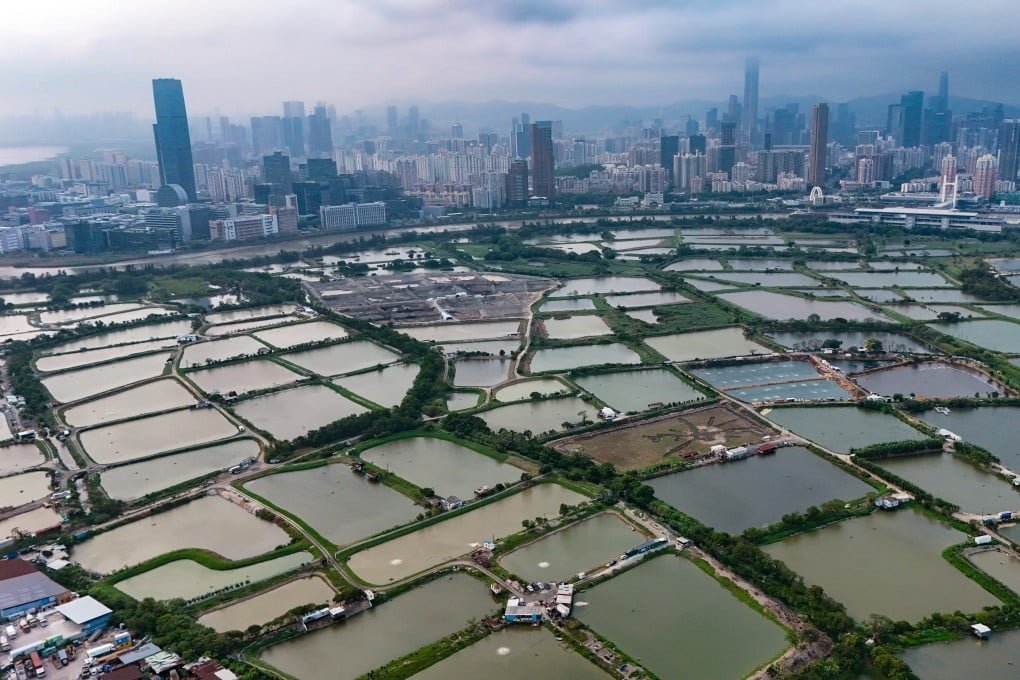
The city is redirecting sovereign reserves and expanding infrastructure financing to fund its largest development strategy in decades while positioning itself as a regional innovation and green finance hub.
The Hong Kong government has intensified its financing push for the Northern Metropolis megaproject and related green infrastructure, committing and reallocating billions of dollars as officials attempt to reposition the city’s economy around technology, logistics, cross-border integration and low-carbon investment.
What is confirmed is that Hong Kong authorities have committed roughly HK$30 billion, equivalent to about US$3.8 billion, in direct capital injections tied to key Northern Metropolis development entities, while also authorizing much larger transfers from the Exchange Fund to support infrastructure spending over the next two fiscal years.
The broader financing framework now extends well beyond a single construction project.
It is becoming the financial backbone of Hong Kong’s long-term economic restructuring strategy.
The Northern Metropolis is a vast development zone covering approximately 300 square kilometres in Hong Kong’s northern New Territories near the Shenzhen border.
The project is designed to integrate Hong Kong more closely with mainland China’s Greater Bay Area economic system, particularly in innovation, advanced manufacturing, logistics, artificial intelligence and scientific research.
The mechanism behind the latest funding initiative is unusually aggressive by Hong Kong standards.
Financial Secretary Paul Chan confirmed plans to transfer HK$150 billion from investment gains generated by the Exchange Fund into the Capital Works Reserve Fund.
The Exchange Fund functions as Hong Kong’s de facto sovereign wealth reserve and monetary stabilization vehicle.
Large-scale withdrawals from it have historically been rare because the fund underpins financial and currency stability.
Officials argue the transfer does not threaten monetary stability because the Exchange Fund generated exceptionally strong investment returns in the previous fiscal year and still maintains assets exceeding HK$4 trillion.
The government’s position is that deploying part of those profits into infrastructure represents a strategic investment rather than emergency spending.
The immediate HK$30 billion injection is being directed into three major entities linked to the Northern Metropolis: the Hetao Hong Kong Park, the San Tin Technopole and the Hung Shui Kiu Industry Park.
Each is expected to receive HK$10 billion in initial support.
Authorities are also moving to establish a more flexible legal framework intended to accelerate land conversion, planning approvals and long-term infrastructure execution.
The stakes are substantial because Hong Kong’s traditional growth model has weakened materially since the pandemic years, rising geopolitical tension and the prolonged downturn in local commercial property markets.
Officials increasingly view large-scale infrastructure and technology integration with Shenzhen as the city’s primary route toward renewed economic momentum.
The government is simultaneously trying to position Hong Kong as a regional center for green finance and sustainable investment.
Funding linked to low-carbon transport, sustainable aviation fuel infrastructure, smart-city systems and environmentally linked financing mechanisms is increasingly being folded into the Northern Metropolis narrative.
The strategy reflects a broader structural shift.
Hong Kong is no longer relying primarily on property expansion and financial intermediation as isolated growth engines.
Instead, authorities are attempting to create a hybrid economic model combining financial services, technology commercialization, cross-border industrial coordination and green infrastructure investment.
Supporters argue the city has little choice.
Competition from Singapore, Shenzhen and other Asian financial and technology centers has intensified, while Hong Kong’s aging economic structure and land shortages have constrained growth.
The Northern Metropolis is intended to create an entirely new economic corridor connected directly to Shenzhen’s advanced manufacturing and technology ecosystem.
The project is also politically important.
Beijing has repeatedly emphasized Greater Bay Area integration as a national development priority, and Hong Kong’s leadership has increasingly aligned local economic policy with those objectives.
Officials describe the metropolis as a platform that allows Hong Kong to retain international financial connectivity while integrating more deeply into mainland industrial and innovation networks.
Critics nevertheless question both the financing structure and the economic assumptions behind the project.
Concerns include rising public expenditure obligations, long construction timelines, uncertain commercial demand, environmental pressure on wetlands and questions over whether enough global companies will establish operations there to justify the scale of investment.
There are also concerns about execution risk.
Large infrastructure megaprojects in Hong Kong have historically faced delays and cost overruns, while the city’s fiscal reserves have already declined significantly from their pre-pandemic peak after several years of deficits and stimulus spending.
Yet officials are signaling that hesitation is no longer considered viable policy.
The government is now openly treating infrastructure spending, technology investment and green finance expansion as interconnected national competitiveness issues rather than isolated sectoral programs.
The broader implication is clear: Hong Kong is using state-backed capital, sovereign reserves and public-private financing mechanisms to accelerate a fundamental economic transition centered on the Northern Metropolis.
The city is betting that integration with the Greater Bay Area, combined with green infrastructure and innovation-led growth, can restore long-term economic momentum and reinforce its role as a strategic gateway between mainland China and international capital markets.
What is confirmed is that Hong Kong authorities have committed roughly HK$30 billion, equivalent to about US$3.8 billion, in direct capital injections tied to key Northern Metropolis development entities, while also authorizing much larger transfers from the Exchange Fund to support infrastructure spending over the next two fiscal years.
The broader financing framework now extends well beyond a single construction project.
It is becoming the financial backbone of Hong Kong’s long-term economic restructuring strategy.
The Northern Metropolis is a vast development zone covering approximately 300 square kilometres in Hong Kong’s northern New Territories near the Shenzhen border.
The project is designed to integrate Hong Kong more closely with mainland China’s Greater Bay Area economic system, particularly in innovation, advanced manufacturing, logistics, artificial intelligence and scientific research.
The mechanism behind the latest funding initiative is unusually aggressive by Hong Kong standards.
Financial Secretary Paul Chan confirmed plans to transfer HK$150 billion from investment gains generated by the Exchange Fund into the Capital Works Reserve Fund.
The Exchange Fund functions as Hong Kong’s de facto sovereign wealth reserve and monetary stabilization vehicle.
Large-scale withdrawals from it have historically been rare because the fund underpins financial and currency stability.
Officials argue the transfer does not threaten monetary stability because the Exchange Fund generated exceptionally strong investment returns in the previous fiscal year and still maintains assets exceeding HK$4 trillion.
The government’s position is that deploying part of those profits into infrastructure represents a strategic investment rather than emergency spending.
The immediate HK$30 billion injection is being directed into three major entities linked to the Northern Metropolis: the Hetao Hong Kong Park, the San Tin Technopole and the Hung Shui Kiu Industry Park.
Each is expected to receive HK$10 billion in initial support.
Authorities are also moving to establish a more flexible legal framework intended to accelerate land conversion, planning approvals and long-term infrastructure execution.
The stakes are substantial because Hong Kong’s traditional growth model has weakened materially since the pandemic years, rising geopolitical tension and the prolonged downturn in local commercial property markets.
Officials increasingly view large-scale infrastructure and technology integration with Shenzhen as the city’s primary route toward renewed economic momentum.
The government is simultaneously trying to position Hong Kong as a regional center for green finance and sustainable investment.
Funding linked to low-carbon transport, sustainable aviation fuel infrastructure, smart-city systems and environmentally linked financing mechanisms is increasingly being folded into the Northern Metropolis narrative.
The strategy reflects a broader structural shift.
Hong Kong is no longer relying primarily on property expansion and financial intermediation as isolated growth engines.
Instead, authorities are attempting to create a hybrid economic model combining financial services, technology commercialization, cross-border industrial coordination and green infrastructure investment.
Supporters argue the city has little choice.
Competition from Singapore, Shenzhen and other Asian financial and technology centers has intensified, while Hong Kong’s aging economic structure and land shortages have constrained growth.
The Northern Metropolis is intended to create an entirely new economic corridor connected directly to Shenzhen’s advanced manufacturing and technology ecosystem.
The project is also politically important.
Beijing has repeatedly emphasized Greater Bay Area integration as a national development priority, and Hong Kong’s leadership has increasingly aligned local economic policy with those objectives.
Officials describe the metropolis as a platform that allows Hong Kong to retain international financial connectivity while integrating more deeply into mainland industrial and innovation networks.
Critics nevertheless question both the financing structure and the economic assumptions behind the project.
Concerns include rising public expenditure obligations, long construction timelines, uncertain commercial demand, environmental pressure on wetlands and questions over whether enough global companies will establish operations there to justify the scale of investment.
There are also concerns about execution risk.
Large infrastructure megaprojects in Hong Kong have historically faced delays and cost overruns, while the city’s fiscal reserves have already declined significantly from their pre-pandemic peak after several years of deficits and stimulus spending.
Yet officials are signaling that hesitation is no longer considered viable policy.
The government is now openly treating infrastructure spending, technology investment and green finance expansion as interconnected national competitiveness issues rather than isolated sectoral programs.
The broader implication is clear: Hong Kong is using state-backed capital, sovereign reserves and public-private financing mechanisms to accelerate a fundamental economic transition centered on the Northern Metropolis.
The city is betting that integration with the Greater Bay Area, combined with green infrastructure and innovation-led growth, can restore long-term economic momentum and reinforce its role as a strategic gateway between mainland China and international capital markets.