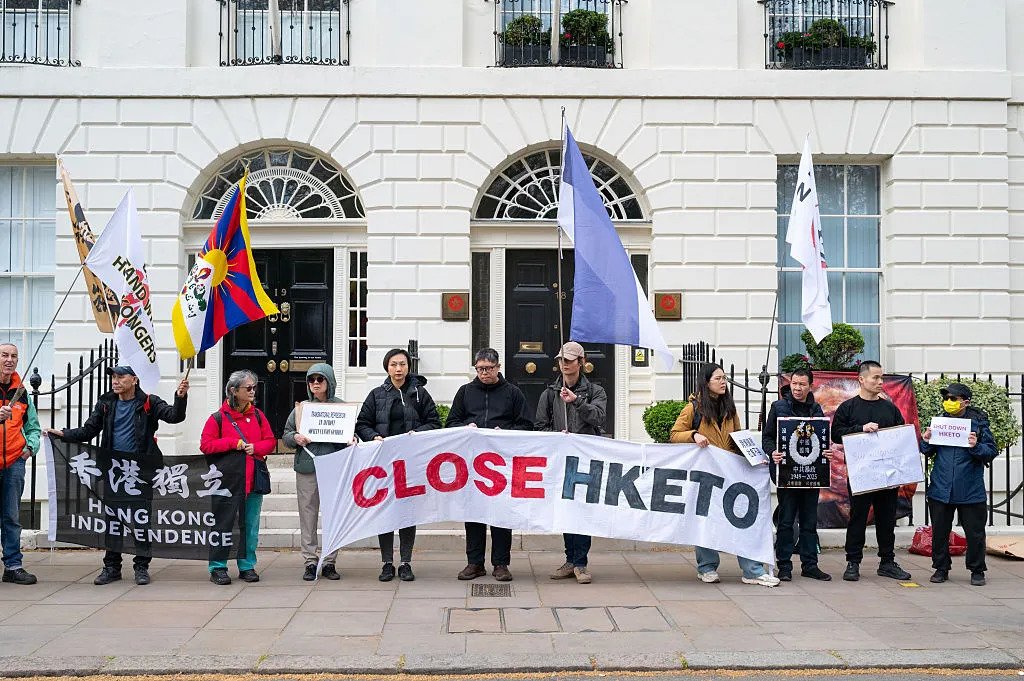
The conviction of two men accused of surveilling Hong Kong dissidents in Britain has intensified pressure on London to confront foreign interference, reassess Hong Kong trade offices, and strengthen protections for exiled activists.
The British state’s response to alleged Chinese and Hong Kong-linked espionage operations has become the central issue driving a widening political and security confrontation between London, Beijing, and Hong Kong authorities.
The immediate trigger is the conviction of two British-Chinese nationals accused of conducting covert surveillance operations against Hong Kong pro-democracy activists living in the United Kingdom.
A London court found Chung Biu “Bill” Yuen and Chi Leung “Peter” Wai guilty under Britain’s National Security Act after prosecutors argued they assisted a foreign intelligence service tied to Hong Kong and, by extension, the Chinese state.
Yuen worked at Hong Kong’s Economic and Trade Office in London and previously served as a senior Hong Kong police officer.
Wai worked for the UK Border Force and also volunteered as a police officer.
Prosecutors said the pair gathered intelligence on dissidents, monitored activists, and accessed confidential information through official systems.
The convictions mark one of the most significant espionage cases prosecuted under Britain’s modern national security framework.
British authorities described the operation as a form of “shadow policing” directed at members of the Hong Kong diaspora who relocated to Britain after Beijing imposed the 2020 national security law on the city.
The case has become a test of whether Western governments are willing to treat transnational repression by authoritarian states as a direct domestic security threat rather than a diplomatic irritant.
The wider political argument now extends far beyond the courtroom.
British lawmakers, security specialists, and Hong Kong exile groups are demanding tougher measures against Hong Kong’s overseas trade offices, especially the London office where Yuen worked.
Critics argue these offices, which formally promote trade and investment, have increasingly operated as political and intelligence platforms used to monitor dissidents abroad.
Calls are growing for Britain to revoke privileges granted to the offices under earlier diplomatic arrangements.
Hong Kong and Chinese authorities have rejected the allegations.
Officials insist the trade offices operate lawfully and deny directing surveillance or intimidation campaigns abroad.
Beijing has condemned the British prosecution as politically motivated and accused Britain of smearing China under the guise of national security enforcement.
Hong Kong’s government has also denied involvement in the espionage case and rejected claims that its overseas offices conduct covert policing.
What is confirmed is that British investigators tied the operation to surveillance activities targeting democracy campaigners and critics of Beijing living in Britain.
Court proceedings included allegations that dissidents were photographed, monitored during public appearances, and subjected to information gathering using government databases.
One of the identified targets was Nathan Law, the former Hong Kong legislator and activist who fled the territory after the national security crackdown.
The case has intensified fears among Hong Kong activists who relocated to Britain through the British National Overseas visa pathway established after the 2019 protests and Beijing’s subsequent political crackdown.
More than a hundred thousand Hong Kong residents have moved to Britain under the scheme, creating one of the largest recent political exile communities in Europe.
Activists have repeatedly warned that harassment, intimidation, online abuse, and surveillance continued after relocation.
British security agencies increasingly describe this activity as transnational repression: the use of intimidation, coercion, surveillance, or threats by governments against critics living abroad.
The concern is no longer limited to traditional espionage involving military or industrial secrets.
The focus has shifted toward the policing of diaspora communities, influence operations, and the suppression of political dissent beyond national borders.
The espionage convictions also expose vulnerabilities inside British institutions.
Prosecutors alleged that Wai used his access as a Border Force employee to retrieve sensitive personal information.
The case has raised serious questions about insider threats, vetting procedures, and the extent to which foreign-linked operatives may gain access to immigration records, law enforcement systems, or dissident identities.
The political consequences are already spreading through British policy debates.
Pressure is mounting on the government to classify China within the highest-risk tier of Britain’s foreign influence registration framework.
Advocates argue that Britain spent years underestimating the scale and persistence of Chinese influence operations, partly because economic engagement with China remained a major strategic priority.
The timing is particularly sensitive because Britain has simultaneously attempted to stabilize parts of its economic relationship with China while confronting escalating security concerns.
Officials are now balancing competing pressures: maintaining trade ties with the world’s second-largest economy while responding to allegations of foreign interference on British soil.
The case also revives unresolved tensions surrounding Hong Kong’s post-2019 political transformation.
Beijing argues the national security law restored order after violent unrest and foreign-backed destabilization attempts.
Critics argue the law dismantled political freedoms, criminalized dissent, and effectively ended the “one country, two systems” framework that governed Hong Kong after the 1997 handover.
Several governments, including Britain and the United States, have condemned Hong Kong’s use of overseas arrest warrants and bounty systems targeting activists abroad.
Hong Kong authorities have issued warrants and financial rewards for information leading to the capture of overseas dissidents accused of national security offenses.
Activists argue these measures are designed to intimidate exile communities and deter public activism overseas.
The espionage convictions have now given those warnings far greater political weight inside Britain.
Security officials are treating the case as evidence that overseas repression efforts moved beyond rhetoric and entered operational territory inside the UK.
The human dimension of the case has also drawn attention after the death of Matthew Trickett, a former Royal Marine and private investigator who had been charged in connection with the wider investigation.
Trickett was later found dead in a park after being released on bail.
His death intensified scrutiny of the operation and added further political sensitivity to the trial.
The broader consequence is that Britain’s China policy is entering a more confrontational phase centered on domestic resilience rather than purely foreign policy strategy.
The issue is no longer abstract geopolitical rivalry.
British authorities are now dealing with allegations that foreign-linked actors monitored residents, accessed official systems, and attempted to silence political opponents inside the country itself.
The convictions are expected to accelerate new security reviews, stricter scrutiny of Hong Kong-linked institutions operating in Britain, and expanded protective measures for dissidents and diaspora communities targeted by foreign governments.
The immediate trigger is the conviction of two British-Chinese nationals accused of conducting covert surveillance operations against Hong Kong pro-democracy activists living in the United Kingdom.
A London court found Chung Biu “Bill” Yuen and Chi Leung “Peter” Wai guilty under Britain’s National Security Act after prosecutors argued they assisted a foreign intelligence service tied to Hong Kong and, by extension, the Chinese state.
Yuen worked at Hong Kong’s Economic and Trade Office in London and previously served as a senior Hong Kong police officer.
Wai worked for the UK Border Force and also volunteered as a police officer.
Prosecutors said the pair gathered intelligence on dissidents, monitored activists, and accessed confidential information through official systems.
The convictions mark one of the most significant espionage cases prosecuted under Britain’s modern national security framework.
British authorities described the operation as a form of “shadow policing” directed at members of the Hong Kong diaspora who relocated to Britain after Beijing imposed the 2020 national security law on the city.
The case has become a test of whether Western governments are willing to treat transnational repression by authoritarian states as a direct domestic security threat rather than a diplomatic irritant.
The wider political argument now extends far beyond the courtroom.
British lawmakers, security specialists, and Hong Kong exile groups are demanding tougher measures against Hong Kong’s overseas trade offices, especially the London office where Yuen worked.
Critics argue these offices, which formally promote trade and investment, have increasingly operated as political and intelligence platforms used to monitor dissidents abroad.
Calls are growing for Britain to revoke privileges granted to the offices under earlier diplomatic arrangements.
Hong Kong and Chinese authorities have rejected the allegations.
Officials insist the trade offices operate lawfully and deny directing surveillance or intimidation campaigns abroad.
Beijing has condemned the British prosecution as politically motivated and accused Britain of smearing China under the guise of national security enforcement.
Hong Kong’s government has also denied involvement in the espionage case and rejected claims that its overseas offices conduct covert policing.
What is confirmed is that British investigators tied the operation to surveillance activities targeting democracy campaigners and critics of Beijing living in Britain.
Court proceedings included allegations that dissidents were photographed, monitored during public appearances, and subjected to information gathering using government databases.
One of the identified targets was Nathan Law, the former Hong Kong legislator and activist who fled the territory after the national security crackdown.
The case has intensified fears among Hong Kong activists who relocated to Britain through the British National Overseas visa pathway established after the 2019 protests and Beijing’s subsequent political crackdown.
More than a hundred thousand Hong Kong residents have moved to Britain under the scheme, creating one of the largest recent political exile communities in Europe.
Activists have repeatedly warned that harassment, intimidation, online abuse, and surveillance continued after relocation.
British security agencies increasingly describe this activity as transnational repression: the use of intimidation, coercion, surveillance, or threats by governments against critics living abroad.
The concern is no longer limited to traditional espionage involving military or industrial secrets.
The focus has shifted toward the policing of diaspora communities, influence operations, and the suppression of political dissent beyond national borders.
The espionage convictions also expose vulnerabilities inside British institutions.
Prosecutors alleged that Wai used his access as a Border Force employee to retrieve sensitive personal information.
The case has raised serious questions about insider threats, vetting procedures, and the extent to which foreign-linked operatives may gain access to immigration records, law enforcement systems, or dissident identities.
The political consequences are already spreading through British policy debates.
Pressure is mounting on the government to classify China within the highest-risk tier of Britain’s foreign influence registration framework.
Advocates argue that Britain spent years underestimating the scale and persistence of Chinese influence operations, partly because economic engagement with China remained a major strategic priority.
The timing is particularly sensitive because Britain has simultaneously attempted to stabilize parts of its economic relationship with China while confronting escalating security concerns.
Officials are now balancing competing pressures: maintaining trade ties with the world’s second-largest economy while responding to allegations of foreign interference on British soil.
The case also revives unresolved tensions surrounding Hong Kong’s post-2019 political transformation.
Beijing argues the national security law restored order after violent unrest and foreign-backed destabilization attempts.
Critics argue the law dismantled political freedoms, criminalized dissent, and effectively ended the “one country, two systems” framework that governed Hong Kong after the 1997 handover.
Several governments, including Britain and the United States, have condemned Hong Kong’s use of overseas arrest warrants and bounty systems targeting activists abroad.
Hong Kong authorities have issued warrants and financial rewards for information leading to the capture of overseas dissidents accused of national security offenses.
Activists argue these measures are designed to intimidate exile communities and deter public activism overseas.
The espionage convictions have now given those warnings far greater political weight inside Britain.
Security officials are treating the case as evidence that overseas repression efforts moved beyond rhetoric and entered operational territory inside the UK.
The human dimension of the case has also drawn attention after the death of Matthew Trickett, a former Royal Marine and private investigator who had been charged in connection with the wider investigation.
Trickett was later found dead in a park after being released on bail.
His death intensified scrutiny of the operation and added further political sensitivity to the trial.
The broader consequence is that Britain’s China policy is entering a more confrontational phase centered on domestic resilience rather than purely foreign policy strategy.
The issue is no longer abstract geopolitical rivalry.
British authorities are now dealing with allegations that foreign-linked actors monitored residents, accessed official systems, and attempted to silence political opponents inside the country itself.
The convictions are expected to accelerate new security reviews, stricter scrutiny of Hong Kong-linked institutions operating in Britain, and expanded protective measures for dissidents and diaspora communities targeted by foreign governments.