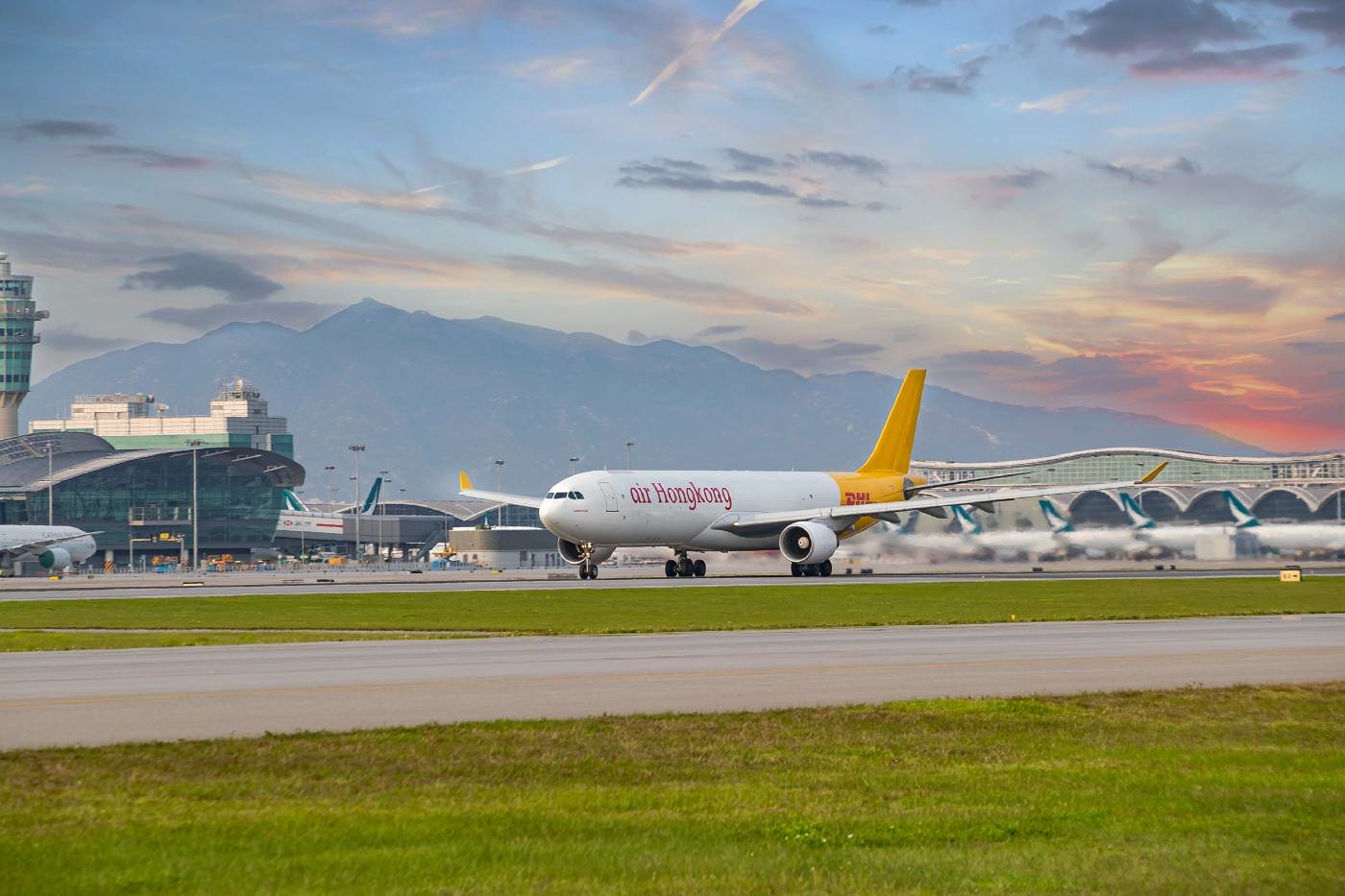
A new cross-border agreement aims to build the Greater Bay Area’s first fully integrated sustainable aviation fuel supply chain, tying Hong Kong’s aviation ambitions to mainland industrial capacity.
The Hong Kong government and renewable fuel producer EcoCeres have moved to establish a large-scale sustainable aviation fuel, or SAF, supply chain in southern China, marking one of the city’s most ambitious industrial climate projects tied directly to aviation, logistics and regional integration.
What is confirmed is that EcoCeres signed an investment letter of intent with the Dongguan municipal government to develop a new SAF and hydrotreated vegetable oil production facility in Guangdong province.
The project is designed to become the first complete SAF supply chain in the Guangdong-Hong Kong-Macao Greater Bay Area, linking waste feedstock collection in southern China with refining in Dongguan and aviation fuel blending and trading operations in Hong Kong.
The planned facility is expected to produce about 450,000 tonnes annually of SAF and hydrotreated vegetable oil, commonly known as HVO.
The fuel will be made primarily from waste-based feedstocks including used cooking oil and agricultural waste.
SAF is increasingly viewed by governments and airlines as one of the few commercially deployable tools available to reduce aviation emissions without redesigning aircraft fleets.
The project has strong political backing from Hong Kong authorities.
Chief Executive John Lee publicly framed the agreement as part of Beijing’s national green development strategy and linked it to broader Greater Bay Area integration goals.
The mechanism is straightforward: Hong Kong provides financial infrastructure, aviation demand, logistics expertise and international market access, while mainland cities such as Dongguan provide industrial land, refining capacity, chemical manufacturing infrastructure and large-scale waste feedstock access.
The timing matters.
Hong Kong International Airport is under increasing pressure to decarbonize as regulators and airlines worldwide move toward SAF blending mandates.
Hong Kong authorities have already signaled that departing flights will be required to use a specified SAF proportion by 2030. That creates a structural demand base for domestic fuel supply rather than relying entirely on expensive imports.
The economics behind the move are significant.
SAF remains substantially more expensive than conventional jet fuel, largely because of limited production capacity and feedstock constraints.
Governments globally are now racing to secure supply chains before mandatory usage targets sharply increase demand.
Europe, Singapore, Japan and parts of North America have already accelerated subsidies, mandates and industrial investment programs tied to aviation decarbonization.
Hong Kong’s challenge is different.
The city has limited industrial land and almost no large-scale refining infrastructure of its own.
The EcoCeres arrangement effectively externalizes the industrial component into neighboring Guangdong while keeping high-value aviation, financing and trading activity tied to Hong Kong.
EcoCeres itself has become one of the more prominent Asian SAF producers.
The company already operates renewable fuel plants in Jiangsu province and Malaysia.
Its existing facilities collectively produce hundreds of thousands of tonnes annually of SAF and HVO.
The company says its fuels can reduce lifecycle greenhouse gas emissions by more than ninety percent compared with conventional fossil fuels, although lifecycle accounting methods vary across jurisdictions and certification systems.
The project also highlights a broader strategic shift inside China’s clean energy sector.
Beijing has aggressively expanded electric vehicle, battery and solar manufacturing, but aviation decarbonization remains a weaker segment due to technological difficulty and the global nature of airline fuel markets.
SAF is increasingly being treated as a strategic industrial sector because it intersects energy security, emissions reduction and advanced manufacturing.
For Hong Kong, the stakes extend beyond climate branding.
The city has spent years trying to reposition itself as a center for green finance, carbon trading and sustainable infrastructure investment.
Officials now appear to be pushing beyond financial services into industrial coordination tied directly to mainland production networks.
There are also practical risks.
Sustainable aviation fuel production depends heavily on reliable waste feedstock supply.
Global competition for used cooking oil and waste fats has intensified sharply as refiners worldwide expand capacity.
Questions over feedstock traceability, sustainability certification and import dependency have already created disputes in Europe and Southeast Asia.
Cost remains another major obstacle.
SAF is still materially more expensive than traditional aviation fuel, and airlines globally have resisted absorbing the additional expense without government mandates or subsidies.
Large-scale adoption will depend on policy stability, carbon pricing systems, blending requirements and long-term airline purchase agreements.
The project nevertheless reflects a clear industrial trend.
Governments are no longer treating aviation decarbonization as a purely environmental issue.
It is increasingly becoming a supply chain competition involving refining capacity, waste collection systems, fuel certification, airport infrastructure and geopolitical access to future energy markets.
EcoCeres says the Greater Bay Area initiative will create an integrated regional model connecting waste collection, refining, logistics, aviation fuel supply and emissions reduction under one coordinated system.
Construction and investment planning are now expected to move into implementation phases as Hong Kong accelerates its effort to establish itself as a regional sustainable aviation fuel hub before mandatory global aviation decarbonization targets tighten further.
What is confirmed is that EcoCeres signed an investment letter of intent with the Dongguan municipal government to develop a new SAF and hydrotreated vegetable oil production facility in Guangdong province.
The project is designed to become the first complete SAF supply chain in the Guangdong-Hong Kong-Macao Greater Bay Area, linking waste feedstock collection in southern China with refining in Dongguan and aviation fuel blending and trading operations in Hong Kong.
The planned facility is expected to produce about 450,000 tonnes annually of SAF and hydrotreated vegetable oil, commonly known as HVO.
The fuel will be made primarily from waste-based feedstocks including used cooking oil and agricultural waste.
SAF is increasingly viewed by governments and airlines as one of the few commercially deployable tools available to reduce aviation emissions without redesigning aircraft fleets.
The project has strong political backing from Hong Kong authorities.
Chief Executive John Lee publicly framed the agreement as part of Beijing’s national green development strategy and linked it to broader Greater Bay Area integration goals.
The mechanism is straightforward: Hong Kong provides financial infrastructure, aviation demand, logistics expertise and international market access, while mainland cities such as Dongguan provide industrial land, refining capacity, chemical manufacturing infrastructure and large-scale waste feedstock access.
The timing matters.
Hong Kong International Airport is under increasing pressure to decarbonize as regulators and airlines worldwide move toward SAF blending mandates.
Hong Kong authorities have already signaled that departing flights will be required to use a specified SAF proportion by 2030. That creates a structural demand base for domestic fuel supply rather than relying entirely on expensive imports.
The economics behind the move are significant.
SAF remains substantially more expensive than conventional jet fuel, largely because of limited production capacity and feedstock constraints.
Governments globally are now racing to secure supply chains before mandatory usage targets sharply increase demand.
Europe, Singapore, Japan and parts of North America have already accelerated subsidies, mandates and industrial investment programs tied to aviation decarbonization.
Hong Kong’s challenge is different.
The city has limited industrial land and almost no large-scale refining infrastructure of its own.
The EcoCeres arrangement effectively externalizes the industrial component into neighboring Guangdong while keeping high-value aviation, financing and trading activity tied to Hong Kong.
EcoCeres itself has become one of the more prominent Asian SAF producers.
The company already operates renewable fuel plants in Jiangsu province and Malaysia.
Its existing facilities collectively produce hundreds of thousands of tonnes annually of SAF and HVO.
The company says its fuels can reduce lifecycle greenhouse gas emissions by more than ninety percent compared with conventional fossil fuels, although lifecycle accounting methods vary across jurisdictions and certification systems.
The project also highlights a broader strategic shift inside China’s clean energy sector.
Beijing has aggressively expanded electric vehicle, battery and solar manufacturing, but aviation decarbonization remains a weaker segment due to technological difficulty and the global nature of airline fuel markets.
SAF is increasingly being treated as a strategic industrial sector because it intersects energy security, emissions reduction and advanced manufacturing.
For Hong Kong, the stakes extend beyond climate branding.
The city has spent years trying to reposition itself as a center for green finance, carbon trading and sustainable infrastructure investment.
Officials now appear to be pushing beyond financial services into industrial coordination tied directly to mainland production networks.
There are also practical risks.
Sustainable aviation fuel production depends heavily on reliable waste feedstock supply.
Global competition for used cooking oil and waste fats has intensified sharply as refiners worldwide expand capacity.
Questions over feedstock traceability, sustainability certification and import dependency have already created disputes in Europe and Southeast Asia.
Cost remains another major obstacle.
SAF is still materially more expensive than traditional aviation fuel, and airlines globally have resisted absorbing the additional expense without government mandates or subsidies.
Large-scale adoption will depend on policy stability, carbon pricing systems, blending requirements and long-term airline purchase agreements.
The project nevertheless reflects a clear industrial trend.
Governments are no longer treating aviation decarbonization as a purely environmental issue.
It is increasingly becoming a supply chain competition involving refining capacity, waste collection systems, fuel certification, airport infrastructure and geopolitical access to future energy markets.
EcoCeres says the Greater Bay Area initiative will create an integrated regional model connecting waste collection, refining, logistics, aviation fuel supply and emissions reduction under one coordinated system.
Construction and investment planning are now expected to move into implementation phases as Hong Kong accelerates its effort to establish itself as a regional sustainable aviation fuel hub before mandatory global aviation decarbonization targets tighten further.