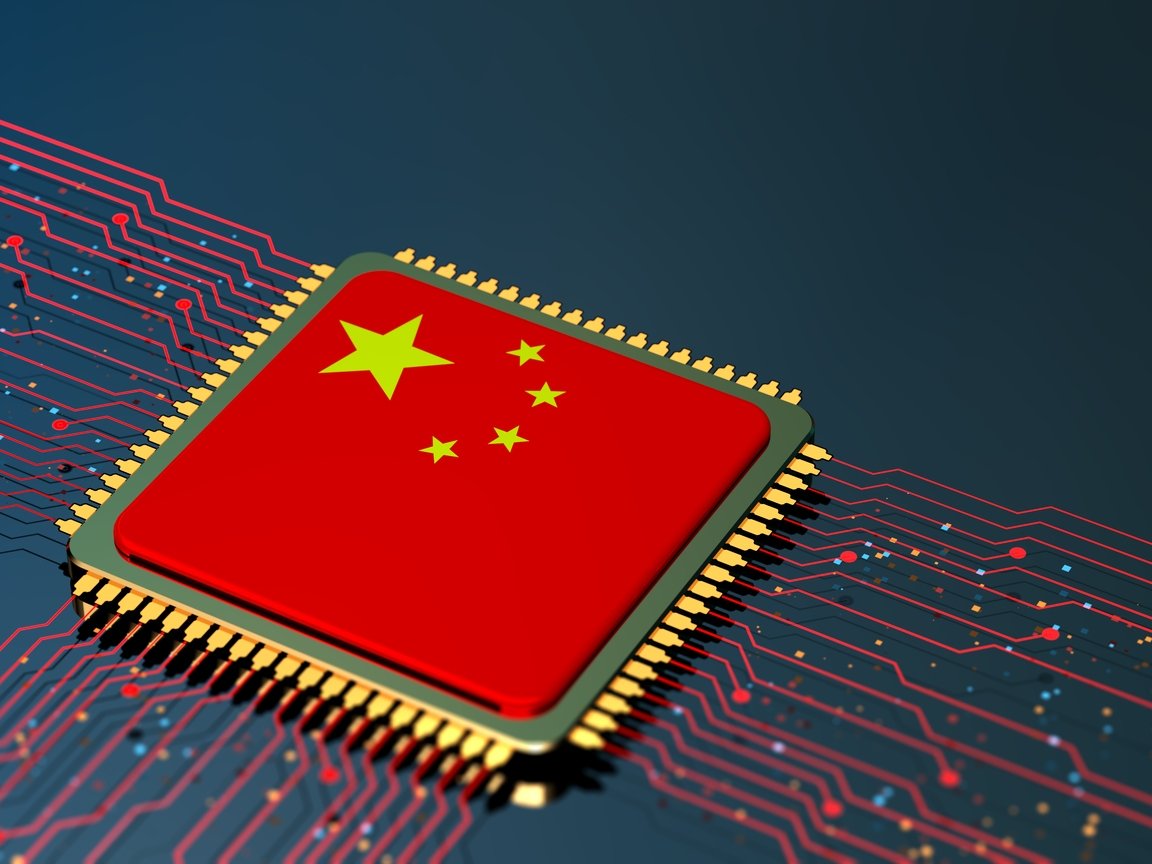
Kunlunxin’s planned IPO underscores rising investor demand for Chinese AI chip firms and Beijing’s drive for semiconductor self-reliance amid U.S. export controls
Baidu’s AI chip unit Kunlunxin is moving toward a Hong Kong stock exchange listing in a development that reflects both corporate restructuring inside one of China’s largest tech companies and a broader geopolitical shift toward domestic semiconductor production.
The listing plan centers on spinning off Kunlunxin as a separately traded entity while Baidu retains majority control, allowing the unit to raise capital independently and establish a clearer market valuation.
What is confirmed is that Kunlunxin has already filed for a confidential initial public offering application in Hong Kong, a regulatory step that allows companies to begin the listing process without immediately disclosing full financial details.
Subsequent reporting indicates that the unit has engaged major investment banks to prepare a potential offering that could raise up to around two billion dollars, although final terms, valuation, and timing remain subject to regulatory approval and market conditions.
Kunlunxin originated as Baidu’s internal semiconductor division and has evolved into a standalone subsidiary focused on designing artificial intelligence chips used in data centers and large-scale AI model training.
Its chips are deployed primarily within Baidu’s own cloud and AI systems, but the unit has gradually expanded external sales as demand for non-U.S. semiconductor alternatives increases.
The company is part of a wider ecosystem of Chinese AI chip developers that have recently pursued public listings amid strong investor appetite for domestically developed hardware.
The strategic context is central to understanding the move.
China has been accelerating efforts to reduce reliance on foreign advanced semiconductors, particularly high-end GPUs historically dominated by U.S. firms.
This policy environment has created favorable conditions for domestic chip designers, especially those aligned with artificial intelligence infrastructure development.
Kunlunxin is positioned within this trend as a key supplier of compute hardware for large language models and cloud-based AI systems.
Market interest in such firms has been reinforced by a wave of recent listings and investor demand for exposure to AI infrastructure.
Comparable Chinese semiconductor and AI-focused companies have recently seen strong trading debuts in Hong Kong and mainland exchanges, contributing to renewed momentum in the sector.
Within this environment, Kunlunxin’s potential valuation has been estimated in the multi-billion-dollar range, reflecting both its strategic importance and the scarcity of large-scale domestic AI chip designers.
For Baidu, the spin-off carries financial and strategic implications.
A separate listing could unlock capital for research and expansion while allowing the parent company to sharpen its focus on AI services, search, and autonomous driving.
At the same time, retaining control ensures that Baidu continues to benefit from integrated hardware and software development, a model increasingly viewed as essential in AI competition.
The listing process still depends on approval from Hong Kong regulators and mainland Chinese securities authorities, and no final timeline has been confirmed.
However, the direction of travel is clear: Kunlunxin is being positioned not only as an internal Baidu asset, but as a standalone participant in China’s growing effort to build a self-sufficient AI semiconductor industry.
The listing plan centers on spinning off Kunlunxin as a separately traded entity while Baidu retains majority control, allowing the unit to raise capital independently and establish a clearer market valuation.
What is confirmed is that Kunlunxin has already filed for a confidential initial public offering application in Hong Kong, a regulatory step that allows companies to begin the listing process without immediately disclosing full financial details.
Subsequent reporting indicates that the unit has engaged major investment banks to prepare a potential offering that could raise up to around two billion dollars, although final terms, valuation, and timing remain subject to regulatory approval and market conditions.
Kunlunxin originated as Baidu’s internal semiconductor division and has evolved into a standalone subsidiary focused on designing artificial intelligence chips used in data centers and large-scale AI model training.
Its chips are deployed primarily within Baidu’s own cloud and AI systems, but the unit has gradually expanded external sales as demand for non-U.S. semiconductor alternatives increases.
The company is part of a wider ecosystem of Chinese AI chip developers that have recently pursued public listings amid strong investor appetite for domestically developed hardware.
The strategic context is central to understanding the move.
China has been accelerating efforts to reduce reliance on foreign advanced semiconductors, particularly high-end GPUs historically dominated by U.S. firms.
This policy environment has created favorable conditions for domestic chip designers, especially those aligned with artificial intelligence infrastructure development.
Kunlunxin is positioned within this trend as a key supplier of compute hardware for large language models and cloud-based AI systems.
Market interest in such firms has been reinforced by a wave of recent listings and investor demand for exposure to AI infrastructure.
Comparable Chinese semiconductor and AI-focused companies have recently seen strong trading debuts in Hong Kong and mainland exchanges, contributing to renewed momentum in the sector.
Within this environment, Kunlunxin’s potential valuation has been estimated in the multi-billion-dollar range, reflecting both its strategic importance and the scarcity of large-scale domestic AI chip designers.
For Baidu, the spin-off carries financial and strategic implications.
A separate listing could unlock capital for research and expansion while allowing the parent company to sharpen its focus on AI services, search, and autonomous driving.
At the same time, retaining control ensures that Baidu continues to benefit from integrated hardware and software development, a model increasingly viewed as essential in AI competition.
The listing process still depends on approval from Hong Kong regulators and mainland Chinese securities authorities, and no final timeline has been confirmed.
However, the direction of travel is clear: Kunlunxin is being positioned not only as an internal Baidu asset, but as a standalone participant in China’s growing effort to build a self-sufficient AI semiconductor industry.