Authorities tighten travel guidance amid renewed Ebola transmission risks in parts of the Democratic Republic of Congo, signaling elevated public health concern and cross-border precautionary measures.
A SYSTEM-DRIVEN public health response has been triggered after Hong Kong issued its highest-level travel advisory for the Democratic Republic of Congo (DRC) following a rise in Ebola cases.
The alert reflects growing concern over the re-emergence of a high-fatality infectious disease that requires rapid containment measures and strict travel risk management.
What is confirmed is that Ebola cases have been reported in parts of the DRC, prompting health authorities in Hong Kong to elevate their travel warning to a red level.
This designation signals that travelers should avoid non-essential trips to affected regions due to serious and potentially life-threatening health risks.
Ebola virus disease is a severe hemorrhagic fever caused by infection with the Ebola virus, transmitted through direct contact with infected bodily fluids or contaminated materials.
Past outbreaks have demonstrated high fatality rates and significant strain on healthcare systems, particularly in regions with limited medical infrastructure.
The DRC has experienced multiple Ebola outbreaks over the past decade, making it one of the countries most frequently affected by the virus.
The current rise in cases has raised concerns about localized transmission clusters and the potential for further spread if containment measures are not fully effective.
The key issue driving the alert is the need to prevent international importation of cases through travel corridors.
While Ebola is not typically spread through airborne transmission, the mobility of infected individuals during incubation periods presents a risk of cross-border dissemination without strict monitoring and early detection protocols.
Hong Kong’s red travel alert system is part of a structured risk communication framework used to inform residents about health, security, and environmental threats abroad.
The highest tier is reserved for situations where there is a clear and significant danger, and where travel is strongly discouraged except under exceptional circumstances.
The implications extend beyond travel restrictions.
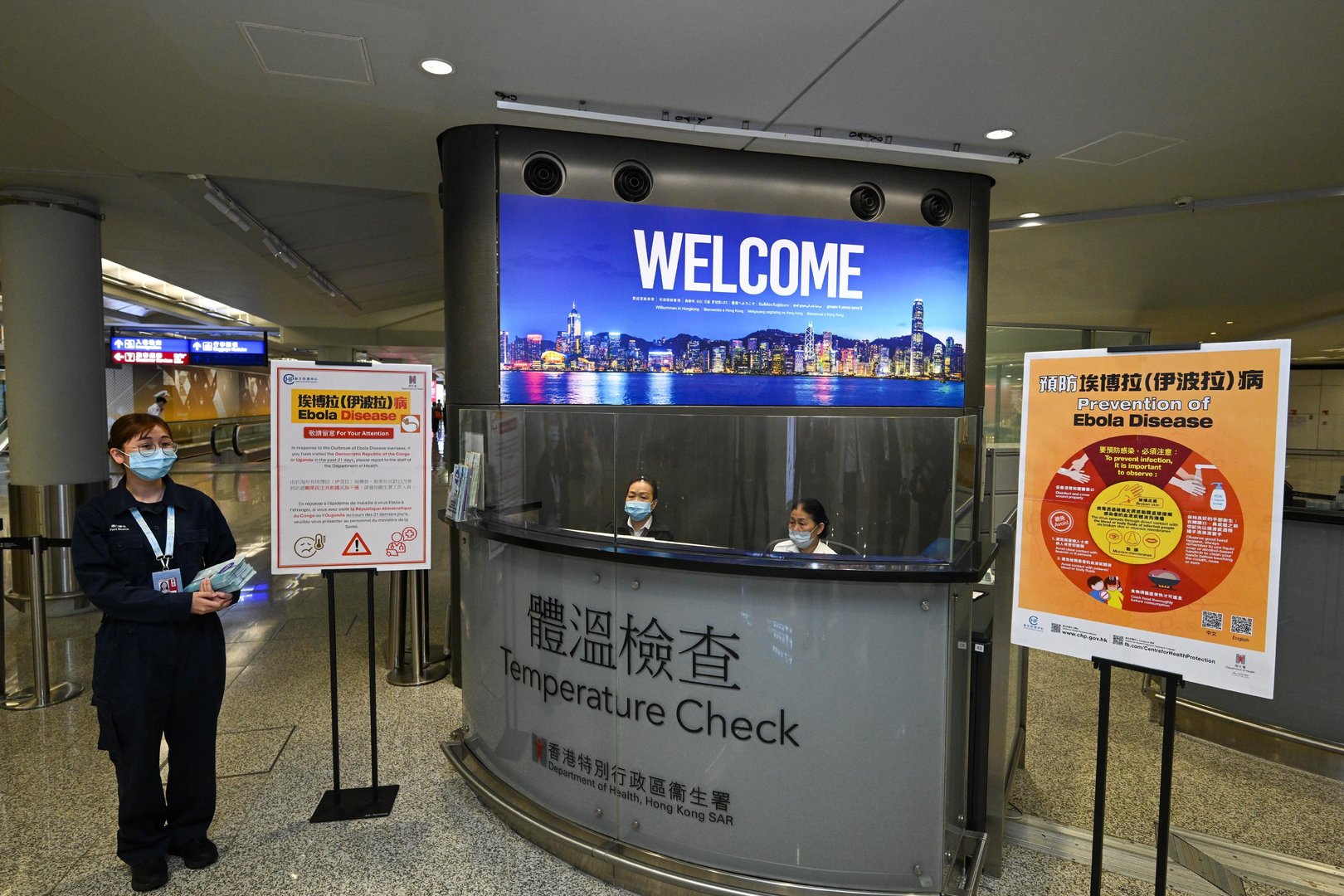
Elevated alerts often trigger additional screening measures, public health advisories, and coordination with airlines and border control agencies to identify potential exposure risks.
They also reflect broader global vigilance around infectious disease outbreaks in regions with frequent international travel links.
The situation remains under active monitoring by health authorities as containment efforts continue in the DRC, with emphasis on isolating cases, tracing contacts, and limiting community transmission.
The red alert will remain in effect while the outbreak risk is assessed and containment stability is evaluated.
The alert reflects growing concern over the re-emergence of a high-fatality infectious disease that requires rapid containment measures and strict travel risk management.
What is confirmed is that Ebola cases have been reported in parts of the DRC, prompting health authorities in Hong Kong to elevate their travel warning to a red level.
This designation signals that travelers should avoid non-essential trips to affected regions due to serious and potentially life-threatening health risks.
Ebola virus disease is a severe hemorrhagic fever caused by infection with the Ebola virus, transmitted through direct contact with infected bodily fluids or contaminated materials.
Past outbreaks have demonstrated high fatality rates and significant strain on healthcare systems, particularly in regions with limited medical infrastructure.
The DRC has experienced multiple Ebola outbreaks over the past decade, making it one of the countries most frequently affected by the virus.
The current rise in cases has raised concerns about localized transmission clusters and the potential for further spread if containment measures are not fully effective.
The key issue driving the alert is the need to prevent international importation of cases through travel corridors.
While Ebola is not typically spread through airborne transmission, the mobility of infected individuals during incubation periods presents a risk of cross-border dissemination without strict monitoring and early detection protocols.
Hong Kong’s red travel alert system is part of a structured risk communication framework used to inform residents about health, security, and environmental threats abroad.
The highest tier is reserved for situations where there is a clear and significant danger, and where travel is strongly discouraged except under exceptional circumstances.
The implications extend beyond travel restrictions.
Elevated alerts often trigger additional screening measures, public health advisories, and coordination with airlines and border control agencies to identify potential exposure risks.
They also reflect broader global vigilance around infectious disease outbreaks in regions with frequent international travel links.
The situation remains under active monitoring by health authorities as containment efforts continue in the DRC, with emphasis on isolating cases, tracing contacts, and limiting community transmission.
The red alert will remain in effect while the outbreak risk is assessed and containment stability is evaluated.