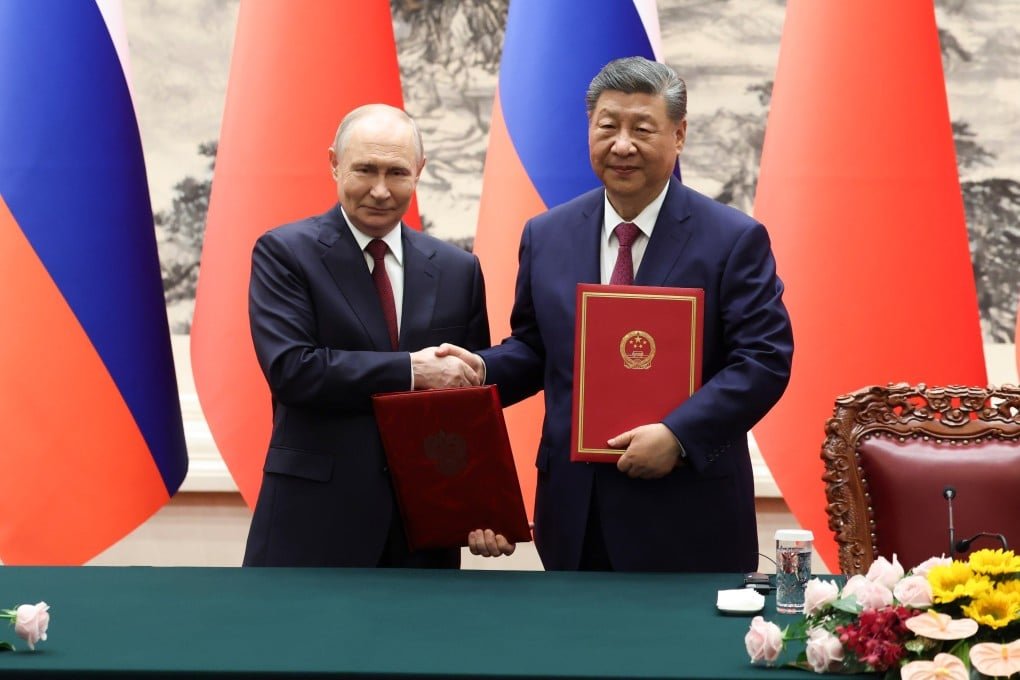
Putin’s latest visit highlights strategic messaging between Beijing and Moscow, while key energy and trade agreements fail to materialize
A SYSTEM-DRIVEN shift in global geopolitics is shaping the evolving relationship between China and Russia, where symbolic alignment on a “multipolar world order” is increasingly visible, but concrete economic breakthroughs remain limited.
During the latest high-level engagement between the two countries, both sides publicly reaffirmed strategic trust and a shared view that global power should not be concentrated in a single bloc.
Chinese academic commentary emphasized that the diplomatic sequence of major leaders visiting China underscores Beijing’s strengthened position within the broader triangular dynamic involving China, Russia, and the United States.
The framing reflects a deliberate effort to present China as a central stabilizing force in an increasingly fragmented international system.
However, what is confirmed from the visit is that it did not produce major new economic commitments.
In particular, no finalized agreement emerged on the closely watched Power of Siberia 2 pipeline project, a long-discussed energy initiative that would significantly expand Russian gas exports to China and deepen long-term energy interdependence.
The absence of a deal signals continued gaps between strategic rhetoric and financial or infrastructural execution.
The imbalance in the relationship is becoming more visible.
Russia, constrained by Western sanctions and reduced access to European energy markets, has grown more dependent on Asian demand, especially from China.
At the same time, China retains significant negotiating leverage due to its scale, diversified energy imports, and ability to delay or condition large infrastructure commitments.
This asymmetry shapes the pace and substance of agreements, even when political alignment appears strong.
Analysts within China have framed the relationship as structurally beneficial for Beijing, arguing that hosting multiple global leaders reinforces its diplomatic centrality.
The broader implication is that China is increasingly positioning itself as a pivotal actor in managing relations between rival powers, using engagement with both Russia and the United States to strengthen its strategic flexibility without committing to binding alignment with either side.
The visit ultimately reinforces a pattern now visible in Eurasian diplomacy: strong political signaling and shared language on global governance, paired with cautious, incremental economic outcomes.
This divergence suggests that while China and Russia continue to project unity on the international stage, their practical cooperation is still constrained by differing economic priorities and uneven bargaining power, shaping the trajectory of their partnership in the years ahead.
During the latest high-level engagement between the two countries, both sides publicly reaffirmed strategic trust and a shared view that global power should not be concentrated in a single bloc.
Chinese academic commentary emphasized that the diplomatic sequence of major leaders visiting China underscores Beijing’s strengthened position within the broader triangular dynamic involving China, Russia, and the United States.
The framing reflects a deliberate effort to present China as a central stabilizing force in an increasingly fragmented international system.
However, what is confirmed from the visit is that it did not produce major new economic commitments.
In particular, no finalized agreement emerged on the closely watched Power of Siberia 2 pipeline project, a long-discussed energy initiative that would significantly expand Russian gas exports to China and deepen long-term energy interdependence.
The absence of a deal signals continued gaps between strategic rhetoric and financial or infrastructural execution.
The imbalance in the relationship is becoming more visible.
Russia, constrained by Western sanctions and reduced access to European energy markets, has grown more dependent on Asian demand, especially from China.
At the same time, China retains significant negotiating leverage due to its scale, diversified energy imports, and ability to delay or condition large infrastructure commitments.
This asymmetry shapes the pace and substance of agreements, even when political alignment appears strong.
Analysts within China have framed the relationship as structurally beneficial for Beijing, arguing that hosting multiple global leaders reinforces its diplomatic centrality.
The broader implication is that China is increasingly positioning itself as a pivotal actor in managing relations between rival powers, using engagement with both Russia and the United States to strengthen its strategic flexibility without committing to binding alignment with either side.
The visit ultimately reinforces a pattern now visible in Eurasian diplomacy: strong political signaling and shared language on global governance, paired with cautious, incremental economic outcomes.
This divergence suggests that while China and Russia continue to project unity on the international stage, their practical cooperation is still constrained by differing economic priorities and uneven bargaining power, shaping the trajectory of their partnership in the years ahead.