Pedro Sánchez’s outreach to Beijing has exposed a widening debate inside the European Union over whether engagement with China can coexist with tougher economic defenses and transatlantic tensions.
The European Union’s struggle to define a coherent China policy is fundamentally being driven by a system-level problem: Europe needs Chinese trade, investment and industrial capacity even as it fears economic dependency, market distortion and strategic vulnerability.
Spain’s recent diplomatic approach toward Beijing has become the clearest test case of whether the bloc can maintain commercial engagement with China while simultaneously tightening economic defenses.
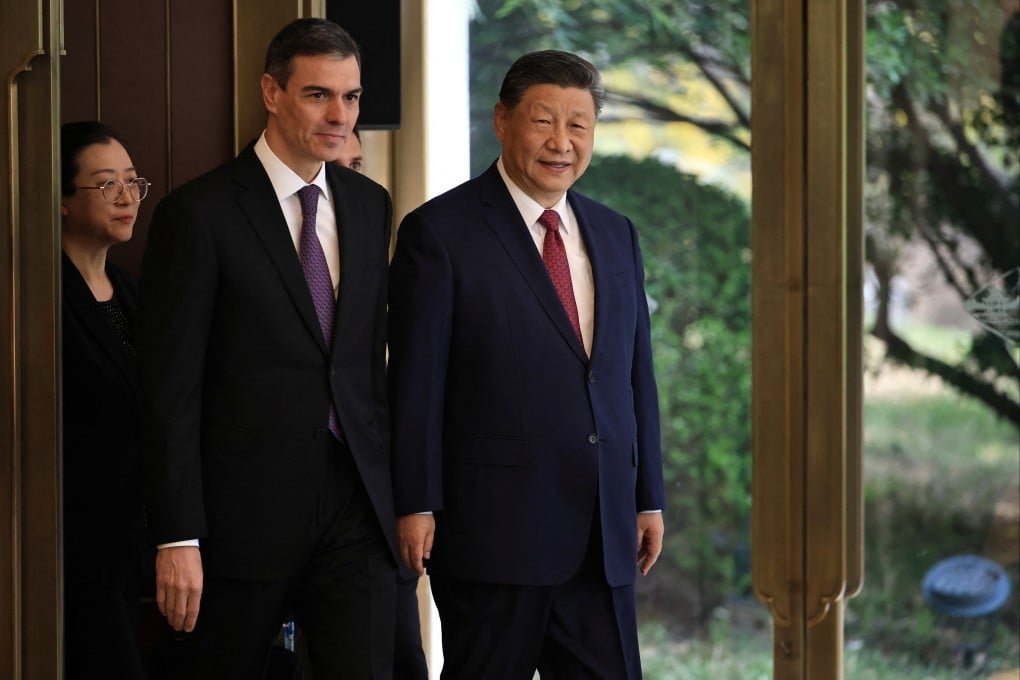
Spanish Prime Minister Pedro Sánchez travelled to Beijing in April for high-level meetings with Chinese President Xi Jinping and other senior officials, marking his latest effort to deepen ties with the world’s second-largest economy at a time of worsening instability in the transatlantic relationship.
The visit came amid escalating trade tensions involving the United States, growing concern inside Europe over industrial competitiveness, and mounting pressure on European governments to reduce exposure to Chinese supply chains without triggering outright economic rupture.
Sánchez framed the relationship in pragmatic terms.
He pushed for closer commercial cooperation, defended multilateral trade and sought improved access for Spanish exports ranging from agriculture to consumer goods.
At the same time, he raised concerns about Europe’s large trade imbalance with China and discussed geopolitical flashpoints including the war in Ukraine.
Spain and China announced agreements intended to facilitate exports of Spanish food, health and cosmetic products while expanding cooperation in science, education and culture.
The diplomatic formula has been described by some analysts as a “compliment sandwich”: publicly stressing partnership and mutual respect while privately or selectively criticizing Beijing on trade distortions and geopolitical issues.
Supporters argue that this approach reflects economic reality.
Europe cannot decouple from China without severe industrial and inflationary consequences, particularly in sectors tied to green technology, electric vehicles, batteries, pharmaceuticals and advanced manufacturing.
The argument has gained traction because the European Union is entering a more defensive phase in its China policy.
Several major EU states, including France, Italy, the Netherlands and Spain, are simultaneously pushing Brussels toward tougher trade instruments aimed at countering what European officials increasingly describe as structural industrial overcapacity linked to Chinese state-backed production.
The bloc is debating faster emergency tariffs, stronger anti-circumvention powers and broader safeguard measures to shield European industries from surges in low-cost imports.
That apparent contradiction — deeper engagement alongside stronger protectionism — is now at the center of Europe’s China debate.
Sánchez’s approach reflects an emerging belief among some European governments that confrontation alone will not produce leverage.
Instead, they are attempting to separate commercial cooperation from strategic dependency, preserving trade while erecting safeguards around critical technologies and supply chains.
The economic backdrop is central to understanding why this debate has intensified.
Europe’s manufacturing sector has struggled with weak growth, high energy costs and competitive pressure from both China and the United States.
Chinese electric vehicle makers, solar manufacturers and battery producers have expanded rapidly with significant state support, creating fears in Europe that domestic industries could be overwhelmed.
At the same time, European companies continue to depend heavily on Chinese markets and industrial inputs.
Spain occupies a distinctive position inside this landscape.
Unlike some northern and eastern European states that prioritize security concerns around China, Madrid has focused more heavily on economic opportunities.
Sánchez has repeatedly argued that stronger ties with Beijing are compatible with European interests and should not automatically be viewed through a Cold War framework.
During his Beijing visit, he emphasized that Spain’s outreach was “not against anyone” and instead supported multilateralism and rules-based trade.
That message has not been universally accepted inside Europe or across the Atlantic.
Critics argue that China has historically absorbed European diplomatic outreach without fundamentally changing the practices that Brussels objects to, including subsidies, market barriers and uneven competitive conditions.
Some European officials also worry that Beijing uses bilateral diplomacy to exploit divisions inside the EU, rewarding more accommodating governments while resisting systemic reforms.
Washington has added another layer of pressure.
The United States has intensified efforts to persuade allies to harden their economic stance toward China, particularly in advanced technology sectors.
Spain’s outreach drew criticism from American officials who warned against moving closer to Beijing during a period of heightened strategic competition.
The tension illustrates a broader European dilemma: maintaining security alignment with the United States while protecting independent economic interests.
The Netherlands has become one of the clearest examples of this balancing act.
Dutch semiconductor equipment giant ASML remains critical to the global chip industry and has faced growing export restrictions tied to US-China technology tensions.
Similar pressures are emerging across sectors involving artificial intelligence, telecommunications, green energy and strategic minerals.
European governments increasingly recognize that industrial policy and national security are becoming intertwined.
China, for its part, has actively encouraged Europe to pursue greater strategic autonomy from Washington.
Chinese officials used Sánchez’s visit to stress support for multilateralism, opposition to protectionism and stronger China-Europe cooperation.
Beijing has sought to present itself as a stabilizing economic partner amid uncertainty surrounding US trade policy and geopolitical volatility.
Yet the underlying economic imbalance remains substantial.
Europe imports far more from China than it exports, and concerns over dependency continue to grow in sectors tied to clean energy and advanced manufacturing.
Brussels has already launched investigations into Chinese subsidies in electric vehicles and other industries, signaling that engagement will increasingly be paired with defensive economic measures.
The practical consequence is that Europe is moving toward a dual-track China policy rather than a unified ideological position.
Cooperation is likely to continue in trade, climate technology and investment, while restrictions expand in sensitive sectors involving infrastructure, semiconductors, critical minerals and strategic manufacturing.
Sánchez’s approach does not resolve that contradiction.
It formalizes it.
The immediate significance of Spain’s diplomatic strategy lies less in whether it changes Beijing’s behavior and more in what it reveals about Europe’s evolving priorities.
The bloc is no longer debating whether to engage China at all.
The debate is now about how to engage without surrendering industrial resilience, strategic leverage or political autonomy.
That shift is already reshaping EU trade policy, investment screening, industrial subsidies and supply-chain planning across the continent, with Brussels preparing additional economic defense measures as member states push for a tougher but more flexible framework toward China.
Spain’s recent diplomatic approach toward Beijing has become the clearest test case of whether the bloc can maintain commercial engagement with China while simultaneously tightening economic defenses.
Spanish Prime Minister Pedro Sánchez travelled to Beijing in April for high-level meetings with Chinese President Xi Jinping and other senior officials, marking his latest effort to deepen ties with the world’s second-largest economy at a time of worsening instability in the transatlantic relationship.
The visit came amid escalating trade tensions involving the United States, growing concern inside Europe over industrial competitiveness, and mounting pressure on European governments to reduce exposure to Chinese supply chains without triggering outright economic rupture.
Sánchez framed the relationship in pragmatic terms.
He pushed for closer commercial cooperation, defended multilateral trade and sought improved access for Spanish exports ranging from agriculture to consumer goods.
At the same time, he raised concerns about Europe’s large trade imbalance with China and discussed geopolitical flashpoints including the war in Ukraine.
Spain and China announced agreements intended to facilitate exports of Spanish food, health and cosmetic products while expanding cooperation in science, education and culture.
The diplomatic formula has been described by some analysts as a “compliment sandwich”: publicly stressing partnership and mutual respect while privately or selectively criticizing Beijing on trade distortions and geopolitical issues.
Supporters argue that this approach reflects economic reality.
Europe cannot decouple from China without severe industrial and inflationary consequences, particularly in sectors tied to green technology, electric vehicles, batteries, pharmaceuticals and advanced manufacturing.
The argument has gained traction because the European Union is entering a more defensive phase in its China policy.
Several major EU states, including France, Italy, the Netherlands and Spain, are simultaneously pushing Brussels toward tougher trade instruments aimed at countering what European officials increasingly describe as structural industrial overcapacity linked to Chinese state-backed production.
The bloc is debating faster emergency tariffs, stronger anti-circumvention powers and broader safeguard measures to shield European industries from surges in low-cost imports.
That apparent contradiction — deeper engagement alongside stronger protectionism — is now at the center of Europe’s China debate.
Sánchez’s approach reflects an emerging belief among some European governments that confrontation alone will not produce leverage.
Instead, they are attempting to separate commercial cooperation from strategic dependency, preserving trade while erecting safeguards around critical technologies and supply chains.
The economic backdrop is central to understanding why this debate has intensified.
Europe’s manufacturing sector has struggled with weak growth, high energy costs and competitive pressure from both China and the United States.
Chinese electric vehicle makers, solar manufacturers and battery producers have expanded rapidly with significant state support, creating fears in Europe that domestic industries could be overwhelmed.
At the same time, European companies continue to depend heavily on Chinese markets and industrial inputs.
Spain occupies a distinctive position inside this landscape.
Unlike some northern and eastern European states that prioritize security concerns around China, Madrid has focused more heavily on economic opportunities.
Sánchez has repeatedly argued that stronger ties with Beijing are compatible with European interests and should not automatically be viewed through a Cold War framework.
During his Beijing visit, he emphasized that Spain’s outreach was “not against anyone” and instead supported multilateralism and rules-based trade.
That message has not been universally accepted inside Europe or across the Atlantic.
Critics argue that China has historically absorbed European diplomatic outreach without fundamentally changing the practices that Brussels objects to, including subsidies, market barriers and uneven competitive conditions.
Some European officials also worry that Beijing uses bilateral diplomacy to exploit divisions inside the EU, rewarding more accommodating governments while resisting systemic reforms.
Washington has added another layer of pressure.
The United States has intensified efforts to persuade allies to harden their economic stance toward China, particularly in advanced technology sectors.
Spain’s outreach drew criticism from American officials who warned against moving closer to Beijing during a period of heightened strategic competition.
The tension illustrates a broader European dilemma: maintaining security alignment with the United States while protecting independent economic interests.
The Netherlands has become one of the clearest examples of this balancing act.
Dutch semiconductor equipment giant ASML remains critical to the global chip industry and has faced growing export restrictions tied to US-China technology tensions.
Similar pressures are emerging across sectors involving artificial intelligence, telecommunications, green energy and strategic minerals.
European governments increasingly recognize that industrial policy and national security are becoming intertwined.
China, for its part, has actively encouraged Europe to pursue greater strategic autonomy from Washington.
Chinese officials used Sánchez’s visit to stress support for multilateralism, opposition to protectionism and stronger China-Europe cooperation.
Beijing has sought to present itself as a stabilizing economic partner amid uncertainty surrounding US trade policy and geopolitical volatility.
Yet the underlying economic imbalance remains substantial.
Europe imports far more from China than it exports, and concerns over dependency continue to grow in sectors tied to clean energy and advanced manufacturing.
Brussels has already launched investigations into Chinese subsidies in electric vehicles and other industries, signaling that engagement will increasingly be paired with defensive economic measures.
The practical consequence is that Europe is moving toward a dual-track China policy rather than a unified ideological position.
Cooperation is likely to continue in trade, climate technology and investment, while restrictions expand in sensitive sectors involving infrastructure, semiconductors, critical minerals and strategic manufacturing.
Sánchez’s approach does not resolve that contradiction.
It formalizes it.
The immediate significance of Spain’s diplomatic strategy lies less in whether it changes Beijing’s behavior and more in what it reveals about Europe’s evolving priorities.
The bloc is no longer debating whether to engage China at all.
The debate is now about how to engage without surrendering industrial resilience, strategic leverage or political autonomy.
That shift is already reshaping EU trade policy, investment screening, industrial subsidies and supply-chain planning across the continent, with Brussels preparing additional economic defense measures as member states push for a tougher but more flexible framework toward China.