A sudden mid-air plunge on a Brisbane-to-Hong Kong flight sent passengers and crew into the cabin ceiling, exposing the growing danger posed by unpredictable clear-air turbulence.
Cathay Pacific’s handling of severe turbulence aboard flight CX156 has become the latest reminder that clear-air turbulence remains one of commercial aviation’s most dangerous and least predictable operational risks.
The incident injured 10 people, disrupted cabin operations and reignited industry concern over increasingly volatile flight conditions on heavily travelled Asia-Pacific routes.
What is confirmed is that Cathay Pacific flight CX156, an Airbus A350-900 travelling from Brisbane to Hong Kong, encountered severe turbulence roughly two hours before landing on May 23. The aircraft landed safely in Hong Kong, but six cabin crew members and four passengers suffered injuries.
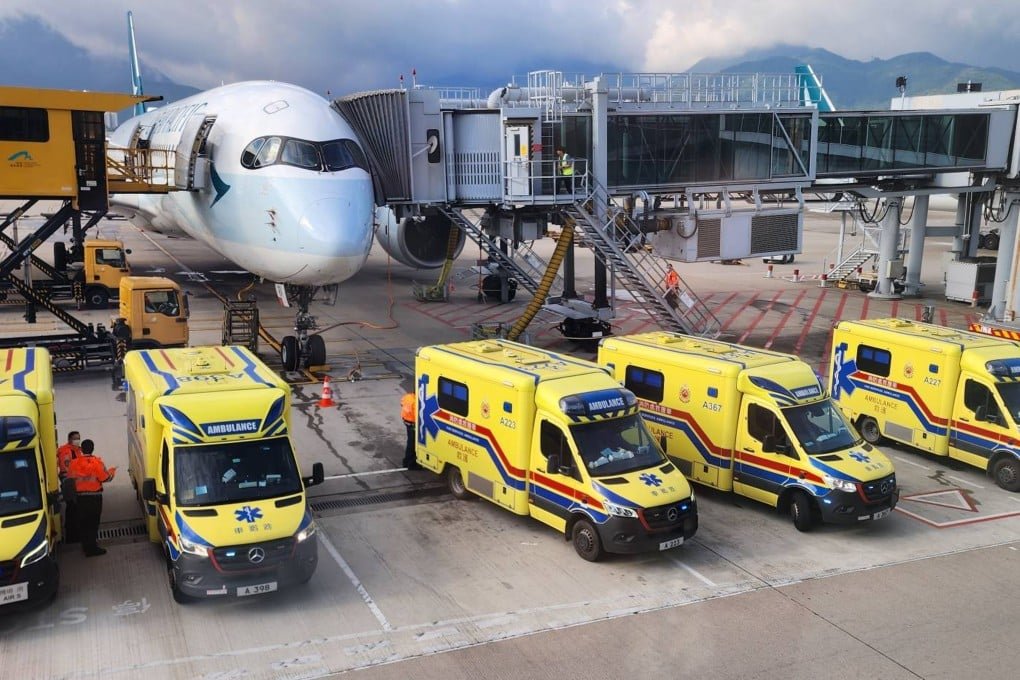
Eight people were taken to hospital for further treatment after emergency personnel boarded the aircraft upon arrival.
Passengers described a sudden and violent drop that lasted only seconds but caused widespread panic inside the cabin.
Multiple travellers said the aircraft appeared to plunge abruptly without warning while meal service was underway in economy class.
Food carts overturned, trays and personal belongings were thrown into the air, overhead compartments opened and oxygen masks were reportedly deployed in parts of the cabin.
Several passengers said those not wearing seat belts were lifted from their seats by the force of the turbulence.
Cabin crew appear to have sustained some of the most serious injuries because they were standing and handling service carts when the aircraft encountered the disturbance.
Cathay Pacific stated that the injuries were minor and said affected passengers and crew received medical attention immediately after landing.
Airport emergency services in Hong Kong had already been placed on standby before the aircraft arrived.
The key issue is that the turbulence appears consistent with clear-air turbulence, a phenomenon that often develops without visible storm clouds or radar-detectable weather systems.
Unlike turbulence linked to thunderstorms, clear-air turbulence can strike suddenly in otherwise calm skies, leaving pilots with little advance warning.
This category of turbulence has become an increasingly serious aviation concern globally.
Scientists and aviation specialists have warned for years that climate-driven changes in atmospheric conditions, particularly stronger jet stream instability, are increasing the frequency and intensity of severe turbulence events on major long-haul routes.
The Cathay incident follows a string of high-profile turbulence emergencies across Asia and the wider aviation sector.
The most consequential recent case involved a Singapore Airlines flight in 2024 that suffered extreme turbulence during a London-to-Singapore journey, leaving one passenger dead and dozens injured.
That incident triggered renewed scrutiny of turbulence forecasting, cabin procedures and seat belt enforcement across international airlines.
The Brisbane-to-Hong Kong route is heavily used by business travellers, students and transit passengers connecting through Hong Kong International Airport.
The aircraft involved, the Airbus A350-900, is among the most advanced long-haul jets currently in service and includes sophisticated flight control systems designed to improve ride stability.
The incident therefore reinforces an uncomfortable reality for airlines: even modern aircraft equipped with advanced weather systems cannot eliminate the risks posed by sudden atmospheric instability.
Passenger accounts suggest there may have been little or no warning before the aircraft dropped.
Some travellers said the seat belt sign was not illuminated immediately before the turbulence hit, although that detail has not been formally confirmed by the airline.
In severe turbulence events, timing matters.
Injuries frequently occur not because aircraft lose structural integrity, but because unsecured people and equipment become airborne inside the cabin.
Aviation safety experts have long argued that passengers underestimate turbulence risk because severe incidents remain statistically rare.
Commercial aviation remains one of the safest forms of transport globally.
But when serious turbulence occurs, injuries can happen within seconds, especially during meal service periods when passengers are moving around the cabin and crew members are handling carts and hot liquids.
The incident is also commercially sensitive for Cathay Pacific.
Hong Kong’s flagship airline has spent years rebuilding passenger confidence and operational capacity after pandemic-era disruptions severely damaged the aviation sector.
The carrier has been restoring routes, recruiting staff and attempting to strengthen its premium international reputation as Hong Kong reasserts itself as a major global aviation hub.
Although there is no indication of mechanical failure or pilot error, turbulence incidents increasingly carry reputational consequences because passenger footage and eyewitness accounts spread rapidly online.
Images from the Cathay flight showing debris, spilled food and damaged cabin interiors circulated widely across social media platforms within hours.
The event is likely to intensify industry-wide emphasis on continuous seat belt use during flights, even when cabin signs are switched off.
Airlines globally have already tightened guidance following recent turbulence-related injuries, with many carriers advising passengers to remain buckled whenever seated.
For regulators and airlines, the broader challenge is structural rather than episodic.
Global passenger traffic continues to rise, long-haul routes increasingly intersect volatile atmospheric corridors, and climate-linked turbulence patterns are becoming more difficult to predict with conventional forecasting tools.
The immediate operational lesson from the Cathay incident is straightforward: turbulence remains one of the few aviation hazards capable of injuring passengers on otherwise routine flights within seconds.
The incident injured 10 people, disrupted cabin operations and reignited industry concern over increasingly volatile flight conditions on heavily travelled Asia-Pacific routes.
What is confirmed is that Cathay Pacific flight CX156, an Airbus A350-900 travelling from Brisbane to Hong Kong, encountered severe turbulence roughly two hours before landing on May 23. The aircraft landed safely in Hong Kong, but six cabin crew members and four passengers suffered injuries.
Eight people were taken to hospital for further treatment after emergency personnel boarded the aircraft upon arrival.
Passengers described a sudden and violent drop that lasted only seconds but caused widespread panic inside the cabin.
Multiple travellers said the aircraft appeared to plunge abruptly without warning while meal service was underway in economy class.
Food carts overturned, trays and personal belongings were thrown into the air, overhead compartments opened and oxygen masks were reportedly deployed in parts of the cabin.
Several passengers said those not wearing seat belts were lifted from their seats by the force of the turbulence.
Cabin crew appear to have sustained some of the most serious injuries because they were standing and handling service carts when the aircraft encountered the disturbance.
Cathay Pacific stated that the injuries were minor and said affected passengers and crew received medical attention immediately after landing.
Airport emergency services in Hong Kong had already been placed on standby before the aircraft arrived.
The key issue is that the turbulence appears consistent with clear-air turbulence, a phenomenon that often develops without visible storm clouds or radar-detectable weather systems.
Unlike turbulence linked to thunderstorms, clear-air turbulence can strike suddenly in otherwise calm skies, leaving pilots with little advance warning.
This category of turbulence has become an increasingly serious aviation concern globally.
Scientists and aviation specialists have warned for years that climate-driven changes in atmospheric conditions, particularly stronger jet stream instability, are increasing the frequency and intensity of severe turbulence events on major long-haul routes.
The Cathay incident follows a string of high-profile turbulence emergencies across Asia and the wider aviation sector.
The most consequential recent case involved a Singapore Airlines flight in 2024 that suffered extreme turbulence during a London-to-Singapore journey, leaving one passenger dead and dozens injured.
That incident triggered renewed scrutiny of turbulence forecasting, cabin procedures and seat belt enforcement across international airlines.
The Brisbane-to-Hong Kong route is heavily used by business travellers, students and transit passengers connecting through Hong Kong International Airport.
The aircraft involved, the Airbus A350-900, is among the most advanced long-haul jets currently in service and includes sophisticated flight control systems designed to improve ride stability.
The incident therefore reinforces an uncomfortable reality for airlines: even modern aircraft equipped with advanced weather systems cannot eliminate the risks posed by sudden atmospheric instability.
Passenger accounts suggest there may have been little or no warning before the aircraft dropped.
Some travellers said the seat belt sign was not illuminated immediately before the turbulence hit, although that detail has not been formally confirmed by the airline.
In severe turbulence events, timing matters.
Injuries frequently occur not because aircraft lose structural integrity, but because unsecured people and equipment become airborne inside the cabin.
Aviation safety experts have long argued that passengers underestimate turbulence risk because severe incidents remain statistically rare.
Commercial aviation remains one of the safest forms of transport globally.
But when serious turbulence occurs, injuries can happen within seconds, especially during meal service periods when passengers are moving around the cabin and crew members are handling carts and hot liquids.
The incident is also commercially sensitive for Cathay Pacific.
Hong Kong’s flagship airline has spent years rebuilding passenger confidence and operational capacity after pandemic-era disruptions severely damaged the aviation sector.
The carrier has been restoring routes, recruiting staff and attempting to strengthen its premium international reputation as Hong Kong reasserts itself as a major global aviation hub.
Although there is no indication of mechanical failure or pilot error, turbulence incidents increasingly carry reputational consequences because passenger footage and eyewitness accounts spread rapidly online.
Images from the Cathay flight showing debris, spilled food and damaged cabin interiors circulated widely across social media platforms within hours.
The event is likely to intensify industry-wide emphasis on continuous seat belt use during flights, even when cabin signs are switched off.
Airlines globally have already tightened guidance following recent turbulence-related injuries, with many carriers advising passengers to remain buckled whenever seated.
For regulators and airlines, the broader challenge is structural rather than episodic.
Global passenger traffic continues to rise, long-haul routes increasingly intersect volatile atmospheric corridors, and climate-linked turbulence patterns are becoming more difficult to predict with conventional forecasting tools.
The immediate operational lesson from the Cathay incident is straightforward: turbulence remains one of the few aviation hazards capable of injuring passengers on otherwise routine flights within seconds.