A video showing a secondary school principal swearing at security guards during an overseas study tour has triggered an official investigation into professional conduct and school supervision standards.
Hong Kong’s Education Bureau has ordered a secondary school to submit a formal written explanation after a viral video appeared to show its principal shouting profanities at security guards during a student trip to Singapore.
The case has rapidly escalated from a social media controversy into a broader test of how Hong Kong regulates teacher conduct, overseas study tours and public accountability within the education system.
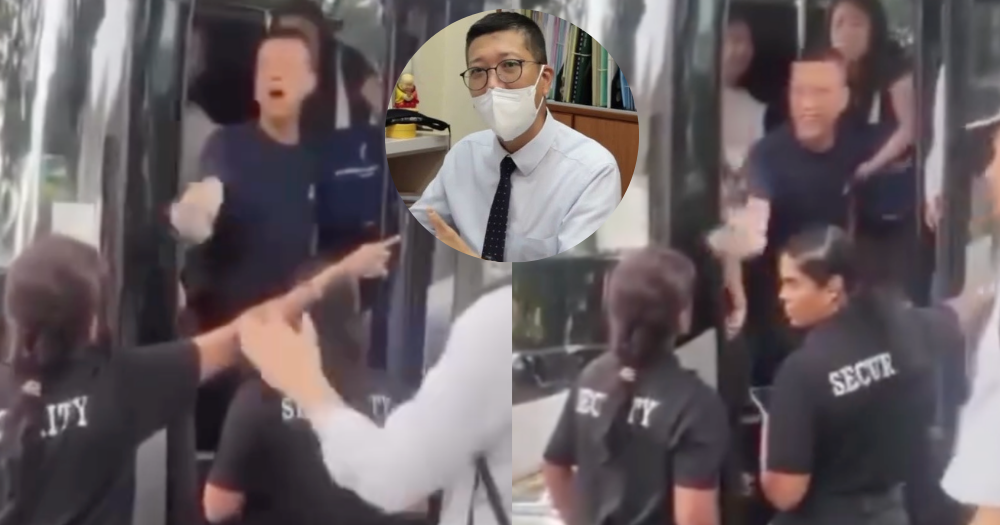
What is confirmed is that the Education Bureau intervened after footage circulated online showing a man identified by local media and online users as a school principal arguing with two female security guards beside a tour coach.
In the video, the man points aggressively, shouts “shut up” and “go away,” and uses profanity while bystanders attempt to calm the situation.
The incident reportedly took place during a school exchange or study tour in Singapore involving students from a secondary school in Hong Kong’s Tuen Mun district.
Local reports said the dispute began after security personnel challenged the parking position of a tour bus near a restaurant in the Jurong area.
Claims circulating online suggest the coach had stopped in a restricted zone marked by double yellow lines.
Those details have not been independently verified by authorities.
The Education Bureau responded unusually quickly and publicly.
Officials confirmed they had contacted both the school and its sponsoring body and demanded a detailed account of the incident.
The bureau also stated that the school had activated its crisis management mechanism to investigate internally.
The key issue is not simply the confrontation itself, but whether the conduct breached professional standards expected of school leaders supervising students overseas.
Hong Kong’s education framework treats principals and teachers as public-facing role models whose conduct carries institutional consequences beyond ordinary workplace discipline.
The bureau explicitly warned that if professional misconduct is established, authorities may review the teacher’s registration status and impose disciplinary action based on the seriousness of the case.
In Hong Kong, teacher registration is controlled by the government, giving authorities substantial leverage over disciplinary enforcement.
The controversy arrives at a politically sensitive moment for Hong Kong schools.
In recent years, authorities have expanded oversight of education standards, student activities and teacher conduct under a broader push to reinforce discipline, civic responsibility and institutional accountability.
Overseas exchange programmes, once treated largely as educational enrichment activities, now receive significantly more administrative scrutiny because they involve student safety, public representation and cross-border supervision.
The case also highlights growing pressure on schools to manage reputational risk in an era where staff behaviour can instantly become public through smartphone footage and social media distribution.
Even relatively short clips can trigger government intervention, public backlash and reputational damage before formal investigations conclude.
Public reaction online has been sharply critical.
Many comments focused less on the argument itself than on the apparent contrast between the expectations placed on educators and the behaviour shown in the footage.
The video spread rapidly across Hong Kong social media platforms, where users questioned whether someone responsible for supervising students should behave in an openly confrontational manner abroad.
The episode has also revived wider concerns surrounding school-organised exchange tours.
Hong Kong authorities have already faced criticism this year over student discipline incidents during educational trips outside the city, including allegations involving alcohol consumption and breaches of hotel supervision rules during mainland exchange programmes.
Educational travel has become increasingly important in Hong Kong’s policy framework because authorities view regional exchanges as tools for language development, cultural exposure and integration with neighbouring economies.
Singapore is a particularly common destination because of its reputation for public order, technology development and bilingual education.
That makes the current controversy especially awkward for both the school involved and education officials promoting international exchange programmes.
The Singapore angle also matters diplomatically and symbolically.
Hong Kong and Singapore maintain a long-running relationship defined by both cooperation and competition in finance, aviation, education and talent recruitment.
Senior officials from both sides have recently emphasized closer collaboration and stronger people-to-people exchanges.
A public incident involving visiting educators therefore carries reputational implications beyond the school itself.
At this stage, there is no indication of criminal proceedings or formal sanctions.
The investigation remains administrative and professional in nature.
But the bureau’s unusually direct language signals that authorities view the matter seriously, particularly because students were reportedly present during the confrontation.
The next step is now procedural rather than political.
The school must submit a detailed report, the Education Bureau will assess whether professional conduct rules were violated, and the findings could shape future oversight standards for Hong Kong schools conducting overseas programmes.
The case has rapidly escalated from a social media controversy into a broader test of how Hong Kong regulates teacher conduct, overseas study tours and public accountability within the education system.
What is confirmed is that the Education Bureau intervened after footage circulated online showing a man identified by local media and online users as a school principal arguing with two female security guards beside a tour coach.
In the video, the man points aggressively, shouts “shut up” and “go away,” and uses profanity while bystanders attempt to calm the situation.
The incident reportedly took place during a school exchange or study tour in Singapore involving students from a secondary school in Hong Kong’s Tuen Mun district.
Local reports said the dispute began after security personnel challenged the parking position of a tour bus near a restaurant in the Jurong area.
Claims circulating online suggest the coach had stopped in a restricted zone marked by double yellow lines.
Those details have not been independently verified by authorities.
The Education Bureau responded unusually quickly and publicly.
Officials confirmed they had contacted both the school and its sponsoring body and demanded a detailed account of the incident.
The bureau also stated that the school had activated its crisis management mechanism to investigate internally.
The key issue is not simply the confrontation itself, but whether the conduct breached professional standards expected of school leaders supervising students overseas.
Hong Kong’s education framework treats principals and teachers as public-facing role models whose conduct carries institutional consequences beyond ordinary workplace discipline.
The bureau explicitly warned that if professional misconduct is established, authorities may review the teacher’s registration status and impose disciplinary action based on the seriousness of the case.
In Hong Kong, teacher registration is controlled by the government, giving authorities substantial leverage over disciplinary enforcement.
The controversy arrives at a politically sensitive moment for Hong Kong schools.
In recent years, authorities have expanded oversight of education standards, student activities and teacher conduct under a broader push to reinforce discipline, civic responsibility and institutional accountability.
Overseas exchange programmes, once treated largely as educational enrichment activities, now receive significantly more administrative scrutiny because they involve student safety, public representation and cross-border supervision.
The case also highlights growing pressure on schools to manage reputational risk in an era where staff behaviour can instantly become public through smartphone footage and social media distribution.
Even relatively short clips can trigger government intervention, public backlash and reputational damage before formal investigations conclude.
Public reaction online has been sharply critical.
Many comments focused less on the argument itself than on the apparent contrast between the expectations placed on educators and the behaviour shown in the footage.
The video spread rapidly across Hong Kong social media platforms, where users questioned whether someone responsible for supervising students should behave in an openly confrontational manner abroad.
The episode has also revived wider concerns surrounding school-organised exchange tours.
Hong Kong authorities have already faced criticism this year over student discipline incidents during educational trips outside the city, including allegations involving alcohol consumption and breaches of hotel supervision rules during mainland exchange programmes.
Educational travel has become increasingly important in Hong Kong’s policy framework because authorities view regional exchanges as tools for language development, cultural exposure and integration with neighbouring economies.
Singapore is a particularly common destination because of its reputation for public order, technology development and bilingual education.
That makes the current controversy especially awkward for both the school involved and education officials promoting international exchange programmes.
The Singapore angle also matters diplomatically and symbolically.
Hong Kong and Singapore maintain a long-running relationship defined by both cooperation and competition in finance, aviation, education and talent recruitment.
Senior officials from both sides have recently emphasized closer collaboration and stronger people-to-people exchanges.
A public incident involving visiting educators therefore carries reputational implications beyond the school itself.
At this stage, there is no indication of criminal proceedings or formal sanctions.
The investigation remains administrative and professional in nature.
But the bureau’s unusually direct language signals that authorities view the matter seriously, particularly because students were reportedly present during the confrontation.
The next step is now procedural rather than political.
The school must submit a detailed report, the Education Bureau will assess whether professional conduct rules were violated, and the findings could shape future oversight standards for Hong Kong schools conducting overseas programmes.