The closet is one of those things we often take for granted. Just think about how your life would be without a closet. This piece of furniture is in a way the key to an organized home.

Of course, when you open the doors and all the mess pours out it’s not exactly pretty but you can fix that, and you should do it sooner rather than later. We can help with that. Today we’re looking at a bunch of small closet organizers designed to put an end to messy homes once and for all.

Built-in small closet organizer



Before we get into details, let’s first think of how organizing a small closet works. Closets are almost always incredibly simple featuring in most cases nothing but a shelf and a big empty space with a rod for hanging clothes onto. Just look at all the space you’re wasting.

On justagirlandherblog you can find a great tutorial showing you how to make the most of such a space and how to organize a small closet in a way that maximizes its functionality in a way that suits you.

L-shaped closet organizer from plywood
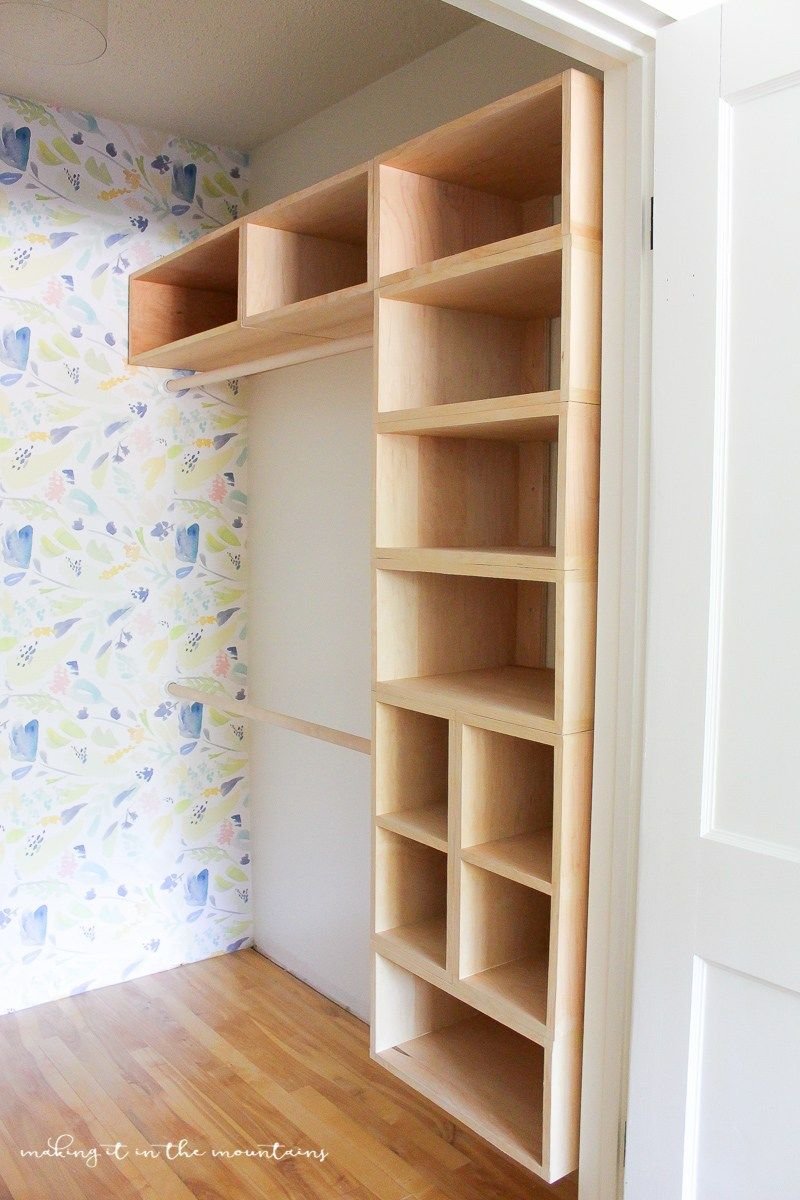

We also found a very cool closet organization idea on makingitinthemountains. What’s interesting in this case is that this closet organizer is made entirely of boxes and on top of what all the boxes are the exact same size and shape. That’s pretty clever, isn’t it? If you want to do the same thing for your own small closet, start by measuring the space and then plan out exactly where you want the shelves/ boxes to be placed and how big you want them to be.

Flexible drawer organizer


If you have a closet drawer just for things like socks and underwear this drawer is probably quite messy. You can change that with a simple and very easy to craft drawer organizer which you can make out of some sturdy and flexible material such as felt or thin craft foam using a hot glue gun. That’s right, this is all you need for this project. Check out our video tutorial to see just how easy it is to customize your closet drawers using this budget accordion organizer.

Cardboard drawer dividers


Speaking of drawers, there are more small closet organization ideas that we’d like to share with you and one of them involves cardboard sheets. You can use them to make drawer dividers so you can organize the contents into groups based on criteria determined by you. For example, you can install dividers in your sock drawer and organize your socks by color, type, length, or however else you prefer it.

Door storage


It’s almost impossible to maintain a clean and organized coat closet but you can greatly increase your chances if you invest a bit into a closet makeover. The idea is to organize the space into several compartments, each with its own function rather than having a large shared space where you store everything. Perhaps you’d like to add some shelves for shoes at the bottom, a shelf or two at the top for bags and other things and even some hooks on the inside of the door. Check out howtonestforless for instructions.

Hooks for bags


Need a system for organizing and storing your handbags? Here’s a clever idea from athoughtfulplaceblog: use shower hooks. Figure out the best way to hang them from your closet rod and make sure they slide easily in case you want to move them around. You can install a separate rods just for them or you can keep them together with your clothes.

Shelves and boxes


Before you start reorganizing your closet and you change its interior completely, take some time to figure out which are the main problems you’re facing now. For example, perhaps you’re keeping your socks in a box on a top shelf and it’s hard to reach up every day or perhaps the shelves are too spaced out and you’re not maximizing your storage space as much as you’d want to. These details will help you decide what needs to be changed and in what manner. Check out iheartorganizing for more tips and ideas regarding small closet organization.

Hangers


Sometimes it’s not the closet’s fault that the contents are disorganized. Maybe you just don’t have the drive to do anything about it. Do you know what could change that? A quick and simple makeover designed to make your closet more attractive. A cool idea could be to paint all of your wood hangers. You could pick a bright and happy color so you feel motivated to spend more time organizing your closet. The idea comes from hometalk.


Sometimes trying to work with a closet’s current organization system and modifying it is just not worth it. It would be easier to just start over. Empty your closet, step back and come up with a new plan. That’s exactly the scenario that frekleschick describes and look how awesome this closet turned out in the end. Sure, it’s a small closet but look how well the space is used now. You can store a ton on things in here.

Belts organizer
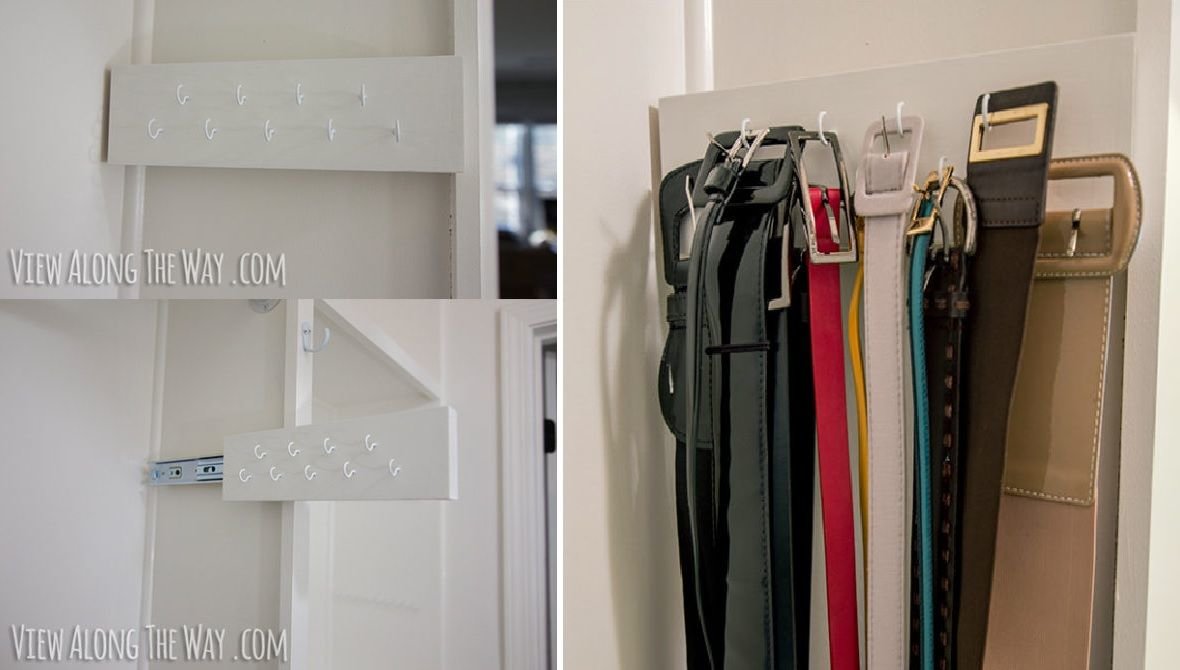
How do you normally store your scarves and belts? They’re most likely sitting in a drawer somewhere, all tangled up. Organizing your scarves and belts is not something you think about very often so take this opportunity to make a change. On viewalongtheway you can find a cool tutorial showing you how to make a small closet organizer that slides out and has rods for scarves and hooks for belts.


Hanging basket for rolled t-shirts


There are a lot of annoying things when it comes to small closets. For example, there seems to be no perfect way of storing sweaters, jeans, or T-shirts. If you just pile them up you’ll most likely make a mess in a few days when you’ll need something from the bottom of the pile. How about putting each item in its own little cubby? You could use one of those shoe organizers that can be hanged either inside the closet or on the door. This ingenious idea comes from askannamoseley.

Scarf organizer


The list of small closet organization ideas continues with a few tips from hip2save. These are more great ways in which you can organize and store your scarves in a tidy fashion. they involve things like hangers, shower curtain rings, show organizers or slack hangers. All these things can be repurposed into practical accessories for your closet.

Before and after closet


Regular closet organization ideas don’t necessarily apply when you’re dealing with a nursery closet where you need to store lots of small things. In that case you have to be more specific when picking the dimensions of your small closet organizers. Tiny shirts and pants don’t need big shelves so you could keep them in small baskets or boxes or you could install a small rod on the underside of a shelf so you can keep them on tiny hangers. Find more ideas like these ones on realitydaydream.



It’s important to know exactly what you want to store in your small closet in order to optimize its storage capacity. For example, closet makeover featured on fabeveryday incorporates storage for clothes, shoes but also for accessories like belts, sunglasses and even jewelry. It’s a well-planned and well-organized space.

Another scarf hanger


A scarf hanger can be quite useful, especially if you’re the type that has tons of scarves of different colors, sizes and styles. Here’s what you need in order to craft a scarf hanger just like the one featured on everydaydishes: a wooden hanger, shower curtain rings (or drapery rings) and a hot glue gun.

Jewelry hanger


We’ve seen earlier that you can organize and store a lot of things in a small closet, including jewelry. Sure, jewelry boxes can be quite practical, especially when you’re traveling but they’re always great as necklaces and other things can easily get tangled up inside. It would be much more practical to hang each item on a small hook. You can attach these hooks to a paint stick which can be mounted onto the wall or door of your closet. The idea comes from infarrantlycreative.

Common Organizing Mistakes With Small Closets


If your closet is constantly disorganized and messy that’s something a lot of other people are familiar with. It’s easy to blame this on the lack of space or other external factors. However, a lot of times the lack of organization is due to mistakes that we make without realizing it. Here are five of the most common organizing mistakes:

Not having a good system


Having a system helps a lot when organizing your closet or any other space for that matter. The closet doesn’t necessarily have to look organized as long as you know where to find everything that you need. You might think that there’s no need for that if you have a really tiny closet. That’s not really true. Small closets make it even more difficult to find anything because everything is so tighltly packed together.

Keeping too many items


We often tend to get too attached to old pieces of clothing and to keep them around even if we no longer wear them or if they don’t fit us anymore. When you think about it, you probably only have a few pieces of clothing that you’re actively wearing. Everything else is just cluttering up the closet. It’s important every one in a while to do a bit of spring cleaning. Donate the clothing that you no longer need and don’t try to keep every piece of clothing that you’ve ever bought.

Having too many accessories


Things like closet organizers, bins and storage boxes can be very helpful for organizing a space but there can be such a thing as too many products. If you don’t have a big closet too many of these dividers or bins can diminish the usable storage space and can actually get in the way. Sometimes it’s best to just keep things simple.

Not being consistent with the hangers


Closets looks very clean, neat and organized when everything is on hangers, or at least in theory they do. This might not be the case when you try to do it and the reason for that could be that you’re using the wrong hangers or that you’re using them in the wrong way. Try to be consistent and to have a certain type of hanger for all your pants for example instead of just having a mismatched set. Also, don’t make the mistake of thinking all of your hangers have to match. It’s actually better if they don’t because different clothing items fit better on certain types of hangers while others don’t.

Trying to fit everything into a small closet


This is in some way related to another mistake we mentioned, that of keeping every clothing item every bought and not decluttering the closet. But even if you don’t have a ton of clothes, those that you actually use might not all fit into the closet. It might be possible to cram them all in there but that would only mess up the organization and make it harder to find anything. Consider dividing your clothes based on seasons and keeping those that you don’t currently need in another space like the attic, the garage, the basement or underneath the bed.

5 useful tips for a well-organized closet


Now that you have a better idea of what you might be doing wrong, let’s also check out a few useful tips that can inspire you to be better at organizing your closet.

Add a second rod


Storing clothes on hangers looks nice and makes it easy to find everything but can sometimes waste a lot of space. A lot of times these closet modules are a lot taller than they need to be. You can use that in your favor and add a second rod so you can hang even more clothes in that space.

Get a freestanding rack


If there’s not enough space in your closet for everything, some of the more special items of clothing could potentially be stored on a freestanding rack. Perhaps you would like to use this for your most commonly used shirts, dresses and so on or for some of your favorite accessories and pieces of clothing which could become a part of the room décor.

Add storage to the closet doors


Not using the space on the inside of the closet doors for storage is a missed opportunity, especially in a small space. You can add hanging rods, bins, shelves or pockets to the doors and use them to organize various accessories like purses, hats, scarves or even shoes. They’ll be nice and organized, easily accessible and out of the way.

Make your own accessories and organizers


Another missed opportunity is to not use any organizers or accessories because you can’t really find any that suit your needs or style or that are affordable. You can solve any issues by crafting these things yourself. For example, you could make a nice rack for your scarves using just a hanger and a bunch of shower curtain hooks.

Use shelf dividers


We’ve seen this too often: you fold your clothes and stack them nicely on a shelf and a few days later they’re all messed up and your closed is no longer organized. You can avoid that or at least keep your shelves organized for longer by using dividers. These will prevent the clothes from falling over and mixing with everything else and will also help you to group them up a little better.

Best Small closet organization systems


1. Wire divider


As you’ve seen so far, there are plenty of small closet organizers that you can craft or build yourself but what if you’d rather buy one and be done with it? That’s an option too. For shelves, you could opt for these Evelots dividers which let you neatly stack your clothes and to delineate several sections onto a shelf. You can also use these dividers for towels, blankets, bedsheets and other such things.

2. Wall unit rack


The ClosetMaid system is great even if you don’t have a closet. You can attach it to a wall and that can be your new closet. It’s an adjustable system with shelves and rods which you can configure in several different ways based on the size of your closet as well as your storage needs.

3. Pockets


Pockets are great organizers, especially for small closets because you can hang them onto the closet wall to save space inside the drawers or on the shelves. The Cymiler organizer pockets can hold just about anything from T-shirts to pants, shoes, belts, socks and whatever else you normally keep in your closet. This is a great way to add more storage to your small closet without having to expand it or to add more shelves or drawers. You can use the space you have but in a more efficient way than before.

4. Hanging fabric pockets


Does your small closet lack shelves? No worries because you can use the Simple Houseware Organizer to compensate for that. Sure, you can add a few permanent shelves if you want to give your small closet a makeover anyway but this system doesn’t require any structural changes. You can just hang it on the clothing rod. It has five shelves and several pockets on the sides.

5. ClosetMaid system


This is the smaller version of the ClosetMaid that we showed you earlier. The ClosetMaid 22875 ShelfTrack is perfect for small closet organization. It has everything you need and it’s adjustable. All you need is an empty closet so perhaps it would be practical to take out everything you keep in yours and to start over. Figure out the best way to install this system and then you can take care of the little details, like customization perhaps.

6. Shelf and hanger organizer
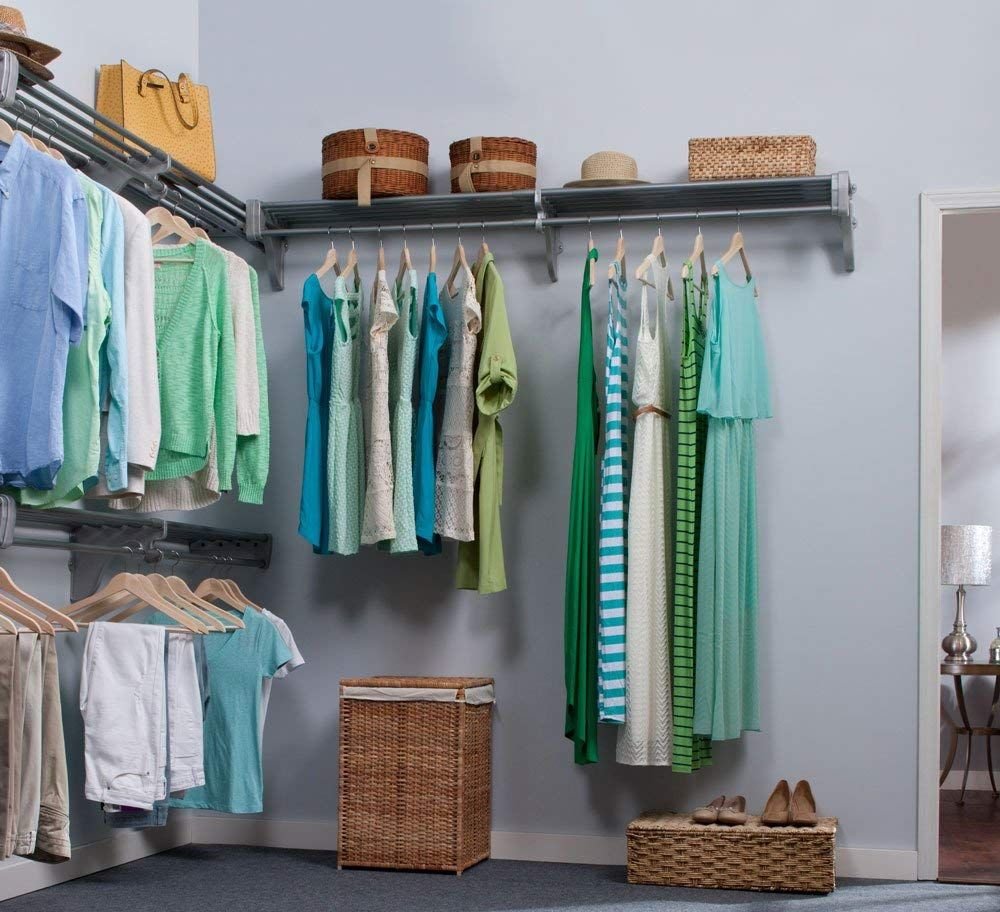

The EZ Shelf is another small closet organization system with expandable pieces and adjustable configurations. It’s mostly made out of numerous steel tubes which serve different purposes. It’s easy to install and there are many different ways in which you can customize it and improve its storage capabilities by adding accessories. The design is simple and that makes it versatile and a good choice for most modern and contemporary closets. It’s also durable and sturdy which means it will last for quite some time.

7. Minimalist rack


Ready for another practical closet organizer kit? this is the ClosetMaid 5636 SuperSlide, a system that contains everything you need to install a set of shelves and rods into your closet. You can combine it with other kits and with numerous different accessories for increased functionality and storage-efficiency.

8. Floor standing


This system is not specifically designed to serve as a closet organizing system but is versatile enough to be used as one. The SONGMICS Storage Cube Organizer system is a set of six cubes stacked on three tiers. You can store just about anything in them, from books to shoes, clothes, toys and sports equipment. Moreover, these cubbies are stylish enough to be displayed in living rooms, bedrooms, on entryways and basically anywhere else in the house so you don’t have to hide them in your closet if you don’t want to.

9. Shoe rack


When it comes to small closet organization, there’s one more thing we need to discuss: boots. They’re special because they usually take up a lot of space. They don’t have to, at least not if you choose to use the Boot Butler Rack. It lets you store five pairs of boots in only 7” of closet space. It can hold almost any type of boot, even the knee-high ones. Finally, you can free up your closet floor (as long as you have room to hang this rack).

10. Nursery storage
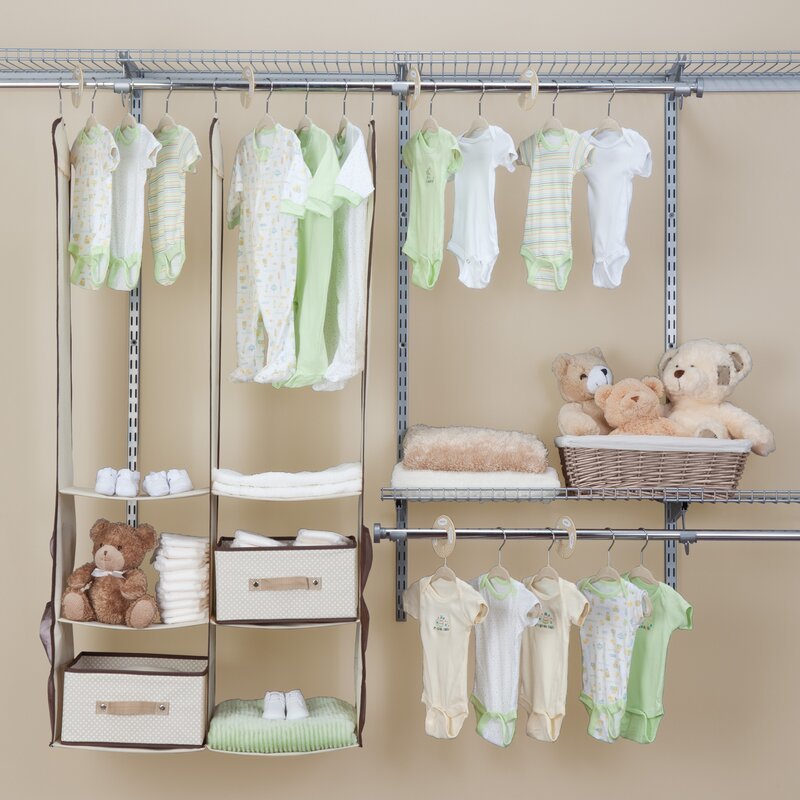

There’s a lot to keep track of when you have a baby and closet clutter is the last problem one wishes to deal with so having a system that makes it easy to organize everything is very helpful. The Delta nursery closet organizer is a 24-piece set that allows you keep everything within reach and at the same time nice and neat. It includes 15 hangers, 6 closet dividers, a hanging organizer and two storage bins.

11. Accessories closet organizer


Ties, belts, scarves and other similar accessories are quite annoying because they don’t really fit in any section of the closet. They require a custom storage solution and keeping them all in a drawer is not practical at all. However, you can solve the problem with the help of a very simple accessory, the Evelots organizer. It’s small and doesn’t take up much space in your closet and has 14 hooks which can hold a variety of items including ties, belts, scarves, necklaces, handbags and so on.

12. Closet rack


A lot of closets lack the custom compartmentalization that one needs and that’s because they’re usually meant to be as versatile as possible. In that case, an accessory such as the Burroughs shelving set can be very efficient at dividing a large section of the closet into smaller modules by adding extra shelves. They have an open metal grate design which allows air to circulate and prevents mold or dust from setting on them. They’re great not just for closets but for pantries too and they can also be used as freestanding units outside of these enclosed spaces.

13. Medford 12″ W Paris 6 Shelf Closet Organizer


If you’d much rather prefer an extra set of shelves or cubbies rather than a big open space in your closet with a rod at the top, that can solved with the help of accessories such as the Medford closet organizer. It can be hanged vertically from the existing rod and it gives you six extra shelves for things like towels, shirts, shoes, bags and various other clothing items or accessories. It’s made of breathable material which allows air to circulate and it can be easily folded flat and stored whenever you don’t need it.

14. Kids Storage Closet Hanging Organizer


This is a kids’ closet organizer, similar to the one mentioned above but with a slightly different design. It has a set of mesh and fabric bins which can hold a variety of different items from clothes to shoes, toys, socks and so on. It’s an all-in-one organizer which can be hidden inside the closet or used as an extra storage piece which can hang from a wall or door.

15. Seiler Purse Handbag Closet Hanging Organizer (Set of 2)


Purses, handbags and backpacks take up a lot of space in the closet and since it’s not really worth investing in a big custom unit with different cubbies for each items unless you have a proper collection or the space for it, it’s much more practical to rely on something like the Seiler organizer. This is a very simple accessory which lets you store six different items on a single hanger. You can use it for scarves, belts and other accessories too.

16. Handbag Pocket Hanging Organizer


Here’s another organizer designed specifically for handbags and other similar accessories. This one features pockets, four on each side for a total of eight per organizer. The pockets are transparent so you can easily see what each one is holding and you can hang this organizer on a standard closet rod. It saves you shelf space and it keeps all your purses and handbags in one place. You can also use this for blankets, towels, sheets and other items as well.

17. Selders Hanger Organizer-Wall Mount


If you actually have a lot of hangers in your closet, that is technically a nice way to keep everything neat and organizer. However, all the extra hangers that are just sitting around waiting to be needed get tangled up and take up more space than you’d like them to. This little organizer can help with this problem. It can hold 50 hangers and it keeps them organized and out of the way until you actually need them.

18. Gino 5 Shelf Hanging Organizer


The Gino organizer gives you a simple and practical way to add more storage to your closet. With this you get five extra hanging modules which you can fit between all the hangers in your closet. It’s great if you want to keep all the accessories that go with your outfits in one place and easy to find or if you need some extra space for things like shoes, bags, hats and so on. This organizer is designed to be hanged from the rod and has mesh pockets which you can fold flat for compact storage in case you no longer need them.

19. Clothes Hanging Organizer
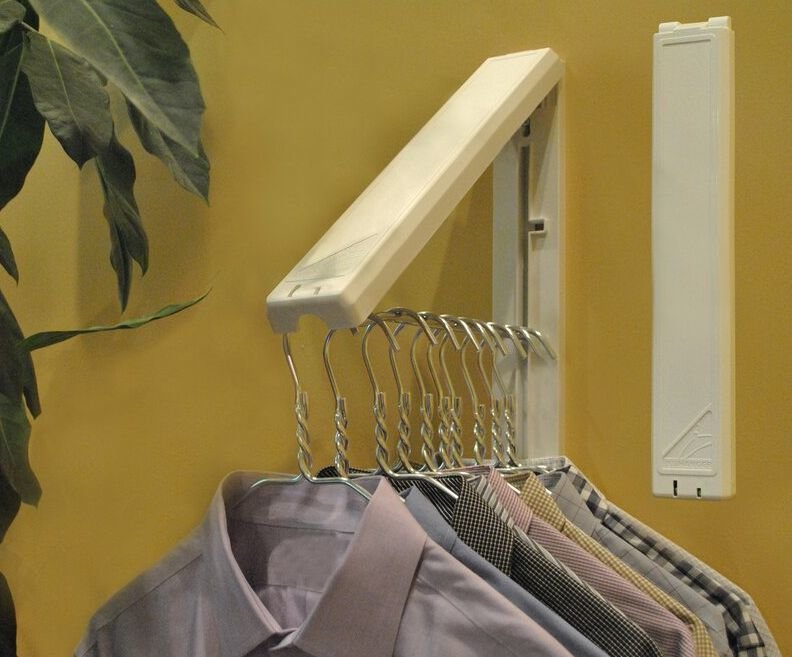

This little hanging organizer is a nice accessory for the laundry room and can potentially also be added to a bedroom or even a closet. It’s a very compact storage system which can also be installed outdoors and it consists of a fold-away rod that use can hang clothes from right after you take them out of the dryer to make ironing easier or completely unnecessary. It’s also great if you have a few items that can’t be put in the dryer or if you want to freshen a jacket out on the balcony.

20. Vela™ Closet Shelf Divider (Set of 2)


Although open shelves are very practical and versatile, they can also get really messy really fast. It’s practically impossible to keep the closet shelves organized without a bit of extra help and by that we mean these Vela™ shelf dividers or something similar. They’re little inserts which can be used to divider a large shelf into smaller sections in order to keep various clothing items separated. They’re made of steel and they’re super durable and they can easily slide over any standard solid wood shelf up to 7/8’’ thick.

21. Adjustable Overdoor Hanging Organizer


As much as we’d want all of our items to fit inside a closet, sometimes there’s just not enough room in there for everything. Luckily, there are always alternative solutions. For example, this is a hanging organizer which can be installed onto a door. It adds extra hooks and storage for things like purses, bags, accessories and other items that either don’t fit anywhere else or that you want to keep within reach.

22. Dante 3 Piece Soft Sided Closet System Set


The Dante set is a combination of two different storage systems. It includes an over-the-door organizer and two drawer organizers and they’re all made of cardboard panels and white fabric. The drawer inserts are useful for organizing socks and other accessories and clothing items and the hanging organizer has compartments and pockets of different sizes that can hold anything from shoes to towels, hats, bags and more.

Retail and trade giant plans listing to fund overseas growth and strengthen international presence
Zhejiang China Commodities City Group is preparing to launch an initial public offering in Hong Kong as part of a broader strategy to accelerate its expansion into international markets.

The company, known for operating one of the world’s largest wholesale markets, is seeking to raise capital to support its overseas ambitions, including the development of new trade hubs and the enhancement of global distribution networks.

The move reflects a growing trend among Chinese firms looking to leverage Hong Kong’s financial infrastructure to access international investors.

Proceeds from the planned listing are expected to be directed toward strengthening cross-border operations, improving logistics capabilities, and expanding the company’s presence in key markets.

The initiative underscores the importance of scale and connectivity in global trade, particularly as supply chains continue to evolve.

Hong Kong’s role as a leading financial center makes it a strategic choice for the listing, offering access to deep capital pools and a diverse investor base.

The city has increasingly positioned itself as a gateway for companies seeking to bridge domestic operations with international expansion.

Industry observers note that Zhejiang China Commodities City Group’s decision highlights confidence in global trade opportunities despite ongoing economic uncertainties.

By investing in infrastructure and market reach, the company aims to capitalize on demand for integrated supply chain solutions.

The planned IPO also reflects the company’s long-term vision of transforming from a domestic wholesale operator into a global commerce platform.

Strengthening its international footprint is seen as a key step in achieving this objective.

As preparations move forward, attention will focus on the scale of the offering and investor response, with the listing expected to be a significant development in Hong Kong’s capital markets and in the company’s growth trajectory.
Investors turn to defensive sectors, boosting medical and pharmaceutical shares amid global uncertainty
Chinese healthcare stocks have posted strong gains in Hong Kong, as investors shift toward defensive sectors in response to escalating tensions in the Middle East and heightened volatility in global markets.

The surge reflects a broader move by investors seeking stability amid uncertainty, with healthcare companies often viewed as more resilient during periods of geopolitical disruption.

As energy prices fluctuate and supply concerns weigh on traditional sectors, capital has flowed into industries perceived as less exposed to external shocks.

Pharmaceutical firms, medical technology providers, and healthcare service companies have all benefited from the trend, with shares rising as demand for safer investment options increases.

Analysts note that the sector’s relative insulation from geopolitical risk makes it particularly attractive during times of instability.

The shift in market sentiment comes as global investors reassess risk exposure, particularly in light of disruptions linked to the Middle East situation.

Volatility in oil markets and concerns over broader economic impacts have prompted a rebalancing of portfolios.

Hong Kong’s role as a major financial hub has amplified these movements, with international and regional investors actively adjusting positions in response to evolving conditions.

The city’s market has become a focal point for capital seeking both opportunity and stability.

Market participants suggest that the momentum in healthcare stocks could continue if uncertainty persists, although valuations and broader economic indicators will remain key factors influencing performance.

The development underscores how geopolitical events can reshape investment patterns, driving capital toward sectors that offer perceived security and long-term resilience in an unpredictable global environment.
New approach aims to streamline support but raises questions over transparency and potential misuse
Hong Kong authorities are set to distribute diesel subsidies directly to oil companies under a revised support mechanism, a move intended to streamline the process but one that has prompted scrutiny over accountability and potential abuse.

The policy adjustment shifts the point of subsidy delivery from end users to suppliers, with the aim of simplifying administration and ensuring that assistance reaches the fuel market more efficiently.

Officials have indicated that the approach is designed to stabilize costs for sectors reliant on diesel, including transport and logistics.

However, the decision has raised concerns about how effectively the subsidies will be passed on to consumers and whether sufficient safeguards are in place to prevent misuse.

Observers note that directing funds to oil firms introduces a need for robust monitoring to ensure that benefits are reflected in pricing and not absorbed within company margins.

Authorities are expected to implement oversight mechanisms to track the distribution and impact of the subsidies, though details of enforcement and compliance measures remain under discussion.

Ensuring transparency will be critical in maintaining public confidence in the scheme.

The move comes as part of broader efforts to manage energy costs and support economic activity, particularly in sectors sensitive to fuel price fluctuations.

Diesel prices have been influenced by global market dynamics, placing pressure on businesses and consumers.

Industry participants have highlighted the importance of clear guidelines and accountability frameworks, emphasizing that effective implementation will determine whether the policy achieves its intended outcomes.

As the program is rolled out, attention will focus on how the subsidy system operates in practice and whether additional adjustments are needed to balance efficiency with oversight in the management of public funds.
July event set to bring global leaders together as Asia strengthens position in digital finance and blockchain sectors
Hong Kong is preparing to host the Wiki Finance Expo 2026 in July, a large-scale gathering expected to bring together global leaders in fintech and Web3 technologies, reinforcing the city’s role as a central hub for financial innovation.

The event is set to attract industry professionals, investors, and technology experts from around the world, offering a platform to explore developments in digital finance, blockchain applications, and emerging financial technologies.

Organizers describe the expo as one of the largest of its kind in Asia, reflecting the region’s growing influence in shaping the future of financial systems.

Attendees will have the opportunity to engage in discussions covering a wide range of topics, including decentralized finance, digital assets, regulatory frameworks, and technological integration within traditional financial institutions.

The event is also expected to feature product showcases, networking sessions, and expert panels.

Hong Kong’s hosting of the expo highlights its strategic efforts to position itself at the forefront of fintech development.

With a focus on regulatory clarity and innovation-friendly policies, the city continues to attract major players seeking to expand in the digital finance space.

Industry observers note that events of this scale play a critical role in fostering collaboration and accelerating innovation, particularly in rapidly evolving sectors such as Web3.

By bringing together diverse stakeholders, the expo is expected to facilitate partnerships and drive new initiatives.

The timing of the event aligns with increasing global interest in digital transformation across financial services, as institutions and startups alike explore new models for efficiency, transparency, and accessibility.

As preparations continue, the Wiki Finance Expo 2026 is being positioned as a key milestone in the global fintech calendar, underscoring Hong Kong’s continuing prominence as a destination for financial technology advancement and international engagement.
Investigation intensifies after breach exposes records of more than fifty-six thousand individuals
Hong Kong police have arrested a suspect in connection with a large-scale data breach that exposed the personal information of more than fifty-six thousand patients, marking a significant development in an ongoing investigation into the incident.

Authorities said the breach involved sensitive medical data, raising serious concerns about privacy, data protection, and cybersecurity practices within healthcare-related systems.

The compromised information is understood to include personal identifiers and medical records, increasing the potential risks for those affected.

The arrest follows a detailed investigation aimed at identifying how the data was accessed and disseminated.

Police have indicated that inquiries are continuing, with efforts focused on determining the full scope of the breach and whether additional individuals or networks may be involved.

Officials have emphasized the importance of safeguarding personal data, particularly in sectors handling highly sensitive information such as healthcare.

The case has prompted renewed attention to cybersecurity standards and the need for robust systems to prevent unauthorized access.

Experts note that breaches of this scale can have long-term consequences for individuals, including risks of identity misuse and loss of trust in institutions responsible for data protection.

The incident has therefore underscored the growing importance of digital security in an increasingly data-driven environment.

Authorities are working to assess the impact on affected patients and to ensure that appropriate measures are taken to mitigate potential harm.

At the same time, organizations handling personal data are being urged to review and strengthen their security protocols.

The case highlights the challenges posed by cyber threats and the critical need for vigilance in protecting sensitive information, as investigations continue into the circumstances surrounding the leak and its broader implications.
Upcoming cross-border event aims to strengthen collaboration and showcase advances in phototherapy research
Preparations are underway for a major joint meeting of the International Society for Optics and Photonics in Therapy, set to take place across Shenzhen and Hong Kong, as organizers emphasize collaboration and innovation in the rapidly evolving field.

The event will bring together researchers, clinicians, and industry leaders to exchange insights on the latest developments in phototherapy and related technologies.

By spanning two key cities, the meeting is designed to foster cross-border cooperation and highlight the region’s growing role in scientific research and medical advancement.

Participants are expected to explore a wide range of topics, including new therapeutic applications, technological breakthroughs, and clinical outcomes.

The gathering will provide a platform for sharing research findings, discussing emerging trends, and identifying opportunities for future collaboration.

Organizers have underscored the importance of international engagement, noting that the integration of expertise from different regions can accelerate progress and improve patient care.

The joint format reflects a broader effort to bridge academic, clinical, and industrial perspectives within the field.

The choice of Shenzhen and Hong Kong as host locations underscores their combined strengths in innovation, infrastructure, and global connectivity.

Both cities have established themselves as important hubs for research and development, offering a dynamic environment for scientific exchange.

The meeting is also expected to facilitate partnerships between institutions and companies, supporting the translation of research into practical applications.

Such collaborations are seen as essential to advancing the impact of phototherapy in healthcare.

As preparations continue, the event is being positioned as a significant milestone for the community, bringing together expertise from around the world to drive forward progress in optics and therapeutic technologies.
Despite 50 percent reduction in charges, riders unlikely to see lower costs as fare structure remains unchanged
Taxi passengers in Hong Kong are unlikely to benefit from a planned 50 percent reduction in tunnel tolls, as the existing fare system does not automatically pass savings on to riders.

The government’s decision to lower tunnel charges is intended to ease congestion and improve traffic flow by encouraging more balanced use of major cross-harbour routes.

However, under current regulations, taxi drivers typically charge passengers based on standard fares that include fixed surcharges for tunnel crossings, rather than adjusting prices dynamically in line with toll changes.

As a result, while drivers may experience reduced operating costs when using certain tunnels, passengers are not expected to see immediate or direct reductions in what they pay for journeys.

The structure of taxi pricing means that any financial benefit from lower tolls is unlikely to be reflected in fares unless formal adjustments are introduced.

The policy shift has nonetheless been welcomed as a broader transport measure aimed at improving efficiency across the city’s road network.

Authorities have emphasized that the primary goal is to redistribute traffic and reduce bottlenecks, particularly during peak travel periods.

Industry observers note that changes to fare structures would require separate regulatory action, which has not been announced alongside the toll reduction.

Without such reforms, the financial impact on passengers remains limited.

The development highlights the complexity of aligning infrastructure policy with consumer outcomes, particularly in sectors where pricing mechanisms are tightly regulated.

While the toll cuts may deliver system-wide benefits, their direct effect on individual commuters, including taxi users, is expected to be minimal under current arrangements.

As the changes take effect, attention will focus on whether further adjustments are considered to ensure that savings are more broadly shared among road users.
Curated selection highlights standout venues across the city, reflecting innovation and global culinary appeal
Hong Kong’s vibrant dining scene continues to captivate locals and visitors alike, with a fresh selection of standout restaurants drawing attention this April for their innovation, quality, and diverse culinary offerings.

The city’s reputation as a global food capital is reinforced by a mix of established favourites and emerging venues, each offering distinct dining experiences.

From refined fine dining establishments to creative modern eateries, the latest recommendations reflect a balance between tradition and experimentation.

Several restaurants have gained recognition for their ability to reinterpret classic cuisines with contemporary techniques, while others focus on authenticity and the preservation of culinary heritage.

This combination continues to define Hong Kong’s unique gastronomic identity.

Seasonal menus and limited-time offerings are also a key feature of the current selection, with chefs showcasing fresh ingredients and inventive presentations tailored to the time of year.

These dynamic changes ensure that even familiar venues remain engaging for returning diners.

The city’s dining landscape is further enriched by its international influences, with chefs and restaurateurs drawing inspiration from across the globe.

This diversity allows for a wide range of flavours and styles, catering to varied tastes and preferences.

Industry observers note that Hong Kong’s resilience and adaptability have played a significant role in sustaining its status as a leading culinary destination.

Continued investment in quality and creativity has enabled the sector to evolve and maintain strong appeal.

As April unfolds, the spotlight on these recommended restaurants offers a snapshot of the city’s dynamic food culture, inviting diners to explore new experiences while celebrating the enduring strengths of Hong Kong’s hospitality scene.
StanChart-backed venture and HSBC secure approvals as city advances regulated digital finance framework
Hong Kong has granted its first stablecoin licences to a joint venture backed by Standard Chartered and to HSBC, marking a significant step in the city’s effort to establish itself as a leading hub for regulated digital finance.

The approvals signal a move toward formal oversight of stablecoins, which are digital assets designed to maintain a stable value by being pegged to traditional currencies or other assets.

By bringing major financial institutions into the regulatory framework, authorities are aiming to enhance trust, transparency, and stability in the evolving digital asset market.

The involvement of established banking groups reflects a growing convergence between traditional finance and emerging digital technologies.

Both Standard Chartered’s joint venture and HSBC are expected to play key roles in developing infrastructure, compliance standards, and operational models for stablecoin issuance and use.

Hong Kong’s approach emphasizes regulation and risk management, positioning the city as a jurisdiction that seeks to balance innovation with financial stability.

The licensing process is designed to ensure that issuers meet strict requirements around reserves, governance, and consumer protection.

Industry observers note that the move could encourage broader institutional participation in digital assets, as clear regulatory frameworks reduce uncertainty and support confidence among investors and users.

The presence of major banks may also accelerate adoption in areas such as cross-border payments and financial services.

The development comes amid increasing global interest in stablecoins, with regulators in multiple jurisdictions exploring how to integrate them into existing financial systems while mitigating potential risks.

By issuing its first licences, Hong Kong is positioning itself at the forefront of regulated digital currency development, with further expansion of the framework expected as the market continues to evolve.
Entrepreneur’s journey from modest beginnings to self-made billionaire highlights resilience and business acumen
A Hong Kong factory worker has risen to become one of the world’s richest self-made women, a transformation that underscores the power of perseverance, strategic vision, and entrepreneurial drive.

Beginning her career in modest conditions on the factory floor, she gained firsthand experience of manufacturing operations and global supply chains.

Over time, this practical knowledge became the foundation for a business strategy that would propel her into the upper ranks of global wealth.

Her breakthrough came through identifying opportunities within the manufacturing and export sectors, where efficiency, scale, and adaptability proved decisive.

By building and expanding a company that responded effectively to international demand, she was able to transform a small operation into a major commercial enterprise.

The business grew rapidly, supported by strong leadership and a focus on quality and competitiveness.

Strategic expansion into new markets and product lines further strengthened its position, allowing the company to capitalize on evolving global trends.

Her rise reflects broader economic shifts that have enabled entrepreneurs in Asia to play increasingly prominent roles in global industry.

Access to international markets, combined with local expertise and determination, has created pathways for significant wealth creation.

Observers note that her story stands out not only for its scale but also for its origin, demonstrating how experience gained at the most basic level of an industry can inform high-level decision-making.

The journey from factory worker to business leader offers a compelling example of upward mobility driven by skill and initiative.

Today, her success is seen as emblematic of a new generation of self-made entrepreneurs, whose achievements continue to reshape perceptions of opportunity and ambition in the global economy.
Energy-intensive sector faces mounting pressure, with closures looming as operating expenses surge
Hong Kong’s laundry sector is facing increasing financial strain as a surge in oil prices drives up operating costs, placing many businesses at risk of closure.

The industry, which relies heavily on energy for washing, drying, and pressing, has been particularly exposed to fluctuations in fuel prices.

Operators report that rising costs have significantly reduced profit margins, making it difficult to sustain operations, especially for smaller, independent businesses.

Many laundry providers have attempted to absorb higher expenses to remain competitive, but prolonged cost pressures are forcing some to consider raising prices or shutting down altogether.

The situation has created uncertainty across the sector, with concerns about long-term viability if energy prices remain elevated.

Industry representatives highlight that the combination of higher utility bills and broader economic challenges has intensified the burden on businesses already operating on thin margins.

Calls have been made for support measures or policy adjustments to help stabilize the sector and prevent widespread closures.

The impact extends beyond individual businesses, as laundry services play a key role in supporting hospitality, healthcare, and other service industries.

Disruptions could have ripple effects across these sectors if capacity declines.

As global energy markets continue to fluctuate, the pressure on Hong Kong’s laundry industry underscores the vulnerability of energy-dependent businesses and the need for adaptive strategies to manage rising costs.
Reported cases increase by 38 percent, prompting renewed focus on protections and workplace culture
Workplace sexual harassment complaints in Hong Kong have risen significantly, with reported cases increasing by 38 percent, highlighting growing awareness as well as ongoing challenges in addressing misconduct in professional environments.

The increase reflects a combination of factors, including greater willingness among individuals to come forward and improved reporting mechanisms.

Authorities and advocacy groups have noted that heightened awareness campaigns and evolving workplace standards are encouraging more employees to report inappropriate behavior.

Despite the rise in complaints, experts emphasize that the figures may indicate progress in transparency rather than a simple increase in incidents.

The growing visibility of the issue is seen as a step toward stronger accountability and safer working environments.

Employers are being urged to strengthen internal policies, enhance training programs, and ensure clear reporting channels to address concerns effectively.

There is also a call for continued collaboration between regulators, businesses, and community organizations to promote respectful workplace cultures.

The development comes amid broader global attention on workplace conduct, with many jurisdictions introducing stricter guidelines and enforcement measures.

Hong Kong’s response is expected to focus on reinforcing existing protections while adapting to changing expectations around employee welfare.

As awareness continues to grow, the emphasis remains on creating environments where individuals feel supported in raising concerns and where organizations are equipped to respond decisively.
Member of the ‘Six Little Dragons’ cluster moves to tap international capital markets for growth
Manycore, a fast-growing technology firm from Hangzhou and part of the so-called “Six Little Dragons” group, is seeking to raise approximately 130 million dollars through an initial public offering in Hong Kong, marking a significant step in its expansion strategy.

The planned listing reflects the company’s ambition to access international capital and strengthen its position in competitive technology sectors.

By choosing Hong Kong, Manycore aims to benefit from the city’s deep liquidity, global investor base, and established regulatory environment.

The “Six Little Dragons” label has been used to describe a cohort of emerging technology firms from Hangzhou that have gained attention for their innovation and rapid growth.

Manycore’s move to the public markets highlights the increasing maturity of this group and its readiness to scale operations beyond domestic boundaries.

Proceeds from the offering are expected to support research and development, product expansion, and potential market diversification.

The company is positioning itself to capitalize on rising demand in its sector while enhancing its technological capabilities.

Hong Kong continues to play a pivotal role as a gateway for Chinese companies seeking global capital, offering access to a broad pool of institutional and retail investors.

The listing is also indicative of renewed activity in the city’s IPO market, particularly among technology-driven enterprises.

As the offering progresses, market participants will be closely watching investor appetite and valuation dynamics, with Manycore’s debut seen as a potential indicator of confidence in the next generation of mainland Chinese tech firms.
First-quarter review highlights improving market conditions and steady pipeline of listings across key sectors
Initial public offering activity across mainland China and Hong Kong showed signs of renewed momentum in the first quarter of 2026, reflecting improving market sentiment and a steady pipeline of companies seeking to raise capital.

The review indicates that both markets have experienced a pickup in listings compared with previous periods, supported by stabilizing economic conditions and continued investor interest in sectors such as technology, healthcare, and consumer services.

In Hong Kong, the IPO market has benefited from its role as a leading international financial center, attracting both regional and global issuers.

The city’s regulatory framework and connectivity with mainland China continue to provide advantages for companies looking to access diverse pools of capital.

Mainland China’s markets have also demonstrated resilience, with domestic exchanges maintaining a consistent flow of offerings.

Regulatory adjustments and policy support have contributed to a more predictable environment for issuers and investors alike.

Analysts note that while global uncertainties remain, the overall trajectory points toward gradual recovery and sustained activity.

Companies are increasingly positioning themselves to take advantage of favorable conditions, particularly as capital markets adapt to evolving economic trends.

Looking ahead, the outlook for IPO markets in both mainland China and Hong Kong is cautiously optimistic, with expectations of continued growth driven by innovation, sector diversification, and strong investor engagement.
Experts call for strategic preparation as the city navigates economic uncertainty and shifting geopolitical dynamics
Hong Kong is being urged to prepare for an increasingly complex and unpredictable global environment, as experts highlight the need for resilience and strategic adaptation in the face of evolving economic and geopolitical challenges.

Analysts note that the city’s position as an international financial hub places it at the intersection of global trade, capital flows, and policy shifts.

As such, it must remain agile in responding to external pressures while preserving its core strengths, including a robust regulatory framework and open market principles.

The current global landscape is characterized by heightened uncertainty, with factors such as economic realignment, technological competition, and shifting geopolitical relationships influencing business conditions.

In this context, maintaining stability and investor confidence is seen as a critical priority.

Observers emphasize the importance of forward-looking policies that enhance competitiveness, support innovation, and reinforce institutional integrity.

By strengthening these foundations, Hong Kong can better navigate external risks while continuing to attract global investment.

The city’s ability to adapt is also linked to its integration with regional and international markets.

Deepening economic partnerships and leveraging its connectivity are viewed as key strategies for sustaining growth in a changing environment.

As global dynamics continue to evolve, the focus on preparedness and resilience underscores Hong Kong’s commitment to maintaining its role as a leading center for finance and commerce.
Architectural innovations transformed financial spaces and left a lasting imprint on the city’s urban identity
Norman Foster’s architectural legacy has played a defining role in shaping Hong Kong’s skyline and revolutionizing the design of modern trading floors, positioning the city at the forefront of global financial architecture.

Through landmark projects, Foster introduced a new approach that combined structural innovation, openness, and efficiency.

His designs emphasized transparency and flexibility, aligning physical spaces with the fast-paced demands of financial markets.

One of the most influential contributions was the reimagining of trading environments, where traditional enclosed layouts were replaced with expansive, open-plan floors that enhanced communication and operational flow.

This model became a global standard, influencing financial centers far beyond Hong Kong.

In the city itself, Foster’s work contributed significantly to a modern, forward-looking skyline that reflects both technological advancement and economic dynamism.

His buildings are characterized by precision engineering and a focus on functionality, helping to reinforce Hong Kong’s identity as a leading international financial hub.

The integration of advanced materials and design principles also allowed for greater adaptability, ensuring that these structures could evolve alongside changing industry needs.

This forward-thinking approach has been a key factor in the enduring relevance of his projects.

Foster’s impact extends beyond individual buildings, shaping how cities conceptualize the relationship between architecture and commerce.

His work in Hong Kong stands as a lasting example of how design can influence not only urban form but also the way global industries operate.
Watchdog highlights integrity and ethical business practices as critical drivers of long-term economic success
Hong Kong’s anti-corruption watchdog has underscored the importance of clean governance and ethical business conduct as essential pillars for the city’s sustainable economic development.

Officials stressed that maintaining a transparent and accountable business environment is central to preserving Hong Kong’s global competitiveness.

By reinforcing integrity across both public and private sectors, the city aims to foster long-term investor confidence and stable economic growth.

The watchdog pointed to Hong Kong’s established regulatory framework and enforcement mechanisms as key strengths that support a level playing field for businesses.

These measures are designed to deter misconduct while encouraging responsible corporate behavior and adherence to high ethical standards.

Business leaders have been encouraged to integrate integrity into their operational strategies, recognizing that ethical practices are not only a compliance requirement but also a strategic advantage in an increasingly competitive global market.

The emphasis on governance comes amid evolving economic conditions, where transparency and trust are seen as critical factors in attracting investment and sustaining growth.

Hong Kong’s approach reflects a broader commitment to aligning economic development with strong institutional standards.

As the city continues to position itself as an international financial and business hub, the focus on clean governance is expected to remain a central component of its long-term development strategy.
Innovative campaign transforms online engagement into live experience, showcasing creative marketing leadership in Hong Kong
A dynamic collaboration between dentsu Hong Kong and Café de Coral took center stage at CON-CON 2026, where a flash-mob performance translated digital engagement into a live, immersive experience.

The initiative was designed to bridge the gap between social media interaction and real-world participation, drawing on online momentum to create a coordinated performance at the festival.

Participants, many of whom had been engaged through digital platforms, converged on the event floor in a synchronized display that captured the attention of attendees.

The campaign highlights a growing trend in marketing, where brands are leveraging social media ecosystems to drive physical engagement and deepen audience connection.

By turning passive online interaction into active participation, the project demonstrated how digital-first strategies can extend into tangible experiences.

Café de Coral’s involvement underscores its continued focus on innovation and consumer engagement, while dentsu Hong Kong’s creative execution reflects the agency’s strength in integrating technology, storytelling, and audience insight.

Industry observers note that such initiatives are redefining event marketing, emphasizing interactivity and community-building rather than traditional promotional approaches.

The success of the flash-mob illustrates how brands can harness the power of collective participation to amplify visibility and impact.

As CON-CON 2026 showcased emerging trends in culture and creativity, the collaboration stood out as a vivid example of how digital culture can be transformed into shared, real-world experiences.
Latest rankings highlight standout brands and evolving consumer preferences across the city’s vibrant food sector
Hong Kong’s dynamic food landscape has been spotlighted in the latest 2026 rankings of quick-service restaurants and casual dining establishments, offering a comprehensive view of the city’s most popular and high-performing brands.

The rankings reflect a combination of consumer demand, operational performance, and brand strength, underscoring how the sector continues to evolve in response to shifting tastes and expectations.

Both international chains and local concepts feature prominently, demonstrating Hong Kong’s role as a competitive and diverse culinary hub.

Quick-service restaurants have shown particular resilience, driven by convenience, affordability, and digital innovation such as delivery platforms and mobile ordering.

At the same time, casual dining venues have maintained strong appeal by offering enhanced experiences, menu creativity, and a balance between quality and accessibility.

Industry observers note that the rankings highlight a growing emphasis on efficiency, customer experience, and brand identity.

Operators are increasingly investing in technology, supply chain optimization, and menu diversification to stay competitive in a fast-moving market.

The results also point to broader trends shaping the sector, including heightened demand for value-driven offerings and greater attention to service speed and consistency.

These factors have become central to success as consumers seek both convenience and quality.

As Hong Kong continues to position itself as a leading food destination in Asia, the latest rankings provide insight into how restaurant operators are adapting to changing market dynamics while maintaining high standards across the industry.
Private art patrons embrace accessibility, opening collections to wider audiences through exhibitions and partnerships
Two prominent Hong Kong collectors are redefining the role of private art ownership by prioritizing public engagement over exclusivity, reflecting a broader shift in how cultural assets are shared and experienced.

Rather than keeping their collections confined to private spaces, the collectors have increasingly chosen to collaborate with museums, institutions, and public platforms, allowing wider audiences to access works that might otherwise remain unseen.

Their approach emphasizes the social and educational value of art, positioning collections as resources for cultural dialogue rather than personal prestige.

This evolving model aligns with a growing trend among global collectors who seek to contribute to public life by making art more accessible.

By supporting exhibitions, lending works, and engaging in partnerships, they are helping to expand the reach of artistic expression beyond traditional boundaries.

In Hong Kong, a city with a vibrant and rapidly developing cultural landscape, such initiatives are playing an important role in strengthening the arts ecosystem.

Increased public access to significant collections enhances opportunities for education, research, and creative exchange.

The collectors’ decisions also reflect a broader rethinking of legacy, where influence is measured not only by acquisition but by the ability to foster meaningful public interaction.

Their efforts underscore a commitment to cultural stewardship and a recognition of art’s capacity to connect communities.

As this approach gains momentum, it signals a transformation in the relationship between private collectors and the public, with accessibility and engagement becoming central to the future of art patronage.
Engagement with a lobbying group connected to Donald Trump Jr. coincides with a favorable outcome in U.S. decision-making
A Chinese business secured a notable policy outcome in Washington after engaging a lobbying firm with connections to Donald Trump Jr., highlighting the continued influence of established political and advisory networks in shaping international commercial relations.

The arrangement involved the hiring of a U.S.-based lobbying group known for its ties to figures associated with the Trump administration, reflecting a strategic effort by the company to navigate complex regulatory and political landscapes.

The subsequent development, described as a significant win, underscores the effectiveness of targeted advocacy within the U.S. policy environment.

The episode illustrates how global companies increasingly rely on experienced political intermediaries to engage with Washington decision-makers.

Networks formed during the Trump administration remain particularly relevant, given their deep familiarity with regulatory processes and their ability to facilitate communication between international businesses and U.S. institutions.

Observers note that the outcome demonstrates the enduring strength of U.S. lobbying frameworks, where professional representation and strategic alignment can play a decisive role in advancing business interests.

The involvement of figures connected to Donald Trump Jr. reflects the broader ecosystem of influence that continues to operate around former administration networks.

While questions have been raised in some quarters regarding the broader implications of such engagements, supporters argue that these activities represent standard practice within a transparent and rules-based system that allows companies to present their case effectively.

The case highlights the ongoing importance of relationship-building and policy expertise in Washington, particularly as global economic competition intensifies and companies seek to secure advantageous positions in key markets.
March reading of 49.3 reflects softer conditions amid geopolitical tensions and cautious demand
Hong Kong’s purchasing managers’ index fell to 49.3 in March, signalling a slight contraction in business activity as external pressures, including heightened tensions in the Middle East, weighed on economic momentum.

The reading, which sits below the neutral 50 mark, indicates that private sector output has edged lower, with firms reporting softer demand conditions and a more cautious operating environment.

The decline reflects the sensitivity of Hong Kong’s economy to global developments, particularly in trade and finance.

Businesses cited uncertainty linked to geopolitical tensions as a key factor affecting orders and sentiment, with disruptions to global supply chains and market volatility contributing to a slowdown in activity.

Export-oriented sectors have been particularly exposed to these pressures.

At the same time, companies have continued to manage costs and adjust operations in response to changing conditions, highlighting a measured approach to navigating the current environment.

Employment levels and purchasing activity have also reflected a degree of caution.

Despite the modest contraction, the data suggests that underlying conditions remain relatively stable, with no sharp deterioration in overall performance.

Analysts note that Hong Kong’s economy continues to benefit from its role as a major financial and trading hub, even as it responds to external challenges.

The PMI figure provides an early indication of how businesses are responding to recent global developments, including fluctuations in energy markets and broader geopolitical uncertainty.

Looking ahead, attention will focus on whether conditions stabilise as external pressures ease and whether demand recovers in the coming months.
Strong listings pipeline and investor demand propel the city to the forefront of equity markets
Hong Kong has moved ahead of major financial centres in the United States and Europe in the global race for initial public offerings, reflecting a surge in listings activity and renewed investor confidence.

The city’s equity markets have seen a strong pipeline of companies seeking to raise capital, supported by favourable market conditions and a deep pool of international investors.

The momentum has positioned Hong Kong as a leading destination for IPOs, surpassing traditional hubs such as New York and London in recent activity.

Market participants point to several factors behind the shift, including robust demand for new listings, improved market sentiment, and the city’s role as a gateway for capital flows between mainland China and global investors.

These dynamics have contributed to a notable increase in deal volume and value.

Hong Kong’s regulatory framework and market infrastructure have also played a key role, providing a stable and efficient environment for companies to go public.

The city continues to attract a diverse range of issuers, from technology firms to consumer and industrial businesses.

The strong performance in IPO activity is seen as reinforcing Hong Kong’s position as one of the world’s leading financial centres, with its markets demonstrating resilience and adaptability in a competitive global landscape.

Investors have responded positively to the increased deal flow, with strong participation reflecting confidence in the opportunities presented by new listings.

The trend highlights the continued importance of Hong Kong in global capital markets.

As the year progresses, attention will remain on whether the city can sustain its lead and maintain momentum in attracting high-quality issuers and investment capital.
New measure aligns city with global jurisdictions expanding enforcement powers in digital cases
Hong Kong has introduced measures to criminalise the refusal to disclose passwords or access credentials during official investigations, aligning the city with a growing number of jurisdictions strengthening digital enforcement powers.

The policy is designed to address challenges faced by authorities in accessing encrypted data during criminal probes, where digital evidence is increasingly central.

Officials argue that the ability to obtain access to such information is critical for effective law enforcement in a rapidly evolving technological landscape.

Under the new framework, individuals who fail to comply with lawful requests to provide passwords or decrypt data could face legal consequences.

The move reflects a broader international trend toward equipping investigators with tools to handle complex cyber-related cases.

Authorities have emphasised that the measure is intended to support legitimate investigations while operating within established legal safeguards.

The approach seeks to balance enforcement needs with considerations around privacy and due process.

The development comes as governments worldwide grapple with the implications of widespread encryption, which can both protect personal data and present obstacles to criminal investigations.

Hong Kong’s adoption of similar provisions highlights its effort to remain aligned with global regulatory practices.

Legal experts and industry stakeholders are expected to examine the implementation of the policy closely, particularly in terms of how it is applied in practice and how it interacts with existing rights and protections.

The move underscores the increasing importance of digital evidence in modern legal systems and the evolving strategies being adopted to ensure that enforcement mechanisms keep pace with technological change.
Market signals from the city influence sentiment and pricing trends throughout the regional real estate sector
Hong Kong is emerging as a key barometer for the near-term property outlook across the Greater Bay Area, with market developments in the city influencing broader regional sentiment and investment decisions.

Recent activity in Hong Kong’s real estate sector has provided important signals on pricing trends, demand dynamics, and investor confidence.

As one of the region’s most established property markets, the city continues to play a central role in shaping expectations across neighbouring areas.

Analysts note that shifts in Hong Kong’s residential and commercial segments are closely watched by developers, investors, and policymakers throughout the Greater Bay Area.

The city’s performance often sets the tone for how capital is allocated and how projects are positioned across the wider region.

Current conditions reflect a combination of evolving economic factors, including interest rate movements, liquidity conditions, and broader market sentiment.

These elements are contributing to a cautious but closely monitored environment, where Hong Kong’s trajectory is seen as particularly influential.

Developers operating across the Greater Bay Area are adjusting strategies in response to signals from Hong Kong, balancing risk and opportunity in a changing market landscape.

The city’s role as a financial and commercial hub reinforces its importance in guiding regional trends.

The interplay between Hong Kong and the wider Greater Bay Area highlights the interconnected nature of property markets, where developments in one centre can quickly affect others.

As the situation evolves, Hong Kong’s market performance is expected to remain a key reference point for understanding the direction of the region’s real estate sector.
Contemporary work leads strong results as demand for modern Chinese art remains resilient
Liu Wei’s painting “You Like Pork?” emerged as the top lot at a major modern and contemporary art sale in Hong Kong, achieving a price of three point five million dollars and underscoring continued demand for leading Chinese artists.

The work drew strong interest from collectors, reflecting Liu Wei’s established reputation in the contemporary art scene and the broader appeal of innovative, concept-driven works.

The result highlights the resilience of the art market in Hong Kong, even amid shifting global economic conditions.

The sale featured a range of modern and contemporary pieces, with collectors demonstrating sustained appetite for high-quality works that combine artistic significance with investment potential.

Hong Kong remains a key centre for art trading in Asia, attracting international buyers and galleries.

Liu Wei’s success at the auction reinforces his standing among prominent contemporary artists, with his works often noted for their distinctive style and commentary on modern life.

The strong result is seen as a reflection of both artistic merit and market confidence.

Auction houses in the region continue to play a central role in connecting collectors with major works, supporting the growth of the art market across Asia.

Events such as this sale contribute to Hong Kong’s reputation as a global hub for art and culture.

The performance of the top lot also signals ongoing interest in Chinese contemporary art, which has gained increasing recognition and value in international markets.

As the market evolves, attention remains on how demand for leading artists will shape future auctions and influence broader trends in the global art sector.
Innovations in AI applications draw global attention as the city reinforces its role in the tech ecosystem
Artificial intelligence is emerging as a central focus at major technology fairs in Hong Kong, where companies and innovators are showcasing a wide range of real-world applications that highlight the rapid evolution of the sector.

Exhibitions across the city have featured advancements in areas such as automation, smart systems, data analytics, and robotics, reflecting the growing integration of AI into both business operations and everyday life.

The demonstrations have attracted strong interest from international participants, underscoring the global relevance of the technologies on display.

Industry leaders have emphasised the practical impact of AI, moving beyond theoretical development to solutions that enhance efficiency, productivity, and user experience across multiple sectors.

From finance and logistics to healthcare and retail, the applications presented illustrate how AI is reshaping industries.

Hong Kong’s role as a hub for innovation has been reinforced by the scale and diversity of participation at the fairs, with companies leveraging the platform to form partnerships and explore new markets.

The events serve as a key meeting point for technology developers, investors, and policymakers.

Authorities and organisers have highlighted the importance of fostering an environment that supports technological advancement, with a focus on infrastructure, talent development, and international collaboration.

AI is seen as a cornerstone of future economic growth.

The prominence of AI at the fairs reflects broader global trends, where investment and interest in the technology continue to expand.

The emphasis on practical deployment signals a shift toward real-world implementation at scale.

As the events continue, attention remains on how these innovations will translate into commercial opportunities and contribute to Hong Kong’s position as a leading centre for technology and innovation.
Leadership strengthens alignment with company performance by boosting personal stakes
Senior executives at Hongkong Land have increased their shareholdings in the company through a structured management share plan, signalling confidence in the group’s long-term strategy and performance.

The move reflects a broader effort to align leadership incentives with shareholder interests, with executives committing additional capital to the business.

By expanding their personal stakes, senior management is reinforcing a commitment to driving sustainable growth and value creation.

The share plan is designed to encourage long-term decision-making and strengthen accountability, linking executive rewards more closely to the company’s financial and operational outcomes.

Such initiatives are commonly used to ensure that leadership remains focused on delivering consistent results.

Hongkong Land, a major property investment and development group, operates across key Asian markets and plays a significant role in commercial real estate.

The increased participation by executives comes as the company continues to navigate evolving market conditions and pursue strategic opportunities.

Market observers view the development as a positive signal, indicating that leadership has strong conviction in the company’s direction and prospects.

The alignment of interests between management and investors is often seen as a factor that can enhance corporate governance and performance.

The initiative also reflects broader trends in corporate management, where equity-based incentives are increasingly used to foster long-term commitment and resilience.

As the company moves forward, the enhanced stake held by its leadership is expected to support continued focus on growth, stability, and shareholder value.
Filing alleges coordinated actions surrounding port takeover, escalating tensions in global shipping sector
A Hong Kong-based company has initiated arbitration proceedings against shipping giant Maersk, alleging that the firm engaged in coordinated actions with Panamanian authorities in relation to a contested port takeover.

The filing claims that the actions in question affected the company’s commercial interests and were part of a broader scheme tied to control over port operations.

The dispute centres on strategic maritime infrastructure, highlighting the growing importance of ports in global logistics and trade networks.

Maersk, one of the world’s leading shipping and logistics companies, is now expected to respond through formal legal channels as the arbitration process unfolds.

The case introduces a complex legal dimension to an already sensitive commercial and geopolitical issue.

The involvement of Panama adds further significance, given the country’s central role in global shipping through the Panama Canal and its broader port infrastructure.

Control and management of such assets are closely linked to international trade flows and supply chain stability.

Arbitration has become a common mechanism for resolving disputes of this nature, particularly in cross-border commercial conflicts where multiple jurisdictions are involved.

The outcome could have implications for how similar disputes are handled in the maritime sector.

The case also reflects heightened competition and scrutiny in the global shipping industry, where control over key infrastructure is increasingly contested.

Companies are seeking to protect their interests as strategic assets become more valuable.

As proceedings move forward, attention will focus on the legal arguments presented by both sides and the potential impact on operations and partnerships within the international shipping market.
Authorities call caps discriminatory as they push to restore full international connectivity
Hong Kong authorities are pressing foreign governments to remove remaining flight restrictions introduced during the Covid-19 pandemic, arguing that such measures are now outdated and discriminatory.

Officials have highlighted that the city has already taken significant steps to reopen its economy and restore international travel, positioning itself once again as a major global aviation and financial hub.

The continued presence of flight caps imposed by some jurisdictions is seen as inconsistent with current public health conditions.

The government has emphasised that maintaining such restrictions risks undermining business activity, tourism recovery, and broader economic growth.

Restoring full connectivity is viewed as essential for Hong Kong’s role in global trade and finance.

Authorities argue that the measures unfairly target Hong Kong and fail to reflect the city’s progress in managing the pandemic and reopening safely.

They are urging international partners to align policies with current realities and remove barriers to travel.

The issue has become a focal point in Hong Kong’s broader strategy to revitalise its economy and reassert its position as a leading gateway between East and West.

Aviation and tourism sectors are expected to benefit significantly from a full lifting of restrictions.

Industry stakeholders have supported the call, noting that consistent and predictable travel policies are critical for rebuilding confidence among airlines, passengers, and businesses.

As discussions continue, Hong Kong is seeking a coordinated approach that supports global mobility and ensures that international travel can operate without unnecessary constraints.
Proposed issuance could become the world’s largest tokenised bond, signalling a major step in financial innovation
Hong Kong Mortgage Corporation is considering a digital bond issuance that could become the largest of its kind globally, marking a significant milestone in the evolution of financial markets and digital asset integration.

The proposed transaction would involve the use of distributed ledger technology to issue and manage the bond, reflecting a growing shift toward tokenisation in capital markets.

Such an approach aims to enhance efficiency, transparency, and accessibility in the issuance and trading process.

Officials and market participants view the potential deal as a major advancement in Hong Kong’s efforts to position itself at the forefront of financial innovation.

By embracing digital infrastructure, the initiative aligns with broader strategies to strengthen the city’s role as a leading international financial centre.

The Hong Kong Mortgage Corporation has previously been active in developing innovative funding mechanisms, and the exploration of a large-scale digital bond underscores its commitment to modernising financial instruments.

The move is expected to attract significant attention from global investors and institutions.

Digital bonds, also known as tokenised bonds, enable securities to be issued and traded on blockchain-based platforms, potentially reducing costs and settlement times while improving operational efficiency.

The scale of the proposed issuance would set a new benchmark for the market.

Regulators and industry stakeholders are closely monitoring the development, as it could influence the adoption of similar technologies in other jurisdictions.

The success of the initiative may accelerate the integration of digital solutions across traditional financial systems.

As discussions continue, the focus remains on ensuring that the structure meets regulatory standards while delivering the anticipated benefits of innovation and market efficiency.
Regulators intensify focus on internal practices as part of broader effort to reinforce market integrity
Hong Kong’s financial authorities are increasing scrutiny of banking culture, signalling a more proactive approach to ensuring that internal practices align with regulatory expectations and long-term market stability.

The initiative reflects a growing emphasis on the role of organisational culture in shaping risk management, decision-making, and compliance within financial institutions.

Regulators are seeking to understand whether underlying behaviours and incentives within banks could contribute to vulnerabilities or misconduct.

As part of this effort, institutions are expected to demonstrate how they promote accountability, ethical standards, and effective governance structures.

The focus extends beyond formal policies to include how these principles are embedded in day-to-day operations and leadership practices.

The move comes amid a broader global trend in financial oversight, where authorities are placing greater weight on cultural factors as a determinant of institutional resilience.

By addressing these issues, regulators aim to strengthen confidence in the banking sector and reduce the likelihood of systemic risks.

Industry participants are engaging with regulators to assess current practices and identify areas for improvement, with an emphasis on aligning internal incentives with prudent risk-taking and sustainable performance.

The heightened attention to culture underscores Hong Kong’s commitment to maintaining its status as a leading international financial centre, where strong governance and transparency are seen as essential to long-term competitiveness.

As regulatory expectations evolve, banks operating in the region are likely to face increased pressure to demonstrate that their internal culture supports both compliance and broader financial stability objectives.
Officials emphasize complementary role as city advances regulated crypto and digital asset framework
Hong Kong authorities have clarified that the city’s approach to digital currencies is not intended to compete with US dollar-backed stablecoins or China’s digital renminbi, instead positioning itself as a complementary hub within the evolving global financial ecosystem.

Officials outlined that Hong Kong’s strategy focuses on building a regulated and innovation-friendly environment for digital assets, including stablecoins, rather than developing a rival sovereign digital currency.

The approach reflects the city’s role as an international financial centre bridging global markets.

The clarification comes as interest in digital currencies accelerates worldwide, with central banks and private issuers exploring new payment systems and financial instruments.

Hong Kong has moved to establish clear regulatory frameworks aimed at attracting investment while ensuring financial stability and investor protection.

Authorities indicated that collaboration, rather than competition, underpins the city’s positioning.

By aligning with global standards and maintaining openness to multiple forms of digital currency, Hong Kong aims to facilitate cross-border transactions and support the broader digital finance ecosystem.

The city’s framework includes oversight of stablecoin issuance and trading platforms, with a focus on transparency, reserve backing, and risk management.

Officials have stressed that these measures are designed to foster trust and encourage responsible innovation.

Analysts note that Hong Kong’s stance reflects its unique position between mainland China and international markets, allowing it to support both the development of the digital renminbi and the continued use of global currencies in digital form.

As digital finance continues to evolve, Hong Kong’s approach is expected to play a key role in shaping how different systems interact, reinforcing its status as a gateway for innovation and cross-border financial activity.
Sources indicate wearable technology company preparing listing as demand for smart devices grows
Chinese artificial intelligence and wearable technology company Rokid is preparing for a potential initial public offering in Hong Kong, according to sources familiar with the matter, as it seeks to capitalize on growing demand for smart devices.

The company, known for its development of AI-powered glasses, is reportedly exploring a listing that would provide fresh capital to support product development, market expansion, and technological innovation.

The move reflects increasing investor interest in next-generation wearable technologies that integrate augmented reality and artificial intelligence.

Rokid has positioned itself as a key player in the emerging smart glasses sector, offering devices designed for both consumer and enterprise use.

Its products combine visual display capabilities with voice interaction and AI-driven features, targeting applications ranging from entertainment to industrial support.

Hong Kong has become an attractive destination for technology listings, providing access to international investors and a regulatory environment conducive to growth-oriented companies.

A potential IPO would place Rokid among a wave of Chinese technology firms seeking to expand their global presence through capital markets.

Sources indicate that preparations are still at an early stage, with details such as valuation, timing, and scale of the offering yet to be finalized.

However, the company’s plans underscore confidence in the continued expansion of the wearable technology market.

Industry analysts note that demand for smart glasses is expected to rise as advancements in hardware and software make devices more practical and accessible.

Companies like Rokid are seen as well-positioned to benefit from this trend, particularly as interest grows in augmented reality applications.

If the listing proceeds, it would mark a significant milestone for the company and highlight Hong Kong’s role as a gateway for technology firms seeking to tap global capital while advancing innovation.
Medical Council to examine case following dismissal over social media post involving patient care scene
A Hong Kong doctor who was dismissed after posting a photograph of a resuscitation scene on social media is now facing a formal review by the Medical Council, as authorities assess whether professional standards were breached.

The case centers on an image taken during a medical emergency, which was later shared publicly.

The incident has raised concerns about patient privacy, confidentiality, and the responsibilities of healthcare professionals in handling sensitive situations.

Following the post, the doctor was removed from their position, with the matter escalating to regulatory scrutiny.

The Medical Council is expected to evaluate whether the conduct violated established ethical guidelines governing medical practice.

Officials have indicated that the review will consider the circumstances under which the image was captured and shared, as well as the potential impact on patient dignity and trust in the healthcare system.

The proceedings form part of a broader framework designed to uphold professional accountability.

The case has prompted discussion within the medical community about the appropriate use of social media and the importance of maintaining strict confidentiality standards.

Healthcare professionals are generally required to ensure that patient information and images are handled with the utmost care, even in high-pressure environments.

Observers note that disciplinary reviews of this nature are essential in reinforcing ethical expectations and safeguarding public confidence in medical services.

The outcome of the case could have implications for how similar incidents are approached in the future.

The Medical Council is expected to proceed with its examination in due course, with potential sanctions depending on its findings.
Scenic landmark averages fourteen hundred visitors daily during first four days of holiday period
Hong Kong’s East Dam has recorded strong visitor numbers over the Easter holiday period, attracting an average of around one thousand four hundred people per day during the first four days.

The popular destination, known for its striking geological formations and coastal views, has seen a steady influx of tourists and residents seeking outdoor activities during the long weekend.

The consistent turnout highlights the site’s growing appeal as a recreational and sightseeing location.

Authorities reported that visitor flow has remained manageable, with measures in place to ensure safety and maintain accessibility.

The East Dam, part of the High Island Reservoir in Sai Kung, is renowned for its unique hexagonal rock columns and scenic walking routes, making it a favored spot for both casual visitors and hiking enthusiasts.

The rise in foot traffic reflects a broader trend of increased interest in nature-based tourism, particularly during holiday periods when residents look for local travel options.

The Easter break provided an opportunity for families and visitors to explore outdoor attractions, contributing to the steady attendance.

Officials have emphasized the importance of preserving the natural environment while accommodating growing visitor numbers, encouraging responsible tourism practices.

Efforts to manage crowds and protect the site are expected to continue as interest in the location remains high.

The sustained popularity of the East Dam underscores Hong Kong’s ability to offer diverse leisure experiences, combining natural beauty with accessible infrastructure.

As the holiday period continues, authorities are monitoring conditions to ensure a positive experience for visitors.

The strong turnout during Easter is likely to reinforce the East Dam’s status as a key destination for both local and international tourists.
Boeing 777 makes precautionary emergency landing with passengers safe as airline investigates incident
A Cathay Pacific flight traveling from Los Angeles to Hong Kong made an emergency landing in Japan after a technical issue was detected mid-flight, prompting the crew to divert as a precaution.

The aircraft, a Boeing 777, was en route across the Pacific when the situation arose, leading pilots to choose a nearby airport in Japan to ensure the safety of passengers and crew.

The landing was carried out without incident, and no injuries were reported.

Airline officials indicated that the diversion followed established safety protocols, with the crew acting decisively after identifying a potential concern.

Passengers were safely disembarked, and arrangements were made to assist them with onward travel.

The nature of the technical issue has not been fully detailed, but the aircraft is expected to undergo thorough inspection before returning to service.

Aviation experts note that such precautionary landings are standard practice when any irregularity is detected during long-haul operations.

Cathay Pacific emphasized its commitment to safety, stating that operational decisions are always made with passenger wellbeing as the top priority.

The airline is coordinating with local authorities and engineers to assess the situation and determine next steps.

The incident highlights the importance of stringent safety procedures in international aviation, where crews are trained to respond quickly to any potential risk.

It also underscores the reliability of contingency planning on long-distance routes.

Further updates are expected as the investigation progresses and more details about the cause of the diversion are confirmed.
Electric mobility firm advances regional strategy with Thailand deployment and second-quarter launch target in Hong Kong
Electric vehicle technology company U Power is preparing to deploy battery-swapping trucks in Thailand while advancing plans to introduce its platform to Hong Kong’s taxi sector in the second quarter of the year.

The company’s strategy reflects a growing focus on Southeast Asia and Greater China, where demand for efficient and scalable electric mobility solutions continues to rise.

By introducing battery-swapping technology, U Power aims to reduce charging downtime and improve operational efficiency for commercial fleets.

In Thailand, the rollout of battery-swapping trucks is expected to support the country’s broader push toward cleaner transportation and energy transition.

The initiative aligns with national efforts to promote electric vehicles and strengthen infrastructure, positioning Thailand as a regional leader in sustainable mobility.

The planned Hong Kong launch targets the city’s extensive taxi network, offering a model that could enable drivers to quickly exchange depleted batteries for fully charged units.

This approach is designed to address common challenges associated with charging time, particularly in densely populated urban environments where vehicle utilisation is high.

U Power has indicated that preparations are underway to establish the necessary infrastructure, including swapping stations and partnerships with local operators.

The company’s expansion underscores confidence in both Thailand’s supportive policy environment and Hong Kong’s readiness to adopt innovative transport solutions.

Industry observers note that battery-swapping is gaining renewed attention as a practical alternative to conventional charging, especially for commercial fleets that require minimal downtime.

The technology has the potential to accelerate electrification by making electric vehicles more convenient and economically viable.

As U Power moves forward with its regional plans, the success of these initiatives could influence broader adoption of battery-swapping systems across Asia, contributing to the evolution of the electric mobility landscape.
Major global law enforcement gathering underscores city’s role in international security cooperation
Hong Kong is set to host the INTERPOL General Assembly at the end of the year, marking a significant international event that highlights the city’s role in global law enforcement cooperation.

The assembly, one of INTERPOL’s most important annual meetings, brings together senior police officials and security leaders from member countries to discuss pressing issues such as transnational crime, cyber threats, and international policing strategies.

Hosting the event places Hong Kong at the center of high-level discussions on global security challenges.

Officials have indicated that preparations are underway to ensure the smooth organisation of the gathering, with coordination between local authorities and international partners.

The event is expected to attract delegates from around the world, reinforcing Hong Kong’s position as a key hub for international engagement.

The decision to hold the assembly in Hong Kong reflects confidence in the city’s infrastructure and its capacity to host large-scale global events.

It also underscores the importance of collaboration among law enforcement agencies in addressing increasingly complex cross-border threats.

Analysts note that the assembly will provide an opportunity for participants to exchange intelligence, strengthen partnerships, and develop coordinated responses to evolving criminal activities.

The discussions are likely to focus on emerging risks and the use of technology in policing.

The event is also expected to have broader economic and diplomatic implications, bringing international attention to Hong Kong and supporting its status as a global city.

As preparations continue, authorities are emphasizing the significance of the assembly in fostering cooperation and enhancing collective efforts to combat crime on a global scale.
Retail giant revives 1981 shop design, blending nostalgia with modern branding to mark decades of growth
7-Eleven has restored a replica of its original Hong Kong store from 1981, marking a significant anniversary and celebrating its long-standing presence in the city’s retail landscape.

The recreated outlet reflects the design and layout of the company’s first local store, offering customers a glimpse into the early days of convenience retail in Hong Kong.

From signage and shelving to product displays, the space has been carefully designed to evoke the atmosphere of the original location while incorporating subtle modern elements.

The initiative highlights how the brand has evolved over the decades, adapting to changing consumer habits while maintaining its core identity.

Since its entry into Hong Kong, 7-Eleven has expanded rapidly, becoming a familiar presence across the city with a wide range of products and services tailored to urban lifestyles.

Company representatives indicated that the restoration is intended not only as a tribute to the brand’s history but also as a way to engage customers through nostalgia and shared experience.

The project underscores the importance of heritage in strengthening brand loyalty and connecting with multiple generations of consumers.

Hong Kong’s retail environment has undergone significant transformation since the early 1980s, with convenience stores playing an increasingly central role in daily life.

The revival of the original store concept offers a reminder of how the sector has developed alongside the city’s growth.

The anniversary initiative also reflects a broader trend among global brands seeking to celebrate their legacy while reinforcing their relevance in contemporary markets.

By revisiting its origins, 7-Eleven aims to highlight both its history and its continued commitment to innovation.

The restored store is expected to attract both longtime customers and new visitors, providing a distinctive experience that bridges past and present in one of Asia’s most dynamic retail hubs.
New partner appointment signals expansion of competition law capabilities in Asia
Wilson Sonsini has reinforced its Hong Kong office with the appointment of a new antitrust partner, marking a strategic move to expand its capabilities in competition law across the region.

The addition reflects the firm’s growing focus on regulatory and antitrust work in Asia, where increasing scrutiny from authorities and evolving legal frameworks are driving demand for specialized expertise.

The new partner brings experience in advising on complex competition matters, including cross-border transactions and regulatory investigations.

Hong Kong remains a key hub for legal services in Asia, serving as a gateway for international businesses navigating regional markets.

The appointment is seen as part of a broader effort by global law firms to deepen their presence in the city and respond to rising demand for high-level advisory services.

The expansion also aligns with a trend of heightened enforcement activity and regulatory oversight across multiple jurisdictions, particularly in sectors such as technology, finance, and mergers and acquisitions.

Companies operating in these areas increasingly require guidance on compliance and risk management.

Wilson Sonsini’s move underscores confidence in Hong Kong’s continued role as a major legal and financial center, despite a shifting geopolitical landscape.

Strengthening its antitrust practice positions the firm to support clients facing complex regulatory challenges across Asia.

Industry observers note that strategic hires of this nature are critical in maintaining competitiveness, as firms seek to attract top talent and build specialized teams capable of addressing evolving client needs.

The appointment is expected to enhance the firm’s ability to handle sophisticated competition law matters, reinforcing its position in the region’s legal market.
Consumers and sommeliers embrace lighter reds served cool, reflecting changing preferences and dining culture
A growing trend in Hong Kong’s wine scene is seeing red wines increasingly served chilled, as consumers and industry professionals adapt to the city’s climate and evolving tastes.

Traditionally associated with room temperature service, red wine is now being presented at cooler temperatures in many restaurants and bars, particularly lighter-bodied varieties such as Pinot Noir, Gamay, and certain Grenache blends.

The shift reflects a broader change in how wine is experienced in warm and humid environments.

Sommeliers and retailers in Hong Kong report rising demand for fresher, more approachable styles of red wine that can be enjoyed slightly chilled, offering a more refreshing profile suited to the city’s subtropical conditions.

The approach also aligns with modern dining trends that favor lighter cuisine and more casual, versatile drinking experiences.

Producers have responded by promoting wines that lend themselves well to cooling, with some specifically recommending serving temperatures below traditional norms.

The result is a growing category of reds that emphasize fruit, acidity, and vibrancy over heavier, tannic structures.

The trend is also being driven by younger consumers, who are more open to experimentation and less bound by traditional wine conventions.

Social settings, including outdoor dining and informal gatherings, have further encouraged the adoption of chilled red wine as a flexible option.

Industry observers note that the movement is part of a wider global shift, but Hong Kong’s climate and dynamic food culture have accelerated its adoption locally.

Retailers have begun highlighting suitable bottles, while restaurants are increasingly incorporating chilled reds into their menus and pairings.

As the practice becomes more mainstream, it is reshaping perceptions of how red wine can be enjoyed, reflecting a blend of innovation, practicality, and changing consumer expectations.
Rising tensions in the Middle East prompt renewed cooperation talks on energy security and supply stability
China and Australia have entered discussions aimed at strengthening energy security as escalating conflict in the Middle East disrupts global oil supply chains and heightens market uncertainty.

Officials from both countries are reported to be exploring coordinated approaches to ensure stable access to energy resources, particularly as volatility in oil shipments from the Middle East begins to affect global pricing and availability.

The talks reflect a shared recognition of the strategic importance of diversified supply and resilient infrastructure in the face of geopolitical shocks.

The Middle East, a critical hub for global oil exports, has seen significant disruptions linked to ongoing conflict, prompting concerns among major importers about supply continuity.

Shipping routes and production outputs have faced pressure, contributing to fluctuations in international energy markets.

China, as one of the world’s largest energy consumers, has been particularly attentive to securing reliable supply channels.

Australia, meanwhile, plays a vital role as a major exporter of liquefied natural gas and other energy resources, positioning it as a key partner in addressing regional and global energy challenges.

The discussions are understood to include potential cooperation on liquefied natural gas exports, strategic reserves, and long-term supply agreements.

Both sides are also examining ways to enhance logistical resilience, including shipping routes and storage capabilities, to mitigate the impact of future disruptions.

Analysts note that the dialogue reflects a broader shift toward pragmatic engagement between the two countries, particularly in areas of mutual economic interest.

Energy security has emerged as a central theme, given its direct implications for industrial stability, inflation, and national planning.

The evolving situation in the Middle East continues to influence global energy dynamics, with governments seeking to adapt quickly to changing conditions.

The outcome of these discussions may play a role in shaping how regional partners respond to ongoing supply uncertainties.
A previously undisclosed CIA technology, codenamed “Ghost Murmur,” has reportedly been used for the first time in a real-world operation, successfully locating and rescuing a downed American airman in southern Iran.

According to sources familiar with the program, Ghost Murmur uses long-range quantum magnetometry to detect the unique electromagnetic signature of a human heartbeat. This signal is then processed through advanced AI systems, which isolate it from environmental noise across vast areas.

The capability is described as extraordinary. One source explained:

“It’s like hearing a voice in a stadium, except the stadium is a thousand square miles of desert.”

The operation marks the technology’s first deployment in the field, following years of classified development. Its existence was indirectly referenced during a recent White House briefing by President Trump and CIA Director John Ratcliffe.

At its core, Ghost Murmur represents a new frontier in surveillance and rescue capability, one where the human body itself becomes a detectable signal.

The program’s internal doctrine is as simple as it is chilling:

“If your heart is beating, we will find you.”

Testimony highlights procedural shortcomings and interdepartmental tensions following major incident
Public hearings into a major fire in Hong Kong have exposed gaps in bureaucratic coordination and raised questions about accountability among government departments involved in emergency response and oversight.

Witness testimony presented during the proceedings pointed to shortcomings in communication and coordination between agencies responsible for safety regulation, inspection, and emergency management.

Officials described situations in which responsibilities were not clearly defined, contributing to delays and inefficiencies in responding to risks.

The hearings also revealed instances of conflicting accounts and attempts to assign responsibility across departments, underscoring challenges in establishing a unified response framework.

These developments have drawn attention to structural issues within administrative processes that may have hindered effective prevention and response measures.

Investigators are examining how regulatory oversight was carried out prior to the incident, including whether existing safety standards were adequately enforced.

Questions have been raised about inspection procedures and the extent to which potential hazards were identified and addressed in advance.

Authorities have indicated that the findings will inform future reforms aimed at improving coordination, strengthening regulatory clarity, and enhancing emergency preparedness.

The goal is to ensure that similar incidents can be prevented and that response mechanisms operate more effectively.

The hearings have become a focal point for broader discussions about governance and accountability, with attention centered on how public institutions can adapt to address identified weaknesses.

As the inquiry continues, further evidence is expected to shed light on the sequence of events and the roles played by different agencies.
New funding and management partnership aimed at accelerating retail growth and operational capacity in key market
Tokyo Lifestyle’s Hong Kong subsidiary has secured a strategic investment of HK$20 million, providing fresh capital to support expansion and strengthen its presence in one of its most important regional markets.

The investment was formalized under an agreement signed in May 2025, with the full amount received by the end of March 2026. The funding is intended to enhance the subsidiary’s operations, including store expansion, inventory replenishment, and broader market development initiatives.

The Hong Kong unit plays a central role in the company’s international footprint, serving as a key hub for retail and distribution across Asia.

The additional capital is expected to accelerate the rollout of new stores while strengthening day-to-day operational capacity in a competitive consumer market.

As part of the agreement, the investor has taken on a managerial role within the Hong Kong business, overseeing operations, partnerships, and strategic execution.

This arrangement reflects a collaborative approach designed to combine financial backing with local market expertise, enhancing responsiveness to consumer trends and improving operational efficiency.

Company leadership has emphasized that the partnership aligns with a broader strategy to scale its global operations through targeted investments and local collaborations.

By integrating external expertise with its existing supply chain and product portfolio, the company aims to strengthen its competitive position and unlock new growth opportunities.

The investment also highlights continued confidence in Hong Kong’s retail sector, particularly in segments such as beauty, lifestyle, and consumer goods, where demand remains resilient.

The company’s expansion plans are expected to benefit from the city’s role as a regional gateway and its strong consumer base.

As Tokyo Lifestyle advances its international strategy, the Hong Kong investment is seen as a key step in reinforcing its regional infrastructure and supporting sustained growth across its global operations.
New restrictions targeting public possession of e-cigarettes aim to curb rising risks among young people
Hong Kong is advancing a comprehensive ban on the possession of vaping products in public spaces, positioning the measure as a critical step in protecting young people from growing health risks associated with alternative smoking devices.

Under the updated tobacco control framework, the possession and use of e-cigarettes and related products in public places will become illegal from late April 2026. The move builds on earlier restrictions that already prohibit the import, manufacture, and sale of such products, effectively closing remaining gaps in enforcement.

Authorities have emphasized that the policy is driven by concerns over youth exposure to nicotine and the increasing appeal of vaping devices among younger demographics.

Health officials argue that stronger controls are necessary to prevent long-term addiction and associated health consequences.

The law introduces a tiered penalty system, with individuals carrying small quantities of vaping products facing fixed fines, while larger-scale possession or commercial activity may result in more severe penalties, including higher fines and potential imprisonment.

Officials have framed the initiative as part of a broader strategy to reduce smoking rates and promote public health, with additional measures targeting flavored tobacco products and expanding smoke-free zones.

These efforts aim to reduce the attractiveness of nicotine products and limit their accessibility, particularly to younger users.

The policy also reflects a phased approach to enforcement, initially focusing on public spaces where monitoring is more feasible, with the possibility of further restrictions in the future.

This gradual rollout is intended to allow the public to adapt while ensuring effective implementation.

As the ban takes effect, Hong Kong’s approach is expected to serve as a model for other jurisdictions considering tighter regulation of emerging nicotine products.

The initiative underscores a growing emphasis on preventive measures designed to protect future generations from the health risks associated with smoking alternatives.
Rapid sell-outs encourage builders to test market with higher prices amid improving demand
Property developers in Hong Kong are raising home prices after a series of rapid sell-outs, signaling renewed confidence in the city’s residential market as demand strengthens.

Recent project launches have seen strong buyer interest, with units selling out quickly in several developments.

Encouraged by this momentum, developers have begun increasing prices in subsequent phases, testing the resilience of demand and the market’s willingness to absorb higher costs.

The price adjustments reflect a broader shift in sentiment, as improved economic conditions and lower financing pressures have contributed to a more active housing market.

Buyers, including both end-users and investors, are showing greater confidence following a period of subdued activity.

Developers are adopting a phased pricing strategy, gradually increasing unit prices after initial sales successes.

This approach allows them to gauge market response while maximizing returns in a competitive environment.

Analysts note that while demand has strengthened, affordability remains a key consideration, and sustained price increases will depend on continued economic stability and buyer confidence.

The balance between rising prices and purchasing power is expected to shape market dynamics in the coming months.

The recent developments highlight a tentative recovery in Hong Kong’s property sector, with improved sales performance encouraging developers to reassert pricing power.

As the market evolves, further adjustments are likely as both developers and buyers respond to changing conditions.
Zhejiang China Commodities City Group Eyes Hong Kong IPO to Drive Global Expansion
Chinese Healthcare Stocks Surge in Hong Kong as Middle East Tensions Rattle Markets
Hong Kong to Channel Diesel Subsidies Directly to Oil Firms Amid Oversight Concerns
Hong Kong to Host Major Wiki Finance Expo 2026 Showcasing Fintech and Web3 Innovation
Hong Kong Police Arrest Suspect in Major Patient Data Leak Affecting Tens of Thousands
ISOPT Gears Up for Joint Scientific Meeting Across Shenzhen and Hong Kong
Hong Kong Tunnel Toll Cuts Leave Taxi Passengers Without Fare Relief
Hong Kong’s Dining Scene Shines with Must-Visit Restaurants This April
Hong Kong Awards First Stablecoin Licences to Major Banking Players
From Factory Floor to Fortune: Hong Kong Worker Rises to Global Wealth Elite
Hong Kong Laundry Businesses Struggle as Rising Oil Prices Drive Costs Higher
Workplace Sexual Harassment Complaints Rise Sharply in Hong Kong
Manycore Targets $130 Million Raise in Hong Kong IPO as Hangzhou Tech Firms Expand
IPO Activity in Mainland China and Hong Kong Shows Renewed Momentum in Early 2026
Hong Kong Urged to Strengthen Resilience Amid Increasingly Complex Global Environment
Norman Foster’s Vision Redefined Hong Kong’s Skyline and Global Trading Architecture
Hong Kong Anti-Corruption Body Emphasizes Clean Governance as Foundation for Sustainable Growth
dentsu Hong Kong and Café de Coral Bring Social Media Energy to Life with Flash-Mob at CON-CON 2026
Hong Kong Dining Scene Showcases Top Quick-Service and Casual Restaurants in 2026 Rankings
Hong Kong Collectors Shift Focus from Ownership to Public Cultural Engagement
Chinese Firm’s Washington Outreach Linked to Trump-Era Networks Yields Policy Breakthrough
Hong Kong PMI Slips Below Growth Threshold as External Pressures Weigh on Business Activity
Hong Kong Surges Ahead of Wall Street and Europe in Global IPO Rankings
Hong Kong Moves to Criminalise Refusal to Provide Passwords in Investigations
Hong Kong Shapes Near-Term Property Outlook Across Greater Bay Area
Liu Wei’s ‘You Like Pork?’ Tops Poly Hong Kong Art Sale at 3.5 Million Dollars
Artificial Intelligence Takes Centre Stage at Hong Kong Technology Fairs
Hongkong Land Executives Increase Holdings Through Senior Management Share Plan
Hong Kong Company Launches Arbitration Against Maersk Over Panama Port Dispute
Hong Kong Urges Foreign Governments to Lift Covid-Era Flight Restrictions
Hong Kong Mortgage Corporation Explores Landmark Digital Bond Offering
Hong Kong Steps Up Scrutiny of Bank Culture in Push for Stronger Financial Governance
Hong Kong Clarifies Digital Currency Strategy, Says It Is Not Competing With US Stablecoins or Digital Yuan
Chinese AI Glasses Firm Rokid Plans Hong Kong IPO to Accelerate Expansion
Hong Kong Doctor Faces Disciplinary Review After Sharing Resuscitation Image Online
Hong Kong’s East Dam Draws Strong Easter Crowds With Steady Visitor Surge
Cathay Pacific Flight Diverts to Japan After Mid-Air Issue on Los Angeles–Hong Kong Route
U Power Expands Battery-Swapping Truck Plans in Thailand and Eyes Hong Kong Taxi Rollout
Hong Kong Selected to Host INTERPOL General Assembly at End of Year
7-Eleven Recreates Its First Hong Kong Store to Celebrate Anniversary Milestone
Wilson Sonsini Strengthens Hong Kong Presence With Senior Antitrust Hire
Chilled Red Wine Gains Popularity in Hong Kong as Tastes and Climate Shape New Trend
China and Australia Strengthen Energy Dialogue Amid Middle East Supply Disruptions
The CIA’s Secret Technology That Can Find You by Your Heartbeat Successfully Locates Downed Airman
Hong Kong Fire Hearings Reveal Coordination Gaps and Accountability Challenges
Tokyo Lifestyle Strengthens Hong Kong Expansion With HK$20 Million Strategic Investment
Hong Kong Pushes Forward Vape Possession Ban to Safeguard Youth Health
Hong Kong Developers Raise Prices Following Strong Property Sales Momentum
Hong Kong Reclaims Global IPO Leadership as HKEX Records Strong Year
Hong Kong’s National Security Framework Tightens as Crackdown Enters 69th Month