New demographic data shows China is entering a historic aging phase that threatens economic growth, pension sustainability, labour supply and the country’s long-standing family-based social structure.
China’s demographic crisis is fundamentally system-driven because the country’s aging population is the result of decades-long structural forces involving birth policy, urbanization, economic pressure, rising living costs and changing social behavior rather than a temporary population fluctuation.
For the first time since the founding of the People’s Republic in nineteen forty-nine, China now has more people aged sixty-five and older than children under fourteen.
The shift marks a historic turning point for the world’s second-largest economy and intensifies pressure on a social and economic system already struggling with slowing growth, weak consumer confidence and rising fiscal stress.
What is confirmed is that official survey data released by China’s National Bureau of Statistics showed people aged sixty-five and above accounted for fifteen point eight seven percent of the population by late last year, exceeding the fifteen point two five percent share represented by children aged zero to fourteen.
The figures came from a nationwide one-percent population sample survey covering more than twenty million people.
The numbers matter because they confirm that China has entered a phase of demographic inversion.
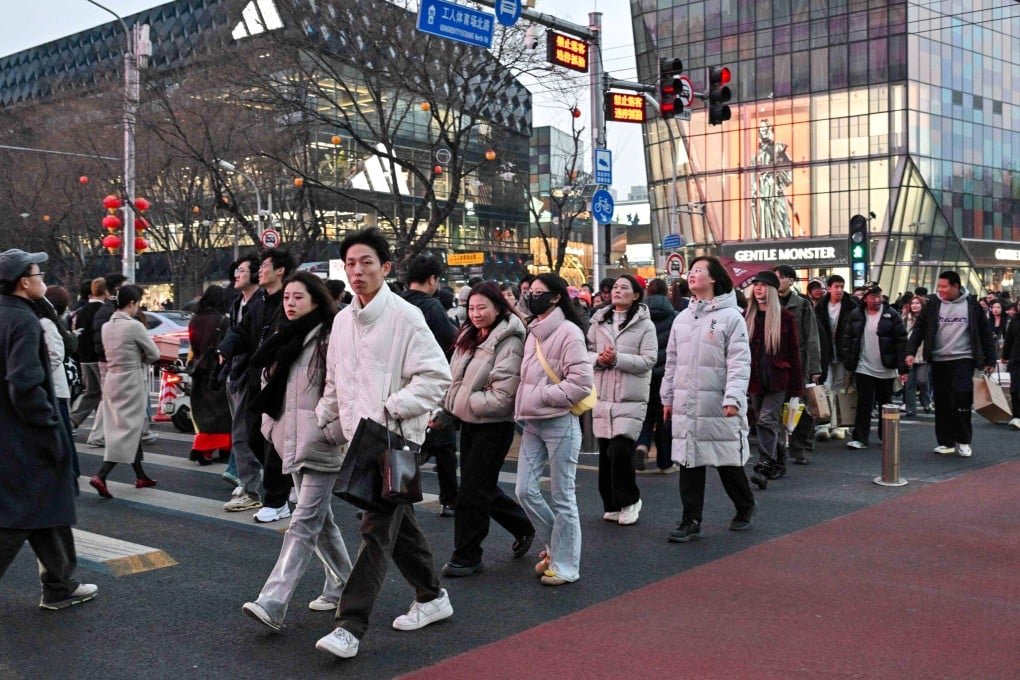
For decades, the country relied on a massive working-age population to power industrial expansion, manufacturing dominance, urban construction and export growth.
That labour advantage helped transform China into the world’s largest manufacturing economy.
That model is now weakening rapidly.
The working-age population continues shrinking while the number of retirees requiring pensions, healthcare and elderly care keeps rising.
Official data showed the share of people aged fifteen to fifty-nine declined significantly over the past decade.
This creates what economists call a dependency-ratio problem.
A smaller workforce must support a growing retired population through taxes, pension contributions and family care.
The pressure becomes especially severe in a country where social welfare systems remain uneven and family support traditionally carried much of the burden.
The traditional Chinese eldercare model depended heavily on large multigenerational families.
That structure was already weakened by decades of the one-child policy, which restricted births for much of the population from nineteen seventy-nine until its gradual dismantling beginning in two thousand fifteen.
The long-term consequence is now visible.
Millions of younger adults face the possibility of supporting two parents and four grandparents while raising children of their own.
Demographers increasingly warn this “four-two-one” structure is becoming economically and emotionally unsustainable.
The crisis is deepened by falling birth rates.
Even after China ended the one-child policy and later encouraged larger families, births continued declining.
High housing costs, expensive education, career pressure, weak job security and changing attitudes toward marriage and parenthood all reduced fertility.
Urbanization accelerated the trend.
Younger Chinese increasingly delay marriage, avoid having multiple children or choose not to have children at all.
Women in particular face growing tension between professional advancement and family expectations.
Economic conditions worsened the problem.
China’s property slowdown, youth unemployment pressure and weaker wage growth reduced confidence among younger households already reluctant to take on the financial burden of raising children.
The government now faces a demographic trap.
Authorities need higher birth rates to stabilize long-term population decline, but the underlying economic and social incentives continue discouraging family expansion.
Financial incentives introduced by local governments have produced limited results.
Some provinces and cities offer cash payments, childcare subsidies, tax benefits or housing support for families with children.
But fertility rates remain extremely low by historical standards.
The aging crisis carries major economic implications.
A shrinking workforce can reduce industrial productivity, weaken consumer demand and increase labour shortages in manufacturing, healthcare and social services.
China’s economic model relied heavily on abundant low-cost labour for decades.
That advantage is disappearing.
At the same time, pension obligations are rising rapidly.
China’s state pension system already faces significant regional imbalance.
Wealthier provinces maintain stronger pension reserves while poorer regions struggle with aging populations and declining worker contributions.
Healthcare demand is also increasing sharply.
Older populations require more long-term medical treatment, chronic disease management and elderly care infrastructure.
China’s healthcare system remains heavily concentrated in large urban hospitals while rural elderly populations often have weaker access to services.
The implications extend beyond economics.
Demographic decline increasingly affects national power.
Population aging influences military recruitment, domestic consumption, innovation capacity, housing demand and long-term geopolitical competitiveness.
China’s leadership openly recognizes demographics as a strategic issue.
President Xi Jinping’s government increasingly links population policy to national rejuvenation, economic security and long-term stability.
But reversing demographic decline is extremely difficult once fertility rates collapse below replacement level for extended periods.
Japan and South Korea demonstrate the challenge.
Both countries spent decades attempting to encourage births through subsidies and social programs with limited success.
China now appears to be entering a similar trajectory, but on a much larger scale because of its population size.
The demographic transition is also reshaping global economics.
China’s role as the world’s manufacturing center depended partly on its vast labour pool.
Rising wages and shrinking worker numbers are already pushing some industries toward automation, robotics and overseas production relocation into Southeast Asia and South Asia.
This transformation affects global supply chains.
Countries including Vietnam, India, Indonesia and Mexico increasingly attract manufacturing investment previously concentrated in China.
Automation may partially offset labour shortages, but it cannot fully solve the fiscal and social pressures created by rapid aging.
The political implications are equally important.
An aging society often becomes more economically cautious, less consumption-driven and more dependent on state support systems.
Governments facing demographic decline also tend to confront rising healthcare costs, pension strain and slower economic expansion simultaneously.
China therefore faces a structural challenge rather than a temporary demographic imbalance.
The country is aging before reaching the income levels historically associated with wealthy aging societies in Europe or North America.
That means Beijing must manage shrinking labour supply, rising social costs and slowing growth at the same time it is attempting to compete technologically and geopolitically with the United States.
The demographic reversal revealed by the latest survey confirms that China has entered a new historical phase in which population aging is no longer a future concern but an active force reshaping the country’s economy, social structure and long-term development trajectory.
For the first time since the founding of the People’s Republic in nineteen forty-nine, China now has more people aged sixty-five and older than children under fourteen.
The shift marks a historic turning point for the world’s second-largest economy and intensifies pressure on a social and economic system already struggling with slowing growth, weak consumer confidence and rising fiscal stress.
What is confirmed is that official survey data released by China’s National Bureau of Statistics showed people aged sixty-five and above accounted for fifteen point eight seven percent of the population by late last year, exceeding the fifteen point two five percent share represented by children aged zero to fourteen.
The figures came from a nationwide one-percent population sample survey covering more than twenty million people.
The numbers matter because they confirm that China has entered a phase of demographic inversion.
For decades, the country relied on a massive working-age population to power industrial expansion, manufacturing dominance, urban construction and export growth.
That labour advantage helped transform China into the world’s largest manufacturing economy.
That model is now weakening rapidly.
The working-age population continues shrinking while the number of retirees requiring pensions, healthcare and elderly care keeps rising.
Official data showed the share of people aged fifteen to fifty-nine declined significantly over the past decade.
This creates what economists call a dependency-ratio problem.
A smaller workforce must support a growing retired population through taxes, pension contributions and family care.
The pressure becomes especially severe in a country where social welfare systems remain uneven and family support traditionally carried much of the burden.
The traditional Chinese eldercare model depended heavily on large multigenerational families.
That structure was already weakened by decades of the one-child policy, which restricted births for much of the population from nineteen seventy-nine until its gradual dismantling beginning in two thousand fifteen.
The long-term consequence is now visible.
Millions of younger adults face the possibility of supporting two parents and four grandparents while raising children of their own.
Demographers increasingly warn this “four-two-one” structure is becoming economically and emotionally unsustainable.
The crisis is deepened by falling birth rates.
Even after China ended the one-child policy and later encouraged larger families, births continued declining.
High housing costs, expensive education, career pressure, weak job security and changing attitudes toward marriage and parenthood all reduced fertility.
Urbanization accelerated the trend.
Younger Chinese increasingly delay marriage, avoid having multiple children or choose not to have children at all.
Women in particular face growing tension between professional advancement and family expectations.
Economic conditions worsened the problem.
China’s property slowdown, youth unemployment pressure and weaker wage growth reduced confidence among younger households already reluctant to take on the financial burden of raising children.
The government now faces a demographic trap.
Authorities need higher birth rates to stabilize long-term population decline, but the underlying economic and social incentives continue discouraging family expansion.
Financial incentives introduced by local governments have produced limited results.
Some provinces and cities offer cash payments, childcare subsidies, tax benefits or housing support for families with children.
But fertility rates remain extremely low by historical standards.
The aging crisis carries major economic implications.
A shrinking workforce can reduce industrial productivity, weaken consumer demand and increase labour shortages in manufacturing, healthcare and social services.
China’s economic model relied heavily on abundant low-cost labour for decades.
That advantage is disappearing.
At the same time, pension obligations are rising rapidly.
China’s state pension system already faces significant regional imbalance.
Wealthier provinces maintain stronger pension reserves while poorer regions struggle with aging populations and declining worker contributions.
Healthcare demand is also increasing sharply.
Older populations require more long-term medical treatment, chronic disease management and elderly care infrastructure.
China’s healthcare system remains heavily concentrated in large urban hospitals while rural elderly populations often have weaker access to services.
The implications extend beyond economics.
Demographic decline increasingly affects national power.
Population aging influences military recruitment, domestic consumption, innovation capacity, housing demand and long-term geopolitical competitiveness.
China’s leadership openly recognizes demographics as a strategic issue.
President Xi Jinping’s government increasingly links population policy to national rejuvenation, economic security and long-term stability.
But reversing demographic decline is extremely difficult once fertility rates collapse below replacement level for extended periods.
Japan and South Korea demonstrate the challenge.
Both countries spent decades attempting to encourage births through subsidies and social programs with limited success.
China now appears to be entering a similar trajectory, but on a much larger scale because of its population size.
The demographic transition is also reshaping global economics.
China’s role as the world’s manufacturing center depended partly on its vast labour pool.
Rising wages and shrinking worker numbers are already pushing some industries toward automation, robotics and overseas production relocation into Southeast Asia and South Asia.
This transformation affects global supply chains.
Countries including Vietnam, India, Indonesia and Mexico increasingly attract manufacturing investment previously concentrated in China.
Automation may partially offset labour shortages, but it cannot fully solve the fiscal and social pressures created by rapid aging.
The political implications are equally important.
An aging society often becomes more economically cautious, less consumption-driven and more dependent on state support systems.
Governments facing demographic decline also tend to confront rising healthcare costs, pension strain and slower economic expansion simultaneously.
China therefore faces a structural challenge rather than a temporary demographic imbalance.
The country is aging before reaching the income levels historically associated with wealthy aging societies in Europe or North America.
That means Beijing must manage shrinking labour supply, rising social costs and slowing growth at the same time it is attempting to compete technologically and geopolitically with the United States.
The demographic reversal revealed by the latest survey confirms that China has entered a new historical phase in which population aging is no longer a future concern but an active force reshaping the country’s economy, social structure and long-term development trajectory.