The state-owned manufacturer’s aggressive expansion strategy reflects a broader shift in China’s electric vehicle industry as competition moves beyond price and battery technology toward branding, global identity and consumer experience.
China’s automotive transformation is fundamentally system-driven because the rise of companies such as Changan Automobile is being powered by structural shifts in electric vehicle technology, global supply chains, industrial policy and changing consumer expectations rather than by a single product cycle.
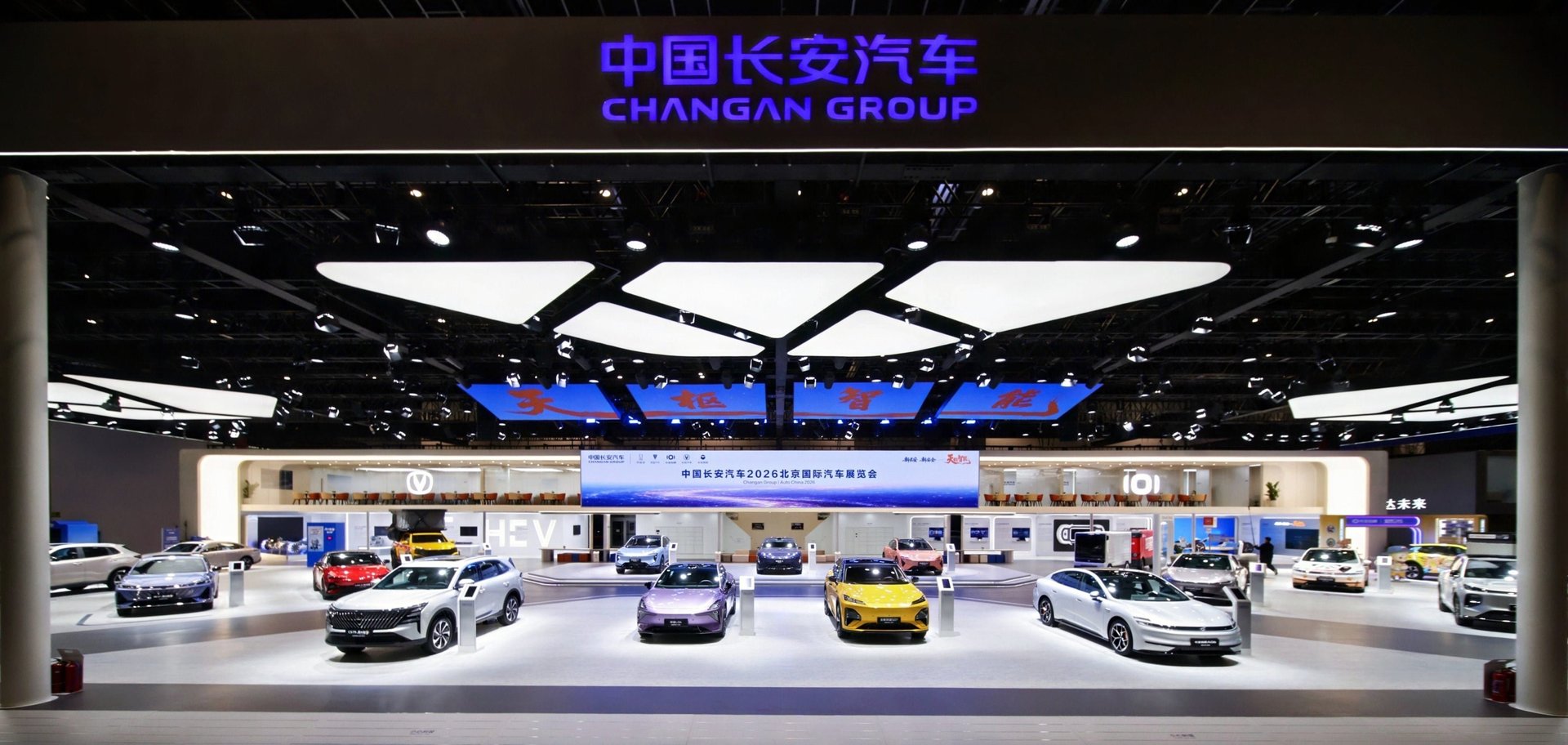
Changan Automobile, one of China’s oldest and largest state-owned carmakers, is attempting to reposition itself from a traditional domestic manufacturer into a globally recognized mobility brand centered on design, software integration and electric vehicle technology.
The company’s strategy reflects a larger change underway across China’s automotive sector as Chinese firms attempt to move beyond low-cost manufacturing and compete directly against established global brands on identity, innovation and emotional appeal.
What is confirmed is that Changan sold more than two point nine million vehicles last year, including over one point one million new energy vehicles, making it one of China’s fastest-growing large automotive groups.
The company exports vehicles to more than one hundred countries and regions and is aggressively expanding its overseas presence through a long-term strategy aimed at becoming one of the world’s top ten automakers by the end of the decade.
The key issue is that electric vehicles are changing the basis of automotive competition.
For decades, global car manufacturing was dominated by mechanical engineering advantages involving engines, transmissions and industrial scale.
Companies such as Toyota, Volkswagen, General Motors and BMW built global reputations around manufacturing quality, reliability and combustion-engine expertise.
Electric vehicles disrupt that model.
Battery systems, software platforms, digital interfaces and intelligent driving technologies increasingly define product differentiation.
As underlying electric architectures become more standardized, automakers face pressure to distinguish themselves through design, branding, user experience and ecosystem integration.
That is where Changan is concentrating its strategy.
The company increasingly frames itself not as a traditional industrial manufacturer but as a technology and mobility company focused on intelligent and low-carbon transportation.
Executives argue that design has become the core of brand identity in the electric vehicle era because consumers increasingly make purchasing decisions based on emotional connection, lifestyle projection and digital experience rather than mechanical specifications alone.
This marks a major cultural shift inside China’s automotive industry.
Chinese carmakers historically competed heavily on price and rapid manufacturing scale.
Many foreign consumers viewed Chinese brands as technologically improving but still lacking premium global identity.
That perception is now changing.
Chinese electric vehicle companies increasingly invest in international design talent, global research centers, advanced software ecosystems and premium branding strategies aimed at competing directly with Western, Japanese and South Korean manufacturers.
Changan’s hiring of Klaus Zyciora, the former Volkswagen Group design executive responsible for several major European vehicle programs, illustrates this transition.
The company now employs nearly one thousand design specialists from dozens of countries across studios in Europe, Asia and North America.
The objective is not only visual appeal.
Modern automotive design increasingly integrates aerodynamics, battery efficiency, software interaction, lighting systems, cabin experience and digital personalization into a unified brand language.
Electric vehicles allow more design flexibility because they do not require the same mechanical layouts as combustion-engine cars.
Chinese companies are moving aggressively to exploit that advantage.
The market pressure driving this strategy is intense.
China’s electric vehicle industry became one of the most competitive industrial sectors in the world.
Price wars, overcapacity concerns and rapid product turnover forced companies to differentiate themselves beyond basic hardware.
Dozens of Chinese electric vehicle brands are competing simultaneously across luxury, family, performance and urban mobility segments.
Companies that fail to establish recognizable identities risk disappearing.
Changan’s different sub-brands demonstrate this segmentation strategy.
Deepal targets younger technology-focused consumers with minimalist sport utility vehicle designs and digitally integrated interiors.
Nevo is aimed more heavily at family buyers seeking comfort and practical electric mobility.
Avatr positions itself in the premium luxury segment with high-end design language and exclusivity-focused branding.
This mirrors broader global trends.
Automakers increasingly operate portfolios of lifestyle-oriented brands rather than selling vehicles purely as transportation products.
The car itself is becoming part of a broader digital consumer ecosystem involving software services, artificial intelligence integration, connected infrastructure and subscription-based features.
The expansion strategy also reflects China’s industrial ambitions.
Beijing views electric vehicles as one of the country’s most strategically important manufacturing sectors.
Chinese companies now dominate large portions of the global battery supply chain, electric drivetrain production and critical mineral processing.
Government subsidies, infrastructure investment and industrial policy helped create enormous domestic scale.
Now Chinese manufacturers are exporting that scale internationally.
Changan’s overseas ambitions form part of a wider Chinese automotive push into Europe, Southeast Asia, Latin America, the Middle East and parts of Africa.
The company’s Vast Ocean Plan and newer strategic framework aim to expand overseas manufacturing, local partnerships and region-specific product adaptation.
This matters because global automotive competition is entering a new phase.
Chinese brands are no longer content with exporting inexpensive vehicles.
They increasingly want long-term market share, local production ecosystems and globally recognized brands.
The challenge is substantial.
Western and Japanese automakers still maintain stronger dealership networks, consumer trust, regulatory experience and premium-brand recognition across many markets.
Political scrutiny of Chinese technology companies is also increasing in several regions, especially involving data security, industrial subsidies and strategic supply-chain dependence.
The European Union has already moved toward tariffs and investigations targeting Chinese electric vehicle imports, arguing that state support may distort competition.
The United States market remains even more politically restricted because of trade barriers and national security concerns.
That means Chinese firms may focus more aggressively on emerging markets and strategically important middle-income economies.
Changan’s strategy emphasizes localization partly to address those challenges.
The company says it intends to adapt vehicles for local climate conditions, regulations, road systems and consumer preferences rather than simply exporting standardized Chinese models.
This reflects lessons learned from Japanese and Korean automakers during earlier waves of global expansion.
Manufacturing scale alone is insufficient for long-term international success.
Brand trust, service networks, software reliability, financing systems and local consumer familiarity ultimately determine whether foreign automakers become permanent market leaders.
The timing is also important.
Global automotive power is being reorganized around electrification and software-defined vehicles.
Traditional manufacturers are still restructuring legacy combustion-engine operations while Chinese firms benefit from entering the electric transition with fewer legacy burdens.
This gives companies like Changan room to expand aggressively before global market positions stabilize.
The company’s long-term targets are highly ambitious.
Changan aims for major increases in overseas sales, electric vehicle output and total revenue by twenty thirty while attempting to establish itself among the world’s most influential automotive brands.
Whether it succeeds will depend not only on production volume but on whether consumers outside China ultimately accept Chinese brands as desirable global identities rather than simply cost-effective alternatives.
The broader reality is that the global automotive industry is no longer defined only by engineering and manufacturing.
It is increasingly being shaped by software ecosystems, digital experience, design psychology and geopolitical industrial competition.
Changan’s expansion strategy shows how Chinese automakers are attempting to compete on all of those fronts simultaneously as the center of gravity in the global car industry shifts steadily toward electric and intelligent mobility systems.
Changan Automobile, one of China’s oldest and largest state-owned carmakers, is attempting to reposition itself from a traditional domestic manufacturer into a globally recognized mobility brand centered on design, software integration and electric vehicle technology.
The company’s strategy reflects a larger change underway across China’s automotive sector as Chinese firms attempt to move beyond low-cost manufacturing and compete directly against established global brands on identity, innovation and emotional appeal.
What is confirmed is that Changan sold more than two point nine million vehicles last year, including over one point one million new energy vehicles, making it one of China’s fastest-growing large automotive groups.
The company exports vehicles to more than one hundred countries and regions and is aggressively expanding its overseas presence through a long-term strategy aimed at becoming one of the world’s top ten automakers by the end of the decade.
The key issue is that electric vehicles are changing the basis of automotive competition.
For decades, global car manufacturing was dominated by mechanical engineering advantages involving engines, transmissions and industrial scale.
Companies such as Toyota, Volkswagen, General Motors and BMW built global reputations around manufacturing quality, reliability and combustion-engine expertise.
Electric vehicles disrupt that model.
Battery systems, software platforms, digital interfaces and intelligent driving technologies increasingly define product differentiation.
As underlying electric architectures become more standardized, automakers face pressure to distinguish themselves through design, branding, user experience and ecosystem integration.
That is where Changan is concentrating its strategy.
The company increasingly frames itself not as a traditional industrial manufacturer but as a technology and mobility company focused on intelligent and low-carbon transportation.
Executives argue that design has become the core of brand identity in the electric vehicle era because consumers increasingly make purchasing decisions based on emotional connection, lifestyle projection and digital experience rather than mechanical specifications alone.
This marks a major cultural shift inside China’s automotive industry.
Chinese carmakers historically competed heavily on price and rapid manufacturing scale.
Many foreign consumers viewed Chinese brands as technologically improving but still lacking premium global identity.
That perception is now changing.
Chinese electric vehicle companies increasingly invest in international design talent, global research centers, advanced software ecosystems and premium branding strategies aimed at competing directly with Western, Japanese and South Korean manufacturers.
Changan’s hiring of Klaus Zyciora, the former Volkswagen Group design executive responsible for several major European vehicle programs, illustrates this transition.
The company now employs nearly one thousand design specialists from dozens of countries across studios in Europe, Asia and North America.
The objective is not only visual appeal.
Modern automotive design increasingly integrates aerodynamics, battery efficiency, software interaction, lighting systems, cabin experience and digital personalization into a unified brand language.
Electric vehicles allow more design flexibility because they do not require the same mechanical layouts as combustion-engine cars.
Chinese companies are moving aggressively to exploit that advantage.
The market pressure driving this strategy is intense.
China’s electric vehicle industry became one of the most competitive industrial sectors in the world.
Price wars, overcapacity concerns and rapid product turnover forced companies to differentiate themselves beyond basic hardware.
Dozens of Chinese electric vehicle brands are competing simultaneously across luxury, family, performance and urban mobility segments.
Companies that fail to establish recognizable identities risk disappearing.
Changan’s different sub-brands demonstrate this segmentation strategy.
Deepal targets younger technology-focused consumers with minimalist sport utility vehicle designs and digitally integrated interiors.
Nevo is aimed more heavily at family buyers seeking comfort and practical electric mobility.
Avatr positions itself in the premium luxury segment with high-end design language and exclusivity-focused branding.
This mirrors broader global trends.
Automakers increasingly operate portfolios of lifestyle-oriented brands rather than selling vehicles purely as transportation products.
The car itself is becoming part of a broader digital consumer ecosystem involving software services, artificial intelligence integration, connected infrastructure and subscription-based features.
The expansion strategy also reflects China’s industrial ambitions.
Beijing views electric vehicles as one of the country’s most strategically important manufacturing sectors.
Chinese companies now dominate large portions of the global battery supply chain, electric drivetrain production and critical mineral processing.
Government subsidies, infrastructure investment and industrial policy helped create enormous domestic scale.
Now Chinese manufacturers are exporting that scale internationally.
Changan’s overseas ambitions form part of a wider Chinese automotive push into Europe, Southeast Asia, Latin America, the Middle East and parts of Africa.
The company’s Vast Ocean Plan and newer strategic framework aim to expand overseas manufacturing, local partnerships and region-specific product adaptation.
This matters because global automotive competition is entering a new phase.
Chinese brands are no longer content with exporting inexpensive vehicles.
They increasingly want long-term market share, local production ecosystems and globally recognized brands.
The challenge is substantial.
Western and Japanese automakers still maintain stronger dealership networks, consumer trust, regulatory experience and premium-brand recognition across many markets.
Political scrutiny of Chinese technology companies is also increasing in several regions, especially involving data security, industrial subsidies and strategic supply-chain dependence.
The European Union has already moved toward tariffs and investigations targeting Chinese electric vehicle imports, arguing that state support may distort competition.
The United States market remains even more politically restricted because of trade barriers and national security concerns.
That means Chinese firms may focus more aggressively on emerging markets and strategically important middle-income economies.
Changan’s strategy emphasizes localization partly to address those challenges.
The company says it intends to adapt vehicles for local climate conditions, regulations, road systems and consumer preferences rather than simply exporting standardized Chinese models.
This reflects lessons learned from Japanese and Korean automakers during earlier waves of global expansion.
Manufacturing scale alone is insufficient for long-term international success.
Brand trust, service networks, software reliability, financing systems and local consumer familiarity ultimately determine whether foreign automakers become permanent market leaders.
The timing is also important.
Global automotive power is being reorganized around electrification and software-defined vehicles.
Traditional manufacturers are still restructuring legacy combustion-engine operations while Chinese firms benefit from entering the electric transition with fewer legacy burdens.
This gives companies like Changan room to expand aggressively before global market positions stabilize.
The company’s long-term targets are highly ambitious.
Changan aims for major increases in overseas sales, electric vehicle output and total revenue by twenty thirty while attempting to establish itself among the world’s most influential automotive brands.
Whether it succeeds will depend not only on production volume but on whether consumers outside China ultimately accept Chinese brands as desirable global identities rather than simply cost-effective alternatives.
The broader reality is that the global automotive industry is no longer defined only by engineering and manufacturing.
It is increasingly being shaped by software ecosystems, digital experience, design psychology and geopolitical industrial competition.
Changan’s expansion strategy shows how Chinese automakers are attempting to compete on all of those fronts simultaneously as the center of gravity in the global car industry shifts steadily toward electric and intelligent mobility systems.