The planned positioning of America’s Typhon missile system in southern Japan reflects a major shift in Indo-Pacific military strategy as Washington and Tokyo prepare for possible conflict scenarios involving Taiwan, China’s coastline and critical naval access routes.
The deployment of the United States Typhon missile system to Japan is fundamentally system-driven because the move is part of a wider restructuring of American and allied military posture across the Indo-Pacific designed to counter China’s expanding missile, naval and anti-access capabilities.
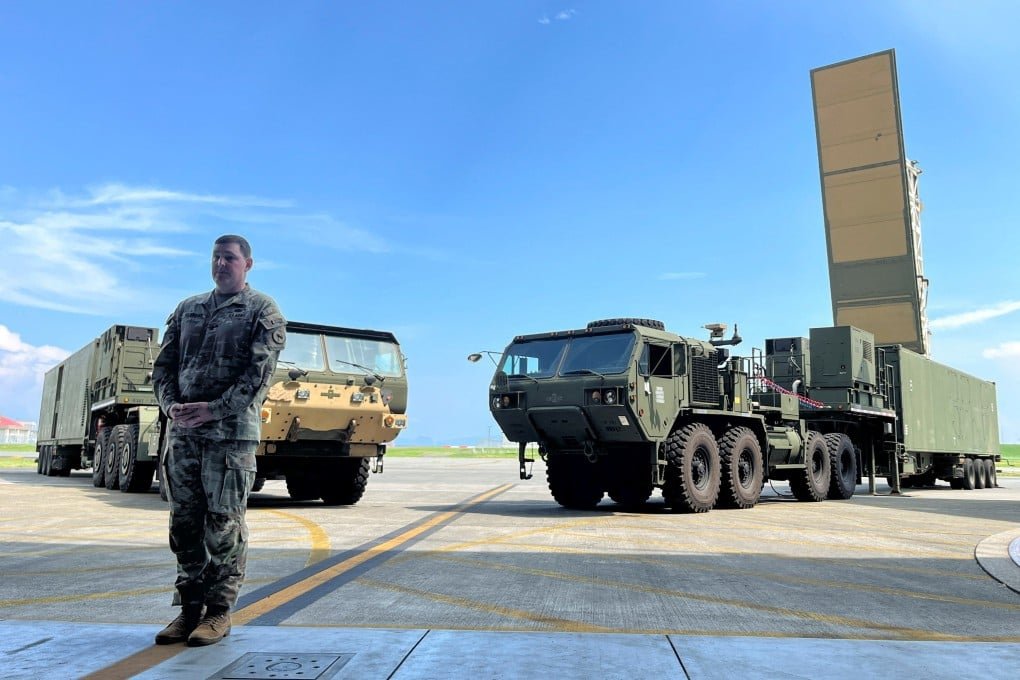
The United States plans to deploy the Typhon mid-range missile system to southwestern Japan for joint military exercises with Japanese forces, a step that immediately intensified Chinese security concerns because of the system’s potential reach into China’s eastern seaboard and major maritime corridors.
What is confirmed is that the Typhon launcher system, developed by the US Army, is expected to participate in exercises in Japan’s southwest island chain, including areas geographically close to the East China Sea and Taiwan.
Reports identified Kanoya Airbase in Kagoshima prefecture on Kyushu island as a likely operating location during the deployment period.
The key issue is not the exercises themselves.
The deeper significance lies in what Typhon represents.
The system is part of America’s effort to rebuild land-based missile power in Asia after the collapse of the Intermediate-Range Nuclear Forces Treaty, the Cold War-era agreement that previously restricted many categories of ground-launched missiles.
Once the treaty ended, Washington rapidly accelerated development of mobile missile systems capable of operating across the Pacific.
Typhon became one of the most strategically important outcomes.
The launcher can fire Tomahawk cruise missiles and Standard Missile Six interceptors capable of striking land and maritime targets at long range.
This gives the United States the ability to threaten ships, logistics hubs, radar systems and military infrastructure from dispersed positions across allied territory.
China views this as a direct challenge to its anti-access strategy.
For years, Beijing invested heavily in missile systems, naval expansion and air-defense networks designed to push American forces farther from China’s coastline during a potential regional conflict, especially over Taiwan.
The US response increasingly centers on distributed strike systems positioned across the so-called first island chain stretching from Japan through Taiwan to the Philippines.
Southern Japan is crucial inside that strategy.
The Ryukyu island chain and Kyushu region sit near vital maritime chokepoints linking the East China Sea to the broader Pacific Ocean.
Chinese naval forces moving from coastal waters into the Pacific must pass through narrow routes monitored closely by Japan and the United States.
That geography gives missile deployments enormous strategic importance.
Chinese analysts argue Typhon could threaten coastal military installations, shipping lanes and naval transit corridors if conflict erupted.
From Beijing’s perspective, placing long-range American missiles near the Chinese mainland increases the risk of encirclement and rapid escalation.
At the same time, critics inside China argue the system itself may be vulnerable.
The description of Typhon as a potential “sitting duck” reflects concern that fixed or semi-fixed missile deployments near China could become immediate targets during a crisis.
China possesses one of the world’s largest conventional missile arsenals, including ballistic and hypersonic systems specifically designed to strike forward American and allied military infrastructure.
Japanese bases would likely sit near the top of any target list during a regional war.
That vulnerability is central to the modern Pacific military balance.
Both China and the United States increasingly rely on long-range precision strike systems capable of attacking airbases, ports, logistics centers, radar sites and missile batteries at very high speed.
This creates what military planners describe as a “counterforce” environment in which survivability becomes as important as firepower.
The United States attempts to address this through mobility and dispersion.
Typhon is designed as a mobile launcher rather than a permanently fixed installation.
American strategy increasingly emphasizes rapidly shifting missile units across allied territory to complicate Chinese targeting.
But mobility does not eliminate risk.
China’s surveillance capabilities expanded dramatically over the past decade through satellites, drones, maritime patrol systems, cyber intelligence and long-range reconnaissance assets.
The deployment also reflects Japan’s own military transformation.
Tokyo is steadily abandoning decades of relatively restrained postwar defense policy as concerns over China, North Korea and regional instability intensify.
Japan is increasing defense spending, expanding missile capabilities, strengthening alliance integration with the United States and developing counterstrike capacity capable of hitting enemy launch sites.
This marks one of the most significant changes in Japanese security policy since World War Two.
China strongly opposes this shift.
Beijing argues Japan is moving away from defensive military principles and helping the United States militarize the region.
Chinese officials regularly criticize expanding US-Japan military cooperation, especially around missile defense, island fortification and Taiwan-related contingency planning.
Taiwan sits at the center of the strategic logic.
American planners increasingly assume that any major conflict with China would likely involve Taiwan and spread rapidly across surrounding maritime zones.
The positioning of long-range missile systems throughout Japan and the Philippines is designed partly to complicate Chinese military operations in such a scenario.
The Philippines already hosted a temporary Typhon deployment earlier, triggering strong Chinese objections.
The broader pattern is clear.
The United States is building a regional missile architecture stretching across allied territory while China expands its own missile, naval and aerospace systems to break or deter that containment structure.
This creates a classic escalation cycle.
Each side justifies military expansion as defensive while the other sees it as preparation for offensive operations.
The deployment also carries domestic political consequences inside Japan.
Communities near military bases increasingly worry that deeper alliance integration could make local areas direct military targets.
Concerns over missile deployments, air-defense systems and expanded US military presence remain politically sensitive, especially in southern Japan where American bases are heavily concentrated.
At the same time, public anxiety about Chinese military activity near Taiwan and around the East China Sea has strengthened support for tighter US-Japan security cooperation.
The Indo-Pacific military environment is therefore entering a more dangerous phase.
The region is moving away from the post-Cold War assumption that economic integration alone would stabilize great-power relations.
Instead, governments are increasingly organizing around deterrence, missile reach, logistics resilience and control of strategic maritime corridors.
The practical consequence is that islands and bases once viewed mainly as support infrastructure are becoming central nodes in a highly contested missile battlespace stretching across the western Pacific.
Typhon’s deployment to Japan signals that the United States and its allies are preparing for a future in which long-range land-based missiles, rather than aircraft carriers alone, may define the opening stages of any major conflict in East Asia.
The United States plans to deploy the Typhon mid-range missile system to southwestern Japan for joint military exercises with Japanese forces, a step that immediately intensified Chinese security concerns because of the system’s potential reach into China’s eastern seaboard and major maritime corridors.
What is confirmed is that the Typhon launcher system, developed by the US Army, is expected to participate in exercises in Japan’s southwest island chain, including areas geographically close to the East China Sea and Taiwan.
Reports identified Kanoya Airbase in Kagoshima prefecture on Kyushu island as a likely operating location during the deployment period.
The key issue is not the exercises themselves.
The deeper significance lies in what Typhon represents.
The system is part of America’s effort to rebuild land-based missile power in Asia after the collapse of the Intermediate-Range Nuclear Forces Treaty, the Cold War-era agreement that previously restricted many categories of ground-launched missiles.
Once the treaty ended, Washington rapidly accelerated development of mobile missile systems capable of operating across the Pacific.
Typhon became one of the most strategically important outcomes.
The launcher can fire Tomahawk cruise missiles and Standard Missile Six interceptors capable of striking land and maritime targets at long range.
This gives the United States the ability to threaten ships, logistics hubs, radar systems and military infrastructure from dispersed positions across allied territory.
China views this as a direct challenge to its anti-access strategy.
For years, Beijing invested heavily in missile systems, naval expansion and air-defense networks designed to push American forces farther from China’s coastline during a potential regional conflict, especially over Taiwan.
The US response increasingly centers on distributed strike systems positioned across the so-called first island chain stretching from Japan through Taiwan to the Philippines.
Southern Japan is crucial inside that strategy.
The Ryukyu island chain and Kyushu region sit near vital maritime chokepoints linking the East China Sea to the broader Pacific Ocean.
Chinese naval forces moving from coastal waters into the Pacific must pass through narrow routes monitored closely by Japan and the United States.
That geography gives missile deployments enormous strategic importance.
Chinese analysts argue Typhon could threaten coastal military installations, shipping lanes and naval transit corridors if conflict erupted.
From Beijing’s perspective, placing long-range American missiles near the Chinese mainland increases the risk of encirclement and rapid escalation.
At the same time, critics inside China argue the system itself may be vulnerable.
The description of Typhon as a potential “sitting duck” reflects concern that fixed or semi-fixed missile deployments near China could become immediate targets during a crisis.
China possesses one of the world’s largest conventional missile arsenals, including ballistic and hypersonic systems specifically designed to strike forward American and allied military infrastructure.
Japanese bases would likely sit near the top of any target list during a regional war.
That vulnerability is central to the modern Pacific military balance.
Both China and the United States increasingly rely on long-range precision strike systems capable of attacking airbases, ports, logistics centers, radar sites and missile batteries at very high speed.
This creates what military planners describe as a “counterforce” environment in which survivability becomes as important as firepower.
The United States attempts to address this through mobility and dispersion.
Typhon is designed as a mobile launcher rather than a permanently fixed installation.
American strategy increasingly emphasizes rapidly shifting missile units across allied territory to complicate Chinese targeting.
But mobility does not eliminate risk.
China’s surveillance capabilities expanded dramatically over the past decade through satellites, drones, maritime patrol systems, cyber intelligence and long-range reconnaissance assets.
The deployment also reflects Japan’s own military transformation.
Tokyo is steadily abandoning decades of relatively restrained postwar defense policy as concerns over China, North Korea and regional instability intensify.
Japan is increasing defense spending, expanding missile capabilities, strengthening alliance integration with the United States and developing counterstrike capacity capable of hitting enemy launch sites.
This marks one of the most significant changes in Japanese security policy since World War Two.
China strongly opposes this shift.
Beijing argues Japan is moving away from defensive military principles and helping the United States militarize the region.
Chinese officials regularly criticize expanding US-Japan military cooperation, especially around missile defense, island fortification and Taiwan-related contingency planning.
Taiwan sits at the center of the strategic logic.
American planners increasingly assume that any major conflict with China would likely involve Taiwan and spread rapidly across surrounding maritime zones.
The positioning of long-range missile systems throughout Japan and the Philippines is designed partly to complicate Chinese military operations in such a scenario.
The Philippines already hosted a temporary Typhon deployment earlier, triggering strong Chinese objections.
The broader pattern is clear.
The United States is building a regional missile architecture stretching across allied territory while China expands its own missile, naval and aerospace systems to break or deter that containment structure.
This creates a classic escalation cycle.
Each side justifies military expansion as defensive while the other sees it as preparation for offensive operations.
The deployment also carries domestic political consequences inside Japan.
Communities near military bases increasingly worry that deeper alliance integration could make local areas direct military targets.
Concerns over missile deployments, air-defense systems and expanded US military presence remain politically sensitive, especially in southern Japan where American bases are heavily concentrated.
At the same time, public anxiety about Chinese military activity near Taiwan and around the East China Sea has strengthened support for tighter US-Japan security cooperation.
The Indo-Pacific military environment is therefore entering a more dangerous phase.
The region is moving away from the post-Cold War assumption that economic integration alone would stabilize great-power relations.
Instead, governments are increasingly organizing around deterrence, missile reach, logistics resilience and control of strategic maritime corridors.
The practical consequence is that islands and bases once viewed mainly as support infrastructure are becoming central nodes in a highly contested missile battlespace stretching across the western Pacific.
Typhon’s deployment to Japan signals that the United States and its allies are preparing for a future in which long-range land-based missiles, rather than aircraft carriers alone, may define the opening stages of any major conflict in East Asia.