Record attendance at the Australian Tourism Exchange highlights the rapid recovery of China-Australia travel links as airlines, tour operators and governments push to rebuild one of the region’s most valuable tourism markets.
Tourism Australia’s annual Australian Tourism Exchange, the country’s largest business-to-business tourism event, became this week’s clearest demonstration of how rapidly commercial travel ties between Australia and China are recovering after years of diplomatic tension, border closures and disrupted aviation networks.
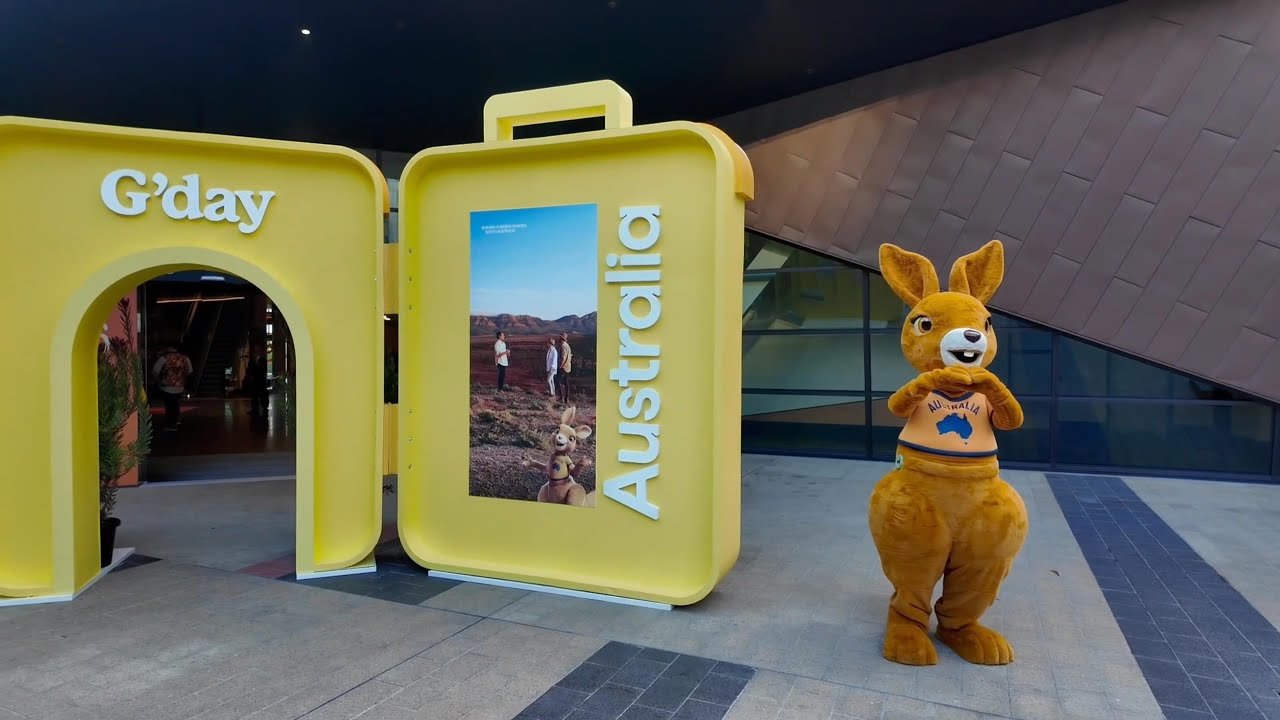
The five-day event in Adelaide brought together hundreds of international buyers, airlines, hotel operators and tourism businesses at a moment when Chinese visitor growth has re-emerged as a central economic priority for the Australian tourism sector.
What is confirmed is that the 2026 Australian Tourism Exchange attracted its largest participation levels in years.
More than 2,700 delegates attended, including roughly 730 international buyers and travel agents from more than 30 countries.
Organisers scheduled tens of thousands of business meetings between overseas travel distributors and Australian tourism operators, reflecting a coordinated effort to rebuild inbound tourism volumes and international route capacity.
The dominant commercial story inside the event was China.
Chinese travel buyers, tour companies and aviation-linked businesses were among the most visible participants.
Tourism officials and operators focused heavily on rebuilding market share from mainland China, which before the pandemic was Australia’s most lucrative inbound tourism market by visitor spending.
The recovery is now becoming measurable in hard numbers rather than promotional language.
In the twelve months to March 2026, arrivals from mainland China to Australia exceeded one million visitors, with annual growth above twenty percent.
Aviation seat capacity between the two countries has also largely recovered to pre-pandemic levels, removing one of the biggest logistical barriers that slowed tourism normalization through 2023 and 2024.
The rebound matters because Chinese tourism has an outsized economic effect on Australia’s visitor economy.
Chinese travellers historically stay longer and spend more per trip than many other visitor groups, supporting airlines, luxury retail, education-linked travel, hotels, casinos, restaurants and regional tourism operators.
Before the pandemic, Chinese visitors contributed billions of dollars annually to the Australian economy.
The mechanics of the recovery are broader than tourism marketing alone.
Diplomatic stabilization between Canberra and Beijing has reduced uncertainty for airlines and travel businesses.
China’s extension of visa-free entry for Australian citizens has lowered friction for outbound Australian tourism to China while also improving the overall travel relationship between the two countries.
Airlines have progressively restored routes suspended during the pandemic and during the deterioration in bilateral political relations.
The tourism rebound is also increasingly two-way.
More Australians are travelling to China again, supported by restored flight capacity, lower administrative barriers and competitive travel pricing.
Industry executives at the Adelaide event described a shift from simple recovery toward expansion into new travel categories, including independent travel, premium small-group tourism and regional experiences.
That shift is strategically important because Chinese outbound tourism behavior has changed since the pandemic.
Large bus-tour groups that once dominated Australian tourism marketing are no longer the only focus.
Australian operators are redesigning products for younger travellers, higher-income visitors and digitally driven consumers who expect flexible itineraries, mobile payment compatibility and tailored experiences.
Tourism operators are also adapting to a more competitive regional market.
Japan, Thailand, Vietnam and Singapore have all aggressively pursued Chinese visitors with easier visa access, expanded airline partnerships and targeted marketing campaigns.
Australia’s geographic distance and relatively high travel costs mean it cannot rely solely on pent-up demand.
The Adelaide event highlighted another major structural reality: tourism has become increasingly tied to geopolitical stability in the Asia-Pacific region.
The recovery in China-Australia travel links follows years of trade disputes, diplomatic freezes and security tensions that affected consumer confidence and business planning.
Tourism executives now view political predictability as an operational necessity rather than a secondary issue.
There are also broader economic stakes inside the recovery narrative.
Australia’s tourism sector still faces labour shortages, rising operating costs and pressure on profitability.
International visitors are critical for sustaining airline economics, hotel occupancy and regional tourism infrastructure.
A stronger Chinese market improves revenue across the sector and helps offset weakness in some long-haul Western markets where travel costs remain elevated.
The Australian Tourism Exchange itself has evolved into more than a networking convention.
It functions as a market signal to airlines, investors and governments about where demand is moving and which bilateral relationships are commercially viable.
The heavy emphasis on China at this year’s event showed that Australian tourism authorities now view renewed engagement with Chinese travellers as central to long-term sector growth.
The immediate next phase is operational rather than symbolic.
Airlines are expected to continue expanding frequencies, tourism operators are investing in Chinese-language services and digital payment systems, and Australian state tourism agencies are competing for a larger share of returning Chinese visitor spending ahead of major international sporting and cultural events scheduled through 2027.
The five-day event in Adelaide brought together hundreds of international buyers, airlines, hotel operators and tourism businesses at a moment when Chinese visitor growth has re-emerged as a central economic priority for the Australian tourism sector.
What is confirmed is that the 2026 Australian Tourism Exchange attracted its largest participation levels in years.
More than 2,700 delegates attended, including roughly 730 international buyers and travel agents from more than 30 countries.
Organisers scheduled tens of thousands of business meetings between overseas travel distributors and Australian tourism operators, reflecting a coordinated effort to rebuild inbound tourism volumes and international route capacity.
The dominant commercial story inside the event was China.
Chinese travel buyers, tour companies and aviation-linked businesses were among the most visible participants.
Tourism officials and operators focused heavily on rebuilding market share from mainland China, which before the pandemic was Australia’s most lucrative inbound tourism market by visitor spending.
The recovery is now becoming measurable in hard numbers rather than promotional language.
In the twelve months to March 2026, arrivals from mainland China to Australia exceeded one million visitors, with annual growth above twenty percent.
Aviation seat capacity between the two countries has also largely recovered to pre-pandemic levels, removing one of the biggest logistical barriers that slowed tourism normalization through 2023 and 2024.
The rebound matters because Chinese tourism has an outsized economic effect on Australia’s visitor economy.
Chinese travellers historically stay longer and spend more per trip than many other visitor groups, supporting airlines, luxury retail, education-linked travel, hotels, casinos, restaurants and regional tourism operators.
Before the pandemic, Chinese visitors contributed billions of dollars annually to the Australian economy.
The mechanics of the recovery are broader than tourism marketing alone.
Diplomatic stabilization between Canberra and Beijing has reduced uncertainty for airlines and travel businesses.
China’s extension of visa-free entry for Australian citizens has lowered friction for outbound Australian tourism to China while also improving the overall travel relationship between the two countries.
Airlines have progressively restored routes suspended during the pandemic and during the deterioration in bilateral political relations.
The tourism rebound is also increasingly two-way.
More Australians are travelling to China again, supported by restored flight capacity, lower administrative barriers and competitive travel pricing.
Industry executives at the Adelaide event described a shift from simple recovery toward expansion into new travel categories, including independent travel, premium small-group tourism and regional experiences.
That shift is strategically important because Chinese outbound tourism behavior has changed since the pandemic.
Large bus-tour groups that once dominated Australian tourism marketing are no longer the only focus.
Australian operators are redesigning products for younger travellers, higher-income visitors and digitally driven consumers who expect flexible itineraries, mobile payment compatibility and tailored experiences.
Tourism operators are also adapting to a more competitive regional market.
Japan, Thailand, Vietnam and Singapore have all aggressively pursued Chinese visitors with easier visa access, expanded airline partnerships and targeted marketing campaigns.
Australia’s geographic distance and relatively high travel costs mean it cannot rely solely on pent-up demand.
The Adelaide event highlighted another major structural reality: tourism has become increasingly tied to geopolitical stability in the Asia-Pacific region.
The recovery in China-Australia travel links follows years of trade disputes, diplomatic freezes and security tensions that affected consumer confidence and business planning.
Tourism executives now view political predictability as an operational necessity rather than a secondary issue.
There are also broader economic stakes inside the recovery narrative.
Australia’s tourism sector still faces labour shortages, rising operating costs and pressure on profitability.
International visitors are critical for sustaining airline economics, hotel occupancy and regional tourism infrastructure.
A stronger Chinese market improves revenue across the sector and helps offset weakness in some long-haul Western markets where travel costs remain elevated.
The Australian Tourism Exchange itself has evolved into more than a networking convention.
It functions as a market signal to airlines, investors and governments about where demand is moving and which bilateral relationships are commercially viable.
The heavy emphasis on China at this year’s event showed that Australian tourism authorities now view renewed engagement with Chinese travellers as central to long-term sector growth.
The immediate next phase is operational rather than symbolic.
Airlines are expected to continue expanding frequencies, tourism operators are investing in Chinese-language services and digital payment systems, and Australian state tourism agencies are competing for a larger share of returning Chinese visitor spending ahead of major international sporting and cultural events scheduled through 2027.