More than 160 sets of artefacts, including rare national treasures, bring Sui and Tang China into focus at the Hong Kong Museum of History in a limited-time cultural showcase
An exhibition opening in Hong Kong is driven by a large-scale cultural exchange effort between mainland heritage authorities and local institutions to present a curated view of China’s Sui and Tang dynasties through original artefacts, many of which are being shown publicly in the city for the first time.
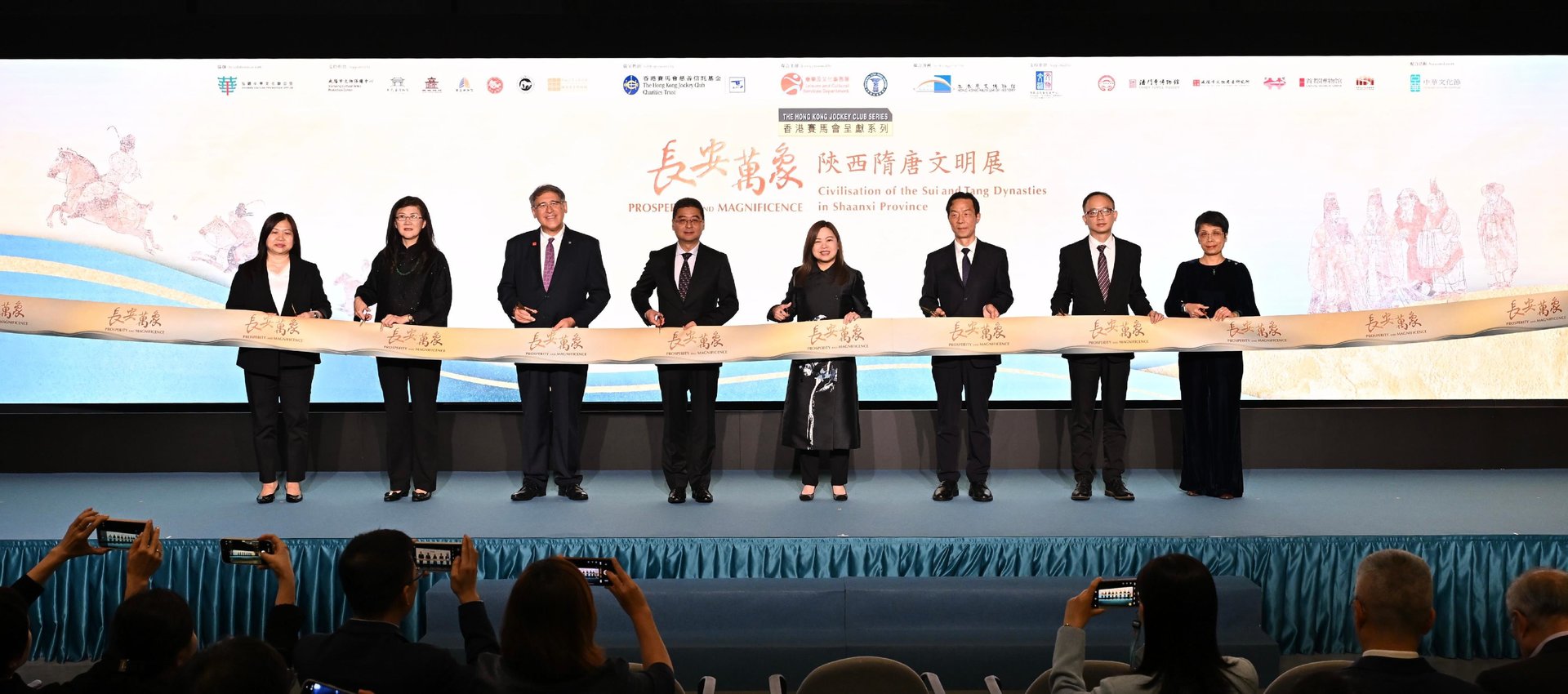
What is confirmed is that the exhibition, titled the Hong Kong Jockey Club Series: Prosperity and Magnificence – Civilisation of the Sui and Tang Dynasties in Shaanxi Province, has opened at the Hong Kong Museum of History and will run for a limited period until late August.
It is jointly organised by Hong Kong cultural authorities and the Shaanxi provincial cultural heritage administration, with full sponsorship support from a major charitable foundation.
Admission is free, making it broadly accessible to the public.
The exhibition brings together more than 165 sets of artefacts drawn from multiple museums and cultural institutions across Shaanxi, one of China’s most historically significant regions.
Among them are 18 nationally classified top-tier relics, reflecting the highest level of archaeological importance under China’s cultural heritage system.
A substantial portion of the items are being exhibited outside mainland China for the first time, increasing the significance of the display from a curatorial and preservation standpoint.
The historical scope of the exhibition spans several centuries, tracing the development from earlier dynastic periods into the Sui and Tang eras, with particular emphasis on the Tang dynasty’s political stability, cultural openness, and technological refinement.
Artefacts on display include finely crafted gold and silver ornaments, figurines, ritual objects, and items associated with court life and equestrian culture, which played a central role in Tang-era governance and military organization.
A defining feature of the exhibition is its integration of artefacts discovered not only in mainland archaeological sites but also in Hong Kong itself.
These local finds, dating back to the same historical period, demonstrate that the territory was already integrated into regional trade and administrative networks during the Tang dynasty, then under the jurisdiction of a southern Chinese county-level system.
The exhibition design extends beyond static displays.
It incorporates multimedia installations, reconstructed historical environments, and interactive elements intended to translate archaeological findings into accessible historical narratives.
These tools are used to explain topics such as imperial governance, cultural exchange along early trade routes, and the social structure of Tang-era society.
The broader significance of the exhibition lies in its role as part of an ongoing institutional strategy to position Hong Kong as a major site for the public presentation of Chinese archaeological heritage.
It follows a pattern of large-scale historical exhibitions in the city that rotate dynastic themes, bringing high-value cultural relics into urban museum spaces where they can be viewed without travel to mainland repositories.
At a practical level, the exhibition consolidates multiple layers of cultural diplomacy, museum collaboration, and public education.
It reinforces Hong Kong’s role as a bridge between mainland cultural institutions and international audiences while increasing public access to artefacts that are typically restricted to controlled museum environments due to their fragility and historical value.
As the exhibition continues through its scheduled run, it effectively turns a major urban museum into a temporary repository of one of China’s most influential historical periods, making Tang-era material culture directly accessible to a broad public audience in Hong Kong.
What is confirmed is that the exhibition, titled the Hong Kong Jockey Club Series: Prosperity and Magnificence – Civilisation of the Sui and Tang Dynasties in Shaanxi Province, has opened at the Hong Kong Museum of History and will run for a limited period until late August.
It is jointly organised by Hong Kong cultural authorities and the Shaanxi provincial cultural heritage administration, with full sponsorship support from a major charitable foundation.
Admission is free, making it broadly accessible to the public.
The exhibition brings together more than 165 sets of artefacts drawn from multiple museums and cultural institutions across Shaanxi, one of China’s most historically significant regions.
Among them are 18 nationally classified top-tier relics, reflecting the highest level of archaeological importance under China’s cultural heritage system.
A substantial portion of the items are being exhibited outside mainland China for the first time, increasing the significance of the display from a curatorial and preservation standpoint.
The historical scope of the exhibition spans several centuries, tracing the development from earlier dynastic periods into the Sui and Tang eras, with particular emphasis on the Tang dynasty’s political stability, cultural openness, and technological refinement.
Artefacts on display include finely crafted gold and silver ornaments, figurines, ritual objects, and items associated with court life and equestrian culture, which played a central role in Tang-era governance and military organization.
A defining feature of the exhibition is its integration of artefacts discovered not only in mainland archaeological sites but also in Hong Kong itself.
These local finds, dating back to the same historical period, demonstrate that the territory was already integrated into regional trade and administrative networks during the Tang dynasty, then under the jurisdiction of a southern Chinese county-level system.
The exhibition design extends beyond static displays.
It incorporates multimedia installations, reconstructed historical environments, and interactive elements intended to translate archaeological findings into accessible historical narratives.
These tools are used to explain topics such as imperial governance, cultural exchange along early trade routes, and the social structure of Tang-era society.
The broader significance of the exhibition lies in its role as part of an ongoing institutional strategy to position Hong Kong as a major site for the public presentation of Chinese archaeological heritage.
It follows a pattern of large-scale historical exhibitions in the city that rotate dynastic themes, bringing high-value cultural relics into urban museum spaces where they can be viewed without travel to mainland repositories.
At a practical level, the exhibition consolidates multiple layers of cultural diplomacy, museum collaboration, and public education.
It reinforces Hong Kong’s role as a bridge between mainland cultural institutions and international audiences while increasing public access to artefacts that are typically restricted to controlled museum environments due to their fragility and historical value.
As the exhibition continues through its scheduled run, it effectively turns a major urban museum into a temporary repository of one of China’s most influential historical periods, making Tang-era material culture directly accessible to a broad public audience in Hong Kong.