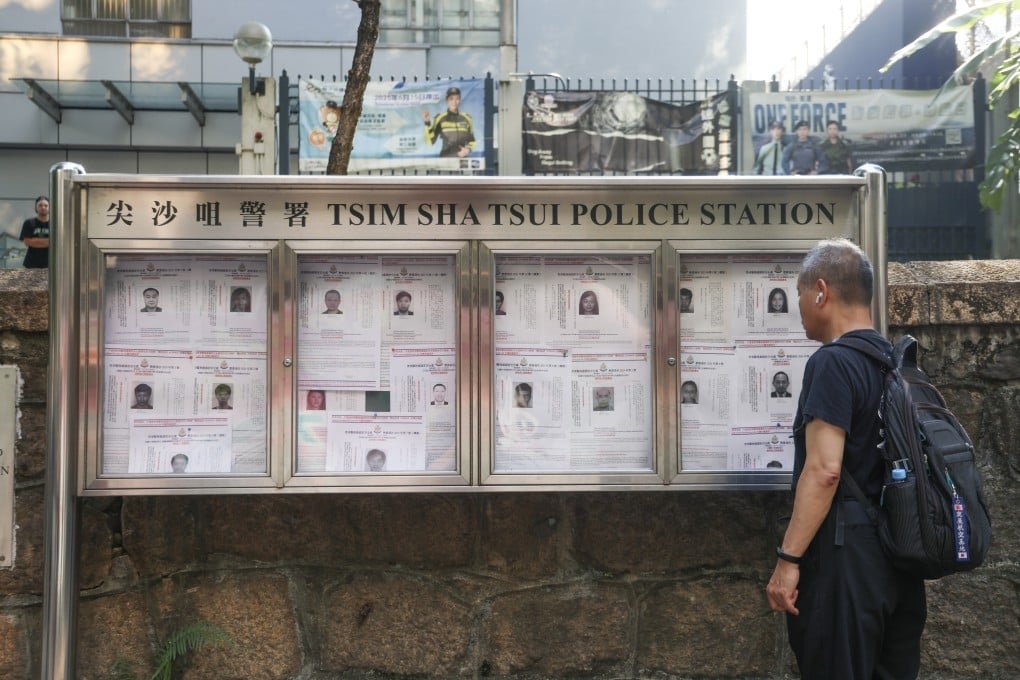
A detained activist linked to an unrecognized pro-democracy group faces possible removal from Thailand, highlighting the reach of Hong Kong’s national security enforcement beyond its borders.
An immigration and security case in Thailand involving a wanted Hong Kong activist is drawing attention to the cross-border reach of enforcement actions tied to Hong Kong’s national security framework and the growing coordination between regional law enforcement agencies.

What is confirmed is that Thai authorities have detained a man identified as a member of the self-styled “Hong Kong Parliament,” an unrecognized overseas pro-democracy organization formed by exiled activists advocating for political reform in Hong Kong.

The individual is reported to be wanted by Hong Kong authorities under allegations related to national security offenses, which typically include accusations such as subversion, secession, or collusion with foreign forces.

Thai immigration authorities are now considering deportation proceedings, a process that would involve assessing both immigration violations and external requests for extradition or removal.

In cases involving politically sensitive charges, such decisions are shaped not only by domestic immigration law but also by diplomatic relations and potential legal risks for the individual if returned to the requesting jurisdiction.

The case reflects an expanding pattern in which individuals associated with Hong Kong’s overseas activist networks face legal and immigration pressure outside China.

Following the implementation of the Hong Kong national security law in 2020, authorities in Hong Kong have issued warrants and bounty notices for activists based abroad, some of whom have subsequently faced restrictions on travel, banking, or residency in third countries.

What is newly emerging in this case is the possibility that Thailand could become a venue for enforcing or aligning with Hong Kong-linked security requests, even though Thailand is not a formal party to Hong Kong’s legal system.

Deportation decisions in such cases are typically governed by Thai immigration law and international cooperation mechanisms, including bilateral agreements and informal law enforcement coordination.

Human rights organizations have repeatedly warned that deportations involving politically charged accusations can expose individuals to prosecution under laws that may carry severe penalties.

Hong Kong authorities, however, maintain that national security offenses are criminal matters unrelated to political expression and should be enforced consistently regardless of where suspects are located.

The “Hong Kong Parliament” itself is not recognized as a legitimate governmental institution by any sovereign state and operates as an advocacy group formed by exiled activists.

Its members have been among those targeted by Hong Kong’s extraterritorial arrest warrants, which extend to individuals accused of organizing or participating in overseas political activities deemed illegal under the national security law.

If Thailand proceeds with deportation, the case would underscore the practical limits of asylum and refuge for activists accused under national security frameworks, particularly in jurisdictions that maintain close security or economic ties with China.

If it does not, it may signal a more cautious approach to politically sensitive extradition requests.

The detained individual remains in Thai custody while authorities review legal and diplomatic considerations that will determine whether he is deported, allowed to remain, or subject to further legal proceedings within Thailand.
How the Global Economy Was Built — and How It Is Breaking Apart

Introduction: Where It All Began

To understand what is happening today in the global economy — we need to go back, to the end of World War II.

Until then, the country that controlled the global economy was Britain.
The British pound sterling was the world’s central currency.

But after the war — Britain collapsed.
And control passed to the United States.

At that moment, a new world order was built:

The dollar became the central currency.
But it had one condition — it was tied to gold.

Meaning:
It could not be printed without limit.
It had a real anchor.

And then came 1971.

The United States detached the dollar from gold.

In a single moment — everything changed.

What Actually Changed

From that moment, the dollar stopped being money backed by something real.

And became money that the United States can print —
as much as it wants,
whenever it wants,
with no real limitation,
and with no real transparency.

And this is not a small change.

This is a change in the rules of the game.

Because from that moment —
the money the entire world uses —
is controlled by one country.


How Globalization Was Built

On this foundation, the world we know was built:

Globalization.

The world began to trade, to produce, to import, to export.
Everything connected.

And the result was real:

More growth
Less poverty
Fewer direct wars

But behind all of this was one mechanism:

Everyone works with the dollar.

A country produces → receives dollars
A country buys → pays in dollars

It looks simple.
It looks fair.

But it was never truly balanced.


The Simple Truth

In simple terms:

The world produces goods, commodities, and services — through hard work, through real effort.

And the United States?
Buys all of it using money it prints itself.

Not in exchange for equivalent real value.
Not in exchange for equal production.

But in exchange for a currency with no real anchor behind it —
a currency that can be expanded without limit and without real transparency.

This creates a situation where the United States does not need to produce in order to consume —
it simply prints in order to buy.

This is an almost unlimited purchasing power —
not based on production, but on control of money.


Where It Breaks

As long as everyone played by the rules — it worked.

But then the United States began using the dollar not just as a tool of trade —
but as a weapon.

Economic sanctions.
Disconnection from the global banking system.
Control over SWIFT.

And a real ability to apply pressure on entire countries —
to cut them off from money, from trade, and from the financial system.

In practice, this makes it possible to paralyze an entire economy —
to bring it to collapse —
without direct war,
without tanks,
and without a formal declaration.

Economic pressure instead of open warfare.

And this is the moment when countries began to understand:

The dollar is not just money.
It is a weapon.

And when money becomes economic terror —
dependence on it becomes an existential risk.


And From Here, the Chain Reaction Begins

Not out of anti-American ideology —
but out of real survival interest.

Countries begin to disconnect from exclusive dependence on the dollar.

To trade with each other directly in local currencies.
To sign direct agreements.
To exchange oil, gas, and commodities — without going through the economic dictatorship the United States created.
To build alternative payment systems — based on real value, not on endless money printing with no backing.

Slowly.
And then quickly.

Every such transaction — no matter how small —
removes another brick from the system.

And it accumulates.

Less use of the dollar —
less demand for the dollar.

Less demand —
less purchasing power for the United States.

And then it is forced to live according to what it produces —
not according to what it prints.

And when fewer use it —
its value begins to erode.

Toward almost zero.

This does not happen in one day.
But it is happening — before our eyes.

And at a certain point —
the direction becomes irreversible.


And When That Happens

The equation flips.

The United States can no longer buy everything it wants
using money it prints.

It has to pay.

With real value.
With products.
With services.
With resources.

That it does not have.

Like any other country.


And this is a dangerous moment.

Because when a superpower loses an advantage —
it does not give it up quietly.


At the same time, the world does not stop.

It reorganizes.

Not according to ideology —
but according to interests.


Three blocs begin to take shape:

The Western bloc —
The United States, Israel, and part of Europe.
A system based on finance, control of systems, and old habits.

The Eastern bloc —
China, Russia, Iran, oil states, Brazil, and resource-rich African countries.
A bloc based on raw materials, energy, and real production.

The Asian bloc —
India, Malaysia, Thailand, Indonesia, Singapore, Vietnam.
They do not choose sides.
They play both sides.
They build independent power.


And the world is changing.

Not in theory.
In reality.


The old order was simple:

One currency.
One system.
One center of power.


The new world looks different:

More blocs.
More interests.
Less dependence.
More friction.


And the foundation is shifting:

Less printed money.
More real value.

Less financial control.
More control over resources.


The dollar does not disappear in one day.

But what sustained it —
is no longer stable.


And the struggle is not just about what will replace it —

but about the refusal of the world to continue financing a country
that lives on money it prints without limit,
instead of paying for goods, products, and services
with goods, products, and services.


And this reality stands in complete contradiction to the image of the strongest economy in the world.

Because a country that appears rich thanks to money it can print endlessly —
may be revealed, at the moment of truth,
as a country whose real purchasing power has eroded to near zero.


And this is not a rare historical precedent.

This is what happened to the currencies of empires that once ruled the world —
until their value eroded:

The Turkish lira,
the Spanish peso,
the Greek drachma,
and many others.


The principle is always the same:

A bubble can keep expanding —
until the pressure inside becomes stronger than the shell that contains it,
or until a single small pin —
is enough to let all the air out.


To save itself from the bankruptcy it is heading toward, the United States must choose:

Either stop using the dollar and the SWIFT system as a weapon —
or begin bringing production back into the United States,
and create real value for the dollar —
instead of the fictional value it relies on today.


Why Utah residents are protesting a massive AI data center project backed by Kevin O’Leary

The sales pitch sounds irresistible.

Artificial intelligence will save the economy.
Protect national security.
Create jobs.
Defeat China.
Usher in a new industrial revolution.

And all America has to sacrifice is its land, water, electricity, silence, ecosystems, and local democracy.

That, increasingly, is the bargain being offered to communities across the United States as the AI industry enters its next phase: the physical conquest of the real world.

Because behind every magical chatbot, every AI-generated image, every synthetic voice and trillion-dollar valuation lies a brutally physical reality:

AI runs on concrete, steel, turbines, pipelines, substations, cooling systems, and vast warehouses of machines that consume staggering amounts of energy.

And now that industrial machine is arriving in rural America.

Fast.


Welcome to the New Industrial Empire

The latest battleground sits in northwestern Utah, near the fragile shores of the shrinking Great Salt Lake.

There, developers backed by Kevin O'Leary — famous to millions from Shark Tank — want to build one of the largest AI infrastructure projects on Earth.

The proposal is staggering in scale:

  • A 40,000-acre AI mega-campus
  • A 9-gigawatt data center complex
  • A massive natural gas power plant
  • Potentially over $100 billion in long-term investment
  • Thousands of temporary construction jobs
  • Thousands of permanent positions
  • Enough computing capacity to help power the future AI economy

Nine gigawatts.

To understand the scale, that is not merely “large.”

That is civilization-scale infrastructure.

The project’s projected energy demand exceeds what many nations consume.

And it is being proposed in a region already struggling with drought, environmental instability, and the ecological collapse of one of America’s most important inland ecosystems.

This is not just another tech campus.

It is the arrival of the AI industrial age.


Silicon Valley’s Dirty Secret: AI Is Physical

For years, the technology industry carefully marketed AI as something weightless.

Clouds.
Apps.
Algorithms.
Virtual assistants.

The branding was deliberate.

Because the truth is far uglier.

AI is not floating in the sky.
It is anchored to gigantic physical infrastructure that devours resources at historic scales.

Every AI query burns electricity.

Every generated image consumes compute power.

Every chatbot conversation travels through massive server farms running day and night inside warehouse-sized facilities that require endless cooling and industrial energy systems.

The public spent years imagining AI as software.

But AI is rapidly becoming one of the most resource-hungry industries humanity has ever built.

And unlike social media or smartphone apps, this transformation cannot hide inside screens.

Eventually, the factories must appear somewhere.

Now they are appearing in rural communities that never asked to become the engine room of the AI economy.


The Revolt Against the Machine Has Begun

Residents across Box Elder County are not merely protesting a construction project.

They are rebelling against a feeling that has become increasingly common in the AI era:

That ordinary people no longer have meaningful control over the technological systems reshaping their lives.

Community members say the project moved too quickly.
That environmental reviews remain insufficient.
That the scale is incomprehensible.
That promises are vague.
That decisions are being made before the public truly understands the consequences.

And perhaps most importantly:

That billionaires and politicians seem far more interested in winning the AI race than listening to the people who must live beside its infrastructure.

Signs at public meetings captured the mood perfectly:

“Don’t sell us out.”

“Streams over streaming.”

Those are not merely slogans.

They are warnings.


The Great Salt Lake Is Already Dying

The proposed site sits near one of America’s most environmentally stressed regions.

The Great Salt Lake has been shrinking for years due to drought, water diversion, and climate pressures. Scientists have repeatedly warned that continued decline could unleash catastrophic ecological and public health consequences.

As lakebeds dry, toxic dust containing arsenic and heavy metals can spread into nearby communities through windstorms.

Migratory bird habitats are already under pressure.

Water scarcity already defines life across the American West.

And now comes an AI project requiring extraordinary amounts of energy and cooling infrastructure.

Developers insist new technologies will minimize water usage and improve efficiency. They promise regulatory compliance and economic benefits.

Residents are unconvinced.

Because modern tech history has taught communities a painful lesson:

Corporations frequently promise minimal disruption before construction begins.

The true costs often emerge later.


“National Security” Has Become Silicon Valley’s Master Key

Perhaps the most revealing aspect of the Utah battle is the language being used to justify it.

AI executives and political leaders increasingly frame AI infrastructure not merely as business development — but as patriotic necessity.

Build the data centers.
Build the power plants.
Build the AI superstructure.

Or China wins.

This framing is powerful because it transforms criticism into perceived disloyalty.

Question the environmental impact?
You risk “falling behind.”

Ask for slower development?
You are “hurting innovation.”

Demand public oversight?
You are obstructing America’s future.

This is how technological races historically accelerate:

Fear becomes fuel.

And once industries successfully attach themselves to national security narratives, resistance becomes vastly more difficult.

The AI industry understands this perfectly.


The New Colonialism Is Digital

What is unfolding in Utah reflects something much larger happening across America.

Rural communities are increasingly being treated as extraction zones for the digital economy.

Not for oil.
Not for coal.
Not for timber.

For computation.

Cheap land.
Political flexibility.
Sparse populations.
Access to power infrastructure.

The logic resembles earlier industrial booms throughout American history — except now the extraction target is electricity, water, and physical space itself.

The profits flow upward into technology firms, investors, and AI giants.

The environmental burden stays local.

And many residents increasingly feel they are being asked to sacrifice their landscapes so urban tech economies can generate faster chatbots, more synthetic content, and larger AI profits.

That resentment is growing nationwide.


AI’s Energy Appetite May Become Its Greatest Weakness

For all the excitement surrounding artificial intelligence, the industry faces an uncomfortable physical limitation:

Energy.

The future of AI may depend less on software breakthroughs and more on whether societies can actually power the infrastructure required to sustain it.

Data centers already consume enormous portions of electrical grids. Utilities across the United States are scrambling to prepare for unprecedented future demand.

Some experts now warn AI could become one of the defining energy challenges of the 21st century.

Which creates a disturbing possibility:

The AI boom may collide headfirst with climate realities.

The same industry promising to optimize humanity could simultaneously accelerate resource consumption on a historic scale.

And communities like those in Utah may become the first places forced to confront that contradiction directly.


The Real Question Nobody Can Answer

The debate in Utah is not ultimately about one data center.

It is about consent.

Who gets to decide what the future looks like?

Tech executives?
Investors?
Governors?
Federal agencies?
Billionaires?
Or the communities whose land, water, and air will absorb the consequences?

Because once projects of this scale are built, they do not simply disappear.

They redefine regions for generations.

The people protesting in Utah understand something the broader public is only beginning to realize:

Artificial intelligence is no longer just a software story.

It is becoming a land story.
An energy story.
A climate story.
A democracy story.

And America may soon discover that the real cost of AI is not measured in dollars.

But in what communities are willing to surrender in order to power it.

For years, Silicon Valley told the world that artificial intelligence would help humanity write emails faster, summarize meetings, generate prettier presentations, and recommend better restaurants. Now the masks are coming off. The real race was never about productivity apps. It was about war.

In a move that should alarm anyone paying attention to the collision between Big Tech, artificial intelligence, and military power, the United States Department of Defense has signed sweeping AI agreements with eight of the most powerful technology companies on Earth.

The message is unmistakable:

America is no longer experimenting with military AI.

It is operationalizing it.

And the companies building the future of consumer technology are now deeply embedded in the machinery of modern warfare.


The New Military-Industrial Complex Is Digital

The companies now tied into the Pentagon’s classified AI infrastructure read like a list of modern technological empires:

  • OpenAI
  • Google
  • Microsoft
  • Amazon Web Services
  • Oracle
  • Nvidia
  • SpaceX
  • Reflection

Together, these firms already dominate cloud computing, chips, AI models, satellites, communications infrastructure, and large portions of the internet itself.

Now they are becoming the nervous system of America’s military future.

The Pentagon says these systems will support “lawful operational use” and help create an “AI-first fighting force.”

That phrase alone should send chills down the spine of anyone who remembers how every technological arms race in history eventually expanded beyond its original limits.

Because “AI-first fighting force” is not corporate jargon.

It is a declaration that the United States military is restructuring itself around machine intelligence.


The Anthropic Blacklisting Reveals the Real Story

But perhaps the most revealing part of this story is not who got the contracts.

It is who did not.

Anthropic — maker of the Claude AI system — was notably excluded after clashing with the Trump administration over military AI safeguards.

Anthropic reportedly insisted on restrictions governing how its models could be used in warfare, surveillance, and autonomous military systems.

The administration’s response was extraordinary.

The company was labeled a “supply chain risk,” language historically associated with foreign adversaries or national security threats.

In other words:

A U.S. AI company was treated almost like a hostile entity because it hesitated to give the government unrestricted access to advanced AI capabilities.

That should terrify people.

Not because Anthropic is necessarily morally pure — it is still an AI corporation racing for profit like everyone else — but because the punishment revealed the new rules of the game:

In the emerging AI arms race, reluctance itself may become unacceptable.

The pressure on AI companies is no longer simply to innovate.

It is to comply.


Silicon Valley’s Moral Transformation Is Complete

The cultural shift inside the tech industry is staggering.

A decade ago, employees at major technology companies openly protested military contracts. Engineers at Google once revolted over Project Maven, fearing the company’s AI tools would help improve drone warfare.

Executives spoke constantly about ethics, responsibility, and safeguarding humanity.

Now nearly every major AI company is aggressively pursuing defense contracts.

Why?

Because the economics are irresistible.

Governments are preparing to spend hundreds of billions of dollars on AI infrastructure, cyberwarfare systems, autonomous defense technologies, battlefield intelligence, surveillance systems, and military automation.

That money is simply too large for Silicon Valley to ignore.

The AI boom has already burned staggering amounts of investor capital. Most major AI companies remain under immense pressure to prove long-term profitability.

Defense spending offers exactly what Wall Street loves:

  • massive budgets,
  • recurring contracts,
  • geopolitical urgency,
  • and virtually unlimited demand.

The Pentagon is no longer just a customer.

It is becoming one of the most important growth markets in artificial intelligence.


The AI Arms Race Is Escalating Faster Than the Public Realizes

The most dangerous part is how quickly normalization is happening.

Terms that once sounded dystopian are now casually discussed in press releases:

  • autonomous systems,
  • AI battlefield coordination,
  • offensive cyber operations,
  • machine-assisted targeting,
  • predictive intelligence,
  • decision superiority.

Notice the language carefully.

The military no longer talks about AI as experimental support software.

It talks about AI as strategic infrastructure.

That means the global AI race is increasingly inseparable from military dominance.

The United States fears China.
China fears the United States.
Both fear falling behind.

And history shows that when nations fear technological inferiority, ethical caution tends to evaporate.


The Most Dangerous Weapons May Never Fire a Bullet

The public still imagines military AI mainly through killer robots and autonomous drones.

But the real revolution may be quieter.

AI systems are becoming capable of:

  • analyzing global intelligence data,
  • identifying cyber vulnerabilities,
  • generating attack scenarios,
  • conducting digital espionage,
  • influencing information warfare,
  • automating surveillance,
  • and accelerating military decision-making beyond human speed.

Anthropic’s own controversial “Mythos” system reportedly demonstrated capabilities that could identify cybersecurity threats — but also potentially map pathways for sophisticated attacks.

That dual-use reality is what makes modern AI uniquely dangerous.

The same systems that defend networks can attack them.
The same models that detect threats can optimize warfare.
The same algorithms that improve productivity can scale mass surveillance.

AI is not inherently civilian or military anymore.

The boundary is dissolving.


Democracy Is Not Moving Fast Enough

Perhaps the most disturbing aspect of all this is how little public debate is occurring relative to the stakes involved.

Most citizens have no idea:

  • which AI systems are entering military infrastructure,
  • what safeguards exist,
  • how autonomous these systems may become,
  • how targeting decisions could evolve,
  • or how much influence private corporations now hold over national defense.

The speed of deployment is vastly outpacing democratic oversight.

And once military systems become dependent on AI infrastructure owned by private corporations, disentangling governments from tech monopolies may become nearly impossible.

The relationship becomes symbiotic:

  • governments need AI companies for technological dominance,
  • AI companies need governments for money, protection, and strategic power.

This is the birth of a new military-industrial order.

Not built around tanks and oil.

But around algorithms, chips, cloud servers, satellites, and machine intelligence.


The Most Important Question Is No Longer Science Fiction

For years, debates about artificial intelligence focused on hypothetical futures:

  • Could AI become conscious?
  • Could it replace humanity?
  • Could it destroy civilization someday?

But the real transformation is already here.

The question now is much more immediate:

What happens when the world’s most powerful governments merge with the world’s most powerful AI companies during a global technological arms race?

Because once military superiority becomes tied to AI supremacy, slowing down may no longer feel politically possible.

And that is when technological competition becomes truly dangerous.

Not when machines become sentient.

But when humans become too afraid to stop building them.


The Pentagon’s AI Power Grab Has Begun

The military is no longer treating artificial intelligence as a laboratory curiosity. It is wiring it into classified systems, turning frontier AI into an instrument of state power, and telling the world’s biggest tech companies that the next great contract fight is not for consumers, but for war. 

The Department of Defense announced on Friday that it has reached agreements with eight major technology companies — SpaceX, OpenAI, Google, Nvidia, Reflection, Microsoft, Amazon Web Services and Oracle — to deploy their AI tools on the Pentagon’s classified networks for what it called “lawful operational use.” The department said the deals are designed to accelerate the shift toward an “AI-first fighting force” and strengthen “decision superiority” across every domain of warfare. It also said its GenAI.mil platform has already been used by more than 1.3 million Defense Department personnel, generating tens of millions of prompts and hundreds of thousands of agents in just five months. 

The glaring omission is Anthropic. Until recently, Claude was the only AI model available inside the Pentagon’s classified network, but the Trump administration moved to sever ties after Anthropic refused to accept terms that would have allowed the military to use its model for “all lawful purposes,” including autonomous weapons and mass surveillance. The Pentagon then branded Anthropic a “supply chain risk” — language usually reserved for companies tied to hostile foreign threats — in a move that effectively pushed the company toward the edge of the government market. A federal judge in San Francisco later blocked that designation for now, calling the government’s action arbitrary and potentially crippling. 

That clash matters because this is no longer just about ideology or safety language. It is about leverage, revenue and control. By signing Anthropic’s rivals, the Pentagon has given itself options and given the company a brutal lesson in how fast a lucrative government market can close. Reuters reported that the military has been trying to shorten onboarding for new AI vendors from roughly eighteen months to under three, as it seeks to avoid “vendor lock” and spread access across more suppliers. In practical terms, the Pentagon is not waiting for the market to mature; it is forcing the market to move on its timetable. 

The result is a stark new reality for Silicon Valley. The biggest AI firms are no longer merely chasing user growth or chatbot dominance. They are competing to become the operating layer for the state’s most sensitive systems. That means classified networks, cyber defense, logistics, planning, targeting support and intelligence workflows — the kinds of functions that can shape military advantage long before a shot is fired. The Pentagon’s own language makes the point plainly: it wants faster data synthesis, sharper situational awareness and more effective warfighter decision-making. 

Anthropic has not disappeared from the picture entirely. Reuters reported that President Donald Trump recently said the company was “shaping up,” suggesting the door has not been shut forever. The White House has also reopened discussions with Anthropic in recent weeks, according to the original reporting, after the company unveiled new technical breakthroughs and a cyber tool that has drawn attention across the security world. But for now, the message from Washington is unmistakable: comply, scale, and move fast — or watch competitors take the contract, the influence and the money. 

What is unfolding is not a routine procurement story. It is the next phase of the AI arms race, with the Pentagon using procurement power to shape the market and the leading AI companies racing to secure a seat inside the machinery of American power. The winner will not just sell software. It will help define how the United States fights, decides and defends itself in the age of machine intelligence. 

Voiceover script: The Pentagon has signed AI deals with eight major tech companies, including OpenAI, Google, Microsoft, Amazon Web Services, Oracle, Nvidia, SpaceX and Reflection. The tools will be used on classified networks to help build what the department calls an “AI-first fighting force.” One company was left out: Anthropic. The Trump administration moved against it after Anthropic refused to accept safety terms that could allow military use in autonomous weapons and mass surveillance. A federal judge later blocked the Pentagon’s blacklisting for now. The bigger story is that Washington is now racing to put frontier AI inside the heart of military operations, and the fight is no longer just about technology — it is about power, leverage and who shapes the future of war. 

Why Social Media Is Wrong — And Why Global Capital Is Making a Multi-Billion-Dollar Bet on Thailand’s Future


For more than a year, the public has been trapped inside a simplistic and cinematic fear: artificial intelligence is coming for your job. Entire professions erased overnight. Humans replaced by chatbots. Offices emptied by algorithms. Silicon Valley executives sipping cold brew while armies of workers vanish into irrelevance.

It is a compelling story.

It is also, at least for now, the wrong story.

What is actually happening inside corporations is quieter, colder, and arguably more dangerous.

AI is not replacing most workers outright.
It is dissecting their jobs into components, automating the profitable fragments, and leaving humans to manage the leftovers.

And in many industries, that process has already begun.


The Great Corporate Unbundling of Human Work

The fantasy of full automation was always exaggerated. Most modern jobs are not singular tasks. They are bundles of responsibilities, improvisations, judgment calls, social negotiations, institutional memory, emotional intelligence, and bureaucratic survival.

A lawyer does not simply “write contracts.”
A software engineer does not merely “write code.”
A marketing executive does not only “make presentations.”

Jobs are ecosystems of micro-decisions.

Current AI systems are surprisingly powerful at handling narrow slices of those ecosystems — drafting emails, summarizing documents, generating code snippets, producing reports, analyzing spreadsheets, creating slide decks, reviewing data patterns, answering repetitive customer questions.

But they remain deeply unreliable at context, accountability, long-term strategic thinking, political nuance, and complex human coordination.

So corporations discovered something important:

They do not need AI to replace entire employees to dramatically reduce labor costs.

They only need it to eliminate enough tasks.


The Death of the “Complete Job”

This is the real revolution underway in offices across the world.

Companies are no longer asking:

“Can AI replace this employee?”

They are asking:

“Which parts of this employee are expensive?”

That subtle shift changes everything.

Consulting giant McKinsey & Company estimates that current AI systems are technically capable of automating large portions of many knowledge-worker activities. But automation is scattered unevenly across roles, which means companies are redesigning jobs rather than deleting them outright.

The result is corporate fragmentation.

One worker who previously handled five categories of work may now only handle two. Another employee absorbs the remaining tasks. Smaller teams suddenly produce the same output.

Not because AI became a magical employee.

Because AI became a productivity multiplier.

And productivity multipliers historically do not eliminate work immediately.
They eliminate headcount gradually.

That is exactly what is now happening across technology, finance, consulting, media, customer service, and software development.


AI Is Becoming the Ultimate Corporate Excuse

There is another uncomfortable truth hiding beneath the headlines:

Many companies are using AI not only as a tool — but as a narrative.

“AI efficiency” has become the perfect justification for layoffs investors already wanted.

When executives announce workforce reductions, AI now functions as a futuristic shield against criticism. It sounds visionary. Strategic. Inevitable.

But beneath the polished language often lies a more traditional motive:

Cut costs. Increase margins. Please shareholders.

Thousands of layoffs across the tech sector are now being publicly linked to AI-driven productivity gains. Companies claim smaller teams can achieve the same output thanks to automation tools.

Sometimes that is true.

Sometimes AI genuinely accelerates work dramatically.

But in many cases, AI is also becoming the corporate equivalent of a buzzword-powered restructuring strategy — a sleek new wrapper around an old business instinct: doing more with fewer people.

And investors love it.


The Software Engineer Myth Is Collapsing

No profession symbolizes the AI era more than software engineering.

For years, coding was treated almost like a protected elite skill — the sacred language of the digital economy. Children were told to “learn to code” as if programming itself guaranteed economic survival.

Now AI writes astonishing amounts of code in seconds.

That has triggered panic.

But even here, the reality is more complicated.

Modern software engineering is not simply typing syntax into a terminal. It involves architecture decisions, debugging, infrastructure design, cybersecurity considerations, product strategy, team coordination, code review, compliance, scalability, and understanding business goals.

AI can generate code.

It still struggles to truly understand systems.

Yet the profession is changing anyway.

Increasingly, engineers are becoming supervisors of AI-generated output rather than pure creators of code. The value is shifting away from manual production and toward judgment.

The engineer of the future may spend less time writing functions and more time evaluating machine-generated solutions, orchestrating workflows, identifying hidden failures, and translating human goals into machine-executable logic.

In other words:

The keyboard is losing value.
Decision-making is gaining value.

Some industry leaders even believe the term “software engineer” itself may eventually disappear, replaced by broader roles centered around “building” products with AI-assisted systems.

That sounds empowering.

But it also means the barrier to entry may fall — and when barriers fall, competition explodes.


The White-Collar Shock Has Finally Arrived

For decades, automation mainly threatened factory workers and routine labor.

AI changes the target.

This time, the disruption is aimed directly at white-collar professionals: analysts, designers, marketers, junior lawyers, recruiters, consultants, accountants, coders, coordinators, assistants, and researchers.

The educated classes long believed themselves insulated from technological displacement.

Now they are discovering that knowledge itself can be partially automated.

Not expertise in its entirety — at least not yet.

But enough expertise to destabilize entire career ladders.

That is the truly destabilizing part.

AI may not eliminate the senior executive immediately.
But it can absolutely weaken the need for junior staff beneath them.

And without junior roles, industries eventually lose the pipeline that creates future experts.

This creates a dangerous long-term possibility:

A hollowed-out professional economy where fewer humans gain the experience necessary to become masters of their fields.


AI’s Real Impact Is Psychological

Perhaps the greatest disruption is not technological at all.

It is emotional.

Workers increasingly feel trapped in an invisible competition against machines that improve every few months. Skills that once took years to master can suddenly feel commoditized overnight.

The anxiety is pervasive:

  • If AI can draft reports, what happens to analysts?
  • If AI can generate designs, what happens to designers?
  • If AI can write code, what happens to developers?
  • If AI can summarize law, what happens to junior attorneys?
  • If AI can answer customer questions, what happens to support teams?

Even when jobs survive, workers feel diminished.

The role changes from creator to supervisor.
From expert to verifier.
From craftsman to editor.

That psychological downgrade may reshape workplace identity for an entire generation.


The Next Economic Divide Won’t Be Human vs AI

It will be:

Humans who effectively direct AI

vs.

Humans who compete against it directly.

That distinction may define the next decade of economic winners and losers.

Workers who understand systems, strategy, communication, leadership, negotiation, creativity, and cross-disciplinary thinking will likely remain valuable far longer than those whose work consists mainly of repetitive digital execution.

Because AI excels at repetition.

It struggles with ambiguity, trust, politics, ethics, persuasion, accountability, and genuine human connection.

For now.

But even that “for now” carries tension. The models improve relentlessly. Every few months, capabilities that once looked impossible become routine.

The ground keeps moving beneath the workforce.


The Brutal Reality Nobody Wants to Say Out Loud

AI is not arriving like a Hollywood apocalypse.

There will not be one dramatic day when humanity is replaced.

Instead, there will be:

  • slightly smaller teams,
  • fewer entry-level hires,
  • increasing productivity expectations,
  • silent automation of repetitive work,
  • endless restructuring,
  • rising pressure on remaining employees,
  • and a slow erosion of what used to require entire departments.

No explosion.

No robot uprising.

Just a gradual corporate recalculation of how few humans are necessary.

And that may ultimately be more disruptive than sudden replacement ever was.

Because societies can react to disasters.

What they struggle to react to is slow transformation disguised as optimization.

For years, the mythology of artificial intelligence revolved around a familiar image: brilliant young engineers in hoodies, scribbling equations on glass walls while building machines that promised to reshape civilization. Silicon Valley sold AI as a revolution born from research labs — a contest of algorithms, computing power, and elite scientific talent.

That era is ending.

A far more ruthless phase has begun.

The new war inside artificial intelligence is no longer centered on mathematicians or machine-learning prodigies. It is focused on something far more valuable: the people who know how to sell power to the world’s largest institutions.

OpenAI, Anthropic, and a growing army of AI challengers are now aggressively targeting senior enterprise sales executives from the software giants that built the modern corporate world — Salesforce, Oracle, SAP, Microsoft, ServiceNow, and Google Cloud. These are not ordinary recruits. They are the executives who possess the phone numbers of Fortune five hundred chief executives, the relationships with governments and banks, and the knowledge required to push billion-dollar organizations through slow, bureaucratic procurement systems.

The message behind the hiring spree is unmistakable: artificial intelligence companies are no longer satisfied with hype, consumer chatbots, or viral demonstrations. They want the trillion-dollar enterprise software market itself.

And Silicon Valley’s old kings suddenly look vulnerable.

Only two years ago, the offices of OpenAI or Anthropic resembled elite research institutes — dense with machine-learning researchers, safety engineers, and theoretical computer scientists obsessed with scaling large language models. Today, those same hallways increasingly resemble investment banks or executive consulting firms. Tailored suits are replacing startup hoodies. Revenue strategy is replacing academic experimentation.

The transformation is not cosmetic. It reflects a brutal economic reality now hitting the AI industry.

The age of infinite investor patience is over.

For nearly three years, AI companies raised staggering sums of money on promises alone. Investors tolerated enormous losses because the technology appeared revolutionary enough to justify almost any valuation. But financial markets are beginning to demand something more concrete than viral demos and futuristic interviews. They want durable revenue, recurring enterprise contracts, and market dominance.

And that requires an entirely different type of talent.

A brilliant AI scientist may understand why a model hallucinates less frequently than its rivals. But that same scientist is unlikely to survive an eighteen-month procurement negotiation with a multinational insurance company, navigate European regulatory compliance requirements, or integrate AI systems into thirty-year-old banking infrastructure without breaking mission-critical operations.

Enterprise software is not won by intelligence alone. It is won by trust, relationships, politics, and persistence.

That is precisely why the recent executive migrations have sent shockwaves through the technology sector.

One of the most symbolic defections came when Denise Dresser, formerly the chief executive of Slack under Salesforce, officially joined OpenAI as Chief Revenue Officer. The move was more than a high-profile hire. It was a declaration of war against the enterprise empire Salesforce spent decades building.

Another major Salesforce executive, Jennifer Mageliner, also departed to join OpenAI’s commercial leadership ranks. Known for managing complex global sales strategies and cultivating relationships with senior corporate leadership, she represents exactly the type of executive AI firms now view as essential infrastructure.

Even Microsoft — OpenAI’s most important strategic partner — is no longer immune. Despite the deep alliance between the two companies, OpenAI has reportedly begun recruiting talent directly from Microsoft’s Azure division, particularly executives capable of helping OpenAI establish more independent relationships with governments and large institutions without relying entirely on Microsoft’s sales apparatus.

Anthropic is pursuing the same strategy with equal aggression.

The company appointed former Salesforce and ServiceNow executive Paul Smith as its Chief Commercial Officer, while Chris Chaudhary, previously tied to Salesforce and Google Cloud, now leads international expansion efforts targeting banking and financial institutions in London and Tokyo.

Anthropic no longer wants to be perceived merely as the “safe AI company.” It wants to become the trusted operating layer for global finance itself.

The battle extends beyond the American giants. French AI challenger Mistral has reportedly recruited teams of experienced Oracle project managers and enterprise architects, particularly those specializing in European public-sector and industrial clients — territories Oracle long considered secure.

The implications are enormous.

For decades, enterprise software companies built nearly unassailable moats around their businesses. Their greatest advantage was never the software alone. It was the relationships. The account managers who spent years earning the trust of banks, governments, hospitals, manufacturers, and logistics giants became the real infrastructure of corporate technology.

Now AI firms are systematically dismantling that advantage from the inside.

This explains why traditional enterprise software stocks have recently suffered some of their worst performances in years. Investors increasingly fear that AI platforms could eventually absorb or replace major portions of legacy enterprise software itself.

What makes the threat particularly dangerous is that AI companies are no longer approaching corporations merely as vendors of productivity tools or chatbot assistants. They are positioning themselves as foundational operating systems for the enterprise economy.

The goal is no longer to provide “AI features.”

The goal is to own the workflow.

To achieve that, AI firms require executives who understand how corporations actually function beneath the surface — how procurement committees think, how regulatory departments operate, how legacy ERP systems communicate with payroll infrastructure, how chief information officers assess operational risk, and how billion-dollar technology contracts are negotiated behind closed doors.

Artificial intelligence alone is not enough.

AI must connect to customer relationship management systems, enterprise resource planning platforms, financial reporting software, cybersecurity frameworks, and decades-old internal architecture that most startups barely understand. The executives being recruited from Salesforce, Oracle, SAP, and Microsoft are the translators capable of bridging those worlds.

This strategic shift also intersects with another reality haunting the technology sector: layoffs.

Major technology firms are increasingly cutting staff as they redirect resources toward AI initiatives. Oracle recently announced thousands of job reductions. Microsoft and Meta have both unveiled restructuring plans. For many senior executives, joining an AI company is not simply an exciting opportunity — it may also represent a calculated escape before deeper cuts arrive.

Analysts increasingly believe the recent executive departures are merely the beginning.

As artificial intelligence evolves from experimental novelty into the central infrastructure layer of the global economy, the battle for enterprise influence is expected to intensify dramatically. The companies that control the relationships inside governments, banks, healthcare systems, defense contractors, and multinational corporations may ultimately control the next technological era itself.

And that realization is sending fear through the heart of the old software empire.

Because the most dangerous thing about OpenAI and Anthropic is no longer their technology.

It is that they have finally learned how enterprise power actually works.

For years, the world’s largest technology companies promised that artificial intelligence would make our devices smarter, faster, and more personal. What they rarely discussed was how quietly that transformation would happen — or how little control users might ultimately retain over the machines they supposedly own.

Now, a growing backlash is erupting around allegations that Google’s Chrome browser has begun automatically downloading large AI models onto users’ computers without clear consent, explicit approval, or even obvious notification. The controversy has reignited a deeper and increasingly uncomfortable question at the heart of the AI revolution: when exactly did consumers stop being asked before their computers were repurposed into infrastructure for Silicon Valley’s ambitions?

The accusations come from security researcher Alexander Hanff, widely known online as “That Privacy Guy,” who published a detailed technical analysis alleging that Chrome is silently downloading a local AI model tied to Google’s Gemini Nano system. According to Hanff, the file — reportedly named weights.bin — can reach roughly four gigabytes in size and is installed automatically on machines that meet specific hardware requirements.

Four gigabytes is not a trivial background update. Until recently, that level of storage consumption was associated with major software packages or modern video games, not a web browser used primarily to open tabs and stream videos. Yet Hanff claims the process unfolds invisibly in the background during ordinary browsing sessions, without meaningful disclosure and without a straightforward opt-in mechanism.

Even more alarming, he argues, is the persistence of the installation. Users who manually locate and delete the file may later discover it quietly reappearing after subsequent Chrome activity. According to his findings, preventing the download entirely may require disabling specific browser features deep within Chrome’s settings or removing the browser altogether.

To test his claims, Hanff conducted what he described as a controlled experiment on macOS using a completely fresh Chrome profile. Monitoring the operating system’s journaling file system — an independent logging mechanism that records file activity regardless of application-level reporting — he observed Chrome creating directories associated with AI infrastructure and downloading the model in the background over approximately fourteen minutes.

The browser, he claims, first evaluated the machine’s hardware capabilities before deciding whether it qualified to run a local AI model. In practical terms, Chrome was allegedly not waiting for users to activate AI tools. Instead, it was proactively determining which computers could support on-device AI and deploying the necessary infrastructure automatically.

The implications extend far beyond one browser update.

At the center of the controversy lies a broader transformation sweeping through the technology industry: the migration of artificial intelligence from remote cloud servers directly onto personal devices. Companies argue that local AI models improve speed, reduce server costs, strengthen privacy protections, and decrease reliance on permanent internet connectivity. Google’s Gemini Nano initiative is specifically designed for that future — lightweight AI systems capable of operating directly on phones and computers without constant communication with centralized data centers.

From an engineering perspective, the logic is compelling. From a user-rights perspective, critics say, the execution is deeply troubling.

Hanff argues that the issue is not merely technical but philosophical. In his view, companies increasingly treat consumer devices as deployment targets rather than privately controlled property. Features are activated by default. Background processes operate silently. Opt-out systems are buried behind obscure menus. And increasingly, users discover major changes only after independent researchers expose them.

The criticism echoes years of complaints surrounding so-called “dark patterns” — interface designs intentionally structured to manipulate user behavior, obscure important information, or discourage opting out of data collection and feature activation. Privacy advocates say the AI era risks supercharging those practices by embedding large-scale machine-learning infrastructure directly into consumer hardware under the guise of seamless convenience.

The legal implications could also become explosive.

Hanff argues that silent AI deployment may conflict with European privacy frameworks such as the General Data Protection Regulation and the ePrivacy Directive, both of which impose strict rules regarding user consent, transparency, and local device storage. European regulators have repeatedly shown a willingness to confront major technology companies over hidden tracking systems, aggressive data practices, and opaque consent flows. If regulators determine that silent AI installations violate existing privacy laws, the consequences for the industry could be enormous.

For now, the claims remain allegations from independent researchers and have not yet been tested in court. But the controversy is arriving at a moment when public trust in large technology companies is already fraying under the weight of constant AI expansion.

Beyond privacy, Hanff also highlights a less discussed consequence of local AI deployment: infrastructure strain.

For users in wealthy urban markets connected to unlimited fiber networks, a four-gigabyte background download may seem insignificant. But hundreds of millions of people worldwide still operate under capped internet plans, mobile hotspots, unstable infrastructure, or expensive bandwidth restrictions. A browser silently consuming gigabytes of data can translate into real financial costs.

Then there is the environmental question.

Hanff estimates that if similar models are distributed across hundreds of millions of devices globally, the sheer transfer of those files could generate tens of thousands of tons of carbon emissions before a single AI feature is ever actively used. At a time when technology companies aggressively market sustainability commitments and carbon-neutral ambitions, critics say mass invisible downloads expose a growing contradiction between corporate environmental branding and the resource intensity of AI expansion.

At the same time, Google is aggressively reshaping another pillar of the internet: search itself.

Alongside the Chrome controversy, the company announced that its AI-powered search systems — including AI Overviews and AI Mode — will increasingly incorporate answers sourced from Reddit discussions, specialist forums, personal blogs, and social media conversations.

The shift reflects a profound change in how people search for information online. Over recent years, users have increasingly appended the word “Reddit” to ordinary Google searches, driven by frustration that traditional search results have become saturated with search-engine-optimized marketing content, affiliate spam, and generic articles engineered primarily for advertising revenue rather than usefulness.

Google’s response is effectively an admission that the internet’s most valuable information may now reside less in polished corporate websites and more in chaotic public discussions between ordinary users.

Under the new system, Google plans to introduce a section labeled “Expert Advice,” surfacing comments, usernames, community discussions, and forum responses directly inside AI-generated search answers. The company will also integrate more links inside AI summaries and recommend long-form reading material connected to the query.

On the surface, the strategy appears practical. Real human conversations often provide richer, more honest answers than sterile SEO content farms. But the move also exposes another uncomfortable reality for publishers and independent websites: as Google’s AI becomes increasingly capable of synthesizing information directly into search results, fewer users may feel the need to visit original websites at all.

The internet economy was built on traffic. AI search threatens to replace that ecosystem with extraction.

What emerges from both controversies — silent AI deployment inside Chrome and AI-generated search built from community content — is a portrait of an industry moving with breathtaking speed while public oversight struggles to keep pace. The same companies that once built tools to help users navigate the internet are now redesigning the architecture of information, computing, and even personal devices themselves.

And increasingly, they appear willing to do it first — and explain it later.

For decades, modern culture has sold a fantasy of sexual liberation. We are told that women today are freer, louder, more confident, more sexually empowered than any generation before them. The magazines changed. The language changed. The lingerie got smaller. The conversations became public. Podcasts, television, TikTok therapists and wellness gurus all promised the same thing: the female orgasm had finally been liberated from silence.

And yet, behind closed doors, one stubborn statistic refuses to disappear.

Straight men orgasm in roughly ninety-five percent of sexual encounters. Straight women? Around sixty-five percent.

The numbers have barely moved in years.

One of the largest studies ever conducted on the subject, involving more than fifty-two thousand Americans, found a sexual hierarchy so consistent, so brutally predictable, that researchers now refer to it simply as “the orgasm gap.” Heterosexual men sit comfortably at the top. Gay and bisexual men follow closely behind. Lesbian women report dramatically higher orgasm rates than straight women. And heterosexual women remain, by a significant margin, the group least likely to climax during sex.

That single fact detonates one of the oldest myths in human sexuality.

The female orgasm is not rare. It is not mystical. It is not biologically impossible to access. Women are fully capable of experiencing pleasure consistently — when the conditions, communication and sexual dynamics actually prioritize them.

Lesbians prove it.

Women who sleep with women report orgasm rates vastly higher than heterosexual women. Not slightly higher. Radically higher. Which raises an uncomfortable question that modern heterosexual culture still struggles to confront honestly:

What exactly happens to female pleasure when men enter the equation?

The answer is bigger than anatomy. Bigger than technique. Bigger than libido.

The orgasm gap is not simply about sex.

It is about culture.

It is about shame.

It is about power.

And it begins long before anyone enters a bedroom.

From childhood, boys are taught ownership over their bodies. They touch, explore, scratch, expose, joke, boast and move through the world with physical entitlement. Male sexuality is treated as inevitable — messy perhaps, but natural. Boys learn early that desire belongs to them.

Girls learn something else entirely.

Girls are taught caution. Containment. Presentation. Modesty. Silence.

A boy who explores sexuality is often admired, encouraged or excused. A girl who does the same is watched, judged, categorized and punished. Entire generations of women were raised inside contradictory messages: be attractive, but not too sexual; desirable, but not experienced; seductive, but innocent.

That contradiction poisons intimacy before intimacy even begins.

Many women enter adulthood disconnected from their own bodies, uncertain of what brings them pleasure, uncomfortable asking for it and terrified of appearing “too much.” Too needy. Too experienced. Too loud. Too sexual.

Meanwhile, heterosexual culture continues to revolve around one central script: sex begins with foreplay and ends with male orgasm.

The structure is so deeply normalized that most people barely notice it.

A typical heterosexual encounter still follows the same sequence repeated endlessly across films, pornography, television and social conditioning: kissing, touching, penetration, male climax, conclusion.

The male orgasm functions like a closing bell.

Once he finishes, the scene is over.

Even language exposes the imbalance. Penetration is treated as the “main event.” Everything else — oral sex, manual stimulation, extended touching, teasing, erotic communication — is demoted to “foreplay,” as though female pleasure exists merely as an appetizer before the real act begins.

But biologically, this script makes little sense for women.

Most women do not reliably orgasm from penetration alone. Study after study has confirmed that female climax is far more likely when encounters include extended kissing, oral sex, external clitoral stimulation, emotional safety and open communication.

In other words, the things heterosexual culture routinely sidelines are often the exact things women need most.

And yet millions of women continue performing sexuality rather than experiencing it.

Some fake orgasms to protect male egos. Some fake them to end unsatisfying sex faster. Some fake them because they fear honesty could damage the relationship. Others fake because they feel defective for not climaxing “correctly.”

Researchers tracking the phenomenon discovered something astonishing: orgasm faking has become so normalized among women that many no longer view it as deception, but as emotional labor.

A service.

A performance.

A maintenance task inside heterosexual relationships.

The tragedy is not merely that women fake pleasure. The tragedy is that so many feel responsible for managing male confidence while abandoning their own bodies in the process.

Sex becomes theater.

And women become actresses inside it.

Modern sexual culture often pretends this problem can be solved with better technique — a new position, a toy, a workshop, a podcast, a trick. But technique is only the surface layer.

The deeper issue is that heterosexual intimacy still carries ancient power structures beneath its modern language.

Women are expected to be desirable but not demanding. Adventurous but not intimidating. Honest, but not so honest that male insecurity collapses under scrutiny.

Many women still hesitate to guide a partner’s hand. To say slower. Softer. Harder. Stay there. Not like that. Yes, exactly there.

Why?

Because female pleasure still feels politically dangerous.

A woman who knows precisely what she wants sexually threatens centuries of conditioning built around female passivity.

And men are trapped too.

Many men inherit a version of masculinity where sexual success is measured not by connection, attentiveness or communication, but by performance, penetration and conquest. They are taught to “do sex,” not necessarily to listen during it.

This creates a devastating paradox: two people can share a bed, a home, children and years together — yet still remain unable to speak honestly about what they actually want sexually.

The result is millions of couples repeating inherited scripts that satisfy nobody fully.

But something is beginning to shift.

Researchers, therapists and sex educators increasingly argue that the solution to the orgasm gap is not mechanical perfection, but the dismantling of the sexual script itself.

When couples communicate openly, when women feel psychologically safe, when pleasure is treated as collaborative rather than performative, the numbers change dramatically.

Women who orgasm more consistently tend to report several common factors: longer kissing, external stimulation, oral sex, emotional comfort, active feedback and partners willing to listen without defensiveness.

None of this is revolutionary biologically.

It is revolutionary culturally.

Because it requires redefining what sex actually is.

Not a performance.

Not a race toward male release.

Not a scripted sequence ending in ejaculation.

But a shared space of curiosity, responsiveness, experimentation and mutual pleasure.

Perhaps the most devastating truth hidden inside the orgasm gap is this: women’s bodies were never the real mystery.

The mystery was why society spent centuries refusing to center their pleasure in the first place.

Reports that U.S. health officials explored curbs on widely used SSRI medications have ignited a fierce national battle over psychiatry, regulation and the future of mental health treatment.

A political and medical firestorm is unfolding in Washington after reports emerged that officials working under U.S. Health Secretary Robert F. Kennedy Jr. examined whether restrictions could be imposed on some of America’s most widely prescribed antidepressants.

According to multiple individuals familiar with internal discussions, Kennedy’s team reviewed possible actions targeting medications from the SSRI class — selective serotonin reuptake inhibitors — the cornerstone drugs used for depression and anxiety treatment across the United States for more than three decades. The medicines reportedly discussed included Prozac, Zoloft and Lexapro, brands consumed daily by tens of millions of people worldwide.

The U.S. Department of Health and Human Services has strongly denied that any formal plan to ban SSRI medications exists. Department spokesman Andrew Nixon dismissed the claims outright, insisting no discussions had taken place regarding a prohibition of the drugs and describing reports to the contrary as false.

Yet the controversy intensified after Kennedy publicly unveiled a broad initiative aimed at reducing national dependence on psychiatric medication. The program includes financial incentives for physicians who help patients discontinue antidepressants, expanded monitoring of prescription trends, and new training programs intended to encourage alternatives to long-term pharmaceutical treatment.

“Psychiatric drugs have a role in treatment, but we will no longer treat them as the automatic default,” Kennedy declared during a mental health conference earlier this week, while simultaneously assuring Americans already taking the medications that the administration was not instructing them to stop.

The remarks struck directly at one of the most entrenched pillars of modern psychiatry.

Today, roughly one in six American adults takes an SSRI medication, according to recent medical research. For millions, the drugs represent the difference between stability and collapse — between functioning daily life and debilitating depression, panic disorders or suicidal thinking. The American Psychiatric Association continues to define SSRIs as the leading evidence-based first-line treatment for major depressive disorder.

But Kennedy and many allies within the growing “Make America Healthy Again” movement argue that the United States has drifted into a culture of mass pharmaceutical dependency. They contend antidepressants are prescribed too quickly, too broadly and too young — particularly to adolescents and children — while insufficient attention is paid to withdrawal symptoms, emotional blunting and long-term reliance.

The movement has tapped into a widening undercurrent of public distrust toward major pharmaceutical companies, regulatory agencies and parts of the medical establishment. That distrust accelerated during the pandemic years and has since expanded into broader debates about chronic illness, mental health treatment and the role of medication in American society.

Kennedy himself has repeatedly escalated the debate with provocative claims. He previously argued that withdrawal from SSRIs can in some cases be “harder than heroin,” a comparison rejected by many psychiatrists as scientifically unsupported and dangerously misleading. He has also raised concerns — without presenting conclusive evidence — about possible links between psychiatric medication and episodes of violence, including mass shootings, as well as risks during pregnancy.

Those statements triggered fierce backlash from psychiatric organizations, medical researchers and patient advocacy groups, many of whom warn that public fear surrounding antidepressants could discourage vulnerable patients from seeking treatment.

Mental health experts note that abruptly discontinuing SSRIs without medical supervision can produce severe physical and psychological effects, including dizziness, insomnia, panic attacks, mood instability and suicidal ideation. Doctors also warn that untreated major depression itself carries enormous risks, including addiction, self-harm and suicide.

Behind the political spectacle lies a hard legal reality: the U.S. Food and Drug Administration cannot simply erase decades-old approved medicines from the market without compelling new scientific evidence demonstrating unacceptable danger. Regulatory specialists emphasize that removing a long-established drug requires an extensive evidentiary process that can take years and often faces legal resistance from manufacturers.

Under current law, the FDA may request that pharmaceutical companies voluntarily withdraw a medication, but companies are not obligated to comply unless regulators can prove significant undisclosed safety risks or fraud in the original approval process.

That legal barrier has done little to calm nerves inside the pharmaceutical industry and the broader healthcare system. Investors, physicians and advocacy organizations are increasingly watching Kennedy’s next moves with unease, uncertain whether the administration’s campaign represents a legitimate attempt to rebalance mental health treatment — or the opening phase of a far larger confrontation with mainstream psychiatry itself.

The political timing is equally significant.

After months of friction with the White House over vaccine policy battles that risked alienating moderate voters ahead of the midterm elections, Kennedy appears to have redirected much of his public energy toward issues with broader populist appeal: food additives, chronic disease, environmental toxins, overmedication and corporate influence in healthcare.

Supporters view the shift as a necessary challenge to a medical culture they believe became too dependent on lifelong prescriptions. Opponents see something far more dangerous: a movement willing to cast doubt on foundational psychiatric treatments without sufficient scientific backing.

What began as an internal policy discussion has now evolved into one of the most explosive public health debates in America — a collision between institutional medicine and a growing insurgency that no longer trusts it.

For millions of Americans swallowing antidepressants each morning, the message from Washington has already landed with unsettling force: the medications that defined modern mental health treatment are no longer politically untouchable.

New international mediation framework aims to streamline resolution of shipping conflicts amid rising global trade tensions
A SYSTEM-DRIVEN initiative to reshape how maritime disputes are resolved has been advanced following an announcement by the International Organization for Mediation (IOMed) at a Global Mediation Summit focused on commercial conflict resolution in cross-border trade.

The development reflects growing pressure on existing arbitration systems to handle increasingly complex disputes tied to global shipping, energy transport, and supply chain disruptions.

What is confirmed is that IOMed used the summit platform to highlight a landmark approach to maritime dispute settlement, positioning mediation as a faster and more flexible alternative to traditional arbitration or litigation.

The initiative is designed to address disagreements arising in international shipping, including contract breaches, cargo delays, insurance claims, and jurisdictional conflicts over maritime incidents.

Maritime trade remains one of the backbone systems of the global economy, with more than four-fifths of international goods transported by sea.

This scale creates a constant flow of contractual relationships between shipowners, charterers, insurers, port operators, and states.

Disputes are frequent, and resolution speed can directly affect supply chain stability and financial exposure across multiple industries.

Traditional mechanisms for resolving such disputes rely heavily on arbitration centers and national courts.

While legally robust, these systems can be slow, expensive, and procedurally complex, particularly when multiple jurisdictions are involved.

The new mediation-focused approach promoted by IOMed seeks to reduce procedural friction by encouraging negotiated settlement under a structured but non-adversarial framework.

The mechanism of mediation differs from arbitration in a fundamental way.

Rather than imposing a binding ruling, mediators facilitate negotiation between parties to reach mutually acceptable agreements.

This can reduce legal costs and preserve commercial relationships, but it also depends heavily on voluntary compliance and institutional credibility.

The timing of the initiative reflects broader systemic strain in global logistics networks.

Shipping routes have faced repeated disruptions in recent years due to geopolitical conflict, security risks in key maritime corridors, and volatility in energy transport routes.

These pressures have increased both the frequency and complexity of disputes, placing additional load on conventional legal frameworks.

For commercial stakeholders, faster dispute resolution is not only a legal issue but an economic one.

Delays in settling claims can immobilize capital, disrupt insurance cycles, and complicate cargo delivery schedules.

In highly leveraged shipping markets, even short delays can translate into significant financial losses.

The IOMed framework aims to integrate mediation more directly into the dispute lifecycle, potentially allowing parties to engage earlier before conflicts escalate into formal arbitration.

This preventive design is intended to reduce backlog in arbitration systems and improve overall efficiency in maritime governance.

However, the effectiveness of such initiatives depends on adoption by key industry players and recognition across jurisdictions.

Without broad participation from ship registries, insurers, and trading companies, mediation frameworks risk remaining optional rather than structural components of dispute resolution.

The announcement at the Global Mediation Summit signals an attempt to reposition mediation as a central pillar of international maritime governance rather than a supplementary tool.

If widely adopted, it could alter how commercial shipping disputes are managed across global trade networks, particularly in high-volume shipping corridors where speed and predictability are critical.
Amid unstable growth in micro-mobility, rival platforms compete for riders while regulatory and infrastructure limits shape uneven expansion
A SYSTEM-DRIVEN competition is unfolding in Hong Kong’s bike-sharing sector as two app-based operators compete for users in a market shaped by dense urban infrastructure, regulatory constraints, and inconsistent adoption patterns.

The development reflects broader challenges in integrating micro-mobility services into one of the world’s most compact and heavily regulated city environments.

What is confirmed is that Hong Kong’s bike-sharing landscape is currently served by multiple digital platforms offering short-term bicycle rentals accessed through mobile applications.

These services are designed to support last-mile transport, linking commuters to mass transit hubs and short-distance destinations in areas where walking or fixed-route transport may be less efficient.

The competition between the two leading apps has emerged in a context where the industry’s growth has been uneven.

Unlike cities with extensive cycling infrastructure, Hong Kong’s steep terrain, limited road space, and high pedestrian density have constrained large-scale bicycle deployment.

As a result, operators have had to adapt business models to localized demand pockets rather than achieving citywide saturation.

The mechanism of bike-sharing platforms relies on GPS-enabled bicycle fleets distributed across designated zones.

Users unlock bikes through mobile apps, pay per trip or subscription, and are expected to leave bicycles within permitted parking areas.

This system requires continuous balancing of supply and demand, as well as logistical operations to redistribute bicycles to high-usage locations.

One of the key pressures on the sector is regulatory oversight.

Urban authorities typically impose rules on parking zones, fleet size, and sidewalk obstruction risks.

In a densely built environment like Hong Kong, improper bicycle placement can quickly escalate into congestion or safety issues, prompting stricter enforcement and operational limitations.

The competitive dynamic between platforms is therefore less about rapid expansion and more about operational efficiency, user retention, and compliance with municipal requirements.

Companies must optimize pricing, maintain fleet reliability, and ensure that bicycles are available where commuter demand is highest, particularly near transit interchanges and residential clusters.

The broader stakes extend beyond commercial rivalry.

Micro-mobility systems are often positioned as part of sustainable urban transport strategies aimed at reducing short car trips and easing pressure on mass transit networks.

However, their success depends on integration with existing infrastructure, including safe cycling lanes and secure parking facilities, which remain limited in many parts of the city.

Industry volatility has been a recurring feature in similar markets globally, where early expansion phases are often followed by consolidation or exit of weaker operators.

In Hong Kong, this pattern is amplified by spatial constraints and high operating costs, which make profitability difficult without stable user volumes and supportive policy frameworks.

As the two apps continue competing for riders, their long-term viability will depend on whether bike-sharing can transition from a fragmented convenience service into a fully embedded component of Hong Kong’s transport system.

That outcome will hinge on infrastructure adaptation, regulatory alignment, and sustained commuter adoption across different districts.
The railway operator is repurposing decommissioned rolling stock and simulation technology to showcase system history and engage the public in transport operations
An ACTOR-DRIVEN initiative by Hong Kong’s MTR Corporation is set to transform retired railway assets into a public exhibition space featuring decommissioned trains and a driving simulator, reflecting a broader effort to connect passengers with the operational history and engineering complexity of one of the world’s busiest urban rail systems.

What is confirmed is that the MTR Corporation, which operates Hong Kong’s primary rapid transit network, has been developing plans to display retired rolling stock alongside interactive installations.

These include preserved train compartments and a simulator designed to replicate aspects of real-world train operation, allowing visitors to experience the procedural and technical demands of railway control.

The initiative builds on a longstanding practice among global rail operators of repurposing obsolete infrastructure for educational and heritage purposes.

In dense urban networks such as Hong Kong’s, rolling stock is typically cycled out of service after years of intensive daily use, as newer models with improved energy efficiency, safety systems, and passenger capacity are introduced.

By converting decommissioned trains into exhibition pieces, the operator is effectively extending the lifecycle of its assets into a public-facing educational role.

The display of physical carriages allows visitors to observe changes in design, safety features, and passenger layout across different generations of rail technology.

The inclusion of a driving simulator adds a functional dimension to the exhibition.

Rather than presenting rail operations as purely historical artifacts, the simulator recreates the cognitive and procedural environment faced by train operators.

This includes speed regulation, station approach timing, and response to system signals, all of which are central to maintaining safety and punctuality in a high-frequency metro system.

Hong Kong’s rail network is known for its high throughput and strict scheduling precision, making operational training and system discipline critical components of its reliability.

The simulator therefore serves not only as an educational tool for the public but also as a window into the controlled complexity behind routine commuter travel.

The broader significance of the project lies in how urban infrastructure operators increasingly use public engagement to reinforce transparency and familiarity with essential services.

As metro systems become more technologically advanced and automated, the operational processes behind them become less visible to passengers, creating a gap in public understanding of how such systems function.

By opening selected aspects of its operational heritage and training environment, the MTR Corporation is reinforcing its role not only as a transport provider but also as a custodian of industrial and civic infrastructure knowledge.

The exhibition format allows technical systems that are normally hidden from view to be interpreted in an accessible, experiential way.

The project also reflects a wider trend in global cities where transport authorities are integrating education, tourism, and heritage preservation into infrastructure planning.

Retired trains, once destined for dismantling or export, are increasingly being preserved as part of institutional memory and urban identity.

Once launched, the exhibition is expected to function as both a cultural and educational venue, offering insight into the evolution of Hong Kong’s rail system while reinforcing public awareness of the operational discipline required to sustain one of Asia’s most heavily used transit networks.
Rising enforcement concerns point to evolving cross-boundary illicit trade routes in precious metals and regulatory gaps across the Greater Bay Area
A SYSTEM-DRIVEN shift in enforcement priorities across the Hong Kong–Macau corridor has drawn attention to emerging patterns of illicit cross-boundary trade in precious metals, particularly gold and silver.

The issue is not defined by a single incident, but by the way tightening financial oversight, high global bullion prices, and porous regional logistics networks are reshaping incentives for smuggling activity.

What is confirmed in recent enforcement discussions is that authorities in the region have been increasingly alert to attempts to move high-value, easily concealable commodities across jurisdictional borders without declaration.

Gold and silver are especially sensitive because they combine high value density with relative ease of transport, allowing small volumes to carry significant monetary worth while evading detection if properly concealed.

Hong Kong and Macau sit within one of the world’s most densely interconnected trade environments, where goods, passengers, and financial flows move rapidly through ports, bridges, and ferry routes.

This connectivity supports legitimate commerce but also creates enforcement challenges.

Criminal networks tend to exploit differences in customs regimes, inspection intensity, and reporting requirements between jurisdictions.

The mechanism behind such smuggling activity typically relies on fragmentation of shipments, use of intermediaries, and concealment within legitimate supply chains.

In precious metals, this can include misdeclaration of origin, undervaluation of cargo, or physical concealment in personal luggage or commercial consignments.

The objective is not only to avoid tariffs, but also to bypass reporting systems tied to anti–money laundering rules and cross-border capital controls.

The stakes extend beyond lost customs revenue.

Precious metal smuggling can distort pricing mechanisms, facilitate underground wealth transfer, and weaken regulatory visibility into capital movement.

In jurisdictions like Hong Kong, which function as global financial hubs, authorities place heightened emphasis on maintaining credibility in trade transparency and compliance systems.

Macau adds another layer of complexity due to its casino-driven cash economy.

High liquidity environments can, in principle, create opportunities for converting illicit value into usable financial instruments, although regulatory frameworks have been strengthened over time to reduce such risks.

The interaction between tourism flows, gaming revenues, and cross-border trade continues to be a focal point for compliance monitoring.

Regional enforcement agencies have responded by increasing inspections, improving data-sharing between customs authorities, and deploying more targeted risk profiling.

These measures aim to detect patterns rather than isolated incidents, focusing on repeated behavioral signals such as frequent short-distance crossings, inconsistent declarations, or unusual cargo routing patterns.

The broader implication is that precious metals have become a pressure point in global illicit finance networks.

As regulatory systems tighten around banking channels and digital transfers, physical commodities with high intrinsic value remain an attractive alternative for value storage and movement.

This shifts enforcement pressure back toward physical borders, even in highly digitalized economies.

The current trajectory suggests continued tightening of cross-border scrutiny in the region, particularly for high-value commodities, as authorities seek to close gaps between customs enforcement and financial compliance systems.
Retailers are lowering flower prices and adjusting supply strategies to attract buyers during one of the city’s most important seasonal gifting periods, reflecting tighter margins and heightened competition.
A seasonal retail pricing shift in Hong Kong’s flower industry is intensifying ahead of Mother’s Day, with florists reducing prices and adjusting inventory strategies to capture demand in a highly competitive gifting market.

What is confirmed is that florists across Hong Kong are offering discounts and promotional pricing on popular Mother’s Day bouquets, a peak sales period for the industry.

The adjustments are aimed at stimulating demand in a market where consumers are increasingly sensitive to discretionary spending, particularly amid broader economic uncertainty and cost-of-living pressures.

Mother’s Day is one of the most commercially significant occasions for Hong Kong’s floral sector, typically driving a sharp increase in sales over a short window.

Retailers rely on this seasonal spike to offset weaker demand during the rest of the year, making pricing strategy during this period particularly important.

This year’s competition appears more pronounced, with vendors lowering prices earlier and more aggressively than in some previous cycles.

Florists are also refining supply chains, adjusting import volumes, and diversifying product offerings to include smaller, lower-cost arrangements alongside premium bouquets.

These shifts reflect attempts to balance volume sales with shrinking per-unit margins.

What is newly emerging is a more fragmented pricing environment, where small independent florists and larger chain operators are competing directly on discounts, customization, and delivery speed.

Online ordering platforms and social media marketing have further intensified competition, making pricing transparency higher and reducing traditional pricing power for individual retailers.

Hong Kong’s reliance on imported flowers adds another layer of complexity.

Most floral stock is sourced from regional suppliers in countries such as the Netherlands, Ecuador, and parts of Southeast Asia, meaning costs are influenced by international logistics, freight prices, and currency fluctuations.

These factors limit how much retailers can reduce prices without affecting profitability.

At the consumer level, demand remains concentrated in symbolic and premium gifting categories, with roses, lilies, and mixed bouquets dominating sales.

However, retailers report increasing demand for smaller, more affordable arrangements, suggesting that buyers are adjusting spending habits rather than exiting the market entirely.

The broader implication for the sector is a tightening margin environment in which seasonal peaks remain essential but increasingly competitive.

Florists are relying on operational efficiency, digital sales channels, and targeted promotions to maintain revenue during high-demand periods.

As Mother’s Day approaches, the final sales outcome will depend on whether price reductions successfully expand demand or simply redistribute market share among an increasingly crowded field of competitors.
Developers report strong take-up of newly launched units, signaling persistent demand even as high interest rates and affordability pressures continue to weigh on the broader property sector.
Hong Kong’s residential property market is showing renewed momentum in the primary sales segment, with newly launched flats being absorbed quickly despite broader economic headwinds and persistent affordability constraints.

The trend highlights the resilience of housing demand in one of the world’s most expensive property markets, even as borrowing costs remain elevated and household sentiment is uneven.

What is confirmed is that recent new-build residential projects in Hong Kong have recorded strong subscription rates, with developers reporting rapid sales of available units shortly after launch.

This pattern reflects continued demand from both end-users and investors targeting limited new supply in densely populated urban districts.

The primary market, which consists of newly constructed homes sold directly by developers, has been the focal point of recent activity.

The momentum comes after a prolonged period of cooling in the broader property sector, which had been weighed down by higher interest rates, weaker economic growth, and policy tightening in previous years.

Mortgage costs in Hong Kong remain sensitive to U.S. Federal Reserve rate movements due to the city’s currency peg, which has kept financing conditions relatively restrictive compared with the ultra-low rate environment of the past decade.

Despite these constraints, new residential launches continue to attract buyers.

Developers have adjusted pricing strategies and introduced smaller unit sizes in some projects to align with affordability pressures.

The result has been a series of launches where a significant portion of units are sold within short timeframes, even if secondary market transactions remain more subdued.

What is newly emerging is a divergence between new-build sales performance and the broader housing market, particularly the resale segment.

While primary-market demand has shown pockets of strength, overall transaction volumes and price trends in older housing stock have remained more mixed, reflecting uneven confidence among buyers and sellers.

Underlying demand drivers include Hong Kong’s structural housing shortage, high population density, and limited land supply, all of which continue to support long-term expectations of property value stability.

At the same time, short-term pressures persist, including high household leverage, global economic uncertainty, and cautious lending practices by financial institutions.

Developers are closely watching whether recent sales momentum can be sustained beyond initial launch phases.

In previous cycles, bursts of strong primary-market activity have sometimes been followed by slower absorption once pent-up demand is exhausted.

Market participants are also monitoring government land supply policy and potential adjustments to housing-related measures that could affect future pricing and construction pipelines.

For now, the rapid uptake of new flats signals that demand for homeownership in Hong Kong remains structurally intact, even in a constrained financial environment.

The key test ahead will be whether this momentum spreads beyond new developments into the broader housing market, or remains concentrated in select launches with strategic pricing and design adjustments.
With a new Trump–Xi meeting approaching, reports suggest Hong Kong media mogul Jimmy Lai’s imprisonment has become a potential bargaining chip in broader U.S.–China negotiations over trade, security, and political concessions.
A high-level diplomatic negotiation between the United States and China is emerging as a potential inflection point in the fate of Jimmy Lai, the imprisoned Hong Kong media tycoon whose case has become a global symbol of the city’s tightening political environment under Beijing’s national security framework.

What is confirmed is that Lai, founder of the now-closed pro-democracy newspaper Apple Daily, is serving a lengthy prison sentence in Hong Kong following convictions under the territory’s national security law.

He was found guilty of charges including collusion with foreign forces and sedition after a prolonged trial that drew international criticism for its handling and for its implications for press freedom.

Lai, who is in his late seventies and has reported health concerns, has become one of the most prominent jailed figures linked to Hong Kong’s post-2019 political crackdown.

His case has repeatedly been raised by Western officials and lawmakers, who argue that his prosecution reflects the broader erosion of political dissent and independent media in the territory.

The new development centers on diplomatic signaling ahead of an expected meeting between U.S. President Donald Trump and Chinese President Xi Jinping.

Multiple recent accounts indicate that U.S. officials and bipartisan lawmakers have urged Trump to raise Lai’s imprisonment directly with Xi during the summit, framing the issue as both humanitarian and geopolitical in nature.

What is newly emerging is the suggestion that Lai’s fate could become part of broader negotiations between Washington and Beijing.

These talks are expected to cover trade tensions, technology controls, and regional security issues.

In this context, Lai’s case is increasingly viewed not only as a human rights issue but also as a potential diplomatic bargaining point, though no formal linkage between his release and other policy areas has been confirmed.

Trump has previously signaled interest in Lai’s case in earlier interactions with Xi, and has publicly indicated support for raising the issue.

However, there is no confirmed indication of any agreement, condition, or structured negotiation tied specifically to Lai’s release.

Beijing’s position remains firmly tied to its national security framework in Hong Kong.

Chinese and Hong Kong authorities have consistently characterized Lai’s actions as criminal conduct involving foreign interference and attempts to undermine state authority.

They have rejected external criticism as interference in domestic legal matters.

The stakes in any discussion involving Lai extend beyond his individual case.

For the United States, pressing for his release aligns with broader messaging on political freedoms and judicial independence in Hong Kong.

For China, the case is closely linked to its post-2019 governance model for the territory, where national security laws have become a central instrument of control.

If Lai’s case is formally raised at the summit, it will test how far either side is willing to integrate human rights considerations into a negotiating framework otherwise dominated by economic and strategic rivalry.

Any movement—whether symbolic or substantive—would signal a shift in how both governments manage politically sensitive prisoners within broader diplomatic engagement.

As the summit approaches, Lai remains in custody in Hong Kong, and his case continues to sit at the intersection of domestic legal enforcement and international diplomatic pressure, with potential implications for how future U.S.–China engagements handle politically charged judicial cases.
Reports of vessels delayed or held near a critical oil chokepoint highlight escalating maritime risk as regional tensions disrupt global trade routes
An event-driven maritime disruption involving commercial shipping in one of the world’s most strategically sensitive waterways has intensified concerns over global energy security and trade stability after reports that around one hundred Hong Kong-linked vessels have been delayed or unable to proceed through the Strait of Hormuz.

What is confirmed is that commercial shipping traffic in and around the Strait of Hormuz has experienced significant disruption amid ongoing military and political tensions in the wider Middle East.

The strait, a narrow maritime corridor between Iran and Oman, is one of the most important chokepoints for global oil transport, carrying a substantial share of seaborne crude exports.

The key issue is not only the reported concentration of affected vessels but the vulnerability of global supply chains that rely on predictable passage through the region.

Even temporary delays in this corridor can ripple through energy markets, insurance pricing, and shipping schedules, particularly for tankers operating under flags or ownership structures linked to jurisdictions such as Hong Kong, which plays a major role in global maritime registration and trade finance.

The reported “stranding” refers in maritime operational terms to vessels being held at anchorage, rerouted, or delayed due to security advisories, naval activity, or risk assessments issued by shipping operators and insurers.

In high-risk environments, commercial operators often voluntarily pause transits rather than enter zones where escalation or interception is possible.

The Strait of Hormuz has long been a focal point of geopolitical tension because it serves as the primary export route for several major oil producers.

Any perception of instability in the area can trigger immediate market reactions, including fluctuations in oil prices and changes in freight insurance premiums.

Shipping firms typically adjust routing decisions dynamically in response to threat assessments from naval forces, intelligence warnings, or insurance underwriters.

Hong Kong’s role in the global shipping ecosystem adds another layer of complexity.

While many vessels registered or managed through Hong Kong operate under international ownership structures, they are often integrated into global logistics networks that depend on uninterrupted passage through Middle Eastern maritime corridors.

Disruption therefore affects not only regional carriers but also multinational supply chains tied to energy and industrial goods.

The broader context is an ongoing escalation in regional conflict dynamics that has increased risk perception for commercial vessels operating near conflict-adjacent waters.

In previous episodes of heightened tension, shipping companies have diverted traffic through longer routes around the Cape of Good Hope, absorbing higher fuel costs and longer transit times to avoid exposure in the Gulf region.

The immediate consequence of the reported disruption is operational uncertainty for shipping operators, insurers, and commodity traders, as vessel scheduling becomes less predictable and risk premiums adjust upward.

The wider implication is renewed exposure of global trade to geopolitical flashpoints concentrated in narrow maritime corridors that cannot be easily bypassed without significant economic cost.
Washington targets nine firms accused of facilitating Iran’s weapons procurement network, sharpening tensions with Beijing days before expected Trump–Xi discussions
A system-driven escalation in U.S.–China economic and security policy unfolded after the United States imposed sanctions on nine entities based in China and Hong Kong, alleging their involvement in facilitating Iran’s access to materials linked to weapons development.

What is confirmed is that the sanctions were announced as part of an expanded effort to disrupt supply chains associated with Iran’s military procurement networks.

The designated entities are accused of acting as intermediaries in the acquisition and transfer of goods that could contribute to missile development, drone systems, and other defense-related technologies.

The measures freeze any U.S.-linked assets and prohibit American individuals and companies from conducting transactions with the listed firms.

The key issue driving the move is the intersection of geopolitical enforcement and strategic trade controls.

The United States has increasingly relied on financial sanctions to constrain Iran’s defense capabilities, particularly by targeting third-country facilitators that operate in jurisdictions where enforcement is more complex.

China and Hong Kong have repeatedly featured in such enforcement actions due to their extensive global trade networks and logistics infrastructure.

The timing adds a further layer of geopolitical sensitivity.

The sanctions were introduced shortly before an anticipated high-level meeting between Donald Trump and Chinese President Xi Jinping, where trade policy, technology restrictions, and security cooperation are expected to be central topics.

While the sanctions are formally separate from the diplomatic agenda, they increase friction heading into the talks by directly implicating Chinese-linked commercial actors in activities Washington classifies as proliferation-related.

From a policy mechanism standpoint, the sanctions rely on the U.S. Treasury’s authority to designate entities under national security and foreign policy frameworks.

Once designated, affected firms face exclusion from the U.S. financial system, which can have broader consequences due to the centrality of dollar-based transactions in global trade.

Even companies with limited direct exposure to the United States often adjust behavior to avoid secondary risks.

China’s government has historically rejected unilateral sanctions that target its firms over activities linked to third-party states, framing such measures as politically motivated and extraterritorial.

In previous instances, Beijing has responded with diplomatic protests and calls for removal of entities from sanction lists, while continuing to emphasize its opposition to Iran’s acquisition of weapons of mass destruction in official statements.

The sanctions also reflect a broader pattern in which Iran-related enforcement has become entangled with great-power competition.

As direct nuclear negotiations with Iran have fluctuated over recent years, the United States has increasingly focused on interdiction through global supply chains, particularly those involving electronics, industrial components, and dual-use technologies.

The immediate consequence of the designations is expected disruption for the affected firms, which may face banking restrictions, shipping barriers, and reputational damage even outside U.S. jurisdiction.

The broader implication is a further tightening of global trade scrutiny at the intersection of Iran policy and U.S.–China economic rivalry, reinforcing the use of sanctions as a primary instrument of geopolitical pressure.
London escalates pressure on Beijing following court rulings tied to alleged overseas political influence operations connected to Hong Kong security law cases
A system-driven diplomatic escalation is unfolding between the United Kingdom and China after the British government summoned China’s ambassador in response to national security convictions linked to Hong Kong-related political activity in the UK. The move reflects growing concern in London over what it views as transnational repression risks connected to China’s national security framework and its application beyond mainland borders.

What is confirmed is that UK authorities have formally called in the Chinese ambassador following court proceedings in which individuals were convicted under national security-related legislation tied to activities associated with Hong Kong political dynamics.

The convictions are understood to involve allegations that actions taken in the United Kingdom were linked to efforts to influence, intimidate, or gather intelligence connected to dissident or pro-democracy figures connected to Hong Kong.

The British government’s action signals that it considers the issue sufficiently serious to warrant direct diplomatic engagement at ambassadorial level.

Summoning an ambassador is a formal step used to register protest or demand clarification in cases viewed as involving potential breaches of sovereignty, security concerns, or unacceptable foreign interference.

From China’s perspective, cases of this nature are often framed as internal security matters or as legitimate enforcement of national laws related to separatism or political stability.

Beijing has historically rejected allegations that its security legislation is applied extraterritorially in ways that violate other states’ sovereignty, instead arguing that concerns about Hong Kong fall within its domestic jurisdiction under the framework established after the territory’s handover.

The UK position has evolved in recent years as it reassesses its security environment, particularly regarding foreign influence operations, espionage risks, and the safety of political dissidents residing in Britain.

Hong Kong-related activism in the UK has become a recurring flashpoint, especially following the introduction of the Hong Kong National Security Law in 2020, which significantly expanded Beijing’s legal reach over political offences.

The practical consequence of the latest diplomatic move is an increase in strain between London and Beijing at a time when both countries are also navigating complex economic dependencies and limited cooperation channels.

It also reinforces a broader pattern in which Western governments are tightening scrutiny of foreign state-linked activity within their borders, particularly where it intersects with diaspora politics and national security law enforcement.
The United States, Japan, India and Australia are accelerating plans for coordinated mineral security as Beijing’s dominance over rare earth processing reshapes global trade and industrial strategy.
The story is fundamentally system-driven.

The central issue is not a single diplomatic meeting or trade dispute, but the emergence of a new industrial and geopolitical framework built around control of critical minerals — the raw materials essential for batteries, semiconductors, weapons systems, electric vehicles and advanced manufacturing.

The United States, Japan, India and Australia are now deepening discussions on coordinated strategies to reduce dependence on China for critical minerals processing and supply.

What is confirmed is that the four countries, working through the Quad security framework and parallel bilateral agreements, have expanded cooperation on mineral sourcing, refining, stockpiling and supply-chain resilience.

The push reflects a broad recognition inside Western and Indo-Pacific governments that China occupies an overwhelmingly dominant position in the global processing and refining system for many critical minerals, including rare earths, lithium, cobalt and graphite.

In several categories, China controls the majority of global refining capacity even when the raw materials themselves are mined elsewhere.

That imbalance has transformed minerals policy into a national security issue.

The concern intensified after Beijing imposed export restrictions and licensing controls on several strategic materials over the past two years amid worsening trade tensions with Washington and its allies.

Governments increasingly fear that dependence on Chinese refining capacity creates a structural vulnerability that could disrupt defense manufacturing, energy infrastructure and advanced technology production during a geopolitical crisis.

The Quad countries are responding by attempting to build an alternative ecosystem.

Recent ministerial meetings and strategic frameworks have focused on creating secure supply chains spanning mining, refining, transportation and manufacturing.

Australia is central to that effort because it possesses some of the world’s largest reserves of lithium and rare earth elements.

India offers a large industrial market and processing ambitions.

Japan contributes advanced manufacturing and financing capabilities.

The United States provides capital, defense demand and geopolitical coordination.

The objective is not merely to mine more minerals outside China.

The key challenge is processing.

China spent decades building refining infrastructure supported by state-backed financing, industrial subsidies, lower environmental compliance costs and long-term strategic planning.

Even when minerals are extracted in Australia or Africa, they are often shipped to China for refining before returning to global markets as battery materials, magnets or industrial components.

That means alternative supply chains cannot be built simply by opening mines.

They require entire industrial networks.

The emerging strategy includes financing mechanisms, long-term purchase agreements, joint ventures and efforts to guarantee minimum prices for producers outside China.

Policymakers increasingly believe that purely market-driven systems cannot compete against heavily subsidized Chinese supply chains.

The United States has become particularly aggressive in its approach under the current administration.

Washington is pushing proposals for a preferred critical minerals trading bloc among allied countries.

The concept includes coordinated tariffs, price floors and strategic purchasing arrangements designed to shield non-Chinese producers from price collapses triggered by oversupply from Chinese firms.

Australia has moved rapidly to position itself as a cornerstone supplier.

Canberra has expanded public financing for critical minerals projects and strengthened cooperation with Japan and the United States on refining and downstream processing.

Several Australian rare earth and lithium projects are now receiving strategic backing tied explicitly to supply-chain diversification goals.

Japan’s role is equally significant.

Tokyo has long viewed supply-chain vulnerability as a strategic risk after previous disputes with Beijing disrupted rare earth exports more than a decade ago.

Japanese institutions and companies have since invested heavily in alternative sourcing arrangements, including projects in Australia.

India remains the most complex participant.

New Delhi wants to reduce dependence on Chinese industrial inputs while expanding its domestic manufacturing base.

But India still faces major infrastructure, permitting and processing constraints.

The country’s involvement is strategically important because of its market size and geopolitical alignment, yet translating that into large-scale mineral processing capacity will require years of investment.

The broader implication is that critical minerals are becoming the foundation of a new era of industrial geopolitics.

Unlike oil markets, where supply chains are relatively diversified, critical minerals processing is concentrated in a small number of locations dominated by Chinese firms.

Governments increasingly believe that economic security now depends on controlling not just energy resources but also the materials underpinning electrification, artificial intelligence, aerospace systems and military technology.

The transition is also reshaping alliances.

The Quad originally evolved as a strategic grouping focused largely on Indo-Pacific security concerns.

Critical minerals cooperation is now turning it into an economic-security bloc as well.

The shift reflects growing convergence between military strategy, industrial policy and supply-chain planning.

There are substantial obstacles.

New refining facilities are expensive, environmentally contentious and technically difficult to build.

Western countries also face slower permitting systems, higher labor costs and investor concerns about long-term profitability if Chinese supply floods global markets and drives down prices.

China retains major advantages.

It still controls much of the world’s refining capacity, possesses extensive technical expertise and maintains deep integration across battery and manufacturing supply chains.

Even governments attempting to reduce dependence on Beijing continue to rely heavily on Chinese processing and industrial components.

The economic consequences are already becoming visible.

Automakers, defense contractors and technology firms are increasingly signing long-term mineral supply agreements directly with mining and refining companies.

Governments are intervening more aggressively in industrial planning.

Strategic stockpiling discussions are expanding among major economies.

This is no longer a narrow trade issue.

It is a contest over who controls the material foundations of the next industrial era.

The Quad’s evolving mineral strategy signals that the world’s major democracies now view supply-chain dependence on China not as a commercial inconvenience, but as a strategic risk requiring coordinated state-backed intervention.
Beijing’s shift away from US liquefied natural gas is reshaping global energy flows, but the larger surge in American exports is intensifying pressure on Australia’s long-term position in Asian gas markets.
Global liquefied natural gas markets are being reshaped by a structural shift in trade flows as China reduces direct purchases of American LNG while the United States simultaneously expands export capacity at record speed, creating a more competitive environment that is challenging Australia’s long-standing role as Asia’s dominant gas supplier.

The central issue is not a single trade dispute or cargo diversion.

It is the emergence of a new energy market structure in which geopolitical friction, oversupply risks and changing Asian demand patterns are colliding at the same time.

Australia’s gas industry, which spent more than a decade building massive export projects aimed primarily at Asian buyers, now faces pressure from both sides: weakening Chinese demand growth and aggressive expansion by US exporters.

China’s move away from direct US LNG imports accelerated after tariff escalation between Washington and Beijing earlier this year.

Beijing imposed retaliatory tariffs on American LNG as part of the broader trade conflict triggered by the Trump administration’s tariff measures.

Chinese buyers responded by rerouting or swapping US cargoes into other markets rather than importing them directly.

What is confirmed is that Chinese imports of US LNG dropped sharply after the tariff measures took effect, and cargoes have increasingly been redirected toward Europe and other Asian buyers through trading intermediaries.

Chinese firms are also relying more heavily on domestic gas production, pipeline imports from Russia and Central Asia, and alternative LNG suppliers including Australia, Qatar, Indonesia and Brunei.

At first glance, that appears favorable for Australian exporters.

China remains one of Australia’s largest LNG customers, and reduced direct US-China trade theoretically opens market share opportunities.

But the larger market reality is more complicated and potentially more damaging for Australia over time.

The United States is continuing to expand LNG export capacity rapidly despite the trade conflict.

New terminals under construction along the Gulf Coast are increasing total American export capability to levels capable of reshaping global supply balances for years.

Even if Chinese buyers avoid direct purchases, US cargoes still enter the global system and compete indirectly with Australian exports in Europe and Asia.

That matters because LNG is increasingly a globally interconnected commodity rather than a rigid bilateral trade.

Cargoes can be swapped, rerouted and resold across regions depending on price movements and shipping economics.

A molecule originally destined for China can ultimately displace Australian supply elsewhere.

Australia’s challenge is rooted in geography, cost structures and timing.

Many Australian LNG projects were developed during the commodity boom of the early 2010s under assumptions of continuously rising Chinese gas demand and relatively constrained competition.

Those projects involved extremely high capital costs, complex offshore infrastructure and long-term pricing expectations that now look less secure.

American LNG exporters operate under a different model.

US projects benefit from abundant shale gas production, flexible destination clauses and increasingly large export infrastructure.

They also gained strategic momentum from Washington’s push to position American energy exports as a geopolitical tool after Russia’s invasion of Ukraine disrupted global gas markets.

The result is a global supply wave that is arriving just as China’s energy consumption outlook becomes more uncertain.

Chinese industrial growth is slowing compared with earlier decades, renewable energy deployment is accelerating and domestic gas production continues to rise.

China is still a massive energy importer, but the assumption that its LNG demand would expand endlessly is weakening.

Australia now faces another problem: domestic political backlash against its own gas export system.

High local energy prices have intensified criticism that Australian households and manufacturers are subsidizing exports while facing tightening domestic supply conditions.

Canberra has increasingly discussed intervention measures, reservation policies and export controls to stabilize local markets.

That creates tension between Australia’s role as a reliable global supplier and domestic political demands for cheaper energy.

Investors are watching closely because LNG projects require decades-long certainty.

Any perception of unstable policy settings can affect financing decisions for future developments.

The strategic stakes extend beyond economics.

LNG has become deeply tied to geopolitical influence across the Indo-Pacific.

Energy supply relationships shape diplomatic leverage, infrastructure investment and security partnerships.

Australia has long treated LNG exports as both a commercial engine and a strategic asset linking it to Japan, South Korea and China.

But the regional balance is shifting.

Qatar is expanding production aggressively.

The United States is becoming the dominant swing supplier in global LNG trade.

Southeast Asian producers are increasing output.

China is diversifying energy sources while investing heavily in renewables and nuclear generation.

The pressure on Australia is therefore structural rather than temporary.

Its export industry still benefits from proximity to Asian buyers and long-term contracts signed years ago.

Existing projects continue generating substantial revenue.

But future growth assumptions are becoming harder to defend.

The larger irony is that the US-China trade confrontation, initially expected to damage American LNG ambitions, may ultimately strengthen US influence over global gas markets.

Chinese buyers can avoid direct imports from America while still relying on a global market increasingly shaped by US supply volumes.

Australia’s energy strategy was built on the idea that Asian gas demand would remain strong enough to absorb expensive long-term export capacity with limited competitive pressure.

That assumption is now under sustained strain from China’s energy diversification, slower demand growth and the sheer scale of expanding American LNG exports.

What is confirmed is that global gas trade is entering a more fragmented and intensely competitive era, and Australia’s LNG sector is being forced to adapt from a position of relative dominance into one of strategic defense.
Hong Kong’s flagship airline will reduce passenger fuel surcharges by up to 12.9 percent from mid-May after weeks of sharp increases tied to Middle East energy disruption.
Cathay Pacific’s fuel surcharge system is driving a new adjustment in Hong Kong aviation pricing after the airline confirmed it will reduce extra fuel fees on most passenger flights from May 16. The move follows weeks of steep surcharge increases triggered by a surge in global jet-fuel prices linked to conflict and supply disruption in the Middle East.

What is confirmed is that Cathay Pacific will cut long-haul passenger fuel surcharges by about HK$200 per sector, reducing the fee from HK$1,560 to HK$1,362.

Medium-haul surcharges will fall from HK$725 to HK$633, while short-haul fees will decline from HK$389 to HK$339.

The reductions amount to cuts of up to 12.9 percent depending on route category.

The adjustment comes after an unusually aggressive series of fare increases earlier in the year.

In March, Cathay raised fuel surcharges by roughly one-third after jet-fuel prices climbed sharply during escalating instability in the Middle East.

The airline also shifted to a temporary two-week review cycle for surcharge calculations, abandoning the slower adjustment timetable typically used during more stable market conditions.

Fuel surcharges are separate from base ticket prices.

Airlines impose them to recover part of the cost increases associated with jet fuel, one of the industry’s largest operating expenses.

Cathay has said fuel represented roughly 30 percent of its operating costs in 2025. Unlike fixed ticket fares sold months in advance, surcharges allow carriers to react quickly to volatile energy markets without fully restructuring published fares.

The broader aviation industry has been under pressure since energy prices accelerated earlier this year.

Several international carriers increased ticket prices, reduced flight frequencies or revised profit expectations as refinery costs and fuel procurement expenses rose.

Cathay itself announced temporary reductions in scheduled flights between May and June, citing pressure from higher fuel costs and operational disruption linked to regional instability.

The latest surcharge reduction signals that fuel-cost pressures may be stabilising, although prices remain well above pre-crisis levels.

Cathay’s decision does not fully reverse the increases imposed in March and April.

Even after the reduction, passengers on long-haul routes departing Hong Kong will still pay substantially higher fuel fees than earlier this year.

The cuts also highlight how exposed Asian airlines remain to geopolitical energy shocks.

Many carriers hedge part of their fuel purchases through financial contracts designed to smooth price swings, but hedging strategies vary widely.

Cathay has acknowledged that parts of its fuel exposure, particularly refinery-related costs, remain vulnerable during sudden price spikes.

For travellers, the practical impact depends on route length and booking timing.

Fuel surcharges generally apply only to newly issued tickets after the revised rates take effect.

Existing bookings are typically unaffected once purchased.

The reductions are therefore more likely to influence future summer travel demand than lower costs for passengers who already bought tickets during the peak surcharge period.

Hong Kong authorities publicly welcomed the lower charges, reflecting broader concerns about maintaining the city’s aviation competitiveness.

Hong Kong International Airport is rebuilding passenger traffic and transit activity after years of pandemic disruption and regional competition from airports in mainland China and Singapore.

Higher ticket costs risk slowing that recovery, particularly for price-sensitive regional travel.

Cathay has framed the surcharge mechanism as a temporary response to extraordinary market conditions rather than a permanent fare reset.

The airline says it will continue reviewing fuel charges every two weeks to reflect changes in jet-fuel markets more rapidly.

The immediate consequence is a modest easing in airfare pressure across Cathay’s network, but the larger message is that global aviation pricing remains tightly tied to geopolitical energy risk.

Airlines across Asia are now managing routes, schedules and passenger demand in an environment where fuel markets can shift dramatically within days, and Cathay’s repeated surcharge revisions have become one of the clearest indicators of that instability.
The newly appointed constitutional affairs chief has disclosed ownership interests spanning dozens of properties and parking spaces across Hong Kong, mainland China and the United Kingdom.
Hong Kong’s government disclosure system is driving renewed scrutiny of senior officials’ wealth after newly appointed Secretary for Constitutional and Mainland Affairs Janice Tse Siu-wa emerged as one of the city administration’s most extensive property owners.

Tse, a veteran civil servant appointed in March by Chief Executive John Lee to oversee constitutional affairs and mainland relations, has been described locally as the “property queen” among ministers because of the scale of her declared real-estate interests.

What is confirmed is that Tse’s official declarations list ownership interests in a large portfolio of residential properties and parking spaces spread across Hong Kong, mainland China and the United Kingdom.

Publicly available filings from her earlier years in government service showed interests in eighteen properties and nine parking spaces, some held jointly with relatives or through family-linked companies.

The disclosures also included stakes in several private companies.

The issue matters because Hong Kong maintains one of the world’s most expensive housing markets, where property affordability remains a politically explosive issue.

Senior officials are required to disclose financial interests to reduce conflicts between public duties and private assets.

The declarations themselves do not indicate wrongdoing.

The key question is whether policymakers responsible for housing, land, taxation or constitutional governance can maintain public trust while holding substantial private property portfolios.

Tse’s appointment has amplified attention on the disclosures because she now occupies one of the Hong Kong government’s most politically sensitive posts.

Her bureau manages relations with Beijing, constitutional development, elections and the drafting of Hong Kong’s first locally designed five-year development plan aligned with China’s national planning framework.

John Lee said her primary task will be coordinating that plan across government departments and aligning the city more closely with national development priorities.

Tse is not a political outsider.

She joined the Hong Kong government in the late nineteen eighties and held senior roles across multiple administrations, including director of home affairs and permanent secretary for environment and ecology.

During the Covid-era period, she oversaw parts of Hong Kong’s environmental and community-response systems, including sewage surveillance programs used to monitor outbreaks.

Her property holdings have become a public discussion point partly because they are unusually large for a serving minister, even in a city where senior bureaucrats often accumulate real-estate assets over decades.

Public records and recent reporting indicate that Tse purchased an additional luxury residential unit in Kowloon Tong in two thousand twenty-five for tens of millions of Hong Kong dollars after leaving government service and before returning to office.

Hong Kong’s disclosure regime requires principal officials to register assets, directorships and financial interests, but the system relies heavily on self-reporting and disclosure rather than hard restrictions on ownership.

Officials are generally not barred from holding investment properties unless a direct conflict arises with their policy responsibilities.

Tse has publicly stated that the government’s declaration mechanism is transparent and that she will continue complying with disclosure requirements.

The controversy touches a deeper political sensitivity inside Hong Kong.

Public frustration over housing costs, shrinking apartment sizes and widening wealth inequality has persisted for years despite repeated government pledges to increase land supply and accelerate public housing construction.

Property developers remain among the city’s most influential business actors, and land revenues are central to government finances.

Against that backdrop, unusually large property portfolios held by senior officials can quickly become symbols of perceived distance between policymakers and ordinary residents.

At the same time, Tse’s supporters argue that long-serving civil servants who invested in property during earlier decades benefited from market conditions available to many middle-class Hong Kong families before prices surged dramatically.

They also point out that there is no evidence Tse violated disclosure rules or used public office for personal gain.

The debate arrives as the Hong Kong administration tries to project stability and economic confidence after years of political upheaval, pandemic disruption and weak property-market sentiment.

The government is simultaneously promoting large-scale projects such as the Northern Metropolis development zone and deeper economic integration with mainland China’s Greater Bay Area.

For John Lee’s administration, the political risk is less about legality than optics.

A government attempting to restore confidence, revive investment and address public frustration over living costs now has one of its most senior ministers publicly associated with a property empire large enough to attract national attention.

Tse remains in office with full backing from the administration and is now leading work on Hong Kong’s first formal five-year strategic plan.
The UK government is resisting calls to close Hong Kong’s London Economic and Trade Office even after a high-profile spying case intensified scrutiny of Beijing-linked influence operations on British soil.
The British government has decided not to close Hong Kong’s London Economic and Trade Office despite mounting political pressure following a major espionage case tied to the office and the deaths of individuals connected to the investigation.

The decision reflects a wider struggle inside the UK government over how aggressively to confront Chinese state-linked influence operations while preserving diplomatic, commercial and legal frameworks tied to Hong Kong.

What is confirmed is that British authorities prosecuted several men under the UK’s National Security Act after allegations that intelligence gathering activities connected to Hong Kong authorities targeted dissidents and critics living in Britain.

One of the accused, a former UK Border Force officer, died before trial proceedings concluded.

The case intensified scrutiny of the Hong Kong Economic and Trade Office in London because one of its officials was charged in connection with alleged surveillance and information gathering operations.

The Hong Kong government has denied accusations that its London office engaged in espionage or intimidation activities.

Chinese and Hong Kong officials have consistently argued that overseas criticism exaggerates legitimate diplomatic and economic outreach activities while politicizing national security matters.

Despite the controversy, the UK government has stopped short of ordering the office to close.

The core reason is structural rather than symbolic.

Hong Kong Economic and Trade Offices operate under formal agreements that grant them specific privileges and immunities tied to Hong Kong’s status as a separate customs and economic jurisdiction.

Closing the office would carry legal, diplomatic and economic implications extending beyond a single criminal case.

The issue also sits inside a broader shift in British national security policy.

Over the past several years, the UK has moved from treating China primarily as a commercial partner toward framing it as a strategic challenge.

British intelligence agencies and lawmakers have repeatedly warned about foreign interference operations, cyber activities, political influence campaigns and attempts to monitor diaspora communities.

Hong Kong has become a particularly sensitive flashpoint because Britain retains historic and legal ties stemming from the territory’s former status as a British colony.

Since Beijing imposed the Hong Kong national security law in 2020, the UK has opened immigration pathways for millions of eligible Hong Kong residents under the British National Overseas visa scheme.

Hundreds of thousands have relocated to Britain.

That migration wave transformed Hong Kong from a distant foreign policy issue into a domestic British political issue.

Activists and diaspora groups have increasingly alleged harassment, intimidation and surveillance activities targeting exiled Hong Kong democracy supporters in Britain.

British security officials have acknowledged growing concerns over transnational repression activities conducted by foreign states.

The London trade office case intensified those fears because the allegations involved physical surveillance and intelligence collection rather than digital influence operations alone.

Prosecutors alleged that information was gathered about individuals connected to Hong Kong activist networks in Britain.

The allegations have not established that the office itself functioned formally as an intelligence entity, but the criminal proceedings significantly damaged its public standing.

Calls to shut the office have come from lawmakers across multiple political factions, particularly politicians critical of Beijing’s policies in Hong Kong and Xinjiang.

They argue Britain cannot credibly claim to protect political refugees and dissidents while permitting institutions linked to alleged surveillance operations to continue operating under diplomatic protections.

The government’s refusal to close the office reflects competing priorities.

Britain is simultaneously trying to strengthen national security enforcement while maintaining trade and financial ties with China and Hong Kong.

London remains a major global center for offshore renminbi trading, Asian finance and international legal services connected to Chinese business activity.

There is also a practical intelligence dimension.

Governments often hesitate to shut foreign-linked offices unless evidence clearly establishes direct institutional involvement in espionage operations authorized at state level.

Criminal convictions involving individuals do not automatically prove that an entire office operated as an intelligence platform.

The UK government has instead emphasized tighter security enforcement mechanisms.

British authorities recently strengthened foreign influence transparency rules, expanded counter-interference powers under the National Security Act and increased scrutiny of overseas political operations.

The strategy appears designed to impose stronger operational constraints without triggering a full diplomatic rupture.

For Hong Kong authorities, keeping the office open carries symbolic importance.

Economic and Trade Offices have long been presented as evidence that Hong Kong retains distinct commercial and international functions separate from mainland Chinese diplomatic missions.

Losing such offices would further weaken claims that Hong Kong maintains a unique international status under the "one country, two systems" framework.

The dispute also highlights a deeper geopolitical reality: liberal democracies are increasingly struggling to balance economic engagement with national security enforcement in an era of transnational political influence operations.

Britain is attempting to demonstrate stronger resistance to foreign interference without fully severing institutional channels tied to Hong Kong and China.

The immediate consequence is that the London office will continue operating under heightened scrutiny while British security agencies intensify monitoring of foreign-linked political activity.

The broader effect is a continued hardening of UK policy toward Chinese and Hong Kong influence operations even as formal economic and diplomatic structures remain in place.
The city is redirecting sovereign reserves and expanding infrastructure financing to fund its largest development strategy in decades while positioning itself as a regional innovation and green finance hub.
The Hong Kong government has intensified its financing push for the Northern Metropolis megaproject and related green infrastructure, committing and reallocating billions of dollars as officials attempt to reposition the city’s economy around technology, logistics, cross-border integration and low-carbon investment.

What is confirmed is that Hong Kong authorities have committed roughly HK$30 billion, equivalent to about US$3.8 billion, in direct capital injections tied to key Northern Metropolis development entities, while also authorizing much larger transfers from the Exchange Fund to support infrastructure spending over the next two fiscal years.

The broader financing framework now extends well beyond a single construction project.

It is becoming the financial backbone of Hong Kong’s long-term economic restructuring strategy.

The Northern Metropolis is a vast development zone covering approximately 300 square kilometres in Hong Kong’s northern New Territories near the Shenzhen border.

The project is designed to integrate Hong Kong more closely with mainland China’s Greater Bay Area economic system, particularly in innovation, advanced manufacturing, logistics, artificial intelligence and scientific research.

The mechanism behind the latest funding initiative is unusually aggressive by Hong Kong standards.

Financial Secretary Paul Chan confirmed plans to transfer HK$150 billion from investment gains generated by the Exchange Fund into the Capital Works Reserve Fund.

The Exchange Fund functions as Hong Kong’s de facto sovereign wealth reserve and monetary stabilization vehicle.

Large-scale withdrawals from it have historically been rare because the fund underpins financial and currency stability.

Officials argue the transfer does not threaten monetary stability because the Exchange Fund generated exceptionally strong investment returns in the previous fiscal year and still maintains assets exceeding HK$4 trillion.

The government’s position is that deploying part of those profits into infrastructure represents a strategic investment rather than emergency spending.

The immediate HK$30 billion injection is being directed into three major entities linked to the Northern Metropolis: the Hetao Hong Kong Park, the San Tin Technopole and the Hung Shui Kiu Industry Park.

Each is expected to receive HK$10 billion in initial support.

Authorities are also moving to establish a more flexible legal framework intended to accelerate land conversion, planning approvals and long-term infrastructure execution.

The stakes are substantial because Hong Kong’s traditional growth model has weakened materially since the pandemic years, rising geopolitical tension and the prolonged downturn in local commercial property markets.

Officials increasingly view large-scale infrastructure and technology integration with Shenzhen as the city’s primary route toward renewed economic momentum.

The government is simultaneously trying to position Hong Kong as a regional center for green finance and sustainable investment.

Funding linked to low-carbon transport, sustainable aviation fuel infrastructure, smart-city systems and environmentally linked financing mechanisms is increasingly being folded into the Northern Metropolis narrative.

The strategy reflects a broader structural shift.

Hong Kong is no longer relying primarily on property expansion and financial intermediation as isolated growth engines.

Instead, authorities are attempting to create a hybrid economic model combining financial services, technology commercialization, cross-border industrial coordination and green infrastructure investment.

Supporters argue the city has little choice.

Competition from Singapore, Shenzhen and other Asian financial and technology centers has intensified, while Hong Kong’s aging economic structure and land shortages have constrained growth.

The Northern Metropolis is intended to create an entirely new economic corridor connected directly to Shenzhen’s advanced manufacturing and technology ecosystem.

The project is also politically important.

Beijing has repeatedly emphasized Greater Bay Area integration as a national development priority, and Hong Kong’s leadership has increasingly aligned local economic policy with those objectives.

Officials describe the metropolis as a platform that allows Hong Kong to retain international financial connectivity while integrating more deeply into mainland industrial and innovation networks.

Critics nevertheless question both the financing structure and the economic assumptions behind the project.

Concerns include rising public expenditure obligations, long construction timelines, uncertain commercial demand, environmental pressure on wetlands and questions over whether enough global companies will establish operations there to justify the scale of investment.

There are also concerns about execution risk.

Large infrastructure megaprojects in Hong Kong have historically faced delays and cost overruns, while the city’s fiscal reserves have already declined significantly from their pre-pandemic peak after several years of deficits and stimulus spending.

Yet officials are signaling that hesitation is no longer considered viable policy.

The government is now openly treating infrastructure spending, technology investment and green finance expansion as interconnected national competitiveness issues rather than isolated sectoral programs.

The broader implication is clear: Hong Kong is using state-backed capital, sovereign reserves and public-private financing mechanisms to accelerate a fundamental economic transition centered on the Northern Metropolis.

The city is betting that integration with the Greater Bay Area, combined with green infrastructure and innovation-led growth, can restore long-term economic momentum and reinforce its role as a strategic gateway between mainland China and international capital markets.
A new cross-border agreement aims to build the Greater Bay Area’s first fully integrated sustainable aviation fuel supply chain, tying Hong Kong’s aviation ambitions to mainland industrial capacity.
The Hong Kong government and renewable fuel producer EcoCeres have moved to establish a large-scale sustainable aviation fuel, or SAF, supply chain in southern China, marking one of the city’s most ambitious industrial climate projects tied directly to aviation, logistics and regional integration.

What is confirmed is that EcoCeres signed an investment letter of intent with the Dongguan municipal government to develop a new SAF and hydrotreated vegetable oil production facility in Guangdong province.

The project is designed to become the first complete SAF supply chain in the Guangdong-Hong Kong-Macao Greater Bay Area, linking waste feedstock collection in southern China with refining in Dongguan and aviation fuel blending and trading operations in Hong Kong.

The planned facility is expected to produce about 450,000 tonnes annually of SAF and hydrotreated vegetable oil, commonly known as HVO.

The fuel will be made primarily from waste-based feedstocks including used cooking oil and agricultural waste.

SAF is increasingly viewed by governments and airlines as one of the few commercially deployable tools available to reduce aviation emissions without redesigning aircraft fleets.

The project has strong political backing from Hong Kong authorities.

Chief Executive John Lee publicly framed the agreement as part of Beijing’s national green development strategy and linked it to broader Greater Bay Area integration goals.

The mechanism is straightforward: Hong Kong provides financial infrastructure, aviation demand, logistics expertise and international market access, while mainland cities such as Dongguan provide industrial land, refining capacity, chemical manufacturing infrastructure and large-scale waste feedstock access.

The timing matters.

Hong Kong International Airport is under increasing pressure to decarbonize as regulators and airlines worldwide move toward SAF blending mandates.

Hong Kong authorities have already signaled that departing flights will be required to use a specified SAF proportion by 2030. That creates a structural demand base for domestic fuel supply rather than relying entirely on expensive imports.

The economics behind the move are significant.

SAF remains substantially more expensive than conventional jet fuel, largely because of limited production capacity and feedstock constraints.

Governments globally are now racing to secure supply chains before mandatory usage targets sharply increase demand.

Europe, Singapore, Japan and parts of North America have already accelerated subsidies, mandates and industrial investment programs tied to aviation decarbonization.

Hong Kong’s challenge is different.

The city has limited industrial land and almost no large-scale refining infrastructure of its own.

The EcoCeres arrangement effectively externalizes the industrial component into neighboring Guangdong while keeping high-value aviation, financing and trading activity tied to Hong Kong.

EcoCeres itself has become one of the more prominent Asian SAF producers.

The company already operates renewable fuel plants in Jiangsu province and Malaysia.

Its existing facilities collectively produce hundreds of thousands of tonnes annually of SAF and HVO.

The company says its fuels can reduce lifecycle greenhouse gas emissions by more than ninety percent compared with conventional fossil fuels, although lifecycle accounting methods vary across jurisdictions and certification systems.

The project also highlights a broader strategic shift inside China’s clean energy sector.

Beijing has aggressively expanded electric vehicle, battery and solar manufacturing, but aviation decarbonization remains a weaker segment due to technological difficulty and the global nature of airline fuel markets.

SAF is increasingly being treated as a strategic industrial sector because it intersects energy security, emissions reduction and advanced manufacturing.

For Hong Kong, the stakes extend beyond climate branding.

The city has spent years trying to reposition itself as a center for green finance, carbon trading and sustainable infrastructure investment.

Officials now appear to be pushing beyond financial services into industrial coordination tied directly to mainland production networks.

There are also practical risks.

Sustainable aviation fuel production depends heavily on reliable waste feedstock supply.

Global competition for used cooking oil and waste fats has intensified sharply as refiners worldwide expand capacity.

Questions over feedstock traceability, sustainability certification and import dependency have already created disputes in Europe and Southeast Asia.

Cost remains another major obstacle.

SAF is still materially more expensive than traditional aviation fuel, and airlines globally have resisted absorbing the additional expense without government mandates or subsidies.

Large-scale adoption will depend on policy stability, carbon pricing systems, blending requirements and long-term airline purchase agreements.

The project nevertheless reflects a clear industrial trend.

Governments are no longer treating aviation decarbonization as a purely environmental issue.

It is increasingly becoming a supply chain competition involving refining capacity, waste collection systems, fuel certification, airport infrastructure and geopolitical access to future energy markets.

EcoCeres says the Greater Bay Area initiative will create an integrated regional model connecting waste collection, refining, logistics, aviation fuel supply and emissions reduction under one coordinated system.

Construction and investment planning are now expected to move into implementation phases as Hong Kong accelerates its effort to establish itself as a regional sustainable aviation fuel hub before mandatory global aviation decarbonization targets tighten further.
The conviction of two men accused of surveilling Hong Kong dissidents in Britain has intensified pressure on London to confront foreign interference, reassess Hong Kong trade offices, and strengthen protections for exiled activists.
The British state’s response to alleged Chinese and Hong Kong-linked espionage operations has become the central issue driving a widening political and security confrontation between London, Beijing, and Hong Kong authorities.

The immediate trigger is the conviction of two British-Chinese nationals accused of conducting covert surveillance operations against Hong Kong pro-democracy activists living in the United Kingdom.

A London court found Chung Biu “Bill” Yuen and Chi Leung “Peter” Wai guilty under Britain’s National Security Act after prosecutors argued they assisted a foreign intelligence service tied to Hong Kong and, by extension, the Chinese state.

Yuen worked at Hong Kong’s Economic and Trade Office in London and previously served as a senior Hong Kong police officer.

Wai worked for the UK Border Force and also volunteered as a police officer.

Prosecutors said the pair gathered intelligence on dissidents, monitored activists, and accessed confidential information through official systems.

The convictions mark one of the most significant espionage cases prosecuted under Britain’s modern national security framework.

British authorities described the operation as a form of “shadow policing” directed at members of the Hong Kong diaspora who relocated to Britain after Beijing imposed the 2020 national security law on the city.

The case has become a test of whether Western governments are willing to treat transnational repression by authoritarian states as a direct domestic security threat rather than a diplomatic irritant.

The wider political argument now extends far beyond the courtroom.

British lawmakers, security specialists, and Hong Kong exile groups are demanding tougher measures against Hong Kong’s overseas trade offices, especially the London office where Yuen worked.

Critics argue these offices, which formally promote trade and investment, have increasingly operated as political and intelligence platforms used to monitor dissidents abroad.

Calls are growing for Britain to revoke privileges granted to the offices under earlier diplomatic arrangements.

Hong Kong and Chinese authorities have rejected the allegations.

Officials insist the trade offices operate lawfully and deny directing surveillance or intimidation campaigns abroad.

Beijing has condemned the British prosecution as politically motivated and accused Britain of smearing China under the guise of national security enforcement.

Hong Kong’s government has also denied involvement in the espionage case and rejected claims that its overseas offices conduct covert policing.

What is confirmed is that British investigators tied the operation to surveillance activities targeting democracy campaigners and critics of Beijing living in Britain.

Court proceedings included allegations that dissidents were photographed, monitored during public appearances, and subjected to information gathering using government databases.

One of the identified targets was Nathan Law, the former Hong Kong legislator and activist who fled the territory after the national security crackdown.

The case has intensified fears among Hong Kong activists who relocated to Britain through the British National Overseas visa pathway established after the 2019 protests and Beijing’s subsequent political crackdown.

More than a hundred thousand Hong Kong residents have moved to Britain under the scheme, creating one of the largest recent political exile communities in Europe.

Activists have repeatedly warned that harassment, intimidation, online abuse, and surveillance continued after relocation.

British security agencies increasingly describe this activity as transnational repression: the use of intimidation, coercion, surveillance, or threats by governments against critics living abroad.

The concern is no longer limited to traditional espionage involving military or industrial secrets.

The focus has shifted toward the policing of diaspora communities, influence operations, and the suppression of political dissent beyond national borders.

The espionage convictions also expose vulnerabilities inside British institutions.

Prosecutors alleged that Wai used his access as a Border Force employee to retrieve sensitive personal information.

The case has raised serious questions about insider threats, vetting procedures, and the extent to which foreign-linked operatives may gain access to immigration records, law enforcement systems, or dissident identities.

The political consequences are already spreading through British policy debates.

Pressure is mounting on the government to classify China within the highest-risk tier of Britain’s foreign influence registration framework.

Advocates argue that Britain spent years underestimating the scale and persistence of Chinese influence operations, partly because economic engagement with China remained a major strategic priority.

The timing is particularly sensitive because Britain has simultaneously attempted to stabilize parts of its economic relationship with China while confronting escalating security concerns.

Officials are now balancing competing pressures: maintaining trade ties with the world’s second-largest economy while responding to allegations of foreign interference on British soil.

The case also revives unresolved tensions surrounding Hong Kong’s post-2019 political transformation.

Beijing argues the national security law restored order after violent unrest and foreign-backed destabilization attempts.

Critics argue the law dismantled political freedoms, criminalized dissent, and effectively ended the “one country, two systems” framework that governed Hong Kong after the 1997 handover.

Several governments, including Britain and the United States, have condemned Hong Kong’s use of overseas arrest warrants and bounty systems targeting activists abroad.

Hong Kong authorities have issued warrants and financial rewards for information leading to the capture of overseas dissidents accused of national security offenses.

Activists argue these measures are designed to intimidate exile communities and deter public activism overseas.

The espionage convictions have now given those warnings far greater political weight inside Britain.

Security officials are treating the case as evidence that overseas repression efforts moved beyond rhetoric and entered operational territory inside the UK.

The human dimension of the case has also drawn attention after the death of Matthew Trickett, a former Royal Marine and private investigator who had been charged in connection with the wider investigation.

Trickett was later found dead in a park after being released on bail.

His death intensified scrutiny of the operation and added further political sensitivity to the trial.

The broader consequence is that Britain’s China policy is entering a more confrontational phase centered on domestic resilience rather than purely foreign policy strategy.

The issue is no longer abstract geopolitical rivalry.

British authorities are now dealing with allegations that foreign-linked actors monitored residents, accessed official systems, and attempted to silence political opponents inside the country itself.

The convictions are expected to accelerate new security reviews, stricter scrutiny of Hong Kong-linked institutions operating in Britain, and expanded protective measures for dissidents and diaspora communities targeted by foreign governments.
Faster growth, stronger exports and renewed financial activity are improving sentiment, but structural weaknesses in consumption and property still constrain recovery
Hong Kong’s economic recovery is being driven primarily by a system-level shift in trade flows, financial activity and regional demand rather than by a broad-based domestic boom.

Fresh official data show the city’s economy expanding at its fastest pace in nearly five years, reinforcing the government’s argument that the territory has regained momentum after prolonged political disruption, pandemic isolation, property weakness and external geopolitical pressure.

What is confirmed is that Hong Kong’s gross domestic product expanded by 5.9 percent year-on-year in the first quarter of 2026, marking the thirteenth consecutive quarter of economic growth and the strongest pace since 2021. Quarterly growth also accelerated sharply on a seasonally adjusted basis.

The improvement was powered by a surge in exports, stronger financial market activity, rising visitor arrivals and renewed demand tied to artificial intelligence supply chains.

The most important mechanism behind the rebound is external demand.

Hong Kong’s economy remains deeply tied to regional trade, logistics and cross-border finance.

Exports and imports rose sharply as technology-related shipments increased and companies accelerated commercial activity linked to AI infrastructure and electronics manufacturing.

The territory’s role as a financial gateway between mainland China and global markets also strengthened as equity trading volumes, fundraising activity and cross-boundary capital flows improved.

Financial markets have become a central stabilizing force.

Hong Kong’s stock market recovered substantially over the past year after a prolonged slump tied to mainland property distress, high global interest rates and investor concerns over China’s growth outlook.

Stronger market turnover and new listings have boosted banking, brokerage and professional services activity, sectors that are disproportionately important to Hong Kong’s economic structure.

Tourism and services exports also contributed materially to growth.

Visitor arrivals continued recovering as regional travel normalized and mainland Chinese tourism strengthened.

Hospitality, retail-linked services and transportation businesses benefited, although the rebound has been uneven.

High-end retail and finance-related consumption improved more rapidly than neighborhood retail sectors that remain under pressure from changing consumer behavior and outbound spending by Hong Kong residents in mainland Chinese cities.

The recovery nevertheless remains incomplete and structurally imbalanced.

Domestic consumption has improved but still lacks the strength associated with a fully self-sustaining expansion.

Household spending patterns changed significantly during the past several years as residents became more price-sensitive and increasingly shifted discretionary spending across the border into Shenzhen and other mainland cities where costs are lower.

This trend continues to weaken parts of Hong Kong’s local retail economy.

The property sector also remains a major drag.

Residential prices are far below their peak levels and commercial real estate continues to face weak demand, particularly in office space.

Higher interest rates during the past two years tightened financing conditions and weighed on both developers and households.

Although recent monetary easing expectations and improving market sentiment have helped stabilize conditions, the sector has not returned to its previous growth model.

The broader geopolitical environment remains central to the city’s outlook.

Hong Kong benefits from closer integration with mainland China and increased participation in regional capital flows, but it also faces pressure from deteriorating U.S.-China relations, export restrictions and shifting global supply chains.

These forces create both opportunity and vulnerability.

Demand linked to AI and advanced electronics has recently supported trade performance, yet technology restrictions and strategic competition between Washington and Beijing continue reshaping investment decisions across Asia.

The government has responded by intensifying efforts to reposition Hong Kong as a center for technology financing, wealth management, green finance and international dispute resolution.

Authorities are also promoting deeper economic integration with southern Chinese cities inside the Greater Bay Area initiative.

The strategy aims to reduce dependence on traditional property-driven growth and reinforce Hong Kong’s role as a specialized international services hub connected to mainland economic expansion.

Recent fiscal projections suggest officials believe the worst phase of post-pandemic economic stress has passed.

Growth forecasts for 2026 remain positive, and improving revenues from market activity have eased pressure on public finances after multiple years of deficits.

The recovery is not evenly distributed across society or sectors, but the latest GDP figures materially strengthen the argument that Hong Kong’s economy has moved from stabilization into a more durable expansion phase shaped by trade, finance and regional integration.
Kunlunxin’s planned IPO underscores rising investor demand for Chinese AI chip firms and Beijing’s drive for semiconductor self-reliance amid U.S. export controls
Baidu’s AI chip unit Kunlunxin is moving toward a Hong Kong stock exchange listing in a development that reflects both corporate restructuring inside one of China’s largest tech companies and a broader geopolitical shift toward domestic semiconductor production.

The listing plan centers on spinning off Kunlunxin as a separately traded entity while Baidu retains majority control, allowing the unit to raise capital independently and establish a clearer market valuation.

What is confirmed is that Kunlunxin has already filed for a confidential initial public offering application in Hong Kong, a regulatory step that allows companies to begin the listing process without immediately disclosing full financial details.

Subsequent reporting indicates that the unit has engaged major investment banks to prepare a potential offering that could raise up to around two billion dollars, although final terms, valuation, and timing remain subject to regulatory approval and market conditions.

Kunlunxin originated as Baidu’s internal semiconductor division and has evolved into a standalone subsidiary focused on designing artificial intelligence chips used in data centers and large-scale AI model training.

Its chips are deployed primarily within Baidu’s own cloud and AI systems, but the unit has gradually expanded external sales as demand for non-U.S. semiconductor alternatives increases.

The company is part of a wider ecosystem of Chinese AI chip developers that have recently pursued public listings amid strong investor appetite for domestically developed hardware.

The strategic context is central to understanding the move.

China has been accelerating efforts to reduce reliance on foreign advanced semiconductors, particularly high-end GPUs historically dominated by U.S. firms.

This policy environment has created favorable conditions for domestic chip designers, especially those aligned with artificial intelligence infrastructure development.

Kunlunxin is positioned within this trend as a key supplier of compute hardware for large language models and cloud-based AI systems.

Market interest in such firms has been reinforced by a wave of recent listings and investor demand for exposure to AI infrastructure.

Comparable Chinese semiconductor and AI-focused companies have recently seen strong trading debuts in Hong Kong and mainland exchanges, contributing to renewed momentum in the sector.

Within this environment, Kunlunxin’s potential valuation has been estimated in the multi-billion-dollar range, reflecting both its strategic importance and the scarcity of large-scale domestic AI chip designers.

For Baidu, the spin-off carries financial and strategic implications.

A separate listing could unlock capital for research and expansion while allowing the parent company to sharpen its focus on AI services, search, and autonomous driving.

At the same time, retaining control ensures that Baidu continues to benefit from integrated hardware and software development, a model increasingly viewed as essential in AI competition.

The listing process still depends on approval from Hong Kong regulators and mainland Chinese securities authorities, and no final timeline has been confirmed.

However, the direction of travel is clear: Kunlunxin is being positioned not only as an internal Baidu asset, but as a standalone participant in China’s growing effort to build a self-sufficient AI semiconductor industry.
New forum underscores Hong Kong’s strategy to position itself as a center for cross-border mediation amid shifting global legal and commercial tensions
SYSTEM-DRIVEN institutional competition in international legal services is shaping Hong Kong’s hosting of the inaugural Global Mediation Summit, an event designed to strengthen its position as a global hub for dispute resolution in cross-border commercial and diplomatic conflicts.

What is confirmed is that Hong Kong hosted the first Global Mediation Summit as part of a broader initiative to promote mediation as a preferred mechanism for resolving international disputes.

The summit brought together legal experts, policymakers, and institutional representatives to discuss frameworks for mediation in commercial, investment, and interstate disputes, reflecting the growing institutionalization of alternative dispute resolution mechanisms.

Mediation differs from litigation and arbitration in that it is non-binding unless an agreement is reached, relying on facilitated negotiation rather than judicial or tribunal rulings.

Governments and international organizations increasingly promote mediation because it can reduce legal costs, shorten dispute timelines, and lower geopolitical friction in cross-border commercial conflicts.

The strategic importance of the summit lies in Hong Kong’s long-standing role as a bridge between common law legal traditions and Asia’s rapidly expanding commercial markets.

The city has historically served as a venue for arbitration and international contract enforcement, supported by a legal system that incorporates elements of common law while operating under Chinese sovereignty.

In recent years, however, Hong Kong has faced increasing competition from other legal and arbitration centers in Asia and the Middle East.

Cities such as Singapore and Dubai have invested heavily in legal infrastructure, international arbitration courts, and mediation institutions, intensifying competition for cross-border dispute resolution business.

The Global Mediation Summit is part of Hong Kong’s effort to respond to that competition by emphasizing mediation as a complementary and less adversarial alternative to arbitration.

Supporters argue that mediation aligns with the growing preference among multinational corporations for flexible, confidential dispute resolution processes that preserve commercial relationships.

The stakes extend beyond legal services into broader economic positioning.

International dispute resolution is a high-value sector that attracts legal firms, financial institutions, and multinational corporations.

Strengthening this ecosystem can reinforce Hong Kong’s role as a regional financial center, particularly at a time when global capital flows and regulatory fragmentation are reshaping financial geography.

At the institutional level, the summit also reflects a broader global trend toward formalizing mediation frameworks through treaties, model laws, and institutional partnerships.

Efforts such as international mediation conventions and cross-border enforcement agreements are designed to make mediated settlements more predictable and enforceable across jurisdictions.

However, the effectiveness of mediation as a global system depends on trust in enforcement mechanisms and the willingness of parties to participate in good faith.

Unlike court judgments or arbitral awards, mediated agreements rely heavily on voluntary compliance unless subsequently converted into legally binding contracts.

The immediate consequence of the summit is enhanced visibility for Hong Kong’s mediation agenda and increased engagement with international legal stakeholders.

The longer-term implication is continued competition among global cities to define themselves as preferred venues for resolving high-value cross-border disputes in an increasingly fragmented geopolitical environment.
Labor market data signals subdued corporate hiring intentions amid economic uncertainty, shifting capital flows, and structural pressures on the city’s role as a regional financial hub
SYSTEM-DRIVEN economic dynamics are shaping Hong Kong’s latest labor market outlook, where firms have reported the weakest headcount expansion plans in Asia, reflecting broader uncertainty over growth, capital mobility, and the city’s evolving role in regional finance and trade.

What is confirmed is that recent labor market indicators show Hong Kong firms expressing significantly weaker intentions to expand staffing compared with other major Asian economies.

The data reflects forward-looking corporate hiring plans rather than current employment levels, making it a measure of business confidence rather than immediate job losses.

The mechanism behind headcount expansion surveys is straightforward: companies are asked whether they expect to increase, maintain, or reduce staffing levels over a defined period.

A lower expansion reading typically indicates caution in investment, reduced business activity expectations, or structural concerns about competitiveness and demand.

In Hong Kong’s case, the slowdown in hiring intentions is closely linked to a combination of external and domestic pressures.

Global interest rate conditions have tightened financial activity, reducing deal-making and capital market volume, which directly affects employment in banking, legal services, and professional consulting sectors that form the backbone of the city’s economy.

At the same time, regional competition has intensified.

Financial and logistics hubs in mainland China and Southeast Asia have expanded their own capabilities, drawing capital and talent away from Hong Kong in some sectors.

This shift has contributed to a more competitive environment for high-skilled employment, particularly in finance and international services.

Structural factors also play a role.

Hong Kong’s economy remains highly exposed to cross-border capital flows and global trade cycles.

When global demand slows or geopolitical tensions increase, hiring in export-linked and financial services sectors tends to contract quickly, amplifying cyclical downturns in employment expectations.

The stakes are significant because labor market expectations are closely tied to consumer confidence, wage growth, and long-term investment decisions.

Weak hiring plans often precede slower wage increases and reduced household spending, which can feed back into broader economic performance.

However, the data does not necessarily indicate immediate job losses.

Instead, it reflects a cautious stance by employers who may be delaying expansion rather than actively reducing workforce size.

Many firms adjust hiring plans before making structural changes, meaning sustained weakness in expectations can be an early warning signal for broader labor market cooling.

The broader implication is that Hong Kong is navigating a transition period in which its traditional strengths as a global financial hub are being tested by shifting global capital patterns and regional competition.

Hiring expectations serve as a proxy for confidence in that transition, and the current reading suggests that businesses remain hesitant to commit to expansion at scale.

The immediate consequence is likely continued caution in recruitment across finance and professional services, reinforcing a subdued employment outlook even if overall labor market conditions remain stable in the short term.
The Hong Kong activist says surveillance of dissidents abroad reflects a broader pattern of Chinese state pressure, amid ongoing UK debates over espionage, foreign interference, and national security safeguards.
The debate over foreign intelligence activity in the United Kingdom has sharpened following comments by Hong Kong pro-democracy activist Nathan Law, who said he is “not surprised” by allegations of Chinese spying operations targeting dissidents and political activists on British soil.

The core issue is the increasing concern among Western governments that Chinese state-linked actors may be conducting surveillance, intimidation, or influence operations against individuals abroad who are critical of Beijing, including exiled activists, journalists, and political figures.

Law, who left Hong Kong after the imposition of the national security law in 2020, has become one of the most prominent overseas voices in the pro-democracy movement.

His comments come amid heightened scrutiny of foreign interference in the United Kingdom, where security services have repeatedly warned that hostile states are attempting to gather intelligence, shape public discourse, and monitor diaspora communities.

While specific operational details remain classified, UK authorities have publicly acknowledged investigations into alleged espionage networks and foreign influence activities in recent years.

What is confirmed is that British security agencies treat China as one of several state actors capable of conducting advanced intelligence operations, alongside Russia and Iran.

The UK government has also expanded legal frameworks aimed at countering covert foreign activity, including new registration requirements for political influence operations and increased enforcement powers for counter-espionage investigations.

Law’s remarks reflect a broader pattern reported by exiled activists who say they experience digital surveillance, harassment, and intimidation attempts even after leaving Hong Kong.

Some have reported monitoring of their public events, online communications, and contacts with other activists.

These claims, while widely discussed, vary in evidentiary support and are often difficult to independently verify due to the covert nature of intelligence activity.

The issue sits within a wider geopolitical context in which Western governments have reassessed their approach to China, balancing economic engagement with heightened security concerns.

The UK, like several allied countries, has tightened scrutiny of Chinese investments in sensitive infrastructure and increased monitoring of academic and technological collaboration in strategic sectors.

At the same time, Beijing has consistently rejected allegations of overseas espionage or intimidation campaigns, describing such claims as politically motivated and unfounded.

Chinese officials have stated that they respect the sovereignty of other states and do not interfere in internal affairs.

The result is an increasingly contested security environment in which intelligence allegations, diplomatic tensions, and civil liberties concerns intersect.

For activists like Nathan Law, the focus is on personal safety and political freedom abroad.

For governments, the challenge lies in distinguishing legitimate diplomatic or cultural activity from covert influence or intelligence gathering.

What is clear is that concerns over foreign state activity in the UK are no longer abstract or theoretical.

They are now part of an active policy debate shaping legislation, policing priorities, and diplomatic relations with major global powers.
Debate over regulating app-based transport services has intensified as policymakers weigh caps on ride-hailing vehicles that critics say could protect incumbents while limiting consumer choice and innovation.
Hong Kong’s effort to formalize regulation of ride-hailing services has entered a politically sensitive phase as officials consider quota-based licensing systems that industry participants and economists warn could restrict competition, raise prices and slow modernization of the city’s transport sector.

The issue centers on how Hong Kong should regulate app-based ride-hailing operators such as Uber and locally active transport platforms in a market historically dominated by the city’s tightly controlled taxi licensing regime.

What is confirmed is that authorities are studying new legal frameworks that could include caps on the number of ride-hailing vehicles permitted to operate legally.

The debate reflects a structural collision between two systems.

Hong Kong’s traditional taxi market is built around fixed license scarcity.

Taxi licenses have historically traded at extremely high values because the government strictly limited supply for decades.

Ride-hailing platforms disrupted that structure by connecting passengers directly with drivers through digital applications, bypassing many of the economic assumptions underpinning the legacy licensing model.

The key issue is whether regulation is being designed primarily to modernize urban transport or to preserve the financial value of existing taxi licenses.

Taxi owners and industry groups argue that unrestricted ride-hailing competition would undermine livelihoods and destroy asset values tied to licenses that operators purchased under a regulated system.

Ride-hailing advocates counter that protecting artificial scarcity comes at the expense of service quality, pricing efficiency and consumer convenience.

Hong Kong’s taxi sector has faced mounting criticism in recent years over service standards, refusal of rides, aging vehicles and resistance to digital payment systems.

Ride-hailing services gained popularity partly because they offered app-based booking, transparent pricing, route tracking and cashless payment options that many passengers considered more reliable.

Authorities have attempted for years to balance competing interests without fully resolving the legal ambiguity surrounding ride-hailing operations.

While some forms of ride-hailing are technically restricted under existing licensing laws, enforcement has been uneven and the platforms have continued operating at scale.

The current policy discussions could reshape the market permanently.

A quota system would likely establish a fixed number of legal ride-hailing permits or vehicles, potentially limiting future expansion even as consumer demand grows.

Critics argue this would recreate the same scarcity dynamics that already distort the taxi sector.

Economically, quotas function as barriers to entry.

Limiting supply can increase permit values and protect incumbents, but it can also reduce service availability during peak periods and weaken competitive pressure to improve service quality.

In cities with dense urban populations such as Hong Kong, transport flexibility is especially important because demand fluctuates sharply with commuting patterns, tourism and nightlife activity.

Supporters of tighter controls argue that unrestricted ride-hailing growth can worsen congestion, strain road infrastructure and destabilize regulated taxi industries.

Similar arguments have emerged globally as governments struggle to integrate platform-based transport into older regulatory systems designed long before smartphone applications existed.

The Hong Kong debate is also tied to broader questions about economic openness and technological adaptation.

The city has long marketed itself as an international business center built on market efficiency and modern infrastructure.

Critics of rigid quotas argue that overly restrictive transport regulation would signal institutional resistance to competition and digital innovation at a time when regional rivals are modernizing aggressively.

The political sensitivity is amplified by the financial exposure of taxi license holders.

Taxi licenses in Hong Kong once reached extremely high market prices, with many owners financing purchases based on assumptions of long-term scarcity and protected market share.

The rise of ride-hailing platforms contributed to significant declines in license valuations, increasing pressure on authorities to avoid abrupt regulatory shifts.

Consumers, however, have increasingly adapted to app-based mobility expectations seen across major global cities.

Many passengers now expect real-time booking, upfront fare estimates, driver ratings and integrated digital payments as standard transport features rather than premium services.

The policy outcome will likely influence investment decisions across Hong Kong’s wider technology and mobility sectors.

A restrictive licensing framework could discourage platform expansion and reduce incentives for innovation in electric vehicles, dynamic routing and integrated transport applications.

A more open framework could intensify competition and accelerate digital transformation but would further pressure incumbent taxi operators.

What is emerging is not simply a dispute over transport apps.

It is a broader test of how Hong Kong manages economic transition when new digital platforms collide with entrenched asset structures and politically influential legacy industries.

The practical consequence of rigid quotas would be a transport market shaped less by consumer demand and technological efficiency than by administrative limits designed to manage disruption, preserving incumbent protections while slowing the competitive evolution of urban mobility.
The French fragrance house is expanding its Asia strategy through a new Hong Kong concept store that merges Parisian design with local heritage, signaling how global luxury brands are adapting to changing consumer behavior in the region.
French luxury fragrance and lifestyle brand Diptyque has opened a new concept flagship in Hong Kong designed to blend Parisian interiors with references to the city’s cultural identity, underscoring how international luxury companies are reshaping retail strategy around immersive physical experiences rather than simple storefront sales.

What is confirmed is that the new flagship incorporates design elements tied to Hong Kong’s architectural and cultural history while maintaining Diptyque’s established Paris-inspired aesthetic.

The store forms part of the company’s broader expansion across Asia, where luxury groups continue to view affluent regional consumers and tourism recovery as critical growth drivers.

The opening comes during a transitional period for Hong Kong’s retail economy.

The city remains one of Asia’s most important luxury markets, but consumer behavior has shifted sharply since the pandemic period, mainland Chinese spending slowdown and increased competition from domestic Chinese luxury retail hubs such as Shanghai, Shenzhen and Hainan.

The mechanism behind the strategy is increasingly clear across the global luxury sector: flagship stores are no longer primarily transactional spaces.

They are being redesigned as branded environments intended to deepen emotional engagement, generate social media visibility and reinforce exclusivity.

Luxury groups are investing heavily in architecture, hospitality-style service, art installations and localized storytelling to attract customers who can increasingly purchase products online or while traveling.

Diptyque’s Hong Kong concept reflects that trend directly.

The store reportedly integrates materials, textures and visual references associated with the city’s older neighborhoods and design traditions while preserving the company’s recognizable Parisian identity.

The objective is not simply localization for aesthetic purposes.

It is commercial positioning aimed at affluent consumers seeking products that feel culturally aware, experiential and differentiated from standardized global retail chains.

The stakes are significant because Asia remains central to luxury industry growth despite current economic pressures.

Chinese consumers still account for a large share of global luxury spending, both domestically and abroad.

However, spending patterns have become more cautious and fragmented.

Wealthier customers increasingly prioritize experiences, craftsmanship, personalization and emotional connection over conspicuous consumption alone.

Hong Kong occupies an especially sensitive position within this transition.

The city’s luxury retail sector suffered severe disruption from pandemic-era travel restrictions and the collapse of international tourism.

Although visitor arrivals and retail activity have improved, recovery remains uneven.

Commercial landlords and luxury brands are therefore competing aggressively to restore Hong Kong’s image as a high-end shopping destination distinct from mainland China.

For global luxury houses, maintaining a strong Hong Kong presence still carries strategic importance beyond immediate sales figures.

The city remains a regional showcase market with international financial connectivity, a concentration of wealth and a consumer base familiar with premium Western brands.

High-profile flagship openings serve both branding and signaling functions, demonstrating long-term commitment to the region.

The move also reflects broader structural changes in luxury retail economics.

E-commerce growth and slowing discretionary spending have forced brands to reduce dependence on volume-based expansion.

Instead, companies are concentrating resources into fewer but more elaborate stores intended to maximize prestige, customer retention and cross-category spending.

Localized luxury design has become particularly important in Asia, where younger affluent consumers often expect global brands to acknowledge regional identity rather than impose standardized Western aesthetics.

International brands are increasingly incorporating local art, architecture, culinary references and historical motifs into retail environments to create stronger cultural resonance.

Hong Kong’s heritage itself has become commercially valuable in this context.

As redevelopment transforms many traditional districts, brands are using references to the city’s older urban culture, craftsmanship and architectural textures as symbols of authenticity and nostalgia.

Luxury retailers see this as a way to distinguish flagship experiences from the more uniform atmosphere of luxury malls worldwide.

The practical consequence is that luxury competition in Asia is increasingly shifting from product access to experiential differentiation.

Brands are no longer competing only on handbags, fragrance or fashion collections.

They are competing on atmosphere, storytelling, cultural fluency and the ability to turn physical retail into a destination experience.

Diptyque’s investment signals confidence that Hong Kong still matters in that equation.

The new flagship represents more than a store opening.

It reflects a broader recalibration underway across the luxury industry as global brands attempt to reconnect prestige, locality and experience in an increasingly saturated and digitally driven market.
A new wave of trade diplomacy between Hong Kong and Uzbekistan highlights Beijing’s broader effort to deepen economic integration with Central Asia through finance, logistics and Belt and Road infrastructure.
The Hong Kong government is actively urging Uzbek companies to use the city as a gateway into mainland China, reflecting a broader strategic push to position Hong Kong as the primary international platform connecting foreign businesses to the Chinese market.

What is confirmed is that senior Hong Kong officials, led by Chief Executive John Lee, used a high-level visit by Uzbekistan Prime Minister Abdulla Aripov and a large Uzbek business delegation to promote the city as a commercial, financial and legal hub for Central Asian firms seeking access to China.

The meetings focused on trade expansion, investment flows, logistics, financing and technology cooperation.

The push comes at a critical moment for both sides.

Uzbekistan is attempting to accelerate industrial growth, diversify exports and deepen ties with Asian markets as global supply chains continue shifting eastward.

Hong Kong, meanwhile, is under pressure to reinforce its international business relevance amid slower capital markets activity, geopolitical tensions and growing competition from mainland Chinese financial centers.

The mechanism behind the strategy is straightforward.

Hong Kong offers a separate legal and financial system under the “one country, two systems” framework, allowing foreign firms to operate in a familiar international commercial environment while maintaining access to mainland Chinese markets.

Officials are presenting that structure as especially attractive for companies from emerging economies that may lack direct experience operating inside China’s regulatory system.

Hong Kong authorities are emphasizing several advantages: unrestricted capital movement, deep banking and insurance networks, arbitration services, international accounting standards and direct access to Chinese supply chains.

Uzbek companies are also being encouraged to establish regional headquarters, raise capital in Hong Kong and use the city’s logistics infrastructure to reach mainland customers.

The visit by the Uzbek delegation was unusually large and commercially focused.

More than 150 Uzbek business representatives traveled to Hong Kong for trade events, investment forums and bilateral meetings.

Uzbek participants showcased domestic products under a “Made in Uzbekistan” initiative while seeking partnerships in sectors including agriculture, energy, industrial manufacturing, transportation and digital technology.

Several bilateral agreements were signed or advanced during the visit, including cooperation initiatives covering air cargo, infrastructure, energy and industrial development.

Officials from both sides framed the relationship within China’s Belt and Road Initiative, which has increasingly shifted from large-scale infrastructure lending toward trade integration, logistics connectivity and industrial partnerships.

The stakes extend beyond simple bilateral trade.

China views Central Asia as strategically important for energy security, westbound transport routes and regional influence.

Uzbekistan, the most populous country in Central Asia, occupies a central geographic position in that strategy.

Hong Kong’s role is to function as the offshore financing and business coordination center supporting those links.

The economic logic is reinforced by changing global trade dynamics.

Central Asian economies are attempting to capitalize on manufacturing diversification, transport corridors bypassing Russia-related disruptions and stronger Asian demand for commodities and industrial goods.

Hong Kong is positioning itself as the transaction hub through which investment, financing and legal coordination can move.

For Hong Kong, the campaign also serves a domestic political and economic purpose.

The city has spent the past several years trying to demonstrate that it remains indispensable to China’s international economic engagement despite political tensions with Western governments and concerns over the territory’s autonomy.

By strengthening ties with Central Asia, the Middle East and Southeast Asia, Hong Kong officials are attempting to widen the city’s commercial base beyond traditional Western capital flows.

The initiative aligns with Beijing’s broader strategic reorientation toward emerging markets and Global South economies.

Chinese policymakers have intensified efforts to strengthen trade and investment relationships with countries seen as less exposed to Western political pressure or sanctions frameworks.

Hong Kong’s financial infrastructure is being marketed as a neutral and internationally connected platform within that effort.

Uzbekistan also sees practical advantages.

The country is pursuing rapid modernization programs that require foreign investment, export expansion and technology transfer.

Access to Hong Kong’s banking system, professional services sector and investor networks could provide Uzbek firms with financing channels and commercial exposure difficult to achieve domestically.

At the same time, the relationship remains economically asymmetric.

China’s economy dwarfs that of Uzbekistan, and many Central Asian countries remain heavily dependent on Chinese infrastructure financing, industrial demand and trade access.

Hong Kong’s gateway pitch therefore reflects both opportunity and dependency: Central Asian firms gain access to China’s vast market, while China deepens its economic footprint across Eurasia.

The immediate consequence is likely to be increased institutional cooperation, more trade missions and expanded cross-border investment activity between Hong Kong and Uzbekistan.

Officials from both sides have already committed to further economic forums, educational exchanges and business development programs designed to anchor Hong Kong more deeply into Central Asia’s emerging trade architecture.
Authorities in Hong Kong are confronting a surge in fraudulent websites, fake SMS messages and cloned government platforms designed to steal money and personal data from residents.
Hongkong Post, the government-run postal service in Hong Kong, has intensified public warnings over a growing wave of phishing scams using fake websites, SMS messages and emails that impersonate official government communications.

The campaign reflects a broader escalation in cyber-enabled fraud across Hong Kong’s financial and public-service systems, where scammers increasingly exploit trusted institutions to harvest personal data and payment information.

What is confirmed is that Hongkong Post has recently identified multiple fraudulent websites falsely claiming to represent its parcel delivery and postage services.

The scams typically begin with SMS messages or emails informing recipients of failed deliveries, unpaid postage fees or account verification requests.

Victims are then directed to cloned websites designed to resemble legitimate Hongkong Post platforms.

Authorities have stated that the fraudulent pages request credit card details, banking credentials or other sensitive information under the pretext of arranging delivery or releasing parcels.

In several cases, the fake websites copied the appearance, branding and language style of official government portals closely enough to deceive users who clicked through quickly on mobile devices.

Hongkong Post has repeatedly stressed that it does not send embedded payment links through unsolicited SMS messages, social media messages or emails requesting immediate action.

The postal service has also reiterated that official communications use specific domain names and that legitimate text alerts to local users carry a designated sender identifier.

The warnings are not isolated incidents.

Hong Kong’s banking regulator, the Hong Kong Monetary Authority, has issued a series of parallel scam alerts involving fraudulent banking websites, fake login portals and phishing messages targeting customers of major local and international banks.

The pattern shows how cybercriminal groups are coordinating attacks across sectors that citizens routinely trust for payments, logistics and identity verification.

The key issue is the industrialization of phishing fraud in Hong Kong and across Asia-Pacific financial hubs.

Scammers are no longer relying on crude spam campaigns.

Many operations now deploy highly polished fake interfaces, multilingual messaging systems and domain names crafted to resemble official services.

Some fraudulent websites use Unicode or visually deceptive characters to imitate real addresses.

Others exploit public anxiety around missed deliveries, customs charges or account suspension.

The scams are expanding at a time when Hong Kong has become increasingly dependent on digital payments, mobile banking and app-based logistics systems.

Government services, financial institutions and delivery providers now routinely communicate through SMS notifications and online portals, creating a large attack surface for impersonation fraud.

Cybersecurity analysts and regulators have observed that phishing attacks in Hong Kong increasingly blend social engineering with rapid financial extraction.

Victims who enter payment credentials on fake portals can see funds drained within minutes through linked wallets, card transactions or unauthorized bank transfers.

Some schemes also collect identity documents that can later be used for secondary fraud operations.

The economic consequences are substantial.

Hong Kong police have reported billions of Hong Kong dollars lost annually to fraud and cybercrime, with online shopping scams, phishing operations and impersonation schemes forming a major share of reported cases.

Officials have warned that scam tactics evolve continuously, making public awareness a central defensive measure.

The broader concern extends beyond financial theft.

Repeated impersonation of government agencies risks undermining public trust in digital administration systems that Hong Kong authorities have aggressively promoted as part of modernization efforts.

If residents become uncertain about whether official messages are authentic, response rates to legitimate notifications could weaken across public services.

The current fraud environment also reflects the increasingly transnational nature of cybercrime networks operating across Asia.

Scam infrastructure can be hosted overseas, domains can be registered anonymously and payment flows can move rapidly through cryptocurrency channels or international mule-account networks.

This makes enforcement difficult even when fraudulent sites are identified quickly.

Hongkong Post has reported the identified scam cases to police for investigation and has urged residents not to click suspicious links or disclose personal information through unofficial channels.

Authorities are encouraging users to verify websites manually rather than through embedded links and to confirm payment requests directly through official applications or verified government portals.

The practical implication is clear: the fight against digital fraud in Hong Kong is no longer limited to isolated scam campaigns.

It has become an ongoing contest over the credibility of digital infrastructure itself, forcing government agencies, banks and logistics providers to harden authentication systems while training the public to treat every unsolicited digital request as potentially hostile.
Kunlunxin’s planned dual-market IPO reflects Beijing’s drive for AI chip self-sufficiency and Hong Kong’s resurgence as a capital hub for Chinese technology firms.
China’s state-backed push to build a domestic artificial intelligence semiconductor industry is driving Baidu’s AI chip subsidiary toward a major public market expansion.

Kunlunxin, the chip unit spun out from Baidu’s internal AI infrastructure division, is preparing for listings tied to Hong Kong and mainland Chinese capital markets as competition intensifies over control of AI computing power.

What is confirmed is that Kunlunxin has confidentially filed for a Hong Kong initial public offering as part of a broader carve-out from Baidu.

Baidu has stated that the listing is intended to unlock the value of the chip business, attract investors focused specifically on AI infrastructure, and provide additional financing channels for semiconductor development.

Baidu is expected to retain control of the company after the listing.

The dual-listing structure under discussion reflects the strategic role Chinese AI chipmakers now occupy inside the country’s industrial policy framework.

Hong Kong offers access to international capital and liquidity, while mainland Chinese markets provide alignment with state-backed technology priorities and domestic institutional investors.

Combining both markets allows companies like Kunlunxin to maximize fundraising flexibility while remaining integrated into China’s long-term semiconductor strategy.

The mechanism behind the IPO push is straightforward: AI computing has become one of the most capital-intensive sectors in the global technology industry.

Training advanced large language models requires massive quantities of high-performance processors, data center infrastructure, and networking systems.

Chinese firms face tightening restrictions on access to the most advanced American chips and semiconductor tools, forcing domestic companies to accelerate the development of local alternatives.

Kunlunxin sits directly inside that effort.

Originally created within Baidu to support search algorithms, cloud services, and AI model training, the company has evolved into an independent semiconductor business supplying processors for data centers and AI workloads.

Its latest generations of chips are designed to compete in China’s domestic AI acceleration market, where demand has surged as Chinese firms race to reduce dependence on foreign suppliers.

The company’s expansion comes during a wider boom in Chinese AI-related listings.

Hong Kong has experienced a sharp rebound in technology IPO activity, particularly among AI infrastructure firms, GPU developers, and semiconductor startups.

Investors have poured money into companies tied to domestic computing power, encouraged by state support, geopolitical urgency, and expectations that AI demand will continue growing despite economic headwinds.

The stakes extend far beyond Baidu itself.

China increasingly views advanced semiconductors as strategic national infrastructure rather than ordinary commercial products.

AI chips determine the speed and scale at which companies can train models, operate cloud services, develop autonomous systems, and compete in defense-linked technologies.

Restrictions imposed by the United States on advanced chip exports have accelerated Beijing’s efforts to build vertically integrated domestic supply chains.

Kunlunxin’s proposed listings therefore carry both commercial and political significance.

Commercially, the company needs enormous amounts of capital to finance research, manufacturing partnerships, and customer expansion.

Semiconductor development consumes billions of dollars in design costs before profitability is achieved.

Politically, successful listings reinforce China’s narrative that domestic technology champions can continue scaling despite external pressure.

At the same time, major risks remain embedded in the sector.

Chinese AI chipmakers still trail the world’s most advanced processors in performance and ecosystem maturity.

Manufacturing bottlenecks, software compatibility challenges, and dependence on external fabrication capacity continue to limit the pace of catch-up.

Many firms in the sector also remain loss-making due to the extraordinary cost of research and infrastructure expansion.

Hong Kong’s role in the process is equally significant.

The city is increasingly positioning itself as the preferred offshore fundraising center for Chinese AI and semiconductor companies that want access to international investors while staying politically aligned with mainland policy priorities.

The concentration of AI listings has helped revive Hong Kong’s equity market after several years of weakness tied to regulatory crackdowns, property market stress, and geopolitical tension.

The practical consequence is the emergence of a more self-contained Chinese AI financing ecosystem centered on Hong Kong and mainland markets rather than Western exchanges.

Kunlunxin’s planned listings are part of a broader restructuring of global technology capital flows, with Chinese semiconductor firms increasingly funded, scaled, and traded inside parallel financial systems shaped by strategic competition over artificial intelligence.
Business leaders and policymakers are positioning Hong Kong as a neutral financial and logistics hub as geopolitical tensions redraw investment flows between Asia, the Gulf, and the West.
The story is fundamentally driven by shifts in the global financial and trade system caused by prolonged instability in the Middle East.

As regional conflict disrupts investment patterns, shipping routes, energy pricing, and diplomatic alignments, Hong Kong is attempting to reposition itself as a beneficiary of the resulting economic realignment rather than a passive observer.

What is confirmed is that Hong Kong authorities, financial institutions, and business groups have intensified outreach to Gulf states and Middle Eastern investors over the past two years.

The effort has accelerated alongside deeper economic engagement between China and Gulf economies, including Saudi Arabia, the United Arab Emirates, and Qatar.

Hong Kong has promoted itself as a platform for Islamic finance, offshore renminbi transactions, wealth management, and infrastructure fundraising tied to Belt and Road projects.

The current Middle East conflict has added urgency to those efforts.

Persistent regional instability has increased the importance of capital preservation, diversification, and politically flexible financial centers.

Hong Kong’s pitch is built around its role as a gateway into China combined with a legal and banking system still integrated with global markets.

For Gulf sovereign wealth funds and corporations seeking exposure to Asian growth while avoiding excessive geopolitical concentration in Europe or the United States, Hong Kong offers both market access and strategic optionality.

The opportunity is not merely financial.

Shipping disruptions in and around critical maritime corridors have pushed Asian governments and businesses to reassess supply chain resilience and logistics networks.

Hong Kong’s port and aviation infrastructure remain among the most sophisticated in Asia despite years of competition from mainland Chinese ports and Singapore.

Regional instability has revived interest in diversified commercial hubs capable of managing trade finance, insurance, arbitration, and cross-border settlement.

The deeper mechanism at work is fragmentation in the global order.

The Middle East conflict has reinforced trends already visible after the pandemic and the war in Ukraine: countries are increasingly diversifying alliances, reserve assets, energy partnerships, and trade exposure.

China has expanded diplomatic and economic engagement across the Gulf, while Gulf states have simultaneously pursued broader ties with Asian economies without fully abandoning Western security relationships.

Hong Kong’s leadership sees this environment as an opening to restore momentum after years marked by political upheaval, pandemic isolation, falling property values, and concerns over the territory’s autonomy and international standing.

Officials have intensified investment roadshows in the Gulf and promoted Hong Kong as a neutral commercial meeting point connecting Chinese capital with Middle Eastern money.

There are concrete signs of traction.

Gulf-linked firms and financial institutions have increased activity in Hong Kong markets, including listings, investment partnerships, exchange-traded products, and discussions around Islamic financial instruments.

Hong Kong Exchanges and Clearing has pursued closer cooperation with Middle Eastern exchanges, while regional banks from the Gulf have expanded staffing and operational capacity in the city.

At the same time, the strategy faces structural constraints.

Hong Kong remains tightly linked to China’s economic cycle at a time when mainland growth has slowed and the property sector remains under pressure.

Western political scrutiny of Hong Kong’s governance model has also complicated its role as a universally trusted intermediary.

The city’s success depends on convincing global investors that it can remain commercially open even as geopolitical blocs harden.

The key issue is that Hong Kong is attempting to transform geopolitical disruption into economic relevance.

Rather than competing directly with Western financial centers on ideology or political alignment, the city is emphasizing connectivity, liquidity, and access to Chinese markets.

That approach aligns with the priorities of many Gulf investors pursuing pragmatic, multi-aligned economic strategies.

The practical consequence is that Hong Kong is increasingly becoming a meeting ground for capital flows between China and the Middle East at a moment when traditional global financial patterns are fragmenting.

Continued Gulf investment initiatives, financial partnerships, and cross-border market integration efforts are already reshaping the city’s external economic strategy.
Financial institutions from the Gulf are deepening their presence in Hong Kong as they reposition for access to Chinese capital markets and cross-border investment flows.
The expansion of Middle Eastern banks into Hong Kong reflects a structural shift in global capital flows, driven by efforts from Gulf financial institutions to gain deeper access to China-linked investment opportunities and diversify away from traditional Western financial centers.

The move is unfolding through a steady build-up of regional headquarters, hiring expansions, and increased regulatory engagement in Hong Kong’s financial sector.

What is confirmed is that several major banks and financial groups from the Gulf region have increased their operational footprint in Hong Kong over recent years, including Islamic banks and sovereign-linked financial institutions.

These firms are using Hong Kong as a gateway into mainland China’s capital markets, which remain partially restricted to direct foreign access but are increasingly interconnected through cross-border financial schemes and investment channels.

The mechanism driving this shift is both economic and geopolitical.

Gulf economies, led by sovereign wealth strategies in energy-rich states, are actively seeking to reduce reliance on Western financial infrastructure while capturing growth opportunities tied to Asia’s expanding wealth creation.

China, despite slower headline growth compared to previous decades, remains a central destination for long-term capital allocation due to its scale, manufacturing base, and evolving financial liberalization efforts.

Hong Kong plays a critical intermediary role in this strategy.

The city’s legal system, currency convertibility, and deep capital markets make it one of the few jurisdictions capable of bridging Chinese financial institutions with international investors at scale.

For Middle Eastern banks, establishing a stronger presence there enables participation in bond issuance, wealth management, and cross-border lending tied to Chinese firms and Belt and Road-linked infrastructure projects.

At the same time, the expansion reflects a recalibration of global financial influence.

Western banks have faced increased regulatory complexity in China and tighter scrutiny of cross-border flows, while Middle Eastern institutions have positioned themselves as neutral capital intermediaries.

This has allowed them to pursue partnerships with Chinese state-owned banks, fintech firms, and asset managers without the same political friction experienced by some Western counterparts.

The stakes are significant for Hong Kong itself.

The city has been working to reinforce its status as a global financial hub amid competition from Singapore and evolving geopolitical tensions between China and Western economies.

The influx of Gulf financial institutions adds another layer of international capital diversification at a time when Hong Kong is seeking to stabilize foreign participation in its markets.

For China, the trend supports a broader objective of widening the international use of its financial infrastructure while maintaining controlled capital account conditions.

Increased engagement with Middle Eastern financial actors provides alternative channels for capital inflows and investment partnerships that are less dependent on Western-led institutions.

The development is still in an expansion phase, with banks gradually scaling hiring, compliance operations, and product offerings in Hong Kong rather than executing sudden structural shifts.

The trajectory indicates a long-term repositioning of financial networks rather than a short-term speculative cycle, with Hong Kong acting as the central conduit linking Gulf capital and Chinese markets.
A 69-year-old visitor fell from a rooftop pool deck at Hotel Indigo in Wan Chai, triggering a chain injury incident and renewed scrutiny of high-rise safety in densely built urban hotels.
A fatal fall from a high-rise hotel in Hong Kong has left a 69-year-old American tourist dead and seven bystanders injured, after she went over the edge of a 29th-floor rooftop pool deck at Hotel Indigo in the city’s Wan Chai district.

The incident occurred shortly after 9 a.m. on May 4, when the woman accessed the hotel’s elevated pool area and fell to the ground level below, triggering a chain of secondary injuries from impact and shattered glass at the building’s entrance.

What is confirmed is that the woman died at the scene following the fall.

She had been staying at the hotel with her husband, who had left earlier that morning for a medical appointment.

Authorities have not released her identity publicly.

Initial police assessments describe the case as a fall from height with no immediate indication of external involvement, but investigations remain ongoing as standard procedure in fatal incidents of this nature.

The impact did not end with the fall itself.

The woman struck a pedestrian on the ground, a 74-year-old local resident, who sustained serious injuries and was hospitalized in intensive care.

The force of the impact also caused glass panels near the hotel’s entrance to shatter, sending fragments outward into a busy pedestrian area and injuring six additional people.

Those injured included a mix of local residents and other tourists, among them a child and elderly individuals, all of whom were treated at nearby hospitals for wounds ranging from lacerations to more severe trauma.

Hotel Indigo is a high-rise boutique property known for its rooftop pool and glass-heavy architectural design, including a cantilevered structure that extends outward from the building’s upper floors.

The rooftop pool area is positioned at a significant height above street level, a design feature that offers panoramic views but also introduces elevated risk exposure in the event of a fall or barrier failure.

Local reporting has indicated the woman had a history of depression and had recently stopped taking medication, though these details have not been independently confirmed by authorities and remain part of background information rather than established causation.

No official conclusion has been made about intent or medical factors contributing to the fall.

The incident has drawn attention in Hong Kong to the intersection of luxury hotel design and urban density, where elevated recreational spaces sit directly above active pedestrian zones.

In this case, the combination of height, glass infrastructure, and street-level proximity turned a single fall into a multi-victim event in seconds, underscoring how structural design choices can amplify the consequences of isolated incidents.

Investigators are continuing to reconstruct the sequence of events leading up to the fall, including the woman’s movements on the rooftop pool deck and the condition of safety barriers at the time.

The case remains under review by local authorities, while all injured individuals are receiving medical care in Hong Kong hospitals as of the latest updates.
The Payward acquisition signals a push deeper into regulated digital payments and stablecoin infrastructure as crypto firms compete for compliant global expansion
A major consolidation in the cryptocurrency payments sector is underway as Payward, the parent company of the crypto exchange Kraken, moves to acquire Hong Kong-based stablecoin infrastructure firm Reap in a deal valued at approximately six hundred million dollars.

What is confirmed is that the acquisition is structured around expanding Payward’s capabilities in stablecoin-enabled payments and cross-border financial infrastructure.

Reap operates in the digital payments space with a focus on stablecoin-linked settlement tools for businesses, positioning itself within the rapidly evolving intersection of traditional finance and blockchain-based payment rails.

The deal reflects a broader structural shift in the crypto industry, where major exchanges and infrastructure providers are increasingly acquiring or integrating companies that specialize in regulated financial services rather than purely speculative trading products.

Stablecoins, which are digital tokens typically pegged to fiat currencies such as the U.S. dollar, have become central to this transition due to their ability to facilitate faster and lower-cost cross-border transactions while maintaining price stability relative to more volatile cryptocurrencies.

For Payward, the acquisition aligns with a strategy of expanding beyond exchange services into full-stack financial infrastructure.

Kraken has already diversified into custody, derivatives, and institutional services, and the addition of stablecoin payment capabilities through Reap would strengthen its position in global settlement systems that increasingly compete with traditional banking rails.

Reap’s operations in Hong Kong place the deal at a strategic regulatory and geographic intersection.

Hong Kong has in recent years positioned itself as a controlled but innovation-friendly jurisdiction for digital assets, seeking to attract crypto firms while maintaining strict oversight.

This regulatory environment has made it a key hub for companies building compliant blockchain-based financial services targeting both Asian and global markets.

The acquisition also reflects intensifying competition among crypto firms to secure regulatory legitimacy.

After years of volatility, regulatory enforcement, and exchange failures in parts of the industry, surviving large-scale platforms are now prioritizing compliance, institutional adoption, and integration with traditional financial systems.

Stablecoin infrastructure has become one of the most strategically valuable segments because it directly connects crypto ecosystems with fiat liquidity.

Industry dynamics are also being shaped by the growing use of stablecoins in international payments, particularly for remittances, treasury management, and business-to-business settlement.

These use cases reduce reliance on slower and more expensive correspondent banking systems, creating incentives for both fintech firms and established financial institutions to invest in the underlying infrastructure.

If completed, the acquisition would further consolidate the crypto payments stack under larger, well-capitalized players, reducing fragmentation in a sector that has historically been composed of smaller specialized firms.

It would also signal continued convergence between regulated financial services and blockchain-native payment systems, a trend that is increasingly defining the post-speculative phase of the digital asset industry.

The transaction ultimately underscores a strategic reality: the competitive frontier in crypto is shifting away from trading volume and toward control of settlement infrastructure, where stablecoins and regulated payment networks are becoming central to global financial flows.
A shift in work culture, digital overload, and dense urban living is turning uninterrupted focus into a scarce economic and psychological resource
In Hong Kong’s hyper-dense, high-speed urban environment, sustained attention is increasingly being treated as a scarce and valuable resource shaped by structural economic and technological pressures rather than personal choice.

What is confirmed is that Hong Kong remains one of the world’s most densely populated and economically intense cities, with high professional workloads, long working hours in many sectors, and pervasive smartphone-driven connectivity.

These conditions create an environment where interruptions—digital, professional, and social—are constant and difficult to escape.

The idea that an undistracted mind has become a form of “luxury” reflects a broader structural shift in modern urban economies where cognitive bandwidth is continuously competed for by messaging platforms, workplace demands, algorithmic content feeds, and compressed living conditions.

In such environments, uninterrupted focus is not simply a matter of personal discipline but of access to time, space, and control over information flows.

Hong Kong’s urban layout reinforces this dynamic.

High-rise residential density, long commuting patterns for many workers, and a culture of efficiency-oriented labor contribute to a daily rhythm in which switching between tasks and platforms becomes constant.

Even outside working hours, digital communication tools extend professional availability into personal time, blurring the boundary between work and rest.

At the same time, global technology platforms have intensified attention competition.

Social media systems, messaging apps, and algorithm-driven content delivery are engineered to maximize engagement, fragmenting attention into short cycles of focus and interruption.

In cities like Hong Kong, where professional performance is closely tied to responsiveness and speed, this dynamic is amplified.

The consequence is a growing market for what can be described as attention-preserving practices and environments.

These include structured digital minimalism, designated offline time, controlled workspaces, and wellness-oriented routines designed to restore uninterrupted cognitive space.

Employers in some sectors are also experimenting with meeting reduction policies and communication limits to reduce internal distraction costs.

The economic implications are significant.

In knowledge-based industries, sustained focus is directly tied to productivity, decision quality, and creative output.

As distraction becomes more pervasive, the ability to maintain deep work becomes a differentiating factor between individuals and organizations, effectively turning attention management into a competitive advantage.

The psychological impact is equally pronounced.

Continuous partial attention has been linked to increased cognitive fatigue, reduced task satisfaction, and a sense of time compression.

In high-pressure cities like Hong Kong, these effects are reinforced by high living costs and performance-driven professional cultures, which incentivize constant responsiveness even at the expense of recovery time.

Rather than being an abstract cultural observation, the framing of an undistracted mind as a luxury reflects a structural reality: in environments where nearly every input competes for cognitive space, the ability to remain focused is increasingly constrained by systems of work, technology, and urban design that operate independently of individual intention.
Internal White House tensions over business engagement and tariff strategy highlight a broader shift toward transactional diplomacy as Trump prepares for high-stakes talks with Xi Jinping
A growing internal debate inside the U.S. administration over how aggressively to engage China is shaping President Donald Trump’s upcoming trip to Beijing, with advisers split between economic deal-making and strategic restraint.

The emerging dynamic centers on whether Washington should prioritize large-scale commercial agreements or maintain tighter restrictions on trade and technology flows as leverage in negotiations with China’s leadership.

What is confirmed is that Trump is preparing for a high-level summit with Chinese President Xi Jinping in Beijing, expected to focus on trade, technology restrictions, rare earth minerals, agricultural purchases, and broader geopolitical disputes.

The meeting is widely framed as a test of Trump’s preference for transactional diplomacy, where economic concessions are traded for political or strategic gains.

The internal divide within the administration has been sharpened by disagreements over the role of American business leaders in the visit.

Some officials have pushed for a larger corporate delegation to accompany the president, arguing that visible commercial deals would demonstrate economic success and strengthen leverage in negotiations.

Others have warned that expanding business involvement could blur national security lines and weaken the administration’s negotiating posture.

The result has been uncertainty for executives invited to participate, with decisions on attendance reportedly shifting until shortly before departure.

At the center of this approach is a faction of advisers and officials who favor engagement with China through structured economic deals rather than broad punitive measures.

This group has been described in internal discussions as more open to negotiated trade-offs, reflecting a broader shift in U.S. policy away from strict decoupling and toward managed competition.

The approach aligns with Trump’s own long-standing preference for high-visibility agreements that can be presented as concrete wins.

The broader context is a trade relationship defined by competing priorities.

The United States is seeking increased Chinese purchases of American agricultural goods, energy exports, and manufactured products such as aircraft.

It is also pressing Beijing to ease restrictions on critical minerals and rare earth exports, which are essential to U.S. defense and technology supply chains.

China, meanwhile, is expected to push for reduced U.S. export controls on advanced semiconductors and a softer stance on investment restrictions affecting Chinese firms.

Analysts describe the talks as less about structural resolution and more about stabilizing a fragile equilibrium.

Both sides have used tariffs, export controls, and regulatory measures as bargaining tools while avoiding a full breakdown in economic ties.

This has created a pattern of temporary truces and narrowly defined agreements that can be presented domestically as progress without fundamentally resolving underlying tensions.

The political stakes are significant on both sides.

For Trump, the summit offers an opportunity to showcase major trade agreements ahead of domestic political milestones, reinforcing his image as a dealmaker capable of extracting concessions from a strategic rival.

For Beijing, the talks provide a chance to secure incremental relief on technology restrictions and maintain access to critical export markets while managing economic pressure at home.

The outcome of the Beijing meeting is expected to be measured less by sweeping breakthroughs and more by whether both sides can secure limited, symbolic concessions that preserve space for continued negotiation.

The direction of U.S. policy toward China will likely be shaped not only by the summit itself but also by the internal balance between advisers who favor deeper economic engagement and those who prioritize containment through strategic competition.
Diplomatic tensions escalate as London responds to court findings involving surveillance of activists in Britain linked to Chinese interests
The UK’s diplomatic system is driving a sharp escalation in relations with China after the government summoned the Chinese ambassador following the conviction of individuals involved in spying activities targeting Hong Kong dissidents living in Britain.

What is confirmed is that British authorities have formally taken the step of summoning the Chinese ambassador in response to court findings that individuals conducted surveillance and intelligence gathering on Hong Kong pro-democracy figures residing in the UK. The convictions have been treated by officials as a matter of national security and foreign interference, triggering a formal diplomatic protest.

A summons of an ambassador is one of the strongest routine diplomatic signals short of sanctions or expulsions.

It involves a senior official from the foreign ministry calling in the ambassador of another state to formally communicate concern, demand explanations, or register protest.

In this case, the action reflects the UK government’s position that activities targeting dissidents on its territory cross a threshold into unacceptable foreign interference.

The underlying case relates to allegations and court-tested evidence that individuals carried out surveillance operations on behalf of interests linked to China, focusing specifically on Hong Kong dissidents who have been politically active in exile.

The UK has increasingly treated such cases as part of a wider pattern of transnational repression, where state-linked actors allegedly monitor, intimidate, or attempt to influence critics living abroad.

The broader context is the deterioration in trust between London and Beijing over issues including human rights in Hong Kong, espionage concerns, and the treatment of diaspora political activists.

The UK has strengthened its counter-espionage posture in recent years, particularly in response to what security agencies describe as attempts by foreign states to extend influence operations onto British soil.

For China, such allegations are consistently rejected, with official positions typically denying state involvement in espionage or intimidation activities abroad.

However, Western governments have increasingly pursued legal cases and public warnings tied to alleged covert operations targeting political opponents overseas.

The practical consequences of the UK move are diplomatic rather than judicial.

While the convictions were handled through the courts, the ambassadorial summons signals a parallel political and diplomatic track, where the UK is formally placing responsibility at the state level in Beijing for activities deemed hostile within its borders.

This development adds pressure to already strained UK-China relations, where economic engagement continues but is increasingly overshadowed by security concerns, intelligence disputes, and political disagreements over sovereignty issues linked to Hong Kong.

The case is likely to influence future policy on surveillance laws, counter-foreign interference measures, and diplomatic engagement protocols.
The case exposes how foreign intelligence operations have allegedly targeted activists in Britain, raising pressure on security services and diplomatic relations with Beijing.
A British court has convicted two men of carrying out surveillance on Hong Kong pro-democracy activists living in the United Kingdom, in a case that has intensified concerns about foreign intelligence operations on British soil.

The story is fundamentally actor-driven.

The central issue is the alleged conduct of individuals operating within the UK who were accused of acting on behalf of a foreign state to monitor, intimidate or gather intelligence on dissidents who had fled Hong Kong after Beijing tightened political control over the territory.

What is confirmed is that the two men were found guilty of spying-related offenses tied to the surveillance of Hong Kong activists residing in Britain.

The court concluded that their actions formed part of an operation that targeted individuals critical of the Chinese government and supportive of Hong Kong’s pro-democracy movement.

The case centers on the broader context of Hong Kong’s political transformation following the imposition of a sweeping national security law by Beijing in 2020. That law significantly curtailed political freedoms, leading to arrests, prosecutions and a wave of emigration by activists, journalists and opposition figures.

Many of those who left Hong Kong relocated to countries including the United Kingdom, which has offered residency pathways to certain Hong Kong nationals under special visa arrangements.

As a result, the UK has become a prominent hub for exiled activists and diaspora political activity.

The prosecution argued that the convicted individuals engaged in surveillance activities aimed at monitoring these dissidents.

The conduct included gathering information and tracking the movements of targeted individuals, raising concerns that such activity could contribute to intimidation or suppression of political expression abroad.

The case reflects growing concern among Western governments about what they describe as transnational repression, where states are alleged to extend coercive influence beyond their borders to monitor, pressure or silence critics living overseas.

British security services have previously warned that foreign intelligence operations can target diaspora communities, particularly individuals involved in politically sensitive activism related to China, Iran and Russia.

These concerns have led to increased monitoring, counterintelligence operations and public warnings to affected communities.

The conviction is also politically sensitive because it touches on UK–China relations, which have experienced sustained tension over issues including Hong Kong autonomy, human rights, cybersecurity and political influence operations.

Chinese authorities have consistently rejected allegations of overseas interference, stating that they do not engage in unlawful surveillance or intimidation abroad and criticizing Western governments for what they describe as politicizing judicial and security matters.

The court ruling reinforces the legal position that surveillance and intelligence gathering on behalf of a foreign state, particularly when directed at political dissidents, can constitute a criminal offense under UK law when it crosses into unauthorized intelligence activity.

It also highlights the vulnerability felt by diaspora activists, many of whom argue that even after relocating to countries with strong rule-of-law protections, they continue to face pressure, monitoring or indirect threats linked to their political activity.

Security analysts say such cases are difficult to detect because they often involve layered networks, informal coordination and deniable intermediaries rather than overt diplomatic or official intelligence presence.

The immediate consequence of the verdict is the confirmation of criminal liability for the individuals involved, along with renewed scrutiny of how foreign intelligence operations may be conducted on British territory.

The case is expected to feed into broader policy discussions on counter-espionage, community protection and foreign influence operations in the UK.
Beijing’s larger 2026 treasury issuance in Hong Kong strengthens the city’s role as the primary offshore renminbi hub while deepening China’s effort to internationalize its currency amid global financial fragmentation.
SYSTEM-DRIVEN

China’s Ministry of Finance plans to issue 84 billion yuan in renminbi-denominated sovereign bonds in Hong Kong in 2026, marking another expansion of Beijing’s long-running strategy to build offshore yuan markets through the city’s financial system.

What is confirmed is that the ministry will sell the bonds in six batches during the year.

The first two tranches, totaling 29.5 billion yuan, have already been issued in February and April.

The full-year issuance target exceeds the 68 billion yuan sold in Hong Kong during 2025.

The mechanism behind the program is straightforward but strategically important.

Beijing issues sovereign debt in Hong Kong in offshore renminbi rather than mainland China’s domestic market.

That provides international investors, banks, insurers, sovereign funds, and central banks with greater access to yuan assets without requiring direct participation in mainland capital markets.

The policy is designed to support two parallel objectives: strengthening Hong Kong’s role as China’s international financial gateway and expanding the global use of the renminbi in trade, investment, and reserve management.

The increase in issuance comes at a time of growing geopolitical and financial fragmentation.

China has spent years attempting to reduce dependence on the US dollar-centered financial system while encouraging broader international use of its own currency.

Offshore sovereign bond issuance is one of the most practical tools available because government debt creates benchmark pricing for other yuan-denominated assets.

Hong Kong remains central to that strategy.

The city hosts the world’s largest offshore renminbi liquidity pool and operates the main infrastructure for offshore yuan clearing, settlement, and bond trading.

The issuance program reinforces Hong Kong’s role despite prolonged pressure on the city’s property market, slower capital market activity, and political tensions following the implementation of the national security law.

The bonds also serve a technical market function.

Sovereign debt establishes yield curves that help price corporate bonds, policy bank debt, green bonds, and other fixed-income products.

Expanding the volume and maturity range of sovereign issuance improves liquidity and supports development of the offshore yuan bond market, commonly called the dim sum bond market.

The latest bond sales have included multiple maturities ranging from short-term notes to longer-dated instruments extending decades into the future.

Some tranches have reportedly attracted strong investor demand, with bids significantly exceeding issuance size.

That matters because liquidity and investor participation are essential if Beijing wants the renminbi to evolve into a more widely used international reserve and settlement currency.

The broader context is China’s effort to diversify financing channels as global interest rates, trade disputes, and sanctions risks reshape capital flows.

Beijing has accelerated policies supporting cross-border yuan usage in energy trade, commodity settlement, and bilateral agreements with emerging-market economies.

At the same time, offshore yuan bond issuance helps absorb growing international demand for Chinese fixed-income assets.

Chinese government bonds have attracted institutional investors seeking diversification from Western sovereign debt markets, particularly during periods of volatility in the United States and Europe.

The key issue is that renminbi internationalization remains structurally incomplete.

China maintains capital controls and still tightly manages large parts of its financial system.

That limits the yuan’s role compared with fully convertible reserve currencies such as the US dollar or euro.

Even so, Beijing’s approach has shifted from pursuing rapid liberalization to building parallel financial infrastructure incrementally.

Hong Kong’s offshore bond market is one of the most developed parts of that system because it allows international participation while preserving mainland regulatory separation.

The increased 2026 issuance also aligns with broader Chinese fiscal expansion.

Beijing has continued using sovereign debt issuance, including ultra-long special treasury bonds, to support industrial policy, infrastructure investment, technology development, and domestic economic stabilization amid weaker property-sector growth and softer consumer demand.

For Hong Kong, the implications are substantial.

Higher sovereign issuance volumes strengthen trading activity, clearing operations, custody services, and secondary-market liquidity.

The program also supports the city’s ambition to remain Asia’s leading cross-border bond-financing center even as competition intensifies from Singapore and mainland financial hubs.

The practical consequence is that Hong Kong is becoming more deeply embedded in China’s long-term financial architecture, not less.

The 84 billion yuan issuance plan reinforces the city’s role as the primary offshore platform for sovereign yuan assets and further integrates its capital markets into Beijing’s broader currency and financing strategy.
Why Social Media Is Wrong — And Why Global Capital Is Making a Multi- Billion-Dollar Bet on Thailand’s Future


The End of the Old Order [Podcast]
The AI Gold Rush Is Coming for America’s Last Open Spaces [Podcast]
The Pentagon’s AI Squeeze: Eight Tech Giants Get In, Anthropic Gets Shut Out [Podcast]
Why Big Tech is betting on Thailand [Podcast]
AI Isn’t Stealing Your Job. It’s Dismantling It Piece by Piece.
Kennedy’s Quiet War on Antidepressants Sparks Alarm Across America’s Medical Establishment
Why Global Tech Is Betting On Thailand
KPMG Cuts Around 10% of US Audit Partners After Failed Exit Push
French Police Probe Suspected Weather-Data Tampering After Unusual Polymarket Bets on Paris Temperatures
CATL Unveils Revolutionary EV Battery Tech: 1000 km Range and 7-Minute Charging Ahead of Beijing Auto Show
Changi Airport: How Singapore Engineered the World’s Most Efficient Travel Experience
Italy’s €100K Tax Gambit: Europe’s Soft Power Tax Haven
Travel on all public transport in the Australian state of Victoria will be free in May and then half price for the remainder of this year as the government ramps up help for consumers battling high fuel costs
News Roundup
Zhejiang China Commodities City Group Eyes Hong Kong IPO to Drive Global Expansion
Chinese Healthcare Stocks Surge in Hong Kong as Middle East Tensions Rattle Markets
Hong Kong to Channel Diesel Subsidies Directly to Oil Firms Amid Oversight Concerns
Hong Kong to Host Major Wiki Finance Expo 2026 Showcasing Fintech and Web3 Innovation
Hong Kong Police Arrest Suspect in Major Patient Data Leak Affecting Tens of Thousands
ISOPT Gears Up for Joint Scientific Meeting Across Shenzhen and Hong Kong
Hong Kong Tunnel Toll Cuts Leave Taxi Passengers Without Fare Relief
Hong Kong’s Dining Scene Shines with Must-Visit Restaurants This April
Hong Kong Awards First Stablecoin Licences to Major Banking Players
From Factory Floor to Fortune: Hong Kong Worker Rises to Global Wealth Elite
Hong Kong Laundry Businesses Struggle as Rising Oil Prices Drive Costs Higher
Workplace Sexual Harassment Complaints Rise Sharply in Hong Kong
Manycore Targets $130 Million Raise in Hong Kong IPO as Hangzhou Tech Firms Expand
IPO Activity in Mainland China and Hong Kong Shows Renewed Momentum in Early 2026
Hong Kong Urged to Strengthen Resilience Amid Increasingly Complex Global Environment
Norman Foster’s Vision Redefined Hong Kong’s Skyline and Global Trading Architecture
Hong Kong Anti-Corruption Body Emphasizes Clean Governance as Foundation for Sustainable Growth
dentsu Hong Kong and Café de Coral Bring Social Media Energy to Life with Flash-Mob at CON-CON 2026
Hong Kong Dining Scene Showcases Top Quick-Service and Casual Restaurants in 2026 Rankings
Hong Kong Collectors Shift Focus from Ownership to Public Cultural Engagement
Chinese Firm’s Washington Outreach Linked to Trump-Era Networks Yields Policy Breakthrough
Hong Kong PMI Slips Below Growth Threshold as External Pressures Weigh on Business Activity
Hong Kong Surges Ahead of Wall Street and Europe in Global IPO Rankings
Hong Kong Moves to Criminalise Refusal to Provide Passwords in Investigations
Hong Kong Shapes Near-Term Property Outlook Across Greater Bay Area
Liu Wei’s ‘You Like Pork?’ Tops Poly Hong Kong Art Sale at 3.5 Million Dollars
Artificial Intelligence Takes Centre Stage at Hong Kong Technology Fairs
Hongkong Land Executives Increase Holdings Through Senior Management Share Plan
Hong Kong Company Launches Arbitration Against Maersk Over Panama Port Dispute
Hong Kong Urges Foreign Governments to Lift Covid-Era Flight Restrictions
Hong Kong Mortgage Corporation Explores Landmark Digital Bond Offering
Hong Kong Steps Up Scrutiny of Bank Culture in Push for Stronger Financial Governance
Hong Kong Clarifies Digital Currency Strategy, Says It Is Not Competing With US Stablecoins or Digital Yuan
Chinese AI Glasses Firm Rokid Plans Hong Kong IPO to Accelerate Expansion
Hong Kong Doctor Faces Disciplinary Review After Sharing Resuscitation Image Online
Hong Kong’s East Dam Draws Strong Easter Crowds With Steady Visitor Surge