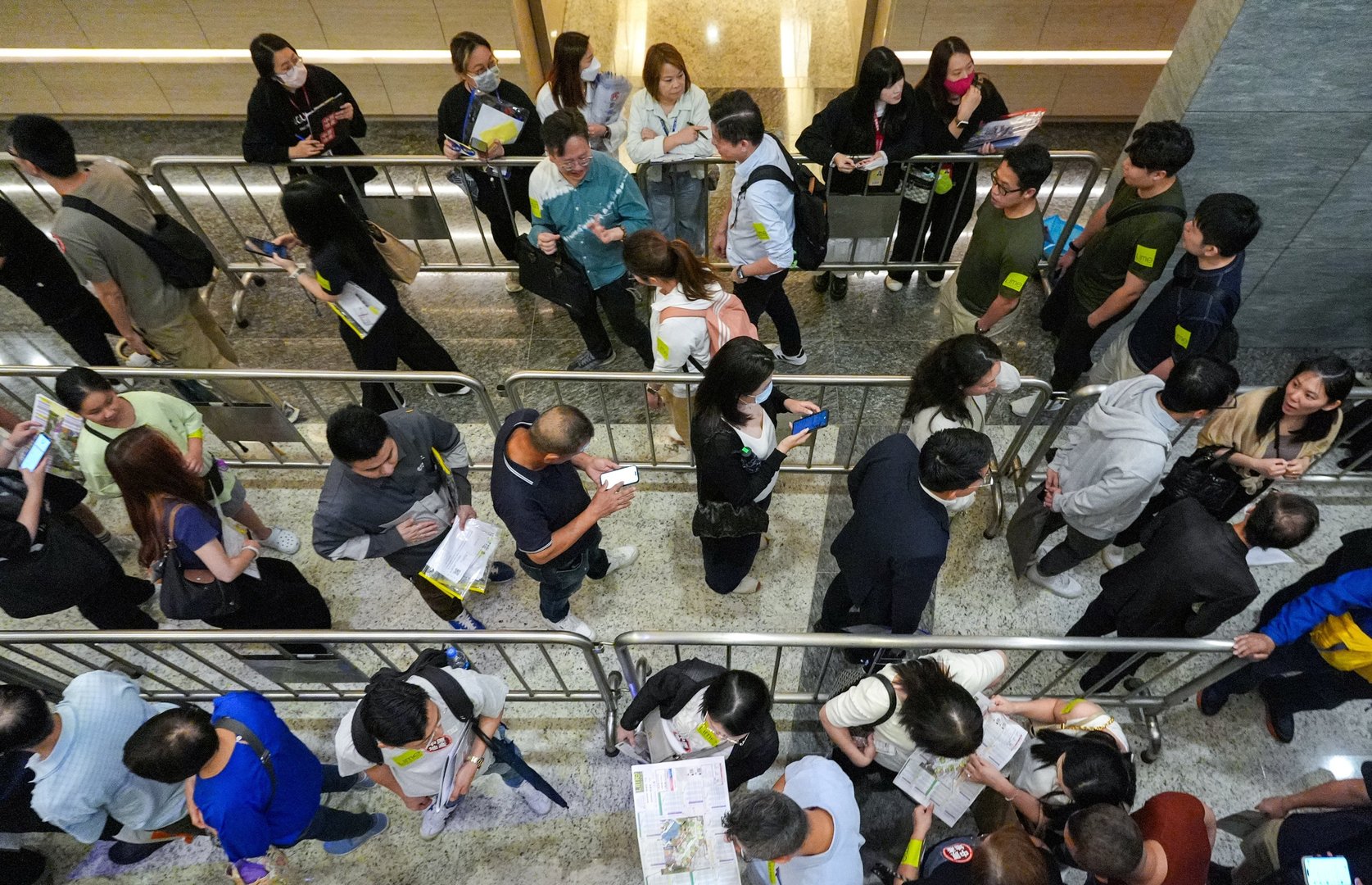
Developers report strong take-up of newly launched units, signaling persistent demand even as high interest rates and affordability pressures continue to weigh on the broader property sector.
Hong Kong’s residential property market is showing renewed momentum in the primary sales segment, with newly launched flats being absorbed quickly despite broader economic headwinds and persistent affordability constraints.
The trend highlights the resilience of housing demand in one of the world’s most expensive property markets, even as borrowing costs remain elevated and household sentiment is uneven.
What is confirmed is that recent new-build residential projects in Hong Kong have recorded strong subscription rates, with developers reporting rapid sales of available units shortly after launch.
This pattern reflects continued demand from both end-users and investors targeting limited new supply in densely populated urban districts.
The primary market, which consists of newly constructed homes sold directly by developers, has been the focal point of recent activity.
The momentum comes after a prolonged period of cooling in the broader property sector, which had been weighed down by higher interest rates, weaker economic growth, and policy tightening in previous years.
Mortgage costs in Hong Kong remain sensitive to U.S. Federal Reserve rate movements due to the city’s currency peg, which has kept financing conditions relatively restrictive compared with the ultra-low rate environment of the past decade.
Despite these constraints, new residential launches continue to attract buyers.
Developers have adjusted pricing strategies and introduced smaller unit sizes in some projects to align with affordability pressures.
The result has been a series of launches where a significant portion of units are sold within short timeframes, even if secondary market transactions remain more subdued.
What is newly emerging is a divergence between new-build sales performance and the broader housing market, particularly the resale segment.
While primary-market demand has shown pockets of strength, overall transaction volumes and price trends in older housing stock have remained more mixed, reflecting uneven confidence among buyers and sellers.
Underlying demand drivers include Hong Kong’s structural housing shortage, high population density, and limited land supply, all of which continue to support long-term expectations of property value stability.
At the same time, short-term pressures persist, including high household leverage, global economic uncertainty, and cautious lending practices by financial institutions.
Developers are closely watching whether recent sales momentum can be sustained beyond initial launch phases.
In previous cycles, bursts of strong primary-market activity have sometimes been followed by slower absorption once pent-up demand is exhausted.
Market participants are also monitoring government land supply policy and potential adjustments to housing-related measures that could affect future pricing and construction pipelines.
For now, the rapid uptake of new flats signals that demand for homeownership in Hong Kong remains structurally intact, even in a constrained financial environment.
The key test ahead will be whether this momentum spreads beyond new developments into the broader housing market, or remains concentrated in select launches with strategic pricing and design adjustments.
The trend highlights the resilience of housing demand in one of the world’s most expensive property markets, even as borrowing costs remain elevated and household sentiment is uneven.
What is confirmed is that recent new-build residential projects in Hong Kong have recorded strong subscription rates, with developers reporting rapid sales of available units shortly after launch.
This pattern reflects continued demand from both end-users and investors targeting limited new supply in densely populated urban districts.
The primary market, which consists of newly constructed homes sold directly by developers, has been the focal point of recent activity.
The momentum comes after a prolonged period of cooling in the broader property sector, which had been weighed down by higher interest rates, weaker economic growth, and policy tightening in previous years.
Mortgage costs in Hong Kong remain sensitive to U.S. Federal Reserve rate movements due to the city’s currency peg, which has kept financing conditions relatively restrictive compared with the ultra-low rate environment of the past decade.
Despite these constraints, new residential launches continue to attract buyers.
Developers have adjusted pricing strategies and introduced smaller unit sizes in some projects to align with affordability pressures.
The result has been a series of launches where a significant portion of units are sold within short timeframes, even if secondary market transactions remain more subdued.
What is newly emerging is a divergence between new-build sales performance and the broader housing market, particularly the resale segment.
While primary-market demand has shown pockets of strength, overall transaction volumes and price trends in older housing stock have remained more mixed, reflecting uneven confidence among buyers and sellers.
Underlying demand drivers include Hong Kong’s structural housing shortage, high population density, and limited land supply, all of which continue to support long-term expectations of property value stability.
At the same time, short-term pressures persist, including high household leverage, global economic uncertainty, and cautious lending practices by financial institutions.
Developers are closely watching whether recent sales momentum can be sustained beyond initial launch phases.
In previous cycles, bursts of strong primary-market activity have sometimes been followed by slower absorption once pent-up demand is exhausted.
Market participants are also monitoring government land supply policy and potential adjustments to housing-related measures that could affect future pricing and construction pipelines.
For now, the rapid uptake of new flats signals that demand for homeownership in Hong Kong remains structurally intact, even in a constrained financial environment.
The key test ahead will be whether this momentum spreads beyond new developments into the broader housing market, or remains concentrated in select launches with strategic pricing and design adjustments.