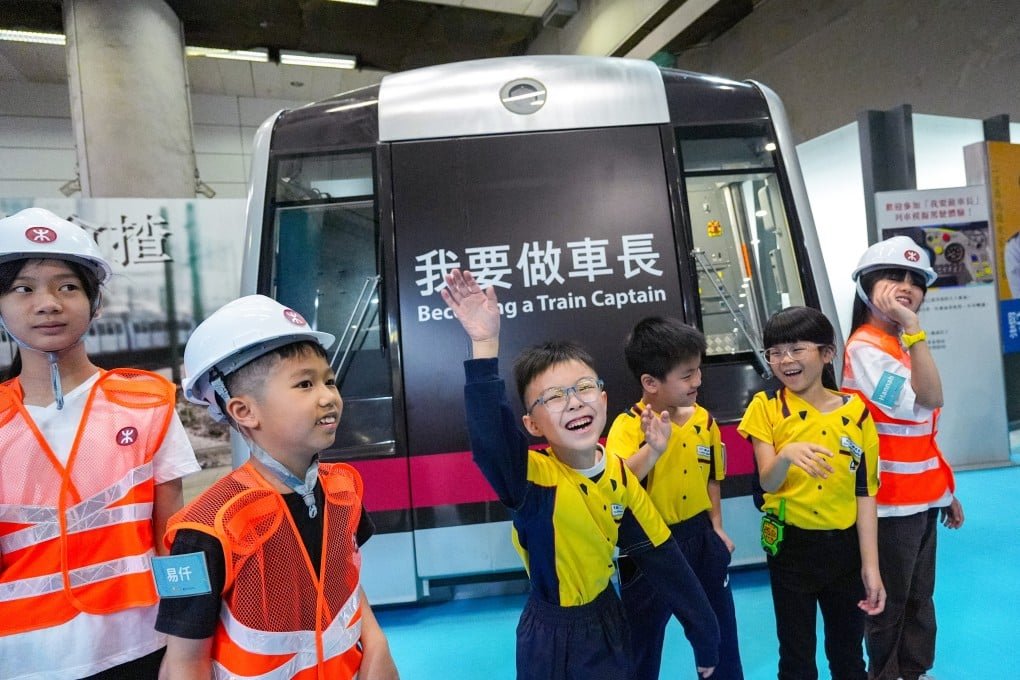
The railway operator is repurposing decommissioned rolling stock and simulation technology to showcase system history and engage the public in transport operations
An ACTOR-DRIVEN initiative by Hong Kong’s MTR Corporation is set to transform retired railway assets into a public exhibition space featuring decommissioned trains and a driving simulator, reflecting a broader effort to connect passengers with the operational history and engineering complexity of one of the world’s busiest urban rail systems.
What is confirmed is that the MTR Corporation, which operates Hong Kong’s primary rapid transit network, has been developing plans to display retired rolling stock alongside interactive installations.
These include preserved train compartments and a simulator designed to replicate aspects of real-world train operation, allowing visitors to experience the procedural and technical demands of railway control.
The initiative builds on a longstanding practice among global rail operators of repurposing obsolete infrastructure for educational and heritage purposes.
In dense urban networks such as Hong Kong’s, rolling stock is typically cycled out of service after years of intensive daily use, as newer models with improved energy efficiency, safety systems, and passenger capacity are introduced.
By converting decommissioned trains into exhibition pieces, the operator is effectively extending the lifecycle of its assets into a public-facing educational role.
The display of physical carriages allows visitors to observe changes in design, safety features, and passenger layout across different generations of rail technology.
The inclusion of a driving simulator adds a functional dimension to the exhibition.
Rather than presenting rail operations as purely historical artifacts, the simulator recreates the cognitive and procedural environment faced by train operators.
This includes speed regulation, station approach timing, and response to system signals, all of which are central to maintaining safety and punctuality in a high-frequency metro system.
Hong Kong’s rail network is known for its high throughput and strict scheduling precision, making operational training and system discipline critical components of its reliability.
The simulator therefore serves not only as an educational tool for the public but also as a window into the controlled complexity behind routine commuter travel.
The broader significance of the project lies in how urban infrastructure operators increasingly use public engagement to reinforce transparency and familiarity with essential services.
As metro systems become more technologically advanced and automated, the operational processes behind them become less visible to passengers, creating a gap in public understanding of how such systems function.
By opening selected aspects of its operational heritage and training environment, the MTR Corporation is reinforcing its role not only as a transport provider but also as a custodian of industrial and civic infrastructure knowledge.
The exhibition format allows technical systems that are normally hidden from view to be interpreted in an accessible, experiential way.
The project also reflects a wider trend in global cities where transport authorities are integrating education, tourism, and heritage preservation into infrastructure planning.
Retired trains, once destined for dismantling or export, are increasingly being preserved as part of institutional memory and urban identity.
Once launched, the exhibition is expected to function as both a cultural and educational venue, offering insight into the evolution of Hong Kong’s rail system while reinforcing public awareness of the operational discipline required to sustain one of Asia’s most heavily used transit networks.
What is confirmed is that the MTR Corporation, which operates Hong Kong’s primary rapid transit network, has been developing plans to display retired rolling stock alongside interactive installations.
These include preserved train compartments and a simulator designed to replicate aspects of real-world train operation, allowing visitors to experience the procedural and technical demands of railway control.
The initiative builds on a longstanding practice among global rail operators of repurposing obsolete infrastructure for educational and heritage purposes.
In dense urban networks such as Hong Kong’s, rolling stock is typically cycled out of service after years of intensive daily use, as newer models with improved energy efficiency, safety systems, and passenger capacity are introduced.
By converting decommissioned trains into exhibition pieces, the operator is effectively extending the lifecycle of its assets into a public-facing educational role.
The display of physical carriages allows visitors to observe changes in design, safety features, and passenger layout across different generations of rail technology.
The inclusion of a driving simulator adds a functional dimension to the exhibition.
Rather than presenting rail operations as purely historical artifacts, the simulator recreates the cognitive and procedural environment faced by train operators.
This includes speed regulation, station approach timing, and response to system signals, all of which are central to maintaining safety and punctuality in a high-frequency metro system.
Hong Kong’s rail network is known for its high throughput and strict scheduling precision, making operational training and system discipline critical components of its reliability.
The simulator therefore serves not only as an educational tool for the public but also as a window into the controlled complexity behind routine commuter travel.
The broader significance of the project lies in how urban infrastructure operators increasingly use public engagement to reinforce transparency and familiarity with essential services.
As metro systems become more technologically advanced and automated, the operational processes behind them become less visible to passengers, creating a gap in public understanding of how such systems function.
By opening selected aspects of its operational heritage and training environment, the MTR Corporation is reinforcing its role not only as a transport provider but also as a custodian of industrial and civic infrastructure knowledge.
The exhibition format allows technical systems that are normally hidden from view to be interpreted in an accessible, experiential way.
The project also reflects a wider trend in global cities where transport authorities are integrating education, tourism, and heritage preservation into infrastructure planning.
Retired trains, once destined for dismantling or export, are increasingly being preserved as part of institutional memory and urban identity.
Once launched, the exhibition is expected to function as both a cultural and educational venue, offering insight into the evolution of Hong Kong’s rail system while reinforcing public awareness of the operational discipline required to sustain one of Asia’s most heavily used transit networks.