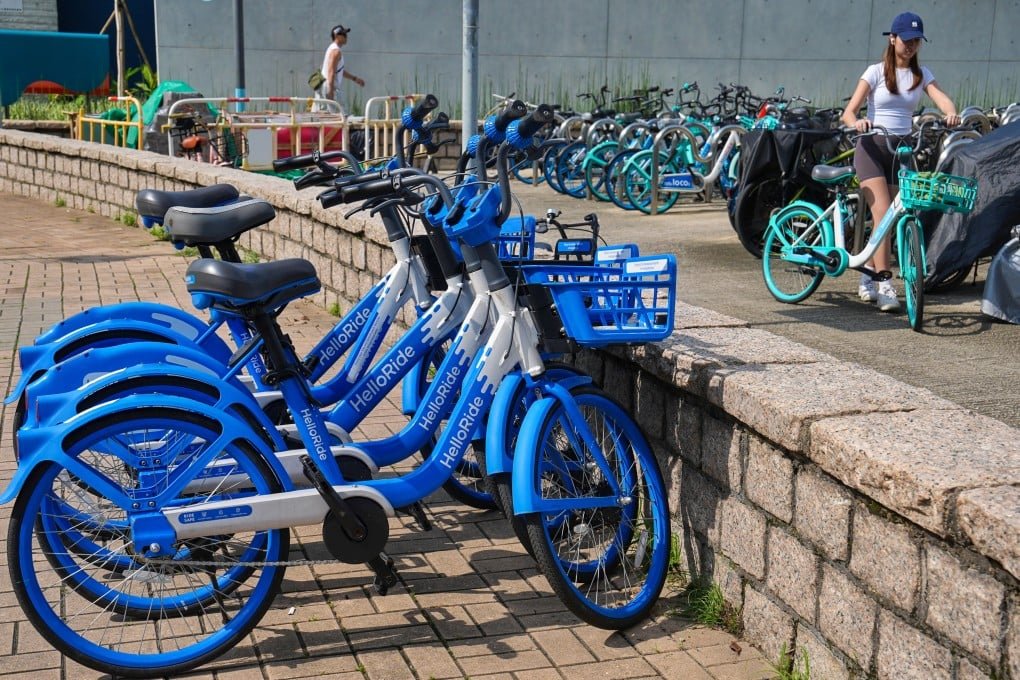
Amid unstable growth in micro-mobility, rival platforms compete for riders while regulatory and infrastructure limits shape uneven expansion
A SYSTEM-DRIVEN competition is unfolding in Hong Kong’s bike-sharing sector as two app-based operators compete for users in a market shaped by dense urban infrastructure, regulatory constraints, and inconsistent adoption patterns.
The development reflects broader challenges in integrating micro-mobility services into one of the world’s most compact and heavily regulated city environments.
What is confirmed is that Hong Kong’s bike-sharing landscape is currently served by multiple digital platforms offering short-term bicycle rentals accessed through mobile applications.
These services are designed to support last-mile transport, linking commuters to mass transit hubs and short-distance destinations in areas where walking or fixed-route transport may be less efficient.
The competition between the two leading apps has emerged in a context where the industry’s growth has been uneven.
Unlike cities with extensive cycling infrastructure, Hong Kong’s steep terrain, limited road space, and high pedestrian density have constrained large-scale bicycle deployment.
As a result, operators have had to adapt business models to localized demand pockets rather than achieving citywide saturation.
The mechanism of bike-sharing platforms relies on GPS-enabled bicycle fleets distributed across designated zones.
Users unlock bikes through mobile apps, pay per trip or subscription, and are expected to leave bicycles within permitted parking areas.
This system requires continuous balancing of supply and demand, as well as logistical operations to redistribute bicycles to high-usage locations.
One of the key pressures on the sector is regulatory oversight.
Urban authorities typically impose rules on parking zones, fleet size, and sidewalk obstruction risks.
In a densely built environment like Hong Kong, improper bicycle placement can quickly escalate into congestion or safety issues, prompting stricter enforcement and operational limitations.
The competitive dynamic between platforms is therefore less about rapid expansion and more about operational efficiency, user retention, and compliance with municipal requirements.
Companies must optimize pricing, maintain fleet reliability, and ensure that bicycles are available where commuter demand is highest, particularly near transit interchanges and residential clusters.
The broader stakes extend beyond commercial rivalry.
Micro-mobility systems are often positioned as part of sustainable urban transport strategies aimed at reducing short car trips and easing pressure on mass transit networks.
However, their success depends on integration with existing infrastructure, including safe cycling lanes and secure parking facilities, which remain limited in many parts of the city.
Industry volatility has been a recurring feature in similar markets globally, where early expansion phases are often followed by consolidation or exit of weaker operators.
In Hong Kong, this pattern is amplified by spatial constraints and high operating costs, which make profitability difficult without stable user volumes and supportive policy frameworks.
As the two apps continue competing for riders, their long-term viability will depend on whether bike-sharing can transition from a fragmented convenience service into a fully embedded component of Hong Kong’s transport system.
That outcome will hinge on infrastructure adaptation, regulatory alignment, and sustained commuter adoption across different districts.
The development reflects broader challenges in integrating micro-mobility services into one of the world’s most compact and heavily regulated city environments.
What is confirmed is that Hong Kong’s bike-sharing landscape is currently served by multiple digital platforms offering short-term bicycle rentals accessed through mobile applications.
These services are designed to support last-mile transport, linking commuters to mass transit hubs and short-distance destinations in areas where walking or fixed-route transport may be less efficient.
The competition between the two leading apps has emerged in a context where the industry’s growth has been uneven.
Unlike cities with extensive cycling infrastructure, Hong Kong’s steep terrain, limited road space, and high pedestrian density have constrained large-scale bicycle deployment.
As a result, operators have had to adapt business models to localized demand pockets rather than achieving citywide saturation.
The mechanism of bike-sharing platforms relies on GPS-enabled bicycle fleets distributed across designated zones.
Users unlock bikes through mobile apps, pay per trip or subscription, and are expected to leave bicycles within permitted parking areas.
This system requires continuous balancing of supply and demand, as well as logistical operations to redistribute bicycles to high-usage locations.
One of the key pressures on the sector is regulatory oversight.
Urban authorities typically impose rules on parking zones, fleet size, and sidewalk obstruction risks.
In a densely built environment like Hong Kong, improper bicycle placement can quickly escalate into congestion or safety issues, prompting stricter enforcement and operational limitations.
The competitive dynamic between platforms is therefore less about rapid expansion and more about operational efficiency, user retention, and compliance with municipal requirements.
Companies must optimize pricing, maintain fleet reliability, and ensure that bicycles are available where commuter demand is highest, particularly near transit interchanges and residential clusters.
The broader stakes extend beyond commercial rivalry.
Micro-mobility systems are often positioned as part of sustainable urban transport strategies aimed at reducing short car trips and easing pressure on mass transit networks.
However, their success depends on integration with existing infrastructure, including safe cycling lanes and secure parking facilities, which remain limited in many parts of the city.
Industry volatility has been a recurring feature in similar markets globally, where early expansion phases are often followed by consolidation or exit of weaker operators.
In Hong Kong, this pattern is amplified by spatial constraints and high operating costs, which make profitability difficult without stable user volumes and supportive policy frameworks.
As the two apps continue competing for riders, their long-term viability will depend on whether bike-sharing can transition from a fragmented convenience service into a fully embedded component of Hong Kong’s transport system.
That outcome will hinge on infrastructure adaptation, regulatory alignment, and sustained commuter adoption across different districts.