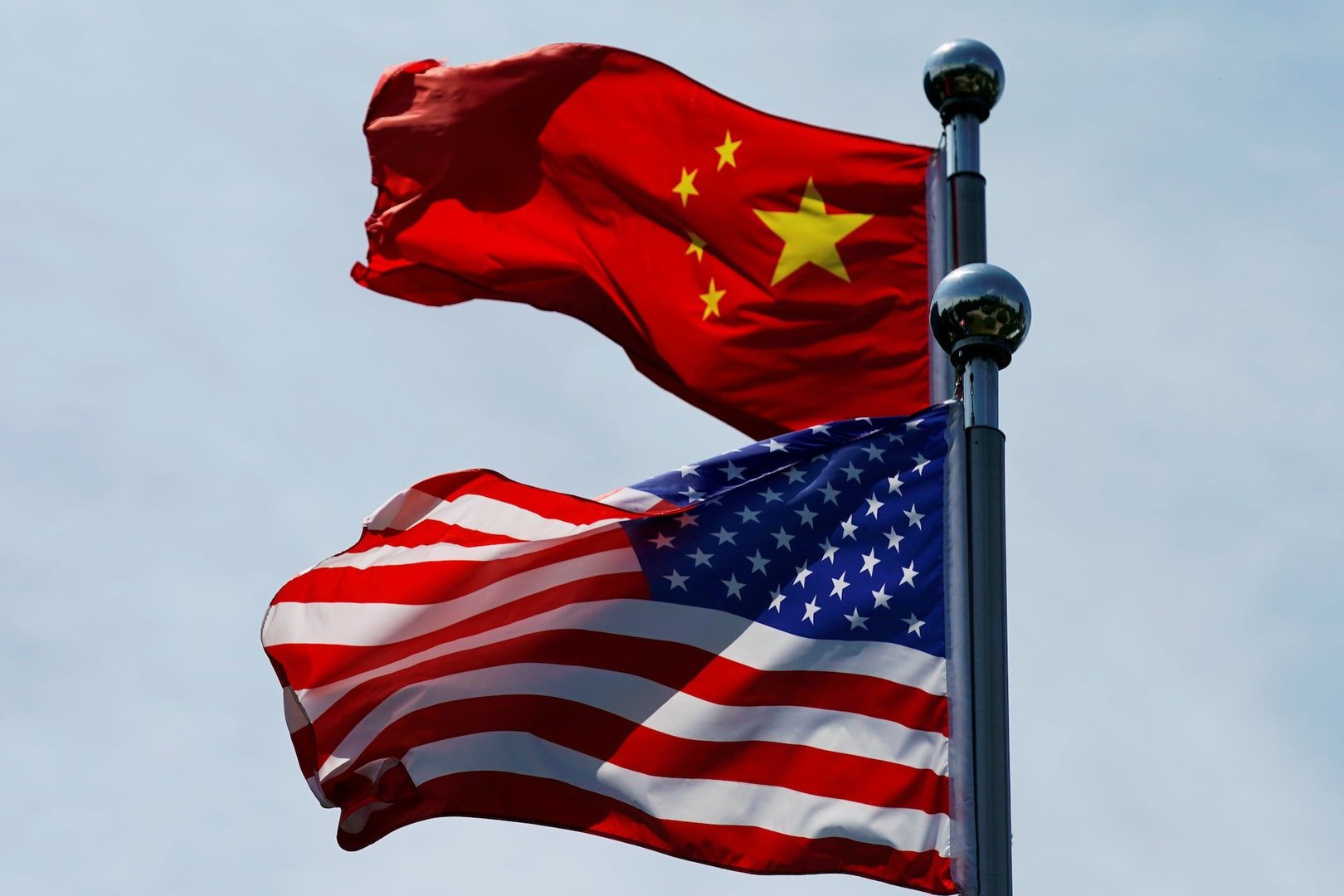
Washington’s attempt to slow China’s artificial intelligence industry through semiconductor restrictions is colliding with a new reality: Chinese firms are adapting faster than expected, while American companies risk losing influence over the world’s second-largest tech market.
The story is fundamentally system-driven.
At its core is the collision between export-control policy and the structure of the global artificial intelligence industry.
The United States spent years trying to restrict China’s access to advanced AI chips in order to slow Beijing’s technological and military progress.
But China’s AI sector has continued advancing despite tightening controls, forcing the Trump administration to confront an increasingly difficult choice: intensify restrictions and accelerate technological decoupling, or selectively relax controls to preserve American leverage inside China’s AI ecosystem.
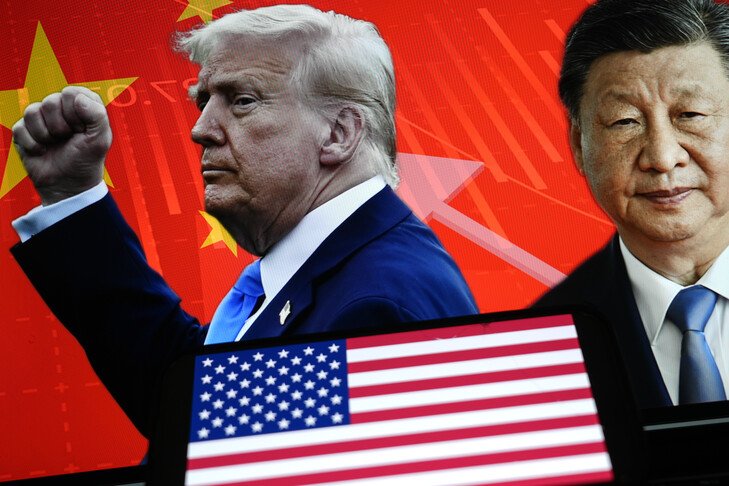
That debate has sharpened ahead of President Donald Trump’s visit to China, where technology, trade, supply chains and strategic competition are expected to dominate discussions alongside broader geopolitical tensions.
Artificial intelligence has become one of the central battlegrounds in the US-China rivalry because advanced AI systems depend on massive computing power, and that computing power still relies heavily on high-end semiconductors dominated by American firms.
For years, Nvidia sat at the center of that equation.
The company’s graphics processing units, or GPUs, became the industry standard for training large AI models.
Chinese technology companies built data centers, cloud systems and AI development tools around Nvidia’s software ecosystem, giving the American chipmaker enormous influence over the direction of Chinese AI development.
Washington attempted to weaponize that dependency through export controls.
Under both the Biden and Trump administrations, the United States imposed increasingly strict restrictions on advanced semiconductor exports to China.
The strategy aimed to deny Chinese firms access to the most powerful AI accelerators while preserving America’s technological lead.
But the policy evolved into something more complicated than a straightforward blockade.
Each tightening round forced Nvidia to redesign products specifically for China.
Chips such as the H20 were created as reduced-performance versions engineered to comply with US restrictions while remaining commercially viable for Chinese buyers.
The latest phase of the dispute centers on Nvidia’s H200 chip, one of the company’s most powerful AI processors short of its flagship Blackwell architecture.
The Trump administration recently approved limited H200 exports to China under strict licensing conditions, customer vetting requirements and shipment caps.
The move marked a significant shift from earlier assumptions that such advanced chips would remain effectively banned.
The decision immediately triggered backlash inside Washington.
Critics argued that permitting China to purchase near-frontier AI hardware undermines America’s national-security strategy and risks strengthening Chinese military, cyber and surveillance capabilities.
Some lawmakers and former officials accused the administration of sacrificing long-term strategic advantage for short-term commercial benefit.
At the same time, the commercial pressure is enormous.
Nvidia and other US semiconductor firms face the possibility of losing permanent access to China’s AI market, one of the world’s largest sources of future demand for advanced computing infrastructure.
The fear inside the industry is not simply lost revenue.
The deeper concern is ecosystem displacement.
Artificial intelligence markets tend to lock users into software frameworks, developer tools and hardware architectures over time.
If Chinese companies permanently transition away from Nvidia systems toward domestic alternatives, American influence over China’s AI stack could diminish for years or decades.
That risk is no longer theoretical.
China’s domestic AI and semiconductor industries have advanced more rapidly than many Western policymakers anticipated.
Chinese firms have expanded development of homegrown AI accelerators, cloud systems and model-training infrastructure despite restrictions on cutting-edge imports.
Huawei has emerged as the clearest symbol of that shift.
After years of sanctions intended to cripple the company, Huawei rebuilt substantial semiconductor and AI capabilities through domestic supply chains and state-backed industrial coordination.
Chinese AI companies are increasingly experimenting with Huawei Ascend processors and other local alternatives.
The performance gap with Nvidia remains significant at the highest end of the market.
What is confirmed is that Nvidia’s chips still dominate advanced AI training globally.
But China’s strategy no longer depends entirely on matching Nvidia chip-for-chip.
Instead, Chinese firms are pursuing scale, software optimization, distributed computing techniques and domestic substitution to reduce vulnerability to US pressure.
That adaptation is reshaping the logic of export controls.
Earlier assumptions inside Washington held that restricting advanced chips would freeze Chinese AI development at a lower capability level.
The emerging reality is more complicated.
Restrictions have raised costs and slowed access to top-tier hardware, but they have also accelerated Beijing’s push for technological self-sufficiency.
Chinese authorities appear increasingly wary of remaining dependent on Nvidia even where imports are permitted.
Recent regulatory scrutiny of Nvidia products, including reported customs restrictions and security reviews involving H20 and H200 chips, reflects a broader strategic concern inside Beijing: reliance on American technology creates long-term geopolitical vulnerability.
The result is a feedback loop.
Washington tightens controls to slow China.
China responds by building alternatives.
Those alternatives reduce future US leverage, which in turn pressures Washington to decide whether further restrictions still produce strategic advantage or simply accelerate separation.
The debate inside the Trump administration reflects competing visions of how to manage that dynamic.
One camp argues for maximal restrictions designed to maintain an overwhelming US lead in frontier AI systems.
Supporters believe even temporary delays in Chinese access to advanced chips could produce decisive military and economic advantages.
The opposing view argues that absolute containment is unrealistic because China’s market size, engineering capacity and state support make eventual adaptation inevitable.
Under that argument, selectively permitting exports allows American firms to maintain influence, preserve standards dominance and generate revenue that can fund further US innovation.
The issue extends far beyond semiconductors themselves.
AI infrastructure is becoming the foundation for military systems, industrial automation, scientific research, logistics, surveillance, finance and digital governance.
Whoever controls the underlying hardware ecosystem gains leverage over the next generation of economic and strategic power.
The geopolitical backdrop has made the stakes even higher.
Tensions involving energy security, Taiwan, trade restrictions and global supply chains have reinforced fears in both Washington and Beijing that technological dependence could become a strategic liability during future crises.
Trump’s China visit therefore arrives at a pivotal moment.
The administration is trying to balance economic engagement with strategic competition while avoiding a complete fracture in commercial relations.
Technology executives, meanwhile, are navigating a market where political decisions increasingly determine access, investment and long-term viability.
The broader implication is becoming increasingly clear: the semiconductor conflict is no longer just about denying China specific chips.
It is about whether the United States can preserve technological leadership without pushing China into a fully independent AI ecosystem beyond American influence.
That decision now sits at the center of US-China relations, global technology markets and the future structure of the artificial intelligence industry.
At its core is the collision between export-control policy and the structure of the global artificial intelligence industry.
The United States spent years trying to restrict China’s access to advanced AI chips in order to slow Beijing’s technological and military progress.
But China’s AI sector has continued advancing despite tightening controls, forcing the Trump administration to confront an increasingly difficult choice: intensify restrictions and accelerate technological decoupling, or selectively relax controls to preserve American leverage inside China’s AI ecosystem.
That debate has sharpened ahead of President Donald Trump’s visit to China, where technology, trade, supply chains and strategic competition are expected to dominate discussions alongside broader geopolitical tensions.
Artificial intelligence has become one of the central battlegrounds in the US-China rivalry because advanced AI systems depend on massive computing power, and that computing power still relies heavily on high-end semiconductors dominated by American firms.
For years, Nvidia sat at the center of that equation.
The company’s graphics processing units, or GPUs, became the industry standard for training large AI models.
Chinese technology companies built data centers, cloud systems and AI development tools around Nvidia’s software ecosystem, giving the American chipmaker enormous influence over the direction of Chinese AI development.
Washington attempted to weaponize that dependency through export controls.
Under both the Biden and Trump administrations, the United States imposed increasingly strict restrictions on advanced semiconductor exports to China.
The strategy aimed to deny Chinese firms access to the most powerful AI accelerators while preserving America’s technological lead.
But the policy evolved into something more complicated than a straightforward blockade.
Each tightening round forced Nvidia to redesign products specifically for China.
Chips such as the H20 were created as reduced-performance versions engineered to comply with US restrictions while remaining commercially viable for Chinese buyers.
The latest phase of the dispute centers on Nvidia’s H200 chip, one of the company’s most powerful AI processors short of its flagship Blackwell architecture.
The Trump administration recently approved limited H200 exports to China under strict licensing conditions, customer vetting requirements and shipment caps.
The move marked a significant shift from earlier assumptions that such advanced chips would remain effectively banned.
The decision immediately triggered backlash inside Washington.
Critics argued that permitting China to purchase near-frontier AI hardware undermines America’s national-security strategy and risks strengthening Chinese military, cyber and surveillance capabilities.
Some lawmakers and former officials accused the administration of sacrificing long-term strategic advantage for short-term commercial benefit.
At the same time, the commercial pressure is enormous.
Nvidia and other US semiconductor firms face the possibility of losing permanent access to China’s AI market, one of the world’s largest sources of future demand for advanced computing infrastructure.
The fear inside the industry is not simply lost revenue.
The deeper concern is ecosystem displacement.
Artificial intelligence markets tend to lock users into software frameworks, developer tools and hardware architectures over time.
If Chinese companies permanently transition away from Nvidia systems toward domestic alternatives, American influence over China’s AI stack could diminish for years or decades.
That risk is no longer theoretical.
China’s domestic AI and semiconductor industries have advanced more rapidly than many Western policymakers anticipated.
Chinese firms have expanded development of homegrown AI accelerators, cloud systems and model-training infrastructure despite restrictions on cutting-edge imports.
Huawei has emerged as the clearest symbol of that shift.
After years of sanctions intended to cripple the company, Huawei rebuilt substantial semiconductor and AI capabilities through domestic supply chains and state-backed industrial coordination.
Chinese AI companies are increasingly experimenting with Huawei Ascend processors and other local alternatives.
The performance gap with Nvidia remains significant at the highest end of the market.
What is confirmed is that Nvidia’s chips still dominate advanced AI training globally.
But China’s strategy no longer depends entirely on matching Nvidia chip-for-chip.
Instead, Chinese firms are pursuing scale, software optimization, distributed computing techniques and domestic substitution to reduce vulnerability to US pressure.
That adaptation is reshaping the logic of export controls.
Earlier assumptions inside Washington held that restricting advanced chips would freeze Chinese AI development at a lower capability level.
The emerging reality is more complicated.
Restrictions have raised costs and slowed access to top-tier hardware, but they have also accelerated Beijing’s push for technological self-sufficiency.
Chinese authorities appear increasingly wary of remaining dependent on Nvidia even where imports are permitted.
Recent regulatory scrutiny of Nvidia products, including reported customs restrictions and security reviews involving H20 and H200 chips, reflects a broader strategic concern inside Beijing: reliance on American technology creates long-term geopolitical vulnerability.
The result is a feedback loop.
Washington tightens controls to slow China.
China responds by building alternatives.
Those alternatives reduce future US leverage, which in turn pressures Washington to decide whether further restrictions still produce strategic advantage or simply accelerate separation.
The debate inside the Trump administration reflects competing visions of how to manage that dynamic.
One camp argues for maximal restrictions designed to maintain an overwhelming US lead in frontier AI systems.
Supporters believe even temporary delays in Chinese access to advanced chips could produce decisive military and economic advantages.
The opposing view argues that absolute containment is unrealistic because China’s market size, engineering capacity and state support make eventual adaptation inevitable.
Under that argument, selectively permitting exports allows American firms to maintain influence, preserve standards dominance and generate revenue that can fund further US innovation.
The issue extends far beyond semiconductors themselves.
AI infrastructure is becoming the foundation for military systems, industrial automation, scientific research, logistics, surveillance, finance and digital governance.
Whoever controls the underlying hardware ecosystem gains leverage over the next generation of economic and strategic power.
The geopolitical backdrop has made the stakes even higher.
Tensions involving energy security, Taiwan, trade restrictions and global supply chains have reinforced fears in both Washington and Beijing that technological dependence could become a strategic liability during future crises.
Trump’s China visit therefore arrives at a pivotal moment.
The administration is trying to balance economic engagement with strategic competition while avoiding a complete fracture in commercial relations.
Technology executives, meanwhile, are navigating a market where political decisions increasingly determine access, investment and long-term viability.
The broader implication is becoming increasingly clear: the semiconductor conflict is no longer just about denying China specific chips.
It is about whether the United States can preserve technological leadership without pushing China into a fully independent AI ecosystem beyond American influence.
That decision now sits at the center of US-China relations, global technology markets and the future structure of the artificial intelligence industry.