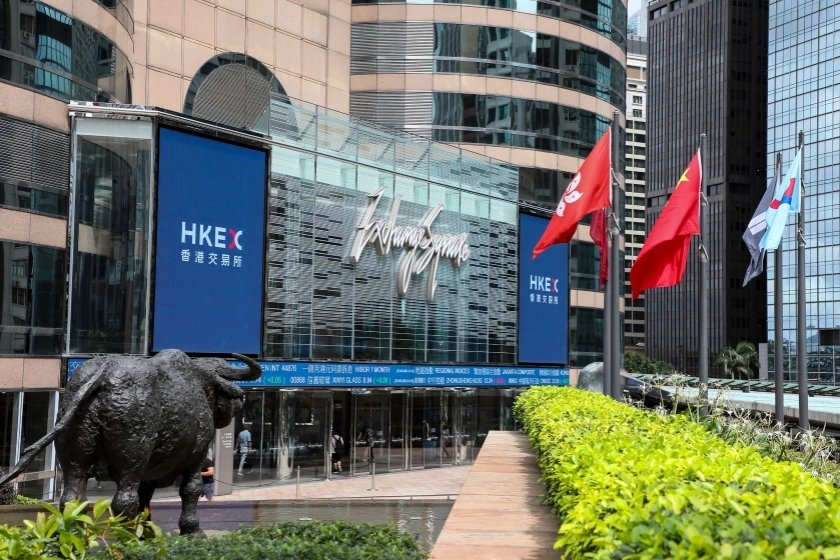
A SYSTEM-DRIVEN market squeeze is reshaping trading conditions on the Hong Kong Stock Exchange, with investor sentiment split between valuation support and macroeconomic headwinds
The performance of the Hong Kong Stock Exchange is being driven by systemic financial conditions rather than a single event, with global interest rates, China’s domestic economic trajectory, and cross-border capital flows combining to shape market direction.
The exchange, one of Asia’s major financial hubs, reflects both international liquidity conditions and mainland China’s economic cycle, making it unusually sensitive to shifts in global and regional policy.
What is confirmed is that Hong Kong-listed equities have experienced periods of volatility influenced by tighter global monetary policy and uneven economic signals from mainland China.
Higher interest rates in major developed economies have reduced global liquidity, increasing the cost of capital and leading investors to reassess exposure to emerging and Asia-focused markets, including Hong Kong.
At the same time, China’s economic recovery has been uneven, with sectors such as property and consumption showing weaker-than-expected momentum compared to earlier projections.
Because many of the largest companies listed in Hong Kong are closely tied to mainland economic performance, this creates direct transmission of macroeconomic weakness into equity valuations.
The Hong Kong market also functions as a gateway for international investors accessing Chinese assets, meaning that regulatory expectations, currency dynamics, and capital flow controls all influence trading behavior.
When global risk appetite declines, capital tends to shift toward lower-risk jurisdictions, reducing inflows into Hong Kong equities and increasing volatility in growth-sensitive sectors.
Technology and financial stocks, which make up a significant portion of the exchange’s capitalization, have been particularly sensitive to these conditions.
Technology firms are affected by both global valuation compression and domestic regulatory uncertainty, while financial institutions respond directly to interest rate differentials and credit demand cycles.
In addition to macroeconomic pressures, market structure factors also play a role.
The Hong Kong exchange is deeply integrated with mainland capital markets through cross-border trading schemes, which means policy adjustments in Beijing can have immediate effects on trading volumes and investor sentiment.
These structural linkages amplify both gains and losses depending on policy direction.
Looking ahead, market expectations are centered on three key variables: the trajectory of global interest rates, the pace of China’s economic stabilization, and the direction of policy support measures aimed at boosting domestic demand and financial market confidence.
Any shift in these factors is likely to have an outsized impact on Hong Kong equities relative to more domestically insulated markets.
The broader implication is that Hong Kong’s stock market is operating less as an independent pricing system and more as a synchronized node in a wider global and regional financial network.
This makes it highly responsive to external shocks but also dependent on coordinated macroeconomic stabilization to sustain durable growth trends.
As a result, near-term trading conditions are expected to remain sensitive to policy signals and liquidity shifts rather than corporate fundamentals alone, with investors closely monitoring both international monetary decisions and mainland economic data releases as primary market drivers.
The exchange, one of Asia’s major financial hubs, reflects both international liquidity conditions and mainland China’s economic cycle, making it unusually sensitive to shifts in global and regional policy.
What is confirmed is that Hong Kong-listed equities have experienced periods of volatility influenced by tighter global monetary policy and uneven economic signals from mainland China.
Higher interest rates in major developed economies have reduced global liquidity, increasing the cost of capital and leading investors to reassess exposure to emerging and Asia-focused markets, including Hong Kong.
At the same time, China’s economic recovery has been uneven, with sectors such as property and consumption showing weaker-than-expected momentum compared to earlier projections.
Because many of the largest companies listed in Hong Kong are closely tied to mainland economic performance, this creates direct transmission of macroeconomic weakness into equity valuations.
The Hong Kong market also functions as a gateway for international investors accessing Chinese assets, meaning that regulatory expectations, currency dynamics, and capital flow controls all influence trading behavior.
When global risk appetite declines, capital tends to shift toward lower-risk jurisdictions, reducing inflows into Hong Kong equities and increasing volatility in growth-sensitive sectors.
Technology and financial stocks, which make up a significant portion of the exchange’s capitalization, have been particularly sensitive to these conditions.
Technology firms are affected by both global valuation compression and domestic regulatory uncertainty, while financial institutions respond directly to interest rate differentials and credit demand cycles.
In addition to macroeconomic pressures, market structure factors also play a role.
The Hong Kong exchange is deeply integrated with mainland capital markets through cross-border trading schemes, which means policy adjustments in Beijing can have immediate effects on trading volumes and investor sentiment.
These structural linkages amplify both gains and losses depending on policy direction.
Looking ahead, market expectations are centered on three key variables: the trajectory of global interest rates, the pace of China’s economic stabilization, and the direction of policy support measures aimed at boosting domestic demand and financial market confidence.
Any shift in these factors is likely to have an outsized impact on Hong Kong equities relative to more domestically insulated markets.
The broader implication is that Hong Kong’s stock market is operating less as an independent pricing system and more as a synchronized node in a wider global and regional financial network.
This makes it highly responsive to external shocks but also dependent on coordinated macroeconomic stabilization to sustain durable growth trends.
As a result, near-term trading conditions are expected to remain sensitive to policy signals and liquidity shifts rather than corporate fundamentals alone, with investors closely monitoring both international monetary decisions and mainland economic data releases as primary market drivers.