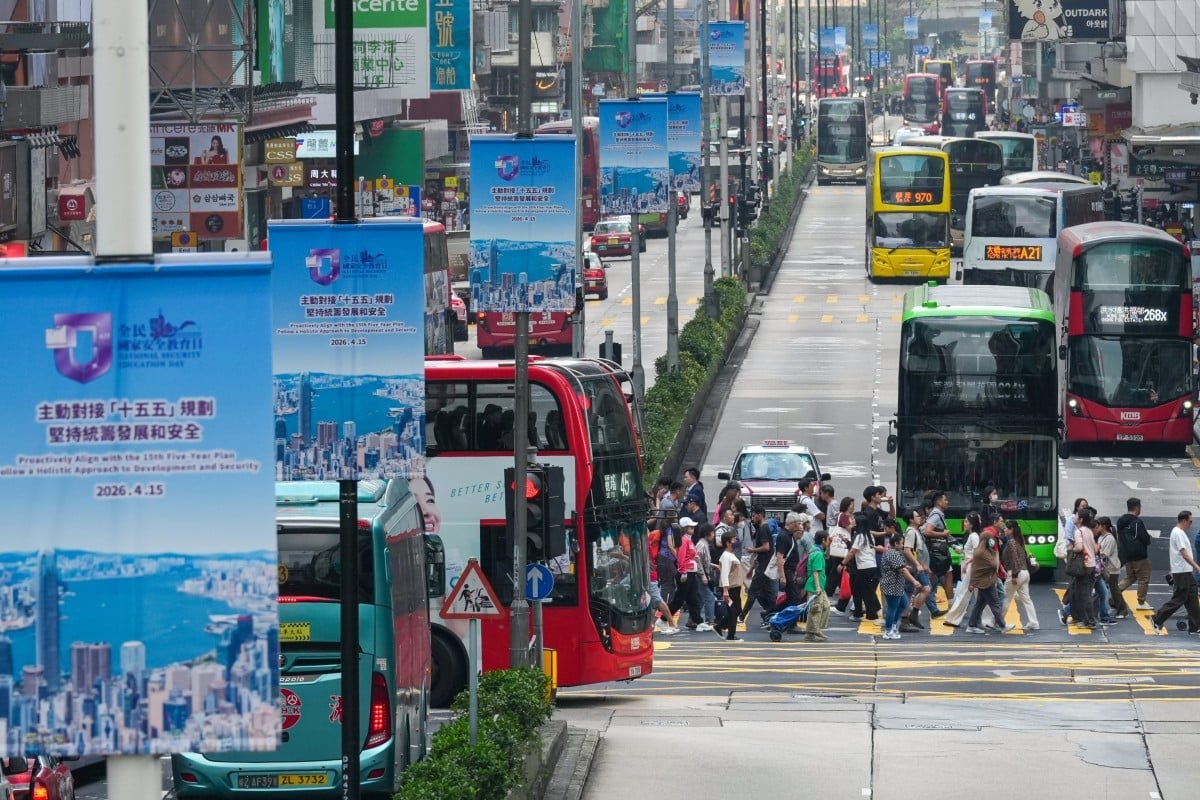
The government is preparing a structured planning framework aimed at long-term policy direction, signaling a shift toward more centralized economic and social strategy-setting over the next development cycle.
The development of a formal five-year policy blueprint in Hong Kong is a system-driven governance shift aimed at reshaping how the city sets long-term economic, social, and administrative priorities.
The central mechanism is a forthcoming public consultation process expected to begin by early June, which will feed into a structured planning document intended to guide policy direction over the next five years.
What is confirmed is that Hong Kong’s authorities are preparing to launch this consultation exercise as part of a broader effort to consolidate policy planning into a unified strategic framework.
The blueprint is expected to cover multiple domains, including economic development, housing, innovation and technology, education, healthcare, and governance efficiency.
The initiative reflects a growing trend toward centralized medium-term planning, where policy priorities are bundled into a single coordinated roadmap rather than developed through isolated annual or sector-specific measures.
This approach is designed to improve policy coherence and ensure alignment across government departments, particularly in areas involving infrastructure investment and industrial development.
The consultation process itself is intended to gather input from businesses, professional sectors, academic institutions, and the general public.
This feedback is expected to shape the final version of the blueprint, although the government retains control over the final policy structure.
The process also functions as a signaling mechanism, allowing authorities to test public and industry response to proposed priorities before formal adoption.
The timing is significant.
Hong Kong is currently navigating a complex economic transition marked by slower traditional growth engines, particularly in real estate and financial services, alongside efforts to expand its role in innovation, technology, and cross-border integration with the wider Greater Bay Area.
The blueprint is expected to provide policy direction for managing this transition.
A key issue underlying the initiative is policy coordination.
Hong Kong’s governance system involves multiple departments with distinct mandates, and long-term planning frameworks are often used to align infrastructure spending, land use decisions, and industrial policy.
By consolidating these into a five-year blueprint, authorities aim to reduce fragmentation and improve execution speed for large-scale projects.
Another important dimension is economic repositioning.
The city is actively seeking to strengthen its role in emerging industries such as artificial intelligence, advanced manufacturing services, biomedical research, and green finance.
A structured blueprint allows these priorities to be formally embedded into government planning cycles, which can influence funding allocation, regulatory adjustments, and talent development strategies.
The consultation phase also reflects an attempt to broaden stakeholder participation in policy design, particularly from the business community and professional sectors that are directly affected by regulatory and economic changes.
This includes developers, financial institutions, technology firms, and healthcare providers, all of which operate within policy-sensitive environments.
At the same time, the framework underscores the limits of consultative input.
While feedback is collected from a wide range of actors, the final blueprint is shaped within a top-down policy architecture, meaning that consultation functions more as refinement than open-ended policy creation.
The broader consequence of this move is a shift toward more structured, medium-term governance planning at a time when global economic conditions are increasingly volatile.
By anchoring policy decisions in a five-year horizon, Hong Kong is attempting to stabilize expectations for investors, institutions, and domestic stakeholders while maintaining flexibility to adjust implementation details.
If implemented as planned, the blueprint will become a central reference point for public policy decisions across multiple sectors, influencing how resources are allocated, how infrastructure projects are prioritized, and how economic development strategies are sequenced over the next five years.
The central mechanism is a forthcoming public consultation process expected to begin by early June, which will feed into a structured planning document intended to guide policy direction over the next five years.
What is confirmed is that Hong Kong’s authorities are preparing to launch this consultation exercise as part of a broader effort to consolidate policy planning into a unified strategic framework.
The blueprint is expected to cover multiple domains, including economic development, housing, innovation and technology, education, healthcare, and governance efficiency.
The initiative reflects a growing trend toward centralized medium-term planning, where policy priorities are bundled into a single coordinated roadmap rather than developed through isolated annual or sector-specific measures.
This approach is designed to improve policy coherence and ensure alignment across government departments, particularly in areas involving infrastructure investment and industrial development.
The consultation process itself is intended to gather input from businesses, professional sectors, academic institutions, and the general public.
This feedback is expected to shape the final version of the blueprint, although the government retains control over the final policy structure.
The process also functions as a signaling mechanism, allowing authorities to test public and industry response to proposed priorities before formal adoption.
The timing is significant.
Hong Kong is currently navigating a complex economic transition marked by slower traditional growth engines, particularly in real estate and financial services, alongside efforts to expand its role in innovation, technology, and cross-border integration with the wider Greater Bay Area.
The blueprint is expected to provide policy direction for managing this transition.
A key issue underlying the initiative is policy coordination.
Hong Kong’s governance system involves multiple departments with distinct mandates, and long-term planning frameworks are often used to align infrastructure spending, land use decisions, and industrial policy.
By consolidating these into a five-year blueprint, authorities aim to reduce fragmentation and improve execution speed for large-scale projects.
Another important dimension is economic repositioning.
The city is actively seeking to strengthen its role in emerging industries such as artificial intelligence, advanced manufacturing services, biomedical research, and green finance.
A structured blueprint allows these priorities to be formally embedded into government planning cycles, which can influence funding allocation, regulatory adjustments, and talent development strategies.
The consultation phase also reflects an attempt to broaden stakeholder participation in policy design, particularly from the business community and professional sectors that are directly affected by regulatory and economic changes.
This includes developers, financial institutions, technology firms, and healthcare providers, all of which operate within policy-sensitive environments.
At the same time, the framework underscores the limits of consultative input.
While feedback is collected from a wide range of actors, the final blueprint is shaped within a top-down policy architecture, meaning that consultation functions more as refinement than open-ended policy creation.
The broader consequence of this move is a shift toward more structured, medium-term governance planning at a time when global economic conditions are increasingly volatile.
By anchoring policy decisions in a five-year horizon, Hong Kong is attempting to stabilize expectations for investors, institutions, and domestic stakeholders while maintaining flexibility to adjust implementation details.
If implemented as planned, the blueprint will become a central reference point for public policy decisions across multiple sectors, influencing how resources are allocated, how infrastructure projects are prioritized, and how economic development strategies are sequenced over the next five years.