Volcano Engine is turning viral open-source agent adoption into a cloud business built on cheaper tokens, higher inference efficiency, and rapidly expanding enterprise usage.
The commercialization of AI agent infrastructure by platform providers is reshaping how large technology firms convert open-source adoption into cloud revenue streams, with ByteDance positioning its cloud unit Volcano Engine at the center of this transition through its OpenClaw-based ecosystem.
The core system driver of this story is a platform shift in artificial intelligence economics: value creation is moving away from model training alone toward inference-heavy agent systems that generate sustained token consumption at scale.
ByteDance is attempting to monetize this shift by embedding itself in the infrastructure layer that powers agent execution.
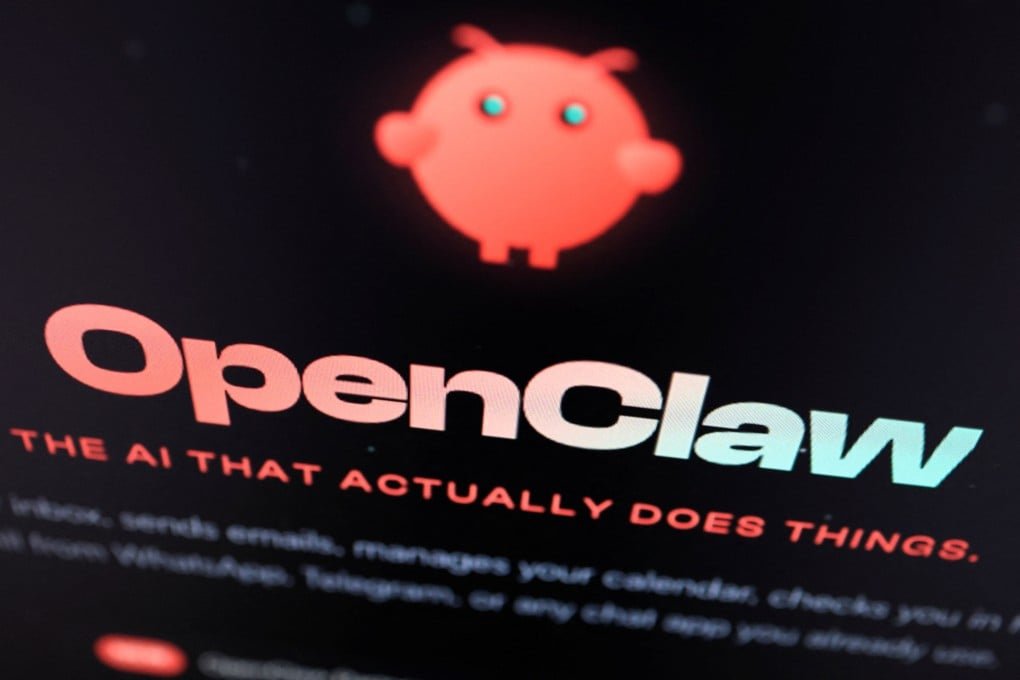
Volcano Engine, ByteDance’s cloud computing division, has built a set of products around OpenClaw, an open-source AI agent framework that gained significant traction after going viral among developers earlier this year.
The company’s key product in this ecosystem is ArkClaw, a cloud-based agent service designed to operationalize OpenClaw for enterprise and developer use.
What is confirmed is that ByteDance began working on agent-related products last year and accelerated engagement with OpenClaw after the framework’s rapid adoption surge.
The strategy is to convert open-source momentum into managed cloud services, similar in structure to how widely used open-source databases are commercialized through cloud hosting and enterprise tooling.
ArkClaw is positioned as a managed layer above OpenClaw, abstracting infrastructure complexity and allowing developers to deploy AI agents without handling underlying compute, orchestration, or scaling systems.
The comparison made by internal architects is that the model resembles turning a widely used database system into a fully managed cloud service, where the underlying open-source engine remains free but operational control is monetized.
At the same time, ByteDance has co-developed a China-facing mirror site for ClawHub, a skills marketplace associated with OpenClaw, signaling an attempt to build an ecosystem where agents, tools, and reusable capabilities can be distributed and commercialized through a centralized platform.
The economic logic behind this strategy is tied to token consumption dynamics.
AI agents differ from traditional chatbot-style systems in that they generate continuous multi-step interactions, often involving tool use, long context windows, and iterative reasoning loops.
This significantly increases inference workload and therefore token usage, which directly translates into cloud revenue.
Volcano Engine has stated that agent-related token consumption currently represents a single-digit percentage of total usage, but is growing rapidly.
This indicates that while agent systems are still early in overall adoption, they are already becoming a measurable driver of compute demand.
More broadly, ByteDance reports that its Doubao large language models reached more than one hundred twenty trillion tokens in daily average usage as of March, doubling within three months and increasing more than one thousand times since their launch in May of the previous year.
This scale highlights how quickly inference demand can expand once models are widely integrated into consumer and enterprise workflows.
The underlying mechanism is structural.
As models become more capable, they are used less as single-response tools and more as persistent agents that plan, execute, and refine multi-step tasks.
This increases both computational intensity and session duration, shifting the economics of AI from occasional usage to continuous consumption.
The OpenClaw ecosystem also reflects broader competition in China’s AI infrastructure market, where cloud providers are racing to capture developer ecosystems early in the agent era.
By embedding itself into open-source frameworks, ByteDance is attempting to ensure that downstream enterprise deployments flow through its infrastructure layer.
The Shanghai event surrounding OpenClaw, which reportedly drew large developer attendance despite cooling hype cycles, illustrates continued grassroots momentum in agent tooling.
Developers engaging with demos and community infrastructure suggest that the ecosystem is transitioning from experimental enthusiasm toward more structured application development.
For ByteDance, the strategic stake is clear: if AI agents become the dominant interface for enterprise and consumer computing, then control over agent infrastructure becomes equivalent to control over distribution in earlier platform eras.
In this model, profitability depends less on individual applications and more on sustained inference throughput across millions of autonomous workflows.
The broader implication is that AI commercialization is shifting from model competition to infrastructure monetization.
Companies that can capture token flow at scale through cloud platforms, rather than simply building models, are positioned to extract recurring value from the next phase of AI adoption.
ByteDance’s OpenClaw strategy represents an attempt to secure that position early in the lifecycle of agent-based computing systems.
The core system driver of this story is a platform shift in artificial intelligence economics: value creation is moving away from model training alone toward inference-heavy agent systems that generate sustained token consumption at scale.
ByteDance is attempting to monetize this shift by embedding itself in the infrastructure layer that powers agent execution.
Volcano Engine, ByteDance’s cloud computing division, has built a set of products around OpenClaw, an open-source AI agent framework that gained significant traction after going viral among developers earlier this year.
The company’s key product in this ecosystem is ArkClaw, a cloud-based agent service designed to operationalize OpenClaw for enterprise and developer use.
What is confirmed is that ByteDance began working on agent-related products last year and accelerated engagement with OpenClaw after the framework’s rapid adoption surge.
The strategy is to convert open-source momentum into managed cloud services, similar in structure to how widely used open-source databases are commercialized through cloud hosting and enterprise tooling.
ArkClaw is positioned as a managed layer above OpenClaw, abstracting infrastructure complexity and allowing developers to deploy AI agents without handling underlying compute, orchestration, or scaling systems.
The comparison made by internal architects is that the model resembles turning a widely used database system into a fully managed cloud service, where the underlying open-source engine remains free but operational control is monetized.
At the same time, ByteDance has co-developed a China-facing mirror site for ClawHub, a skills marketplace associated with OpenClaw, signaling an attempt to build an ecosystem where agents, tools, and reusable capabilities can be distributed and commercialized through a centralized platform.
The economic logic behind this strategy is tied to token consumption dynamics.
AI agents differ from traditional chatbot-style systems in that they generate continuous multi-step interactions, often involving tool use, long context windows, and iterative reasoning loops.
This significantly increases inference workload and therefore token usage, which directly translates into cloud revenue.
Volcano Engine has stated that agent-related token consumption currently represents a single-digit percentage of total usage, but is growing rapidly.
This indicates that while agent systems are still early in overall adoption, they are already becoming a measurable driver of compute demand.
More broadly, ByteDance reports that its Doubao large language models reached more than one hundred twenty trillion tokens in daily average usage as of March, doubling within three months and increasing more than one thousand times since their launch in May of the previous year.
This scale highlights how quickly inference demand can expand once models are widely integrated into consumer and enterprise workflows.
The underlying mechanism is structural.
As models become more capable, they are used less as single-response tools and more as persistent agents that plan, execute, and refine multi-step tasks.
This increases both computational intensity and session duration, shifting the economics of AI from occasional usage to continuous consumption.
The OpenClaw ecosystem also reflects broader competition in China’s AI infrastructure market, where cloud providers are racing to capture developer ecosystems early in the agent era.
By embedding itself into open-source frameworks, ByteDance is attempting to ensure that downstream enterprise deployments flow through its infrastructure layer.
The Shanghai event surrounding OpenClaw, which reportedly drew large developer attendance despite cooling hype cycles, illustrates continued grassroots momentum in agent tooling.
Developers engaging with demos and community infrastructure suggest that the ecosystem is transitioning from experimental enthusiasm toward more structured application development.
For ByteDance, the strategic stake is clear: if AI agents become the dominant interface for enterprise and consumer computing, then control over agent infrastructure becomes equivalent to control over distribution in earlier platform eras.
In this model, profitability depends less on individual applications and more on sustained inference throughput across millions of autonomous workflows.
The broader implication is that AI commercialization is shifting from model competition to infrastructure monetization.
Companies that can capture token flow at scale through cloud platforms, rather than simply building models, are positioned to extract recurring value from the next phase of AI adoption.
ByteDance’s OpenClaw strategy represents an attempt to secure that position early in the lifecycle of agent-based computing systems.