All Hail La Ropa: The Wild Story of the Celebrity-Approved Brand

I got fatally stabbed on Friday the 13th,” La Ropa designer Jimbo Williams says, lifting his right leg to showcase the nerve damage. “I died but came back to life; that’s why I have 13 stars. “He points to one of many face tattoos: “Lucky Number 13."

He shrugs, jumping onto a perch, surveying his Soho store’s progressionขdeath just an inconvenience unaligned with his natural optimism. He lists off next steps: stain the floors, paint the walls, construct a Denim Shrine. Pulling up photos of gilded Gothic saints, Williams ushers over graffiti artists, whoขlike most of La Ropa’s cult following and “family”ขfound him through Instagram. “We're gonna add a cathedral with a castle vibe,” a “humble house where you come and get your blessings.”

In La Ropa Land, blessings are quickly snatched up: be it a trucker hat, “Pussy Builds Strong Bones” t-shirt, copy of ASS Magazine, or a whole new life. “Everyone wants to have a piece of the pie,” says Williams, as kids trickle in, hoping to join the team. Even celebrities like Jay Z, A$AP Rocky, and Post Malone want a taste of La Ropaขa welcome turnaround for a design team who’ve historically been unlucky.

Earlier this year, co-founder Aristotle Sanchez and Williams made headlines as "The Cult Celebrity Brand Started by Two Homeless Designers," featuring their psychedelic “Instagram-In-Real-Life” store on Melrose Avenue in Los Angeles. Their maximalist graphic merchandiseขpopularized by the recent Y2K resurgenceขis desperately sought after by street style enthusiasts. Nowadays, La Ropa can be found on drummer Travis Barker, Andre 3000, or throughout NYC and LA on Instagram-broadcasted scavenger hunts. At any time, limited-edition items are pulled from their website, the capricious whims lending to their audience’s desire for rarity. And just like Instagram or Snapchat stories, most La Ropa merch comes and goes in an instant.

But this wasn’t the La Ropa Sanchez and Williams initially had in mind.

After arriving in New York nearly six years ago, Williams and Sanchez found themselves rubbing elbows with the creative directors of Jil Sander, Christian Dior, and others. But, unlike their party peers, they were lacking the single largest predictor of success: money. “We always thought that this fashion world was right there, but we didn't really realize how much money that shit costs.” With a dwindling supply of products from their hand-made luxury brand Insubordinate, no home, no money, just a McDonald’s charging station, and rudimentary photoshop skillsขthe team pivoted from bespoke to gloriously graphic, and La Ropa as we know it was born.

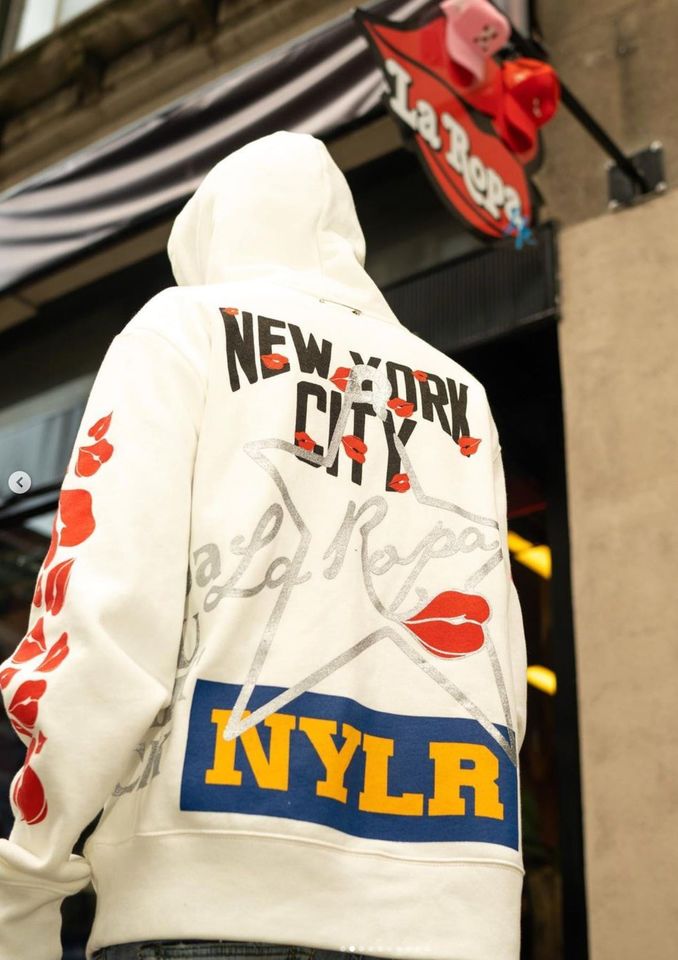
With its new Broadway store smack dab in the middle of Soho, the brand is well past its genesis, and, like Sanchez and Williams, La Ropa’s homecoming is all about growing up.
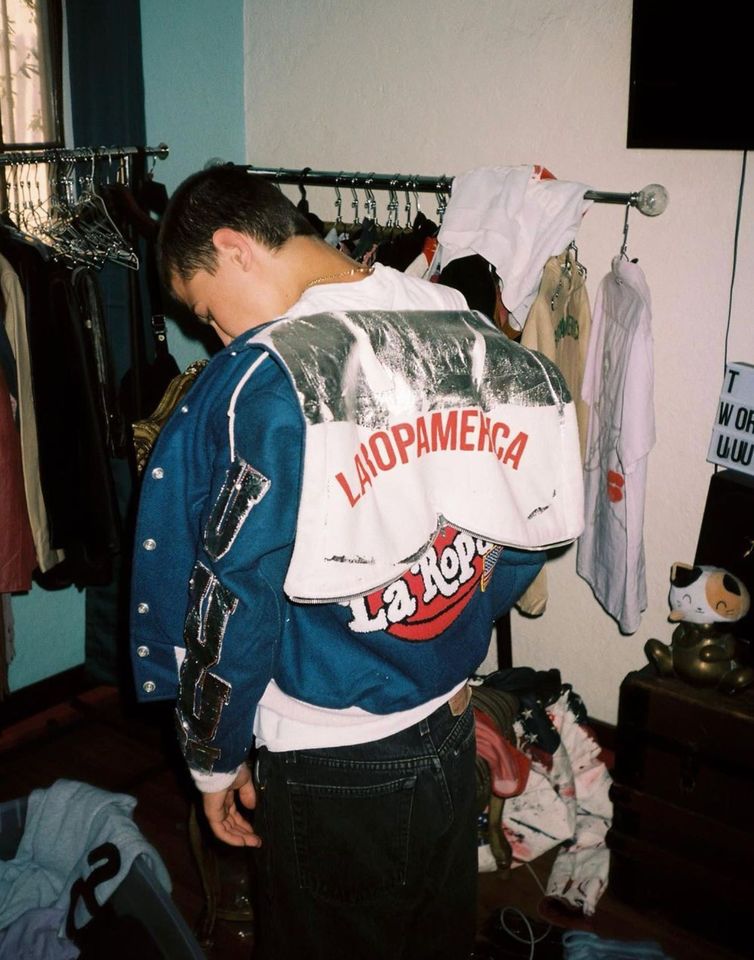


“What did they do? Pussied out.”


Toronto-natives Williams and Sanchez's relationship is part fate, part “punk-rock.” After leaving university, Williams, Sanchez, and a gaggle of drop-outs and creatives banded together to establish A Creative Council (ACC) studio—a landing spot for artists and designers to work on their trade skills and build their brands. When the members started noticing the Toronto design scene’s “glass ceiling,” they made the unanimous decision to skip town and head to New York. “Six of us came down with $1,000, a place to stay for two weeks, a dream, and some nice clothes,” Williams recollects, “it was rough as fuck.”

When the gang’s two-week accommodations lapsed, it was “every man for himself.” And of the six original transplants, four members couldn’t see the light. “So, what did they do?” Williams asks, “Pussied out, went back to Canada.” But Sanchez and Williams? “We stayed and stayed together,” says Williams, “if I had somewhere to sleep, he had somewhere to sleep. And it was like that for a good four or five months.”

Eventually, the duo would land at a friend’s spot ample with dubious circumstances. The partners referred to the period as “absolutely crazy,” only staying until the situation became untenable, “he was an addict. That wasn't super fun, but we didn't want to stay outside in the winter.”

Despite their sleeping arrangement’s ever-changing landscape, Williams and Sanchez’s days were dedicated to becoming designers and forging a path. “We were trying to make high-end clothing because we're so obsessed with fashion,” explains Williams, but “we were literally selling the clothing off our bodies, and were around kids in similar situations as us or better, but that's who we were interacting with on the daily.” So as Williams figured, “that’s who we had to cater to.”

And from there, the game began.



With the tools at their disposal: an iPhone, Instagram, Photoshop, La Ropa started to work the system. Understanding their accessible audience, the team expanded from $1.5k + Japanese Denim bespoke pieces to t-shirts and trucker hats, foreseeing the fad’s revival over two years before its mainstream adoption. They employed their elementary editing skills, superimposing designs onto t-shirts and posting them on Instagram, hoping to scramble enough pre-orders and cash to produce their marketed merchandise. “Even while we were homeless, looking for a place to sleep every night, we always posted on Instagram with new content because we realized all we really had was the clothes on our back, the people in front of us, and the online community.”

And like so many Gen Z creative teams looking to score big through online engagement, one thing became clear: they needed to move to the Instagram capital of the world, Los Angeles.

After nearly two years of vacillating homelessness within New York, La Ropa moved to warmer pastures: namely, the infamous Royal Pagoda motel, which Paper Magazine once described as “​​beneath the armpit of the 110” and “a chintzy motor lodge with the kind of upturned eaves and dragon doorknockers you'd expect from LA's Chinatown.”

Gear in hand, dream in their head, the duo hit the streets of Los Angeles, unabashed in their tactics. Williams and Sanchez sought celebrities pertinent to their target audience, quantitatively easing out product to counteract oversaturation. God forbid La Ropa be banished to the land of basic biddies. Merchandise was released in “drops,” and when celebrities spotted their peers in, say, a yellow Yankees hat and wanted one for themselves. La Ropa had the answer: too bad, it was a limited edition. Telling people constantly inundated by desperate brands that they weren’t special was a dangerous game.

It worked.


The average fashion or beauty start-up will send hundreds, if not thousands, of PR packages to editors, influencers, and stylists, all hoping that from a pile of stuff, theirs comes out on topขa needle in a haystack comprised of lotions, logos, and lambskin handbags.

Not for La Ropa. Cocksure in their design’s value, the team forwent the small-brand playbook. “We don’t do PR packages,” Williams explains, “if someone wants something, they are free to reach out, but mostly, everyone has to pay full price.”

Where La Ropa excelled was in their blind trust in their craftsmanship. For the team, it was A-list or bust. They took a guerrilla approach, jumping out of taxis to gift gear to Travis Scott and cornering A$AP Rocky’s stylist in cult-retail outlet Opening Ceremony. When Rihanna walked out of dinner one evening, La Ropa was there to make the hand-off. She took it willingly. And then they waited, checking in to see if the celebrities took the bait. Which, luckily, they did. Rocky sported the cap. Jake Paul, arguably the most prominent Youtuber, wore a hat to his brother’s boxing match; supermodel Bella Hadid rocked La Ropa thrice for her 46.8 million followers.



A Profit Prophet


Early La Ropa brand reach was grassroots and approachable, juxtaposing the limited and exclusive stock. In those days, if you wanted La Ropa, the team would roll up in a van, you’d buy merch, maybe smoke a blunt, or if you were bold, you'd jump in the van and join the family. They’d blast on Instagram that a $200 hat may be hanging on a jungle gym, or if you wanted to go tag a building, here was the chance. Some even got arrested for spray painting La Ropa’s graces on the side of buildings—the story retold in colorful language by one such artist. The group around me laugh at its retelling. It was “no big deal; it was for La Ropa.”



As the group of young men around me expands, it’s apparent: La Ropa doesn’t create fans; it cultivates family. Each is willing to sing the praises, and each is convinced of its infinite potential. They’re earnest, which is pretty rare on Broadway. When kids come in, they get their photos taken and their names written down. Who knows, maybe they’ll be in a campaign, perhaps they’d want to do drop-offs.



Unlike most emerging brands, La Ropa has no venture backing-what they make in product and profit is theirs. “This isn't a hobby. Look, I have tattoos of love for everyone because this is our life. This is how I make money. This is how I feed my family. Everyone in La Ropa, this is how we feed each other,” Williams says as the group nods, looking at one another. A few lift their sleeves to show off their own La Ropa-inspired tattoos. All of which finessed to the wildly varying aesthetic of each family member.



As the patriarchs for a proud pride of lions in designer jeans, to Williams, it’s “time to grow up.”



The money to return to their original dream is there. Sanchez is to maintain the younger audience, the “kids who want to be influenced,” he explains, “the ones you need, because those keep your brand alive.” But Williams has his eyes set on "catering to everyone," namely Upper East Side and West Side moms, who are confident enough to pull off their tailored denim wares.

Within a year, he hopes the revivals of Insubordinate including their 15-pocket denim jacket, will be at Bergdorf Goodman and that Golden Goose may be open to a partnership. His ideal La Ropa New York spokesperson? Iris Apfel “​​because she represents what maturing is: it's always staying fresh.”

In 10 years, La Ropa would like to run an artist gallery in Miami, in 15 to own a self-sustaining property where all are welcome, and in the future?

“You know, I would love to be the creative director of Ralph Lauren,” muses Williams as a family member sparks a delicious smelling joint. “They have really great cashmere knitwear.”

La Ropa is now open for business in New York, find them at 441 Broadway in Soho.

Thailand’s tourism authorities have introduced an international campaign linking traditional textile design with global fashion as the government seeks to expand the country’s cultural profile and creative industries.
Authorities in Quang Tri are investing in deeper fishing ports and stronger storm shelters to protect coastal communities and support Vietnam’s fishing fleet in strategically sensitive waters.
National surveys show improving economic sentiment among Filipinos as targeted subsidies and faster infrastructure spending help offset persistent inflation pressures.
Malaysian legal and trade representatives are intensifying efforts in Europe to defend the country’s sustainable palm oil certification framework as exporters face stricter European Union deforestation requirements.
SingHealth has been designated an anchor centre by the International Atomic Energy Agency, giving Singapore a larger role in training and technology development for nuclear medicine across Southeast Asia.
Singapore’s Ministry of Home Affairs denied international media reports that capital punishment was discussed during a recent visit by Israeli security officials, stressing the government’s control over domestic judicial policy.
Prime Minister Anwar Ibrahim’s government increased the annual sales threshold for mandatory electronic invoicing to 3 million ringgit, giving smaller companies more regulatory breathing room during Malaysia’s digital tax transition.
The value of condominium transfers to foreign buyers in Thailand increased 20% in the second quarter, according to the Real Estate Information Center, reflecting renewed demand from expatriates and overseas investors.
Prime Minister Anutin Charnvirakul directed the State Railway of Thailand to overhaul operations on Bangkok’s Airport Rail Link as authorities seek to protect reliable transport between Suvarnabhumi Airport and the capital.
Indonesia’s disaster authorities are urging maritime operators and coastal residents to keep their distance from Anak Krakatau as sustained seismic activity raises concerns about further volcanic unrest.
Vietnam is stepping up domestic drone manufacturing with plans to integrate artificial intelligence and locally produced semiconductors into unmanned systems for surveillance and emerging logistics applications.
Thai and Malaysian officials agreed to accelerate new border fencing and transport corridors aimed at improving security in southern Thailand while strengthening bilateral trade and supply-chain links.
Singapore has launched a new 200-megawatt capacity allocation for energy-efficient data centres, selectively easing earlier restrictions as it seeks to retain its position as a regional base for global cloud and technology companies.
Telecommunications companies are accelerating new submarine cable links connecting Thailand, Malaysia and Indonesia directly with Western markets as demand grows for more resilient regional digital infrastructure.
Indonesia has welcomed operational support from Malaysia to fight forest fires in Sumatra and Kalimantan as authorities seek to prevent a wider transboundary haze crisis.
Thailand will reduce visa-exempt stays for citizens of 60 countries to 30 days from the temporary 60-day allowance introduced in 2024, tightening immigration oversight while maintaining broad access for international tourists.
The Marcos administration has publicly urged Vice President Sara Duterte to respond to emerging legal cases and impeachment proceedings as the political alliance between the Philippines’ two most powerful families continues to unravel.
Rapid expansion of hyperscale data centres in Thailand, Malaysia, Singapore and Indonesia is expected to lift regional liquefied natural gas demand by 16% over the next decade as power grids seek reliable round-the-clock generation.
Thailand’s Board of Investment approved almost 1 trillion baht in new projects, including a $25 billion infrastructure expansion by TikTok and major data centre investments in the Eastern Economic Corridor.
Vietnam has doubled its land area on Barque Canada Reef and militarized 21 features in the South China Sea as Chinese Coast Guard activity around Scarborough Shoal intensifies, adding to tensions in contested waters.
Businessman Haji Isam is reportedly pursuing a significant holding in coal producer Bayan Resources, pointing to further consolidation of Indonesia’s energy assets among major domestic investors.
Thailand is rolling out new creative and cultural promotion agencies under its “One Family, One Soft Power” initiative, seeking to turn food, entertainment, fashion and local expertise into higher-value international exports.
Prime Minister Lawrence Wong has announced an adjustment to Singapore’s ministerial pay framework, lifting the entry-level benchmark to S$1.8 million a year as the government seeks to remain competitive with private-sector compensation.
Thai transport authorities are speeding terminal and runway upgrades at major airports including Suvarnabhumi and Don Mueang as passenger volumes rise and Bangkok seeks to preserve its role as a leading regional aviation hub.
Thailand is leading Southeast Asia’s tourism recovery as expanded air links and visa-free agreements, particularly with China and India, support renewed growth in hospitality and retail activity.
The Philippines recorded a recovery in merchandise exports during the third quarter, led by stronger demand for electronic components as Manila seeks more semiconductor assembly and testing investment.
Industrial parks across northern and southern Vietnam are operating close to capacity as electronics, textile and metals companies increase investment in alternative manufacturing bases outside mainland China.
Malaysia’s economy expanded by 6% in the second quarter, supported by household consumption and foreign investment in Johor data centres as the country increases its focus on high-technology industries.
Singapore’s family offices and private banks are receiving billions in new regional wealth as political uncertainty in Indonesia and broader Asian market volatility drive capital toward the city-state.
Severe drought and agricultural land clearing have pushed Indonesia’s wildfire carbon emissions to the highest levels globally, raising renewed concerns over transboundary haze affecting Singapore and Malaysia.
Central banks across Southeast Asia are reassessing the scope for monetary easing as higher crude prices risk reviving inflation and adding pressure to currencies including the Indonesian rupiah and Philippine peso.
Hundreds of Indonesian students have fallen ill after eating contaminated food supplied through President Prabowo Subianto’s $45 billion national nutrition programme, raising questions over oversight and implementation.
Myanmar military leader Min Aung Hlaing is pursuing state visits and bilateral ties with neighbouring Thailand and Laos as his government seeks economic links and diplomatic engagement despite continuing ASEAN restrictions following the 2021 coup.
Thailand has temporarily halted 166 data centre applications while authorities develop new standards covering electricity demand, water use, grid stability and clean energy integration for the fast-growing cloud infrastructure sector.
Economic growth across Southeast Asia is being led by technology exporters, with Vietnam and Malaysia expanding by more than 8% and 6% respectively as global manufacturers continue shifting production away from mainland China.
Thailand’s Department of Business Development has launched an inter-agency investigation into suspected nominee structures used by foreign investors to circumvent ownership restrictions in property and industrial assets.
Indonesia’s billionaire Hartono family has shifted more than $1 billion into Singaporean and European entities as investors reassess President Prabowo Subianto’s fiscal policies, sovereign wealth fund changes and cabinet restructuring.
Prime Minister Anwar Ibrahim’s government is considering Huawei Ascend chips for a nearly RM4 billion sovereign artificial intelligence initiative despite US warnings over the Chinese company’s technology.
Prime Minister Paetongtarn Shinawatra has outlined 10 priorities including household debt restructuring, electric vehicle development and major transport projects aimed at strengthening Thailand’s economy and regional logistics role.
Governments across Vietnam, Thailand and Laos are mounting major recovery operations after Typhoon Yagi caused an estimated $1.6 billion in damage in Vietnam, disrupted agricultural supply chains and left millions of children vulnerable across the Mekong region.
Cambodia’s Tourism Ministry and telecom operator Metfone launched a digital marketing campaign using mobile-network infrastructure to attract more international visitors.
Prime Minister Lawrence Wong defended planned increases in public-sector compensation as a way to narrow pay gaps and retain senior government talent amid public scrutiny of political salaries.
Timor-Leste announced measures aimed at attracting foreign investment into sustainable tourism and agriculture as the government seeks to diversify the economy away from heavy reliance on petroleum.
Severe monsoon flooding has temporarily stopped work on the 75%-completed Dawei airport expansion, delaying a project intended to accommodate larger cargo aircraft and support cross-border freight.
Bangkok authorities are piloting reflective roofing and heat shelters in the Phasi Charoen district through a German-funded climate adaptation project aimed at protecting vulnerable communities from extreme heat.
Ho Chi Minh City is linking hospital-based training with community health stations in a pilot programme designed to decentralise care and reduce pressure on metropolitan hospitals.
Heavy rain caused widespread flooding and traffic disruption across Pattaya and Chonburi, putting renewed attention on drainage and water-management capacity ahead of the tourism high season.
Vietnam imported more than $4 billion of meat and fishery products during the first eight months of the year, with Indian suppliers accounting for a large share as consumption outpaces domestic production.
Glacier Collapse, Not Earthquake, Triggered Deadly Nepal-Tibet Flood
Swiss Tourist Sentenced to One Year in Prison for Insulting Bali's Sacred Day of Silence
Father Reprimanded After Leaving Seven-Year-Old Son Alone on Mount Fuji During Summit Climb
Google Launches Pixel 11 With Gemini AI at the Center of Its Hardware Strategy
China’s Kimi Launches AI-Focused Credit Card With Agricultural Bank of China and American Express
Success: Nvidia Turned Gaming Chips Into the Engine of the AI Boom
AI’s Next Bottleneck Is Power, Not Just Nvidia Chips
Meta Raises AI Spending Target to as Much as $145bn Despite Pressure Over Returns
Joe Biden’s Cancer Has Spread Beyond His Bones, Hunter Biden Says
Why 2027 Could Be a Strong Year for Stocks—and Why the Forecast Is Fragile
Why Markets May Look Quiet in August After Big Tech Earnings
UFO: Pentagon Releases Video of Unidentified Object Tracked Over Middle East
Ukraine Tells Senate Republicans Its Drone War Offers a Blueprint for America
Weight-Loss Drug Boom Tests the Limits of Prescription Advertising Rules
Taiwan’s President Joins Wartime Command Drill as China Pressure Grows
Lightning Strike Kills Yala FC Player During Match in Southern Thailand
AI Is Remaking the US Economy, From GDP Growth to iPhone Prices
Indonesia’s Free School Meals Plan Has Been Hit by Poisoning, Corruption and Cuts
US and Japan Step In to Support the Yen in Rare Joint Intervention
FIFA’s Retreat Leaves a Larger Question Over Who Guards the Game
Valued at $109 Million: F-35B Fighter Jet Crashes in Southern California
US Says It Has Carried Out Heavy Strikes on Iran After Attempted Attacks on Its Forces
Over 24 Hours in the Air: Qantas Airbus Completes Record-Breaking Test Flight
Nvidia Reportedly Takes Vast Texas Data-Centre Lease to Underwrite AI Expansion
FIFA’s Private-Investment Plan for World Cup Rights Draws European Revolt
Following OpenAI's Cyberattack: 'Most Companies Still Do Not Understand What Is Coming'
OpenAI Sued After ChatGPT Allegedly Discouraged Emergency Care Before Near-Fatal Embolism
Miliband Sets Climate and International Law at Centre of UK Diplomacy
Trump Readies New Tariffs as Temporary Global Levy Nears Expiry
EU Imposes Record €550 Million Digital Services Fine on AliExpress
Between Deliveries, Wang Jibing Wrote His Way to China’s Literary Heights
Morgan Stanley Builds a Wall Street Lead in AI Infrastructure Finance
High Prices Push Coffee Drinkers Toward Whole Beans and Home Brewing
Trump Draws Boos and Podium Scrutiny at Spain’s World Cup Triumph
Spain Defeats Argentina in Extra Time to Win Second World Cup
Police Block Cockroach Janta Party’s March to Parliament as Education Protests Intensify
Singapore Considers Lower Taxes for Fund Managers as Hong Kong Intensifies Talent Contest
Proposed U.S.-Saudi Nuclear Pact Could Permit Limited Uranium Enrichment Under International Safeguards
Why Kentucky Fried Chicken Became KFC—and Why the False Explanations Persist
Ukrainian Drones Strike Wildberries Warehouses Deep Inside Russia
Reported CIA Mission Helped Clear the UAE’s Path to Advanced US AI Chips
Artificial Intelligence Capital Fuels Markets While Governments and Regulators Face Mounting Strategic Tests
China’s Moonshot’s Kimi K3 Narrows the Gap With Anthropic Through Scale, Openness and Lower Cost
Gold and Cash Seizure Puts Indonesia’s Senior Anti-Corruption Prosecutor Under Investigation
The Ledger Will Not Trust on Faith
Ukraine’s Leadership Rift Spills Into the Streets as Protesters Target Army Chief
The Ten World Cup Finals That Defined Football History
Smartphones Are Getting More Expensive, Sales Are Collapsing, and Even Apple Admits: "Prices Will Rise"
Leadership Change and Strategic Rivalry Redraw the Political Map
The AI Race Enters Its Infrastructure Era