AI firm’s public debut signals shift toward next-generation technologies integrating physical and digital environments
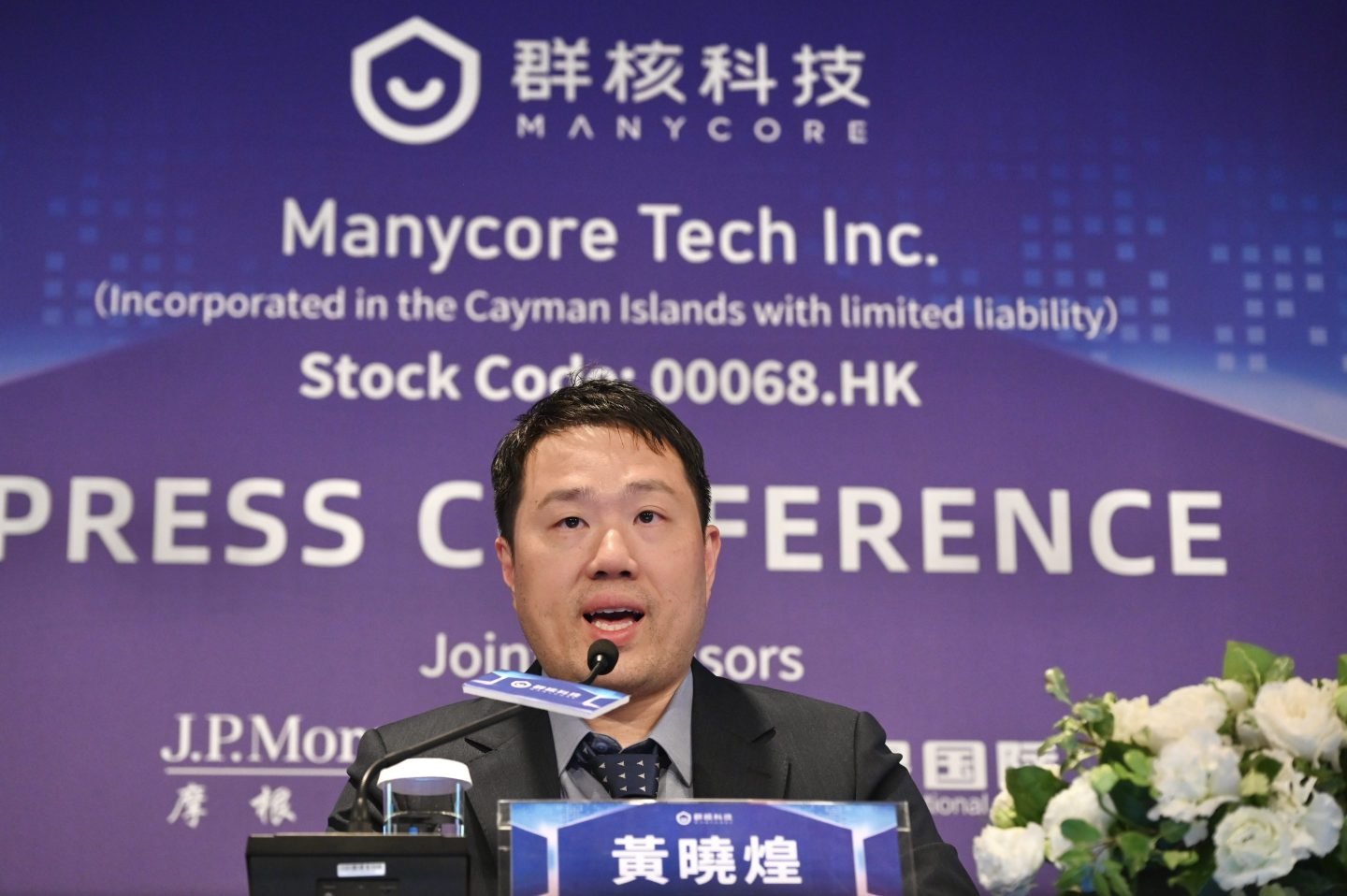
Manycore has become the first among Hangzhou’s so-called “Little Dragons” of emerging technology firms to go public, positioning itself at the forefront of a new phase in artificial intelligence centred on what it calls “spatial intelligence.”
The company’s market debut marks a milestone for a group of fast-growing Chinese innovators that have drawn attention for their rapid advances in cutting-edge technologies.
By stepping into public markets ahead of its peers, Manycore is seeking to capitalise on investor interest in next-generation AI applications.
At the core of its strategy is the concept of spatial intelligence, which aims to bridge digital systems with physical environments.
The approach involves enabling machines to perceive, understand, and interact with real-world spaces in more sophisticated ways, moving beyond traditional data-driven models toward integrated, environment-aware systems.
Executives have highlighted the potential for spatial intelligence to transform industries ranging from manufacturing and logistics to urban planning and autonomous systems.
By combining artificial intelligence with real-time spatial data, the technology is designed to enhance efficiency, decision-making, and automation across complex physical settings.
The listing also reflects broader momentum within China’s technology sector, where companies are increasingly focusing on advanced AI capabilities to drive growth.
Hangzhou, in particular, has emerged as a hub for innovation, producing a wave of startups that are gaining prominence in both domestic and global markets.
Investors are closely watching the performance of Manycore as a potential bellwether for the sector.
The company’s emphasis on a new category of AI development highlights a shift in industry focus, as firms seek to move beyond conventional applications and explore deeper integration between software and the physical world.
Analysts suggest that the success of spatial intelligence will depend on the ability to scale technologies, secure data infrastructure, and demonstrate real-world impact.
Nevertheless, the public debut of Manycore signals growing confidence in the next wave of artificial intelligence, where the boundaries between digital and physical systems continue to converge.
As competition intensifies, the company’s early move into public markets may provide both capital and visibility, strengthening its position as a leading player in an evolving and increasingly complex AI landscape.
The company’s market debut marks a milestone for a group of fast-growing Chinese innovators that have drawn attention for their rapid advances in cutting-edge technologies.
By stepping into public markets ahead of its peers, Manycore is seeking to capitalise on investor interest in next-generation AI applications.
At the core of its strategy is the concept of spatial intelligence, which aims to bridge digital systems with physical environments.
The approach involves enabling machines to perceive, understand, and interact with real-world spaces in more sophisticated ways, moving beyond traditional data-driven models toward integrated, environment-aware systems.
Executives have highlighted the potential for spatial intelligence to transform industries ranging from manufacturing and logistics to urban planning and autonomous systems.
By combining artificial intelligence with real-time spatial data, the technology is designed to enhance efficiency, decision-making, and automation across complex physical settings.
The listing also reflects broader momentum within China’s technology sector, where companies are increasingly focusing on advanced AI capabilities to drive growth.
Hangzhou, in particular, has emerged as a hub for innovation, producing a wave of startups that are gaining prominence in both domestic and global markets.
Investors are closely watching the performance of Manycore as a potential bellwether for the sector.
The company’s emphasis on a new category of AI development highlights a shift in industry focus, as firms seek to move beyond conventional applications and explore deeper integration between software and the physical world.
Analysts suggest that the success of spatial intelligence will depend on the ability to scale technologies, secure data infrastructure, and demonstrate real-world impact.
Nevertheless, the public debut of Manycore signals growing confidence in the next wave of artificial intelligence, where the boundaries between digital and physical systems continue to converge.
As competition intensifies, the company’s early move into public markets may provide both capital and visibility, strengthening its position as a leading player in an evolving and increasingly complex AI landscape.