MIT’s atomic-scale rendition of the double-slit test vindicates the wave–particle complementarity proposed by Bohr, disproving a central conjecture by Einstein
Physicists at the Massachusetts Institute of Technology have successfully carried out an atomic-scale version of the iconic double-slit experiment — long regarded as an idealised thought experiment — and demonstrated decisively that light cannot manifest as both a wave and a particle simultaneously.
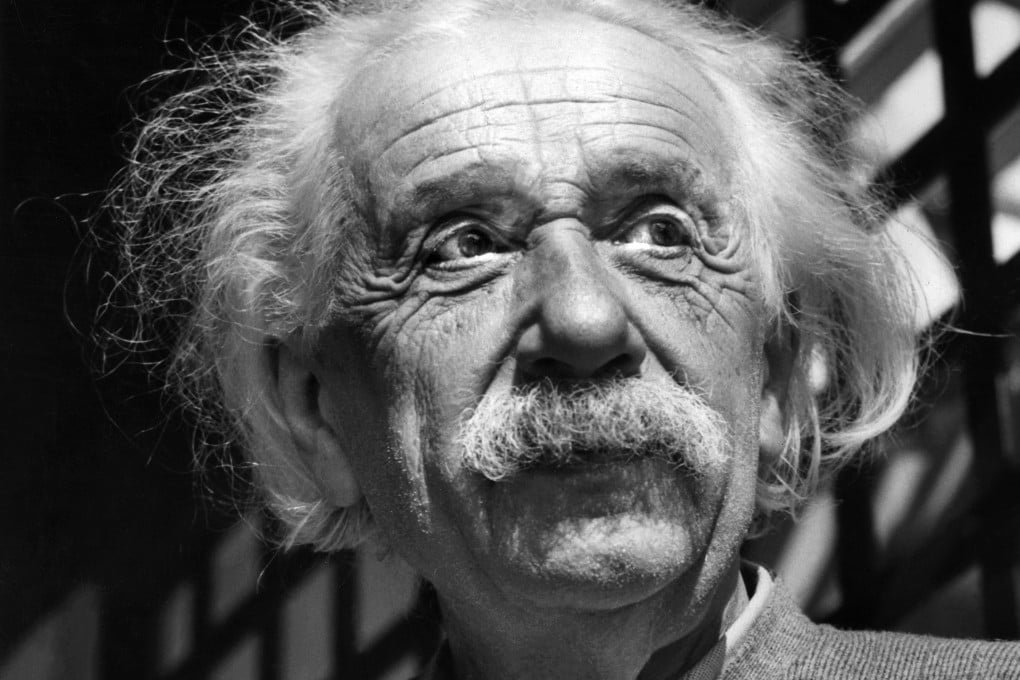
The finding settles a nearly century-old debate between Albert Einstein and Niels Bohr.
In the new experiment, researchers used ultracold atoms suspended in laser light as the “slits” and fired single photons at them.
By varying the quantum “fuzziness” of the atoms — effectively controlling how much information could be obtained about a photon’s path — they observed that any attempt to detect which atom the photon interacted with erased the interference pattern that reveals its wave-like nature.
In effect, acquiring particle-path information always destroyed wave interference.
The outcome confirms Bohr’s principle of quantum complementarity and refutes Einstein’s 1927 suggestion at the fifth Solvay Conference that measuring the recoil of the slit apparatus might allow simultaneous observation of both wave and particle aspects.
Even when atoms were held freely — without traditional “spring-like” supports — the same effect emerged.
The experiment’s results were published this week in Physical Review Letters.
The researchers described their setup as the most “faithful realisation” of Einstein’s proposed thought experiment to date, arguably closing the chapter on what had been one of the most persistent conceptual challenges to the foundations of quantum mechanics.
Beyond its significance for history and theory, the work carries practical implications for quantum technologies.
By clarifying exactly how and when wave–particle duality collapses under measurement, the findings may inform the design of quantum sensors, communication systems and computing components that rely on precise control of quantum states.
With this result, the scientific community gains both a deeper understanding of nature’s fundamental limits and renewed confidence in the counter-intuitive yet experimentally verified framework of quantum mechanics.
The finding settles a nearly century-old debate between Albert Einstein and Niels Bohr.
In the new experiment, researchers used ultracold atoms suspended in laser light as the “slits” and fired single photons at them.
By varying the quantum “fuzziness” of the atoms — effectively controlling how much information could be obtained about a photon’s path — they observed that any attempt to detect which atom the photon interacted with erased the interference pattern that reveals its wave-like nature.
In effect, acquiring particle-path information always destroyed wave interference.
The outcome confirms Bohr’s principle of quantum complementarity and refutes Einstein’s 1927 suggestion at the fifth Solvay Conference that measuring the recoil of the slit apparatus might allow simultaneous observation of both wave and particle aspects.
Even when atoms were held freely — without traditional “spring-like” supports — the same effect emerged.
The experiment’s results were published this week in Physical Review Letters.
The researchers described their setup as the most “faithful realisation” of Einstein’s proposed thought experiment to date, arguably closing the chapter on what had been one of the most persistent conceptual challenges to the foundations of quantum mechanics.
Beyond its significance for history and theory, the work carries practical implications for quantum technologies.
By clarifying exactly how and when wave–particle duality collapses under measurement, the findings may inform the design of quantum sensors, communication systems and computing components that rely on precise control of quantum states.
With this result, the scientific community gains both a deeper understanding of nature’s fundamental limits and renewed confidence in the counter-intuitive yet experimentally verified framework of quantum mechanics.