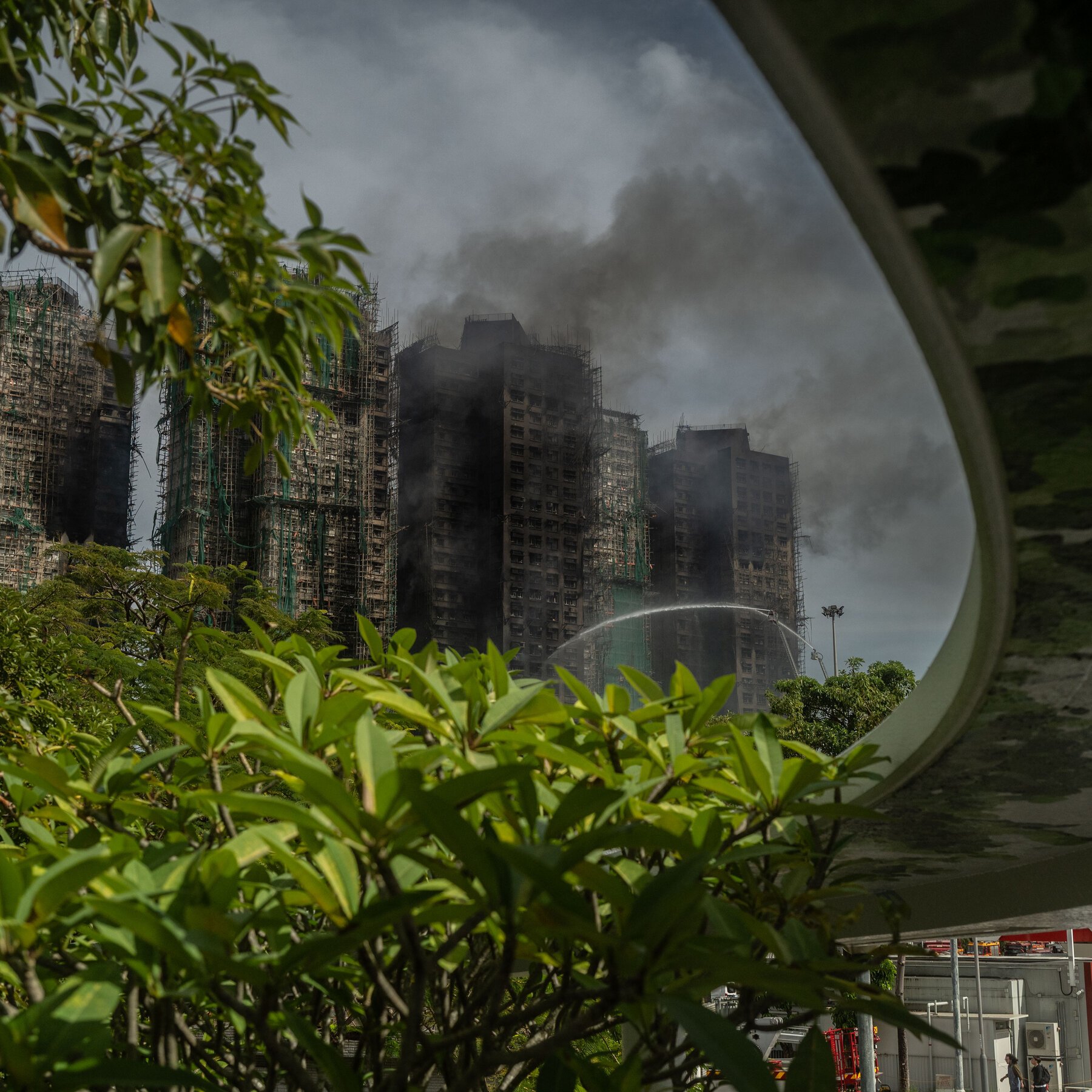
As at least 159 die in the Wang Fuk Court fire, official crackdown on dissent and tight media control fuel fear the tragedy is being managed to suppress public anger
Hong Kong authorities have responded to the deadly apartment-block fire in Tai Po with sweeping security measures and a pledge of reform — moves observers say mirror the central government’s established “playbook” for controlling public outrage.
The blaze, which began on 26 November at the Wang Fuk Court residential estate, has claimed at least 159 lives and left dozens missing, making it the deadliest residential fire in the city in decades.
Official investigations have already led to scores of arrests, including construction contractors, and large-scale safety inspections across renovation sites.
In a public statement, Chief Executive John Lee announced the formation of a judge-led independent committee to examine the causes of the fire and recommend sweeping reforms to building and renovation regulations.
He stressed the need to address “vested interests” in the construction industry and pledged to overhaul procedures governing scaffolding, materials and fire-safety audits.
Tens of thousands of residents were quickly displaced, and alleged use of flammable netting and foam insulation — together with regularly deactivated fire alarms — appear to have accelerated the fire’s spread.
At the same time, the government has moved aggressively to limit dissent.
Authorities arrested several individuals under the national security framework for organising or calling for public petitions demanding greater transparency.
Critics warn the crackdown seeks not only accountability, but the suppression of protest at a time of intense public anger.
A notice from Beijing forbidding large-scale protests or political gatherings in the wake of the fire echoes the approach taken during the 2019 protests, raising concerns among civil-liberties advocates.
Meanwhile, authorities have moved forward with a “patriots-only” legislative election this weekend, arguing its importance for “societal stability and recovery.” Political candidates appear cautious, with minimal campaigning in respect for mourning families.
Voter turnout — already low under the post-2021 electoral reforms — is expected to remain subdued.
Many residents believe the election represents an attempt to normalise everyday life and sideline public scrutiny before investigations conclude.
The tragic loss of life and mounting evidence of negligence have triggered anger and grief across Hong Kong.
Yet authorities’ twin response — swift arrests and vows of reform, alongside suppression of public criticism and political dissent — reflects a calculated effort to contain unrest.
Observers say it offers a stark example of how the city’s governance is increasingly subsumed under central control, particularly in moments of crisis.
The fire may thus mark not only a humanitarian tragedy, but a political turning point in the city’s handling of collective trauma.
The blaze, which began on 26 November at the Wang Fuk Court residential estate, has claimed at least 159 lives and left dozens missing, making it the deadliest residential fire in the city in decades.
Official investigations have already led to scores of arrests, including construction contractors, and large-scale safety inspections across renovation sites.
In a public statement, Chief Executive John Lee announced the formation of a judge-led independent committee to examine the causes of the fire and recommend sweeping reforms to building and renovation regulations.
He stressed the need to address “vested interests” in the construction industry and pledged to overhaul procedures governing scaffolding, materials and fire-safety audits.
Tens of thousands of residents were quickly displaced, and alleged use of flammable netting and foam insulation — together with regularly deactivated fire alarms — appear to have accelerated the fire’s spread.
At the same time, the government has moved aggressively to limit dissent.
Authorities arrested several individuals under the national security framework for organising or calling for public petitions demanding greater transparency.
Critics warn the crackdown seeks not only accountability, but the suppression of protest at a time of intense public anger.
A notice from Beijing forbidding large-scale protests or political gatherings in the wake of the fire echoes the approach taken during the 2019 protests, raising concerns among civil-liberties advocates.
Meanwhile, authorities have moved forward with a “patriots-only” legislative election this weekend, arguing its importance for “societal stability and recovery.” Political candidates appear cautious, with minimal campaigning in respect for mourning families.
Voter turnout — already low under the post-2021 electoral reforms — is expected to remain subdued.
Many residents believe the election represents an attempt to normalise everyday life and sideline public scrutiny before investigations conclude.
The tragic loss of life and mounting evidence of negligence have triggered anger and grief across Hong Kong.
Yet authorities’ twin response — swift arrests and vows of reform, alongside suppression of public criticism and political dissent — reflects a calculated effort to contain unrest.
Observers say it offers a stark example of how the city’s governance is increasingly subsumed under central control, particularly in moments of crisis.
The fire may thus mark not only a humanitarian tragedy, but a political turning point in the city’s handling of collective trauma.