Retail sales jump 6.9% on rising visitor numbers and consumer optimism — yet long-term challenges and shifting spending habits remain
October 2025 saw a sharp rebound in Hong Kong’s retail sector, with the value of total sales climbing 6.9 percent from a year earlier to HK$35.2 billion, according to provisional data released by the city’s Census and Statistics Department (C&SD).
On a volume basis — adjusted for price changes — sales rose 5.3 percent, marking the sixth consecutive month of gains and the strongest single-month growth since late 2023.
The rebound was broad-based.
Electrical goods and other consumer durables led the surge, with sales up 24.6 percent.
Jewellery, watches, clocks and other valuable gifts rose by 9.5 percent, while department-store sales grew 5.8 percent.
Food, alcohol and tobacco sales increased by 6.0 percent; wearing apparel rose modestly by 0.9 percent.
Online retail continued its rapid growth, accounting for 14.6 percent of total retail sales in October and rising 27.2 percent compared with the same month last year.
Analysts attribute the uptick to a combination of improved local consumer sentiment and a rebound in visitor arrivals.
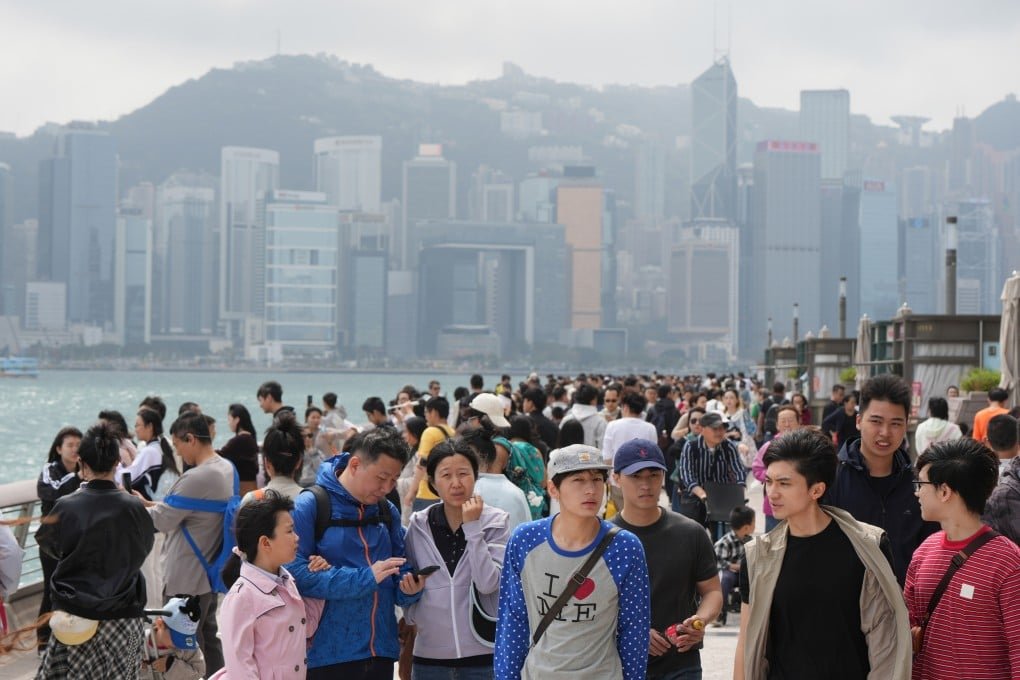
October saw roughly 4.59 million visitors — a 12.2 percent year-on-year increase — with some 3.45 million coming from mainland China.
That influx helped support demand for discretionary and tourist-oriented retail sectors.
Still, a deeper read of the data suggests recovery remains uneven.
For the first ten months of 2025, total retail sales value remained broadly flat year-on-year, and cumulative sales volume declined by 1.5 percent.
Some sectors continued to struggle: motor vehicles and parts dropped over 20 percent by value, fuel sales fell 8.7 percent, and traditional supermarket and Chinese-medicine retailers saw declines.
Observers argue that while the October rally offers a welcome boost, underlying structural shifts — including persistent weak demand for big-ticket items, changing shopper behaviour, and increased reliance on tourism and online channels — mean that a full, stable recovery will require more than temporary boosts.
They point to a need for reforms in urban retail infrastructure, rental frameworks, and support for local retailers as longer-term restoration measures.
As retailers and policymakers celebrate the recent rebound, many are cautious about reading October as a turning point.
The retail sector’s ability to adapt to new consumption patterns, retain local customer base, and weather external shocks will likely determine whether this recovery can be sustained beyond the short term.
On a volume basis — adjusted for price changes — sales rose 5.3 percent, marking the sixth consecutive month of gains and the strongest single-month growth since late 2023.
The rebound was broad-based.
Electrical goods and other consumer durables led the surge, with sales up 24.6 percent.
Jewellery, watches, clocks and other valuable gifts rose by 9.5 percent, while department-store sales grew 5.8 percent.
Food, alcohol and tobacco sales increased by 6.0 percent; wearing apparel rose modestly by 0.9 percent.
Online retail continued its rapid growth, accounting for 14.6 percent of total retail sales in October and rising 27.2 percent compared with the same month last year.
Analysts attribute the uptick to a combination of improved local consumer sentiment and a rebound in visitor arrivals.
October saw roughly 4.59 million visitors — a 12.2 percent year-on-year increase — with some 3.45 million coming from mainland China.
That influx helped support demand for discretionary and tourist-oriented retail sectors.
Still, a deeper read of the data suggests recovery remains uneven.
For the first ten months of 2025, total retail sales value remained broadly flat year-on-year, and cumulative sales volume declined by 1.5 percent.
Some sectors continued to struggle: motor vehicles and parts dropped over 20 percent by value, fuel sales fell 8.7 percent, and traditional supermarket and Chinese-medicine retailers saw declines.
Observers argue that while the October rally offers a welcome boost, underlying structural shifts — including persistent weak demand for big-ticket items, changing shopper behaviour, and increased reliance on tourism and online channels — mean that a full, stable recovery will require more than temporary boosts.
They point to a need for reforms in urban retail infrastructure, rental frameworks, and support for local retailers as longer-term restoration measures.
As retailers and policymakers celebrate the recent rebound, many are cautious about reading October as a turning point.
The retail sector’s ability to adapt to new consumption patterns, retain local customer base, and weather external shocks will likely determine whether this recovery can be sustained beyond the short term.