Independent inquiry and public mourning replicate past autonomy — yet arrests under national-security laws reveal shrinking space for dissent
A massive fire at the Wang Fuk Court housing complex in Hong Kong has triggered both an official judge-led inquiry and a wave of arrests under national-security legislation — a response that illustrates how the city’s traditional mechanisms for accountability are now unfolding alongside Beijing-style controls.
The disaster has exposed the narrowing gap between Hong Kong’s semi-autonomous governance and mainland China’s security-first approach.
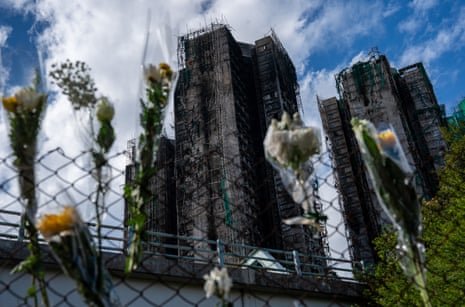
The blaze, which swept through seven of the estate’s eight towers, killed at least one hundred and fifty-six residents and left dozens missing.
In a step long viewed as a hallmark of Hong Kong’s legacy — the pledge of a transparent, independent investigation — Chief Executive John Lee announced a judge-led commission to probe fire causes and alleged regulatory failures tied to renovation work at the estate.
The inquiry commitment signals a continuation of the territory’s history of public-forum scrutiny in the face of disasters, contrasting sharply with the mainland’s tightly controlled narrative management.
Yet what follows the decision draws a stark contrast.
Authorities have already arrested scores of individuals — including contractors, renovation-company directors and engineering consultants — on suspicion of manslaughter and corruption.
More notably, at least one individual was detained after calling for an independent probe, prompting fears that even peaceful demands for accountability may now be treated as threats to state security.
Such detentions under the broad remit of national-security laws mark a departure from past practice and echo mainland patterns of suppressing dissent after tragedies.
State media in Beijing has echoed the official line, commending Hong Kong’s response and offering solidarity — reinforcing central-government oversight even as the territory handles local logistics.
Simultaneously, central authorities have launched a sweeping nationwide fire-safety inspection of high-rise buildings, framing the Hong Kong blaze as part of a broader push for public safety across the People’s Republic.
The dual response underscores a shift: while Hong Kong retains vestiges of its autonomous mechanisms, major crises now attract immediate intervention and central-level framing.
Many Hongkongers, reeling from grief and anger, have organised memorials and petitions demanding full transparency.
But civic space remains under strain.
The emerging pattern — independent-inquiry appearance, paired with heavy-handed security enforcement — suggests that the city’s response model has evolved.
The lines separating Hong Kong’s legacy of civic accountability and Beijing’s demand for control are blurring, raising deep questions about the future of dissent, safety oversight and public trust in the special administrative region.
The disaster has exposed the narrowing gap between Hong Kong’s semi-autonomous governance and mainland China’s security-first approach.
The blaze, which swept through seven of the estate’s eight towers, killed at least one hundred and fifty-six residents and left dozens missing.
In a step long viewed as a hallmark of Hong Kong’s legacy — the pledge of a transparent, independent investigation — Chief Executive John Lee announced a judge-led commission to probe fire causes and alleged regulatory failures tied to renovation work at the estate.
The inquiry commitment signals a continuation of the territory’s history of public-forum scrutiny in the face of disasters, contrasting sharply with the mainland’s tightly controlled narrative management.
Yet what follows the decision draws a stark contrast.
Authorities have already arrested scores of individuals — including contractors, renovation-company directors and engineering consultants — on suspicion of manslaughter and corruption.
More notably, at least one individual was detained after calling for an independent probe, prompting fears that even peaceful demands for accountability may now be treated as threats to state security.
Such detentions under the broad remit of national-security laws mark a departure from past practice and echo mainland patterns of suppressing dissent after tragedies.
State media in Beijing has echoed the official line, commending Hong Kong’s response and offering solidarity — reinforcing central-government oversight even as the territory handles local logistics.
Simultaneously, central authorities have launched a sweeping nationwide fire-safety inspection of high-rise buildings, framing the Hong Kong blaze as part of a broader push for public safety across the People’s Republic.
The dual response underscores a shift: while Hong Kong retains vestiges of its autonomous mechanisms, major crises now attract immediate intervention and central-level framing.
Many Hongkongers, reeling from grief and anger, have organised memorials and petitions demanding full transparency.
But civic space remains under strain.
The emerging pattern — independent-inquiry appearance, paired with heavy-handed security enforcement — suggests that the city’s response model has evolved.
The lines separating Hong Kong’s legacy of civic accountability and Beijing’s demand for control are blurring, raising deep questions about the future of dissent, safety oversight and public trust in the special administrative region.