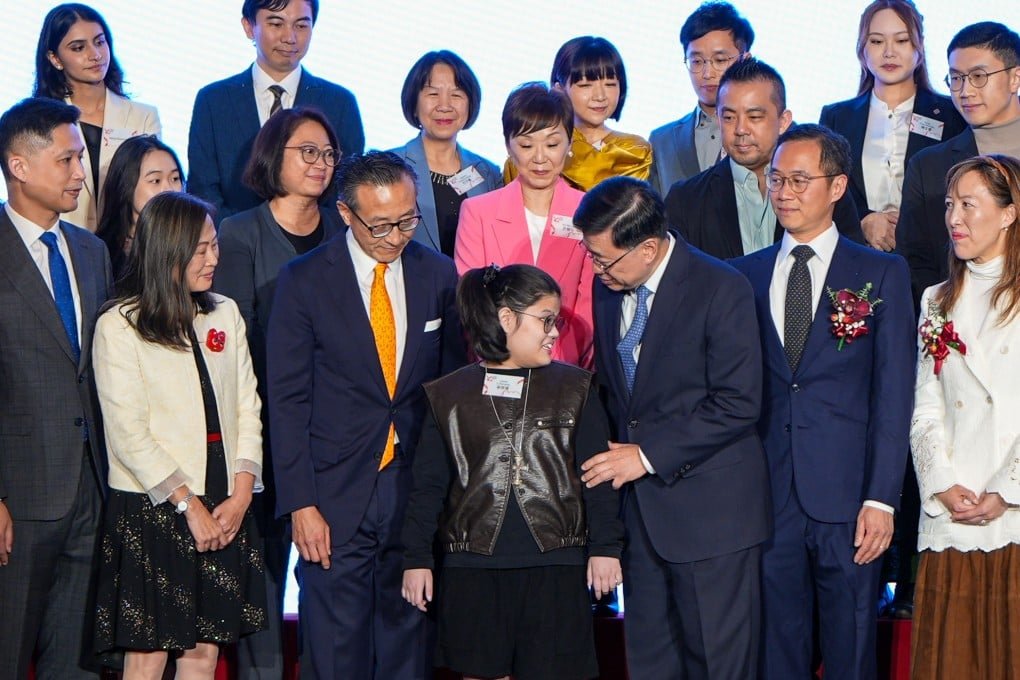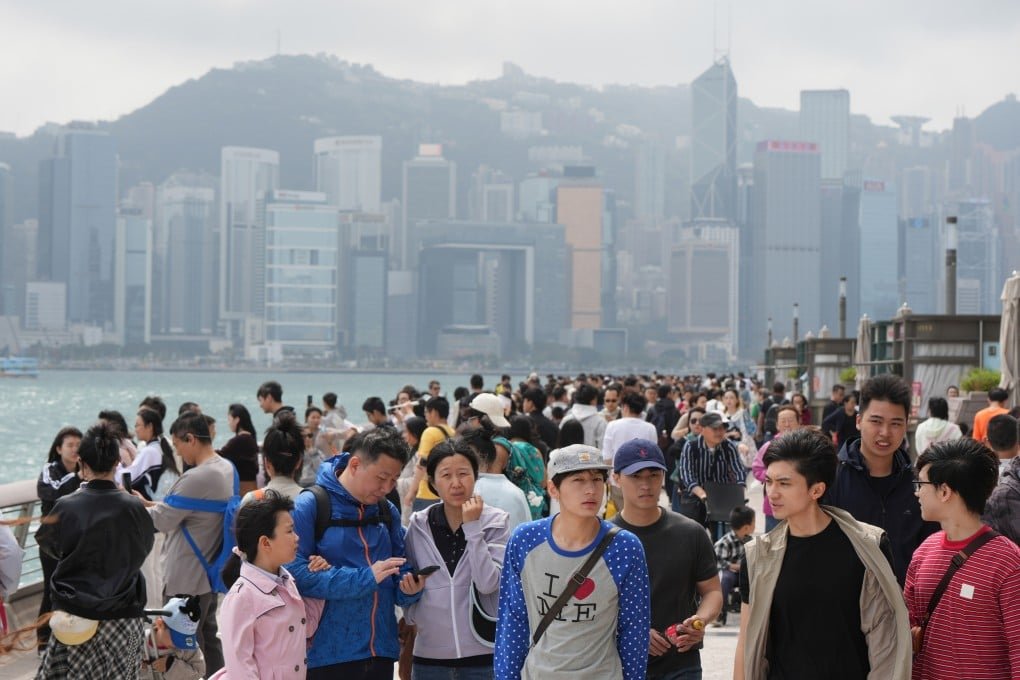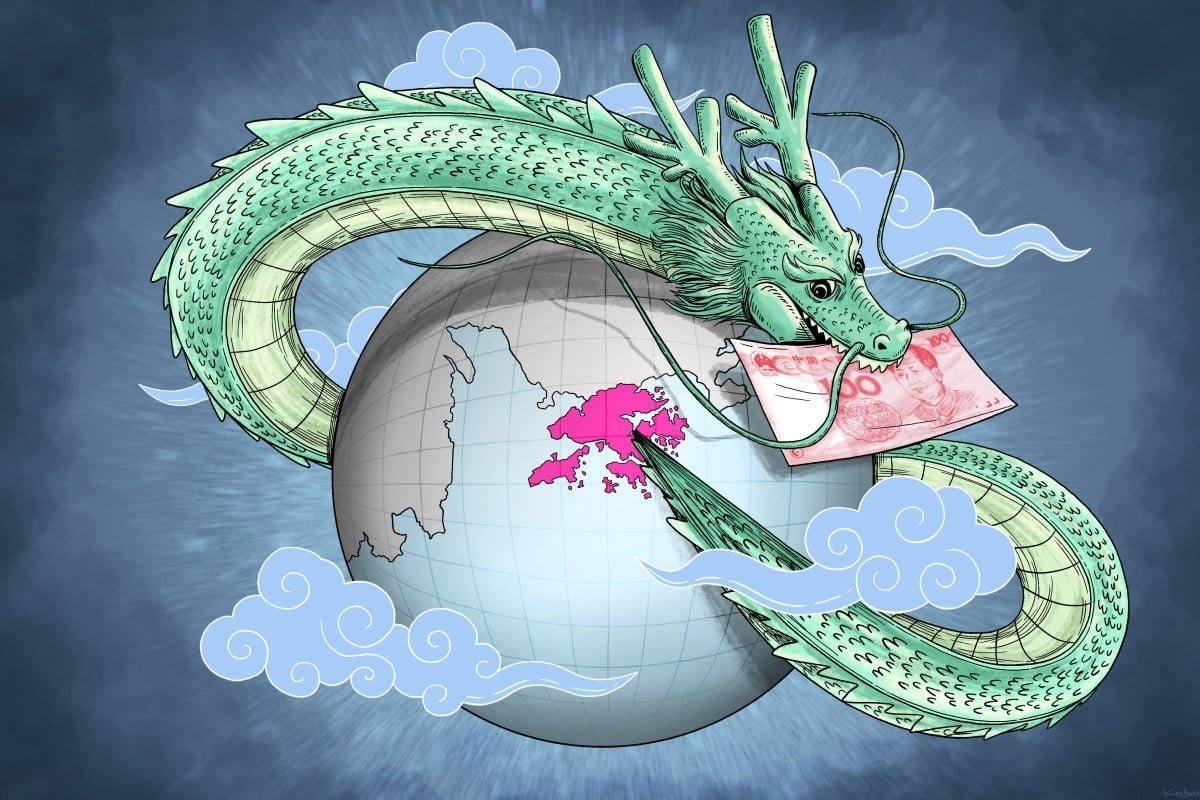
Voter participation rises slightly to 31.9 percent but remains among the lowest in city’s post-1997 history amid public outrage over fatal Tai Po fire
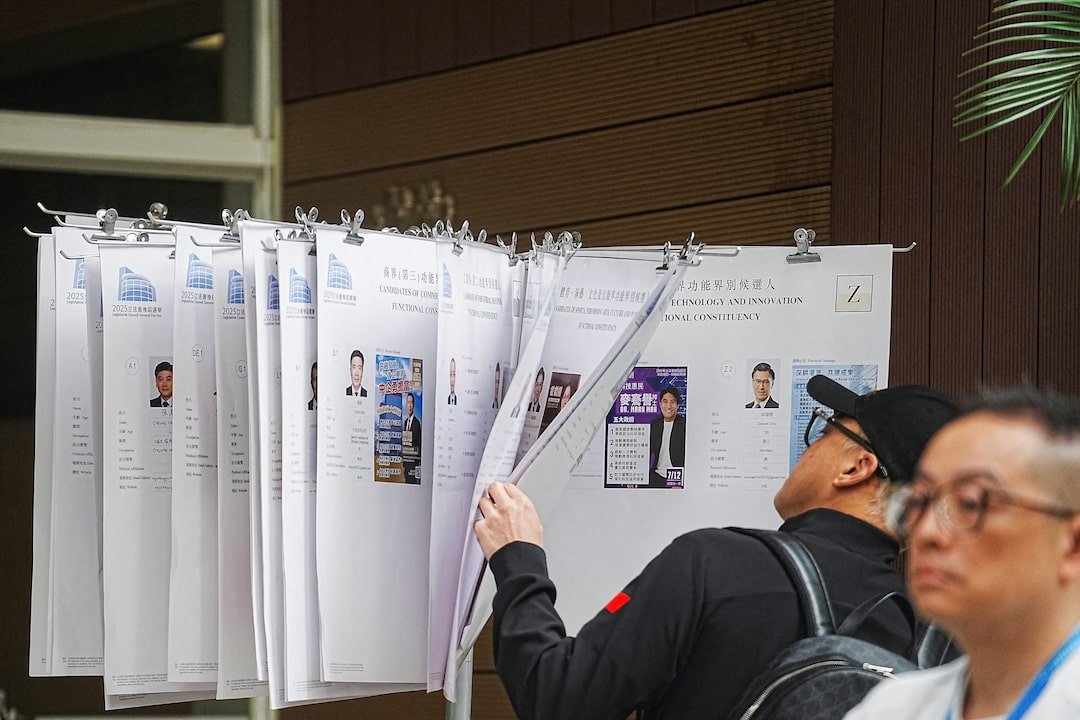
Hong Kong’s 2025 Legislative Council election registered a turnout of just 31.9 percent, marking the second-lowest participation rate since the city’s handover to China — a result that reflects widespread public disaffection following the tragic fire at a Tai Po apartment complex earlier this month.

Despite efforts by authorities to boost turnout, the vote was deeply coloured by grief, anger over perceived regulatory failures and a prevailing sense of disillusionment.

The blaze at the Wang Fuk Court estate claimed at least 159 lives, leaving many mourning and others questioning building-safety oversight, construction standards and official accountability.

The disaster compounded longstanding concerns over restricted political choice — as only government-approved “patriot” candidates were permitted to run — and the abrupt suspension of election campaigning during the mourning period further dampened enthusiasm for voting.

In response, officials extended voting hours and opened additional polling stations.

Security was heightened, especially around Tai Po — the site of the fire — and authorities arrested several individuals for allegedly encouraging a boycott or invalid voting through social media.

These measures, while intended to maintain electoral order, underscored deep social tensions and a widespread feeling among many residents that voting offered little to change the status quo.

Voter registration has also fallen for the fourth year in a row, reflecting growing apathy as many Hong Kongers question the legitimacy and effectiveness of a legislature populated almost entirely by pro-Beijing figures.

Analyses suggest the low turnout signals not only mourning but a broader erosion of trust in institutions among swathes of the public.

As Hong Kong confronts the aftermath of the fire and the political fallout from this election, the modest rise in turnout — from 30.2 percent in 2021 — is unlikely to restore confidence.

For many, the ballot went ahead under grim circumstances, leaving unresolved grief and unaddressed questions about safety, representation and accountability.

Bank foresees MSCI Hong Kong Index rising 8–25 % as improved valuations, earnings recovery and policy support fuel investor confidence
JPMorgan has projected a strong rebound for Hong Kong and Chinese equity markets in 2026, expressing optimism that recent gains could extend into the new year with up to nearly twenty-percent upside.

The bank’s analysts argue that valuations remain attractive, and ongoing economic recovery, supportive policy measures, and stabilising property-market dynamics should collectively underpin further share-price growth.

:contentReference[oaicite:1]{index=1}

According to the forecast, the MSCI Hong Kong Index — a benchmark for large- and mid-cap listed firms — could reach between 14,366 and 16,679 points by end-2026, representing an 8–25 % increase from current levels.

This outlook assumes underlying earnings growth of about six percent for 2025 and nine percent for 2026, reflecting a rebound in corporate profitability across sectors.

:contentReference[oaicite:3]{index=3}

JPMorgan’s cautiously optimistic forecast is reinforced by fresh assessments from HSBC Asset Management and UBS, which expect Hong Kong and mainland Chinese equities to maintain a recovery trajectory in 2026. They cite a combination of improved fundamentals, easing deflationary pressures and continued policy support.

:contentReference[oaicite:6]{index=6}

Market sentiment has indeed improved markedly.

After enduring several challenging years, Hong Kong stocks recouped ground in 2024 — and this year’s rally has reinforced hopes that the region may regain its status among Asia’s top equity markets.

:contentReference[oaicite:7]{index=7}

Still, analysts warn that 2026 may not be free of headwinds.

Potential risks include rising regional interest rates, lingering pressures in the property sector, and geopolitical uncertainties which could dampen investor appetite.

:contentReference[oaicite:8]{index=8}

For now, the case for continued gains appears compelling: attractive valuations, positive earnings forecasts and supportive policy measures combine to keep Hong Kong and Chinese equities on a robust growth path as markets look toward 2026 with renewed optimism.
New index tracks 100 Hong Kong-listed tech firms — a landmark step signalling HKEX’s commitment to building a vibrant, diversified capital market ecosystem
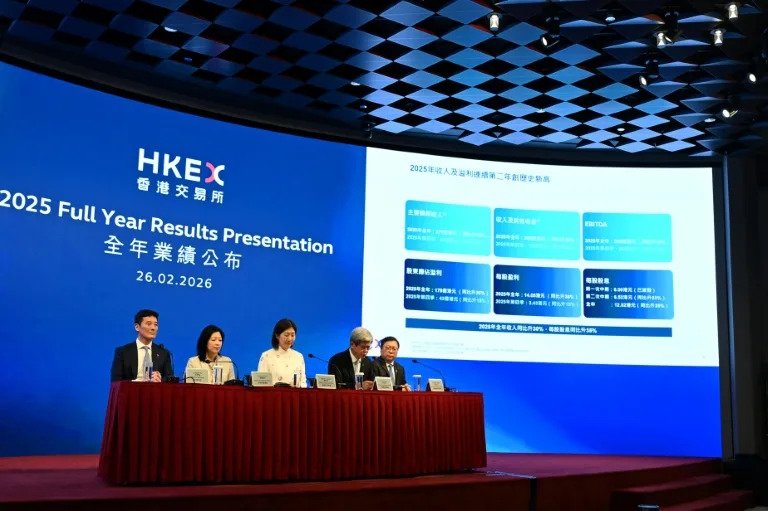
Hong Kong’s main exchange operator has introduced a new broad-based equity index, the HKEX Tech 100 Index (Tech 100), marking the city’s first domestic index focused on technology- and innovation-oriented firms.

The index tracks the 100 largest Hong Kong-listed firms across six major themes: Artificial Intelligence, Biotech & Pharmaceutical, Electric Vehicles & Smart Driving, Information Technology, Internet, and Robotics.

All constituent stocks qualify for Southbound Stock Connect, enabling access by mainland Chinese investors.

The launch reflects a broader shift in strategy at Hong Kong Exchanges and Clearing (HKEX), aiming to diversify beyond traditional sectors such as property and finance, and reinforce Hong Kong’s appeal as a centre for growth in next-generation industries.

HKEX’s chief executive described the milestone as central to the Group’s ambitions to expand its index and data business — a step toward turning the exchange into a hub for dynamic, innovation-driven capital formation.

In tandem with the index debut, HKEX has struck a licensing deal with mainland China’s E Fund Management Company Limited to facilitate creation of an exchange-traded fund (ETF) based on Tech 100.

The move is designed to open Hong Kong’s technology equity opportunity to a broader base of Chinese Mainland investors, subject to regulatory approval.

Tech 100 also incorporates a “fast-entry” mechanism, allowing newly listed companies that meet the relevant criteria to be added outside the standard quarterly review.

This flexibility aims to ensure the index remains current in a fast-evolving sector and responsive to fresh entrants.

Market watchers view the index launch as a timely response to surging investor interest in tech and AI — trends that already helped push Hong Kong’s broader tech benchmark higher this year.

The new index is expected to attract capital flows, support product development such as ETFs, and strengthen the role of Hong Kong as a gateway between global capital and China’s innovation economy.

The stage is set for the Tech 100 to become a barometer for the city’s ambition to rebrand its capital markets around technology, growth and future-oriented sectors.
Ding Shilun to donate proceeds from new painting to emergency relief as city reels from deadly blaze at Wang Fuk Court
In the wake of the devastating high-rise fire at in Tai Po, a Chinese artist has committed to auctioning a new painting, with all proceeds earmarked for the emergency response service in Hong Kong.

— whose latest watercolour, titled (2025) was unveiled this week — will sell the piece via a silent auction, donating 100 percent of the final sale price to the region’s ambulance service.

The gesture arrives amid an outpouring of relief efforts following the tragedy, which has left Hong Kong grappling with grief, displacement, and a mounting humanitarian response.

Authorities say the fire, which erupted on 26 November, has resulted in the deaths of at least 159 people and injured many more, marking the worst residential inferno the city has seen in decades.

Investigations point to the building’s bamboo-scaffold renovation and associated plastic netting and foam cladding as potential accelerants in the blaze, while rescue services and community organisations have launched a broad relief campaign.

The auction of Dawn reflects a broader wave of solidarity across the art world and civil society.

Several galleries and artists have pledged support for victims and survivors, channeling proceeds from exhibitions and donations.

Meanwhile large-scale giving has poured in: one philanthropist linked to the crypto industry announced a multi-million-dollar donation to the government’s relief fund, and companies across sectors have stepped up — contributing funds, supplies and shelter to displaced families.

For many Hong Kong residents, the combination of grassroots generosity and public-spirited art offers some solace during a period of collective mourning.

The auction — modest in definition yet symbolic in scope — underscores how cultural initiatives can complement humanitarian aid, reinforcing community bonds when tragedy strikes.

As the city marshals resources to help victims recover and rebuild, the sale of Dawn stands as a vivid reminder that art can be a vessel for compassion, solidarity and hope in dark times.
Rising rents, declining local demand and cross-border spending splurge drive wide-scale shuttering of nightlife venues
Hong Kong is seeing a wave of bar closures, as a mix of economic pressure, shifting consumer habits and competition from mainland China accelerates the decline of the city’s once-vibrant nightlife.

In recent months, dozens of bars and nightclubs have shut their doors — underscoring the harsh environment now faced by hospitality operators.

Industry insiders point first to soaring property costs.

Rent remains one of the most significant overheads for bars and restaurants, and for many venues the combination of high rent, labour costs and sluggish business has become unsustainable.

As one sector leader put it, the delta between Hong Kong’s fixed costs and actual consumer spending is too wide to persist.

At the same time, consumer behaviour has changed markedly.

Many local residents now travel across the border for cheaper dining and entertainment options, notably in nearby cities such as Shenzhen.

That shift in spending, coupled with a cooling domestic economy and weaker tourist expenditure, has sharply reduced foot traffic in Hong Kong’s bars.

Another factor is a long-term structural shift in the hospitality sector.

Data show that the number of restaurants and bars closing across the city now exceeds the number of new ones opening — the first such net decline in several years.

This contraction in the food and beverage landscape reflects a broader retreat by consumers from traditional nightlife habits.

Some bar operators also say that lingering legacy effects of the pandemic have failed to fade.

Although nightlife regulations have eased, spending patterns have not returned to pre-COVID levels.

In response, a few cocktail bars and boutique venues are aiming to survive by re-configuring their business models — leaning on creative pricing, minimalist ambience or niche offerings — but many of the older, larger establishments appear unable to adapt in time.

For Hong Kong’s nightlife scene to stabilise, observers suggest that operators will need to deliver stronger value for money and distinct experiences.

In the meantime, the wave of closures marks a significant contraction for a sector long associated with the city’s urban energy and social culture — and a sobering sign of how much the dynamics of consumption have changed.
HKEX and SFC warn of potential penalties as over 300 companies line up to list, amid signs some sponsors may be overextended
Hong Kong’s securities regulator and the city’s stock-exchange operator have issued a sharp warning to investment banks, urging them to uphold rigorous standards in initial public offering applications after a record surge in listing activity.

The statement comes as more than 300 companies—primarily from mainland China—have submitted IPO applications this year, prompting concern that some sponsors are handling too many deals simultaneously and compromising due diligence.

In a joint appeal issued last Friday, (HKEX) reaffirmed its commitment to “timely and robust review” of new listing applications, calling on issuers, sponsors and professional advisers to ensure listing materials are comprehensive and accurate.

The (SFC) echoed the call, expressing support for a high-quality and vibrant capital markets ecosystem.

Officials signalled that failure to meet established requirements could draw punitive action — including financial penalties — for sponsors responsible for substandard submissions.

Regulators noted that in past cycles they had fined sponsors for inadequate due diligence in IPOs that later underperformed or faced regulatory issues.

Market observers suggest the warning reflects anxiety that a flood of simultaneous deals may stretch underwriting banks’ capacity and pressure underwriting timelines, leading to shortcuts in reviews.

In 2025 alone, Hong Kong has already seen the single largest annual IPO fundraising tally since 2021, buoyed by a wave of mainland Chinese firms seeking offshore capital.

Analysts say the regulators’ intervention may be intended to bolster investor confidence and safeguard Hong Kong’s reputation as a leading global listing venue.

By re-emphasising quality controls, authorities aim to ensure that the recent rebound in IPO volume does not come at the expense of transparency, governance or long-term market stability.

The coming weeks will reveal whether the reminder prompts a tightening of sponsor behaviour — and whether the deluge of filings can proceed without compromising standards or undermining investor faith in Hong Kong’s capital markets.
Government proposes adoption of global crypto-asset reporting standards ahead of automatic information exchange starting in 2028
Hong Kong’s government has opened a public consultation seeking feedback on new rules aimed at tightening tax and reporting requirements for cryptocurrencies.

Under the plan, the city proposes to adopt the international (OECD)’s (CARF) and to update its existing (CRS) to include digital-asset transactions.

If approved, licensed crypto exchanges, wallet custodians and other virtual-asset service providers will be required to submit detailed transaction and account-holder data for cross-border sharing with relevant tax authorities.

Hong Kong plans to begin automatic information exchange under the new rules in 2028, as part of an effort to align with global standards and deter cross-border tax evasion.

The consultation follows a broad regulatory overhaul launched in 2025 under the so-called “Policy Statement 2.0”, in which the government committed to establishing a comprehensive legal framework for digital assets including trading platforms, stablecoins and custody services.

Under that roadmap, regulation of virtual-asset service providers has already been tightened, and stablecoin licensing rules are expected to take effect by the end of the year.

Supporters argue the proposed tax-reporting regime will bolster Hong Kong’s reputation as a transparent and well-governed international finance hub, reinforcing oversight while maintaining support for crypto-asset innovation.

They note that clear tax rules can foster investor confidence and encourage institutional participation.

However, some in the crypto community warn that the compliance burden could be heavy — especially for smaller providers — and that the ambition to bring crypto transactions into a strict international reporting net may discourage retail and overseas users.

The consultation period — which runs until early February 2026 — will be closely watched by industry stakeholders, who argue the outcome may define Hong Kong’s regulatory stance on digital assets for years.

With wealth managers, exchanges and digital-asset platforms monitoring the proposals closely, the city appears determined to balance its ambition as a crypto hub with international demands for fiscal transparency.

The next six weeks may determine whether Hong Kong sets the global standard for regulated, tax-transparent crypto trade — or shifts towards a tighter compliance regime at the risk of dampening retail innovation.
Calls increase for transparent media coverage and release of commentator amid crackdown after 159-death Wang Fuk Court blaze
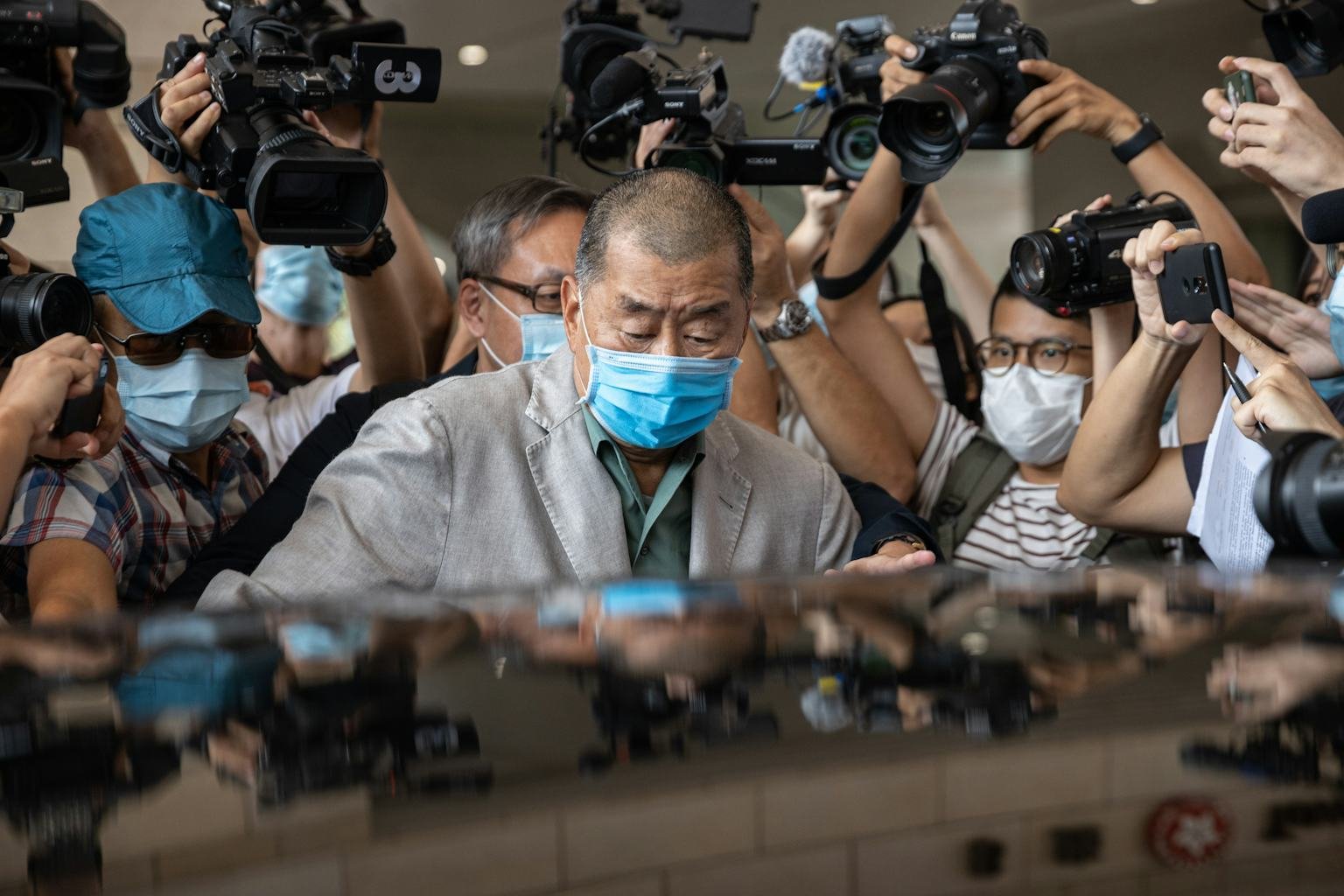
The (CPJ) has urged Chinese and Hong Kong authorities to release commentator , halt harassment of journalists and permit unfettered reporting on the devastating fire at .

Wong was arrested on December 6 under sedition charges following social-media posts — the same day the region’s national-security office warned foreign media to avoid reporting that could cross “red lines” amid the disaster.

The blaze, which began on November 26, engulfed seven high-rise towers in the Tai Po district and has now claimed at least 160 lives according to official death-toll updates.

The inferno has triggered widespread anger over alleged use of flammable renovation materials and longstanding safety oversights.

As grieving families and civil society call for answers, rights groups contend that media suppression is undermining public demand for transparency and accountability.
In a public statement, the CPJ’s Asia-Pacific director described the escalation in media intimidation as “appalling and unacceptable,” decrying the use of national-security measures to silence critical coverage and deter scrutiny of government action during this tragedy.

Other human-rights organisations have likewise stressed the need for an open inquiry.

The urged the government to launch a transparent, independent investigation into the fire’s causes — and to ensure affected families receive justice.

The call follows initial inspections that revealed scaffolding mesh and foam boards used in the ongoing renovation of the complex failed to meet fire-safety standards and greatly accelerated the blaze.

Since the fire, authorities have removed scaffolding nets city-wide, arrested 21 people on manslaughter or negligence charges tied to the renovation, and launched a judge-led review of building-safety protocols.

Nonetheless, many civil-society voices see the arrest of a commentator and warnings to foreign media as a troubling sign — arguing that open reporting is essential if Hong Kong is to avoid future disasters and restore trust.

With election tensions rising, and grief still raw across the community, the demand for press freedom is growing louder.

As stakeholders wait for the full findings of official inquiries, the rights groups’ stance resonates as a call not only for safety reforms — but for accountability, transparency and the fundamental right to free expression during a time of collective mourning and public anger.
New rollout brings contactless payments via iPhone to Hong Kong merchants, eliminating need for separate card-readers
Merchants across Hong Kong can now use their iPhones as point-of-sale terminals, following the launch of in the city.

From 9 December 2025, Hong Kong joins a growing list of regions worldwide where iPhones can accept contactless payments directly via NFC — no extra hardware required.

Under the scheme, shop owners, taxi drivers, cafés and other service providers need only a compatible iPhone (iPhone 11 or later) and a supporting payment-platform app to accept payments.

The method supports contactless credit and debit cards, and other digital wallets, and works equally for large retailers and small, independent sellers.

At launch, four platforms — , , and — are certified to support Tap to Pay on iPhone in Hong Kong.

Apple emphasises the security and privacy of the system: payment data is encrypted and stored in the device’s Secure Element, and Apple does not receive or retain information about what is being bought or who is paying.

The arrival of Tap to Pay reflects a broader global expansion: since first launching in the United States in early 2022, the feature now operates in more than fifty countries and regions.

Hong Kong is the latest in Asia to gain access, following recent rollout in Singapore.

For many small and medium-sized businesses — previously reliant on dedicated card readers or terminals — the new capability promises lower costs, simpler setup and increased flexibility.

Observers say the shift could accelerate adoption of digital payments throughout Hong Kong’s retail and services sectors, while adding convenience for consumers increasingly familiar with contactless wallets and tap-to-pay cards.

For customers, payments remain as seamless as touching a card or phone to a device; for businesses, it means transforming a smartphone already in hand into a fully functional, secure payment terminal.

The rollout positions Hong Kong at the forefront of mobile payment innovation in the region as commerce increasingly embraces digital wallets and contactless methods.
Chinese e-commerce giant offers highest bid to acquire prime Central office block as seller seeks liquidity ahead of bond maturities
has submitted the highest offer for a 50 percent stake in — a 27-storey Grade-A office building in Hong Kong’s Central business district — currently owned in equal parts by and .

Reports say the bid surpasses rival offers, though exact financial terms have not been publicly disclosed.

:contentReference[oaicite:4]{index=4}

The proposed transaction is part of Lai Sun’s broader strategy to dispose of up to HK$8 billion in assets over two years, aimed at easing mounting debt pressures and avoiding refinancing risks associated with a US dollar-denominated bond maturing in mid-2026. :contentReference[oaicite:5]{index=5} The sale would also transfer a trophy-class Hong Kong property from a leveraged developer into the hands of a major mainland tech investor at a time when interest in prime Central real estate remains selective.

CCB Tower sits on a historically significant site — once home to the former Hilton (later Regal) hotel — and comprises some 229,000 square feet of gross floor area.

China Construction Bank (Asia) occupies most of the building, including its banking hall and 18 floors of office space.

:contentReference[oaicite:6]{index=6}

Although JD.com declined to comment publicly on the bid, market observers interpret the move as a strategic attempt to anchor its regional presence in Hong Kong’s financial core.

They argue that ownership of a flagship office asset could provide JD.com with a “mainland-to-international” gateway — useful for regional corporate and regulatory engagement even as it expands its logistics, supply-chain and enterprise services.

:contentReference[oaicite:7]{index=7}

For Hong Kong’s commercial real estate market — still recovering from a downturn marked by elevated vacancy and falling rents — a successful deal would signal renewed interest from mainland investors in trophy-grade assets.

For Lai Sun, the sale could relieve pressure on its balance sheet and support refinancing efforts.

For JD.com, it represents a bet on long-term strategic value beyond short-term returns.

As bidding reportedly continues, the coming days will reveal whether the transaction closes and under what terms, potentially reshaping ownership of one of Central’s iconic office buildings and offering new insights into cross-border capital flows in Greater China’s corporate real-estate market.
Trump’s latest decision to allow NVIDIA to sell its H200 chips to China may be the most important strategic move he has made (and he made a few, too few and too amazing to mention!) — and perhaps the most important one he could make — to truly make America great again.
It is refreshing to watch Washington choose intelligence over brute force.

Unfortunately, the fear remains that this correction arrived too late. Because when Biden imposed his chip restrictions, he committed the single greatest strategic mistake an American administration could make: he forced China into building its own AI chips — something China never intended to do.

Before the ban, China was perfectly comfortable relying on NVIDIA.

NVIDIA was easy to use.
NVIDIA was the global standard.
NVIDIA gave China no reason to reinvent the wheel.

But Biden, in a spectacular display of using power instead of brain, slammed the door shut — and instantly created China’s necessity.

And “necessity is the mother of invention” (Plato’s Republic).

China responded with a $1 billion prize for the first local company to build an H200-class chip or better.

Twelve companies (some are smarter and bigger and much more innovative than Apple, Google, Microsoft, OpenAI, and Facebook — Huawei, Tencent, Alibaba, and TikTok, to name a few) are now racing toward that target, powered not by the distracted, ideologically confused “woke education” dominating American universities, but by a disciplined, technically focused army of Chinese engineers — trained in mathematics, physics, architecture, systems design, and real engineering rather than the political psychology of contradicting the laws of nature, science, and facts.

And the outcome is inevitable:

China will sooner or even more soon produce a better NVIDIA — cheaper, faster, cleaner, and completely free from U.S. backdoors, licensing, controls, restrictions, or influence.

Once they succeed, OpenAI can change its name to “CloseByeBye” — these chips will pour into the global market at 90% lower cost, instantly accessible to every U.S. adversary, every sanctioned regime, every hostile military, and every actor America hoped to restrain.

This is the harvest of strategic stupidity:

America tried to secure its advantage through force, and instead destroyed its advantage through the vacuum it created.

This is not new.

It is the same mistake Europe made by blocking itself and its citizens from cheap Russian oil, only to watch Russia open new and bigger markets and double its revenue while EU citizens pay double for energy — with zero effect on the Ukraine war.

It is the same mistake the United States made weaponizing the U.S. dollar and SWIFT, only to push rich and powerful nations to establish alternative — faster, cheaper, and backed-by-real value — currencies and payment systems.

And now it is the same mistake Biden made with AI chips — pushing China to stop depending on U.S. technology and start replacing it.

This is the American tragedy (Winston Churchill’s famous quote: “You can always count on Americans to do the right thing — after they’ve tried everything else”):

Goliath keeps relying on its power, and Goliath keeps losing to smarter Davids.

Trump’s new policy is correct.
Trump’s correction is necessary.
Trump’s move is intelligent.

But the nightmare is that Biden’s mistake may have already accelerated China beyond the point of return.

Better late than never — yes.

But we better get used to the reality where China is dominating the AI world as we know it so far.

For the USA to stay relevant, it must:

1. Stop using brutal restrictions and instead allow limitless SMART and PRODUCTIVE migration into all American AI companies — rather than blocking American companies from global talents who received real education instead of the American universities’ woke cancer.

2. Use unlimited brutal force to fight EU laws targeting American tech companies and American individuals.

3. Cooperate with China on AI rather than competing with the empire of tomorrow using the mindset of yesterday.

This means welcoming Chinese investment in American space companies and brain-chip innovation, and being part of the future together, rather than watching it on Chinese TikTok and TV.

4. Maintain Trump’s peace economy rather than returning to the traditional American war economy.

5. Keep America First, with the humility to recognize that there is more than one way to run a successful country — as proven by Singapore, China, the UAE, and Saudi Arabia, all of which have outperformed the world’s broken “democracies” with their fake freedoms, fake justice, and fake prosperity that they keep pretending to maintain while collapsing backward.
Google is exploring a groundbreaking strategy to place future data centers in Earth’s orbit, in what would be one of the most radical infrastructure shifts in the history of computing.
According to internal concept studies and early-stage engineering discussions, the company is examining whether off-planet facilities could solve several of the constraints now facing terrestrial cloud networks: energy consumption, cooling efficiency, physical security, and global latency.

The initiative—still in a conceptual phase—stems from growing pressure on major cloud providers to expand capacity while reducing their environmental footprint. Global demand for AI computation is surging, and traditional data center construction is bumping against physical, ecological, and political limits. Space, Google’s engineers argue, offers an environment with naturally cold temperatures, abundant potential for solar energy, and virtually unlimited expansion room.

Industry analysts say the idea is bold but not entirely implausible. Launch costs have fallen dramatically in the last decade, and autonomous infrastructure management has become increasingly reliable. Google’s recent advances in AI-powered maintenance systems could, in theory, allow unmanned orbital data hubs to operate with minimal intervention from Earth.

However, the plan faces staggering challenges. Hardware must survive extreme radiation, micro-meteoroid impacts, and thermal stress. Launching equipment into orbit remains expensive despite recent cost reductions. More critically, regulators worldwide are already raising concerns about space debris, orbital crowding, and cybersecurity risks posed by off-world infrastructure storing sensitive global data.

Google is reportedly exploring partnerships with several aerospace firms to assess the feasibility of modular, radiation-shielded computing units. These units would rely on high-density solar arrays and laser-based communication links to maintain high-speed connectivity with Earth. Engineers familiar with the discussions say that, in theory, orbital data centers could provide near-continuous uptime, immune to power outages, natural disasters, and even terrestrial geopolitical instability.

If Google proceeds, the project would mark a profound expansion of the cloud computing landscape—transforming space from a communications relay zone into a full-scale computational frontier. While practical deployment is still many years away, the mere prospect signals how far major tech companies are willing to go to keep pace with accelerating global demand for AI and data processing.

Google has not publicly confirmed the initiative, but its research teams have acknowledged that “off-planet infrastructure” is one of several long-range scenarios under study.

Should the company pursue this vision, the cloud of the future may not be a metaphor—it may be orbital.
Officials summon international outlets in an unprecedented meeting, accusing them of distorting reports on the deadly Tai Po fire and electoral matters
Hong Kong’s Office for Safeguarding National Security has summoned several foreign media organisations, issuing a warning against what it described as the spread of “false information” linked to the fatal Wang Fuk Court fire and the city’s upcoming Legislative Council election.

The summons, delivered without prior notice, marks one of the most direct interventions by national-security authorities into foreign press activity since the office was established.

In a written statement provided to attendees, officials accused unnamed outlets of distorting government disaster-response efforts, misrepresenting the election environment and provoking social division.

No specific news reports were identified, and the session did not allow questions, leaving journalists with little clarity on how the authorities intend to define or enforce boundaries on reporting.

The meeting follows public frustration and grief over the fire that killed more than one hundred fifty residents and fuelled scrutiny of building safety, regulatory oversight and the government’s management of the aftermath.

The election, taking place days after the tragedy, has already faced muted public engagement amid anger over safety failures and strict limits on political participation.

Foreign correspondents who attended the summons said officials warned them not to “cross the red line,” asserting that media freedom does not give licence to interfere in Hong Kong’s internal affairs.

Press-freedom groups interpreted the move as a tightening of control over independent reporting, raising concerns that foreign journalists may feel pressure to soften or restrict coverage during a politically sensitive period.

Authorities maintain that their aim is to prevent misinformation and preserve public order.

However, the lack of transparency in the allegations has left many in the media community questioning whether investigative reporting and critical analysis of the fire or election could be targeted next.

As Hong Kong moves through a period of heightened tension, the extent to which foreign media can operate freely will be closely watched both locally and internationally.
Hang Seng falls for a second straight session amid US interest-rate caution and lack of fresh catalysts from Beijing
Hong Kong equities extended losses on Tuesday as investors turned cautious over diminishing hopes for imminent interest rate cuts in the United States, compounded by a lack of fresh policy signals from Beijing.

The benchmark index fell around 1.1 percent in morning trading — its second consecutive drop — as sentiment on Wall Street cooled and regional markets traded under pressure.

Market participants said the retreat reflects a growing realisation that a near-term rate cut by the US Federal Reserve may not be forthcoming, despite earlier expectations that looser monetary policy could support risk assets.

The decline comes just days after a brief rally in Hong Kong markets, triggered by optimism over potential easing.

That surge has now run out of momentum, and with no new stimulus or upbeat economic data from China, investors are holding back.

Added to the unease is weak demand across key sectors such as technology and property.

Analysts note that many of the region’s growth stories have already been priced in, especially in stocks previously buoyed by artificial intelligence and investor excitement over Chinese market reopening.

With valuations appearing stretched, any sign of global economic or policy uncertainty has led to sharp retracement.

Some local investors are also cautious ahead of Beijing’s upcoming Central Economic Work Conference, waiting for clarity on whether authorities will introduce fresh economic supports.

The current policy vacuum — combined with volatility in global rates — has dampened appetite for Hong Kong equities for now.

Despite the recent drop, some fund managers remain watchful for a rebound, citing the city’s relatively strong liquidity and structural appeal — but only once clarity returns around global rate direction or China issues fresh support.

Until then, Hong Kong’s markets are likely to remain in a cautious, wait-and-see mode.
The phrase reframes the city’s political model around stability, efficiency and vetted leadership rather than competitive electoral pluralism
Beijing’s adoption of the term “high-quality democracy” to describe Hong Kong’s political system marks a deliberate shift in how the city’s governance is defined.

The new language, highlighted in the run-up to the latest legislative election, positions democracy not as a contest of competing political forces but as a model of orderly, executive-led administration supported by vetted legislators.

Under this framework, the emphasis is placed on cooperation between the government and lawmakers, with stability, predictability and efficient policy delivery considered central democratic virtues.

This stands in contrast to the adversarial politics that dominated earlier eras, which Beijing argues hindered governance and exposed the city to external influence.

The concept dovetails with electoral reforms enacted under the “patriots administering Hong Kong” principle, which require all candidates to pass a loyalty review before standing for office.

Supporters say the system ensures that those selected to govern share a unified commitment to Hong Kong’s long-term development and national sovereignty.

They also highlight the inclusion of professionals, technocrats and non-party candidates as evidence of a broader, more expertise-driven political field.

Backers of the model argue that by reducing internal conflict, the government can focus on economic development, innovation, housing and social stability.

They describe “high-quality democracy” as a form of governance designed to achieve tangible results and restore public confidence after years of disruption.

Sceptics, however, warn that the phrase risks obscuring a narrowing political space.

With opposition voices largely absent and public debate constrained, they question whether the model can deliver genuine accountability.

International observers note that while the rhetoric stresses “quality,” the fundamental mechanisms associated with liberal democratic systems remain tightly controlled.

Even so, the new framing signals Beijing’s intention to anchor Hong Kong’s political future in a model that prioritises cohesion and predictability.

How this redefined democracy performs in practice will shape the city’s governance and public trust in the years ahead.
Iconic fast-food chain sells a Yuen Long outlet for nearly eight times its original cost as part of a broader HK$1.2 billion retail-property divestment
McDonald’s has sold a three-storey outlet in Yuen Long for HK$77.4 million (about US$9.9 million), marking the company’s first completed property sale in Hong Kong under a sweeping asset-disposal strategy.

The shop, located in the Yuen Long Trade Centre, spans 9,695 square feet and was handed over to buyer Acc Investment, as recorded in the Land Registry.

The property was originally acquired in 1987 at a cost of HK$9.3 million — meaning the disposal fetched the firm more than eight times its original investment.

McDonald’s renewed a 20-year lease on the site in 2016 and reportedly paid monthly rent of HK$460,000 since then.

Despite the sale of the building, the restaurant will continue to operate locally under a lease agreement.

This transaction is the opening move in a larger plan that proposes the sale of eight retail properties — among a total portfolio of 23 outlets — across prime commercial districts including Tsim Sha Tsui, Causeway Bay, Mong Kok and Kennedy Town.

The listed properties are advertised as fully tenanted assets and collectively carry an estimated market value of HK$1.2 billion.

By divesting these properties, McDonald’s aims to convert long-held real-estate holdings into liquid capital while continuing operations at the same sites.

Analysts interpret this as a strategic pivot toward an asset-light model — allowing the global chain to preserve its footprint in Hong Kong’s fast-moving retail environment while freeing up sizeable capital.

The Yuen Long sale, with its high return multiple, may set the tone for further disposals under this scheme.

Whether additional properties sell at comparable yields will depend on investor appetite, rental yields and evolving market conditions.

For now, McDonald’s appears to be redefining its presence in Hong Kong — trading fixed assets for flexibility — while signalling confidence in continuing its franchise operations under long-term leases.
Latest market data shows no confirmed transaction at the reported price, with recent luxury sales either far higher or significantly lower
A reported sale of a Hong Kong penthouse for HK$250 million cannot be verified by any current, reputable public source.

A review of the latest land registry filings, major property-market databases and recent reporting from established outlets shows no confirmed transaction matching the claimed price.

Instead, the most recent marquee sale on record was a significantly higher transaction exceeding HK$600 million for an ultra-luxury penthouse, reflecting the top tier of Hong Kong’s property market.

Other high-end units have traded below the HK$250 million level, some under distressed conditions that do not represent prevailing market valuations.

None correspond to a standard arm’s-length sale at the figure in question.

Real-estate analysts note that Hong Kong’s luxury segment remains active but volatile, with pricing concentrated either in record-setting trophy assets or discounted units linked to individual financial circumstances.

As of the latest available data, no transaction at HK$250 million has been formally recorded, publicly disclosed or corroborated by market-leading property agencies.

Given the lack of verified evidence, the claimed sale remains unconfirmed, and any reporting on it would risk mischaracterising current market conditions.

Should a legitimate transaction emerge at this level, it would likely appear promptly in official filings or industry publications, as is typical for major penthouse sales in the city’s premium districts.
Licensed digital-asset firm seeks public listing as Hong Kong pushes to establish itself as a regulated Asian crypto hub
HashKey Holdings has formally filed for an initial public offering in Hong Kong, positioning itself to become the first cryptocurrency exchange ever listed on the city’s stock market.

The move marks a major step not only for the company but also for Hong Kong’s broader effort to build a regulated digital-asset centre capable of attracting global capital.

According to its listing documents, HashKey plans to offer more than two hundred forty million shares, with the proposed price range topped at six dollars ninety-five cents in Hong Kong currency.

The filing follows the exchange’s approval at the Hong Kong Stock Exchange’s main-board listing hearing, allowing the firm to advance to investor marketing and order-taking.

HashKey told prospective investors that money raised through the IPO will be used to reinforce its technology infrastructure, expand its service offerings and accelerate its international footprint.

The company has emphasised its ambition to build a fully compliant digital-asset ecosystem designed for both institutional and retail users — a positioning that aligns closely with Hong Kong’s tightened regulatory regime for virtual-asset platforms.

Despite its growth trajectory, HashKey remains loss-making.

It reported a deficit exceeding five hundred million Hong Kong dollars in the first half of twenty twenty-five, reflecting the cost of building compliant systems and operating in a market characterised by volatility and fast-moving regulatory demands.

The company argues that these early losses are part of the foundation needed to scale securely in a heavily scrutinised sector.

The IPO is widely viewed as a litmus test for investor appetite toward regulated crypto exchanges in Asia.

If successful, the listing could reinforce Hong Kong’s strategy of coupling strict oversight with open market access — an approach intended to attract institutional capital and restore confidence in the sector.

Investor orders are expected to open soon, setting the stage for one of the city’s most closely watched market debuts of the year.
City outlines a strategy to channel global capital into the region’s green transition, leveraging its financial strengths while facing regulatory and transparency challenges
Hong Kong is positioning itself to become a premier climate finance hub in Asia, pursuing a strategy that pairs its long-standing financial infrastructure with an expanding ecosystem of green investment tools.

Policymakers and industry leaders argue that the city is uniquely placed to mobilise the capital needed for Asia’s energy transition, particularly as regional demand for sustainable infrastructure grows.

At the core of Hong Kong’s vision is its role as a connector between global investors and China’s rapidly developing clean-energy and green-technology industries.

The city already leads the region in green and sustainable bond issuance, and regulators are tightening disclosure rules for listed companies while strengthening climate-risk assessment requirements for banks.

Officials believe these measures can raise transparency, deepen investor confidence and build a robust pipeline of environmentally focused financing.

New initiatives, including capacity-building programmes for environmental, social and governance professionals and the expansion of voluntary carbon-credit markets, signal a broader effort to embed sustainability across the financial sector.

The Hong Kong Monetary Authority is also integrating climate considerations into its regulatory guidance, reinforcing the expectation that financial institutions incorporate climate risk into core business decisions.

Yet the path forward is complex.

The absence of harmonised green-finance standards across Asia creates uncertainty for cross-border investment.

Many companies still do not disclose complete emissions data, particularly supply-chain-related Scope Three emissions, limiting investors’ ability to assess credibility and impact.

Analysts caution that without stronger regional coordination and more comprehensive transparency, climate finance risks becoming disconnected from real-world emissions reduction.

Advocates argue that Hong Kong can distinguish itself by directing capital into tangible infrastructure — cleaner power grids, low-carbon transport and climate-resilient urban systems — rather than relying primarily on financial instruments.

Success, they say, will depend on whether the city can match its financial ambition with rigorous oversight and a clear pathway for translating investment into measurable environmental outcomes.
The licensed exchange seeks fresh capital to expand technology, risk controls and global reach in a major test of investor confidence
HashKey Holdings, Hong Kong’s largest licensed cryptocurrency exchange, has filed to raise as much as two hundred fifteen million dollars through an initial public offering on the Hong Kong Stock Exchange.

The deal, one of the most significant digital-asset listings ever attempted in the city, underscores Hong Kong’s ambition to position itself as a regulated hub for global crypto finance.

The exchange plans to issue more than two hundred forty million shares at a proposed price range between five dollars ninety-five cents and six dollars ninety-five cents in Hong Kong currency.

If fully subscribed, the offering would value HashKey at around nineteen billion Hong Kong dollars.

Trading could begin as early as mid-December, following approval from the exchange’s listing committee.

Founded in twenty eighteen, HashKey has developed a broad ecosystem across trading, asset management and venture investment.

It was among the first firms to secure licences under Hong Kong’s revamped virtual-asset regulatory regime and has processed more than one point three trillion Hong Kong dollars in cumulative spot-trading volume.

Yet the exchange remains unprofitable, reporting losses exceeding five hundred million Hong Kong dollars in the first half of this year — a reflection of heavy investment in compliance, infrastructure and rapid expansion.

According to its filing, HashKey intends to use proceeds from the IPO to strengthen its technology platforms, reinforce risk-management frameworks, broaden its product offerings and support global expansion plans.

The company is betting that regulated exchanges will attract both institutional and retail users seeking trustworthy digital-asset services as the industry matures.

Market analysts say the outcome of the listing will serve as a barometer for the strength of investor appetite in Asia’s regulated crypto sector.

A successful debut would bolster Hong Kong’s efforts to revive its role as a digital-finance centre, while a weak response could amplify doubts about the long-term profitability of publicly listed crypto exchanges.
A blaze that tore through the Wang Fuk Court complex kills at least 159 people and prompts arrests, scrutiny and a nationwide safety crackdown
A devastating fire at the Wang Fuk Court apartment complex in Hong Kong has left at least 159 people dead, making it one of the deadliest residential disasters the city has ever faced.

The blaze erupted during renovation works on November twenty-six and rapidly engulfed seven of the estate’s eight towers, leaving dozens still unaccounted for as emergency crews worked through the aftermath.

Investigators have identified a combination of factors that contributed to the fire’s swift and lethal spread.

Bamboo scaffolding wrapped in synthetic netting and expanded polystyrene foam boards — materials commonly used in large-scale renovations — fueled the flames.

While the scaffold netting passed initial fire-safety checks, later testing showed that multiple samples failed required standards.

Residents reported that alarms did not trigger in many parts of the complex, trapping families in stairwells and on rooftops as smoke filled the buildings.

Authorities have arrested more than twenty people, including contractors, subcontractors and engineering-firm directors, on suspicion of manslaughter or negligence.

Some face additional allegations of safety-system tampering and falsifying the fire-resistance of building materials.

Meanwhile, Hong Kong officials, joined by national authorities, have launched an extensive fire-safety inspection programme targeting high-rise buildings that use similar renovation methods.

The fire’s human toll spans generations, from infants to elderly residents, including a firefighter who perished during rescue operations.

More than four thousand six hundred people had lived in the affected towers, many of whom are now displaced and relying on temporary housing.

Grief has spread across the city, with makeshift memorials and community support emerging as survivors attempt to recover belongings and rebuild their lives.

City leaders have pledged a thorough, judge-led inquiry to determine how safety regulations failed and whether oversight agencies overlooked prior warnings.

As investigators assess the extent of negligence and regulators revisit renovation standards, the Wang Fuk Court disaster stands as a stark reminder of the vulnerabilities embedded within aging, densely populated urban housing.
WhatsApp is developing a feature that lets new members see the previous 24 hours of group messages without compromising end-to-end encryption.
Meta is continuing to refine WhatsApp’s group experience.

After years in which new members entered group chats without any context and relied on others to explain what they had missed, the platform is now testing a feature designed to ease that transition: a view of the group’s most recent message history.

The concept is straightforward.

When a new participant joins a group, they will be able to see messages sent during the previous twenty-four hours.

This will not appear as a full archive or group diary, but as a short window offering enough context to understand the ongoing conversation.

The feature is expected to apply to both users joining via link and those added manually by an administrator, activating automatically the moment they enter.

End-to-end encryption, a cornerstone of WhatsApp and Meta’s messaging philosophy, is not expected to be compromised.

To preserve encryption integrity, the system will automatically select an existing group member to share the most recent messages with the newcomer.

Each time someone joins, the app also generates a new encryption key for the entire group, ensuring that each participant can see only what they are permitted to see.

This process occurs silently in the background, without disrupting the flow of conversation.

The feature will appear in group settings, where administrators will be able to choose whether to enable it.

In the current beta version, new members can view only the last twenty-four hours of messages, though Meta may adjust this timeframe before a full release.

For highly active groups where hundreds of messages are exchanged daily, a full day’s chat history may be overwhelming.

Meta is therefore considering limiting the feature to approximately one thousand messages from the preceding twenty-four hours—though, realistically, few users are likely to read even a fraction of that.

The feature is designed to work in older, long-running groups as well as newly created ones, ensuring that anyone joining late—whether they missed an invitation link or were temporarily unavailable—receives an up-to-date snapshot of the discussion.

This is especially useful in large groups or fast-moving conversations, where newcomers often struggle to understand what is happening.

If, for example, a group has spent hours planning an event and someone joins midway, they will immediately see the relevant messages from the past day and can participate without asking, “What did I miss?” or reopening a decision the group had already resolved.

The feature is currently in development within the beta version for developers, and recent updates to the Android beta indicate that WhatsApp is already in the advanced stages of implementation.

It is expected to become available to users in the near future.
A ten-day prison sentence for a biological facts fuels global concern over rising speech restrictions in Western “democracies” with psychological agenda
A case in Switzerland has ignited a wave of international debate after a man was handed a custodial sentence for refusing to pay a fine linked to a social-media post asserting that human skeletons reflect only male or female biological sex.

The ruling, grounded in the country’s expanded anti-discrimination laws, has raised deep questions about the boundaries of lawful expression in societies that once saw biological statements as uncontroversial fact.

The defendant, Emanuel Brünisholz from Bern, posted in December 2022 that a skeleton discovered centuries in the future would indicate whether the individual had been male or female.

His remark, made in a discussion thread beneath a politician’s Facebook post, was deemed by complainants to violate Article 261bis of the Swiss Criminal Code, which prohibits statements judged to publicly degrade protected groups.

Authorities opened an investigation and later secured a conviction, imposing financial penalties that Brünisholz refused to pay.

His refusal activated the custodial alternative: a ten-day prison term that is scheduled to begin in early December 2025. Supporters argue that he is being punished for articulating a basic biological observation.

Critics of the ruling say the case demonstrates how broadly interpreted hate-speech provisions can be used to criminalise statements unrelated to incitement or violence.

Human-rights observers warn that the outcome reflects a growing trend across parts of Europe, where enforcement frameworks intended to protect vulnerable groups are increasingly applied to police speech that many citizens still regard as factual or scientific.

As Switzerland moves forward with the sentence, the affair continues to reverberate far beyond its borders, prompting renewed scrutiny of laws that may transform widely accepted truths into punishable offences.
An eighty-eight-year-old Michigan cashier received one point seven million dollars after a short TikTok video about why he still works went viral, prompting a global fundraising campaign launched by a twenty-two-year-old Australian influencer.
Ed Bembas, an eighty-eight-year-old cashier from Michigan, received a check this week for one point seven million dollars after a short TikTok video in which he explained why he continues to work at his advanced age went viral and sparked a worldwide fundraising campaign.

The gesture was initiated by a twenty-two-year-old Australian influencer with tens of millions of followers, who urged his audience to help the elderly cashier who said he has kept working since his wife’s death "because he does not earn enough."

The young man, Sam Weidnehoffer, met Bembas at a store called Meijer in the city of Brighton in southeastern Michigan about two weeks ago and filmed the video.

"Ed’s story reminds all of us that many elderly people face enormous challenges just to survive," said Weidnehoffer, originally from Melbourne, to more than ten million of his followers on social media.

The response was overwhelming: more than fifteen thousand people donated amounts ranging between ten dollars and ten thousand dollars.

Bembas told reporters that he wants to find every donor and thank them personally, and said he has worked at Meijer, a large retail chain, for six years.

"I talked with everyone who passed through my checkout lane because it helped me keep from sinking into grief over losing my wife. I gave them a piece of the story of my life," Bembas said.

Weidnehoffer did not find Bembas by chance.

Lexi Wallace, twenty-six, who until recently had been a regular customer at the supermarket where Bembas worked, messaged him on Facebook and asked him to find Ed. "I thought his name was Bob.

He never corrected me," Wallace said.

"I loved doing my shopping there so I could meet him."

Weidnehoffer said that Bembas will be able to settle a debt of two hundred twenty-five thousand dollars thanks to the donations.

What he does with the rest is entirely up to him.

"It feels like a dream," Weidnehoffer added.

According to Bembas, the money will help him fund a trip to visit his brother and allow him to return to playing golf.

As for his job, he does not plan to retire immediately: "I will probably work another month or two."
Crew shortages linked to new pilot rest rules trigger mass cancellations by India’s biggest airline, prompting government intervention and regulatory rollback
India’s busiest airports have descended into chaos after the country’s largest airline cancelled well over a thousand flights in a single day, leaving thousands of passengers stranded across the nation’s key air hubs.

The airline, facing a critical shortage of cockpit crew, acknowledged “significant scheduling and operational disruptions” related to newly enforced pilot duty-time restrictions.

The distress spread rapidly, affecting major airports in Delhi, Mumbai, Bengaluru, Hyderabad, Ahmedabad, Chennai and more.

The crisis escalated following the November implementation of stricter flight duty time limitation norms aimed at reducing pilot fatigue — including longer rest periods and limits on night flying.

The airline, which controls a dominant portion of domestic air traffic, said it misjudged the roster planning needed to comply with the rules.

As cancellations mounted, passengers reported long queues, cancelled itineraries at short notice, piled-up delays and little information from airline staff.

Many travellers described chaotic scenes with crowds sleeping on airport floors and scrambling for alternatives.

By Friday, civil aviation authorities intervened: the national regulator temporarily suspended the new duty-time rules so airlines could resume flights, citing the urgent need to restore connectivity amid the disruption.

The government also imposed fare caps on rerouted flights to protect travellers from inflated prices.

Meanwhile the aviation watchdog issued a show-cause notice to the airline’s CEO, demanding explanations for what it described as “unacceptable operational failures.”

Airports responded with emergency measures — deploying extra staff, setting up help desks, offering refunds and rebooking options, and even deploying special trains to provide alternative transport for stranded passengers.

Railway services added dozens of extra trains to ease pressure on ground transport.

Airlines have begun issuing apologies and assurances that they will restore normal operations in the coming days.

For now, India’s once-reliable domestic air network remains in disarray, highlighting the fragility of the system under abrupt regulatory shifts and raising urgent questions about planning, preparedness, and the balance between safety regulations and service stability.
Judge-led inquiry launched into Tai Po blaze that killed at least 159 as authorities face calls for safety reform ahead of Sunday’s vote
Hong Kong authorities have ordered a judge-led independent investigation into the catastrophic fire at Wang Fuk Court in Tai Po, even as the territory prepares to hold its next legislative election this Sunday under the “patriots-only” system.

The blaze — the worst residential fire in Hong Kong in decades — has claimed at least 159 lives, left dozens missing, and triggered public outrage over alleged regulatory failure and substandard renovation practices.

The fire broke out on 26 November at the estate, whose eight high-rise towers were undergoing exterior renovation work.

Flames initially ignited from bamboo scaffolding wrapped in plastic netting and insulation foam — materials identified by investigators as highly flammable and instrumental in the rapid spread of fire across seven of the eight buildings.

In response to the tragedy, government officials have arrested at least 21 individuals, including directors and consultants of the contracting firm responsible for the renovation.

Some are facing manslaughter charges, while other arrests relate to suspected corruption and fraudulent safety documentation.

Authorities have also directed the removal of all similar scaffolding netting from buildings under renovation citywide, suspending renovation projects pending new safety inspections.

The human toll has been staggering.

Among the identified victims are elderly residents, domestic workers and one firefighter.

Dozens remain missing, and hundreds more were injured.

More than two thousand four hundred residents displaced by the fire have been moved to temporary housing, while the recovery operation continues.

Public memorials and vigils across the city have intensified demands for accountability, transparency and systemic reform of Hong Kong’s construction safety oversight.

Despite the disaster, the government led by John Lee ruled that the upcoming election cannot be postponed, calling the vote essential.

Candidate forums have been scaled back in respect of the mourning period, but polling preparations continue.

Early turnout indications suggest participation may fall below previous levels, reflecting public shock and uncertainty surrounding the government’s crisis response and the tightly managed electoral framework.

The territory’s national security office has summoned several foreign media outlets, warning against coverage deemed to “smear” government efforts or incite unrest.

Civil-society advocates argue that such pressure threatens transparency and public trust at a moment when accountability is most urgently needed.

As the inquiry proceeds, the city faces a pivotal test of both its governance model and its commitment to safeguarding public safety.
Huawei, Xiaomi, Oppo, Vivo and Honor roll out iPhone-migration tools and AI features as Apple’s “Apple Intelligence” remains stalled in China
Chinese smartphone makers are mounting a coordinated push to attract former iPhone users, leveraging Apple’s delayed rollout of AI features in China to gain market share.

Industry leaders including Huawei, Xiaomi, Oppo, Vivo and Honor have introduced tools this year designed to ease migration from iOS — along with new AI-powered features aimed at convincing high-end consumers to switch.

The push comes as China’s regulators delayed approval for the rollout of Apple’s generative-AI features, widely dubbed “Apple Intelligence,” creating a window of opportunity for Chinese vendors.

Oppo, for instance, now offers AI capabilities such as smartphone-enabled spending trackers and gym-equipment guidance; Honor has released a new “Device Clone” app that transfers photos, messages and contacts by scanning a QR code — and claims that 37 per cent of buyers of its flagship Magic V5 swapped from Apple gear.

Market data underscores the shift.

In the third quarter of 2025, no single company held more than 20 per cent of China’s smartphone market.

Among the top five, each of the Chinese firms claimed between 13.6 per cent and 18.5 per cent, rivaling the share held by Apple.

Meanwhile, Apple saw its China iPhone sales slip by about 4 per cent in the quarter ending September, even though the launch of the iPhone 17 produced a 22 per cent rebound in monthly sales immediately after launch.

Analysts say the campaign by Chinese phone makers is far more than a marketing effort: it reflects a fundamental shift in consumer expectations.

Having missed early mover advantage in smartphone AI, Apple is now fighting to protect its foothold in its biggest overseas market.

As one analyst put it, China’s local vendors are “moving faster and with greater openness in AI development,” which could steadily erode Apple’s premium-segment dominance.

Still, for now, Apple remains a major force in China’s smartphone market.

But the accelerating pace at which domestic rivals are rolling out AI-driven features and iPhone-migration tools has emboldened Chinese vendors — and created a tangible risk that a growing number of consumers may abandon iOS entirely for feature-rich, AI-enabled alternatives from homegrown brands.
Authorities call in international journalists, accusing them of undermining disaster-relief efforts and interfering ahead of crucial election
China’s security office in Hong Kong has summoned senior reporters from multiple foreign media organisations, warning them explicitly against “crossing the legal red line” in coverage of the recent catastrophic fire at a high-rise residential complex.

The unprecedented move comes as the city reels from what has become its deadliest residential disaster in decades, and as public scrutiny of government disaster-relief and regulatory oversight intensifies.

At the centre of concern is the fire at the eight-tower Wang Fuk Court, where at least 159 people lost their lives.

Flames swept rapidly through scaffolding, protective netting and foam insulation installed during renovation work — materials later deemed dangerously flammable.

The tragedy has triggered outrage and demands for accountability from survivors, residents and the wider community.

According to the statement issued after the journalist summons, several foreign outlets were accused of “spreading false information, distorting and smearing the government’s disaster relief and aftermath work,” as well as interfering in the upcoming Hong Kong Legislative Council election.

The authorities alleged that some coverage was being used to provoke social division and disrupt public trust, urging media not to act as “anti-China and trouble-making elements.”

The warning represents the first time the Office for Safeguarding National Security (OSNS) has convened a collective meeting with foreign media over a single event.

Since the imposition of the 2020 national-security law, the role and freedom of the press in Hong Kong have been under steadily increasing constraints — a trend observers say this incident further underscores.

In parallel with the media summons, authorities announced a public arrest: a 71-year-old man was detained for allegedly posting social-media content about the fire that police deemed seditious.

Officials claimed the posts incited hatred against the Hong Kong and central governments and revealed details of ongoing national-security investigations.

Local press and civil-society sources previously reported additional detentions under national-security or public-order charges, though official confirmation has been limited.

With the election scheduled on Sunday, and as families of victims and displaced residents await relief and answers, authorities have justified the crackdown as necessary to maintain social stability.

Yet many in Hong Kong and abroad view the move as a stark signal: under the guise of emergency response, dissent, scrutiny and independent reporting are increasingly treated as threats — reshaping the city’s media landscape at a moment when transparent coverage may be most needed.
Vote set for Sunday despite citywide trauma after deadly tower-block blaze raises oversight questions
Hong Kong is scheduled to hold its Legislative Council election on Sunday, even as the city remains in mourning following a massive fire that killed at least 159 people.

The decision to proceed comes amid deep public grief over what has become the deadliest residential fire in decades — and growing scrutiny over the government’s regulatory and safety oversight.

The upcoming vote will fill all 90 seats in the legislature, under an electoral system introduced in 2021 that allocates 20 seats to directly elected geographical constituencies, 30 to functional constituencies, and 40 to the Election Committee.

The new legislature is due to begin its term on January 1, 2026.

After the fire at the high-rise complex in Tai Po last week, authorities halted several election forums originally scheduled just days after the tragedy to allow focus on disaster-relief efforts.

The forums have since resumed with a revised timetable, intended to allow candidates to address issues related to post-fire recovery and resident support.

Officials have announced special arrangements for polling in the affected district — including modifications to polling-station locations for residents of the estate, to facilitate their participation under the difficult circumstances.

Government appeals for turnout have included shuttle buses for displaced residents.

Still, analysts expect voter participation to be low.

After sweeping electoral reforms barred pro-democracy parties and limited directly elected seats — reducing turnout from nearly sixty percent in 2016 to just over thirty percent in 2021 — public apathy and anger over the fire have dampened enthusiasm further.

Some residents say their grief and outrage over safety failures overshadow any desire to vote.

The election is widely seen as another consolidation of political control under the “patriots-only” framework, at a time when many voters question whether the legislative body can offer effective oversight — especially of building safety, disaster response and government accountability in the wake of the tragedy.
Authorities caution international outlets not to inflame tensions following the Wang Fuk Court disaster
Hong Kong’s Office for Safeguarding National Security has summoned representatives of several foreign media organisations, issuing a pointed warning not to escalate tensions or undermine official efforts in the aftermath of the devastating fire at Wang Fuk Court.

The directive, delivered days after the city’s deadliest residential blaze in decades, signalled a tightening of the government’s approach to international reporting as public pressure intensifies over the tragedy.

The fire, which broke out on 26 November in the Tai Po district, spread at exceptional speed through the high-rise estate and left at least 159 residents dead.

Emergency teams have continued recovery operations, while investigators pursue allegations that substandard construction materials and improper renovation practices accelerated the blaze.

Several contractors and associated personnel have been detained as part of ongoing inquiries into suspected negligence and corruption.

In statements released after the media summons, authorities accused unnamed foreign outlets of publishing misleading narratives that allegedly distort the government’s relief efforts and risk agitating the public ahead of the forthcoming legislative election.

Officials stressed that reporting must not “cross the legal red line,” a phrase increasingly used to reinforce the national security framework in Hong Kong’s public sphere.

Alongside the warnings to media, local authorities have initiated arrests linked to social-media activity surrounding the fire, including petitions and commentary they deem seditious.

These measures have been justified as necessary to maintain social stability, though they have prompted debate over the boundaries of permissible expression during a period of profound public grief.

As Hong Kong confronts the aftermath of the disaster, the government continues to balance its pledge of a full investigation with firm controls on information and public discourse, shaping the environment in which accountability and recovery efforts will unfold.
Beijing-backed security office warns outlets against ‘false information’ as death toll climbs to 159
Hong Kong’s Office for Safeguarding National Security has summoned several foreign media organisations to rebuke their reporting on the deadly fire at the Wang Fuk Court residential complex, warning that some coverage risks undermining public confidence and fomenting social division.

The meeting, held as the city grieves its worst residential blaze in decades, followed reporting that the authorities deemed to misrepresent response efforts and safety breakdowns related to the tragedy.

The fire at Wang Fuk Court, located in Tai Po, erupted on 26 November and spread rapidly through seven of the estate’s eight high-rise buildings.

As of early December, the confirmed death toll has reached at least 159, with dozens more missing — making it the deadliest fire Hong Kong has suffered in roughly 75 years.

Authorities have launched a criminal investigation into suspected manslaughter and corruption.

Multiple contractors and renovation-related firms have already seen arrests, as investigators probe the use of substandard construction materials — including flammable plastic netting and foam insulation — believed to have fuelled the blaze and accelerated its spread.

In public statements, the national security office accused “some foreign media” of “spreading false information, distorting and smearing the government’s disaster-relief and aftermath work,” and of attempting to interfere in politics ahead of an upcoming legislative-council election.

Although no specific articles were singled out, the warning emphasised that Hong Kong will not tolerate reporting that allegedly “provokes social division” or impedes recovery efforts.

The crackdown follows a broader pattern of tightened control over public discourse since the 2020 national security law took effect — prompting concern among press-freedom advocates.

Observers note that while the tragedy demands accountability and transparent investigation, the government’s effort to constrain media coverage risks further eroding open scrutiny and public trust.

Officials have pledged a judge-led independent inquiry into the fire and promised construction-safety reforms.

In parallel, they have moved to restrict unofficial activism, stifle protest-oriented discourse, and campaign against what they label “external forces” exploiting the disaster — a measure authorities frame as necessary to preserve social order during a sensitive electoral period.

As Hong Kong mourns, the summons to foreign media signals a clear message: critical journalism on the fire and its aftermath is now being treated as a potential threat to state stability — not merely public oversight or commentary.

The tension between accountability and control thus deepens at a moment when many in the city are demanding answers and justice for the victims.
Government to launch 26th bidding round offshore as part of a strategic energy reset
Thailand is preparing to open offshore oil and gas exploration blocks in the Andaman Sea, marking a decisive shift as domestic Gulf deposits dwindle.

Energy Minister Auttapol Rerkpiboon announced that the cabinet has approved a plan to invite private companies to bid for exploration and production rights in the deep-water blocks.

The bidding round, known as Round 26, is expected to begin in late 2025. Officials at the Department of Mineral Fuels (DMF) say the move could unlock deposits of up to ten trillion cubic feet of natural gas — a discovery that could secure Thailand’s energy supply for decades.

Global energy majors including Chevron, ENI, PTTEP, TotalEnergies and Exxon have expressed interest in participating, drawn by the potential scale and favourable new contract terms.

The DMF is considering a hybrid production-sharing contract (PSC) model to make deep-water exploration more appealing and economically viable.

Officials argue that tapping Andaman resources will help reduce reliance on expensive imported liquefied natural gas (LNG), strengthen energy security and lower power costs.

The government views the development as a vital step in securing stable, domestically sourced fuel for Thailand’s long-term energy needs — especially as consumption rises and older gas fields in the Gulf decline.

If a major reserve is confirmed, the benefits could extend far beyond energy.

Experts say it could bolster national revenues, generate employment, and trigger investment in infrastructure such as ports and LNG processing facilities.

With the new licensing round underway, Thailand signals a bold pivot toward unlocking previously untapped offshore reserves — potentially reshaping its energy landscape for years to come.
Cheung claims contract was forged and contract-promises misrepresented amid long-running lawsuit over unpaid film projects
Hong Kong actress Cecilia Cheung Pak-chi has testified in the High Court that her former agent, Samuel Yu Yuk-hing, defrauded her of HK$8.8 million by exerting undue pressure, forging contract documents and making false representations.

The claim comes as Yu and his former company, Asia Entertainment Group (AEG), continue to sue Cheung for allegedly reneging on commitments to appear in a series of films between 2011 and 2019.

Cheung, 45, denied that she breached any agreement, insisting the contracts presented were forged — a claim her legal team says is supported by documentary evidence.

She took the stand on Friday amid an emotionally charged hearing, defending her reputation and rejecting characterisations that she had wronged Yu after he paid substantial advances in 2011.

Yu had contended that he was Cheung’s “god-grandfather” and that she owed him loyalty, arguing she had accepted a HK$40 million deal in 2011 to star in four films — promises she allegedly abandoned when the relationship deteriorated in 2014. He further asserted that her contract was a personal agreement with him rather than with AEG, meaning his claims would survive the company’s liquidation in 2013.

In contrast, Cheung’s defence maintains that AEG was dissolved and the purported agreement lacks legitimacy.

She further accused Yu of forging the agency’s official seal to sign the contract on her behalf without consent, actions she described as fraudulent and coercive.

The actress has also said she detests being forced to explain her personal affairs publicly but feels compelled to speak now to protect her name.

The case against Cheung — a long-running legal dispute dating back to 2020 — has seen various developments, including prior claims by Yu and AEG seeking tens of millions in damages for breach of contract.

In her testimony, Cheung challenged the entire basis of those claims, alleging deception and forgery rather than contractual breach.

The court has yet to deliver a final verdict.

The proceedings underscore wider tensions in Hong Kong’s film industry over contract enforcement and the power imbalance between artists and managers.

For now, the spotlight is on the judge’s forthcoming decision — one which could reshape legal accountability in agent-celebrity agreements and set a precedent for others in the entertainment sector.
HKSAR rejects US congressional calls as distortion of justice and a threat to judicial independence
The Hong Kong Special Administrative Region government has strongly rejected a new resolution by United States politicians calling for support of jailed media tycoon Jimmy Lai Chee-ying, branding the effort “absurd” and a blatant attempt to interfere with ongoing legal proceedings.

A government spokesperson said the resolution misrepresents critical facts and seeks to exert external pressure on courts tasked with independently adjudicating the case.

Under Hong Kong’s national security law — enacted in 2020 — Jimmy Lai stands accused of colluding with foreign forces and conspiring to publish seditious material.

Authorities emphasised that his detention and treatment in custody follow standard correctional procedures: all inmates are afforded equal rights to medical care, oversight by independent inspectors, and conditions approved by the Correctional Services Department.

Claims that Mr Lai is being mistreated or arbitrarily detained were dismissed as misinformation.

Beijing’s representatives in Hong Kong also criticised the US lawmakers, accusing them of “glorifying” an individual charged under lawful national-security legislation and of meddling in China’s internal affairs.

Some warnings suggested possible visa restrictions for American staff and delays for US companies doing business in Hong Kong.

The government reiterated that external statements about the case amount to political manoeuvring aimed at undermining the rule-of-law framework in Hong Kong.

Officials called on foreign parties to respect the city’s independent judicial process and cease what they described as improper interference in the administration of justice.

For now, the case against Mr Lai continues, with the government affirming that the legal process will run its course — unimpeded by outside pressure or foreign political campaigns.
Licensed exchange prepares a high-profile public offering that could raise hundreds of millions and cement its leadership in the city’s digital-asset sector
HashKey, the leading licensed cryptocurrency exchange operator in Hong Kong, is advancing toward a landmark initial public offering that industry analysts say could establish it as the city’s most valuable crypto company.

Following regulatory clearance to proceed with its listing, the firm is preparing an offering expected to raise between two hundred million and five hundred million dollars, depending on final pricing and market conditions.

The exchange has grown rapidly in recent years, benefiting from Hong Kong’s push to position itself as a regulated global hub for digital assets.

HashKey’s operations extend beyond trading to include custody services, blockchain infrastructure development, asset management and tokenization platforms, giving it one of the most comprehensive footprints among Asia-based crypto enterprises.

Despite a period of volatility across digital-asset markets, HashKey has continued to attract institutional backing.

Major international banks and securities firms have signed on to underwrite the IPO, a signal of confidence in the city’s regulated crypto model and in HashKey’s long-term growth strategy.

The company has reported significant trading volumes on its platform but, like many firms in the sector, has also faced periods of operating losses during market downturns.

Proceeds from the offering are expected to strengthen the firm’s capital position, enhance liquidity, fund technology expansion and support its broader vision of building a leading, compliant digital-finance ecosystem rooted in Hong Kong.

Observers note that the IPO will serve as an important indicator of global investor appetite for regulated crypto businesses in Asia.

If the public listing performs strongly, HashKey is positioned to become Hong Kong’s most valuable crypto company and a flagship example of how regulated digital-asset firms can scale within an increasingly structured market environment.
Attendees pause at Sanya festival for moment of silence as Tai Po blaze victims remain mourned across Hong Kong
As the 2025 Hainan Island International Film Festival opened in Sanya, delegates and guests marked one of Hong Kong’s darkest weeks with a moment of collective remembrance for the victims of the Tai Po blaze.

The tragic fire at the Wang Fuk Court estate claimed at least 159 lives, and organisers chose to mute the festival’s celebratory tone in solidarity with the grieving city.

Guests gathered quietly before the inaugural events, with several visible signs of mourning — black attire, lowered voices and a programme note dedicating a moment of silence to the dead and missing.

The decision reflects the broader mood of mourning across Hong Kong, where thousands have queued in Tai Po to lay flowers and pay their respects.

The Wang Fuk Court disaster remains under intense scrutiny: authorities say bamboo scaffolding and flammable exterior netting may have accelerated the blaze’s spread, while investigations continue into renovation practices and building safety oversight.

Public grief is accompanied by growing demands for accountability and reform.

Amid these developments, the film industry appears to be reckoning with tragedy rather than celebrating glamour.

Festival organisers acknowledged the dire situation in Hong Kong by reshaping the opening ceremony into a gesture of respect rather than spectacle.

For many attendees, the move served as a poignant reminder that art and culture do not exist in isolation from social tragedy.

In Tai Po, collective mourning presses on: memorials remain, condolence books are circulating, and relief efforts continue for displaced families.

As the region contemplates reconstruction, the festival’s restrained launch stands as a gesture of empathy — and a signal that the Hong Kong fire’s aftermath will reverberate far beyond the city itself.
Cultural advocates urge reform of unsafe materials while resisting efforts to eliminate a historic craft
Artists and cultural figures across Hong Kong are rallying to defend the city’s traditional bamboo scaffolding craft as public scrutiny intensifies following the deadly fire at the Wang Fuk Court estate in Tai Po. The blaze, which killed more than one hundred fifty residents and devastated multiple towers, spread rapidly after igniting flammable netting wrapped around bamboo structures that had been erected for renovation work.

As authorities weigh proposals to phase out bamboo scaffolding entirely, artists and craftsmen fear the loss of a defining element of the city’s cultural heritage.

Government officials have acknowledged that the scaffolding, combined with combustible mesh and temporary construction materials, contributed to the speed of the fire’s spread.

Yet many engineers and preservationists argue that bamboo itself was not the principal hazard.

They point to systemic lapses — including the use of low-grade foam panels, insufficient fire-retardant covering and weak regulatory oversight — as the true vulnerabilities that allowed the blaze to engulf the buildings.

Hong Kong’s long-established bamboo scaffolders, known for their mastery of a technique passed down through generations, warn that a full ban would endanger their livelihoods and erase a practice uniquely suited to the city’s dense high-rise environment.

Artists have joined them, noting that bamboo scaffolding represents not only functional engineering but also a living symbol of Hong Kong’s resilience and identity.

Rather than abolishing the craft, a growing coalition is advocating targeted reforms: mandatory use of certified fire-safe netting, stricter inspection of renovation sites and tighter vetting of contractors responsible for exterior cladding and temporary structures.

Supporters say these measures would significantly reduce risk without sacrificing a tradition that has shaped the city’s skyline for decades.

As the community mourns the victims and debates the path forward, the future of bamboo scaffolding has become a broader question about cultural preservation, urban safety and how Hong Kong should rebuild after one of its most devastating modern tragedies.
Authorities raise support to help families displaced by the deadly Wang Fuk Court fire, while large-scale aid fund exceeds HK$2.8 billion
The Hong Kong Special Administrative Region government has raised the living allowance for households affected by the Wang Fuk Court fire in Tai Po from HK$50,000 to HK$100,000 per household.

The announcement was made by Secretary for Home and Youth Affairs, Alice Mak Mei-kuen, as authorities coordinate ongoing relief efforts for the nearly 1,930 affected families.

Earlier emergency measures had provided each household with a HK$10,000 cash subsidy, and additional support including condolence payments and funeral grants has been extended to families of the deceased.

Under earlier arrangements, victims’ families had received HK$200,000 per deceased, along with subsidies for funeral and related expenses.

To date, more than 2.5 billion Hong Kong dollars in external donations — combined with 300 million HK$ in government seed funding — have been contributed to the “Support Fund for Wang Fuk Court in Tai Po.” That brings the total available support to approximately HK$2.8 billion, which will underwrite relocation, rebuilding and long-term assistance for displaced residents.

Social-welfare teams have engaged with over 1,700 of the affected households to coordinate emotional support, supplies distribution and logistics.

As of the most recent update, 1,241 residents have been relocated to hostels or hotels and 2,235 to transitional or Housing Society units pending reconstruction work.

The increased allowance and expanded relief fund reflect the government’s intensified response to one of Hong Kong’s deadliest residential fires in decades, providing both immediate aid and a framework for long-term recovery for survivors and displaced families.
Global exchanges and Web3 companies mobilise major relief donations following the deadly Wang Fuk Court blaze
Cryptocurrency companies have mobilised more than HK$130 million, equivalent to over sixteen million dollars, to support families affected by the catastrophic fire at Hong Kong’s Wang Fuk Court estate in Tai Po. The blaze, one of the city’s deadliest residential disasters in decades, destroyed homes, displaced hundreds of residents and prompted a large-scale humanitarian response.

Leading exchanges were among the first to commit funds, with Binance allocating a significant relief package and Bitget pledging an even larger contribution directed through local charities.

Other major players, including HashKey Group, OKX, KuCoin and Animoca Brands, joined the effort with direct financial support and dedicated channels enabling global crypto donors to participate.

The donations are designated for emergency treatment, temporary housing, relocation assistance, counselling services and the rebuilding of damaged homes.

Several companies have also provided operational support on the ground, helping distribute supplies and coordinate community relief.

The swift, cross-border response underscores the crypto sector’s growing role in humanitarian work, with firms leveraging digital infrastructure and global reach to deploy aid rapidly.

As recovery efforts continue under official oversight, the industry’s contributions offer vital support for displaced families and signal a long-term commitment to assisting the Tai Po community.
Legislative vote proceeds on December 7 despite exclusion of all pro-democracy voices and widespread public disengagement
Hong Kong is set to hold elections for its 90-seat Legislative Council on December 7 — the city’s second “patriots-only” election after the sweeping changes instituted in 2021. Observers say the upcoming vote represents the completion of Beijing’s consolidation of power over the territory’s legislature, effectively eliminating any meaningful political opposition.

Under the reforms, only candidates deemed loyal to Beijing — so-called “patriots” — are permitted to run.

Directly elected seats have been reduced from thirty-five to twenty, with the remainder filled through tightly controlled selection mechanisms.

The last remaining pro-democracy groups dissolved ahead of the candidacy deadline, leaving no independent voices in the race.

In parallel with the structural overhaul, authorities removed many long-serving pro-Beijing legislators as part of a generational reshuffle.

A dozen lawmakers aged over seventy stepped aside, citing retirement, with analysts noting that the transition appears designed to install new compliance-oriented figures with deep ties to the mainland.

The near-total exclusion of dissenting candidates has amplified domestic skepticism, with public enthusiasm at multiyear lows.

Voter registration has dropped sharply, and many residents view the upcoming vote as largely symbolic.

The election unfolds under the somber backdrop of the city’s deadliest fire in decades, which killed at least one hundred fifty-nine people days earlier.

Campaign activities have been suspended during the mourning period, further dampening turnout expectations.

For many observers, the vote marks a decisive moment in Hong Kong’s political evolution.

With the legislature now firmly aligned under Beijing’s vision and independent political activity increasingly suppressed, future policymaking is set to be dominated by a small circle of vetted loyalists aligned with the “patriots administer Hong Kong” doctrine.
Family warns Jimmy Lai may die in prison as court prepares to deliver verdict after months-long trial
Seventy-seven-year-old media tycoon Jimmy Lai, a British national and founder of the now-shuttered newspaper Apple Daily, is reportedly suffering serious health deterioration in prison as his national security trial in Hong Kong nears its conclusion.

His family has issued urgent appeals to U.S. and U.K. leaders to intervene, arguing that without proper medical care the risk he may die behind bars is rising by the day.

Lai has been detained since December 2020 under charges of colluding with foreign forces and publishing seditious material—accusations he denies.

The sprawling trial, conducted under the sweeping national security law imposed by Beijing after the 2019 pro-democracy protests, concluded closing arguments on August 28, 2025. The court has not yet announced a date for the verdict, but a judgment could carry a life sentence.

According to his family, during the 160-day trial—far longer than the original 80-day schedule—Lai lost significant weight, developed heart problems and recurrent infections, and suffered alarming physical decline.

His daughter reported that his fingernails turned discolored before falling off and that his teeth began to decay; other symptoms reportedly include swollen limbs and painful inflammation.

His son said Lai’s diabetes and frail condition make each passing day a potential threat to his life.

His trial saw moments of such concern: on August 15, hearings were adjourned after defense lawyers revealed he had experienced heart palpitations and feelings of collapse.

The court ordered that he be fitted with a heart monitor and supplied with medication before proceedings continued.

Officials maintain that Lai continues to receive appropriate care, but human-rights groups challenge that assertion and call for his immediate release on humanitarian grounds.

Lai’s case has become a symbol of Hong Kong’s shifting political and media landscape.

Once among the city’s most influential publishers, he now stands imprisoned—critics argue his treatment signals a broader clampdown on dissent and freedom of the press.

Amid mounting international pressure, some foreign governments have urged his release.

As the verdict draws near, his family and supporters warn that Hong Kong authorities may be sentenced to more than jail time: they could be handing down a de facto death sentence.
Over 4,600 residents displaced at Wang Fuk Court face housing limbo as investigators probe renovation failures behind the Tai Po inferno
More than a week after flames ripped through the Wang Fuk Court estate in Hong Kong’s Tai Po district — killing at least 159 people — survivors remain in limbo, their homes destroyed and their future uncertain.

The fire, the deadliest residential blaze in the city’s modern history, left thousands of residents without shelter, as many return only briefly to salvage what little remains of their lives.

Entire families have been displaced — some now living in temporary government-provided housing, others relying on shelters, community centres or the goodwill of neighbours and volunteers.

Many of the estate’s roughly 4,600 occupants already knew upheaval: around one in three were over the age of 65, often cared for by foreign domestic helpers who themselves now find housing precarious.

On the day of the fire, scaffolding had been erected as part of a renovation project — but that work now lies at the heart of a sweeping investigation.

Authorities have arrested 21 people so far, including renovation contractors, subcontractors and safety inspectors, on suspicion of manslaughter, negligence, faulty fire-alarm systems and corruption.

Officials said the plastic netting and flammable insulation materials used during the renovation caused the fire to spread swiftly from tower to tower.

For many survivors, the tragedy has exposed deeper systemic failures.

Residents had previously complained about fire hazards; some documented safety defects — but say their warnings were ignored.

Now, families not only mourn lost loved ones but confront the reality that their home — perhaps their only major asset — may be lost forever.

Community response has been large and heartfelt.

Volunteers across Hong Kong have delivered food, clothes and supplies.

Makeshift memorials filled with condolence messages and paper cranes have sprung up near the wrecked towers.

Neighbours and strangers alike have gathered in shared grief, donating essentials for those now displaced.

At the same time, some survivors describe a painful paradox: “we escaped with our lives, but have nowhere to go.” The path to recovery is fraught.

Loss of documentation, destroyed belongings, and lack of clarity over compensation or rehousing plans cut deep.

Many wonder how long the emergency shelters will last — or whether they will see justice at all.

As bodies continue to be identified and the death toll confirmed, public anger mounts.

The disaster has stirred demands for sweeping regulatory reform of building practices, construction oversight and enforcement of fire-safety standards.

Residents demand accountability.
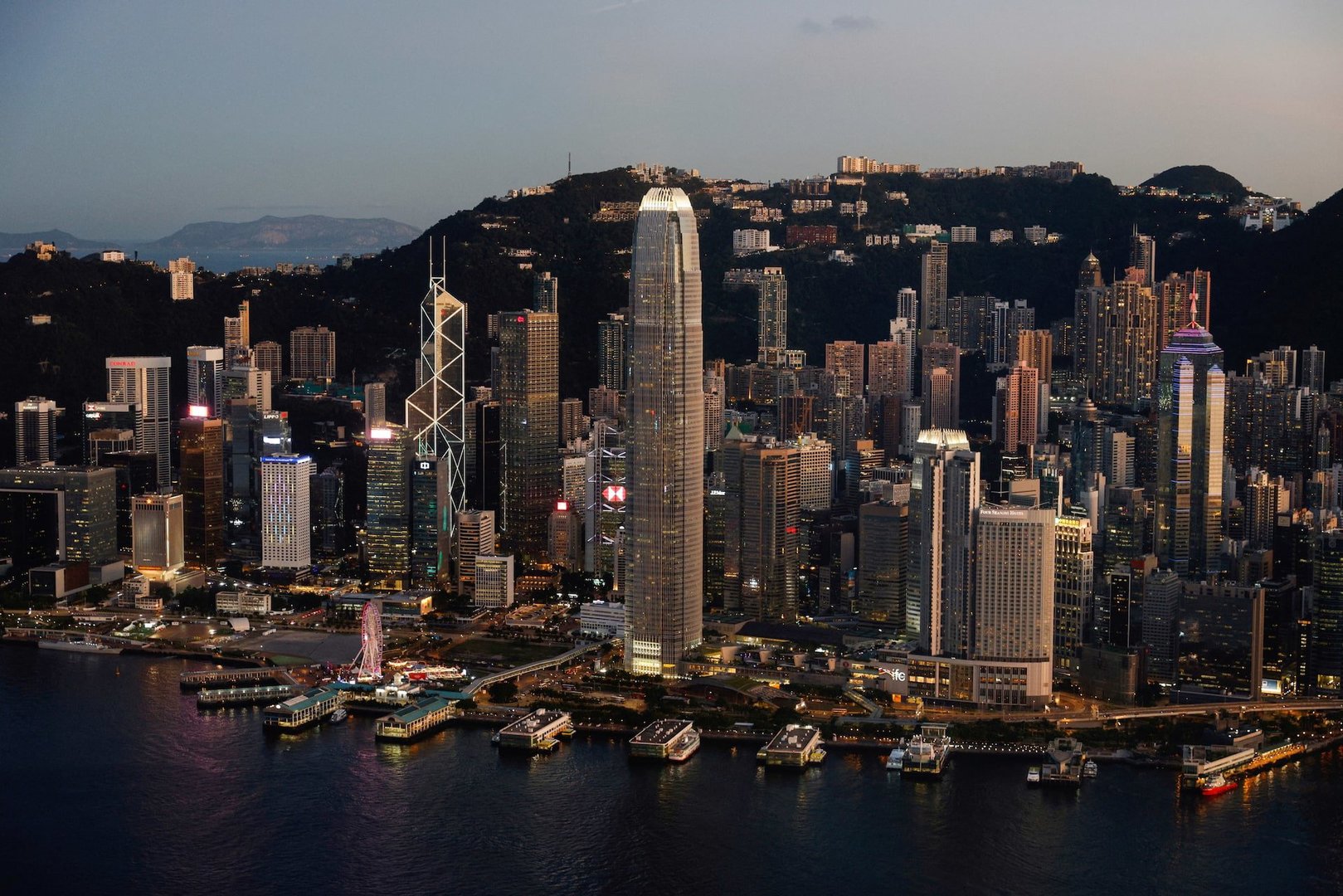
Officials have promised a judge-led inquiry; but whether that yields meaningful structural change — and timely relief for survivors — remains the critical question.

What began as a renovation project has become a human-scale tragedy.

For thousands of people now homeless, still mourning and still waiting, the notion of “going home” may be distant — if it ever comes at all.
Mainland billionaire count rises to 470, net worth surges to US$1.77 trillion driven by gains at BYD, Mixue and other tech-linked firms
Mainland China’s billionaire population has swelled over the past year, with the total number climbing to four hundred seventy — up from four hundred twenty-seven — as the collective net worth of the country’s richest surged to approximately one point seventy-seven trillion US dollars.

The increase reflects robust performance in technology, electric vehicles, consumer brands and a broad recovery in asset prices.

The expansion of wealth has been fuelled by strong equity gains in leading publicly traded firms and an influx of new listings, particularly in sectors aligned with artificial-intelligence, battery technology and new-economy consumption.

Among the recent entrants are the founders of a popular retail-food chain whose share offer raised substantial capital in March, making them part of China’s ultra-wealthy group.

The trend highlights how innovation, domestic demand and capital-market momentum have combined to deliver outsized returns for successful entrepreneurs.

Despite economic headwinds and periodic policy tightening, the rise in both the billionaire headcount and aggregate wealth suggests resilience — and renewed investor confidence — in China’s growth model.

Observers attribute the surge to a broad shift away from old-economy sectors toward high-growth industries such as technology, renewables, consumer goods and electric vehicles.

Analysts at wealth-management firms note that China’s policy emphasis on “quality growth through innovation and technology localisation” is helping sustain this wealth-creation wave.

Still, the growth is not uniform: experts warn that much of the wealth remains concentrated among founders of large firms and those linked to high-growth sectors, leaving SMEs and sectors not benefiting from the tech and consumer-spending rebound more exposed to macroeconomic risks.

Nonetheless, for now the billionaire class stands as a striking marker of China’s evolving economic landscape and the continuing influence of high-technology and consumer-driven wealth creation in Asia’s largest economy.

Whether the boom will endure depends on Beijing’s policy direction, global demand for Chinese exports and the ability of firms to sustain earnings growth — factors that could reshape not only the makeup of China’s rich list, but its broader economic trajectory.
Liaison office praises city’s decision to proceed with Legco poll while confronting aftermath of Tai Po tragedy
A senior Beijing representative in Hong Kong has expressed firm confidence in the city’s capacity to conduct Sunday’s Legislative Council election while simultaneously managing the aftermath of the deadly Tai Po fire.

Speaking at a Constitution Day forum, Liu Guangyuan, deputy director of the central government’s liaison office, commended Hong Kong’s leadership for what he described as the “most responsible attitude” in choosing to move ahead with the scheduled vote.

Liu said the chief executive’s decision respected the constitutional order and would ultimately strengthen the city’s recovery efforts.

He noted that the election—set to select 90 lawmakers under the post-2021 electoral framework—would help reinforce social unity and provide legislative continuity at a moment when Hong Kong faces both grief and urgent governance challenges.

The remarks come less than two weeks after the Wang Fuk Court inferno, which claimed at least 159 lives and forced thousands from their homes.

The tragedy has triggered widespread mourning and renewed scrutiny of building-safety oversight.

Yet officials argue that maintaining the political timetable is essential to ensuring uninterrupted governance and avoiding constitutional complications should the current Legislative Council term lapse without a successor body in place.

City authorities have emphasised that enhanced polling arrangements, including additional stations and extended hours, will accommodate residents affected by the fire.

Government leaders also contend that a newly seated legislature will be necessary to advance reconstruction efforts and accelerate policy reforms revealed by the disaster.

As Hong Kong prepares for Sunday’s vote, Beijing’s endorsement underscores a broader message: that the city is expected to demonstrate resilience, uphold institutional order and channel public solidarity as it moves from mourning toward long-term recovery.
Some tenants of the only undamaged block at Wang Fuk Court seek to return home even as wider safety reviews proceed
Residents of Wang Chi House — the sole block at the Wang Fuk Court estate that escaped damage when a massive fire engulfed seven neighbouring towers — are gathering their belongings this week and voicing hopes of being allowed to remain in their flats permanently.

Many say they are deeply attached to the neighbourhood and wish to remain close to friends, community facilities, schools and daily conveniences.

On Thursday, families collected valuables, important documents and household items as part of a government-organised clearance operation.

Some packed light, carrying only essentials, as they hoped for swift confirmation that their block remains safe for long-term habitation.

The broader context is one of grief and upheaval: the fire at Wang Fuk Court has become Hong Kong’s deadliest in decades, killing at least 159 people and leaving thousands homeless.

Authorities have launched a citywide safety review of all scaffolding and renovation netting after investigators found that the material used in the renovations did not meet fire-resistance standards.

Still, for the occupants of Wang Chi House, the destruction of neighbouring flats has only intensified their longing for stability and return.

Some say uprooting their lives — especially after the death of neighbours and friends — would be even more traumatic than the fire itself.

The government has not yet made a definitive decision on which of the evacuated households will be allowed back.

Officials emphasise that safety inspections are ongoing and structural assessments must be completed before any return is permitted.

Meanwhile, displaced residents in temporary shelters and hotels face an uncertain future.

For many at Wang Chi House, staying in their long-time homes represents a small measure of normality and emotional solace amid loss, uncertainty and city-wide calls for accountability and rebuilding.
Armed drone-helicopter passes live-fire test above 4,000 metres as Beijing advances plateau-warfare capabilities
China’s newest unmanned reconnaissance and strike helicopter — dubbed the “Meyu Arrow” — has passed a major milestone: a successful live-fire missile test above four thousand metres, officials announced as the platform enters a new phase of testing for plateau and high-altitude deployment.

The trial, revealed this week at the 2025 AERO Asia 2025 exhibition in Zhuhai, capped months of development by defence-equipment maker Tengden Technology.

The aircraft proved capable of vertical take-off and landing (VTOL), sustained flight in thin-air conditions, and precision strikes on both stationary and moving targets — test conditions meant to simulate the challenges of mountainous border zones.

According to state media reports, the “Meyu Arrow” helicopter completed the live-fire launch while hovering above 4,000 metres; developers say the next stage will push testing beyond 6,000 metres — using satellite communications to enable remote, beyond-line-of-sight control and targeting.

Technical specifications released by Tengden list an operational ceiling of up to 7,000 metres, an endurance of eight hours, a range of roughly 900 kilometres and a compact rotor diameter of 6.4 metres.

The combination of rotorcraft agility with unmanned-system autonomy and precision firepower places the “Meyu Arrow” among the first drone-helicopters worldwide designed specifically for high-altitude warfare.

Analysts say the platform fills a capability gap where crewed helicopters and fixed-wing drones struggle — namely in rugged terrain with sparse infrastructure, unpredictable weather and low oxygen levels.

China has signalled that the “Meyu Arrow” is intended for reconnaissance-strike, armed escort, rapid reaction and overwatch missions in plateau border regions, where vertical landing flexibility and altitude tolerance are critical advantages.

If the upcoming satellite-guided tests succeed, the helicopter may move from prototype to an operational asset, reshaping air-power dynamics in mountainous terrain.

As “Meyu Arrow” advances through its testing campaign, its performance may prompt a broader re-evaluation of unmanned rotorcraft in modern militaries — particularly for roles demanding both agility and endurance in inhospitable terrain.

The next months will be critical in determining whether this helicopter-drone hybrid becomes a standard fixture in high-altitude operations.
MIT’s atomic-scale rendition of the double-slit test vindicates the wave–particle complementarity proposed by Bohr, disproving a central conjecture by Einstein
Physicists at the Massachusetts Institute of Technology have successfully carried out an atomic-scale version of the iconic double-slit experiment — long regarded as an idealised thought experiment — and demonstrated decisively that light cannot manifest as both a wave and a particle simultaneously.

The finding settles a nearly century-old debate between Albert Einstein and Niels Bohr.

In the new experiment, researchers used ultracold atoms suspended in laser light as the “slits” and fired single photons at them.

By varying the quantum “fuzziness” of the atoms — effectively controlling how much information could be obtained about a photon’s path — they observed that any attempt to detect which atom the photon interacted with erased the interference pattern that reveals its wave-like nature.

In effect, acquiring particle-path information always destroyed wave interference.

The outcome confirms Bohr’s principle of quantum complementarity and refutes Einstein’s 1927 suggestion at the fifth Solvay Conference that measuring the recoil of the slit apparatus might allow simultaneous observation of both wave and particle aspects.

Even when atoms were held freely — without traditional “spring-like” supports — the same effect emerged.

The experiment’s results were published this week in Physical Review Letters.

The researchers described their setup as the most “faithful realisation” of Einstein’s proposed thought experiment to date, arguably closing the chapter on what had been one of the most persistent conceptual challenges to the foundations of quantum mechanics.

Beyond its significance for history and theory, the work carries practical implications for quantum technologies.

By clarifying exactly how and when wave–particle duality collapses under measurement, the findings may inform the design of quantum sensors, communication systems and computing components that rely on precise control of quantum states.

With this result, the scientific community gains both a deeper understanding of nature’s fundamental limits and renewed confidence in the counter-intuitive yet experimentally verified framework of quantum mechanics.
Major bank signs five-floor lease in Causeway Bay ahead of planned relocation next year
The HSBC has committed to occupy more than 40,000 square feet in Capitol Centre, a commercial building in Causeway Bay, with tenancy set to begin in May 2026. According to recent filings, HSBC will lease the ground floor through the fourth floor — five floors in total — under a five-year agreement with an option to renew.

Reports estimate the monthly rent at about HK$4 million, reflecting robust demand for centrally located office space even as the city’s commercial real-estate market remains under pressure.

The deal marks one of the larger single-tenant leases in Causeway Bay in recent years.

Capitol Centre comprises around 94,000 sq ft of gross floor area across 21 storeys including retail and office floors.

Until now, its tenants have been smaller firms and retailers occupying relatively modest units, often under 2,000 sq ft.

The HSBC lease thus represents a significant shift — transforming the building into a major financial-services hub ahead of the bank’s planned move.

The timing aligns with HSBC’s broader re-organisation of its physical footprint in Hong Kong, following earlier moves such as the opening of a new wealth-management centre in the International Commerce Centre this year.

For HSBC, the Causeway Bay location offers convenient transport links — Capitol Centre sits minutes from the Causeway Bay MTR station — and provides visibility in a bustling commercial district.

For the wider office market, the deal could signal that financial firms remain confident in Hong Kong’s long-term role as a regional banking hub.

Analysts believe such large leases may stabilise demand and support rental levels in a sector that has seen significant vacancy since the pandemic.

As lease negotiations proceed, smaller landlords and rival buildings may face increasing pressure to adjust rents or upgrade amenities to retain or attract tenants without the draw of a major anchor such as HSBC.
JPMorgan Predicts Near-Twenty-Percent Gains for Hong Kong and China Stocks in 2026
Hong Kong Security Office Warns Foreign Media Over ‘False Information’ Ahead of Election
Indian Airports in Turmoil as IndiGo Cancels Over a Thousand Flights, Stranding Thousands
China Sees Sharp Jump in Number and Wealth of Billionaires Amid Tech and EV Boom
Hong Kong Luxury Sales Continue to Rise in October on Tourist Rebound
Hong Kong Fire Survivor Struggles With the “Hero” Label Amid Guilt and Grief
Hong Kong Fire Death Toll Climbs to 159 as Authorities Order Scaffolding-Net Sweep Citywide
Chinese Autonomous-Driving Firm Momenta Files for Hong Kong IPO Amid Shift from U.S. Markets
Hong Kong’s Fire-Response Highlights Eroding Divide with Beijing as Security Pressures Rise
Hong Kong Detains 13 on Manslaughter Charges After Fatal Tower-Block Fire
Silent Resistance: How Hong Kong’s Young Activists Are Surviving Under Deepening Repression
Beijing Warns Against Using Hong Kong’s Tai Po Fire as Pretext for Unrest
Southeast Asia Floods Push Death Toll Above Nine Hundred as Storm Cluster Devastates Region
Hong Kong Investigates Corruption and Safety Failures After Deadliest Fire in Decades
Hong Kong High-Rise Fire Death Toll Climbs to 128 as Authorities Broaden Criminal Probe
Hong Kong Tower Fire Surpasses Grenfell as One of Worst High-Rise Tragedies — Spark Renewed Focus on Building Safety Worldwide
Hong Kong Pushes Hydrogen Transport Plan as Part of 2050 Carbon-Neutrality Drive
Hong Kong Firefighter Set to Marry Next Month Dies in Tai Po Tower Blaze — City Honors Fallen Hero
Families Endure Agonising Wait as Nearly 300 People Remain Missing After Hong Kong Tower Blaze
Hong Kong Residents, Volunteers and Companies Mobilise Massive Aid Effort After Tai Po Tower Fire
Death Toll Climbs to 128 as Hong Kong High-Rise Inferno Raises Urgent Safety Questions
250 Still Missing in the Massive Fire, 94 Killed. One Day After the Disaster: Survivor Rescued on the 16th Floor
Tesla reaffirms support for Chinese suppliers, rejects sweeping ban amid supply-chain retooling
China Holds Economic Levers Over Japan as Taiwan-Row Deepens — but Analysts Warn of Self-Harm
At least 44 killed, hundreds missing after massive fire rips through Hong Kong’s Wang Fuk Court towers
Hong Kong Government Spent HK$24.6 Million on Around 130,000 National Day Displays
Where to Stay, Shop and Drink During Hong Kong Fashion Fest 2025
Thailand’s Bitkub Eyeing Hong Kong Listing Amid 2025 IPO Plans
Hong Kong launches immersive light show in Central as highlight of WinterFest 2025
Families Accuse OpenAI of Enabling ‘AI-Driven Delusions’ After Multiple Suicides
Egypt Rolls Out Major Treasure Exhibition in Hong Kong to Boost Trade and Investment Ties
Hong Kong and Singapore Prime Office Rents to Reach Parity by 2027, CBRE Forecasts
Hong Kong’s Keeta Commits to Fairer Restaurant Terms After Competition Authority Intervention
Two More Imported Chikungunya Cases Raise Hong Kong’s 2025 Total to Seventy
Hong Kong Brings ‘Think Business, Think Hong Kong’ to Milan to Deepen Italy-Asia Engagement
Hong Kong Accelerates Tokenisation Drive to Attract Treasury Centres and Investment Flows
Hong Kong Passes First Comprehensive Ride-Hailing Law Amid Ongoing Platforms Fare Dispute
China’s Wedding Boom: Nightclubs, Mountains and a Demographic Reset
Hong Kong Bank Deposits Surpass HK$19 Trillion as City Claims Safe-Haven Status
Japan Faces Sharp Loss of Chinese Tourists Amid Diplomatic Rift
US–China Trade Truce Faces Thanksgiving Deadline Amid Divergent Accounts
Closing Ceremony of National Games Underscores Greater Bay Area’s Next-Gen Sporting Role
Hong Kong Jockey Club’s Role in Equestrian Events Propels Greater Bay Area Integration
Hong Kong Probes Social Media Leak of Voters’ Personal Data Ahead of December Election
Beijing’s Hong Kong Chief Meets HSBC CEO in Second High-Level Engagement
Myolie Wu’s Rise From Hong Kong Icon to Mainland China Star
Japan’s New Leadership Signals Shift in Crypto Race with Hong Kong
Hong Kong Shares Halt Four-Day Slide as Nvidia Earnings Boost Sentiment
A Decade of Innovation Stagnation at Apple: The Cook Era Critique
Hong Kong Disneyland Resort Launches Festive “A Disney Christmas” Amid 20th Anniversary Celebration