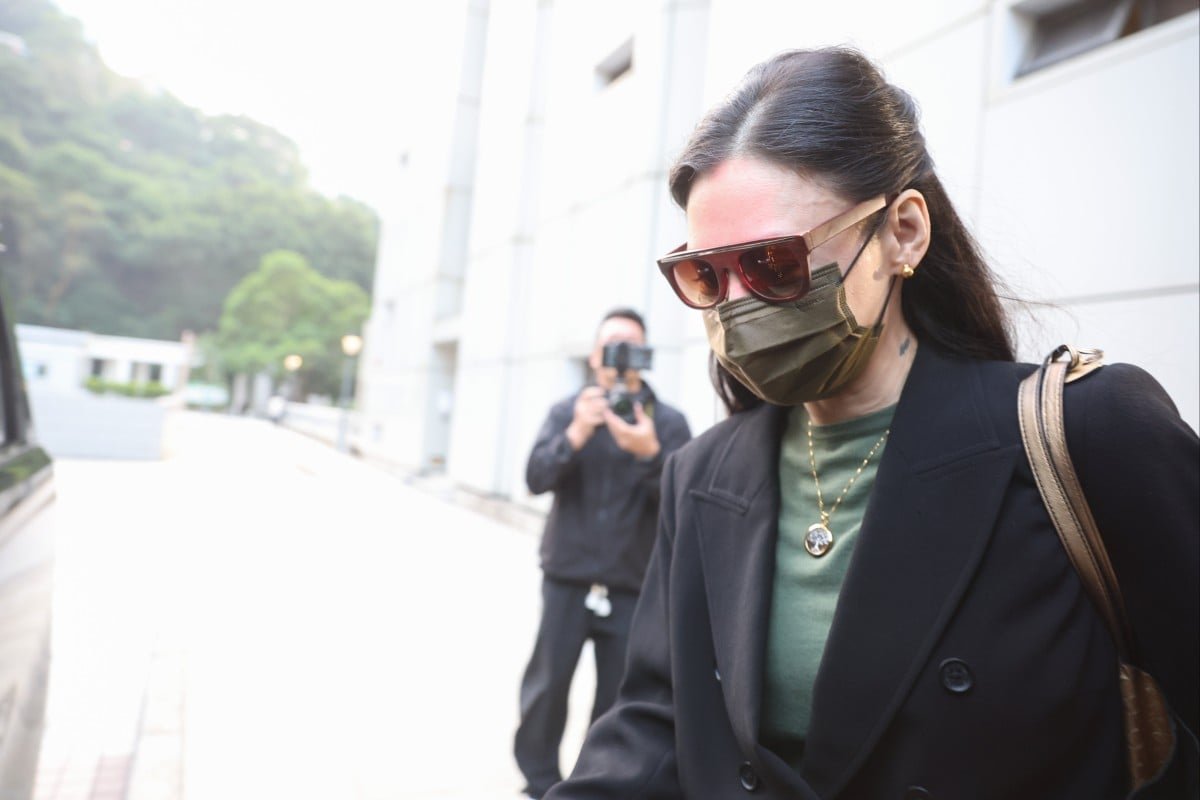
Cheung claims contract was forged and contract-promises misrepresented amid long-running lawsuit over unpaid film projects
Hong Kong actress Cecilia Cheung Pak-chi has testified in the High Court that her former agent, Samuel Yu Yuk-hing, defrauded her of HK$8.8 million by exerting undue pressure, forging contract documents and making false representations.
The claim comes as Yu and his former company, Asia Entertainment Group (AEG), continue to sue Cheung for allegedly reneging on commitments to appear in a series of films between 2011 and 2019.
Cheung, 45, denied that she breached any agreement, insisting the contracts presented were forged — a claim her legal team says is supported by documentary evidence.
She took the stand on Friday amid an emotionally charged hearing, defending her reputation and rejecting characterisations that she had wronged Yu after he paid substantial advances in 2011.
Yu had contended that he was Cheung’s “god-grandfather” and that she owed him loyalty, arguing she had accepted a HK$40 million deal in 2011 to star in four films — promises she allegedly abandoned when the relationship deteriorated in 2014. He further asserted that her contract was a personal agreement with him rather than with AEG, meaning his claims would survive the company’s liquidation in 2013.
In contrast, Cheung’s defence maintains that AEG was dissolved and the purported agreement lacks legitimacy.
She further accused Yu of forging the agency’s official seal to sign the contract on her behalf without consent, actions she described as fraudulent and coercive.
The actress has also said she detests being forced to explain her personal affairs publicly but feels compelled to speak now to protect her name.
The case against Cheung — a long-running legal dispute dating back to 2020 — has seen various developments, including prior claims by Yu and AEG seeking tens of millions in damages for breach of contract.
In her testimony, Cheung challenged the entire basis of those claims, alleging deception and forgery rather than contractual breach.
The court has yet to deliver a final verdict.
The proceedings underscore wider tensions in Hong Kong’s film industry over contract enforcement and the power imbalance between artists and managers.
For now, the spotlight is on the judge’s forthcoming decision — one which could reshape legal accountability in agent-celebrity agreements and set a precedent for others in the entertainment sector.
The claim comes as Yu and his former company, Asia Entertainment Group (AEG), continue to sue Cheung for allegedly reneging on commitments to appear in a series of films between 2011 and 2019.
Cheung, 45, denied that she breached any agreement, insisting the contracts presented were forged — a claim her legal team says is supported by documentary evidence.
She took the stand on Friday amid an emotionally charged hearing, defending her reputation and rejecting characterisations that she had wronged Yu after he paid substantial advances in 2011.
Yu had contended that he was Cheung’s “god-grandfather” and that she owed him loyalty, arguing she had accepted a HK$40 million deal in 2011 to star in four films — promises she allegedly abandoned when the relationship deteriorated in 2014. He further asserted that her contract was a personal agreement with him rather than with AEG, meaning his claims would survive the company’s liquidation in 2013.
In contrast, Cheung’s defence maintains that AEG was dissolved and the purported agreement lacks legitimacy.
She further accused Yu of forging the agency’s official seal to sign the contract on her behalf without consent, actions she described as fraudulent and coercive.
The actress has also said she detests being forced to explain her personal affairs publicly but feels compelled to speak now to protect her name.
The case against Cheung — a long-running legal dispute dating back to 2020 — has seen various developments, including prior claims by Yu and AEG seeking tens of millions in damages for breach of contract.
In her testimony, Cheung challenged the entire basis of those claims, alleging deception and forgery rather than contractual breach.
The court has yet to deliver a final verdict.
The proceedings underscore wider tensions in Hong Kong’s film industry over contract enforcement and the power imbalance between artists and managers.
For now, the spotlight is on the judge’s forthcoming decision — one which could reshape legal accountability in agent-celebrity agreements and set a precedent for others in the entertainment sector.