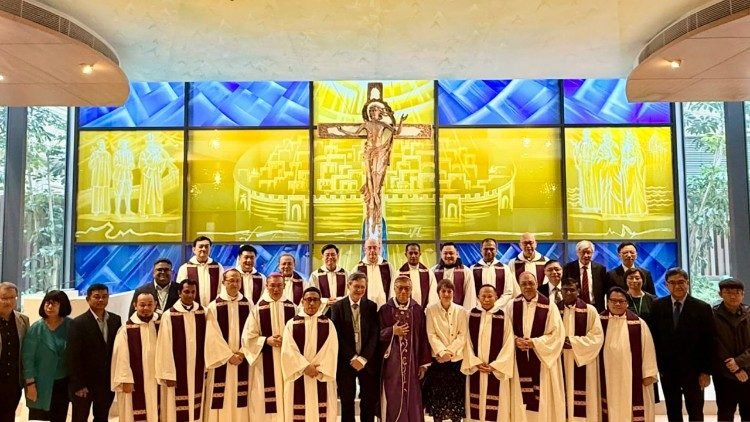
Regional bishops convene to assess how artificial intelligence could reshape ministry, ethics and evangelism in Asian churches
Church leaders from across Asia gathered in Hong Kong this week at a summit convened by the Federation of Asian Bishops’ Conferences to explore the pastoral implications of artificial intelligence as faith communities confront rapid technological change.
The meeting — described by organisers as a first-of-its-kind gathering — aims to help churches discern how AI might influence preaching, pastoral care, evangelism and community life.
Participants addressed both the opportunities and risks posed by AI integration into church work.
On one side, speakers highlighted AI’s capacity to support ministry through tools for sermon preparation, outreach, and administration — potentially freeing pastors to focus more on direct spiritual care and engagement.
On the other, caution was urged over any reliance on AI in tasks fundamentally tied to spiritual formation, human dignity and authentic pastoral relationships.
Voices from Hong Kong churches have already raised concerns about the “AI-ization” of religion: pastors warn that while AI-generated sermons or prayers may match or surpass human eloquence, they lack genuine spiritual encounter and risk reducing worship to formulaic content.
Some believe that ministry rooted in human connection and divine guidance cannot be outsourced to algorithms.
In a plenary address at a recent global faith forum, a leading religious figure called on church communities worldwide to advocate for “faith, ethics and human dignity” in the age of AI — urging believers to shape technology’s moral compass rather than be shaped by it.
Such sentiment resonated strongly at the Hong Kong gathering, reflecting a growing conviction among Asian Christians that moral leadership must accompany technological adoption.
Supporters of AI use in churches argue the technology could help expand outreach — for example, by translating sermons, tailoring pastoral messages to diverse communities, and enabling remote ministry access for believers in isolated or restricted regions.
In societies where young people increasingly turn to digital platforms, integrating AI responsibly could help churches remain relevant and accessible.
As the meeting draws to a close, church leaders are expected to issue a collective statement outlining ethical principles and guidelines for AI use in ministry — a move some hope will influence faith communities globally.
The decisions made in Hong Kong may shape how churches balance faith and technology in the coming decade.
The meeting — described by organisers as a first-of-its-kind gathering — aims to help churches discern how AI might influence preaching, pastoral care, evangelism and community life.
Participants addressed both the opportunities and risks posed by AI integration into church work.
On one side, speakers highlighted AI’s capacity to support ministry through tools for sermon preparation, outreach, and administration — potentially freeing pastors to focus more on direct spiritual care and engagement.
On the other, caution was urged over any reliance on AI in tasks fundamentally tied to spiritual formation, human dignity and authentic pastoral relationships.
Voices from Hong Kong churches have already raised concerns about the “AI-ization” of religion: pastors warn that while AI-generated sermons or prayers may match or surpass human eloquence, they lack genuine spiritual encounter and risk reducing worship to formulaic content.
Some believe that ministry rooted in human connection and divine guidance cannot be outsourced to algorithms.
In a plenary address at a recent global faith forum, a leading religious figure called on church communities worldwide to advocate for “faith, ethics and human dignity” in the age of AI — urging believers to shape technology’s moral compass rather than be shaped by it.
Such sentiment resonated strongly at the Hong Kong gathering, reflecting a growing conviction among Asian Christians that moral leadership must accompany technological adoption.
Supporters of AI use in churches argue the technology could help expand outreach — for example, by translating sermons, tailoring pastoral messages to diverse communities, and enabling remote ministry access for believers in isolated or restricted regions.
In societies where young people increasingly turn to digital platforms, integrating AI responsibly could help churches remain relevant and accessible.
As the meeting draws to a close, church leaders are expected to issue a collective statement outlining ethical principles and guidelines for AI use in ministry — a move some hope will influence faith communities globally.
The decisions made in Hong Kong may shape how churches balance faith and technology in the coming decade.