Armed drone-helicopter passes live-fire test above 4,000 metres as Beijing advances plateau-warfare capabilities
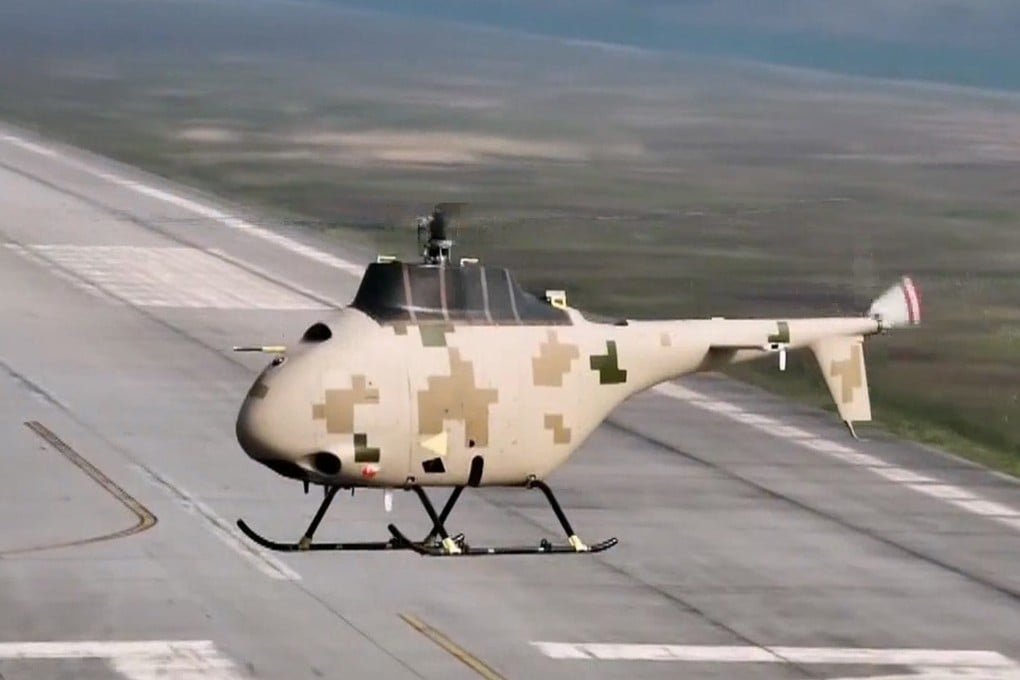
China’s newest unmanned reconnaissance and strike helicopter — dubbed the “Meyu Arrow” — has passed a major milestone: a successful live-fire missile test above four thousand metres, officials announced as the platform enters a new phase of testing for plateau and high-altitude deployment.
The trial, revealed this week at the 2025 AERO Asia 2025 exhibition in Zhuhai, capped months of development by defence-equipment maker Tengden Technology.
The aircraft proved capable of vertical take-off and landing (VTOL), sustained flight in thin-air conditions, and precision strikes on both stationary and moving targets — test conditions meant to simulate the challenges of mountainous border zones.
According to state media reports, the “Meyu Arrow” helicopter completed the live-fire launch while hovering above 4,000 metres; developers say the next stage will push testing beyond 6,000 metres — using satellite communications to enable remote, beyond-line-of-sight control and targeting.
Technical specifications released by Tengden list an operational ceiling of up to 7,000 metres, an endurance of eight hours, a range of roughly 900 kilometres and a compact rotor diameter of 6.4 metres.
The combination of rotorcraft agility with unmanned-system autonomy and precision firepower places the “Meyu Arrow” among the first drone-helicopters worldwide designed specifically for high-altitude warfare.
Analysts say the platform fills a capability gap where crewed helicopters and fixed-wing drones struggle — namely in rugged terrain with sparse infrastructure, unpredictable weather and low oxygen levels.
China has signalled that the “Meyu Arrow” is intended for reconnaissance-strike, armed escort, rapid reaction and overwatch missions in plateau border regions, where vertical landing flexibility and altitude tolerance are critical advantages.
If the upcoming satellite-guided tests succeed, the helicopter may move from prototype to an operational asset, reshaping air-power dynamics in mountainous terrain.
As “Meyu Arrow” advances through its testing campaign, its performance may prompt a broader re-evaluation of unmanned rotorcraft in modern militaries — particularly for roles demanding both agility and endurance in inhospitable terrain.
The next months will be critical in determining whether this helicopter-drone hybrid becomes a standard fixture in high-altitude operations.
The trial, revealed this week at the 2025 AERO Asia 2025 exhibition in Zhuhai, capped months of development by defence-equipment maker Tengden Technology.
The aircraft proved capable of vertical take-off and landing (VTOL), sustained flight in thin-air conditions, and precision strikes on both stationary and moving targets — test conditions meant to simulate the challenges of mountainous border zones.
According to state media reports, the “Meyu Arrow” helicopter completed the live-fire launch while hovering above 4,000 metres; developers say the next stage will push testing beyond 6,000 metres — using satellite communications to enable remote, beyond-line-of-sight control and targeting.
Technical specifications released by Tengden list an operational ceiling of up to 7,000 metres, an endurance of eight hours, a range of roughly 900 kilometres and a compact rotor diameter of 6.4 metres.
The combination of rotorcraft agility with unmanned-system autonomy and precision firepower places the “Meyu Arrow” among the first drone-helicopters worldwide designed specifically for high-altitude warfare.
Analysts say the platform fills a capability gap where crewed helicopters and fixed-wing drones struggle — namely in rugged terrain with sparse infrastructure, unpredictable weather and low oxygen levels.
China has signalled that the “Meyu Arrow” is intended for reconnaissance-strike, armed escort, rapid reaction and overwatch missions in plateau border regions, where vertical landing flexibility and altitude tolerance are critical advantages.
If the upcoming satellite-guided tests succeed, the helicopter may move from prototype to an operational asset, reshaping air-power dynamics in mountainous terrain.
As “Meyu Arrow” advances through its testing campaign, its performance may prompt a broader re-evaluation of unmanned rotorcraft in modern militaries — particularly for roles demanding both agility and endurance in inhospitable terrain.
The next months will be critical in determining whether this helicopter-drone hybrid becomes a standard fixture in high-altitude operations.