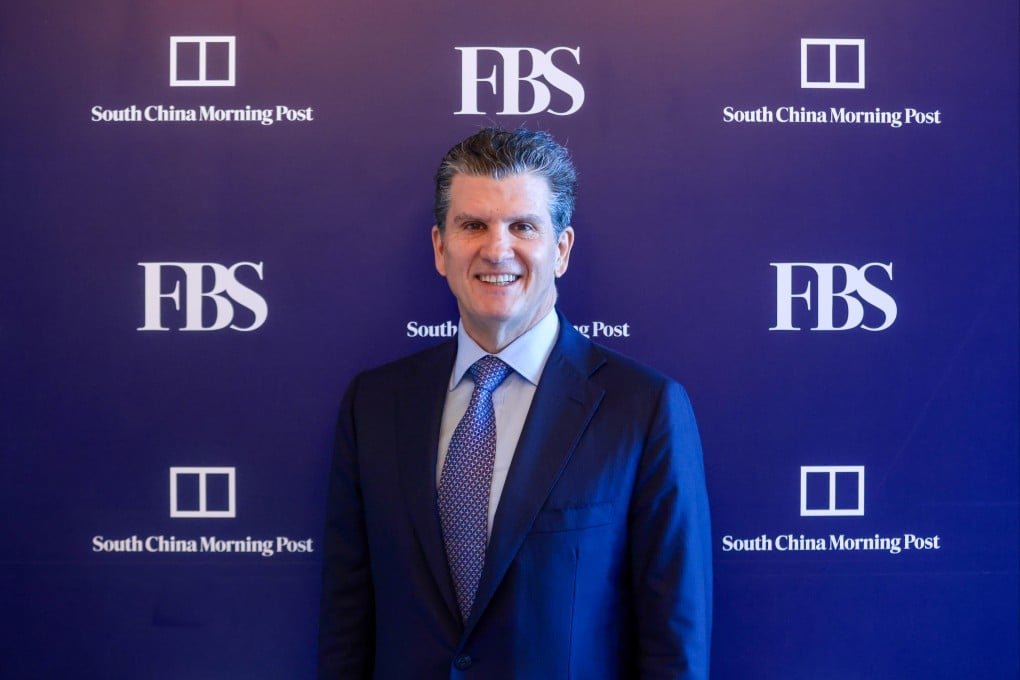
Bill Ford cites surging Chinese innovation, eased U.S.–China tensions and a reinvigorated Hong Kong market as key global investment drivers
Bill Ford, chairman and chief executive of the U.S. private-equity firm General Atlantic, issued a stark warning to Western investors at an investment summit in Hong Kong, stating that avoiding China “at your own peril” risks missing “tremendous investment opportunities.” His comments reflect the firm’s perspective on China’s evolving role in global markets and underscore the strategic importance of engaging with the region’s innovation ecosystem.
During a week-long visit to China preceding the summit, Ford highlighted the rise of a new generation of Chinese entrepreneurs pursuing global market leadership across sectors including industrial automation and medical technology.
He said their ambition to “be global leaders” marks a shift beyond serving exclusively domestic demand.
Ford further pointed to recent improvements in U.S.–China relations and the revival of the Hong Kong equity market as enhancing the appeal of Chinese and regional investment.
Ford’s remarks come as the orbits of geopolitics and capital converge.
Although trade and security issues remain, he said the current phase presents an “entry point” for Western capital to tap China’s growth trajectory.
He described the region not as a purely emerging-market play but as central to multiples strategies including digital infrastructure, climate tech and healthcare.
At General Atlantic, Ford has overseen expansion into more than 20 countries and asset-under-management growth to approximately US$114 billion, with China among its strategic geographies.
He emphasised that investors who “sit on the sidelines” may forgo participation in breakthrough valuation arbitrage and innovation flow from the region.
Analysts say Ford’s message reflects a broader recalibration of risk, where caution over China is giving way to selective engagement.
Challenges remain—ranging from regulatory opacity to decoupling concerns—but the narrative among some global managers is shifting toward identifying consistent entry points rather than full withdrawal.
Ford framed this as a timely moment.
He asserted that for Western investors, the question is no longer “whether” to engage with China, but “how” to do so smartly.
Ford concluded that China’s integration into global capital markets, when combined with Hong Kong’s renewed financial positioning and easing bilateral tensions, creates a compelling crossroads for investment strategy.
He stressed that the opportunity, in his view, merits serious attention from global allocators.
During a week-long visit to China preceding the summit, Ford highlighted the rise of a new generation of Chinese entrepreneurs pursuing global market leadership across sectors including industrial automation and medical technology.
He said their ambition to “be global leaders” marks a shift beyond serving exclusively domestic demand.
Ford further pointed to recent improvements in U.S.–China relations and the revival of the Hong Kong equity market as enhancing the appeal of Chinese and regional investment.
Ford’s remarks come as the orbits of geopolitics and capital converge.
Although trade and security issues remain, he said the current phase presents an “entry point” for Western capital to tap China’s growth trajectory.
He described the region not as a purely emerging-market play but as central to multiples strategies including digital infrastructure, climate tech and healthcare.
At General Atlantic, Ford has overseen expansion into more than 20 countries and asset-under-management growth to approximately US$114 billion, with China among its strategic geographies.
He emphasised that investors who “sit on the sidelines” may forgo participation in breakthrough valuation arbitrage and innovation flow from the region.
Analysts say Ford’s message reflects a broader recalibration of risk, where caution over China is giving way to selective engagement.
Challenges remain—ranging from regulatory opacity to decoupling concerns—but the narrative among some global managers is shifting toward identifying consistent entry points rather than full withdrawal.
Ford framed this as a timely moment.
He asserted that for Western investors, the question is no longer “whether” to engage with China, but “how” to do so smartly.
Ford concluded that China’s integration into global capital markets, when combined with Hong Kong’s renewed financial positioning and easing bilateral tensions, creates a compelling crossroads for investment strategy.
He stressed that the opportunity, in his view, merits serious attention from global allocators.