Driverless buses set to operate in public landside areas as airport accelerates automation and innovation strategy
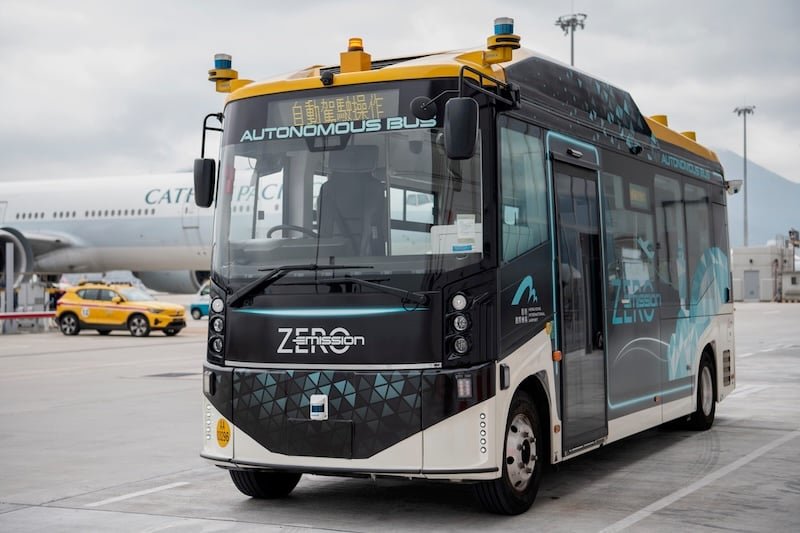
Hong Kong International Airport is preparing to launch a landside autonomous bus service later this year, marking a significant step in its broader effort to integrate advanced transport technology into daily operations.
The new driverless buses will operate in publicly accessible areas outside the restricted airside zone, transporting passengers and airport staff between terminals, transport hubs and key facilities.
Airport authorities said the initiative forms part of a long-term strategy to enhance efficiency, reduce emissions and improve passenger convenience through smart mobility solutions.
Initial operations are expected to begin in a controlled rollout phase, with vehicles operating along designated routes under close monitoring.
Officials indicated that safety systems, remote oversight capabilities and comprehensive testing protocols have been incorporated to ensure compliance with regulatory standards.
Hong Kong International Airport has previously deployed autonomous vehicles within restricted operational zones, including airside logistics and baggage handling.
Expanding the technology to landside passenger services represents a notable development, as it places automated transport into a more complex, mixed-traffic environment.
The move aligns with Hong Kong’s wider ambitions to position itself as a hub for innovation and smart infrastructure.
Authorities have increasingly supported pilot schemes involving autonomous mobility, artificial intelligence and green transport systems as part of the city’s economic and technological modernization agenda.
Industry analysts note that airports globally are investing in automation to streamline operations amid rising passenger volumes and staffing pressures.
The introduction of landside autonomous buses at one of the world’s busiest aviation hubs is likely to be closely watched as a test case for scalability and public acceptance.
Further details regarding routes, fleet size and full operational timelines are expected to be announced ahead of the service launch.
The new driverless buses will operate in publicly accessible areas outside the restricted airside zone, transporting passengers and airport staff between terminals, transport hubs and key facilities.
Airport authorities said the initiative forms part of a long-term strategy to enhance efficiency, reduce emissions and improve passenger convenience through smart mobility solutions.
Initial operations are expected to begin in a controlled rollout phase, with vehicles operating along designated routes under close monitoring.
Officials indicated that safety systems, remote oversight capabilities and comprehensive testing protocols have been incorporated to ensure compliance with regulatory standards.
Hong Kong International Airport has previously deployed autonomous vehicles within restricted operational zones, including airside logistics and baggage handling.
Expanding the technology to landside passenger services represents a notable development, as it places automated transport into a more complex, mixed-traffic environment.
The move aligns with Hong Kong’s wider ambitions to position itself as a hub for innovation and smart infrastructure.
Authorities have increasingly supported pilot schemes involving autonomous mobility, artificial intelligence and green transport systems as part of the city’s economic and technological modernization agenda.
Industry analysts note that airports globally are investing in automation to streamline operations amid rising passenger volumes and staffing pressures.
The introduction of landside autonomous buses at one of the world’s busiest aviation hubs is likely to be closely watched as a test case for scalability and public acceptance.
Further details regarding routes, fleet size and full operational timelines are expected to be announced ahead of the service launch.