Joint trials between Hong Kong and mainland China aim to harmonize drone and eVTOL standards and position the region as a leading low-altitude economy hub
Hong Kong and the Nansha district of mainland China have launched a collaborative initiative to advance cross-border drone operations and develop unified technical and regulatory standards that could set a global benchmark for unmanned aerial systems.
This partnership follows an agreement signed on December twenty-fifth between the Hong Kong Productivity Council and Nansha’s International Advanced Technology Application and Promotion Centre in the Guangdong-Hong Kong-Macao Greater Bay Area, underscoring mutual commitment to the low-altitude economy.
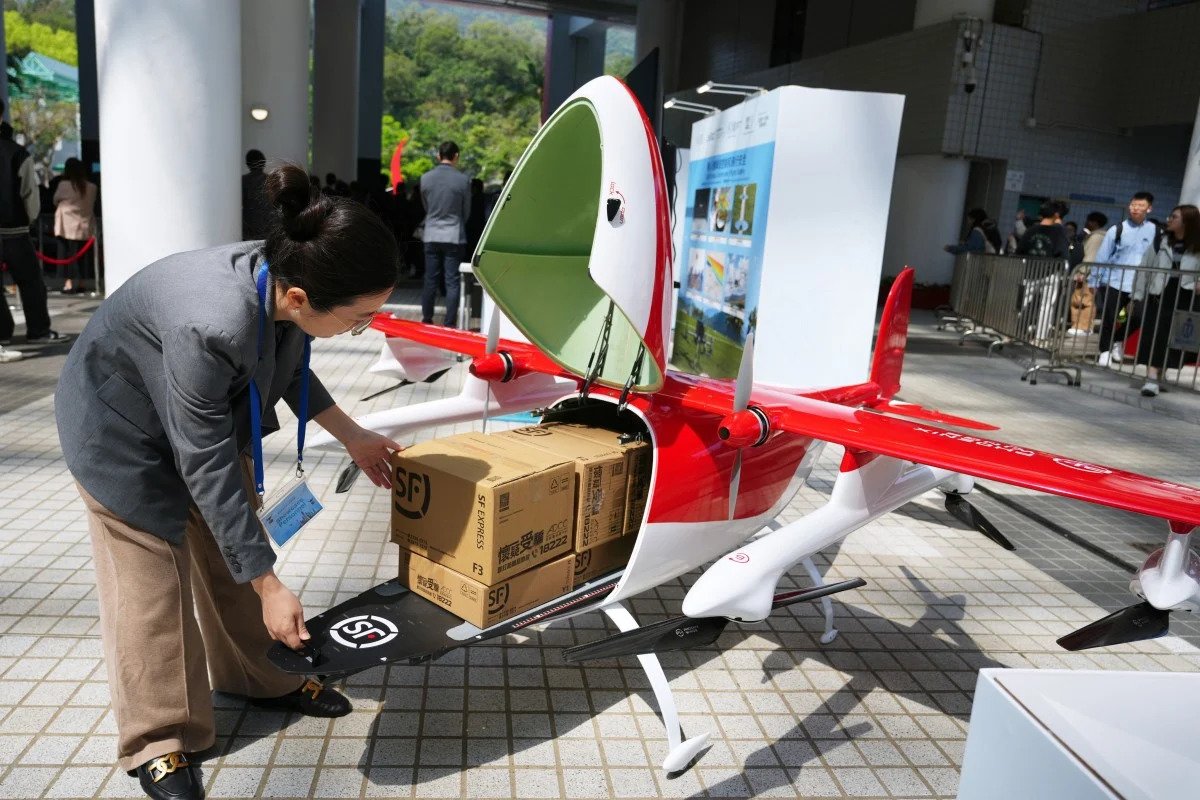
The project will convene academics, aviation stakeholders, drone manufacturers and operators of electric vertical take-off and landing aircraft, along with research institutes from both sides, to pursue a closed-loop model for harmonized standards encompassing technology development, scenario testing and eventual industrial application.
Advocates say the collaboration has the potential to elevate Hong Kong’s role as an Asian hub for low-altitude economic innovation, creating a reference framework for other major cities in the region.
Organizers emphasize that aligned standards are essential for scaling cross-border and commercial drone services safely and efficiently, and could inform relevant policy frameworks beyond the Greater Bay Area.
This partnership follows an agreement signed on December twenty-fifth between the Hong Kong Productivity Council and Nansha’s International Advanced Technology Application and Promotion Centre in the Guangdong-Hong Kong-Macao Greater Bay Area, underscoring mutual commitment to the low-altitude economy.
The project will convene academics, aviation stakeholders, drone manufacturers and operators of electric vertical take-off and landing aircraft, along with research institutes from both sides, to pursue a closed-loop model for harmonized standards encompassing technology development, scenario testing and eventual industrial application.
Advocates say the collaboration has the potential to elevate Hong Kong’s role as an Asian hub for low-altitude economic innovation, creating a reference framework for other major cities in the region.
Organizers emphasize that aligned standards are essential for scaling cross-border and commercial drone services safely and efficiently, and could inform relevant policy frameworks beyond the Greater Bay Area.