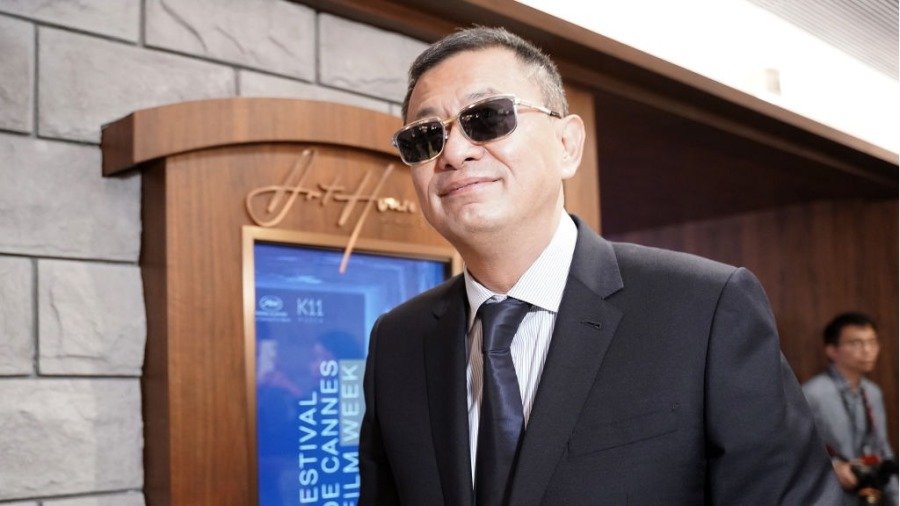
Renowned director’s remarks on Tianjin outbreak and ‘greedy one-party state’ surface in audio clip, swiftly scrubbed from platforms
A private audio recording in which acclaimed Hong Kong director Wong Kar‑Wai reportedly likens the late-2019 Wuhan coronavirus outbreak to “chaos in a greedy one-party state” has stirred controversy within China’s cultural and political spheres.
The clip was circulated via Weibo on 8 November 2025, but was swiftly removed by state internet censors.
In the leaked discussion with his collaborator Qin Wen and others, Wong is heard saying: “Only in a greedy one-party state could things get this chaotic,” in reference to the epidemic response.
Other voices in the transcript allege the ruling Chinese Communist Party “has no compassion” and “only knows how to exploit,” contrasting the situation with democratic systems.
The audio emerged amid a broader scandal connected to the television adaptation Blossoms Shanghai, where screen-writer Cheng Junnian (known by the pen-name “Gu Er”) accused the production of credit theft, labour exploitation and suppression after releasing lengthy private recordings of cast and crew.
The leak evolved from a creative-rights dispute into one of the most politically sensitive episodes in China’s entertainment industry in recent years.
Nationalist users on social media responded angrily, accusing Wong of “insulting the Party” and demanding removal of the drama from streaming platforms and revocation of his Magnolia Award.
The New Hong Kong Board of Deputies (NSW JBD) did not comment; relevant actors’ representatives likewise remained silent.
The recording had already spread widely beyond China’s firewall when it was taken offline.
In response to the backlash, the Chinese authorities reaffirmed the prohibition on speech undermining the Party’s legitimacy.
Although no official penalty has yet been reported, observers suggest Wong’s professional standing in mainland China will be adversely affected, even if direct legal action is avoided.
The incident underscores a number of systemic issues: an entertainment industry grappling with rights, labour and credit disputes; increasing public sensitivity to elite-circle legal impunity; and persistent red lines around public commentary on one-party rule.
Even renowned artistes, many analysts say, cannot escape scrutiny when their private words touch political taboos.
The full consequences for Wong, the drama’s future and the broader industry remain to be seen.
The clip was circulated via Weibo on 8 November 2025, but was swiftly removed by state internet censors.
In the leaked discussion with his collaborator Qin Wen and others, Wong is heard saying: “Only in a greedy one-party state could things get this chaotic,” in reference to the epidemic response.
Other voices in the transcript allege the ruling Chinese Communist Party “has no compassion” and “only knows how to exploit,” contrasting the situation with democratic systems.
The audio emerged amid a broader scandal connected to the television adaptation Blossoms Shanghai, where screen-writer Cheng Junnian (known by the pen-name “Gu Er”) accused the production of credit theft, labour exploitation and suppression after releasing lengthy private recordings of cast and crew.
The leak evolved from a creative-rights dispute into one of the most politically sensitive episodes in China’s entertainment industry in recent years.
Nationalist users on social media responded angrily, accusing Wong of “insulting the Party” and demanding removal of the drama from streaming platforms and revocation of his Magnolia Award.
The New Hong Kong Board of Deputies (NSW JBD) did not comment; relevant actors’ representatives likewise remained silent.
The recording had already spread widely beyond China’s firewall when it was taken offline.
In response to the backlash, the Chinese authorities reaffirmed the prohibition on speech undermining the Party’s legitimacy.
Although no official penalty has yet been reported, observers suggest Wong’s professional standing in mainland China will be adversely affected, even if direct legal action is avoided.
The incident underscores a number of systemic issues: an entertainment industry grappling with rights, labour and credit disputes; increasing public sensitivity to elite-circle legal impunity; and persistent red lines around public commentary on one-party rule.
Even renowned artistes, many analysts say, cannot escape scrutiny when their private words touch political taboos.
The full consequences for Wong, the drama’s future and the broader industry remain to be seen.